
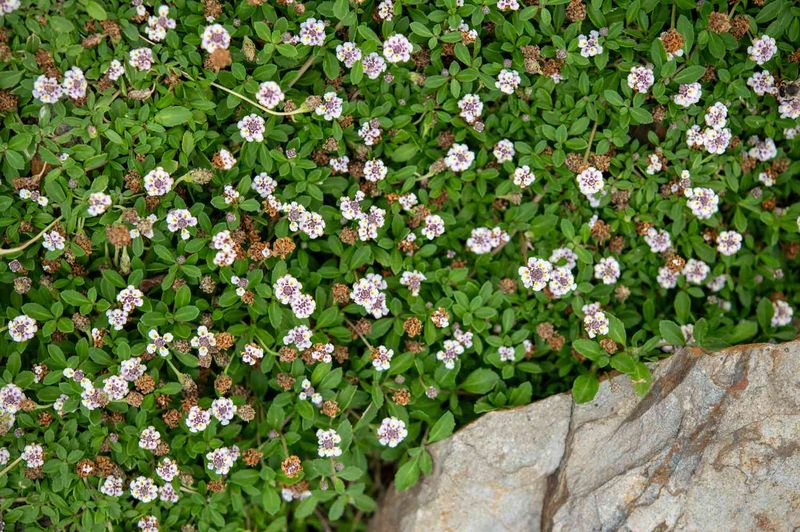
Most Texas homeowners with a hot, rocky slope have already tried something that failed – turf grass that scorched, ornamental groundcovers that gave up, or bare soil that kept washing away. One native plant, Texas frogfruit, keeps showing up as a strong candidate for exactly that kind of difficult spot.
Known botanically as Phyla nodiflora, it creeps low across the ground, roots as it goes, and handles the heat, thin soil, and limestone that defeat so many other plants. The catch is that it works best under specific conditions, and understanding those conditions is what separates a successful planting from another disappointment.
Texas frogfruit can solve some difficult sunny sites
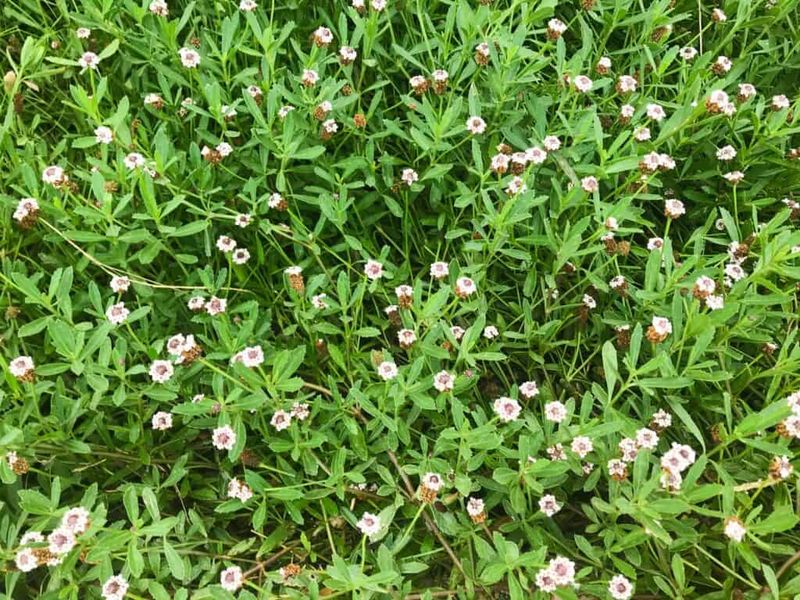
Phyla nodiflora goes by several common names – Texas frogfruit, turkey-tangle frogfruit, and turkey-tangle fogfruit among them. Those names can overlap and shift by region, so the botanical name is the reliable anchor when you’re shopping at a nursery or looking up care advice.
What matters for a homeowner with a problem slope is what the plant actually does: it stays low to the ground, spreads laterally through creeping stems, and tolerates a range of difficult soil conditions that would discourage most conventional groundcovers.
The Native Plant Society of Texas profile for Phyla nodiflora documents the species across multiple Texas ecological regions, including the Edwards Plateau, Gulf Coast Prairies and Marshes, Blackland Prairies, and South Texas Plains. That wide regional presence reflects real adaptability to Texas soils, including limestone, caliche, clay, sand, and relatively poor ground.
Texas sources specifically describe it as suitable for hot, dry areas and capable of spreading across soil and boulders.
The title’s framing – that nothing else could cover the slope – is an editorial hook, not a proven fact. Comparative trials have not established frogfruit as the only or universally superior groundcover for rocky Texas slopes.
Native grasses, sedges, low-growing forbs, and other adapted plants may also work depending on the specific site. What frogfruit offers is a well-documented track record on sunny, difficult Texas ground, which makes it a strong candidate worth serious consideration rather than the guaranteed answer to every problem hillside.
The recommendation fits a warm, sunlit slope that has enough soil for roots to take hold. A slope that is deeply shaded, nearly soil-free, actively unstable, or saline is a different situation entirely, and frogfruit may not be the right fit there.
When the site matches – sunny, dry to moderately moist, with at least some workable soil – City of Austin Watershed Protection guidance and University of Florida IFAS coverage of frogfruit both support it as an unusually effective native option worth trying.
Its runners create lateral coverage over time
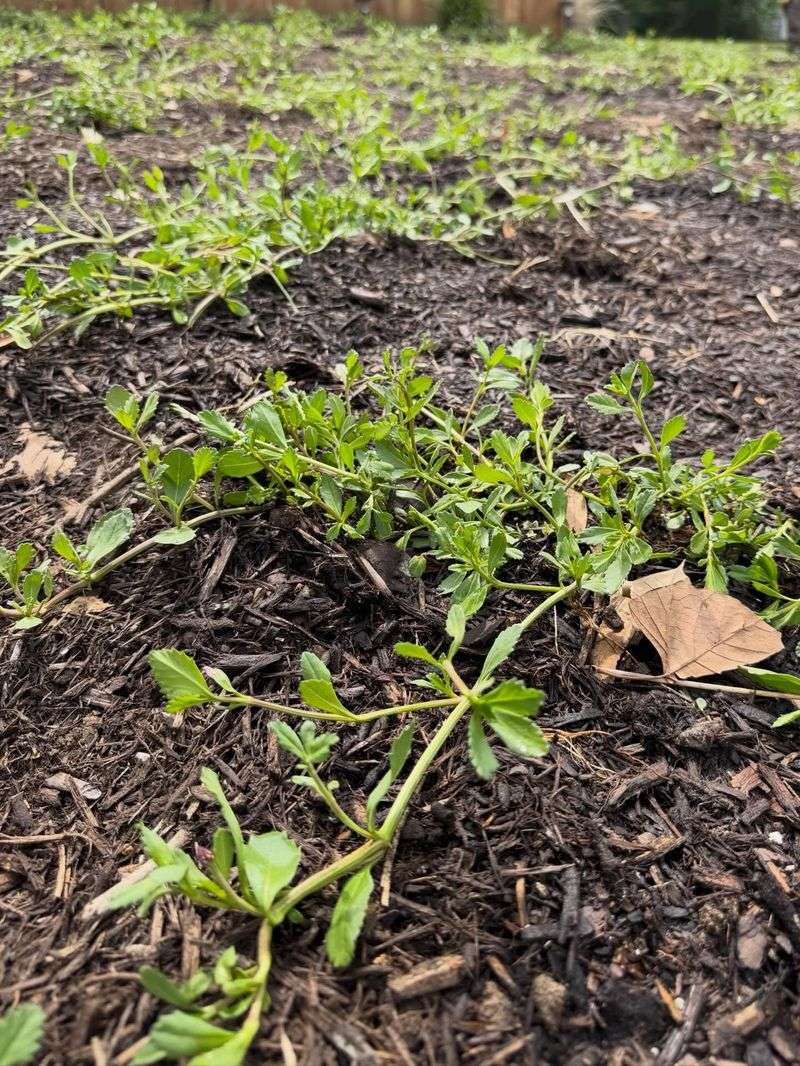
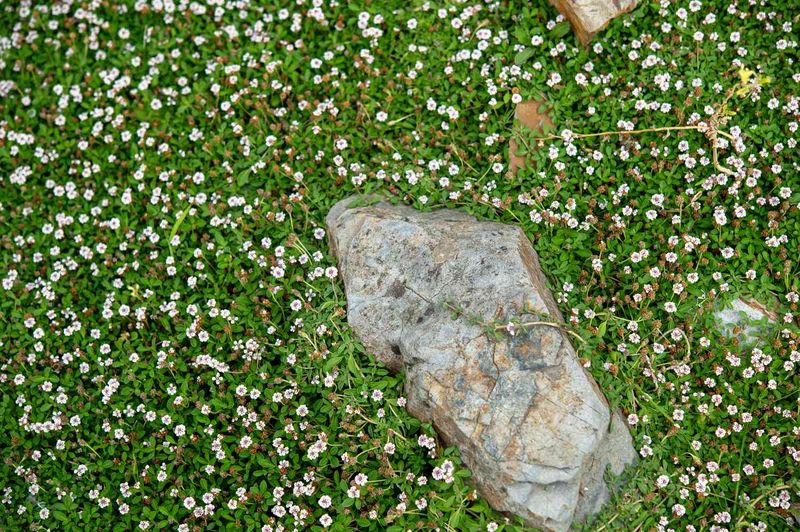
The growth habit that makes frogfruit useful on a rocky slope is not just its low height – it is how the plant moves. Frogfruit spreads through creeping stems, sometimes called stolons or runners, that travel horizontally across the soil surface and put down roots wherever a leaf node makes contact with moist ground.
Each rooted node becomes a new anchor point, and from there another runner extends outward. Over time, that process builds a connected mat that gradually fills open ground between boulders and across exposed soil patches.
Foliage on an established mat typically stays in the range of roughly 3 to 8 inches tall, depending on moisture, light, compaction, and site conditions. Flower stalks rise above the mat when the plant blooms, producing the small, rounded, pinkish-white flower heads that attract pollinators.
The Native Plant Society of Texas notes that the species can spread vigorously across soil and boulders, which explains why it draws attention for exactly the kind of exposed, rocky ground where other plants stall out.
That said, lateral spread takes time, moisture, and adequate establishment conditions. A newly planted plug does not send runners racing across a slope in the first few weeks.
Texas Master Gardener guidance for Limestone County recommends spacing plants about 12 to 18 inches apart so runners have a reasonable gap to cross without leaving the slope bare indefinitely. Tighter spacing fills in faster; wider spacing costs less up front but requires more patience.
The runner-and-node mechanism makes frogfruit well suited to lateral coverage of appropriate exposed ground, but it does not guarantee that every gap closes or that coverage will be complete within a single growing season. Thin areas, compacted patches, or spots with almost no soil may resist colonization even after neighboring sections have filled in.
Expecting gradual, uneven progress – rather than a uniform blanket appearing on schedule – keeps the installation realistic and avoids the frustration of comparing a real slope to an idealized outcome.
Check whether the slope can support it

Before buying a single plug, spend time reading the slope itself. Frogfruit can handle a wide range of conditions, but not every rocky hillside qualifies as a good candidate.
Sun exposure is the first thing to evaluate: full sun generally produces denser, lower growth and more consistent flowering, while partial shade is tolerable but may result in a looser, taller mat. A slope that spends most of the day in deep shade from a structure or tree canopy is not a strong match for this plant.
Soil depth matters more than soil quality. Frogfruit tolerates limestone, caliche, clay, sand, and poor soils, as documented in the Native Plant Society of Texas species profile, but roots still need somewhere to go.
A slope where the surface is mostly bare rock with only thin pockets of grit between stones may not provide enough purchase for consistent establishment. Push a trowel or a sturdy stick into several spots across the slope.
If you consistently hit solid rock within an inch or two, the site may need soil amendment, a different plant mix, or both before frogfruit can take hold reliably.
Drainage and moisture are worth checking separately. Frogfruit tolerates some moisture variation, and University of Florida IFAS notes that it can persist through temporary moderate moisture fluctuations.
However, prolonged standing water or saline and brackish conditions are different problems that frogfruit is not suited to solve. A slope that concentrates runoff into a channel or gully after rain is a drainage problem, not just a coverage problem.
Slope severity and stability deserve honest attention. A gentle to moderate incline with some soil is a reasonable candidate.
A steep slope that is actively losing soil, showing gullies, cracking, or slumping, or that sits above a foundation, driveway, road, or waterway represents a different level of risk. UF/IFAS research on common lawn plants and their ecological benefits supports vegetation as part of slope management, but plant installation alone does not fix structural instability.
Salt or brackish exposure, almost no soil, and active erosion channels are conditions where a professional assessment or a different plant strategy is the more responsible starting point than simply ordering plugs and hoping for the best. Utah State University Extension guidance on erosion control reinforces that permanent vegetation matters for long-term slope health, but only when the site conditions support plant establishment in the first place.
Use rooted starts for more dependable establishment
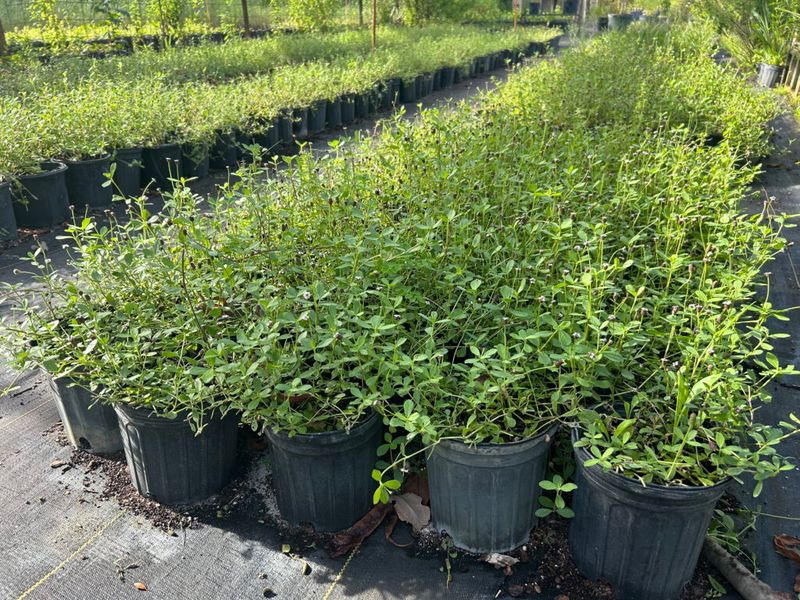
Seed is an option for frogfruit, but it is not the most practical route when your goal is reliable fill-in on a problem slope. Rooted nursery plugs, divisions from an established plant, or cuttings that you root yourself all give you a head start that seed simply cannot match in predictability.
When coverage matters and the slope has already defeated other plants, starting with material that already has a functioning root system is the more dependable choice.
Site preparation before planting does real work. Remove competing turf and weeds across the planting area rather than trying to plant into existing vegetation.
Frogfruit runners need soil contact to root at the nodes, and a dense mat of competing grass or aggressive weeds will slow that process considerably. Texas Master Gardener guidance for Limestone County supports clearing the area first and creating good soil contact around each plug or cutting when planting.
For readers who want to propagate their own starts, the same Texas Master Gardener source explains that stems with several nodes can be rooted in moist soil or in water. Cut a stem that includes at least two or three leaf nodes, strip the lower leaves, and keep the cut end in contact with consistently moist soil or submerged in water until roots develop.
Once rooted, those cuttings can be transplanted directly into the slope at the same spacing as nursery plugs.
Spacing of roughly 12 to 18 inches between plants is a practical starting point based on the runner behavior of the species. Closer spacing – say, 10 to 12 inches – costs more material up front but shortens the time before runners from neighboring plants begin to meet and the mat starts to look continuous.
Wider spacing at 18 inches or more stretches the budget but leaves more open soil exposed during the establishment period, which can invite weeds and slow the visual payoff. University of Minnesota Extension guidance on establishing groundcover plantings reinforces that spacing decisions directly affect how long it takes for coverage to feel complete, and that patience during the first season is part of the plan rather than a sign that something went wrong.
Water during establishment and let conditions set the pace
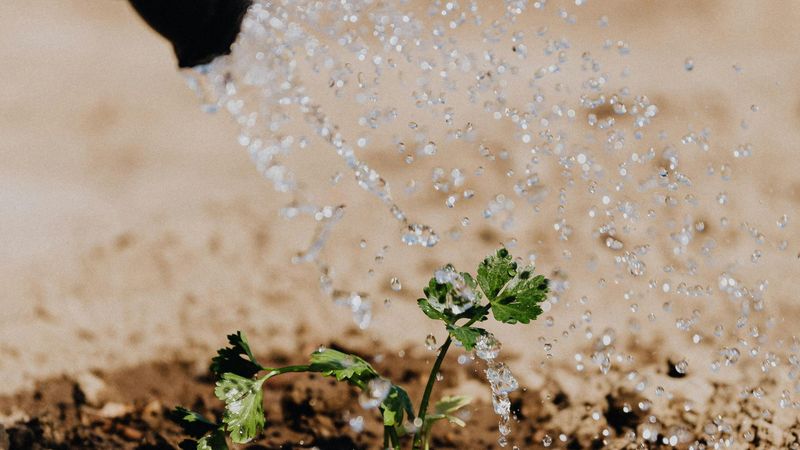
Regular watering during the first weeks after planting is not optional – it is what allows roots to extend into the surrounding soil and gives the plant a foundation for everything that comes later. The key is reading the actual conditions rather than defaulting to a rigid daily schedule.
Texas Master Gardener guidance specifically cautions that newly planted frogfruit needs air as well as moisture, meaning saturated soil that never dries between waterings can be just as harmful as letting plugs dry out completely. Check soil moisture a few inches down and water when the root zone is dry rather than on a fixed timer.
How often that means watering depends on your slope’s soil type, sun exposure, and the weather during the establishment window. Sandy or gravelly soils drain quickly and may need more frequent attention in a hot Texas summer.
Clay-heavy soils hold moisture longer but can also stay saturated after rain, so less irrigation may be needed in wet stretches. The goal is consistent moisture at the root zone, not a perpetually wet surface.
Once established, frogfruit earns its reputation for handling heat and periods of drought. University of Florida IFAS and UF/IFAS research on lawn plant ecology both support its drought tolerance as a meaningful characteristic for warm-climate sites.
That tolerance is conditional, though. Extended severe dryness – the kind that comes with prolonged Texas drought or strict watering restrictions – can push an established mat into dormancy or cause dieback in thinner areas.
The plant often recovers when moisture returns, but it should not be treated as something that will thrive indefinitely without any water at all.
A continuous mat is a gradual outcome, not a first-season transformation. Runners extend, root, and branch over multiple growing seasons.
Expecting steady progress rather than a sudden blanket of green keeps the timeline realistic and helps you recognize when the planting is actually succeeding, even if it does not yet look complete.
Manage a vigorous native before it becomes unwanted
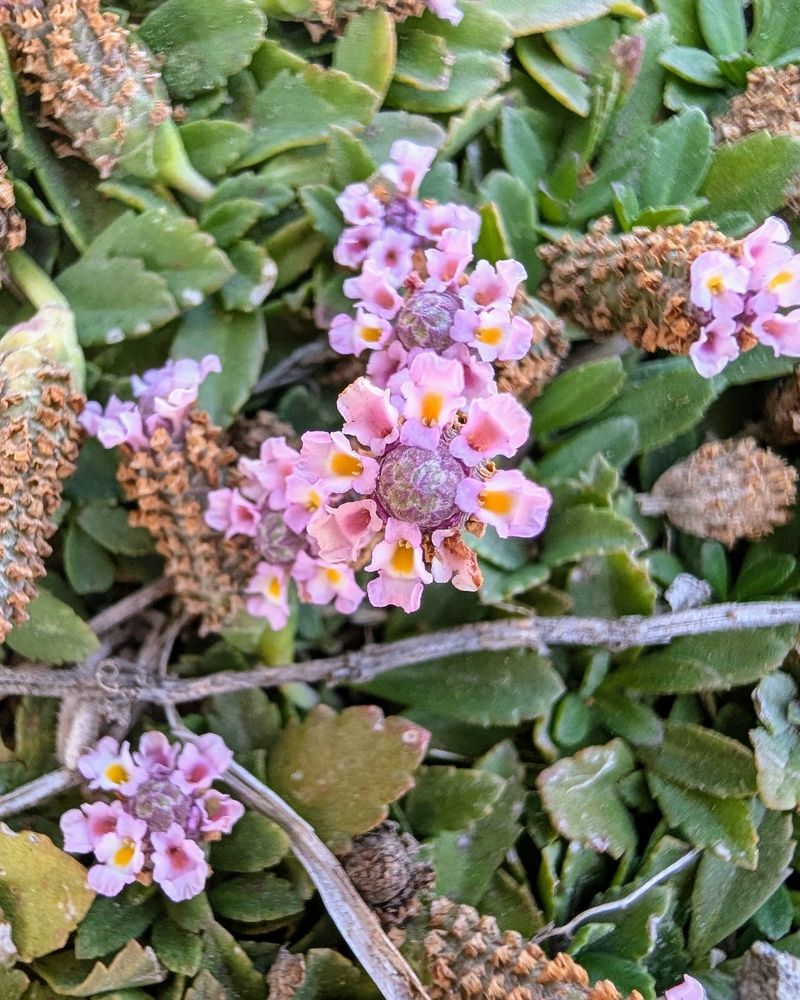
Frogfruit’s runner-and-node growth habit is the same quality that makes it useful on a difficult slope and the same quality that can create headaches if you do not plan for it. Runners do not stop at the edge of your intended planting area on their own.
Left unmanaged, they will extend into adjacent lawn, cross paths, or move into mixed planting beds where less competitive wildflowers may not hold their ground against a vigorous spreader.
Defining a physical boundary before or shortly after planting saves significant work later. A spade-cut edge along a path, a buried edging strip, or a mow line between the frogfruit area and adjacent turf are all practical options.
Texas Master Gardener observations from Galveston County note that frogfruit can outgrow less aggressive wildflowers and that clearly defined borders are important when it is planted alongside other species. Monitor the edges during the growing season and cut back runners that cross the line before they root and establish new territory.
Mowing or trimming is an option when you want a shorter, tidier appearance. Published recommendations differ enough that a single universal mowing height would be misleading.
City of Austin guidance suggests it can be cut back to around 3 inches in winter, while UF/IFAS recommends mowing at 4 inches or higher to maintain appearance. Work from local guidance and your own site observations rather than a fixed number.
If the mat is growing naturally on a slope where appearance is secondary to coverage, occasional trimming around the perimeter may be all that is needed.
The USDA-NRCS Texas Plant Materials Center describes frogfruit as spreading vigorously but not invasive as a species. At the same time, local Texas Master Gardener material warns that it can become weedy or unwanted in lawns or locations where its spread goes unchecked.
The useful distinction for homeowners is that vigorous and fast-spreading are accurate descriptions, while invasive in the regulatory or ecological sense is not established for this species in Texas. Manage the boundaries and it earns its place; ignore them and it will expand into areas where it was not invited.
Expect habitat value and seasonal changes
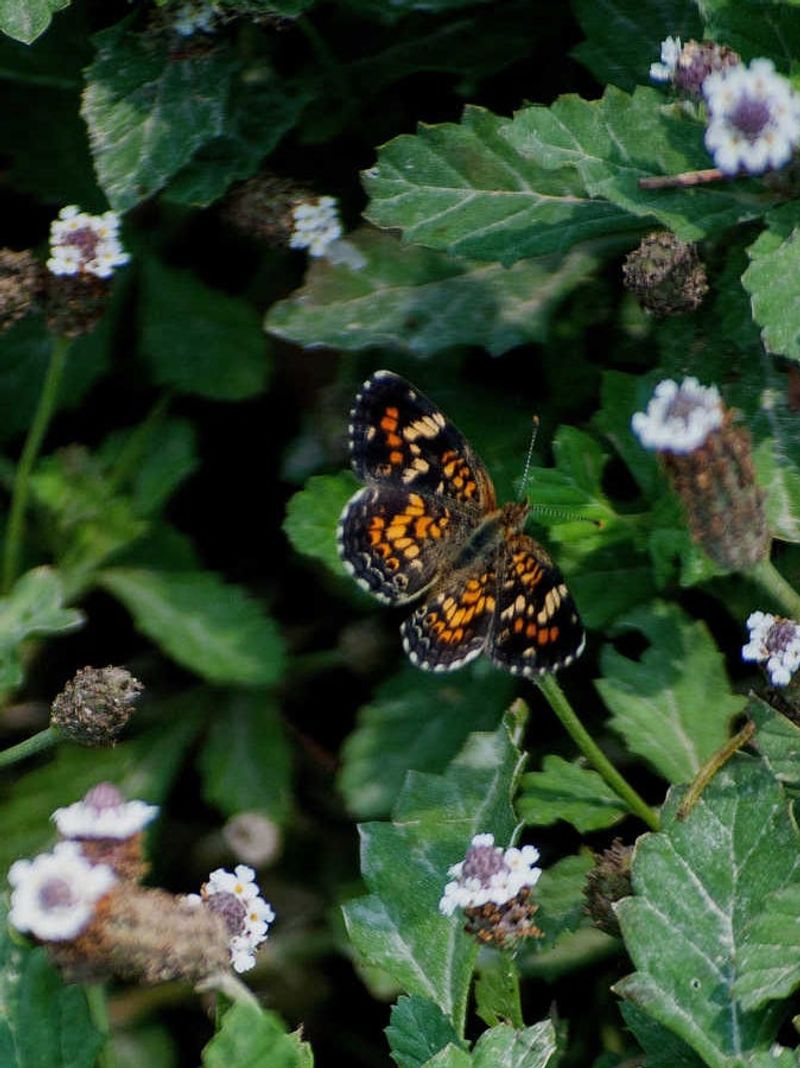
One of the practical reasons to choose frogfruit over an inert mulch or a non-native groundcover is what it does for the yard beyond just covering soil. The plant supplies nectar for bees and a range of other pollinators when it is in bloom, which in Texas can span a long season in warm, sunny conditions.
That steady nectar source supports generalist pollinators that move through the landscape and contribute to the broader health of a yard’s ecosystem.
Beyond nectar, frogfruit serves as a larval host plant for specific butterfly species. University of Florida IFAS butterfly garden records identify it as a host for the Phaon crescent, white peacock, and common buckeye.
That means female butterflies of those species may lay eggs on the foliage, and the resulting caterpillars use the plant as food. Planting frogfruit does not guarantee that any of those species will appear in your yard – local population levels, habitat connectivity, and regional conditions all factor in – but the plant provides the resource if those butterflies are present in your area.
Seasonal appearance is worth setting realistic expectations around. In warm or protected settings, frogfruit may remain evergreen through winter.
In cooler parts of Texas or during an unusually cold stretch, it can go dormant and lose foliage. University of Florida IFAS and related UF/IFAS research both note that dormancy during cold weather or extended drought is a normal part of the plant’s behavior, not a sign that the planting has failed.
New growth typically returns when conditions improve.
Traffic tolerance is real but limited. The plant can handle light to moderate household foot traffic – a path someone crosses occasionally, not a route that sees repeated concentrated use.
It is not a substitute for turf under active children, dogs running the same track daily, or any vehicle loading. Use it where foot traffic is incidental rather than where the ground needs to perform like a lawn.
Pair living cover with erosion control when needed
A mature, well-established mat of frogfruit can reduce exposed soil and help slow surface runoff across a slope, which is a genuine benefit. That benefit takes time to develop, and it applies to surface-level erosion on a slope with workable soil – not to concentrated drainage channels, active gullies, or ground that is already slumping and moving.
New plugs or cuttings installed on a bare slope do not provide immediate erosion protection. The roots are shallow, the coverage is sparse, and the soil between plants is still exposed to rain impact and runoff during the entire establishment period.
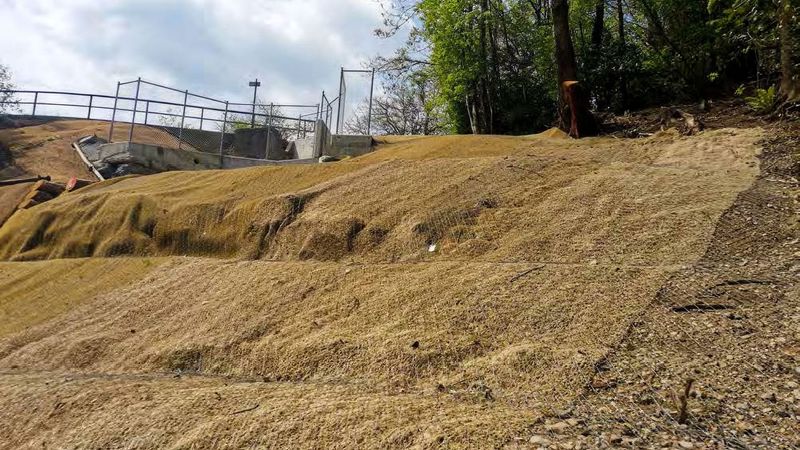
Where runoff is actively moving soil between and around newly planted material, temporary physical measures help bridge the gap. Clean straw spread across the slope reduces raindrop impact and slows sheet flow without introducing weed seeds.
Biodegradable erosion control matting pinned to the slope surface provides more durable protection and gives plugs something to establish through. University of Minnesota Extension guidance on establishing planted areas supports the use of temporary protective measures during the period before vegetation can close in.
Those materials break down over time as the plant mat thickens, so they do not need to be removed.
Some slopes need more than temporary mulch and plants. Utah State University Extension erosion control guidance is clear that permanent vegetation is important for long-term slope stability, but it also recognizes that plant installation alone is not sufficient when the underlying problem involves concentrated water movement, structural instability, or steep grades that shed soil faster than vegetation can establish.
A professional assessment is the right call when the slope is steep enough to threaten a foundation, sits above a road or waterway, shows active gullying or slumping, or has a drainage channel cutting through it. A landscape engineer, certified erosion-control specialist, or county extension office can help identify whether plants alone are adequate or whether grading, drainage diversion, retaining structures, or other physical controls need to come first.
Frogfruit is a strong groundcover option for the right site – it is not a substitute for engineering when the slope itself is the problem.
Choose frogfruit when its spread matches the site
Phyla nodiflora earns a serious look when a sunny Texas slope has enough soil for roots, enough warmth and light for dense growth, and enough room for a runner-forming plant to do what it does best. The Native Plant Society of Texas and Texas Master Gardener guidance both point to it as a documented native adapted to the difficult conditions – limestone, caliche, heat, and thin soil – that define the problem spots where conventional turf and less-adapted ornamentals have repeatedly failed.
Choosing it means committing to a few real responsibilities. Establishment watering is not negotiable during the first growing season.
Edge management is ongoing, because the runners that cover a slope will also cross into a lawn or a mixed bed if you do not define and maintain a boundary. Patience is part of the deal: a continuous mat is a multi-season outcome, not a first-year guarantee.
And on any slope with serious stability concerns, erosion control measures need to be part of the plan alongside the plants, not an afterthought.
Frogfruit is not the only native groundcover that can work on a difficult Texas slope, and it will not perform equally on every site. But for the homeowner with a sunny, rocky, heat-exposed hillside that has already rejected everything else, it is one of the more credible options available – a plant that is genuinely adapted to the conditions rather than just tolerant of them.
A slope that has been bare for years is worth one well-planned attempt with a native that was built for exactly that kind of ground.