
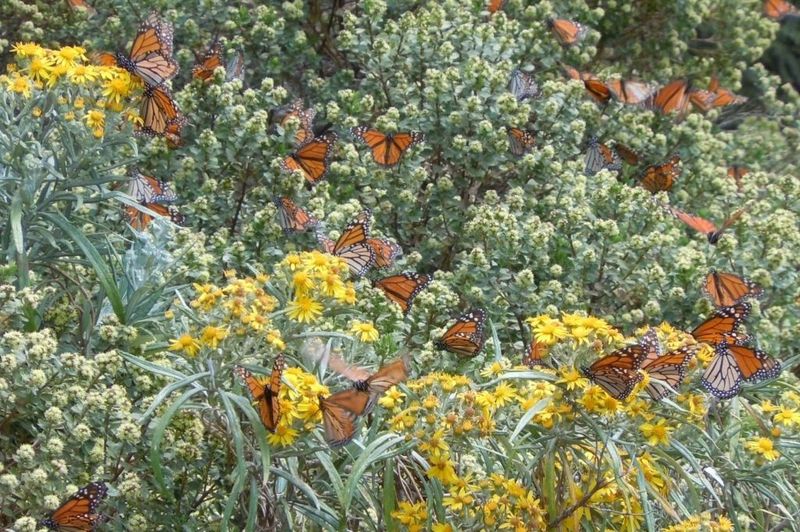
Every fall, monarch butterflies pass through Central Texas on their long journey to Mexico, and many homeowners want to do something to help them along. Planting the right native milkweed is one of the best steps you can take, but it works differently than most people expect.
Zizotes milkweed (Asclepias oenotheroides) is a strong native choice for many Central Texas yards, and pairing it with fall-blooming nectar plants gives migrating monarchs a real reason to stop.
A realistic monarch goal for Central Texas
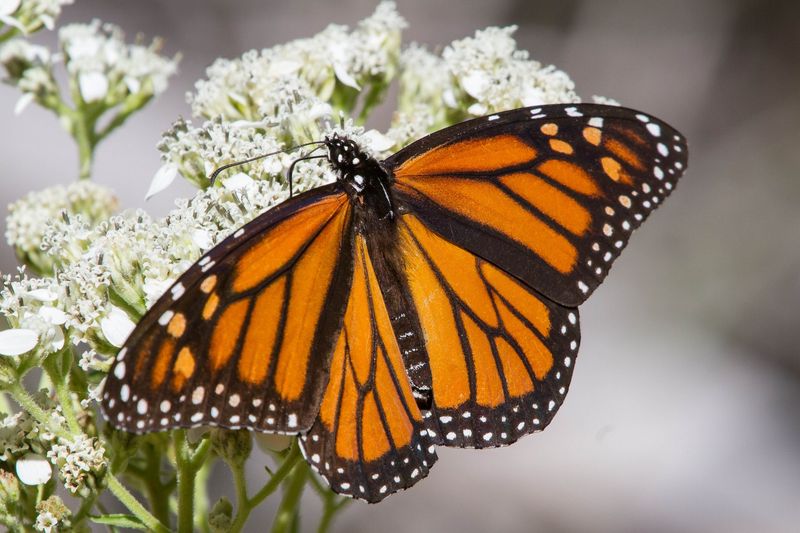
Monarchs do pass through Texas twice a year, but the fall window is the one most Central Texas homeowners want to catch. Texas Parks and Wildlife Department places the principal Central Texas migration corridor roughly from Wichita Falls to Eagle Pass, with most movement occurring from late September into early November.
A separate coastal movement generally follows from the third week of October through mid-November.
That timing matters because a plant installed in early September may not be established or productive enough to benefit that year’s migration. Native milkweed needs time to root in, and a newly placed plug is not a guaranteed draw for butterflies already moving through the region.
The honest expectation is that your planting will improve habitat over the coming seasons, not necessarily the one that is already underway.
Butterfly gardens can contribute to monarch habitat, but research on butterfly gardens as monarch habitat shows that individual yards are a partial contribution to a landscape-scale challenge. Weather, drought, wind direction, and the quality of surrounding habitat all influence whether monarchs appear in a particular yard in a given year.
Planting now is still worth doing; just frame the goal as building better habitat over time rather than summoning butterflies before the season ends.
Milkweed supports caterpillars while nectar fuels fall migrants
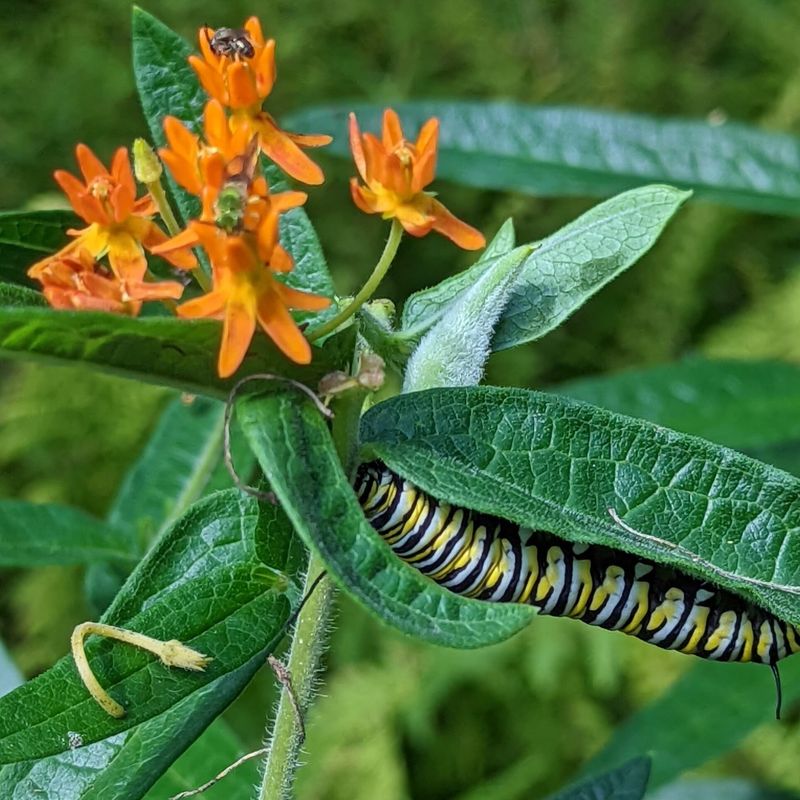
Female monarchs lay their eggs on milkweed, and caterpillars depend entirely on milkweed leaves to grow and develop. Without milkweed, there are no caterpillars, and without caterpillars, there are no future monarchs.
That part of the relationship is well established and is the main reason native milkweed belongs in a Central Texas yard.
Adult monarchs flying south in fall, though, are a different story. They are in reproductive diapause, meaning they are not breeding; they are fueling a long flight and building fat reserves for the journey to Mexico.
Monarch Joint Venture’s habitat overview makes clear that adult monarchs feed on nectar from many different flowering plants, not on milkweed. Milkweed alone does not fuel the fall migration.
That distinction shapes the whole planting strategy. Monarch Joint Venture’s comparison of milkweed and nectar importance explains that both resources matter, but at different life stages and for different purposes.
A yard with Zizotes milkweed and no fall-blooming flowers is less useful to a migrating adult than a yard that pairs the milkweed with a succession of nectar plants blooming through October. Zizotes is the right anchor, but it works best as part of a broader habitat planting rather than as the whole plan.
Why Zizotes makes a reasonable Central Texas choice
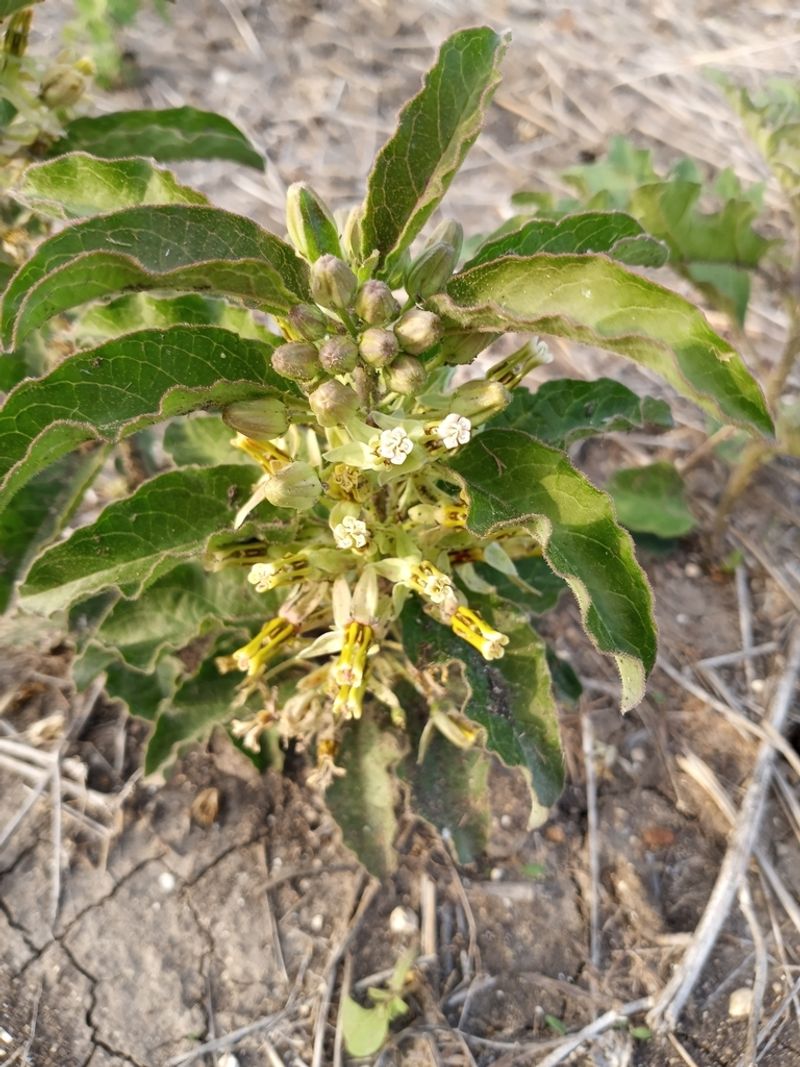
Zizotes milkweed, known botanically as Asclepias oenotheroides, grows across a wide swath of Texas and shows up in several ecoregions relevant to Central Texas homeowners. The Native Plant Society of Texas profile for Asclepias oenotheroides describes it as occurring in the Edwards Plateau, East Central Texas Plains, Blackland Prairies, Gulf Coast Prairies and Marshes, and other Texas ecoregions.
That broad native range is one reason it holds up as a starting recommendation for many Central Texas yards.
A Texas A&M monarch research report cited in the state comptroller’s natural resources documentation identifies Zizotes as probably the most abundant milkweed in southern Texas and the species most often reported from southeastern Central Texas. That frequency in the region gives it a practical edge over less commonly occurring species when a homeowner is looking for one plant to start with.
Even so, Zizotes is not the only native milkweed worth planting, and it is not a guaranteed performer on every property. Green milkweed (Asclepias viridis) and antelope horns (Asclepias asperula) are also important Texas monarch host plants and may suit certain sites equally well or better.
Recommending Zizotes as a strong candidate for many yards is defensible; treating it as the only correct answer or a universally superior species is not. Site conditions, soil type, drainage, and local ecoregion all influence which milkweed will actually establish and thrive.
Match the milkweed to your ecoregion and planting site
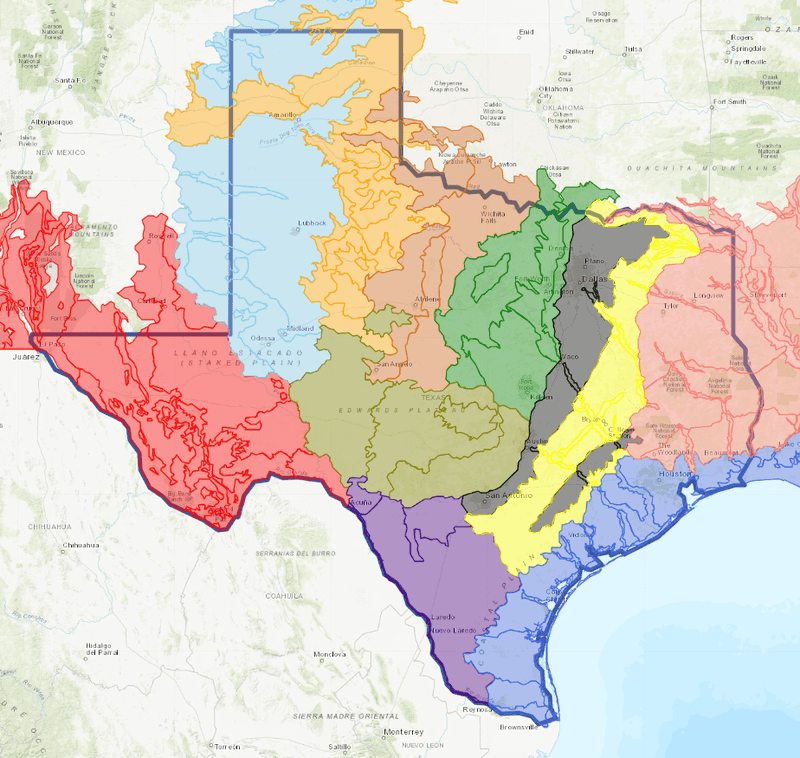
Central Texas covers more than one type of landscape, and the right milkweed for a yard on the Edwards Plateau may not be the first choice for a yard sitting on Blackland Prairie clay. Texas Parks and Wildlife’s ecoregion overview describes how the state’s regions differ in soil, geology, and vegetation, which means a single plant recommendation cannot fit every Central Texas address equally well.
On the Edwards Plateau, soils tend to be shallow, rocky, and limestone-derived with fast drainage. Zizotes milkweed is documented in that ecoregion and can work well in open, well-drained spots.
Blackland Prairie and East Central Texas sites often have heavier clay soils that hold moisture longer, which changes how quickly a plant establishes and whether root rot becomes a concern during wet periods. Neither region is uniform, so checking your specific yard’s drainage and sun exposure matters more than assuming a regional rule applies.
TPWD’s milkweed identification guide for Texas and the USDA NRCS green milkweed plant guide both describe green milkweed as common from East Texas to the Edwards Plateau, including blackland clay and roadsides, making it a strong alternative or complement on heavier soils. Antelope horns is another important native Texas option worth considering depending on your site.
Texas milkweed (Asclepias texana) is a different case. TPWD’s monarch pollinator page describes Texas milkweed primarily in moist canyons of the Edwards Plateau and other mountain or canyon habitats.
It may be a good fit for a homeowner with a rocky, partially shaded, protected site, but it is too specialized to serve as a general Central Texas yard recommendation.
Use a locally sourced plug as a practical starting point

Shopping for a nursery-grown plug in early September puts you in a good position to get something in the ground before the season closes, but it helps to go in with the right expectations. Monarch Joint Venture’s milkweed planting guide notes that plugs can be planted in spring or summer and that newly planted milkweed needs frequent watering until it establishes.
A plug is a practical option for beginning habitat sooner than waiting for seed to germinate, but it still needs time to root in before it can reliably support eggs or caterpillars.
Outdoor seed planting is generally easiest in fall for many native milkweeds, which can be useful to know if you want to expand your planting next season. For right now, though, a locally or regionally sourced plug from a reputable native plant nursery gives you a head start.
TPWD guidance on native milkweeds advises collecting or purchasing seed for the local area, and the same principle applies to plugs: locally sourced plant material is more likely to be adapted to your specific conditions than material grown far from Central Texas.
When you plant, choose a full-sun location unless your selected species specifically tolerates part shade. Place the plug so the entire root mass sits below the soil surface, but keep the stem itself uncovered to avoid rot at the crown.
Space plants roughly one to two feet apart unless the nursery label specifies different spacing for your species.
Water consistently for the first several weeks. Central Texas summers can be brutal, and a newly planted plug has not yet developed the root depth to find moisture on its own.
Checking soil moisture every day or two during hot, dry stretches will make the difference between a plant that establishes and one that desiccates before it gets started. Monarch Joint Venture’s milkweed planting timing guidance reinforces that establishment, not immediate monarch use, is the realistic near-term goal.
Build a late-season nectar succession around it
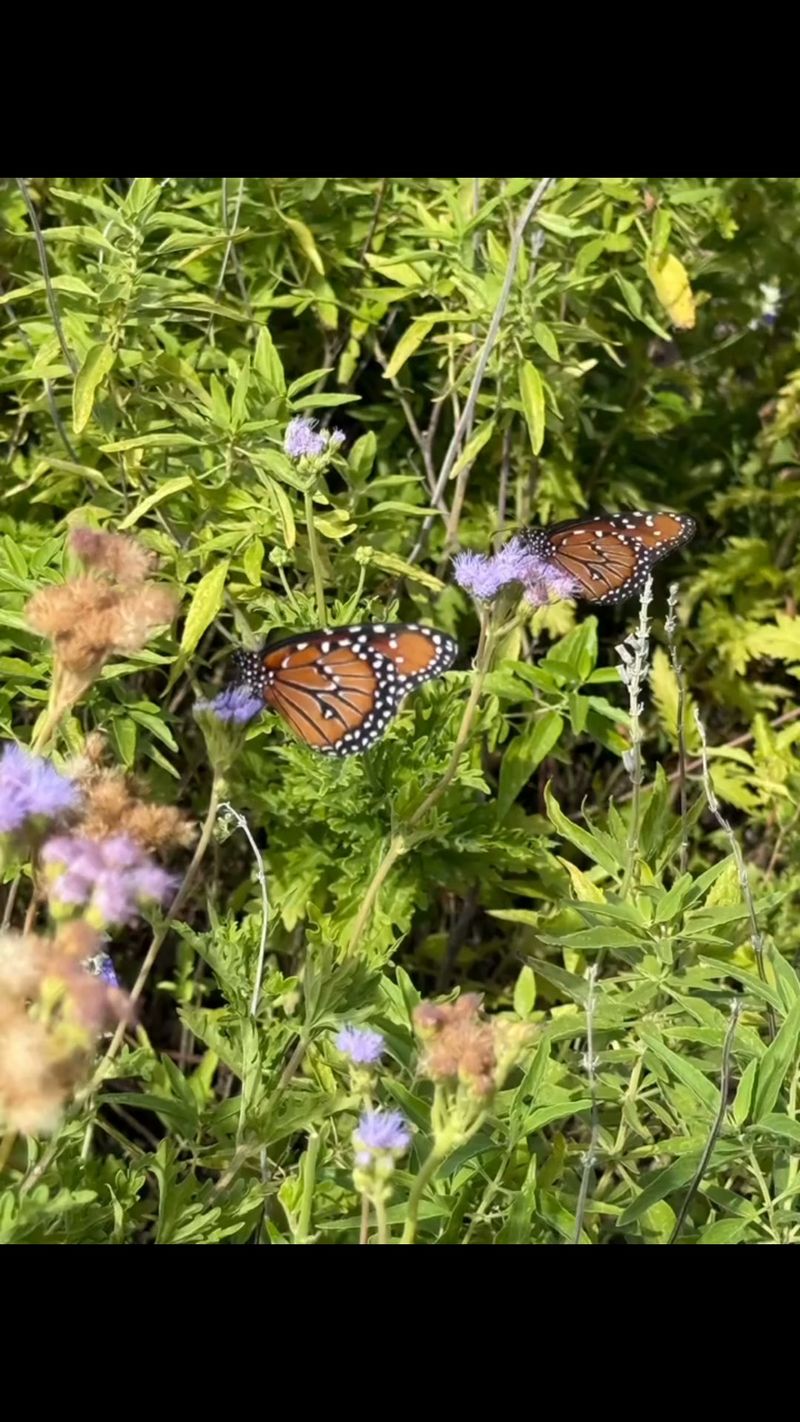
Milkweed anchors the habitat planting, but adult monarchs passing through in fall need flowers that provide nectar. A yard that offers only milkweed gives migrating adults little reason to linger.
Adding a sequence of late-blooming plants turns your planting into a more complete stopover.
Travis County Texas A&M AgriLife Extension’s butterfly plant list for Austin includes goldenrod, Gregg’s mistflower, coneflower, Mexican sunflower, and zinnias among summer-through-fall choices for Austin-area butterfly gardens. Some of these, such as goldenrod and Gregg’s mistflower (Conoclinium greggii), are native to Central Texas.
Others, like zinnias and Mexican sunflower, are commonly grown annuals that provide nectar but are not Central Texas natives. Knowing the difference helps you make intentional choices about which plants to prioritize.
The goal is a succession of blooms rather than a single flowering period. If everything in your yard blooms in August and finishes before monarchs arrive in late September, the planting misses the window that matters most for fall migrants.
Monarch Joint Venture’s nectar and milkweed comparison recommends native nectar plants blooming across spring, summer, and fall to support monarchs at multiple life stages. Selecting species that hold their flowers into October and November gives migrating adults the fuel they need when they are most likely to be moving through your part of Central Texas.
Protect the planting from common homeowner mistakes
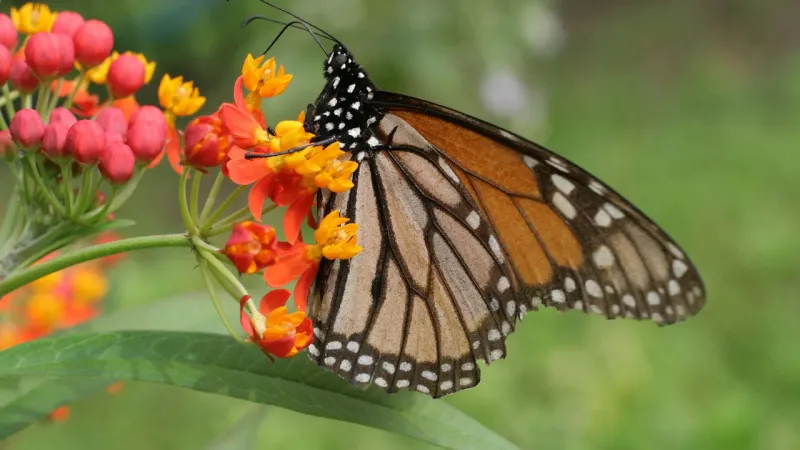
One of the fastest ways to undermine a monarch habitat planting is to reach for an insecticide when aphids or other insects show up on the milkweed. Aphids are common on milkweed and alarming to look at, but broad-spectrum sprays will kill monarch eggs and caterpillars along with the pests.
Travis County AgriLife Extension’s butterfly gardening guidance recommends integrated pest management: monitor the problem first, set a threshold for action, favor biological or cultural controls, and use least-toxic, targeted treatments only when intervention is genuinely necessary. Routine spraying has no place in a habitat planting.
Tropical milkweed (Asclepias curassavica) is the other common mistake worth addressing directly. It is widely sold, monarchs will use it, and it is tempting to grab it at a big-box garden center when native milkweed is hard to find.
The problem is that tropical milkweed can remain green through mild Texas winters, which encourages monarchs to breed when they should be migrating. Research on tropical milkweed and monarch reproductive development found that exposure to non-native tropical milkweed promotes reproductive activity in migratory monarchs, disrupting the diapause state that allows them to complete migration.
Persistent tropical milkweed in warm southern regions is also associated with higher transmission rates of the protozoan parasite Ophryocystis elektroscirrha (OE).
If you already have tropical milkweed in your yard, the recommended step is not to remove it entirely but to manage it carefully. Monarch Joint Venture’s guidance on cutting back tropical milkweed advises cutting plants back to about six inches during fall and winter and removing any regrowth during that period.
Native milkweed is the simpler default because it goes dormant naturally and does not create the same year-round breeding trap.
One additional note on safety: the USDA NRCS green milkweed plant guide describes green milkweed as poisonous to livestock, although animals generally avoid it. If you keep goats, sheep, or other grazing animals, prevent them from accessing your milkweed planting.
The concern is specifically about ingestion by livestock, not about ordinary garden contact.
Let the habitat improve over time
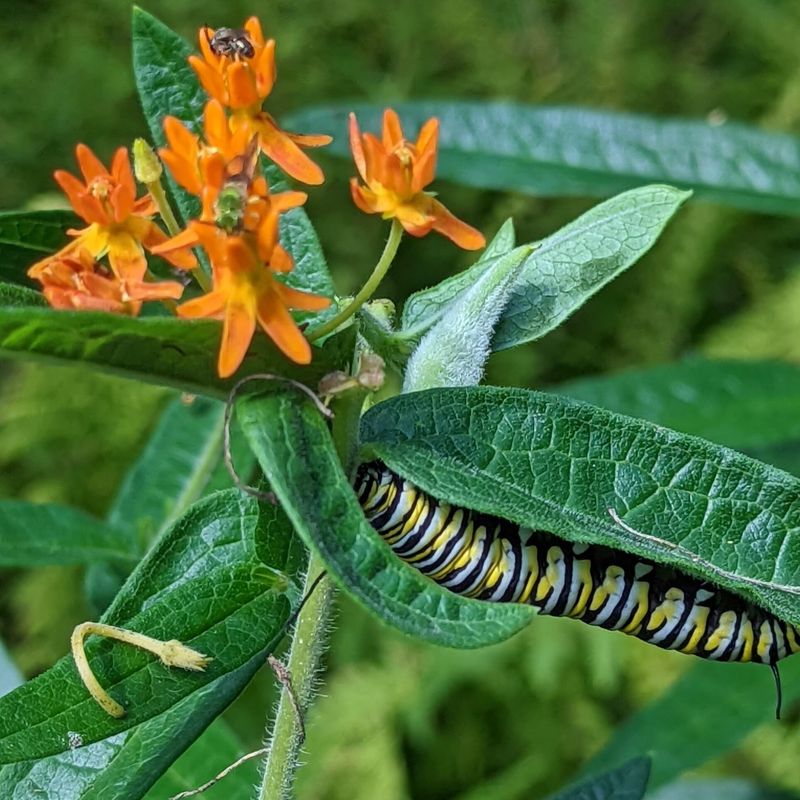
A newly planted Zizotes plug will not transform your yard into a monarch waystation overnight, and that is fine. Monarch Joint Venture’s planting guidance is clear that establishment takes time, and TPWD notes that some native milkweeds can take several years to reach reproductive maturity.
Water your plug consistently through the first season, keep the area free of broad-spectrum insecticides, and let the root system develop at its own pace.
During hot, dry stretches, your milkweed may look sparse or even appear to die back. Monarch Joint Venture’s roadside habitat FAQ explains that some important Texas milkweeds emerge in spring, become difficult to find in midsummer, and then recover when late-summer or fall conditions improve.
A bare-looking plant is not necessarily a dead one; give it time before pulling it out.
Add your fall nectar plants alongside the milkweed so that the full habitat picture develops together. Whether monarchs show up in any particular fall depends on weather, drought, wind, and conditions across the entire migration corridor – factors no single yard can control.
What you can control is the quality of what you offer. A yard with an established native milkweed, a succession of fall flowers, and no insecticides is genuinely more useful to monarchs than one without those things, and that improvement compounds every season the planting matures.