
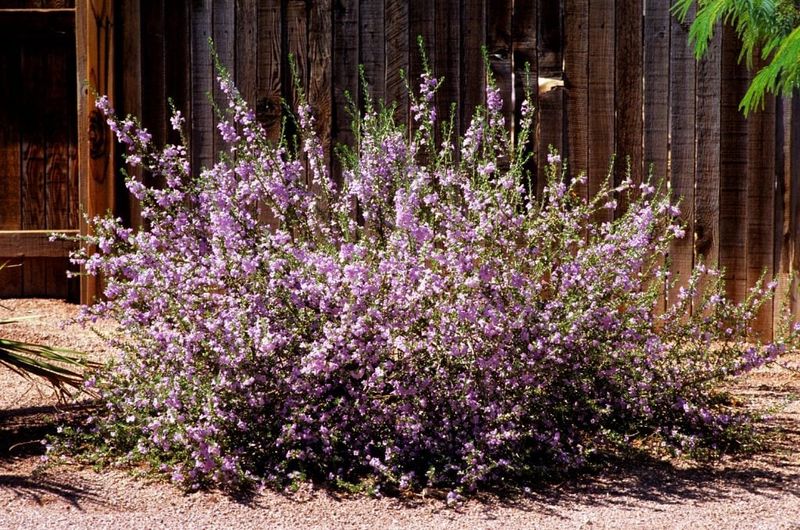
Scorpions showing up around the house is one of those Texas realities that nobody enjoys, and plenty of homeowners are searching for a plant that might help. Texas sage, also called cenizo or barometer bush, is a beautiful native shrub that earns a real place along a sunny fence line in Central, South, and West Texas.
What it cannot do, though, is repel scorpions or drive them off your property. Pairing a well-placed Texas sage border with smarter yard habits is the honest, practical approach that actually moves the needle on reducing scorpion encounters.
Texas sage makes a strong native fence-line choice

Cenizo goes by several names depending on who you ask: Texas sage, barometer bush, and its botanical name, Leucophyllum frutescens. All three refer to the same tough native shrub from Texas and northern Mexico that has been anchoring xeric landscapes, shrub borders, and mass plantings for generations.
The Native Plant Society of Texas documents it as a genuine Texas native adapted to the state’s heat and periodic drought, making it a reliable choice where many ornamentals struggle and fail.
Picture a defined, maintained fence-line row of cenizo: silvery-green foliage that catches the afternoon light, flushes of violet-purple blooms that appear after summer rains, and a growth habit that stays dense enough to form a soft visual screen. At maturity, most plants reach five to eight feet tall and wide, giving a fence line real structure without requiring constant intervention.
That combination of low water demand, heat tolerance, and ornamental appeal is what makes Texas sage worth planting.
The key word in that description is “ornamental.” Texas sage earns its spot along the fence because it is genuinely well-suited to the Texas landscape, not because any controlled research has demonstrated that the living shrub changes how scorpions behave. Homeowners who plant it get a drought-tolerant native border that looks good and handles triple-digit summers.
That is a legitimate payoff on its own, and it is the honest reason to put this shrub along your fence line.
Texas sage is not a proven scorpion repellent
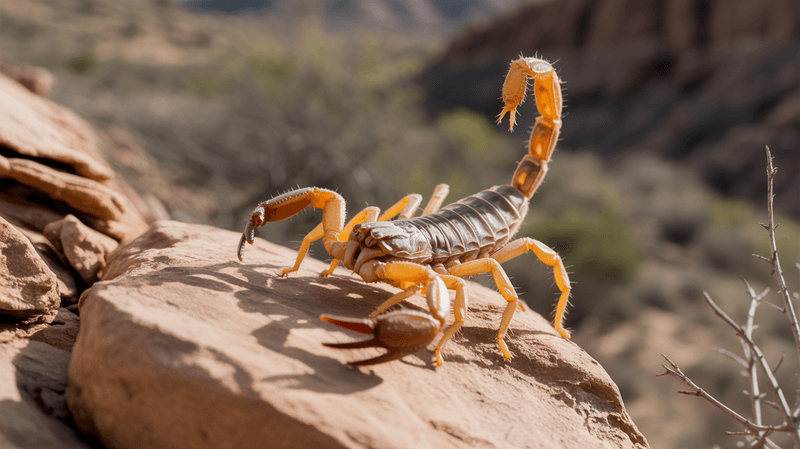
Gardening websites have a long tradition of recommending fragrant plants as pest barriers, and scorpions are no exception to that pattern. Lavender, rosemary, mint, marigolds, and citronella all appear regularly on lists of plants that supposedly keep scorpions away.
Clemson Cooperative Extension guidance on aromatic pest-repellent plants makes an important distinction: even where some concentrated plant-oil research exists, that finding does not automatically translate to an undisturbed outdoor shrub producing a large enough, persistent scent plume to change pest behavior in an open yard. An oil applied directly to a surface and a shrub growing quietly in the sun are very different situations.
Texas sage has not cleared that bar. The authoritative guidance reviewed for this article, including resources from Texas A&M AgriLife Extension, focuses on managing shelter, reducing prey insects, sealing entry points, and maintaining clearance around structures.
None of it points to a native plant as a chemical or sensory shield against scorpions. Texas A&M AgriLife’s guide to venomous terrestrial animals confirms that scorpion management centers on habitat and structural control, not planting choices.
What Texas sage can do is contribute to an orderly, inspectable landscape. A well-maintained border is easier to monitor than a tangle of overgrown vegetation, and a yard that is regularly tended has fewer opportunities for debris and clutter to accumulate.
That is the real landscape value cenizo brings to the scorpion conversation: not repellent chemistry, but a cleaner, more manageable perimeter that supports the hands-on steps that actually work.
Choose a sunny, well-drained site for the shrub
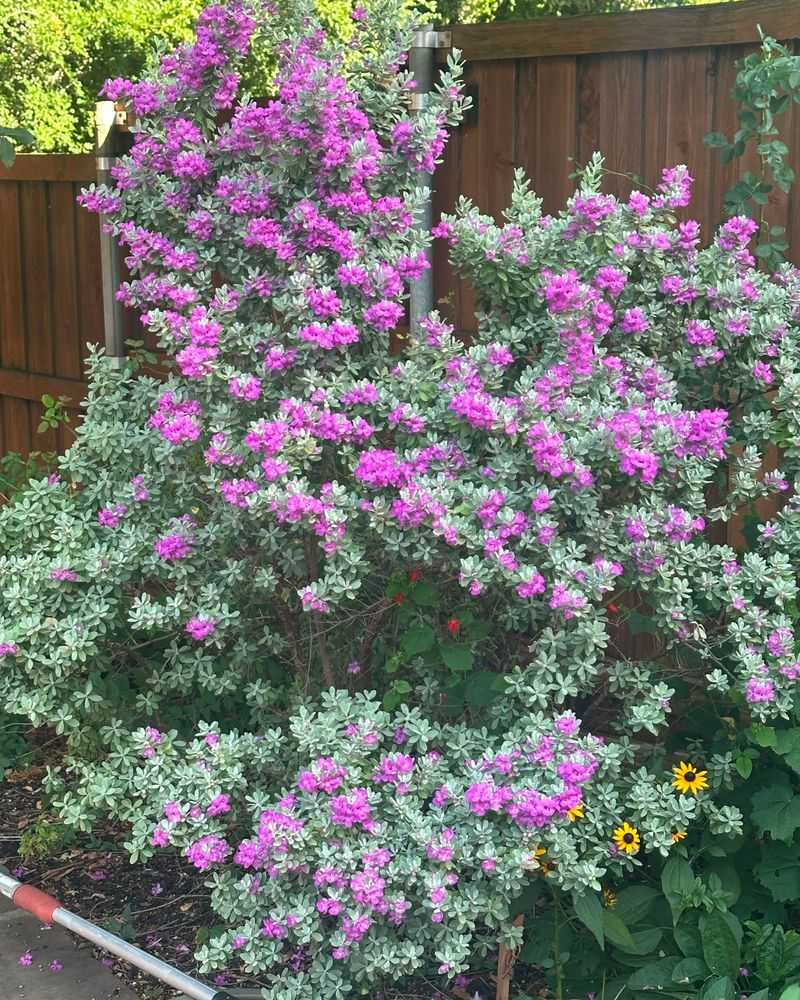
Full sun and well-drained soil are the two conditions Texas sage genuinely requires. Give it both and the shrub largely takes care of itself through heat and drought.
Put it in shade or heavy clay that holds water after rain and the plant declines, sometimes quickly. The Native Plant Society of Texas profile for Leucophyllum frutescens is clear that wet or poorly drained conditions create problems, so gardeners in East Texas or along the Gulf Coast with heavier, wetter soils should evaluate site drainage carefully before committing to a row of cenizo.
The shrub’s strongest regional fit is in dry, sunny parts of Central, South, and West Texas, where alkaline, rocky, or sandy soils and long, hot summers match exactly what the plant is built for. Texas Parks and Wildlife’s Wildscapes program encourages native plantings that suit local conditions, and cenizo fits that standard well in those regions.
Treating it as a universal Texas plant, though, overstates the case.
Placement along a property boundary rather than directly beside the house is also a deliberate choice worth making. University of Arizona Cooperative Extension pest-proofing guidance recommends keeping vegetation trimmed away from walls, doors, and windows so that the perimeter around the structure stays visible and easy to inspect.
A fence-line border accomplishes that separation. Dense shrubs planted immediately against a foundation, door frame, or window well create concealment and make it harder to spot problems before they reach the house.
Remove shelter and hiding places beside the house
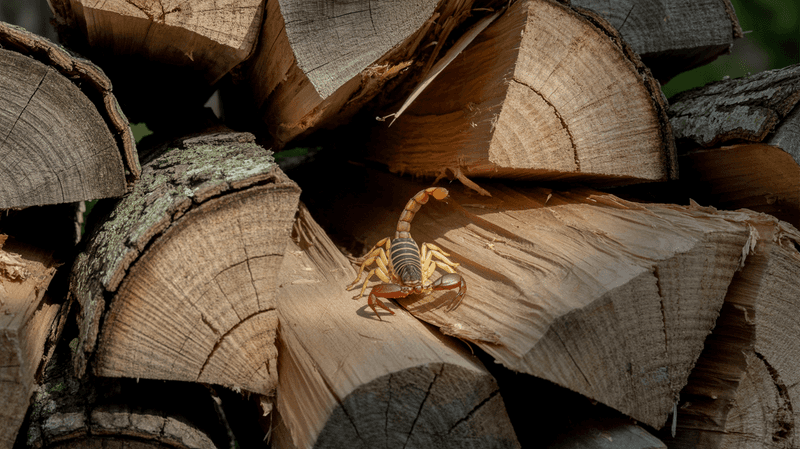
A tidy fence-line border does real work only when the area closest to the house gets the same attention. Scorpions are nocturnal and spend daylight hours tucked into tight spaces.
Texas A&M AgriLife’s venomous animals guide identifies wood piles, stored boards, and firewood as preferred scorpion shelter, and notes that scorpions can enter homes through cracks and crevices once they are close enough to the structure.
Loose boards, stacked lumber, pavers sitting flat on the ground, unused flower pots, and yard debris piled against the wall all create the kind of sheltered, shaded spaces where scorpions can remain through the day. University of Arizona Cooperative Extension scorpion guidance recommends removing these materials from the immediate perimeter of the house and storing firewood elevated and away from exterior walls.
Elevating firewood on a rack keeps it off the ground and removes the ground-level gaps that make stacked wood such useful cover.
Describing these materials as shelter or hiding places is accurate. There is no established evidence that boards, rocks, or pots draw scorpions from a distance the way a food source might attract a foraging animal.
What they do is give scorpions that are already nearby a place to stay. University of Arizona pest-proofing recommendations frame the goal accurately: reducing places where scorpions can remain near the home, not preventing them from ever crossing the property line.
That is a realistic and achievable target, and it starts with a clear, clutter-free perimeter.
Seal the routes scorpions can use to enter

A well-planted, well-cleared yard perimeter still leaves the house vulnerable if entry points stay open. Scorpions are surprisingly flat for their size and can move through gaps that look too small to matter.
University of Arizona Cooperative Extension scorpion guidance recommends inspecting and maintaining door sweeps and weather-stripping as a primary structural exclusion step, along with addressing cracks and crevices in exterior walls, foundations, and utility penetrations.
Door sweeps wear out faster than most homeowners expect, especially on doors that see heavy use or that drag slightly against the threshold. A gap at the base of an exterior door is a direct route into the house, and no amount of thoughtful fence-line planting compensates for that opening.
Check sweeps and weather-stripping at least once a season, replace worn pieces promptly, and pay attention to the seals around garage doors, which often develop gaps along the sides and bottom.
Caulk and expandable foam sealant handle most small cracks around pipes, conduit, and utility lines where they penetrate the exterior wall. University of Arizona pest-proofing recommendations note that sealing these penetrations is one of the more reliable ways to limit indoor access.
The goal here is not a perfect seal on every microscopic gap, but a practical pass on the most obvious routes: doors, windows, and the points where utilities enter the house. A Texas sage border improves the landscape; sealed entry points protect the interior.
Maintain the border without creating dense cover
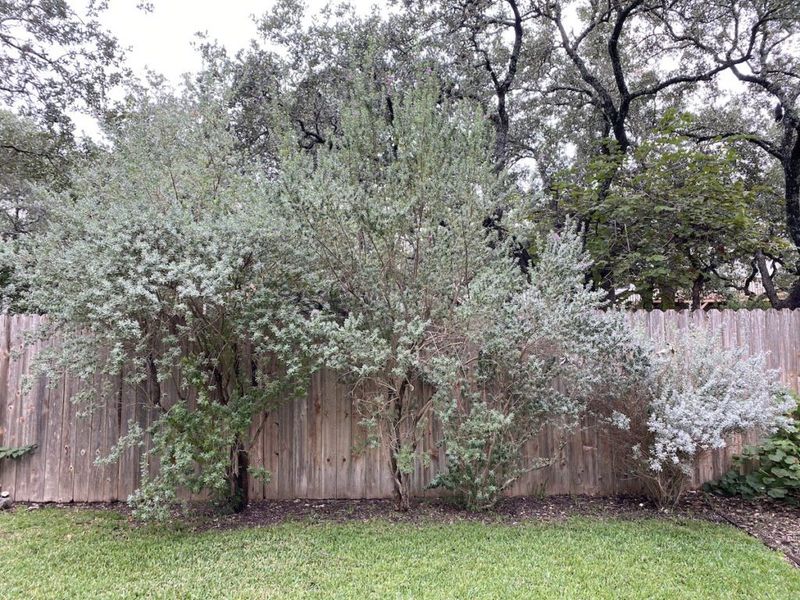
Cenizo grows steadily once established, and a fence-line row can fill in more thickly than expected within a few seasons. Letting the shrubs grow unpruned until they form a continuous, ground-level mat defeats part of the purpose of a maintained border.
University of Arizona pest-proofing guidance specifies that vegetation should be trimmed away from walls and entry points so the perimeter stays visible and accessible for inspection. The same principle applies at the fence line: keep the base of each shrub open enough that you can see what is underneath and behind it.
Leaf litter accumulating beneath cenizo is worth managing too. Decomposing leaves create a moist, shaded layer at ground level that suits a range of small invertebrates.
Raking or blowing out the base of the shrubs a few times a season keeps that layer thin and the ground underneath drier and more exposed. Texas Parks and Wildlife Wildscapes guidance supports native plantings as low-maintenance choices adapted to local climate, and cenizo genuinely fits that description.
Lower water demand and tolerance for alkaline soils are real advantages that stand on their own, independent of pest management.
As the planting matures, the practical goal is preserving visibility and access along the fence line. The Native Plant Society of Texas notes that cenizo responds well to occasional shaping, so light pruning to maintain clearance from the fence structure and neighboring surfaces is entirely consistent with how the shrub grows.
A border you can see into and walk along is an inspectable border, and that quality is more useful than any claim about a plant’s chemistry.
Reduce prey insects and handle yard materials safely
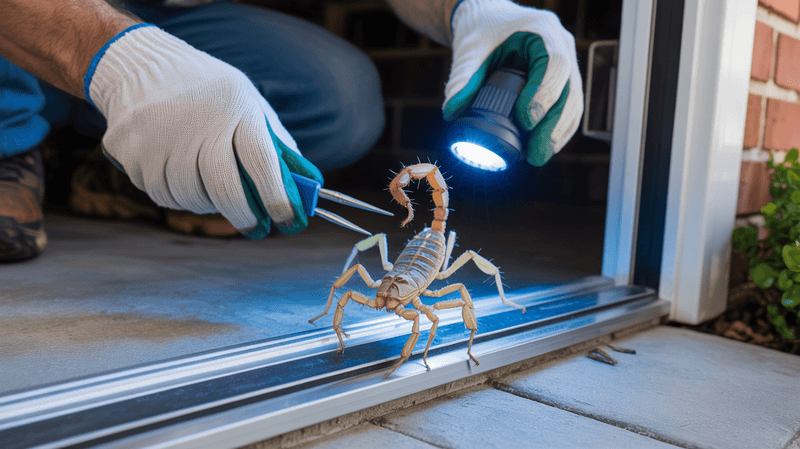
Scorpions eat insects and other small arthropods, so a yard with a heavy cricket or cockroach population can support more scorpion activity than one where those insects are kept in check. University of Arizona Cooperative Extension scorpion guidance notes that reducing prey insects can reduce conditions that support scorpions, while being clear that insect management alone will not eliminate them.
Fixing leaky outdoor faucets, reducing exterior lighting that draws moths and other insects at night, and addressing any indoor cockroach problems all contribute to a less insect-dense environment.
Personal safety habits matter as much as landscape management when scorpions are present. University of Arizona’s guide to scorpions of the Desert Southwest recommends wearing gloves every time you move boards, rocks, pots, or firewood, since scorpions shelter in exactly those places and a bare hand reaching underneath is a common sting scenario.
Shake out shoes and any clothing left on the floor or outside before putting them on, and wear shoes at night inside the house if scorpions have been found indoors.
If chemical control seems necessary, any pesticide product should be used strictly according to its label directions, which specify the sites and pests it is registered for. EPA-registered pesticide labels identify approved application sites and required precautions, including risks to children, pets, pollinators, and runoff into water.
Essential oils are not substitutes for labeled products. The gloves-and-shoes routine costs nothing and addresses the most direct exposure risk every time you work in the yard.
Use Texas sage as one layer of a safer perimeter
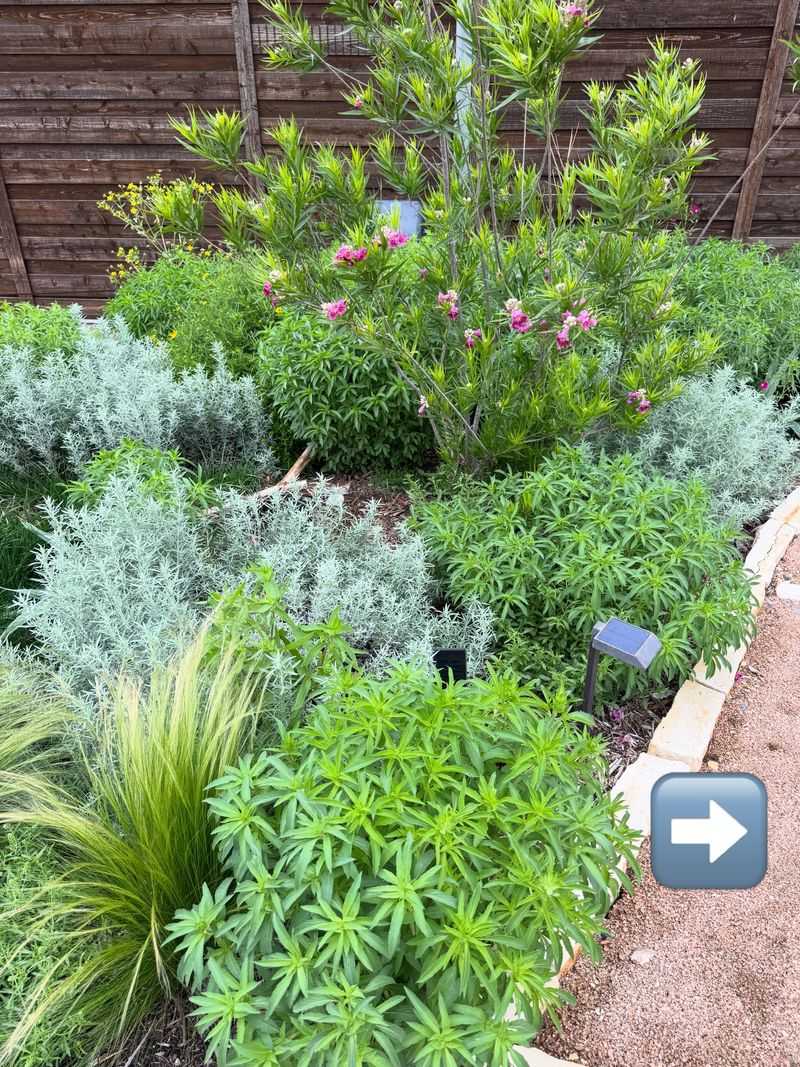
Texas sage is a genuinely good fence-line plant for the right Texas conditions. Its native status, drought tolerance, and heat adaptation make it a smart ornamental choice in dry, sunny parts of Central, South, and West Texas, and a well-maintained border contributes to a cleaner, more inspectable yard.
That is a real benefit worth having.
The shrub works best as one part of a broader routine. Pair it with cleared shelter, elevated firewood, trimmed vegetation, managed prey insects, and sealed door sweeps and entry points.
University of Arizona pest-proofing guidance and Texas A&M AgriLife scorpion management recommendations both point to those habitat and structural steps as the better-supported ways to reduce encounters around the home. The plant improves the landscape; the management routine reduces the risk.
Both belong in a Texas yard, and neither one substitutes for the other.