
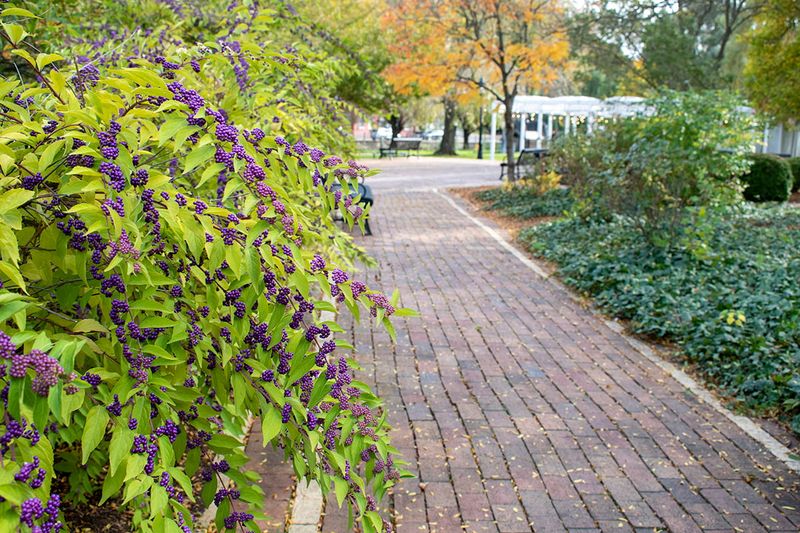
Hydrangeas are gorgeous, but keeping them happy through a Texas summer can feel like a full-time job. American beautyberry, a native shrub suited to eastern and Gulf portions of Texas and much of the Southeast, offers a different kind of seasonal payoff: lush green foliage through the warm months and vivid clusters of purple berries from late summer into fall.
The berries, not large flower heads, are the main event here, and that distinction matters when you are deciding whether this plant fits your yard. If you want lower irrigation demands after establishment, wildlife value, and a shrub that handles heat without constant coddling, beautyberry deserves a close look.
American beautyberry offers a different kind of late-season display
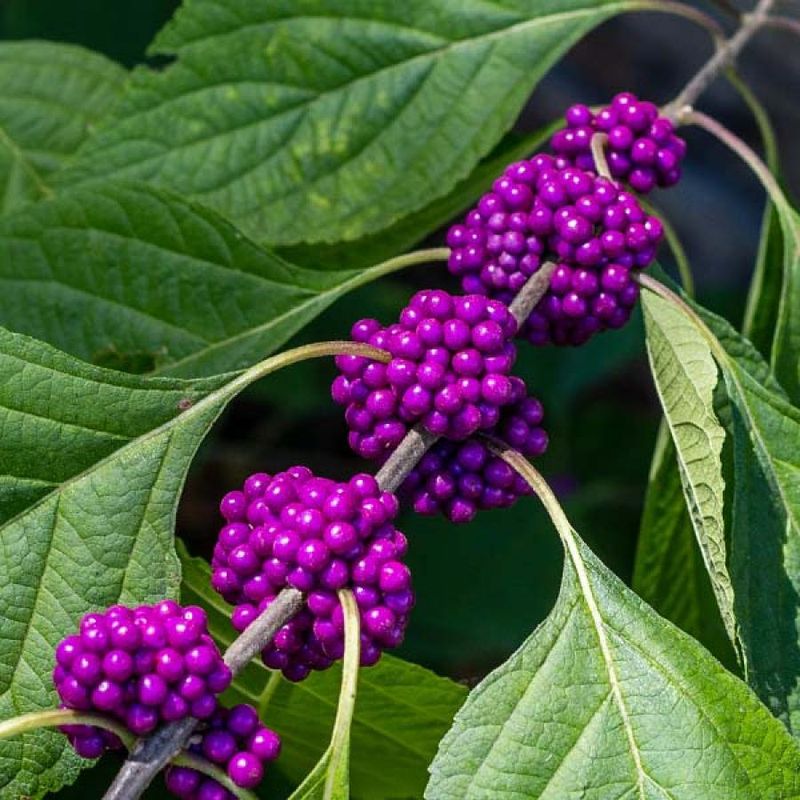
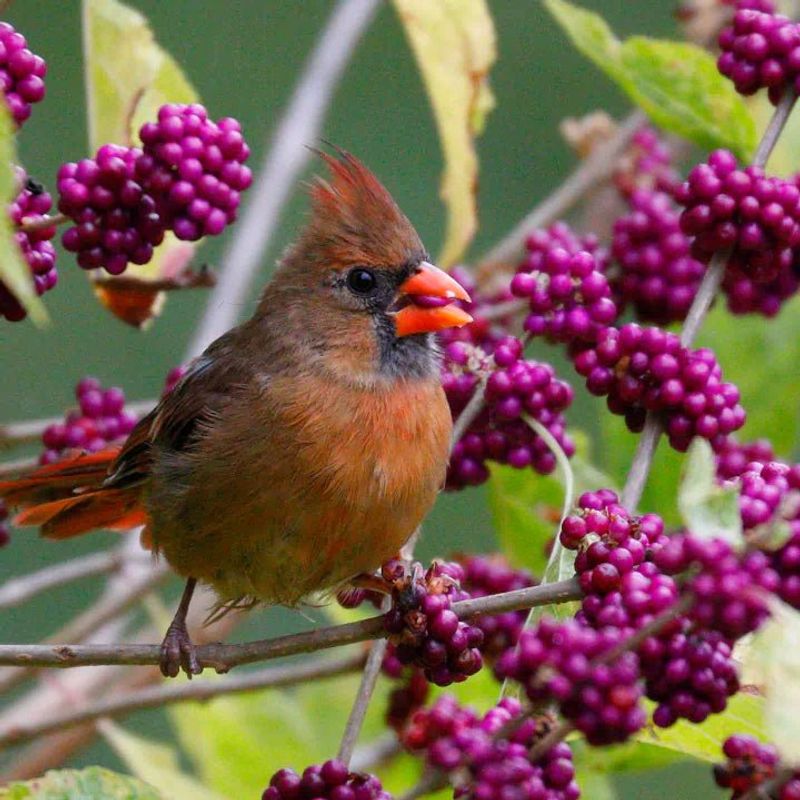
American beautyberry (Callicarpa americana) is a deciduous native shrub that earns its name in late summer, when tight rings of purple berries wrap around its arching stems like something out of a botanical painting. The flowers that come earlier, small pink or lavender blooms tucked along the stems in late spring and summer, are easy to overlook.
That contrast is worth understanding before you plant: beautyberry’s seasonal spectacle is its berry display, not its bloom.
Texas A&M AgriLife has recognized this shrub as a Texas Superstar plant, citing its adaptability, drought tolerance after establishment, cold tolerance, and limited pest and disease problems across multiple Texas regions. That designation reflects real performance data, but it applies to suitable sites, not every corner of the state.
American beautyberry is native to the eastern and Gulf regions of Texas, and gardeners in West Texas or other exposed areas should factor in local conditions before assuming the plant will perform equally well.
The shrub typically grows 3 to 8 feet tall and equally wide, with a rounded, arching habit that reads as informal rather than tidy. Its large leaves fill out the warm-season garden generously, and the berry clusters, which can come in purple, pink, or white depending on the variety, develop from roughly August through October.
NC State Extension notes that berries may even persist on bare stems after the leaves drop, carrying interest into early winter.
This is not a hydrangea look-alike. UF/IFAS describes beautyberry’s flowers as comparatively inconspicuous, with the berry display serving as the plant’s primary ornamental feature.
Homeowners who want big flower heads in saturated colors will need to look elsewhere. Those who want a substantial, heat-adapted shrub with genuine late-season drama and wildlife value are looking at a strong candidate.
Beautyberry solves a different landscape problem than hydrangea
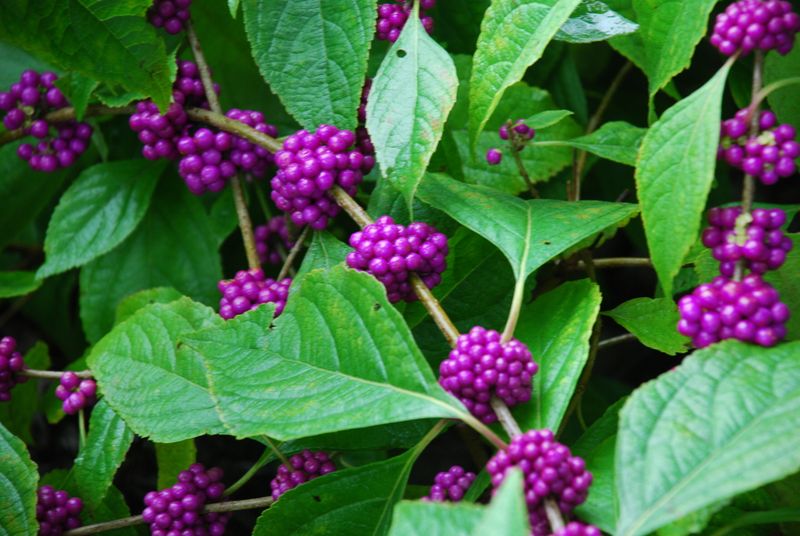
Hydrangeas are not one plant. Bigleaf hydrangeas (Hydrangea macrophyllaH. arborescens) and smooth hydrangeas () are the types most commonly sold at garden centers in the South, and they are also the most demanding when summer heat arrives.
Mississippi State University Extension explains that bigleaf and smooth hydrangeas prefer consistent soil moisture, morning sun, and afternoon shade. Their large, thin leaves wilt quickly in hot afternoon sun even when the soil has not dried out, which makes managing them through a Texas summer genuinely frustrating.
Panicle hydrangeas (H. paniculataH. quercifolia) and oakleaf hydrangeas () are a different story. University of Georgia Extension points out that panicle hydrangeas tolerate more sun and heat than the bigleaf types, and oakleaf hydrangea is itself a native of the Southeast with respectable heat and drought tolerance.
If you already grow oakleaf or panicle hydrangeas successfully in your yard, beautyberry is not necessarily a better option on performance grounds alone.
Where beautyberry makes its strongest case is for gardeners who are specifically struggling with bigleaf or smooth hydrangeas in hot, dry, or water-restricted conditions. University of Georgia’s bigleaf hydrangea guide confirms the plant’s need for consistent moisture and shade protection, requirements that are genuinely difficult to meet in many Texas landscapes without regular irrigation.
Beautyberry, once established, generally gets by with far less supplemental water in suitable sites.
The tradeoff is real. You are exchanging large, showy flower heads for vivid berry clusters, and a plant with a relatively tidy mounded form for one with a more open, arching habit.
UF/IFAS describes beautyberry’s growth as rounded but informal, which suits naturalistic or wildlife-focused plantings more than formal foundation beds. The comparison works best when the goal is heat tolerance and lower established irrigation, not a visual replica of a hydrangea border.
Its foliage, flowers, and berries create seasonal interest
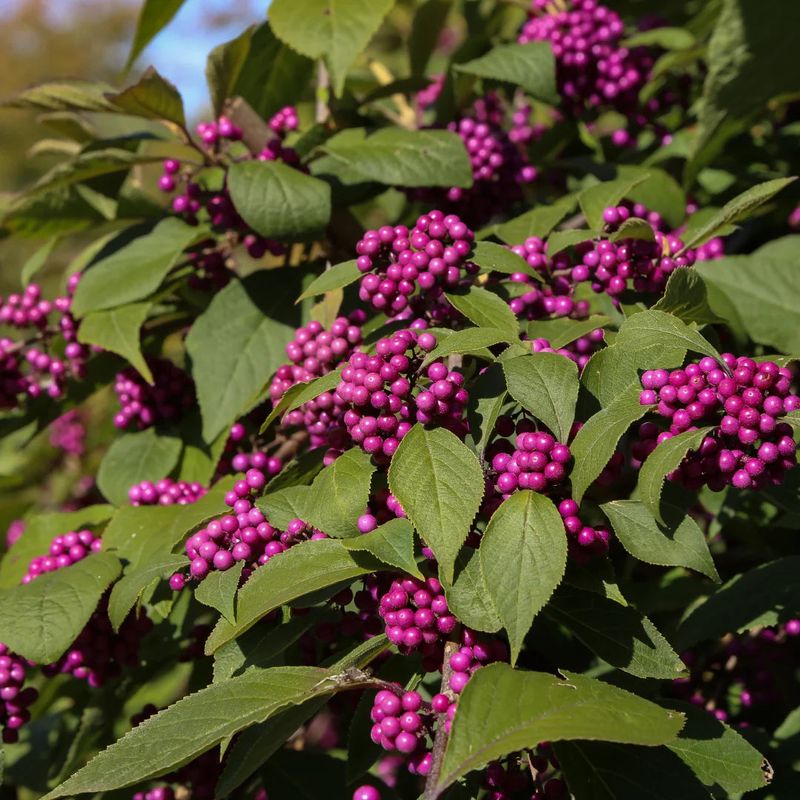
Spring growth on an American beautyberry is fast and lush. The leaves are large, softly textured, and a rich mid-green that reads almost tropical during the growing season.
By late spring, small flowers begin to appear in clusters directly along the stems, tucked at the leaf axils rather than displayed at the branch tips. They come in shades of pink, lavender, or white depending on the variety, and while they attract pollinators, they are not the reason most gardeners plant this shrub.
The berry clusters are what people remember. NC State Extension documents that the berries typically develop from August through October, forming in tight rings that encircle the stems at regular intervals.
Purple is the most common color, but pink and white cultivars exist. The display intensifies as the surrounding landscape starts to dry out and fade, which gives beautyberry an unusual quality: it looks its best precisely when many other shrubs are looking their worst.
UF/IFAS notes that the berries can persist on the bare stems after leaf drop, sometimes carrying ornamental interest into early winter. That window of bare-stem berry display is genuinely useful in a Southern garden, where evergreen structure is often taken for granted and deciduous plants can feel like a liability.
Beautyberry turns that expectation around by saving its most striking moment for the season’s end.
Winter is a different matter. Once the berries are gone, the shrub is a framework of bare stems until spring growth resumes.
Homeowners who need year-round screening or dense evergreen structure will need to pair beautyberry with other plants or choose a different shrub entirely. Used in the right context, though, its seasonal arc from leafy green to berry-studded to quietly bare is a complete and satisfying garden story.
The shrub adds food and shelter value to the planting
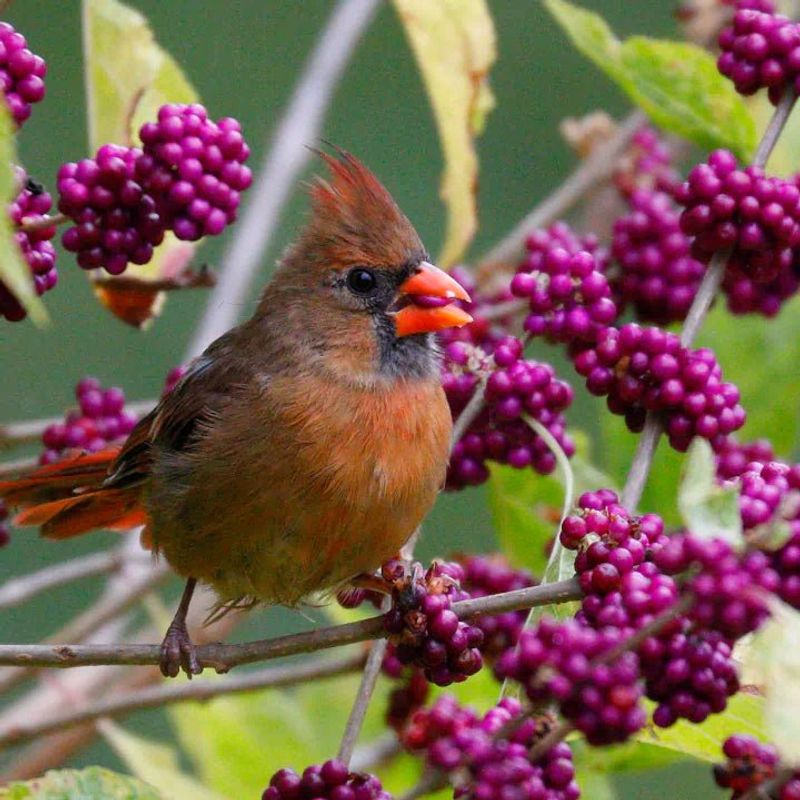
Gardeners who track which shrubs actually do something for local wildlife tend to notice beautyberry quickly. The berry clusters ripen right as many songbirds are moving through on fall migration, and the timing is not coincidental.
Texas Parks and Wildlife documents that the berries provide food for a range of songbirds and small mammals, making the plant a functional part of a yard’s food web rather than just a seasonal decoration.
The shrub’s contributions start before the berries appear. NC State Extension identifies American beautyberry as a larval host for the spring azure butterfly and the snowberry clearwing moth, two species that depend on specific host plants to complete their life cycles.
The flowers also attract native bees and other pollinators during their bloom period in late spring and summer, so the plant is earning its keep from multiple directions across the growing season.
UF/IFAS confirms the shrub’s value for wildlife as part of its broader profile, noting both the fruit’s appeal to birds and the plant’s role in supporting insect diversity. That combination of pollinator support, larval hosting, and bird-feeding value is harder to find in a single ornamental shrub than most gardeners realize.
None of this means beautyberry is right for every wildlife garden. A yard with dense shade, compacted clay, standing water, or salt spray from coastal exposure may not give the plant what it needs to fruit reliably.
The ecological benefits are real, but they depend on the plant being healthy and well-sited. Choosing beautyberry because it supports wildlife is a sound reason; choosing it without considering whether your site suits it is a step worth skipping.
Check your Texas region and planting conditions first
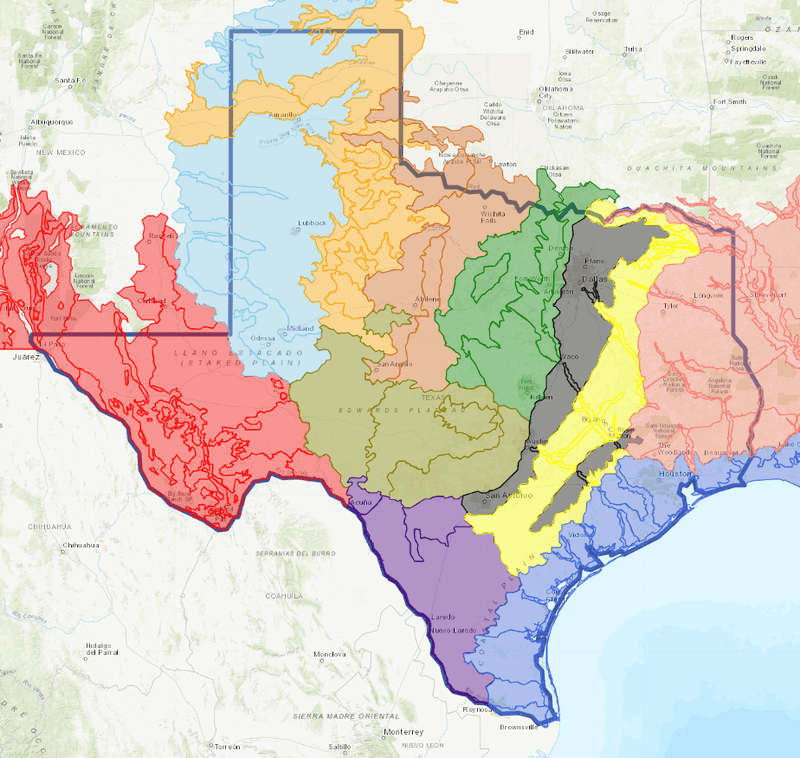
Texas is not one climate. The eastern Piney Woods, the Gulf Coast, Central Texas, the Hill Country, the South Texas Plains, and West Texas all present different rainfall totals, soil types, humidity levels, and summer temperatures.
American beautyberry is native to the eastern and Gulf portions of the state, and the U.S. Forest Service species review documents its natural range as concentrated in the Southeast and Gulf regions rather than spread uniformly across all of Texas.
Calling it a Texas native is accurate but incomplete if the implication is that it performs equally well from El Paso to Beaumont.
The Texas Parks and Wildlife Wildscapes plant list and regional vegetation guidance from TPWD’s coastal fringe forest documentation both confirm beautyberry’s presence in specific Texas ecoregions. Gardeners in East Texas, the Gulf Coast, and parts of Central Texas are working within or near the plant’s natural range.
Gardeners in West Texas, the Panhandle, or areas with alkaline caliche soils and very low annual rainfall are farther outside it and should plan accordingly, whether that means supplemental irrigation, afternoon shade, or choosing a regionally better-matched native shrub.
Soil, drainage, and salt exposure matter as much as geography. Beautyberry tolerates sand, loam, and clay if drainage is adequate, but poor drainage can cause problems regardless of region.
Coastal homeowners dealing with salt spray should note that UF/IFAS flags poor salt tolerance as a documented limitation of the species. A plant that looks perfect on paper can underperform badly in a site that does not match its actual needs.
The Texas A&M Earth-Kind Plant Selector is a practical starting point for matching shrubs to local conditions, and Earth-Kind planning guidance explicitly warns that native status does not guarantee low maintenance when a plant is placed in an unsuitable site. Checking your specific region, soil type, sun exposure, and water availability before planting is not overthinking it.
That step is what separates a thriving shrub from a struggling one. The Texas A&M AgriLife beautyberry profile confirms broad regional performance across multiple Texas areas, but it also underscores that site suitability is the deciding factor.
Give its broad, arching form enough room
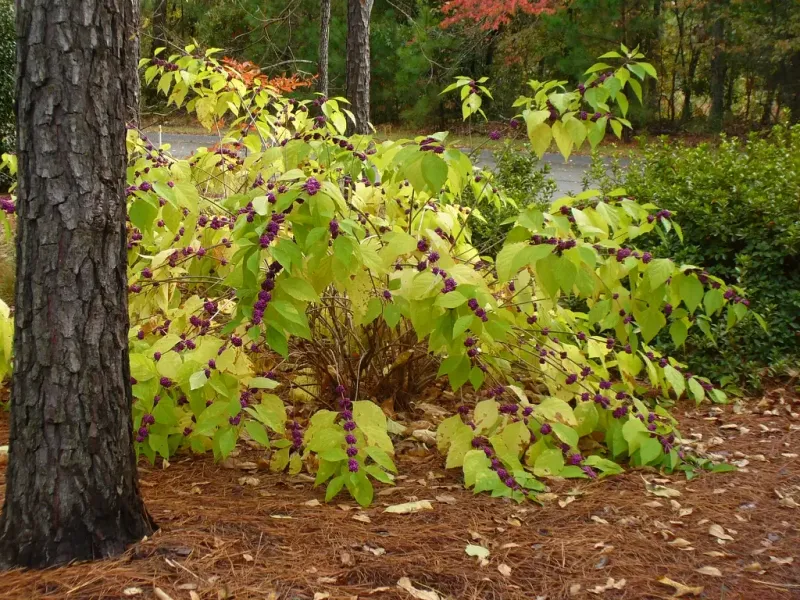
Mature American beautyberry can reach 6 to 8 feet tall and equally wide, though many shrubs stay closer to the 3- to 5-foot range in average garden conditions. NC State Extension describes the habit as rounded and arching, which in practice means the outer stems sweep outward and downward rather than staying upright.
A shrub given adequate space looks graceful and full. The same shrub crammed into a narrow foundation bed between a walkway and a wall will look crowded and awkward within a few seasons.
UF/IFAS notes that the growth habit is open and informal rather than dense and formally rounded, which is a polite way of saying that beautyberry does not naturally hold a tight, manicured shape. Gardeners who expect a shrub to stay tidy without intervention will need to prune it regularly, and heavy shearing can remove the flowering and fruiting wood that makes the plant worth growing.
A looser, more naturalistic placement suits its character far better.
Good spots include informal mixed borders, the back of a layered wildlife planting, or a spacious foundation accent where the plant can spread without crowding neighbors. UF/IFAS Hernando County recommends it as an easy-care option for naturalistic landscapes precisely because its informal habit is an asset rather than a problem in that context.
Light affects both shape and fruit production. Beautyberry grows in full sun, partial shade, or light dappled shade, but brighter conditions generally produce a stronger berry display.
In very hot, exposed locations, some afternoon protection can reduce heat stress without significantly reducing fruiting. For most Texas gardeners, a spot with morning sun and light afternoon shade strikes a practical balance between berry production and plant comfort through the hottest months.
Keep the care routine simple but active
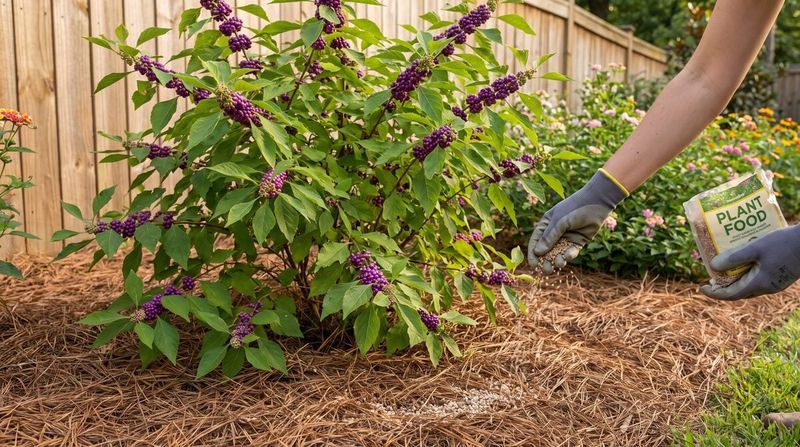
Newly planted beautyberry needs consistent watering while its roots settle in. This is not optional, and skipping it is the most common reason a promising plant fails in its first summer.
UF/IFAS’s beautyberry maintenance guide emphasizes regular irrigation during the establishment period, after which the plant’s water needs drop considerably. Once roots are established in a suitable site, supplemental irrigation can be reduced significantly, though full-sun plants and shrubs in West Texas or during prolonged drought may still need occasional deep watering to stay productive.
Mulch is one of the most useful tools for helping a new beautyberry through its first seasons. Texas A&M recommends a 2- to 3-inch mulch layer around the root zone to conserve soil moisture, moderate root temperature, and suppress competing weeds.
Apply it in a ring that keeps the mulch a few inches away from the stems to avoid rot and pest problems at the crown. That small gap makes a real difference in the long run.
Pruning is where many gardeners either overthink or underdo it. Texas A&M AgriLife and NC State Extension both recommend pruning in late winter or early spring, before new growth begins, because beautyberry flowers and fruits on new wood.
Cutting older stems back to roughly 6 to 12 inches from the ground can encourage compact, vigorous regrowth, which is useful if the shrub has become overly large or leggy. For a plant in a spacious spot where size is not a concern, selective thinning of the oldest stems is a gentler approach that preserves the natural arching form and keeps fruiting wood coming consistently.
UF/IFAS cautions against constant shearing, which removes the stems that would otherwise produce berries and can gradually undermine the plant’s natural character. Beautyberry rewards a light editorial hand more than it rewards a heavy one.
The goal is to keep the plant at a manageable size and shape without sacrificing the late-season display that makes it worth growing in the first place.
Choose it for berries and habitat, not hydrangea-like structure
Before planting beautyberry, run through a short checklist of what the shrub actually is and is not. It is deciduous, meaning bare stems from roughly late fall through early spring.
It is open and arching, not dense and formally rounded. It can spread 6 to 8 feet wide, so a small foundation bed is likely the wrong spot.
UF/IFAS documents poor salt tolerance, which rules it out for sites with regular salt spray exposure along the coast. And in West Texas or other regions outside its natural range, consistent performance is not guaranteed without supplemental irrigation and possibly afternoon protection.
Identification also deserves a moment of attention. Purple-berried plants are not all the same, and berry color alone is not enough to confirm what you have.
UF/IFAS guidance on distinguishing beautyberry from pokeweed points out that the two plants are sometimes confused, and nonnative beautyberry species also exist. American beautyberry’s most reliable identifier is the tight ring of berries that encircles the stems at the leaf nodes, a pattern that pokeweed and most other purple-berried shrubs do not share.
Choose beautyberry when your priorities are seasonal foliage interest, vivid late-summer-to-fall berries, wildlife value, and lower irrigation demands after the plant is established. It earns its place in an informal border, a naturalistic wildlife planting, or a spacious accent spot where its arching form has room to develop.
UF/IFAS Hernando County frames it well as a plant that delivers genuine biodiversity value with modest care requirements in the right setting.
Skip it when you need a year-round evergreen screen, a dense formal shape, or something that approximates the large flower heads of a bigleaf hydrangea. Use the Texas A&M Earth-Kind Plant Selector to cross-check whether beautyberry or a different native fits your specific site conditions before you plant.
A shrub that matches its location earns its keep; one that is fighting its site never quite does.