
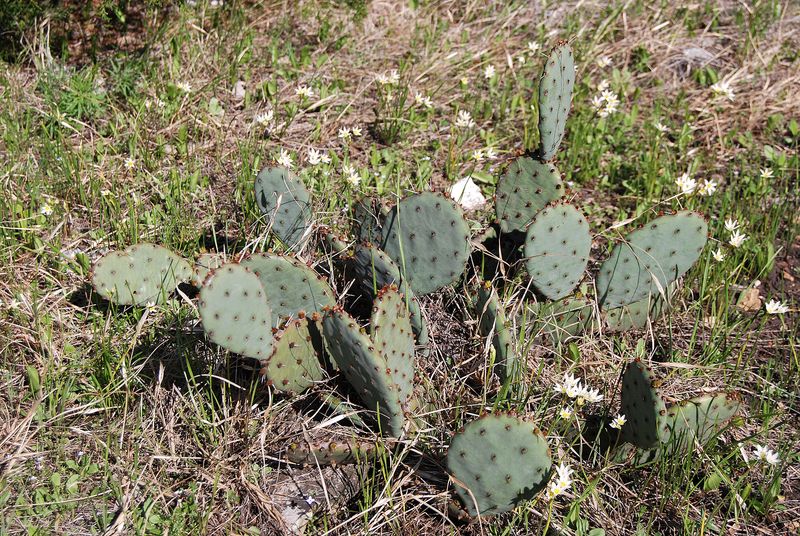
Few backyard sightings stop a Texan in their tracks quite like a Greater Roadrunner trotting across the yard, head bobbing, tail cocked, hunting anything that moves. One plant keeps showing up in the same landscapes where these birds live: prickly pear cactus, a group of Opuntia species that grow across most of Texas.
Understanding what prickly pear actually does for roadrunners, and what it cannot do about scorpions, helps you make smarter choices for your yard and your family’s safety.
Prickly Pear Can Be Part of Roadrunner Habitat in Texas
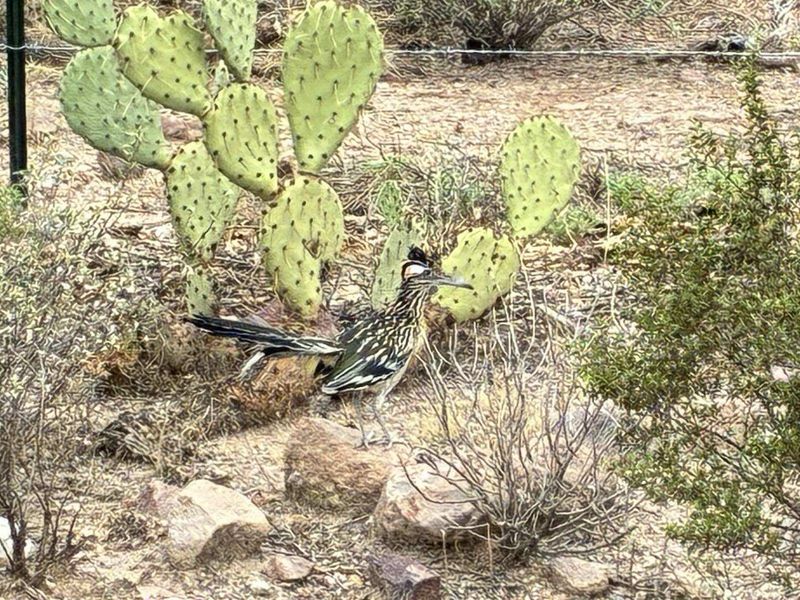
Walk through almost any patch of South or West Texas brushland and you will find prickly pear growing alongside mesquite, scattered shrubs, and open ground. That combination is exactly the kind of landscape where Greater Roadrunners spend their lives.
Texas Parks and Wildlife notes that roadrunners occur in habitats containing mesquite, prickly pear, scattered shrubs, and open feeding areas, and that the birds eat prickly pear as part of their diet. The connection between the plant and the bird is real, but it comes with important context.
“Prickly pear” is not a single species. The name covers multiple Opuntia species and naturally occurring forms, and Texas A&M’s range plant resources describe the genus as widespread across Texas ecoregions, from rocky West Texas soils to the heavier clays of the Coastal Plains.
The right species or cultivar for your yard depends on where in Texas you live, so selecting locally appropriate Opuntia matters more than grabbing the nearest cactus pad at a nursery.
Prickly pear can plausibly contribute to a roadrunner-friendly yard in three ways: as food, since birds eat the fruit and pads; as thorny cover that provides shelter from predators and hot sun; and as potential nesting structure. Texas Parks and Wildlife’s roadrunner profile confirms that the birds raise young on insects, lizards, snakes, and scorpions, and that prickly pear is part of their broader habitat.
Greater Roadrunners are year-round Texas residents. The Texas Breeding Bird Atlas records them in all Texas counties, though they are most common in West Texas and the South Texas brushlands and noticeably less common in the heavily forested Pineywoods region.
Planting prickly pear may improve habitat suitability in areas where roadrunners already move through, but it cannot guarantee a bird will take up residence. A yard represents only one small patch within a much larger territory that a single roadrunner actively patrols.
Scorpions Are Only One Item on a Roadrunner’s Menu
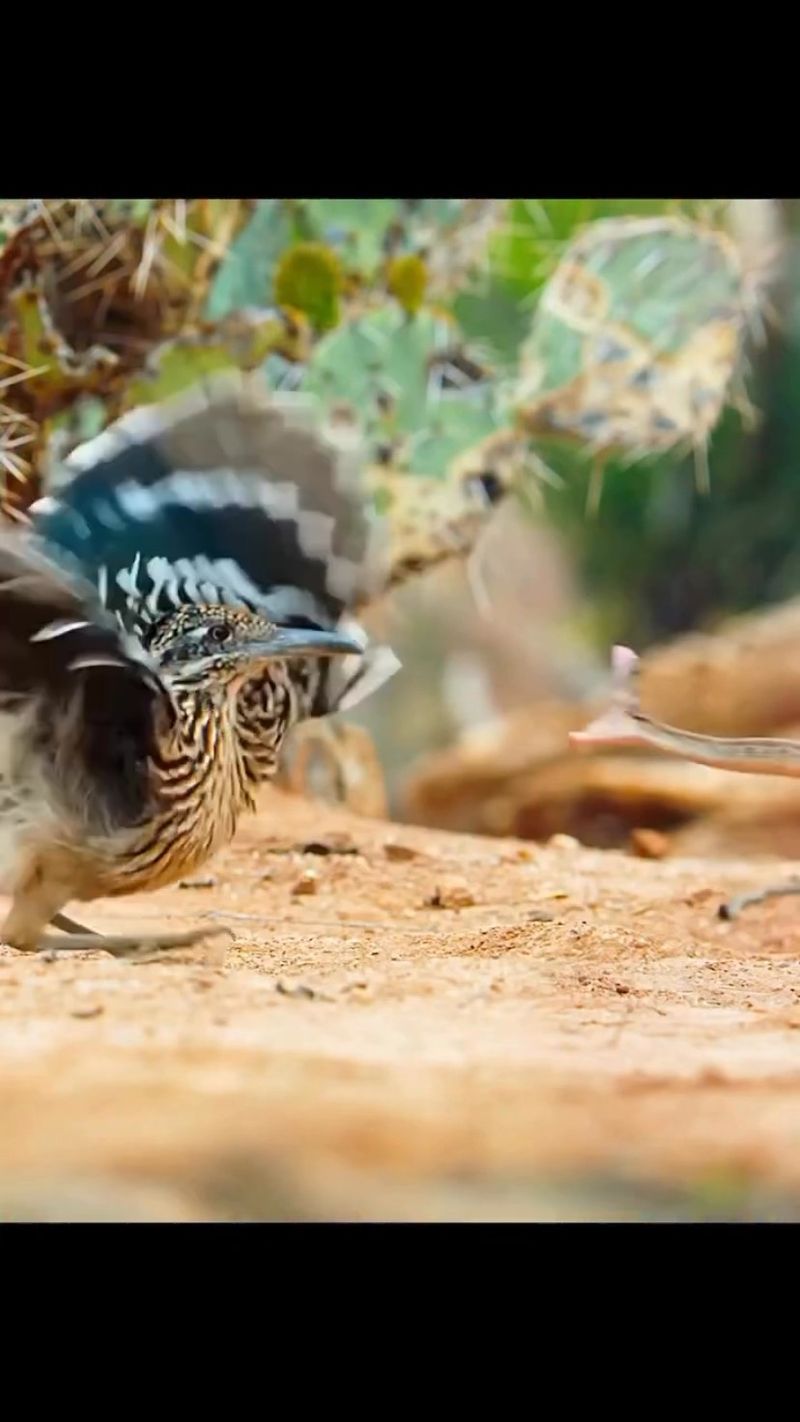
Greater Roadrunners are opportunistic hunters, and that word “opportunistic” carries a lot of weight. Texas Natural Resources Server’s notes on roadrunners describe a diet that shifts with whatever the bird can catch: large insects, grasshoppers, beetles, lizards, small snakes, rodents, nestling birds, seeds, and fruit.
Scorpions do appear on that list, but as one item among many, not as a specialty or a preference.
Watching a roadrunner snatch a scorpion off the ground is genuinely satisfying, and the bird’s speed and thick bill make it well equipped for the job. Still, a roadrunner hunting across your property has no particular reason to prioritize scorpions over a grasshopper, a gecko, or a ripe cactus fruit.
The bird follows opportunity, not a pest-control schedule.
No published evidence establishes a measurable link between roadrunner presence and reduced scorpion counts around a home. A yard that attracts roadrunners will have a bird that occasionally eats scorpions, but that is different from meaningful household-level control.
The gap between “roadrunners eat scorpions” and “roadrunners will clear your yard of scorpions” is wide enough to drive a truck through. Treating the bird as a biological exterminator sets an expectation the evidence cannot support, and it could lead a homeowner to skip the structural precautions that actually reduce scorpion risk inside the house.
The practical takeaway is straightforward: support roadrunners because they are remarkable birds that belong in Texas landscapes, not because they will solve a pest problem. The diet breadth that makes them such effective predators is the same reason they cannot be relied upon to target any single species consistently.
Design a Semi-Open Yard Instead of a Cactus Wall
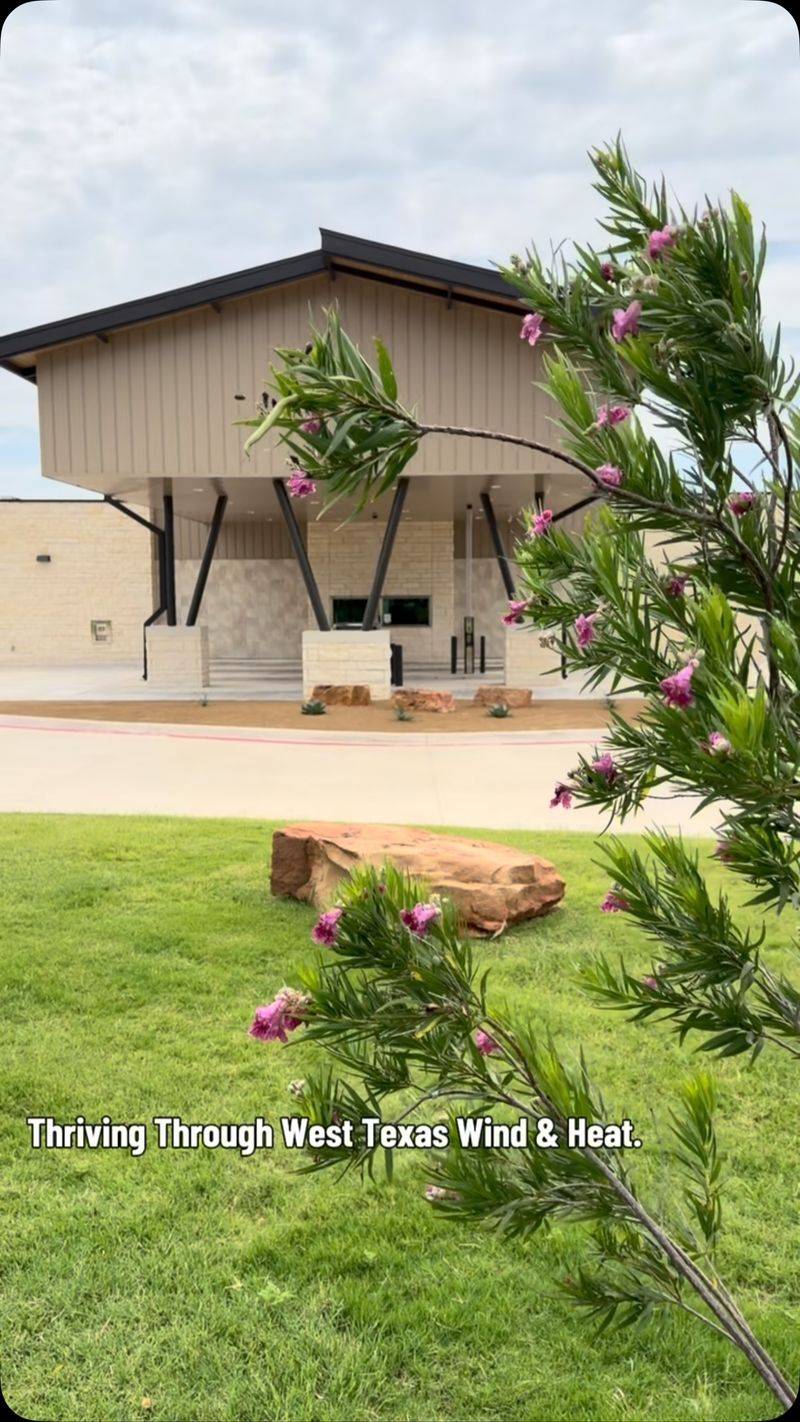
Roadrunners do not thrive in dense, wall-to-wall vegetation. They are ground hunters that need room to run, and their preferred landscape is a mix of open or short-ground areas for walking and foraging combined with scattered sturdy plants, cacti, shrubs, or low trees for shelter, perching, and nesting.
Habitat modeling research from West Texas confirms that the birds select landscapes with this semi-open structure rather than continuous brush or turfgrass monocultures.
Translating that into a home landscape means thinking in patches rather than borders. Place a grouping of prickly pear or thorny native shrubs where they offer cover and potential nesting sites, then leave adjacent areas of open, short, or bare ground where a roadrunner can move freely.
A gravel pathway, a dry creek bed, or a stretch of native low-growing ground cover can all serve as the open corridor the bird needs. A solid hedge of cactus or a dense thicket planted wall-to-wall does the opposite of what roadrunners prefer.
Scale matters here, and it matters a great deal. A study of Greater Roadrunner home ranges found mean territories of roughly 43 hectares, or about 106 acres, among the birds studied in West Texas.
A typical suburban or rural residential yard covers a fraction of that territory. Your prickly pear planting is one small node in a much larger landscape the bird already navigates on its own terms.
That context is not discouraging. It simply means that the yard design you choose can make your property a more useful stop along a roadrunner’s daily route without needing to supply the entire habitat by itself.
Connecting your planting to natural areas, neighboring brushy properties, or even a strip of native vegetation along a fence line increases its value as part of a larger patch network. Think of the yard as one piece of a bigger puzzle, not a self-contained wildlife reserve.
Choose and Place Opuntia for Your Texas Region
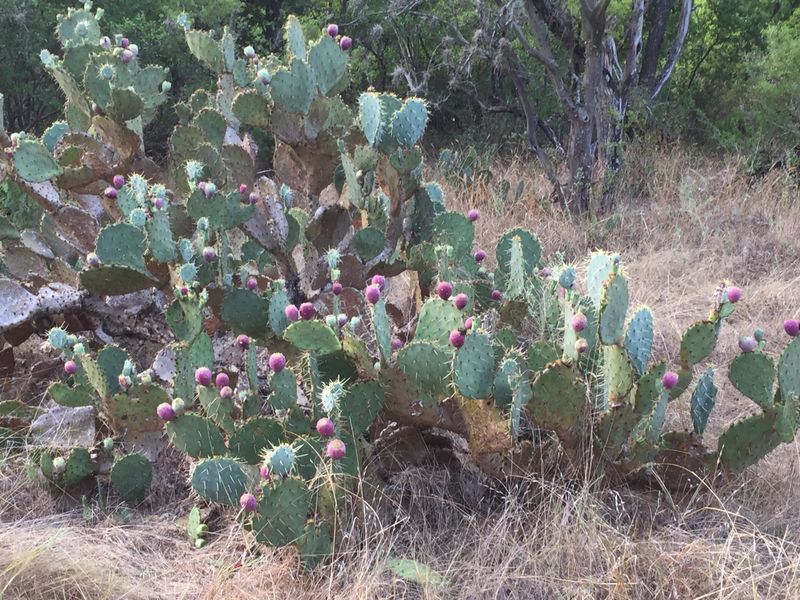
Matching the right Opuntia to your corner of Texas takes a little research, but it pays off in a plant that establishes easily, stays proportionate to the space, and actually belongs in your local plant community. Texas A&M’s range plant database describes prickly pear as highly drought-tolerant and broadly adapted to the state’s varied soils, from the shallow rocky ground of the Edwards Plateau to the heavier clays of the Gulf Coast prairies.
The species and forms that grow naturally near you are the safest starting point.
Full sun is non-negotiable. Prickly pear planted in partial shade tends to grow weakly and may rot at the soil line.
Well-drained soil is equally important; standing water after rain is one of the fastest ways to lose a cactus. Sandy or rocky soils work best, though some Opuntia tolerate clay if drainage is not completely blocked.
Central Texas Gardener’s prickly pear resource notes that the plant needs minimal supplemental water once established, making it a strong fit for yards under municipal water restrictions.
Placement deserves careful thought before you dig. UC Agriculture and Natural Resources’ Opuntia safety guidance recommends keeping thorny Opuntia away from walkways, children’s play areas, pet routes, and any garden edge that gets handled frequently.
Pads break off more easily than most gardeners expect, and a detached pad lying in mulch or grass can root and establish a new plant before anyone notices. AgriLife Extension’s guidance on controlling prickly pear makes clear how readily the plant spreads when pads contact soil, so plan for that tendency from the start rather than after the fact.
Spineless or nearly spineless Opuntia selections are available at many Texas nurseries and are considerably safer around people and pets. They are a reasonable choice for high-traffic areas.
However, the research available here does not establish that spineless forms provide the same nesting protection or thorny cover value as spiny types. If supporting roadrunner habitat is a priority, at least some thorny Opuntia placed in a lower-traffic area of the yard is worth considering.
Texas Parks and Wildlife’s Wildscapes tips encourage matching native plantings to local conditions, which applies equally to cactus selection.
Support the Food Web Around the Cactus
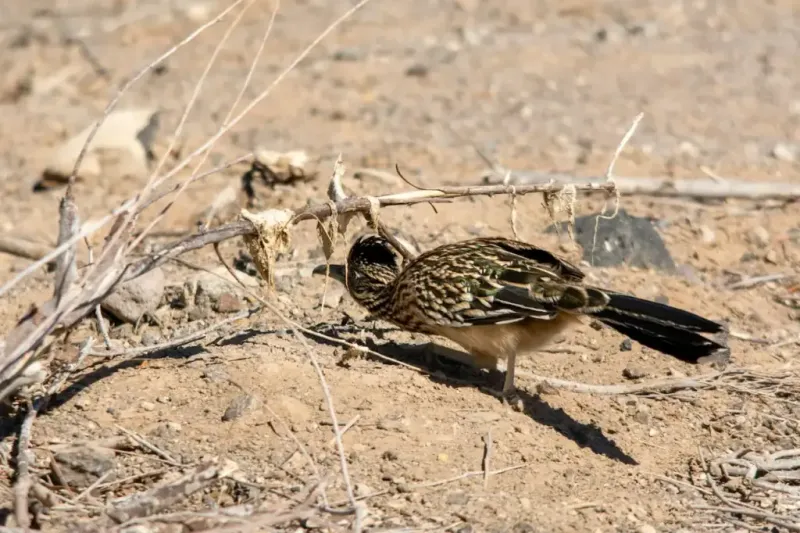
Prickly pear is one component of a habitat, not the whole thing. Roadrunners and other Texas wildlife depend on a functioning food web, and a single cactus cluster cannot supply it.
Native grasses, flowering forbs, shrubs, and low trees each contribute something the cactus alone cannot: insect diversity, seed sources, varied shelter heights, and the kind of layered structure that supports multiple species across seasons.
Texas Parks and Wildlife’s native plant resources emphasize that native vegetation provides both food and shelter for birds and other wildlife in ways that exotic or ornamental plants often cannot match. Native insects, which evolved alongside native plants, are a critical part of that system.
Roadrunners eat large numbers of insects throughout the year, and those insects need native host plants to complete their life cycles.
Routine insecticide applications are worth reconsidering when supporting birds is a goal. Texas Parks and Wildlife’s habitat resources for Bird City Texas and Tucson Audubon’s Greater Roadrunner habitat card both advise against broad-spectrum pesticide use in wildlife-friendly yards because reducing insect populations directly reduces the prey available to birds.
If a specific pest requires treatment, following the product label and targeting the application narrowly is far less damaging than a blanket spray program.
A wildlife-friendly yard also comes with honest tradeoffs. Prickly pear and brushy native plants create cover that benefits roadrunners, but that same cover can shelter lizards, rodents, insects, and occasionally scorpions.
The goal is a functioning habitat, not a curated food supply designed exclusively to produce more roadrunner sightings. A yard that hums with native life is more valuable to wildlife than one managed to favor a single species, and it is a more realistic and sustainable outcome for the gardener too.
Prickly Pear Will Not Repel or Eliminate Scorpions
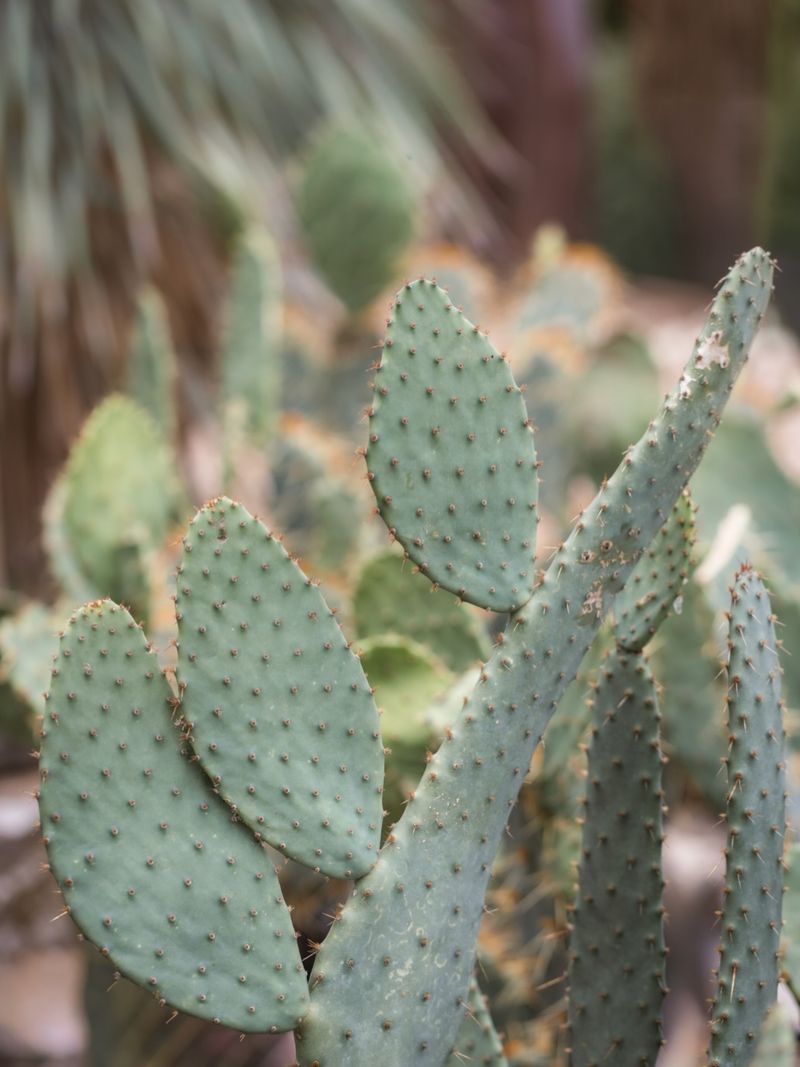
Somewhere along the way, the idea took hold that planting prickly pear would send scorpions running. That premise does not hold up.
Prickly pear has no documented repellent effect on scorpions, and its thorny pads and dense base structure can actually provide the kind of sheltered, cool microhabitat that scorpions use. Prickly pear ecology research from the Texas Natural Resources Server describes the cactus as habitat for a wide range of organisms, not a barrier against any of them.
The scorpion-control promise attached to roadrunners is similarly overstated. Yes, roadrunners eat scorpions.
Texas A&M AgriLife Extension’s scorpion publication identifies birds as natural predators of scorpions but does not suggest that attracting them constitutes a management strategy. No evidence in the available research establishes a threshold at which roadrunner predation meaningfully reduces scorpion numbers around a structure.
The bird hunts what it encounters; it does not patrol a property for a specific pest.
Texas has many scorpion species, and their distribution, behavior, and sting severity vary by region. Assuming that a plant or a bird eliminates that risk is a mistake that could leave a household genuinely exposed.
Texas Parks and Wildlife’s roadrunner profile confirms that the bird eats scorpions as part of a broad diet, which is a far more accurate framing than portraying it as a pest-control specialist.
None of this diminishes the value of prickly pear as a habitat plant or the appeal of having roadrunners in the yard. The plant genuinely contributes to a roadrunner-friendly landscape, and the bird genuinely eats scorpions when it finds them.
The problem is the implied chain: plant this cactus, attract a roadrunner, eliminate your scorpion problem. That chain breaks at every link when tested against actual evidence.
Wildlife habitat and household pest management are two separate projects that deserve separate strategies.
Use Exclusion When Scorpions Reach the House

When scorpions are getting inside, the most effective response is cutting off their access to the building, not changing what grows in the back corner of the yard. Texas A&M AgriLife Extension’s scorpion management guide prioritizes exclusion and harborage reduction at the structure as the foundation of any control effort.
That means sealing cracks and gaps in the foundation, exterior walls, and around utility penetrations with caulk or appropriate sealant. Gaps that seem too small to matter often are not – scorpions can compress their bodies to move through surprisingly tight spaces.
Door sweeps and weather stripping are among the highest-return fixes available. A worn or missing door sweep on a garage door or exterior entry is an open invitation.
University of Arizona Cooperative Extension’s scorpion guide specifically recommends inspecting and replacing damaged sweeps and weather stripping as a primary prevention step, and the same logic applies in Texas where the striped bark scorpion is the most commonly encountered species.
Harborage management around the immediate perimeter of the structure matters as much as sealing gaps. Remove stacked firewood, lumber piles, old boards, and debris from areas directly adjacent to the house.
Keep firewood stored away from exterior walls and elevated off the ground when possible. Prune shrubs and tree branches so they do not contact the roofline, siding, or window frames, since vegetation touching the structure gives scorpions a bridge.
Utah State University Extension’s scorpion identification and management resource echoes this approach, emphasizing that reducing harborage and entry points near the building is more reliable than attempting chemical control alone.
Reducing insect prey around the exterior at night also helps, since scorpions follow their food source. Switching outdoor lighting to yellow or sodium-vapor bulbs that attract fewer insects can reduce the prey concentration that draws scorpions to walls and entry points after dark.
AgriLife Extension’s scorpion resource page reinforces that these structural and behavioral modifications address the problem at its source. None of these steps require stripping the yard of native vegetation – the goal is managing the zone immediately around the building, not eliminating habitat across the entire property.
Texas scorpion species and sting severity vary by region, so if stings are occurring or a vulnerable family member is at risk, contacting a licensed pest management professional is a reasonable next step alongside these exclusion measures.