
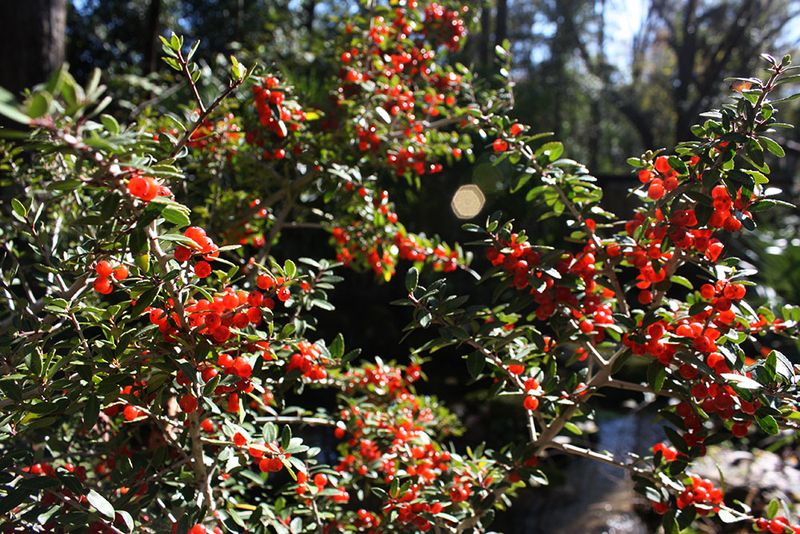
Yaupon holly is a tough, native evergreen shrub that grows across Texas and Florida, and it can do a lot more than fill a bare corner of your yard. When planted near a porch, its dense branches create the kind of layered shelter that lizards and other small wildlife naturally seek out.
House geckos already patrol porches for insects, and giving them better nearby cover may make your outdoor space more welcoming to them. Just know going in that yaupon is a habitat plant, not a guaranteed gecko magnet or a stand-alone roach solution.
Yaupon holly adds dense, year-round porch habitat
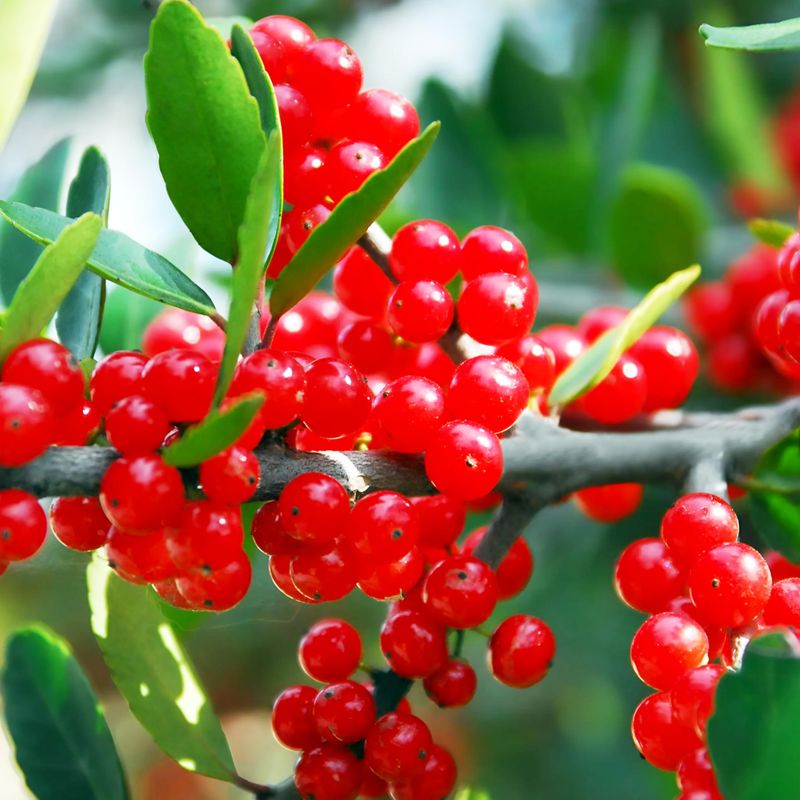
Yaupon holly (Ilex vomitoria) is one of the most adaptable native shrubs in the Southern United States. It grows naturally across Texas and Florida, tolerates full sun or partial shade, handles clay or sandy soil, and shrugs off drought and salt spray once it settles in.
UF/IFAS documentation on yaupon holly confirms it is evergreen, highly adaptable, and suitable for a wide range of landscape conditions across the region.
That evergreen density is the real draw for wildlife. Unlike deciduous shrubs that go bare in winter, yaupon keeps its leaves year-round, giving small animals consistent cover through every season.
Texas Parks and Wildlife Wildscapes guidance specifically lists thick evergreen vegetation as a key component of urban wildlife shelter, and yaupon fits that description well.
Female plants also produce clusters of small red berries that birds visit regularly, and the plant’s spring flowers draw pollinators. UF/IFAS gardening solutions coverage of yaupon notes that its wildlife value extends beyond simple cover to include food sources for birds and beneficial insects.
Here is where honest framing matters. Planting yaupon near your porch can genuinely improve the habitat value of that space.
What it cannot do is guarantee that geckos will show up or that cockroaches will disappear. Think of it as building a better environment rather than flipping a switch, and you will get far more out of this plant than any single-outcome promise could deliver.
Yaupon may complement the places geckos already use
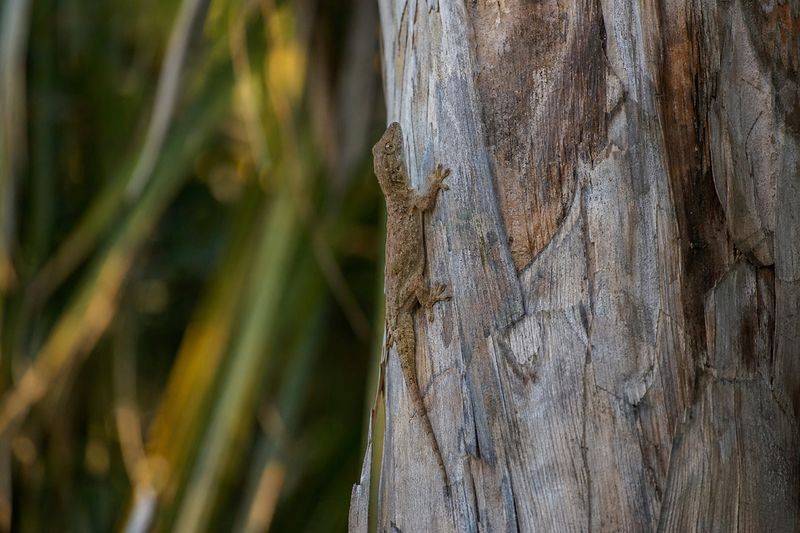
Geckos are not random visitors. They show up where conditions already suit them: warm surfaces, sheltered gaps, active insect populations, and outdoor lighting.
Adding yaupon holly near a porch builds on that existing pattern by offering one more useful feature, dense and layered cover, without replacing the structural elements that matter most to these lizards.
UF/IFAS lizard landscaping guidance recommends creating vegetation with low, medium, and high layers, combined with nearby shelter features like rock crevices, brush piles, and porch or soffit spaces. Yaupon fits naturally into that layered approach, especially when paired with shorter ground-level plants and a taller backdrop.
The plant adds cover; the structure and warmth of the building do the rest.
What the research does not show is that planting yaupon directly causes more geckos to move in. The connection is an inference drawn from lizard habitat preferences generally, not a demonstrated yaupon-specific effect.
Urban gecko habitat research found that most observed geckos used crevices and structural refuges as their primary shelter, with only a small number relying on vegetation directly. Yaupon can add value around an already suitable porch, but it is not the deciding factor.
One more detail worth getting right: the geckos most commonly seen around Texas and Florida homes are introduced species, not native wildlife. Texas A&M AgriLife Extension identifies Mediterranean house geckos and common house geckos as introduced species that have become widespread around buildings.
In Florida, UF/IFAS notes that the Florida reef gecko is the state’s only native gecko, while many house geckos seen around homes are nonnative. Welcoming them is reasonable, but calling them native wildlife is not accurate.
Light, structure, and prey have the clearest gecko link

Any honest look at what draws house geckos to a porch has to start with lights. Texas A&M AgriLife Extension reports that house geckos commonly gather around porch lights because moths, flies, and other insects concentrate there.
That insect buffet, combined with the warmth of the wall and the shelter of eaves and cracks, creates the core conditions geckos use most reliably.
Urban research reinforces that pattern at a broader scale. Buildings with artificial lights, warm surfaces, and structural crevices consistently show up as the features most closely tied to gecko observations in residential settings.
Published urban gecko habitat findings confirm the strong association between lighted structures and gecko presence, with crevices and wall surfaces serving as the primary refuges. Vegetation plays a supporting role, not a starring one.
The diet picture is worth understanding clearly, too. A peer-reviewed Texas study examined what Mediterranean house geckos actually eat, and the findings show a broad arthropod menu.
That USDA Forest Service-archived diet study found that Orthoptera, Lepidoptera, and isopods were among the most important prey categories, meaning grasshoppers, moths, and pill bugs rank high on the list. Cockroaches may show up in a gecko’s stomach occasionally, but the study does not establish that geckos regularly eat large numbers of household roaches or that their presence meaningfully reduces cockroach populations at the porch level.
What this means practically: if you want to make your porch more gecko-friendly, a well-placed light and a building with useful gaps already does most of the work. Yaupon adds habitat texture around that foundation, but it does not replace the structural and lighting conditions that geckos respond to most directly.
Create layered cover without crowding the house

Good porch habitat design keeps the plant working for wildlife without creating problems for the homeowner. The key principle is proximity without contact: yaupon should sit close enough to the porch to offer useful cover, but not pressed against siding, window frames, or walkways where it blocks access or traps moisture against the structure.
UF/IFAS lizard landscaping recommendations call for layered vegetation, meaning plants at low, medium, and high levels, paired with optional shelter features like rock crevices, brush piles, or the natural gaps found in porch soffits and eaves. A dwarf yaupon as a mid-layer anchor, combined with a lower groundcover and a taller backdrop shrub or small tree elsewhere in the bed, creates exactly that kind of stacked habitat without requiring a dense wall of foliage against the house.
Rock borders or stepping stones at the edge of the bed serve double duty. They give lizards warm surfaces to use during the day and define a clear boundary that keeps the planting from creeping toward the foundation.
Shallow water dishes tucked into the bed can add another small attractant without requiring any structural changes.
UF/IFAS plant placement guidance advises allowing enough room for a plant’s mature spread and spacing plants to maintain air circulation, which reduces the need for heavy corrective pruning later. Plan for where the yaupon will be in ten years, not where it sits in the nursery container today.
For Texas homeowners in wildfire-prone or wildland-urban interface areas, spacing from the structure is not just a design preference. Texas Parks and Wildlife Wildscape guidance advises maintaining appropriate separation between a home and fuels and specifically cautions against dense plantings against the foundation in those settings.
Check local fire regulations before finalizing any layout near the house.
Choose a yaupon form that fits the porch bed
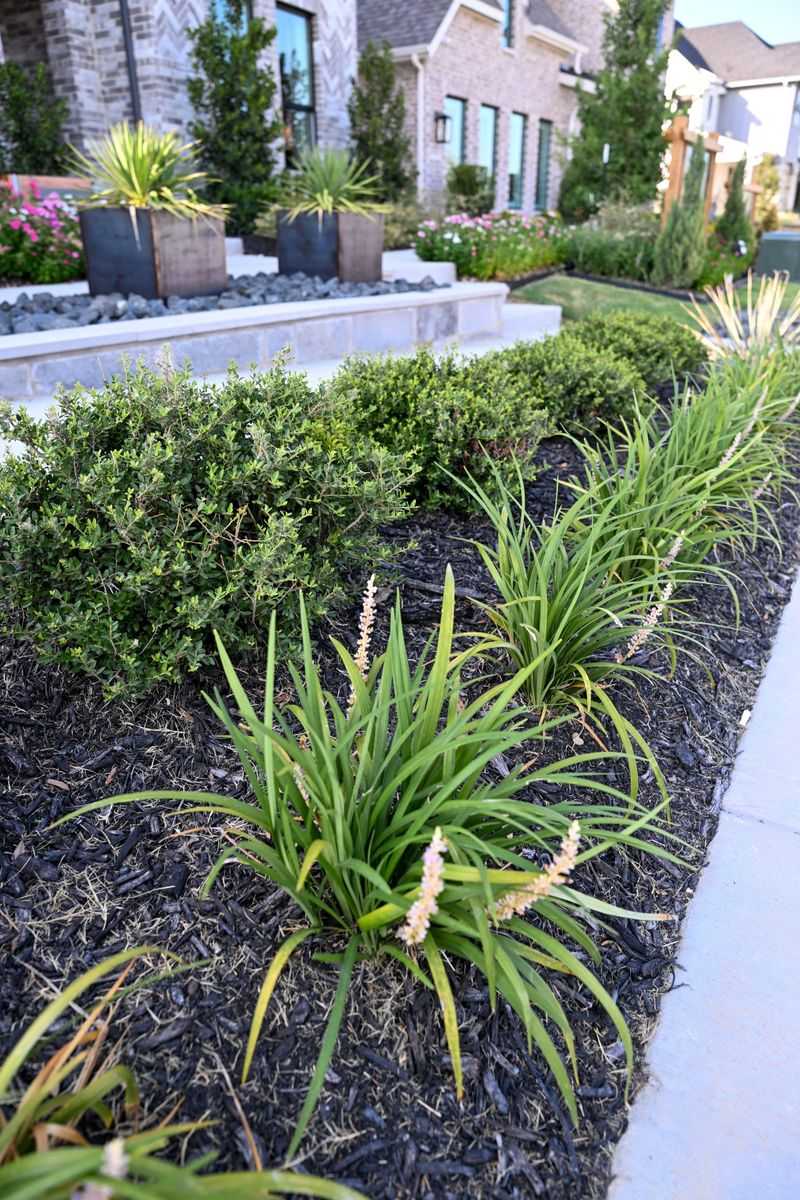
Yaupon holly comes in a wide range of sizes, and picking the wrong one for a porch bed creates a pruning headache that never fully goes away. Large, upright forms can reach roughly 15 to 25 feet tall and equally wide at maturity.
Those are excellent choices for screening, back-of-border structure, or wildlife corridors away from the house, but they are too large for a typical foundation or porch planting without serious ongoing maintenance.
Dwarf cultivars solve that problem for most porch situations, though their mature size still varies more than the word “dwarf” suggests. UF/IFAS coverage of yaupon holly and the UF/IFAS yaupon species profile both recommend selecting a cultivar based on its expected mature spread rather than its current nursery container size.
Ask the nursery staff or check the cultivar’s published dimensions before buying.
Berry production is worth thinking through before you purchase. Yaupon is dioecious, meaning male and female flowers occur on separate plants, and only female plants produce berries.
UF/IFAS guidance on yaupon selection notes that some popular dwarf cultivars, including ‘Nana’ and ‘Schilling’s Dwarf,’ are male and generally do not produce berries. If the red fruit matters to you for bird attraction, look specifically for a female plant or a female-designated cultivar at the nursery.
Watering during the first year is where many new plantings fail. UF/IFAS establishment watering guidance recommends watering the root ball two to three times per week during the first year to help the plant develop a strong root system.
After that establishment period, yaupon generally needs far less supplemental irrigation, though extended heat and drought may still call for occasional deep watering. Always follow local Texas or Florida watering restrictions, which can limit frequency or timing depending on your municipality.
Manage growth and follow Texas fire-safety guidance
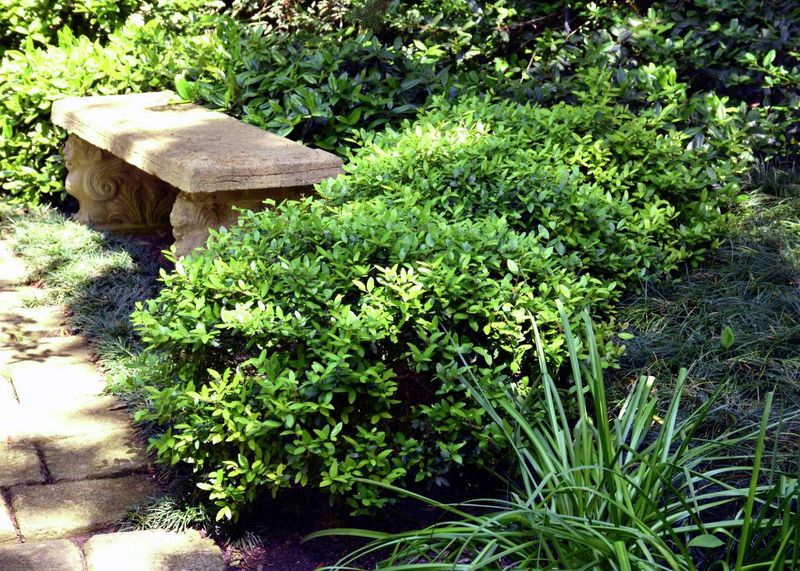
Yaupon holly is famously low-maintenance once established, but low-maintenance does not mean no-maintenance. One growth habit that surprises new owners is suckering: yaupon can send up root sprouts around the base of the plant, and left unchecked, those sprouts gradually turn a tidy shrub into a spreading thicket.
The UF/IFAS yaupon species profile notes that periodic root-sprout pruning, typically two or three times per year, keeps the plant within its intended footprint without requiring drastic cutbacks.
Placement relative to the house also deserves a second look after the plant is in the ground. Branches that grow toward windows, across walkways, or against siding create access problems and can trap moisture against the structure.
UF/IFAS plant placement guidance advises maintaining enough clearance for air to circulate freely around the plant and the building surface, which reduces both disease pressure on the plant and moisture problems on the siding.
In wildfire-prone parts of Texas, the spacing question carries extra weight. Texas Parks and Wildlife Wildscape guidance advises keeping an appropriate separation between a home and fuels in wildland-urban interface settings and specifically cautions against dense yaupon plantings directly against the foundation.
Follow local fire regulations for your specific area rather than assuming any single spacing figure applies universally across Texas.
One more management choice affects whether the plant actually supports gecko activity: pesticide use. Geckos depend on live insects as prey, and broad-spectrum insecticides reduce that food supply along with the target pests.
UF/IFAS lizard landscaping guidance recommends treating only when necessary and choosing selective products so that non-target insects remain available for insect-eating reptiles. Routine calendar spraying around a porch undercuts the very conditions that make gecko visits likely.
Treat geckos as incidental predators, not roach control
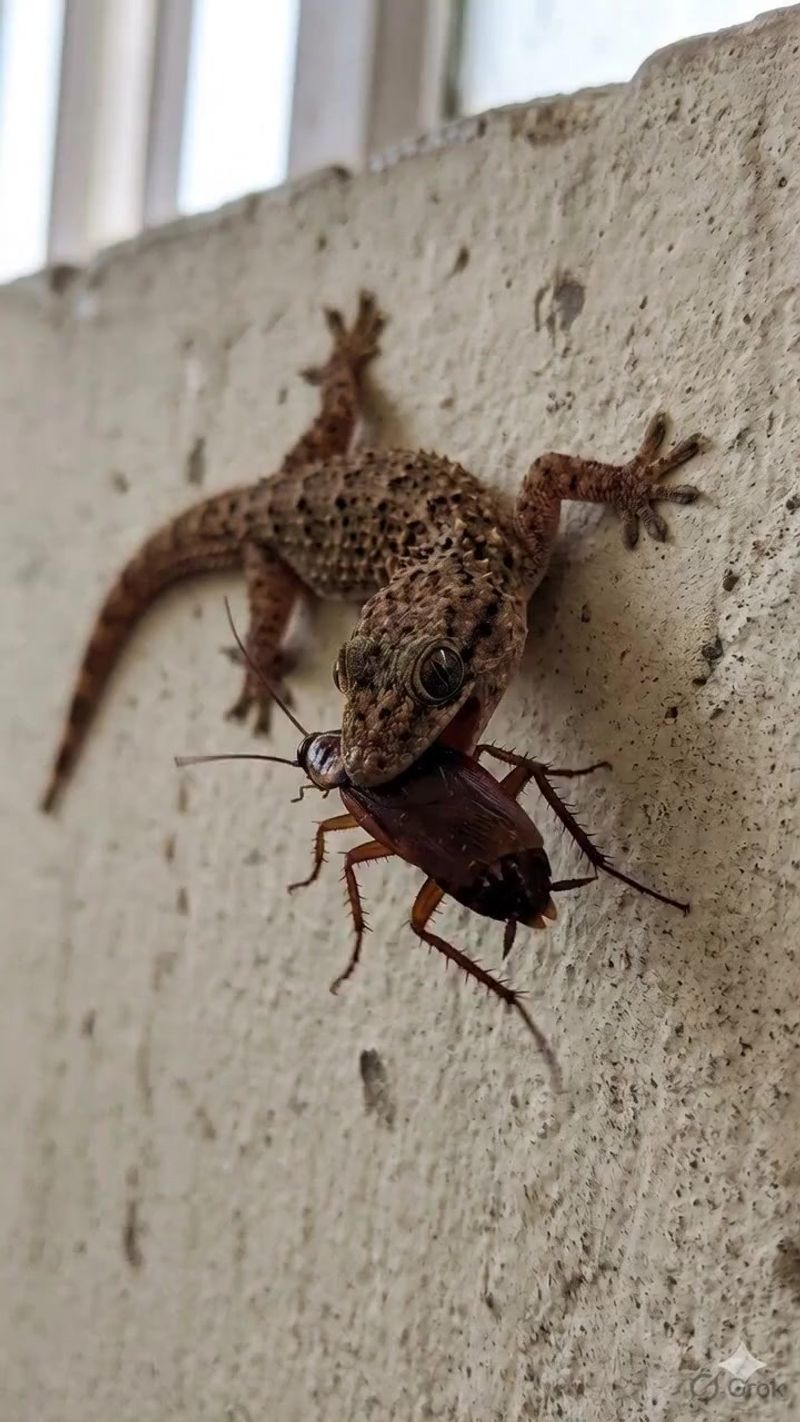
Geckos are opportunistic hunters. They eat what is available and accessible, which on a well-lit Texas porch means moths, flies, small beetles, and yes, occasionally cockroaches.
That last item tends to get overstated, so it is worth being specific about what the evidence actually shows.
The peer-reviewed Texas diet study on Mediterranean house geckos found that Orthoptera, Lepidoptera, and isopods were among the top prey categories in examined specimens. Cockroaches appear in the broader arthropod diet, but the study did not find that geckos consume cockroaches in quantities that meaningfully reduce household populations.
Calling geckos a roach patrol implies a reliability that the data does not support.
That distinction matters because it changes how you manage the rest of your pest situation. If geckos were a proven cockroach suppressor, you might reasonably reduce other control efforts.
Since they are not, the standard integrated approach still applies. UC Integrated Pest Management guidance on cockroaches is clear that sanitation and exclusion are the foundation of effective control, and that pesticides alone will not solve a cockroach problem.
Reducing moisture, sealing entry points, removing food sources, and using properly placed baits when needed remains the reliable toolkit.
Yaupon’s realistic role in this picture is as a habitat-supporting plant that makes the porch environment richer and more functional for small wildlife. It can contribute to a yard that geckos find usable, which may incidentally include some cockroach predation.
What it cannot do is replace an integrated pest management plan or guarantee that roach numbers drop. Plant it for the habitat value it genuinely delivers, and keep the rest of your pest strategy intact.
Plant yaupon for habitat, not a guaranteed result

Putting this all together into an action plan is straightforward. Select a yaupon cultivar sized for your actual bed space, confirm whether you want a berry-producing female plant, and plant it near the porch with enough clearance from siding, walkways, and windows for it to mature without becoming a maintenance burden.
UF/IFAS yaupon guidance covers cultivar options and care requirements that apply across Texas and Florida.
Pair the shrub with lower-layer plants and a few structural features like rocks or a shallow water dish to build the kind of layered habitat that lizards actually use. Keep your porch light working, since Texas A&M AgriLife Extension identifies lighted porch areas as a primary gecko draw.
Avoid routine broad-spectrum spraying, and follow Texas fire-safety spacing in wildfire-prone settings.
For roach management, retain the proven practices: sanitation, exclusion, moisture control, and targeted baits when needed, as outlined by UC IPM cockroach guidance. And refer to UF/IFAS lizard landscaping recommendations for the full picture on creating a habitat that small reptiles can actually use.
Yaupon may make your porch more supportive of geckos that are already in the area, but no plant can guarantee their arrival or promise reliable roach control. What it can do is turn a bare foundation bed into a year-round shelter that quietly improves your yard’s ecology, one season at a time.