
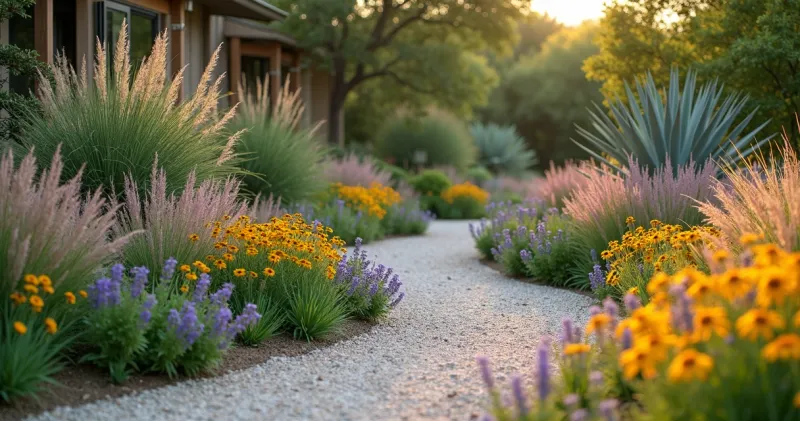
Your hottest fence line is the toughest spot in the whole yard, baking in triple-digit Texas sun with almost no shade and barely any water. Most store-bought plants give up fast out there, leaving you with crispy leaves and wasted money. The good news is that Texas has its own native plants built to thrive in exactly those brutal conditions, spreading and covering fences without needing you to fuss over them. Here are the toughest natives that will happily take over that scorching spot on their own.
1. Coral Honeysuckle
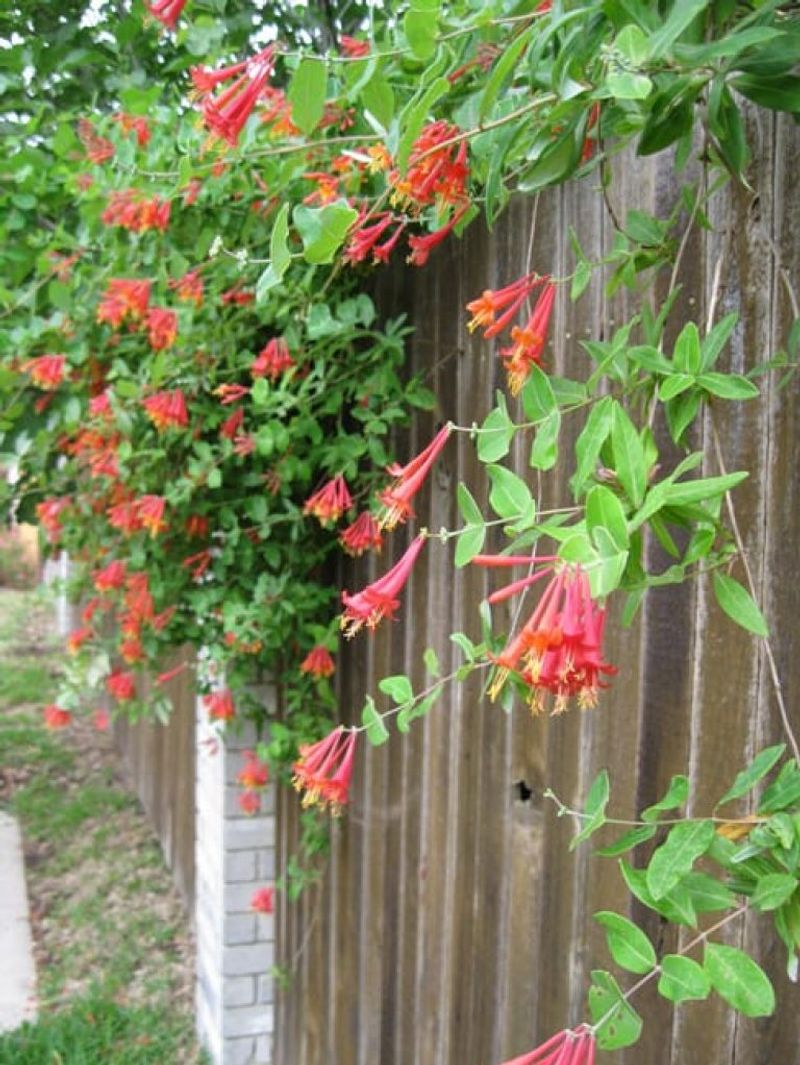
Ask any Texas hummingbird where the best fence in the neighborhood is, and it will lead you straight to a coral honeysuckle in full bloom. The trumpet-shaped red and orange flowers pump out nectar all spring and summer, drawing in ruby-throated hummingbirds like a diner that never closes.
Unlike the invasive Japanese honeysuckle that chokes out everything around it, this native vine (Lonicera sempervirens) behaves itself while still climbing eagerly up wire, wood, or chain-link. It shrugs off drought once its roots settle in, and it keeps some of its leaves through mild Texas winters.
Plant it near a sunny fence and give it a single deep soak a week during its first summer. After that, it mostly handles things on its own, rewarding your neglect with more blooms and a steady parade of pollinators. Berries follow the flowers, which brings in songbirds and turns your fence into a small backyard ecosystem worth watching.
2. Crossvine
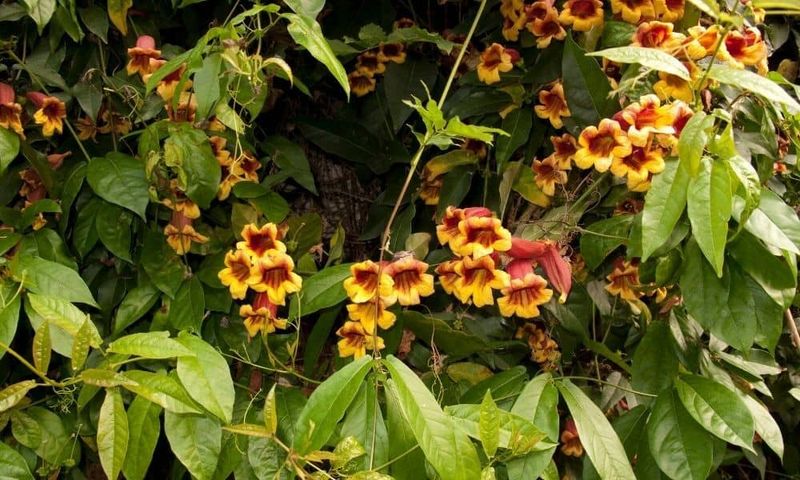
Long before your other vines wake up, crossvine is already unrolling ribbons of orange-and-yellow trumpets across the fence, sometimes as early as March. That early show is its whole personality, giving hummingbirds returning from migration a first meal when little else is blooming.
Crossvine (Bignonia capreolata) climbs with tiny tendrils that grip fences, brick, and posts without any help, and it can shoot up twenty feet or more when it likes a spot. The glossy semi-evergreen leaves take on a purple tint in cold snaps, so your fence never looks bare even in a Texas January.
Heat and poor soil barely faze it, which makes it a natural fit for that western fence line that fries all afternoon. Give it full sun for the heaviest bloom, though it tolerates part shade if that is what your yard offers. Once established, it asks for almost nothing and repays you by covering ugly fencing in a lush green screen year-round.
3. Turk’s Cap
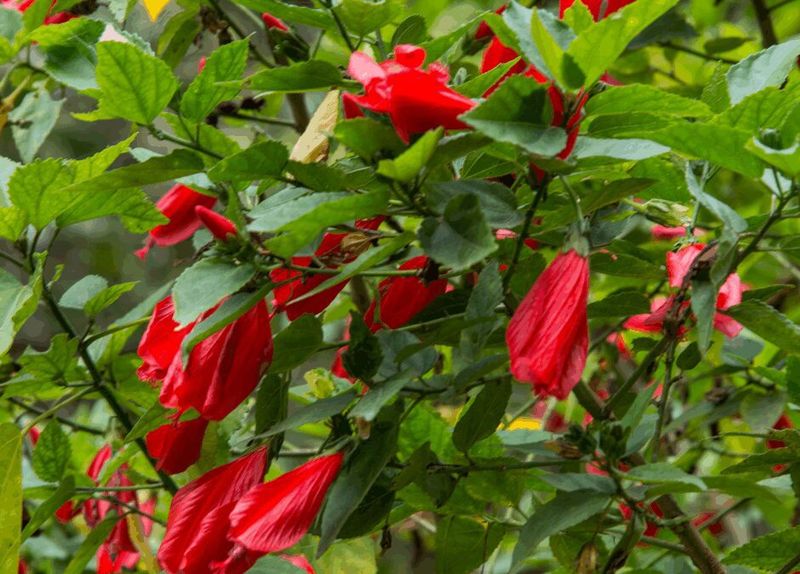
Deep shade or full afternoon blast, it hardly matters to Turk’s cap, which is why gardeners call it the plant that grows where nothing else will. Its little red flowers never fully open, twisting instead into a shape that looks like a tiny wrapped turban, which is exactly how it got its name.
Turk’s cap (Malvaviscus arboreus) spreads into a soft, shrubby mound along a fence line, filling gaps and shading out weeds as it goes. Hummingbirds and butterflies work the flowers all summer, and small marble-sized red fruits follow that birds happily gobble up.
What sets it apart from the vines on this list is how it handles the shady base of a fence just as well as the sun-scorched top. It dies back in a hard freeze, then bounces right back from the roots each spring without any coaxing. A fun bit of history: pioneers and later Texans sometimes ate the mild fruit and used the leaves in folk remedies, earning it the old nickname of manzanilla.
4. Flame Acanthus
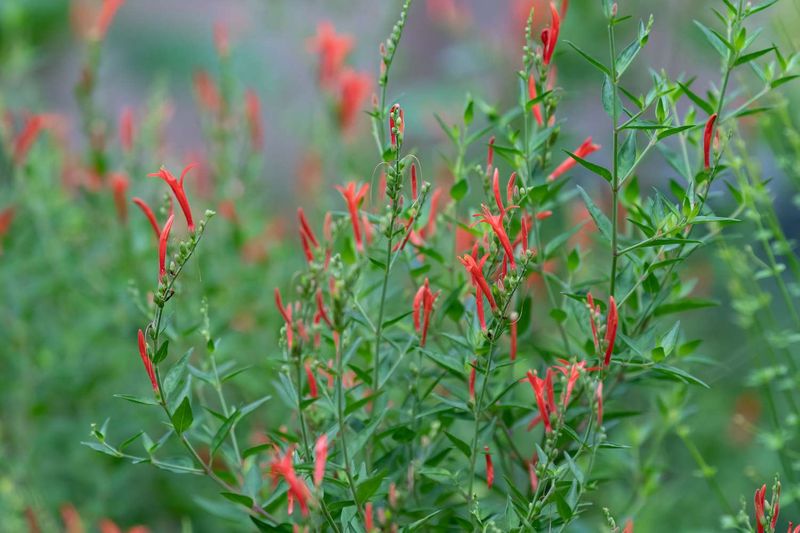
When July turns everything else brown and brittle, flame acanthus is just getting warmed up. Its slender tubular orange-red blooms explode in the worst heat of the summer, earning it the fitting nickname of hummingbird bush.
Native to the rocky hills of Central and West Texas, flame acanthus (Anisacanthus quadrifidus) laughs at drought and thin limestone soil that would kill fussier plants. It grows into a loose, airy shrub about three feet tall and wide, perfect for tucking against a hot fence where it can spill and mingle.
The airy branches give it a wild, informal look that suits a natural Texas yard rather than a tidy formal border. Butterflies and hummingbirds swarm it right through the dog days, so you get pollinator action when your other beds have quit. Cut it back hard in late winter and it returns thicker and more floriferous, no fertilizer or babying required.
5. Texas Lantana
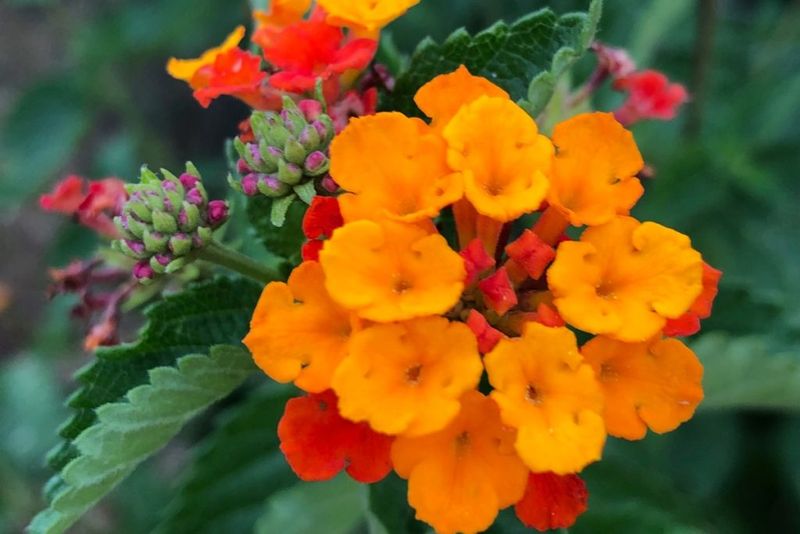
Some plants sulk in the heat; Texas lantana practically celebrates it. The clusters of orange, yellow, and red flowers glow brightest when the thermometer climbs past 100, and butterflies treat it like a landing pad from morning to dusk.
This native (Lantana urticoides, sometimes called calico bush) forms a sprawling mound that leans and tumbles along a fence with cheerful disregard for order. It survives on rainfall alone in most years and shrugs off the sandy or clay soils found across much of the state.
Be aware that the native form spreads readily, which is exactly what you want on a fence line you would rather ignore than tend. The berries are toxic to people and pets, so keep that in mind if curious kids or dogs roam the yard. In return for near-total neglect, you get months of nonstop color and a steady stream of swallowtails and monarchs stopping by.
6. Coralberry
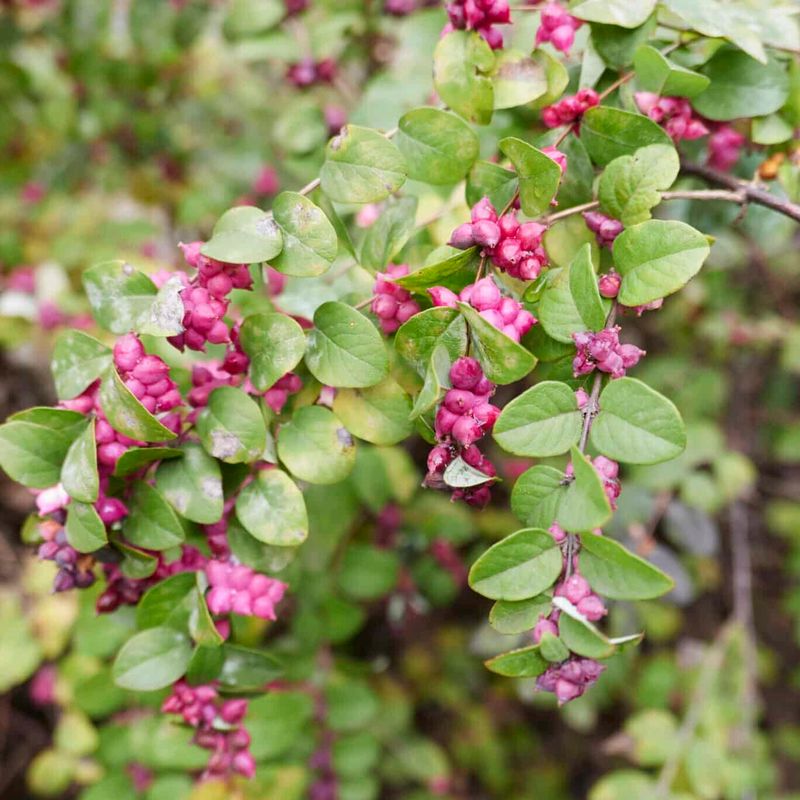
Coralberry keeps its magic hidden until fall, when suddenly its arching branches are strung with clusters of bright pinkish-purple berries like tiny beads. That late-season surprise is its calling card, feeding birds long after the summer bloomers have faded.
Also known as buckbrush, coralberry (Symphoricarpos orbiculatus) forms a low, spreading thicket that fills in the shadier stretches at the base of a fence. It sends out runners and roots where stems touch soil, so a single plant slowly knits itself into a soil-holding groundcover.
Deer tend to leave it alone, drought does not bother it, and it holds a slope or fence bottom together beautifully. The modest greenish flowers of summer are easy to miss, but the fall and winter berries turn a plain fence line into a songbird buffet. Give it a shady, tough corner nobody else wants and it will quietly take over and thrive.
7. Passionflower Vine
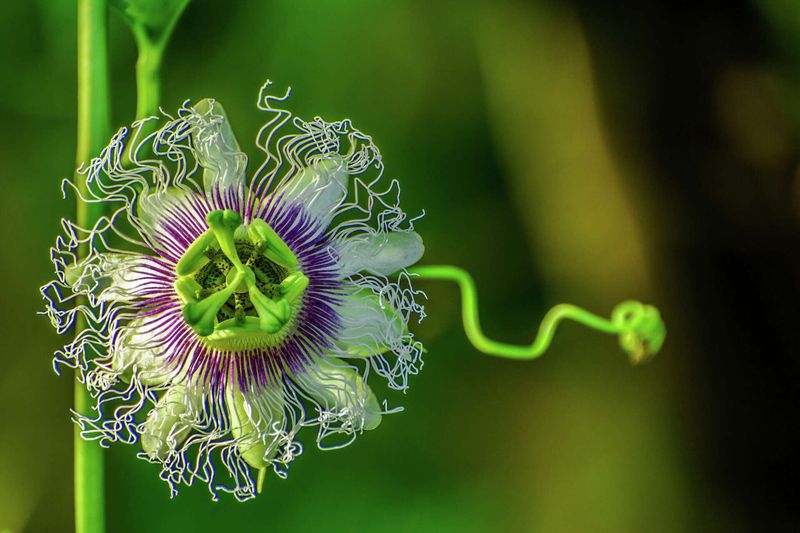
Few native plants stop people in their tracks the way the purple passionflower does, with its wild fringe of lavender filaments that looks more like a sea creature than a flower. Gardeners often assume something so exotic must be finicky, but this Texas native (Passiflora incarnata) is anything but.
Also called maypop, it scrambles up fences with grabbing tendrils and can cover a section fast during the warm months. The flowers give way to egg-shaped green fruits that pop when you step on them, which is how the maypop nickname stuck.
What earns it a spot here is its double duty: it is the host plant for Gulf fritillary butterflies, so their orange caterpillars will munch the leaves before turning into fluttering adults right in your yard. It dies back in winter and springs from the roots again, sometimes popping up a few feet away. Let it wander along a hot fence and you get a living butterfly nursery for zero effort.
8. Autumn Sage
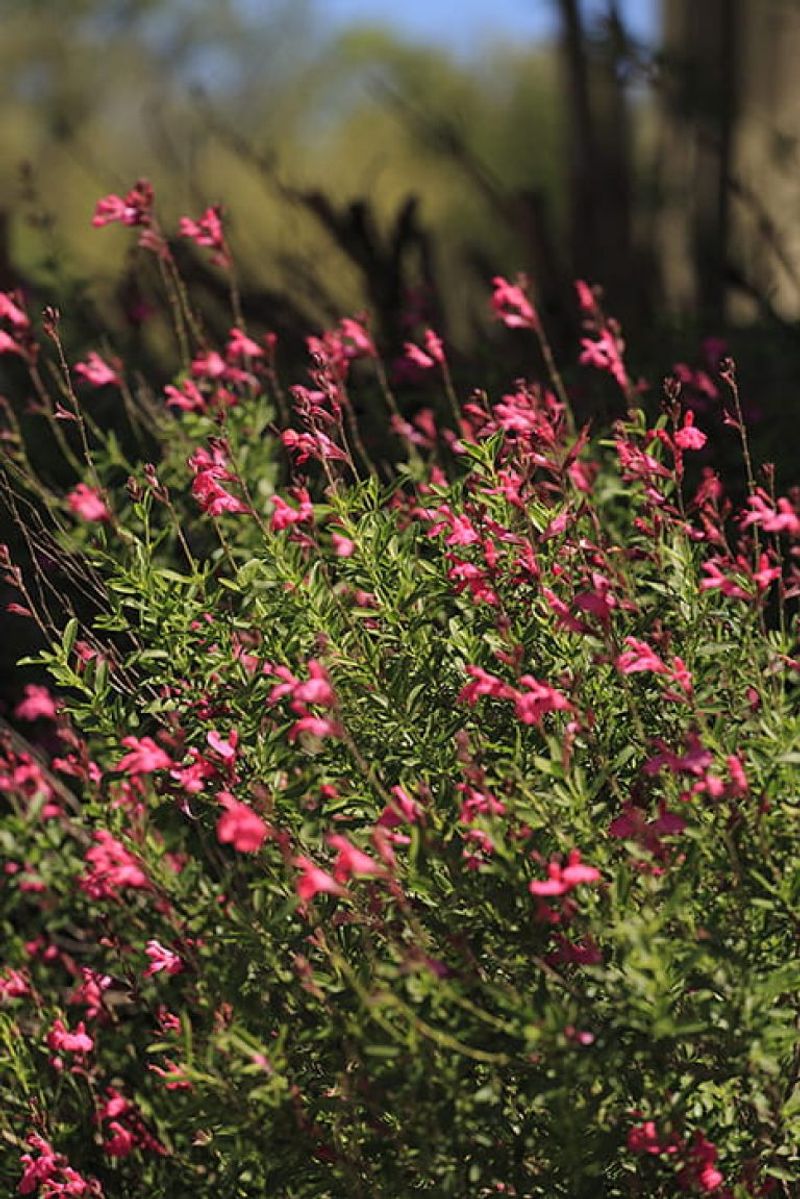
If you have ever wanted a plant that blooms almost every month it is not frozen, autumn sage is that overachiever. Despite the name, this small shrub (Salvia greggii) flowers from spring straight through fall in shades of red, pink, coral, and white.
Hailing from the rocky terrain of West Texas and the Hill Country, it is built for lean soil, brutal sun, and long dry spells. It settles into a tidy mound about two to three feet tall, making it a neat filler along the base of a hot fence.
Hummingbirds and bees keep steady company with its blooms, and the leaves give off a light herbal scent when brushed. A quick shearing after the biggest flushes keeps it bushy and covered in color rather than leggy. Water it deeply now and then during a true drought and it will forgive you for forgetting the rest of the time.
9. Trumpet Vine
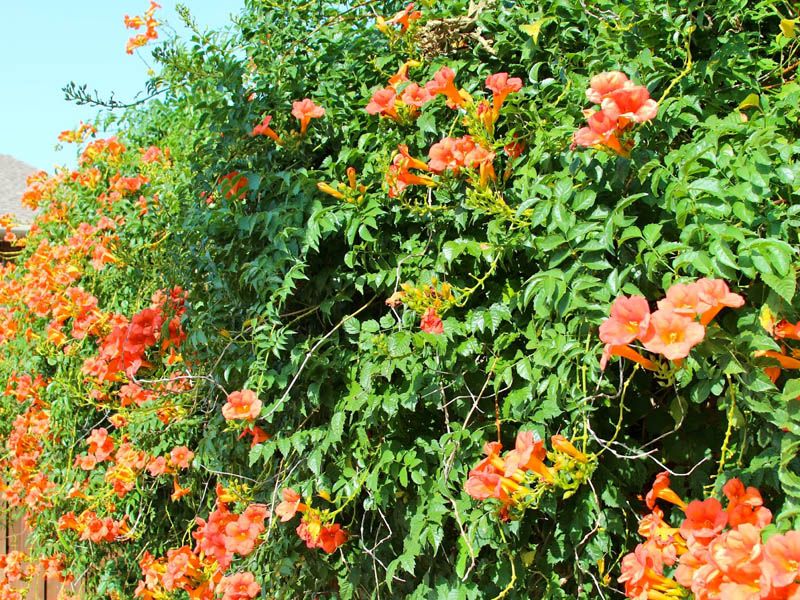
Consider this the heavyweight of the group, the one you plant when you want a fence swallowed whole in a single season. Trumpet vine (Campsis radicans) throws out big clusters of orange trumpet flowers that hummingbirds cannot resist, and it climbs with aerial rootlets that cling to almost anything.
Vigorous barely covers it; this native will race up and over a chain-link fence, and it spreads by underground runners that pop up new shoots nearby. That aggressive streak is both its superpower and its warning label, so give it a spot where you truly want dense coverage and do not mind keeping it in bounds.
Heat, drought, and poor soil are no match for it, and it needs essentially nothing from you once it takes hold. For a scorching, neglected fence line that you want green and blooming fast, few natives deliver the way this one does. Just plant it away from the house foundation and give it room to be the enthusiastic bully it is.