
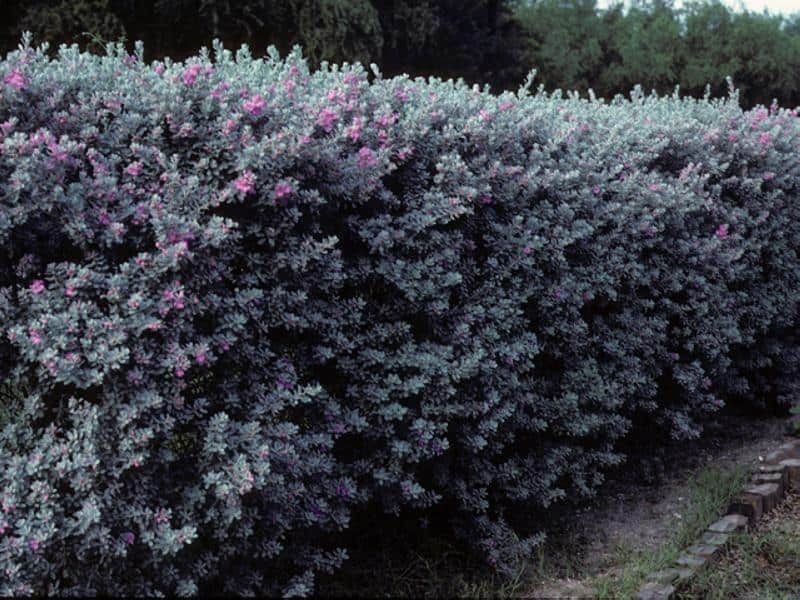
Water restrictions are tightening across Texas, and plenty of homeowners are tired of watching their landscape plants struggle through long, hot summers. Cenizo, commonly called Texas sage, is a well-supported low-water option for suitable Texas sites that keeps its silver-gray foliage looking sharp even when the hose stays coiled up.
Understanding what this shrub actually does, and what it needs during its first season in the ground, makes all the difference between a thriving plant and a disappointing one.
Meet Cenizo, the Shrub Commonly Called Texas Sage
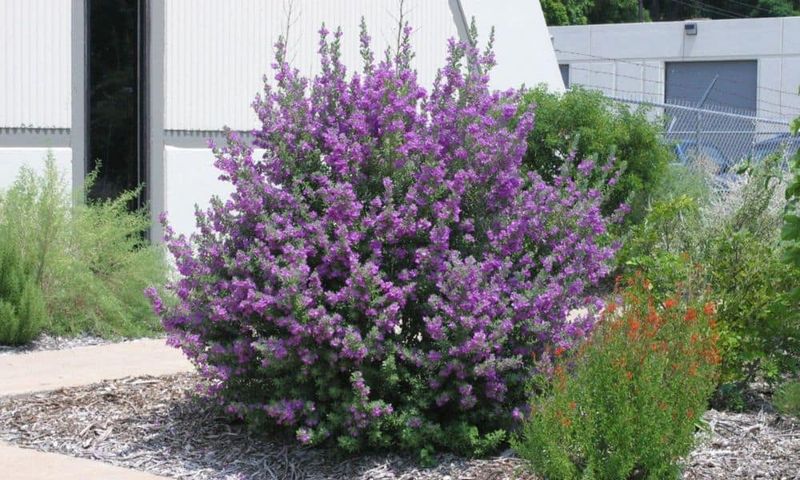
Cenizo goes by a handful of names, and sorting them out early saves confusion at the nursery. You may see it labeled Texas sage, Texas ranger, Texas silverleaf, or barometer bush, but all of those names point to the same plant: Leucophyllum frutescens, a broadleaf evergreen shrub native to Texas and northern Mexico.
One thing the name does not mean is culinary sage. Texas A&M range plant records place cenizo in the figwort family, not the mint family, so it has no relationship to the Salvia species used in cooking.
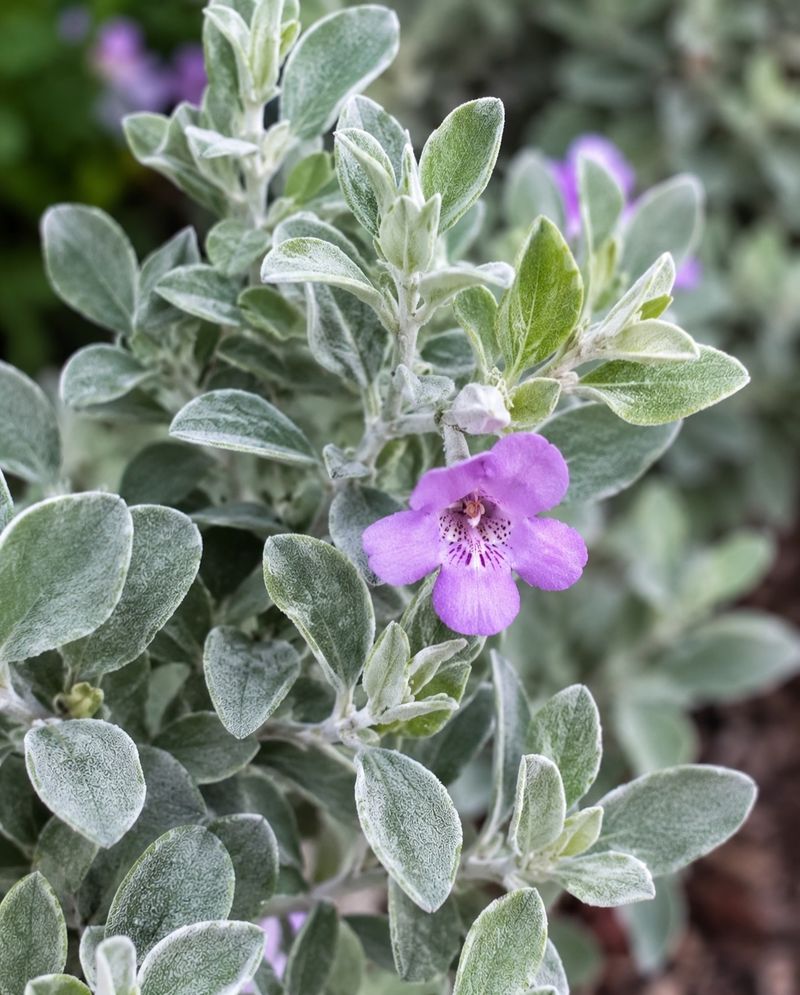
The leaves are small, densely hairy, and carry that distinctive ashy-gray or silver-green color that makes the shrub recognizable even without flowers. Bell-shaped blooms appear in shades of lavender, purple, pink, or occasionally white, though more on that in the next section.
The foliage alone gives the plant a consistent, polished look across most of the year.
Mature size varies depending on the form and growing conditions. Texas SmartScape lists a typical height of 6 to 8 feet with a spread of 4 to 6 feet, while Austin’s plant selection guide references a more compact 4 to 5 feet for certain landscape contexts.
Cultivars are the reason for that range. Compact selections, white-flowered forms, and green-leaved varieties all exist on nursery shelves, and each can have meaningfully different mature dimensions and flowering habits.
Always check the plant tag before buying so the shrub you bring home actually fits the space you have in mind.
The Texas A&M AgriLife Extension describes cenizo as a widespread native shrub that becomes especially conspicuous when it flowers, a useful reminder that the foliage does the steady visual work while the blooms arrive as a bonus rather than a constant feature.
Silver Foliage Gives It Year-Round Structure
Most of the time, cenizo is not covered in flowers. That is not a flaw.
The small, hairy, silver-gray leaves create a soft, textural backdrop that holds the landscape together whether or not a bloom flush is underway. Think of the foliage as the plant’s permanent contribution and the flowers as a welcome but temporary event.
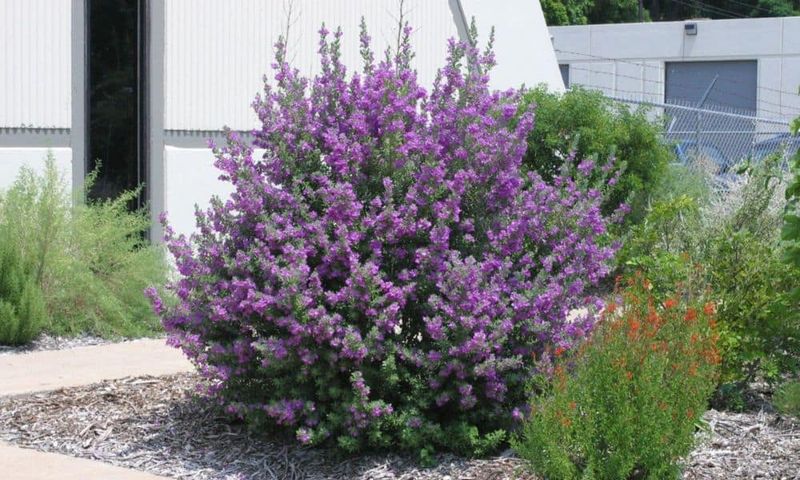
When flowers do appear, they come in bell-shaped clusters colored lavender, purple, pink, or occasionally white. Texas SmartScape notes that individual flower displays may fade within a week or two, so the bursts of color are vivid but short-lived.
Flowering commonly follows rain, a rise in humidity, or weather conditions associated with approaching moisture. That pattern is what earned the plant its barometer-bush nickname.
The nickname is evocative, but Texas Standard’s look at the folklore makes clear that cenizo is not a dependable weather forecaster. Blooms can appear before rain, after rain, or simply when humidity climbs without any measurable precipitation following.
Treating it as a rough signal of changing conditions is reasonable. Treating it as a precision forecast is not.
Flora and fauna records also confirm that flowering is tied to environmental triggers rather than to a fixed calendar, which means you cannot plan around a specific bloom date. What you can count on is the silver foliage showing up every day, giving borders and beds a clean, consistent structure even during the stretches between flower flushes.
For a Texas yard that needs reliable color without constant irrigation, that steady visual presence is often more valuable than a plant that blooms heavily but looks spent the rest of the season.
Established Plants Need Little Supplemental Water
The most important thing to understand about cenizo and water is that the plant’s reputation for drought tolerance applies to established specimens, not to freshly planted ones. A newly installed shrub has a limited root system and cannot reach the moisture reserves that a mature plant taps during dry spells.
Treating a new transplant like an established xeric shrub is one of the fastest ways to lose it.
During the establishment period, which typically spans the first growing season and possibly longer in extremely hot or dry conditions, water the root ball and surrounding soil thoroughly each time you irrigate. The goal is even moisture at the root zone, not saturated soil.
Texas SmartScape’s watering guidance recommends checking actual soil moisture before irrigating rather than following a fixed schedule, because soil type, weather, and sun exposure all affect how quickly a planting dries out.
Once cenizo is established, the picture changes considerably. Texas SmartScape classifies it as extremely drought tolerant and describes established plants as needing very little supplemental water.
When irrigation is appropriate and local rules allow it, deep and infrequent watering serves the plant better than frequent shallow applications. Deep watering encourages roots to follow moisture downward, which builds the resilience that makes cenizo genuinely useful during dry stretches.
One common misconception worth addressing directly: heavy or frequent irrigation will not reliably trigger flowering. Texas SmartScape specifically warns against trying to “trick” the shrub into blooming with extra water.
Beyond not working as intended, overwatering a plant adapted to dry soils raises the risk of root problems, particularly in sites where drainage is already marginal. The Texas A&M plant disease handbook documents root rot as a real concern for plants kept in overly wet conditions, and cenizo is not immune to that risk.
Sun and Drainage Determine Whether Cenizo Thrives
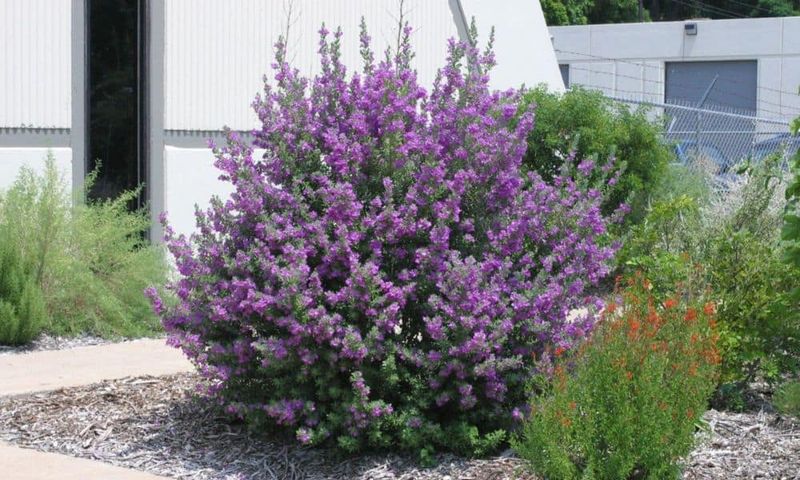
Before buying a cenizo, spend a few minutes evaluating the planting spot rather than just eyeing the available space. Two conditions matter more than almost anything else: how much direct sun the site receives and how quickly water moves through or off the soil after rain.
Full sun produces the strongest flowering. NC State Extension’s plant profile and Texas SmartScape both list full sun as the preferred condition.
Some references allow partial shade, but reduced light tends to mean fewer flowers and a less compact growth habit. If the site gets fewer than six hours of direct sun daily, a different shrub is probably a better fit.
Drainage is equally non-negotiable. Cenizo can tolerate dry, rocky, alkaline, sandy, loamy, or clay soils, but only when water does not pool or linger around its roots.
The key phrase in every reputable reference is “well-drained” or “sharp drainage.” Missouri Botanical Garden’s plant profile recommends raised beds in high-rainfall areas and notes that the species prefers low humidity conditions, which points to how poorly it handles consistently wet feet.
Standing water, compacted soils that hold moisture, and beds that drain slowly after heavy rain all increase the risk of root rot. Texas A&M’s plant disease resources confirm that root rot pathogens thrive in waterlogged soil, and a plant adapted to dry conditions is especially vulnerable when its roots sit in standing moisture for extended periods.
A sloped bed, a raised planting area, or a location where water naturally sheds away from the crown will always outperform a low spot that collects runoff. Checking drainage before planting is far easier than trying to correct a root problem after the shrub is in the ground.
Plant for Drainage and Give New Roots Time
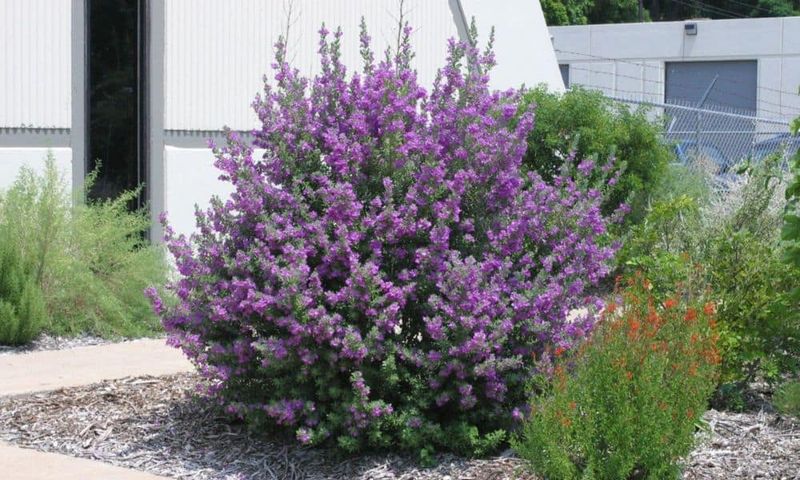
Knowing what cenizo needs is only useful if the planting process actually delivers those conditions. Start by choosing a spot that receives strong, direct sun for most of the day and where rainfall or irrigation water moves away from the planting area rather than collecting around it.
If the natural grade sends water toward the spot, consider building a slight mound or raised bed before planting rather than hoping the roots will adjust.
At planting time, water the root ball and the surrounding soil thoroughly. The goal is to settle the soil around the roots and give the plant a strong start, not to soak the area repeatedly.
Texas SmartScape’s conservation guidance reinforces checking actual soil moisture rather than watering on a rigid schedule, which is especially relevant during the first summer when a new plant can dry out quickly in Texas heat but can also suffer if the soil stays saturated.
Missouri Botanical Garden advises avoiding heavy clay that stays wet, which means amending or selecting an alternative site if your soil drains poorly. A layer of mulch over the root zone helps moderate soil temperature and slow surface moisture loss without holding excess water against the crown if applied correctly – keep mulch pulled back slightly from the base of the stem.
Before finalizing your spacing, read the plant tag for the specific cultivar you purchased. Austin’s plant guide references a 4 to 5 foot landscape size for certain selections, while Texas SmartScape lists 6 to 8 feet for the species in general.
Planting too close to a fence, wall, or neighboring shrub forces future pruning that works against the plant’s natural form. Give it room from the start and the establishment period becomes much simpler to manage.
Keep Maintenance Light and Expectations Realistic
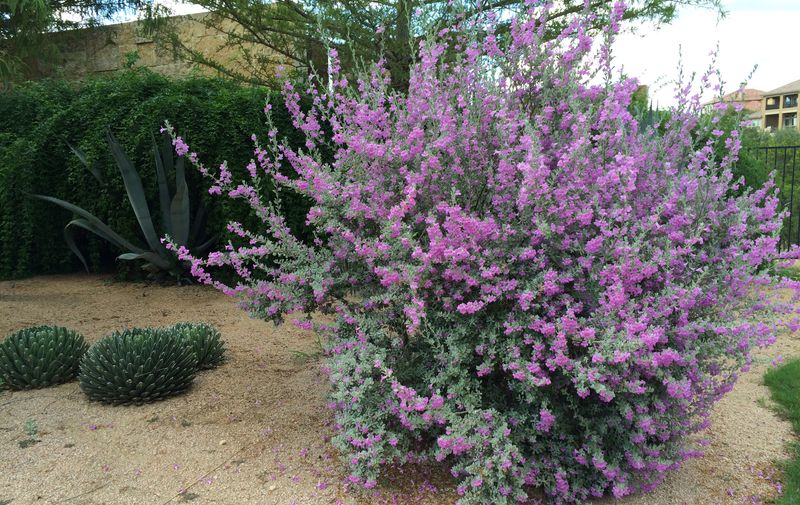
Cenizo earns its low-maintenance reputation, but low-maintenance is not the same as no-maintenance. A few straightforward habits keep an established plant looking its best without turning it into a project.
Pruning is the main task, and the approach matters. Austin’s plant guide recommends pruning for a natural look and specifically advises against shearing the plant into a formal hedge shape.
Routine shearing removes the branch tips where flowers form and produces a dense outer shell over a woody interior that rarely recovers its natural appearance. Light selective shaping, done only when a branch genuinely needs it, preserves both the form and the flowering potential.
Fertilizer is another area where less is clearly better. Missouri Botanical Garden advises against fertilizing this shrub as a routine practice.
If a plant shows signs of a specific deficiency, consulting a local horticulture professional before adding anything to the soil is the right call. Routine feeding is not supported by the available guidance and can push lush, weak growth that is more susceptible to stress.
On the wildlife side, cenizo’s flowers attract bees and other pollinating insects, and Texas Parks and Wildlife habitat references note that the dense growth provides cover for birds. These are genuine potential benefits, not guarantees of specific visitors.
Even a healthy, well-sited cenizo is not immune to stress. Severe drought, root problems from poor drainage, or an unusual freeze event can cause foliage loss or dieback despite the plant’s generally evergreen and heat-tolerant character.
Texas A&M freeze-protection guidance notes that even valuable landscape plants can sustain damage during hard freezes, and Central Texas Extension points out that marginally hardy plants may need attention during unusual cold events. Watching the plant through its first full year gives you the clearest picture of how it handles your specific site.
Match the Recommendation to Your Texas Region
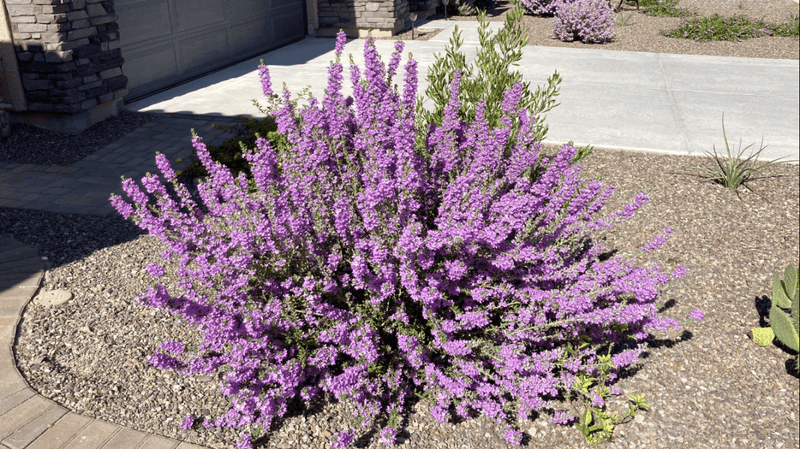
Cenizo is native to Texas, but that fact alone does not make it the right choice for every Texas yard. The state spans multiple ecoregions with dramatically different soils, rainfall patterns, humidity levels, and freeze exposure, and cenizo’s performance reflects those differences in real and sometimes significant ways.
The shrub is most at home in dry western and central Texas conditions, where alkaline soils, low annual rainfall, and strong sun align with what it handles best. Missouri Botanical Garden’s profile specifically recommends raised beds in high-rainfall areas and notes a preference for low humidity, which signals real limitations for sites in East Texas, along the Gulf Coast, or anywhere that receives persistent heavy rainfall combined with slow-draining soils.
For gardeners outside Texas who are considering cenizo, Florida is worth addressing directly. The Florida-Friendly Landscaping plant guide lists Leucophyllum frutescens as an option, and the Florida Museum describes it as suited to average-to-dry, well-drained conditions.
That is a meaningful qualifier. Florida’s frequent rainfall and often humid conditions make site selection especially critical, and cenizo should not be treated as a broadly suitable Florida landscape shrub without careful attention to drainage and sun exposure.
Within Texas, checking how cenizo performs in your specific county or ecoregion before purchasing is a practical step. Texas A&M’s range plant records document cenizo’s natural distribution, which provides a useful starting point for understanding where the species is genuinely in its element.
A local nursery familiar with your county’s soils and rainfall patterns is often the most reliable source for a site-specific recommendation.
Local Water Rules Still Control Irrigation
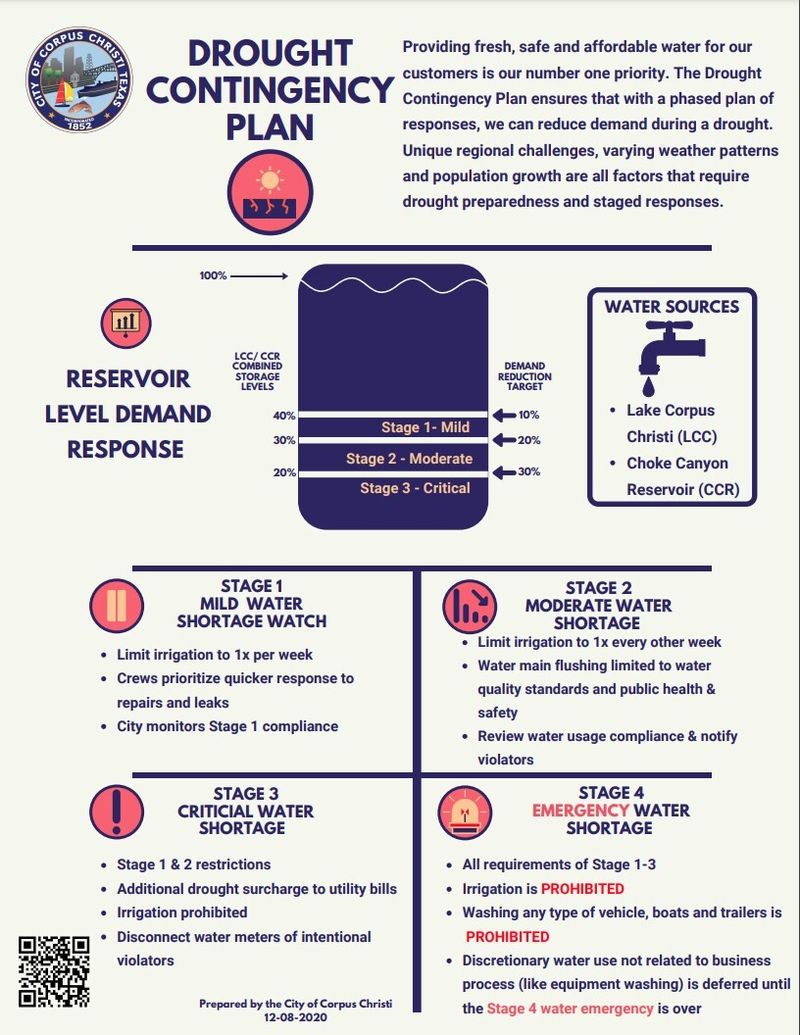
Cenizo’s low water needs after establishment are genuinely useful, but they do not override whatever rules your city or water utility currently has in place. Texas water restrictions are not set by a single statewide authority.
The Texas Water Development Board confirms that drought-contingency plans are managed locally, meaning your neighbor in a different city or utility district could be operating under completely different rules during the same dry stretch.
The Texas Commission on Environmental Quality requires public water systems to have drought-contingency plans, but the specific triggers, stage levels, and allowed irrigation days vary by provider. Austin Water’s drought-response page illustrates this clearly: the utility sets its own stage triggers and defines its own response actions, which differ from what another Texas city might require under similar conditions.
Before you water a newly planted cenizo or set up any irrigation schedule, check directly with your water provider to find out what is currently permitted.
Even when restrictions allow irrigation, Texas SmartScape’s conservation tools recommend letting soil moisture guide your decisions rather than following a fixed weekly schedule. Soil type, recent rainfall, temperature, and the plant’s establishment stage all affect how much supplemental water is actually needed.
A soil moisture check before each irrigation session prevents both underwatering during critical establishment and overwatering once the plant has settled in.
For an established cenizo on a sunny, well-drained site, the practical reality is that supplemental irrigation may rarely be necessary during a typical Texas summer once the plant is fully rooted. Texas SmartScape classifies established Texas sage as extremely drought tolerant, which means it can carry through dry periods that would stress less adapted plants.
That quality makes cenizo a genuinely practical choice for appropriate sites under local restrictions – not a promise of zero watering, but a shrub that asks for far less once it finds its footing in well-drained, sunny ground.