
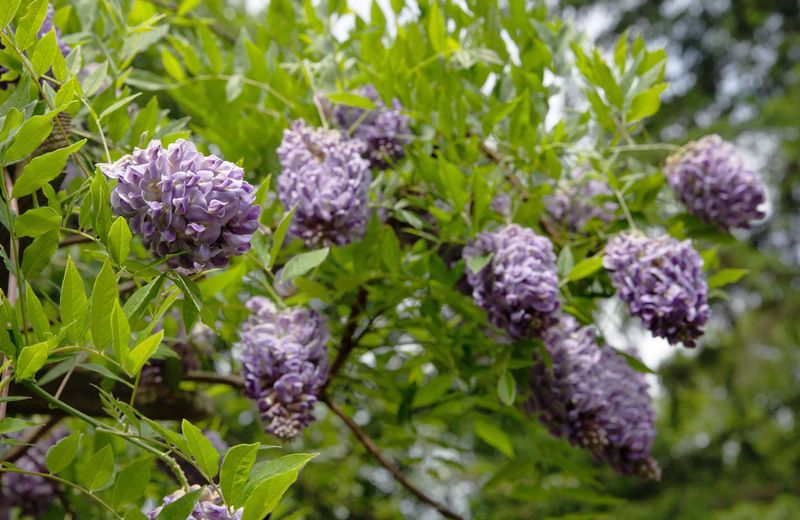
Chinese and Japanese wisteria can take over a yard in a few seasons, swallowing fences, climbing into tree canopies, and resprouting every time you think you have them beat. Texas wisteria, Wisteria frutescens, is a native alternative that produces the same kind of drooping lavender-to-purple flower clusters without the same aggressive takeover.
Before you plant it, though, you need to know what it actually delivers and what it still asks of you.
The problem is Asian wisteria, not every wisteria
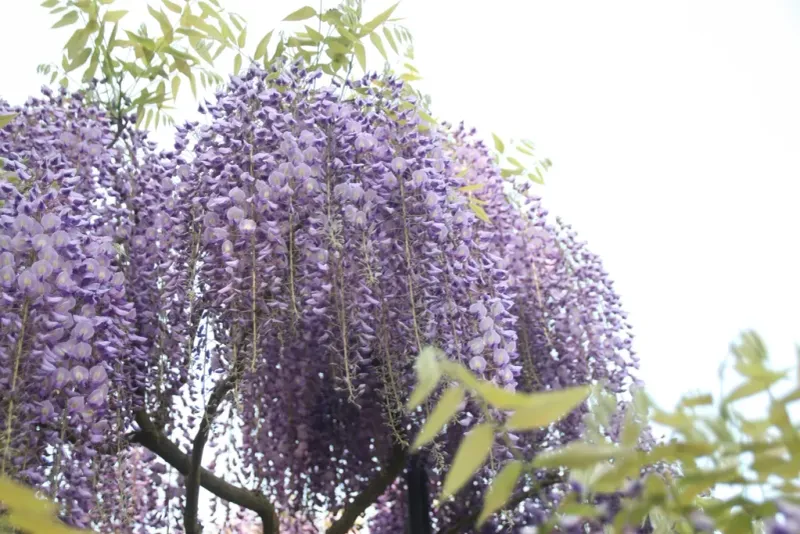
Not every wisteria sold at a garden center is the same plant, and that distinction matters before you pull anything out of the ground. The species that cause real control problems in Texas and across the South are Chinese wisteria, Wisteria sinensis, and Japanese wisteria, Wisteria floribunda.
According to Texas Invasives documentation on Wisteria sinensis, Chinese wisteria can climb into tree canopies, shade out and girdle native vegetation, spread through runners and rooted nodes, and resprout vigorously after cutting. That combination of traits makes it genuinely difficult to contain once it is established.
Japanese wisteria shares many of the same habits. Both Asian species were introduced as ornamentals and have naturalized in parts of Texas and the Southeast.
Their long, showy flower clusters and heady fragrance made them popular, but the plants themselves do not stop where a gardener intends. UF/IFAS plant directory guidance on Chinese wisteria notes that cutting the vine once does not reliably end the problem, because root systems can persist and resprout repeatedly.
American wisteria, Wisteria frutescens, including the Texas-native populations sometimes sold under that common name, is a different plant with a substantially less aggressive growth pattern. It is native to the eastern and southeastern United States, including Texas, and it does not carry the same documented invasive record as its Asian relatives.
Choosing the native species avoids introducing another round of the same control problem.
That said, planting Texas wisteria does not remove an existing Asian wisteria. The two actions are separate, and any established Chinese or Japanese wisteria on a property needs its own removal process before or alongside a new planting.
UF/IFAS guidance on wisteria removal covers that process in detail, and Section 8 of this article addresses it directly.
Texas wisteria keeps the drama without making the same promise
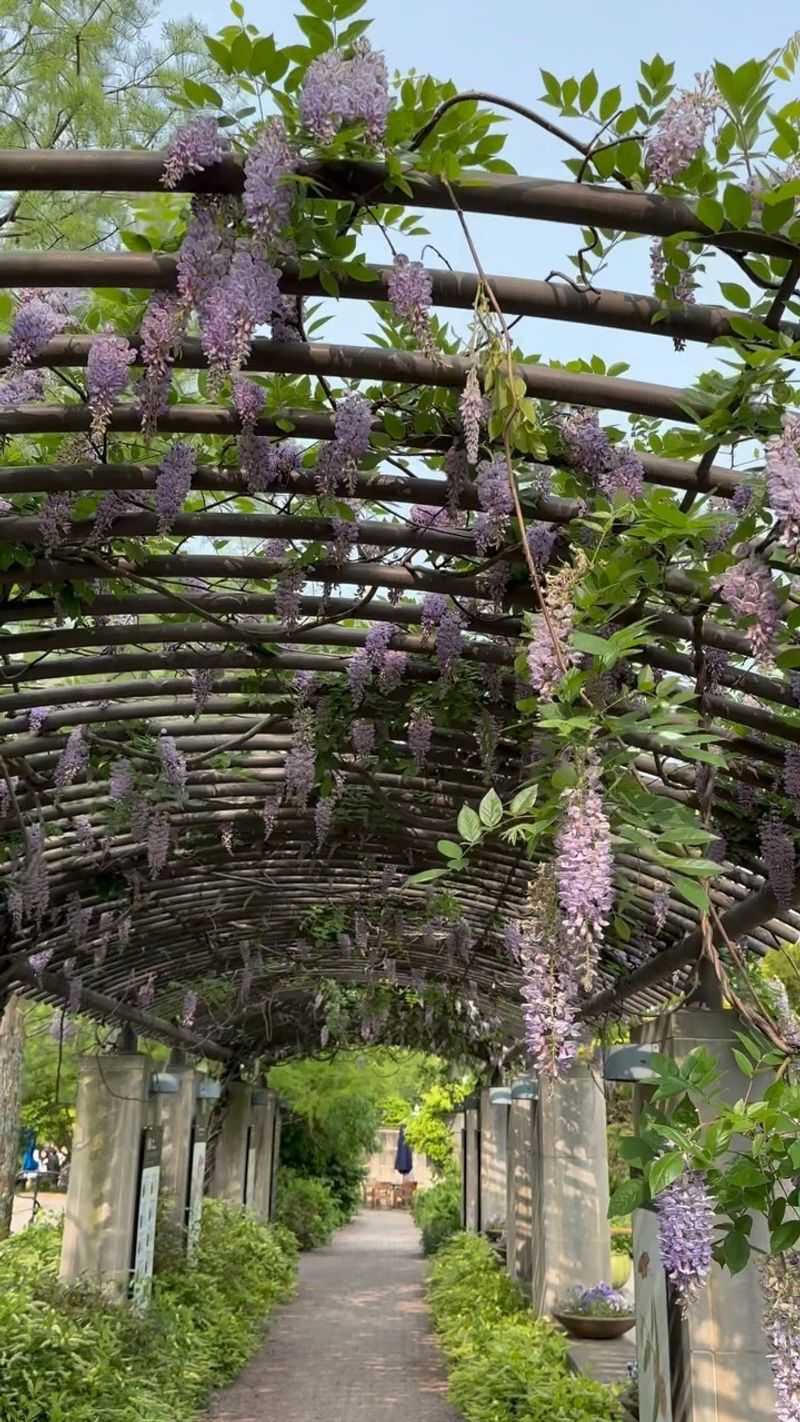
Wisteria frutescens goes by several names at nurseries: American wisteria, Texas wisteria, and sometimes Kentucky wisteria. All refer to a deciduous, twining woody vine native from Virginia and Illinois south through Florida and into Texas.
When it blooms, it produces fragrant lavender-to-purple, pea-shaped flowers arranged in drooping clusters that hang from the vine in a way that reads clearly as wisteria to anyone who has seen the Asian species on a trellis or arbor.
The visual effect is real, but the details differ. Florida Museum coverage of wisteria biology notes that American wisteria racemes are typically shorter than those of Asian species, and the fragrance, while present, may be less pronounced.
Gardeners who have grown Chinese or Japanese wisteria and are hoping for an identical substitute will notice the difference. What they get instead is a similar hanging-cluster effect with a plant that does not carry the same invasive track record.
The behavior difference is meaningful. N.C.
State Extension’s profile of Texas wisteria describes it as substantially less aggressive than Asian wisterias, though it still twines, still grows large, and still needs regular management. Think of it as a vine that delivers the general wisteria language, purple clusters, dangling habit, seasonal drama, without the documented tendency to climb into tree canopies and crowd out surrounding vegetation.
For Texas homeowners who want an arbor or pergola covered in hanging bloom each spring, that trade-off is often worth making. The plant is a strong native option for the hanging-purple-flower effect, not a guaranteed identical replacement, and setting that expectation before planting makes the experience of growing it considerably more satisfying.
Check the botanical name before you buy
Garden centers often group wisteria plants together without making the species distinction easy to find. A tag that says only “wisteria” or “purple wisteria” tells you almost nothing useful.
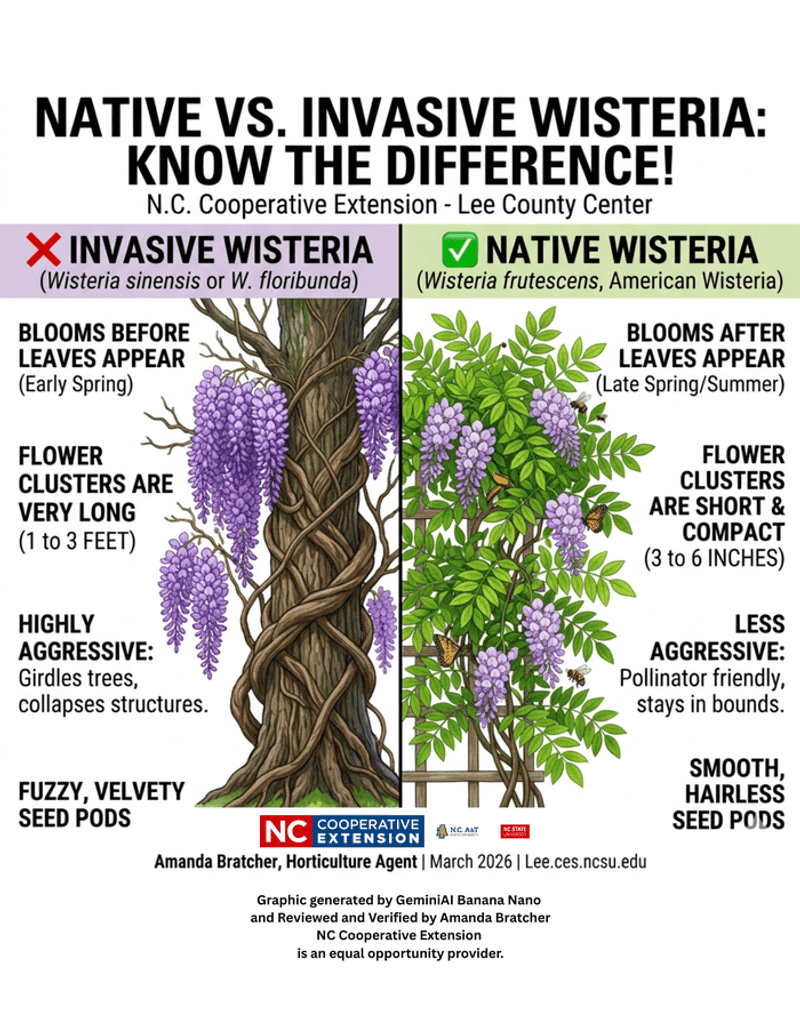
The name to look for is Wisteria frutescens, either as the primary label or alongside the common names American wisteria or Texas wisteria. If the label shows Wisteria sinensis or Wisteria floribunda, those are the Asian species with the documented control problems.
A few physical clues can also help at the nursery. Florida Museum reporting on wisteria identification points out that American wisteria produces smooth, hairless seed pods, while Asian species have fuzzy, velvety pods.
American wisteria also typically flowers after its leaves have begun to emerge, while Asian species often bloom on bare stems before the foliage opens. If a plant is in bloom at the nursery and the flowers are opening alongside new leaf growth, that pattern fits the native species.
One named cultivar worth knowing is ‘Amethyst Falls,’ which is described as a more compact, manageable American-wisteria option with deep blue-purple flowers and a spring-to-summer bloom period. It is often marketed specifically as a better-behaved alternative to Asian wisteria.
Even so, confirm that the full botanical name on the tag reads Wisteria frutescens before you buy it. Cultivar names alone do not guarantee species identity, and a label that only says ‘Amethyst Falls’ without the Latin name is not enough information.
N.C. State’s comparative wisteria overview is a useful reference for sorting out the species distinctions if you want to cross-check a label before committing to a purchase.
Taking five minutes to confirm the botanical name at the point of sale is far easier than managing the wrong plant for the next decade.
Give this heavy vine a site and structure it can handle
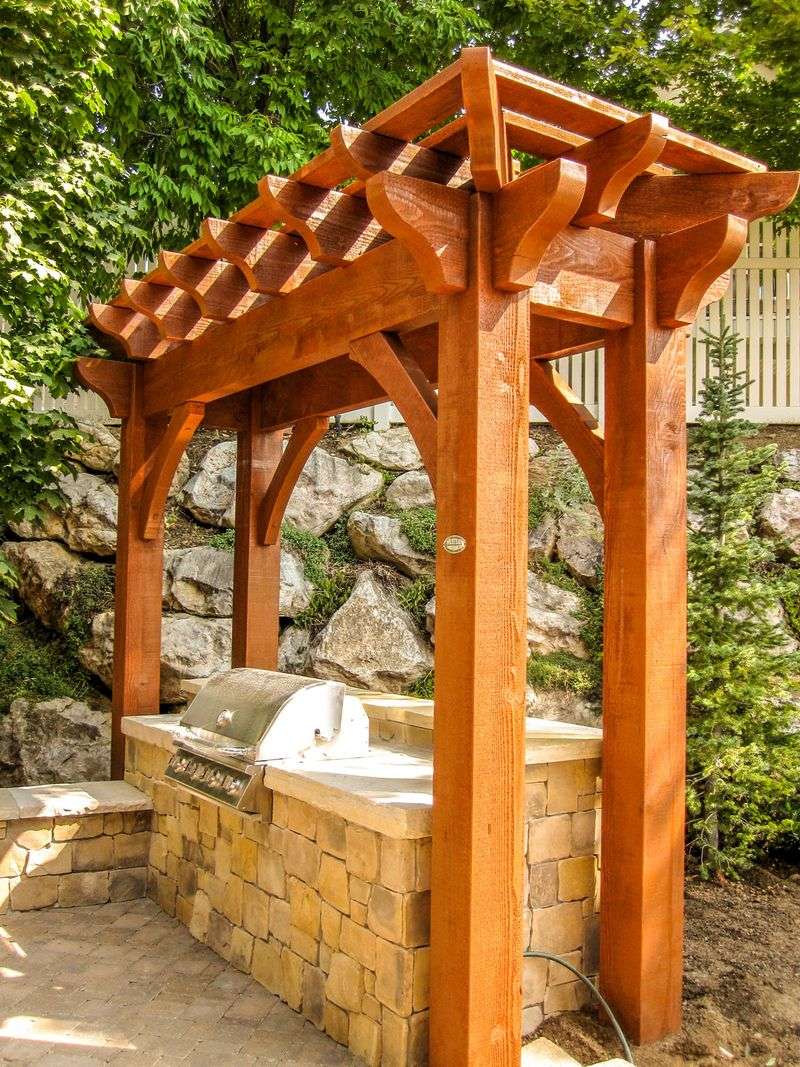
Size is the first thing to plan around. Texas wisteria can reach roughly 15 to 40 feet or more at maturity, and the woody stems become genuinely heavy as the vine ages.
N.C. State Extension’s Texas wisteria profile and City of Austin plant guidance both make clear that this vine needs a structurally strong support: a heavy timber arbor, a solidly built pergola, a robust trellis anchored to a masonry wall, or a sturdy fence rated to carry the load.
A lightweight decorative lattice or a small ornamental trellis will not hold a mature specimen, and a vine that pulls its support down mid-season is a safety and property problem.
Light determines whether the plant blooms well. Full sun, meaning six or more hours of direct sunlight daily, produces the best and most reliable flowering.
City of Austin plant guidance for Texas wisteria lists the species as having high heat tolerance, which is useful for Texas summers, but it also notes that the plant performs and flowers best with adequate light. Some partial shade is tolerable, particularly in the hottest part of the afternoon in West-facing exposures.
Dense shade, however, is a real problem: it can reduce flowering significantly or prevent it altogether. A spot that gets morning sun but is shaded all afternoon by a large building or tree canopy is a poor choice if bloom is the goal.
Soil and moisture matter more than many Texas gardeners expect. The species is naturally associated with moist thickets, stream borders, and wet woodland edges.
University of Georgia Extension guidance on native woody vines recommends moist, fertile, well-drained soil for best establishment and growth. The City of Austin lists medium water needs for the species, which means supplemental irrigation is likely necessary on hot, dry sites, especially through the first few years and during extended dry spells.
One soil-specific caution for Texas gardeners: alkaline soils, common across much of Central and West Texas, can cause chlorosis, a yellowing of the leaves that signals the plant is struggling to take up nutrients. If your soil tests alkaline, amending the planting area or choosing a different site reduces that risk.
A spot with slightly acidic to neutral soil and reliable moisture access gives this vine its best start.
Pruning makes it manageable, not effortless
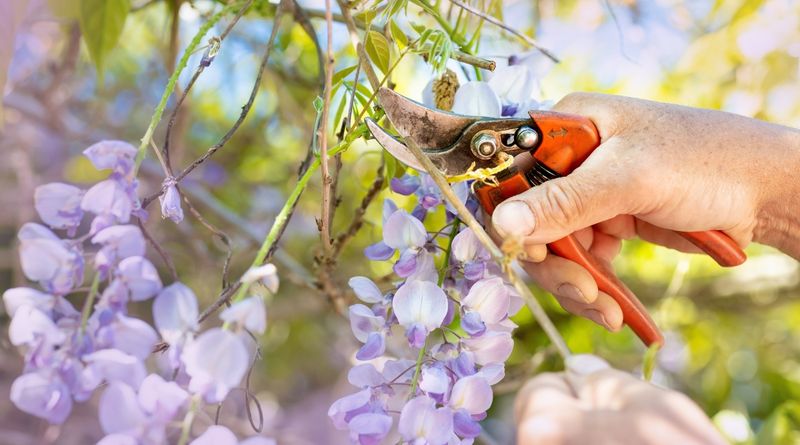
Regular pruning is not optional with Texas wisteria. The vine twines and extends actively during the growing season, and without consistent direction, it will sprawl beyond its support, cover adjacent plants, and become harder to manage with each passing year.
The goal of pruning is threefold: train new growth toward the structure, keep the vine within a size the support can handle, and encourage the kind of spur growth that produces flower buds for the following season.
N.C. State Extension guidance on Wisteria frutescens recommends major pruning immediately after flowering as the primary timing.
This allows the plant to set new growth and develop flower buds for the next bloom cycle without cutting off buds that are already forming. The City of Austin similarly advises pruning to direct and control growth throughout the season.
Lighter tip pruning during summer can help keep long shoots in check between the main pruning sessions.
Bloom timing requires patience. Plants may begin flowering in their second or third year, but some take longer, particularly those grown from seed.
Seed-grown plants have no guaranteed timeline, and waiting several years before seeing any bloom is not unusual. Buying a named cultivar, like ‘Amethyst Falls,’ or selecting a plant that is already in bloom at the nursery gives you a much better chance of seeing flowers sooner.
N.C. State’s broader wisteria overview reinforces that named cultivars and container-grown plants already showing bloom are the most reliable route to earlier flowering.
Framing this vine as maintenance-free because it is native sets up a frustrating experience. It is easier to manage than Chinese or Japanese wisteria, but it still asks for your attention every season.
A gardener who prunes consistently and trains the vine deliberately will have a better-looking plant and more reliable bloom than one who plants it and steps back.
Match the vine to the Texas region and water supply
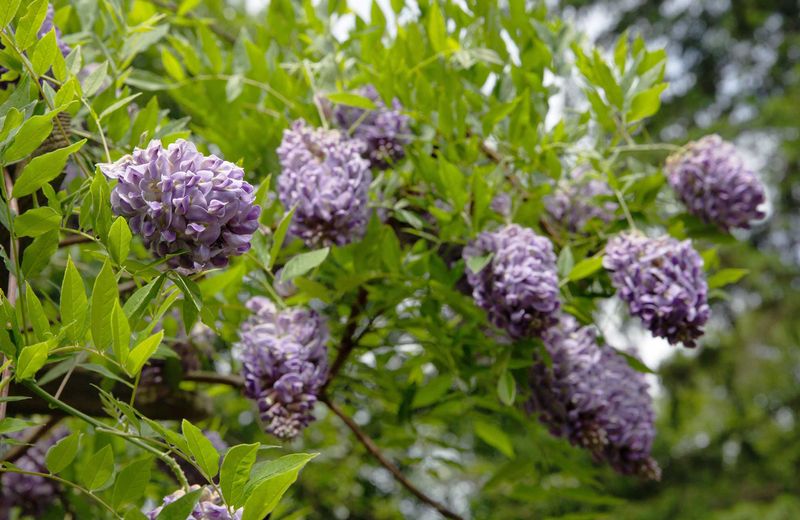
Texas is not one climate, and a plant suited to the moist bottomlands of East Texas is not automatically a good fit for a dry hillside in the Hill Country or a sun-baked West Texas yard with alkaline caliche soil. Texas wisteria’s natural habitats tell you a lot about where it will perform well: moist thickets, stream margins, pond edges, and wet woodland edges are its home ground.
N.C. State’s Texas wisteria profile describes this habitat association clearly, and it points toward sites with dependable soil moisture as the best candidates for the vine.
East Texas gardeners with heavier, moisture-retaining soils and higher average rainfall are working with conditions closer to the plant’s native range. Central Texas gardeners in the Austin area can grow it successfully with supplemental irrigation and attention to soil alkalinity, as City of Austin watershed plant guidance confirms, but they should plan to water through dry stretches rather than treating it as a set-it-and-forget-it planting.
For the driest parts of West Texas, the vine is a harder sell without a reliable irrigation system and amended soil.
High heat tolerance does not equal low water need. The City of Austin lists medium water needs for this species, and that rating assumes supplemental irrigation in hot, dry periods.
Expecting a Texas summer to take care of watering for you is a reasonable assumption for some native plants, but not for one that grows naturally along creek banks and in wet thickets.
When the site clearly does not have the moisture or the sun to support Texas wisteria well, a different native vine often makes more sense. Texas A&M AgriLife horticulture guidance identifies coral honeysuckle, Lonicera sempervirens, as a native Texas vine that handles drought, cold, and full sun with considerably less water demand.
Its flowers are tubular and red-orange rather than dangling and purple, so it is not a visual substitute for wisteria, but for a gardener whose priority is toughness and wildlife value over bloom shape, it is a stronger match for dry Texas conditions. Carolina jessamine is another native option sometimes mentioned for North Central Texas, but its flowers are yellow, all parts are poisonous, and it does not replicate the wisteria look either.
Texas SmartScape’s carolina jessamine listing is a useful reference for readers considering it for their specific region.
Account for toxic pods, pets, and children
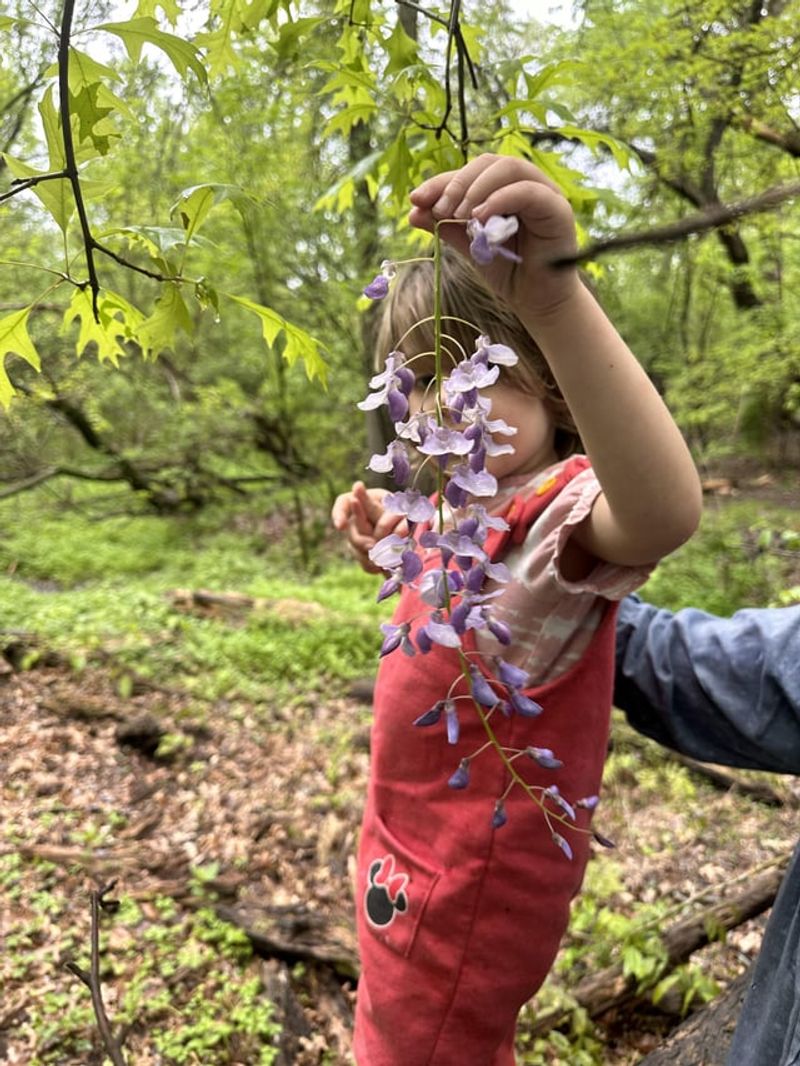
A plant being native does not make it safe to eat, and wisteria is a clear example of that. Seeds, pods, and other parts of wisteria plants contain toxic compounds that can cause gastrointestinal distress if ingested.
N.C. State Extension’s Wisteria frutescens toxicity notes list gastrointestinal symptoms as a concern, with seeds and pods carrying the highest risk.
For pet owners, the risk is documented and specific. ASPCA poison control guidance on wisteria lists the plant as toxic to dogs, cats, and horses.
Fallen pods on the ground are a particular hazard because they are accessible and may attract curious animals. Horses with pasture access near a wisteria vine are at risk if pods drop within reach.
Children present a similar concern. Seed pods can look interesting to young kids, and the seeds inside are the most concentrated source of toxic compounds.
A wisteria vine planted over a play area, near a sandbox, or anywhere young children spend unsupervised time is not a safe placement without additional precautions. Picking up fallen pods regularly reduces the risk, but it does not eliminate it entirely.
This does not mean the plant cannot be grown in a yard where children or pets are present. It does mean that placement and pod management are part of the planting decision.
A vine trained over a back pergola away from the play area, with pods collected as they drop, is a different situation from one planted at the edge of a dog run. Make the placement decision with the specific layout of your yard and the habits of the animals and people in it in mind.
Remove established Asian wisteria before adding another vine
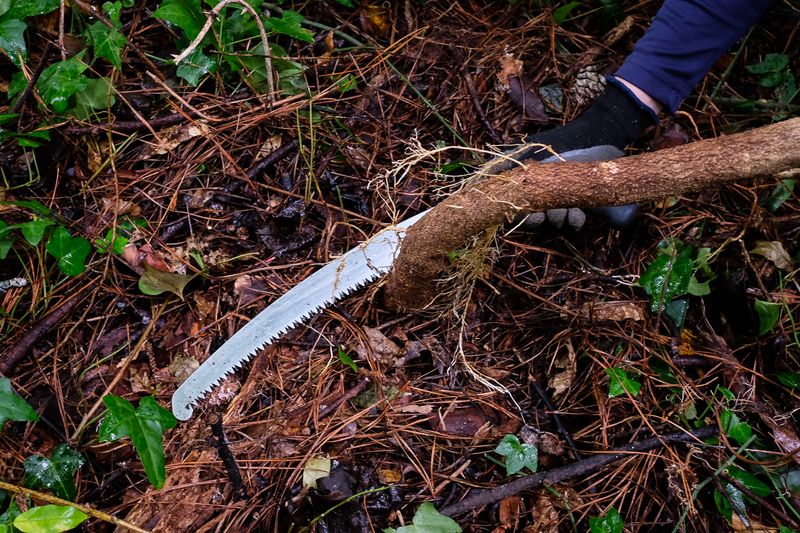
Planting Texas wisteria in a yard that already has Chinese or Japanese wisteria is not a replacement strategy on its own. The existing vine needs to be dealt with separately, and that process takes more than a single cut.
Cutting an Asian wisteria at the base once leaves the root system intact, and the roots will resprout. Repeated monitoring and removal of new growth is the core of any effective removal effort.
UF/IFAS plant directory guidance on Chinese wisteria removal recommends cutting vines close to the root, then returning to cut or pull regrowth as it emerges. Where it is practical to do so, removing root sections from the soil reduces the plant’s ability to resprout.
This is labor-intensive work, particularly for a vine that has been in the ground for several years and has an established root mass.
UF/IFAS invasive-plant management guidance for wisteria also addresses herbicide use for persistent cases. If mechanical removal alone is not keeping regrowth under control, a local extension professional can advise on appropriate options for your specific site.
Any herbicide application must follow the product label exactly, and care must be taken to avoid contact with desirable nearby plants, because wisteria often grows intertwined with vegetation you want to keep.
The timeline for removal is measured in seasons, not days. A vine that has been growing for five or ten years will not be gone after one round of cutting and digging.
Plan to revisit the site through at least one full growing season, cutting regrowth as it appears, before considering the problem resolved. Only after the existing Asian wisteria is genuinely under control does it make sense to introduce a new vine in the same space.
Choose Texas wisteria only when the site can support it
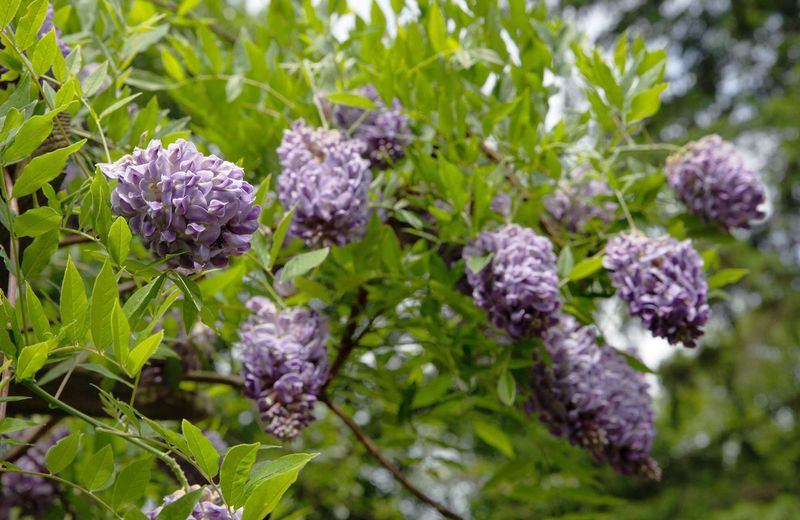
The decision comes down to a short checklist. Texas wisteria, Wisteria frutescens, is a strong native option for gardeners who want hanging purple blooms, have a genuinely sturdy support structure in place, can provide full sun or close to it, and are willing to water through dry periods and prune consistently each year.
When those conditions are met, the vine delivers a comparable wisteria effect with far less of the aggressive behavior that makes Chinese and Japanese wisteria such a long-term headache.
When those conditions are not met, the plant is a poor fit regardless of how appealing the blooms look on a pergola. A shady site will likely produce little to no flowering.
A dry, unirrigated West Texas location without amended soil stacks the odds against the vine. A lightweight trellis or small ornamental structure will not hold it safely at maturity.
N.C. State Extension and City of Austin plant guidance both reinforce that this is a vine for a well-prepared, well-supported site.
For sites that clearly do not fit, Texas A&M AgriLife recommendations for native Texas vines point toward coral honeysuckle as a drought-tolerant, wildlife-friendly alternative with a very different flower shape. The right native vine for your yard is the one that matches your actual conditions, not the one that looks best in a photograph.
A Texas wisteria planted where it can thrive is a genuinely rewarding garden plant; one planted where it cannot is just a slow disappointment.