
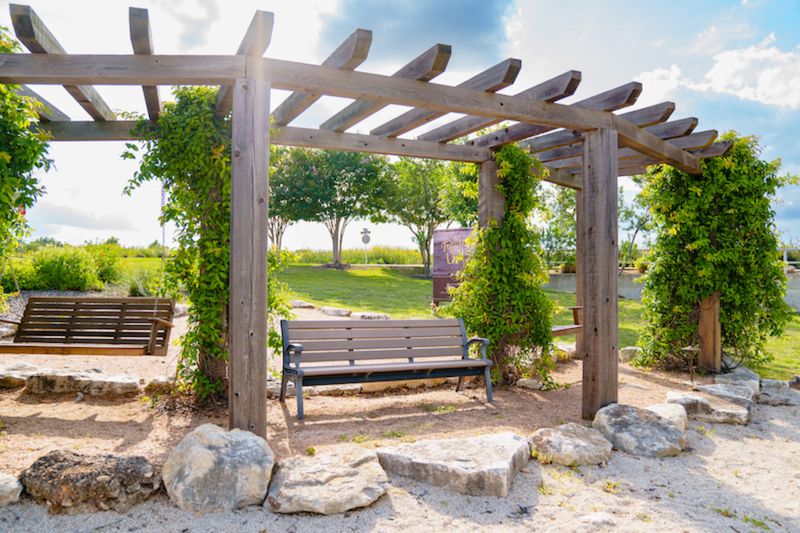
Texans who spend time on a covered patio know the frustration of sweeping up a constant mess of fallen leaves from the vine overhead. The right plant can make a real difference, and crossvine (Bignonia capreolata) is one of the strongest candidates for creating dense, overhead shade on a pergola in eastern, central, and Gulf Coast Texas.
Its semi-evergreen foliage often stays on the vine longer than a fully deciduous climber would, which can mean less of that stark bare-winter look. Before you plant one, though, it helps to understand where it grows best, what kind of support it needs, and what cleanup you can still expect.
Crossvine can shade a pergola without the bare season of a deciduous vine
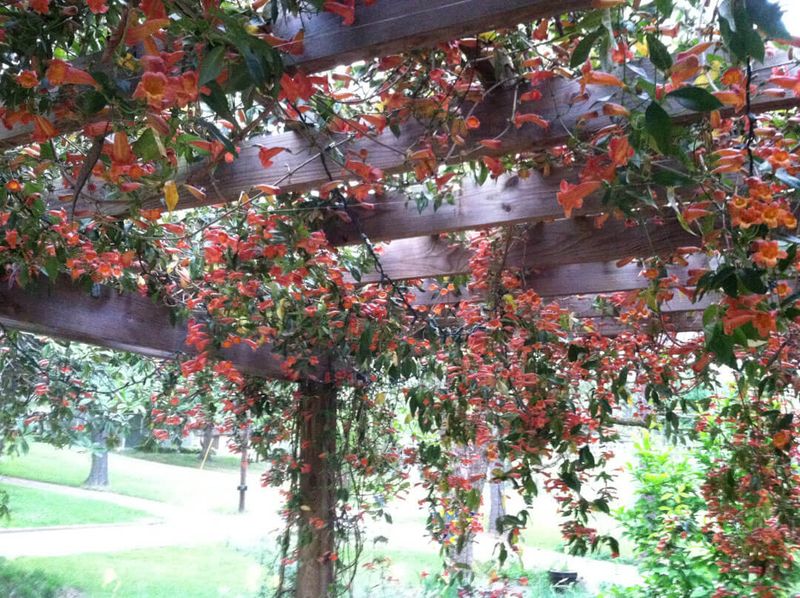
Crossvine, known botanically as Bignonia capreolata, is a woody, perennial vine native to parts of the southeastern and south-central United States, including eastern, central, and Gulf Coast Texas. Where conditions suit it, the plant can cover a pergola with a thick canopy of glossy, compound leaves that may stay green through much of the year.
A shaded patio naturally feels more comfortable than one baking under direct sun, and a well-established crossvine canopy can provide that kind of useful overhead cover.
The key qualifier here is “semi-evergreen.” USDA plant guidance for crossvine classifies it as semi-evergreen and notes that harsh winters can trigger leaf loss. In warmer parts of Texas, particularly along the Gulf Coast, foliage often persists longer than it would on a deciduous vine.
In central and northern Texas, a hard freeze may strip leaves more completely. The result is potentially less of the sudden, bare-branch look that comes with a fully deciduous climber, not a litter-free patio.
That distinction matters for setting expectations. Crossvine still drops leaves, sheds spent flowers each spring, and produces seed capsules in late summer and fall.
You will still sweep. The difference, when conditions are favorable, is that the leaf-drop may be more gradual and spread across the year rather than arriving all at once in autumn.
Regional fit, sturdy support, and consistent training all shape how well the vine performs, so each of those factors deserves a closer look before you commit to planting.
Is crossvine right for your part of Texas?
Texas covers a lot of ground, and crossvine is not equally at home across all of it. The Native Plant Society of Texas documents its strongest relevance in the East Central Texas Plains, Northern Post Oak Savanna, Balcones Canyonlands, Edwards Plateau, and the Western Gulf Coastal Plain.
Those regions share woodland edges, moist creek drainages, and the kind of canopy-filtered light where crossvine naturally establishes itself. If your property sits within or near these zones, crossvine is a reasonable candidate for a pergola planting.
Readers in drier or higher-elevation parts of West Texas, the Panhandle, or the Trans-Pecos face a different situation. Crossvine’s documented range does not extend comfortably into those regions, and trying to force it into a climate or soil type well outside its natural habitat typically means more irrigation, more stress on the plant, and less of the dense canopy you are hoping for.
Checking with a local Texas Cooperative Extension office or a native plant nursery before purchasing can save real time and money.
Winter behavior is another regional variable worth considering. Along the warmer Gulf Coast, foliage retention through winter is more consistent.
In the Hill Country and central Texas, a severe freeze like the one in February 2021 can cause significant dieback or complete defoliation even on an established plant. Recovery is possible, but it delays the shade canopy you are counting on.
For regions farther southeast, the UF/IFAS Florida-Friendly Landscaping guidance also lists crossvine as a suitable vine for shaded and semi-shaded landscape applications, which reflects its adaptability along the warmer Gulf corridor. Wherever you garden in Texas, evaluate your local microclimate, soil moisture, and winter exposure before deciding whether crossvine is the right fit.
Light and drainage shape the canopy and flowers
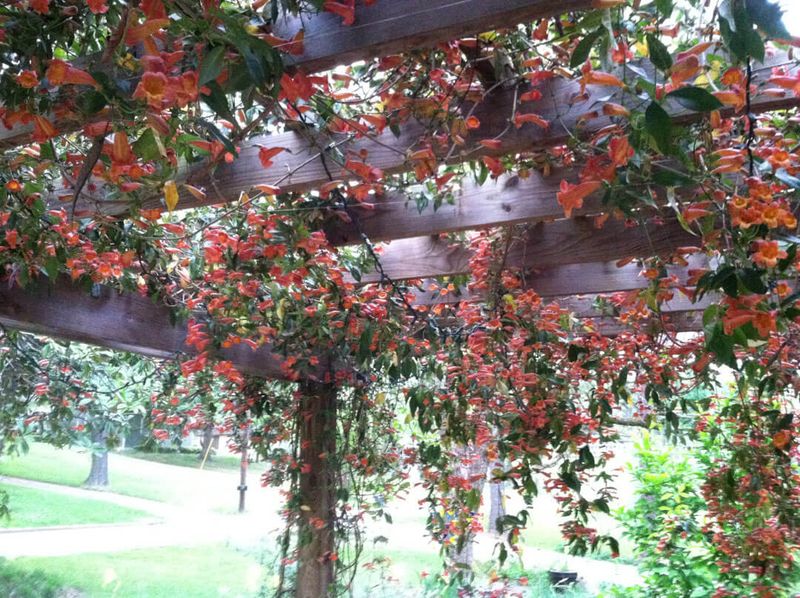
Picking the right spot for crossvine starts with two site factors: how much light the pergola receives and how well the soil drains beneath it. The City of Austin’s plant guide for crossvine confirms that the vine tolerates full sun, part shade, and shade, which makes it flexible for a range of patio orientations.
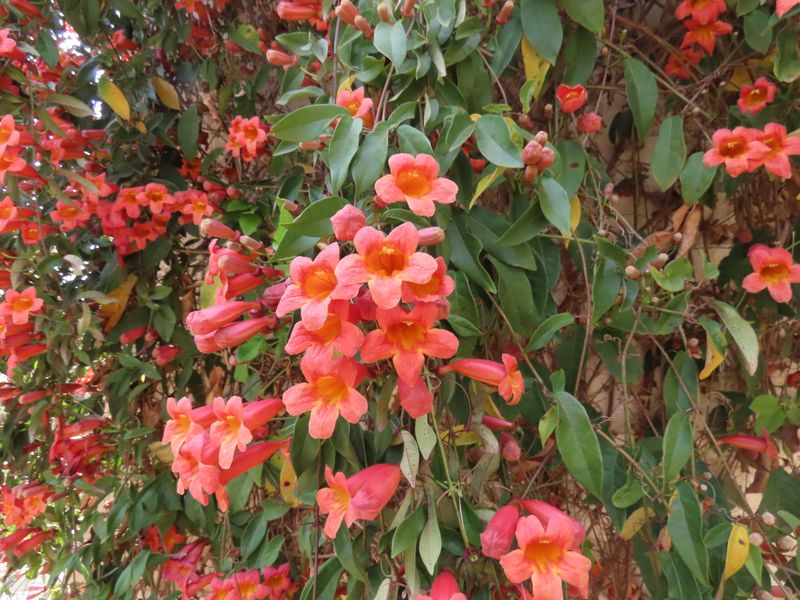
The trade-off is that flowering responds strongly to light levels. More direct sunlight generally produces heavier bloom, while a site that stays in deep shade most of the day may grow plenty of foliage but offer fewer of those tubular, orange-red flowers.
For most Texas pergolas, a position that catches bright morning sun or filtered afternoon light tends to strike a practical balance. You get a dense enough canopy for real shade by midday while still giving the vine enough light to produce flowers each spring.
A pergola on the east or southeast side of a house, or one shaded only by open lattice rather than a solid roof, often fits that description well. NC State Extension’s crossvine profile and the JC Raulston Arboretum plant profile both note this light-to-flower relationship, which is worth keeping in mind when you choose a planting location.
Soil drainage matters just as much. Crossvine adapts to clay, loam, sand, and limestone-based soils common across its Texas range, and it can handle brief flooding without serious damage.
What it does not tolerate well is soil that stays waterlogged for extended periods. Consistently saturated roots weaken the plant and reduce the dense, vigorous growth you want overhead.
Water needs are generally low to medium once the vine is established, so heavy clay that drains slowly between rains is a concern worth addressing at planting with amended beds or a raised planting position. The Native Plant Society of Texas crossvine page lists water needs as low to medium, reinforcing that good drainage is more important than frequent irrigation once roots are settled.
Prepare a sturdy, controllable support system
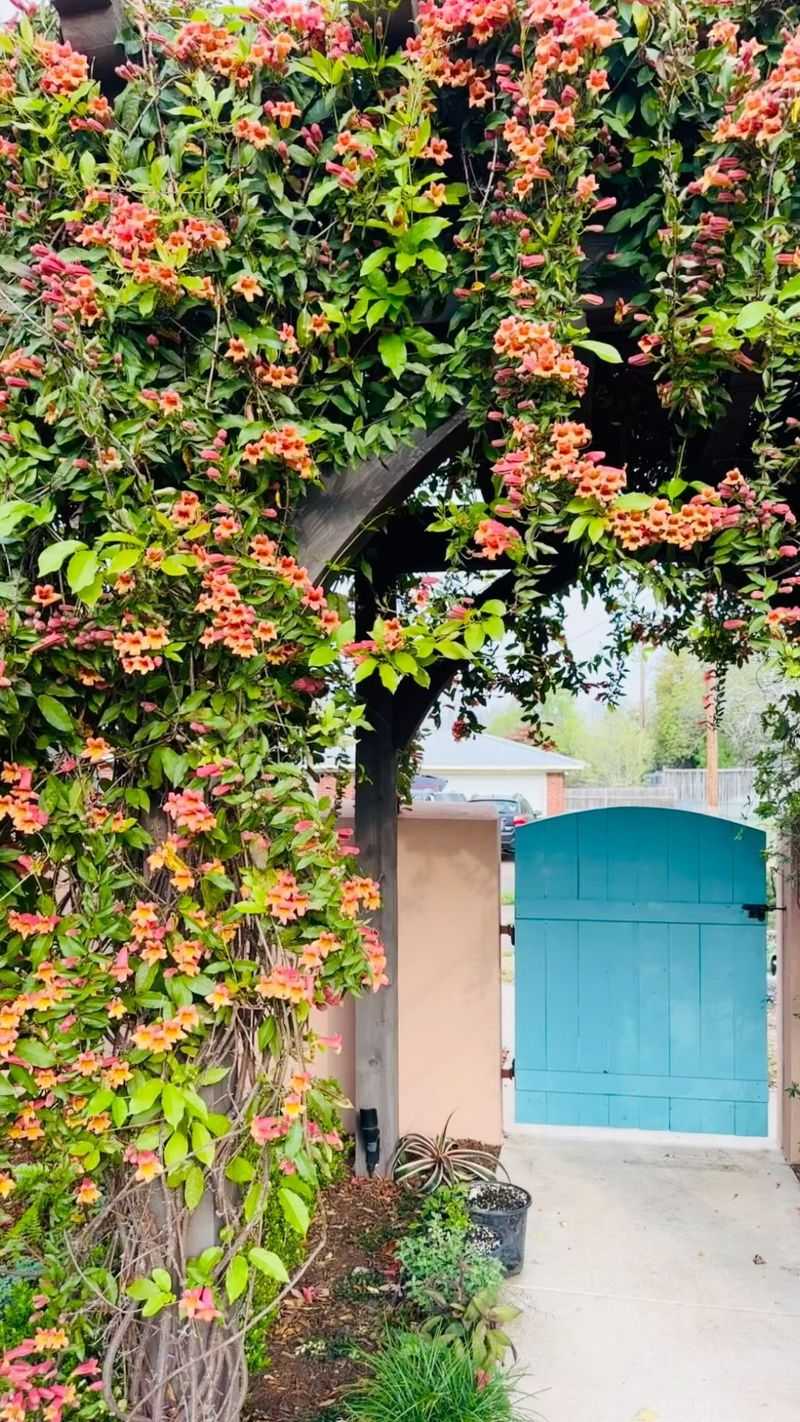
Crossvine is not a lightweight annual that you can train along a flimsy bamboo stake. USDA documentation notes that the vine can reach anywhere from roughly 30 to 70 feet in length depending on conditions, cultivar, soil richness, and available sunlight.
A pergola that feels substantial when you build it can look undersized once a mature crossvine gets going, so matching the structure to the plant’s eventual size is a practical first step before you ever buy a plant.
The vine climbs using two mechanisms: slender tendrils that wrap around supports and adhesive pads that press directly onto surfaces. The tendrils work well on wire, lattice, and wooden beams.
The adhesive pads are the part that requires more thought. The JC Raulston Arboretum crossvine profile notes that the pads allow the vine to cling to masonry and other surfaces, and the Clemson Extension vine guide recommends installing a dedicated trellis or wire system rather than letting adhesive vines attach wherever they reach.
That advice applies directly to a pergola situation: deliberately installed wire runs or wood lattice panels give the vine a clear path to follow and make it far easier to redirect or cut back growth before it spreads somewhere unwanted.
Keep the vine off painted wood trim, siding, gutters, rooflines, utility meters, and any fragile wooden element connected to your house. Adhesive pads can pull paint and damage surfaces when removed, and stems that reach a roofline or gutter can cause structural problems over time.
The Native Plant Society of Texas specifically recommends using crossvine on arbors, fences, and large trellises rather than allowing it to spread unchecked onto buildings. A sturdy pergola built from pressure-treated lumber or cedar, fitted with planned wire guides, gives you a framework the vine can cover while keeping growth where you want it.
Train and prune the vine to keep shade over the seating area
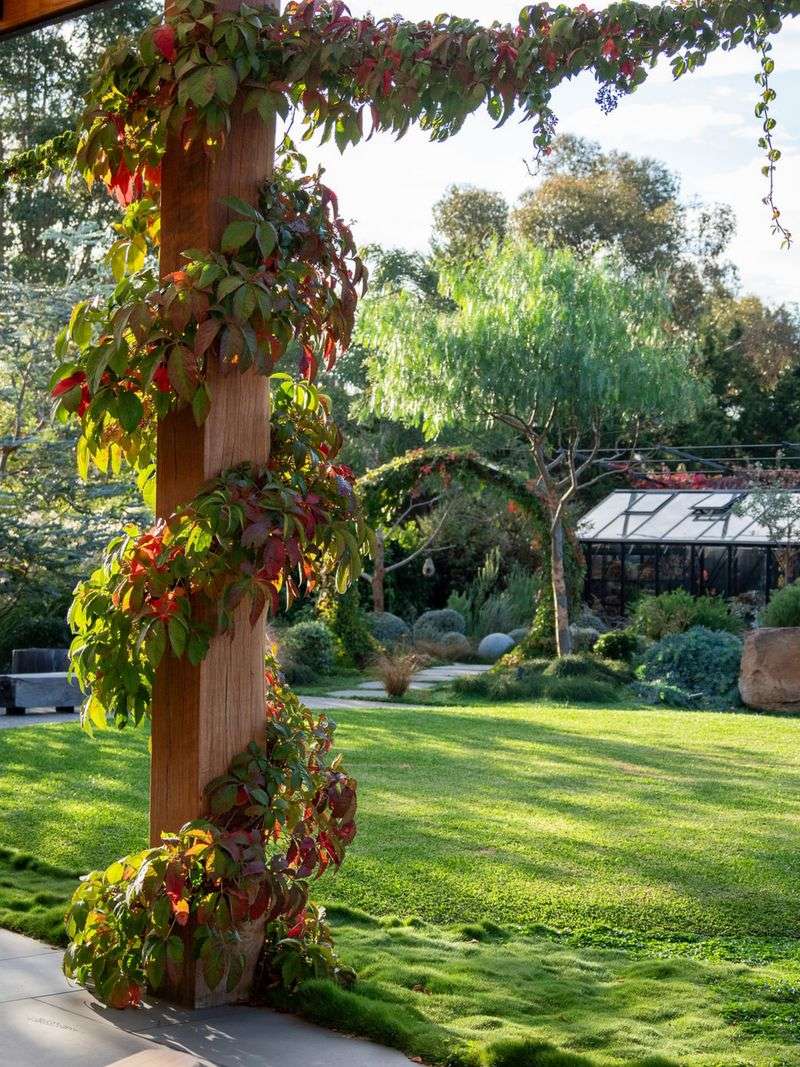
Getting crossvine to cover a pergola the way you want requires active guidance from the start, not just planting and waiting. Young stems are flexible and easy to tie toward the support structure, so the first growing season is the right time to establish the pattern you want.
Use soft garden ties or flexible twine to direct stems horizontally along beams and vertically up posts. The goal early on is to spread growth evenly across the framework so the eventual canopy covers the seating area rather than piling up in one corner.
Austin’s plant guide for crossvine specifically recommends pruning to direct and control the vine’s growth, and the Native Plant Society of Texas echoes that advice. Prune once or twice a year to remove stems that push beyond the pergola toward the roofline, gutters, neighboring shrubs, or walkways.
After the main spring bloom is a practical time for a heavier pruning pass because you get to enjoy the flowers first and then cut back before the vine puts on its main summer growth push.
Root suckers are a separate management task. Crossvine can spread by sending up new shoots from its root system at some distance from the base plant.
If you want to keep the vine contained to the pergola area, pull or cut those suckers as soon as you spot them. NC State Extension notes that the plant can become aggressive if left unmanaged, which makes sucker removal a regular part of the maintenance routine rather than an occasional chore.
Being native does not make crossvine self-limiting, and a pergola planting that goes unpruned for a couple of seasons can quickly send growth into places you did not intend.
Expect seasonal debris even when foliage lasts longer
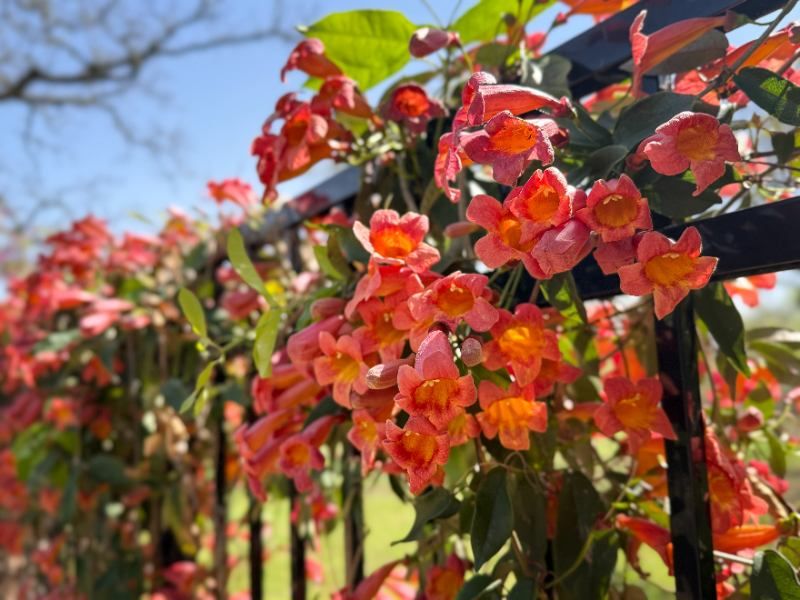
One of the most common misunderstandings about crossvine is that semi-evergreen means debris-free. The foliage can stay green through much of the year, particularly in warmer parts of eastern and Gulf Coast Texas, but it does not stay on the vine permanently.
USDA documentation notes that leaves may turn reddish-purple during cold or stressful periods and can drop when temperatures fall hard enough. A significant freeze will accelerate that process considerably, leaving the patio beneath the pergola covered in fallen foliage just as quickly as any deciduous vine would.
Spring brings a different kind of debris. The tubular flowers that make crossvine so attractive to hummingbirds and pollinators drop after bloom, leaving spent petals and flower tubes on the surface below.
The Native Plant Society of Texas describes the plant as producing flat, brown, multi-seeded capsules that mature in late summer or fall. Those seed pods add another layer of seasonal cleanup, and a mature vine with a large canopy can produce a meaningful number of them.
Compared with a fully deciduous vine, crossvine may offer a less abrupt seasonal leaf-drop pattern, meaning the leaves tend to fall gradually over a longer period rather than all at once over a week or two in autumn. NC State Extension’s profile reinforces the semi-evergreen classification, which supports that expectation.
What it does not support is any promise of significantly less total debris or a measured reduction in sweeping time. Plan on cleaning the patio beneath a crossvine pergola regularly throughout the year, with the understanding that the timing of the biggest cleanup may differ from what you’d experience with a deciduous alternative.
Know when aggressive growth and fire risk make it a poor fit
Crossvine earns the label “very aggressive climber” from the City of Austin’s plant guide, and that description should factor into your decision before planting. On a large, freestanding pergola set well away from the house, that vigor works in your favor by filling in the canopy.
On a small structure attached to the house, near utility equipment, or close to a fence shared with a neighbor’s garden, the same energy becomes a management problem. Stems that are not redirected promptly will follow whatever surface is available, including painted siding, window frames, gutters, and neighboring trees or shrubs.
USDA guidance also notes that crossvine can become weedy or invasive in some regions or habitats when unmanaged, with spread occurring through both seed dispersal and root suckers. If your yard is small, borders a natural area, or sits adjacent to a creek or woodland edge, the potential for spread beyond your intended planting area is a real consideration.
Removing established crossvine from areas where it has naturalized uninvited is considerably harder than preventing the spread in the first place.
Fire safety is a concern that applies specifically to drier, fire-prone parts of Texas. NC State Extension rates crossvine as having a high flammability rating and advises against planting it within a home’s defensible space.
In central and west Texas communities where wildfire risk is elevated, placing a dense, woody vine directly on or adjacent to a structure adds fuel load near the building. Homeowners in those areas should weigh that risk carefully and consider whether a less flammable native plant would be a better fit.
On the ecological side, crossvine does offer real benefits when it is well-placed and well-managed. Its tubular flowers attract hummingbirds and pollinators during spring bloom, and the Native Plant Society of Texas notes its value to native wildlife.
Deer may browse the foliage, particularly on young plants, which is worth factoring in if deer pressure is high in your neighborhood. The ecological upside is real but not guaranteed, and it does not override the need to place the vine where its growth can be managed safely.
Choose crossvine for qualified shade benefits, not a maintenance-free patio
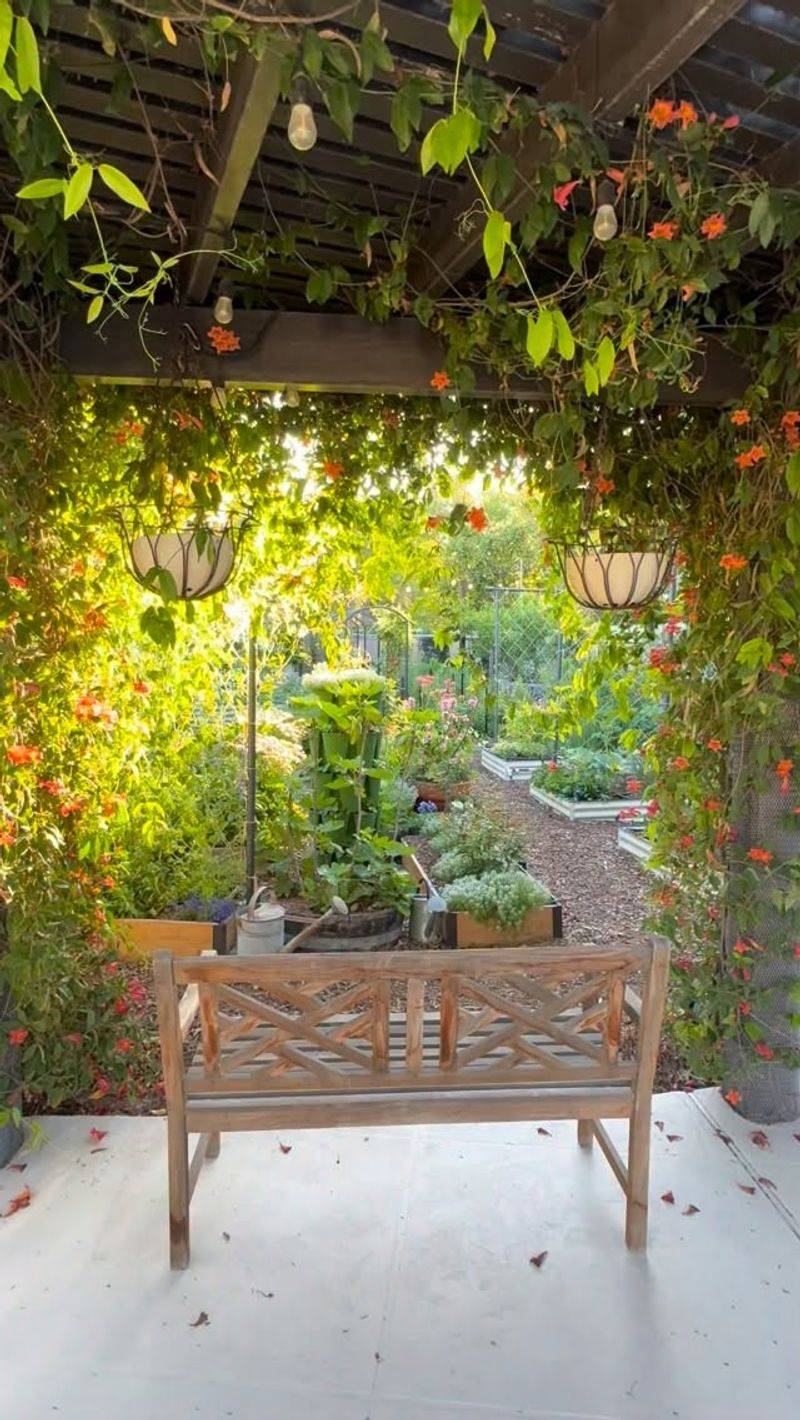
Crossvine earns a place on a Texas pergola when three conditions line up: the site falls within its documented range in eastern, central, or Gulf Coast Texas; the structure is sturdy and set up with a planned support path that keeps growth off the house and utilities; and the gardener is ready to prune regularly and clean up seasonal debris. When those conditions are met, the vine can deliver a dense, leafy canopy that provides real shade and may hold its foliage longer into the cooler months than a fully deciduous alternative would.
What crossvine cannot deliver is a maintenance-free overhead garden. The Native Plant Society of Texas and Austin’s plant guide both treat it as a plant that requires ongoing direction, and the USDA semi-evergreen classification makes clear that foliage loss is a matter of when and how much, not whether it happens at all.
Choose crossvine because you want a native, wildlife-friendly vine with strong shade potential and a longer foliage season than a bare-branched deciduous climber, and you will likely be satisfied. A pergola shaded by an established crossvine on a warm Texas afternoon is a genuinely pleasant place to be.