
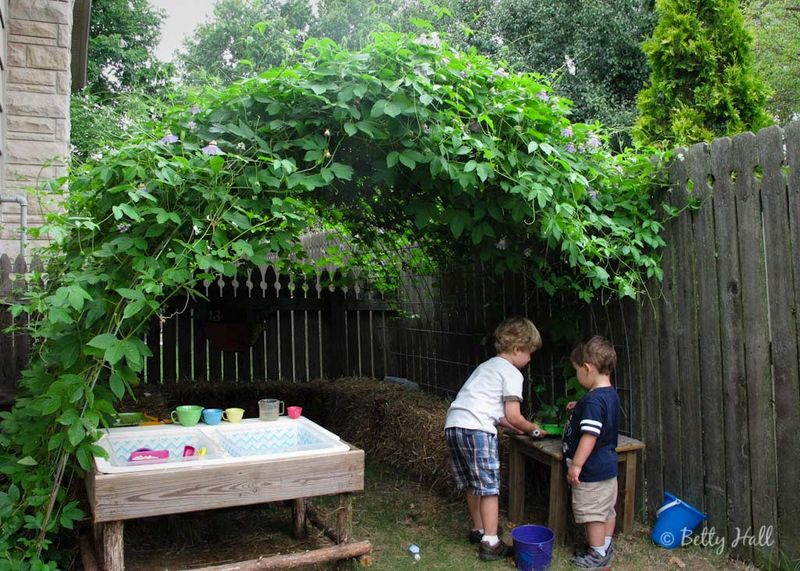
A bare fence can feel like a missed opportunity, especially during the long Texas warm season when everything else in the yard is growing. Purple passionflower, known botanically as Passiflora incarnata or by its common name maypop, is a native vine documented in parts of Texas that can climb a fence and fill it with unusual, showy blooms from early summer into fall.
Its foliage also serves as a feeding ground for Gulf fritillary and variegated fritillary caterpillars, turning a plain boundary into a small wildlife habitat. With realistic expectations about growth, seasonal dieback, and regular maintenance, this vine can become one of the most rewarding plants on a sunny Texas fence line.
Meet the maypop, a documented Texas vine with a vivid seasonal payoff
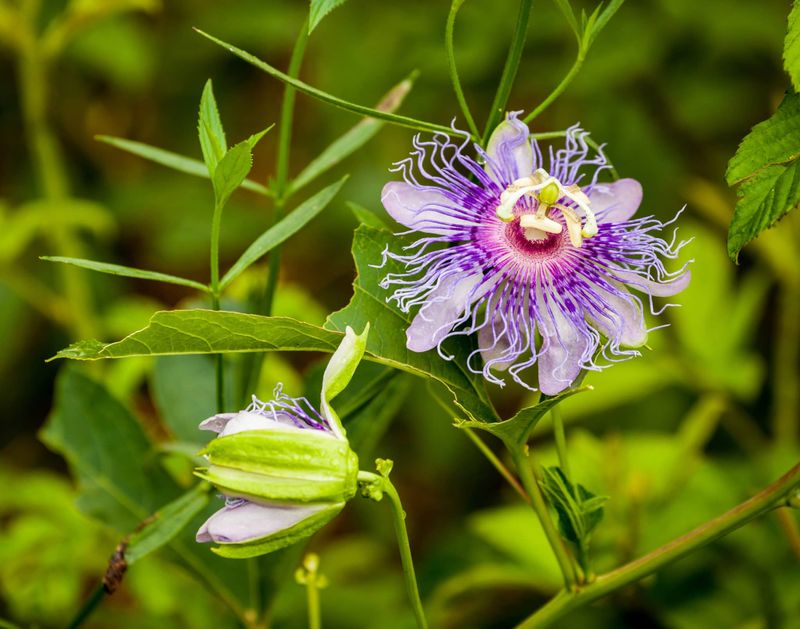
Purple passionflower, or maypop, goes by the scientific name Passiflora incarnata, and that full name matters more than it might seem. The nursery trade uses “passionflower” loosely to describe dozens of species, including tropical vines with entirely different cold hardiness, growth habits, and ecological value.
When you specify Passiflora incarnata, you are asking for the perennial, tendril-climbing species documented in parts of Texas and the broader southeastern United States, not a generic tropical substitute.
Picture a fence line that currently shows bare wood or chain link from May through October. Maypop sends out slender tendrils that grip wire, wood, or trellis material and pull the vine upward, covering sections of fence with lobed, deep-green leaves and, during the warm season, flowers that stop people mid-stride.
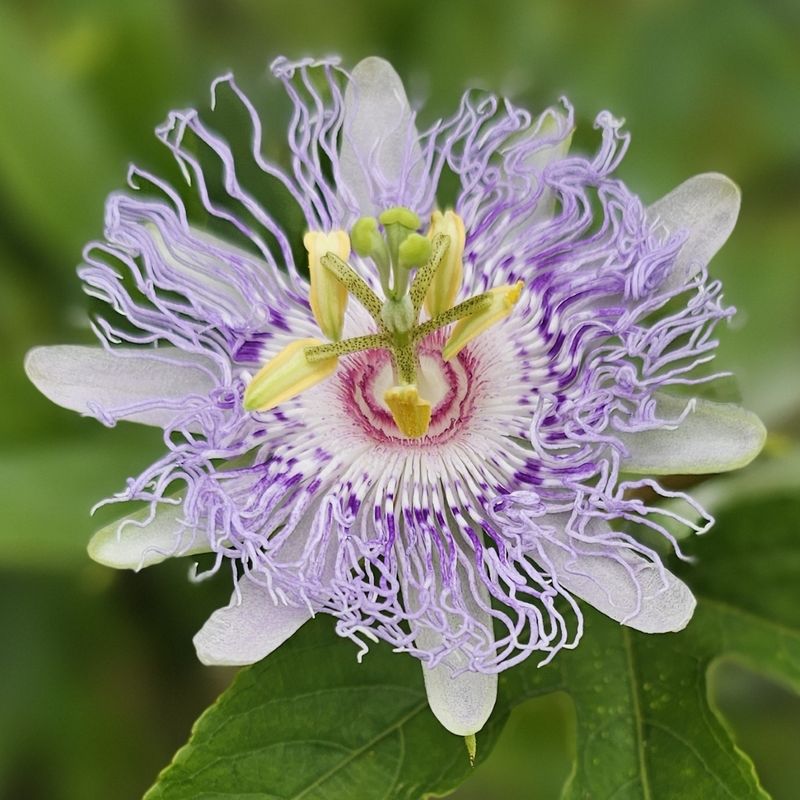
Each bloom is roughly two to three inches across with a corona of purple and white filaments radiating from the center, a structure unlike almost anything else growing in a Texas yard. USDA NRCS documentation confirms the species climbs fences and walls using those tendrils, making a supported fence an appropriate and practical home for it.
Performance across Texas is not uniform. The state spans multiple ecoregions with different soils, rainfall patterns, and temperature extremes, and Texas SmartScape lists the vine as adapted for parts of the state while the Native Plant Society of Texas includes it in regional plant-sale offerings.
Gardeners in East and Central Texas tend to report reliable results; those in drier western regions or the Panhandle should check local native-plant guidance before planting. Choosing the right species and verifying regional fit are the two steps that separate a successful fence vine from a frustrating one.
Why this fence vine hosts fritillary caterpillars
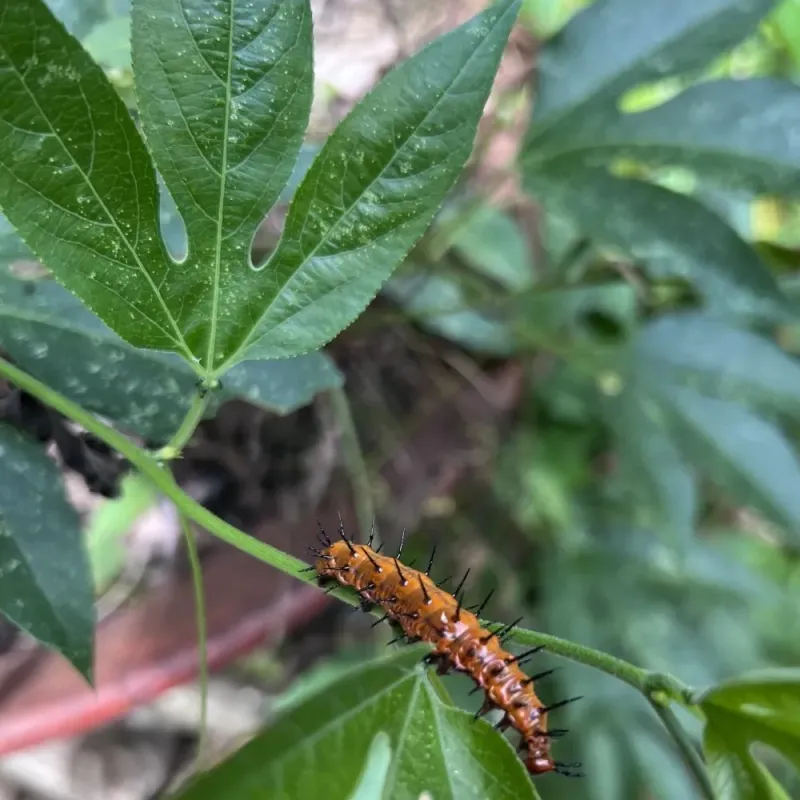
Maypop’s value in a wildlife-friendly yard goes well beyond its flowers. The vine’s leaves are the primary food source for Gulf fritillary caterpillars (Agraulis vanillaeEuptoieta claudia) and variegated fritillary caterpillars ().
Female butterflies of both species seek out passion vines specifically to lay their eggs, and the hatching caterpillars feed on the foliage as they develop. Butterflies and Moths of North America documents Passiflora incarnata as a confirmed host plant for the Gulf fritillary, one of the most recognizable orange-winged butterflies in Texas gardens.
Adult butterflies and caterpillars have completely separate food needs. Caterpillars eat foliage; adult butterflies sip nectar from flowers.
The passionflower blooms do attract bees and some other pollinators, and peer-reviewed research on Passiflora incarnata floral biology describes the flowers as structured to reward visiting pollinators. Adult Gulf fritillaries, however, tend to seek nectar from plants like lantana rather than relying on passionflower as a primary nectar source.
Planting maypop creates the larval habitat; other flowering plants nearby complete the adult butterfly’s food picture.
One species that maypop does not support is the monarch butterfly. U.S.
Forest Service monarch guidance is clear that monarch caterpillars require milkweed (Asclepias species) as their host plant. Passionflower is not a substitute.
If supporting monarchs is also a goal, milkweed plantings need to be part of the plan separately.
The variegated fritillary is a second species that uses passion vine as a larval host, adding another layer of wildlife value to the same fence planting. Both fritillary species produce multiple generations per season in Texas, which means the vine can host successive waves of caterpillars through the warm months rather than just one brief cycle.
Give the fence vine sun, structure, and room to spread
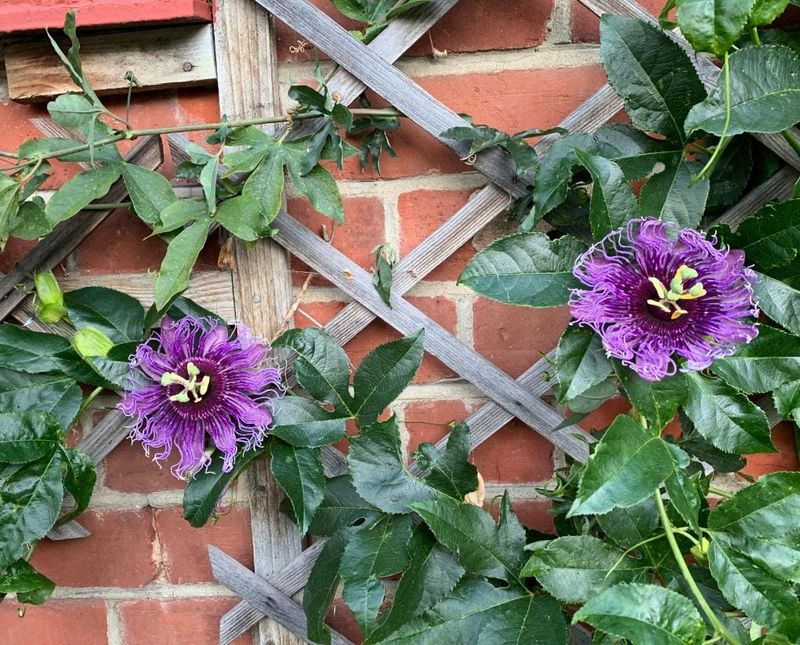
Siting maypop correctly is the single decision that most affects whether the vine becomes a rewarding fence feature or a struggling plant that never flowers well. Sun exposure is the most important variable.
At least half a day of direct sun is the minimum for dependable flowering, and full sun generally produces the best bloom density. University of Tennessee Gardens guidance notes that the vine tolerates some partial shade, but a fence line that sits in heavy shade for most of the day is likely to produce weak growth and fewer flowers.
Soil preference leans toward fertile, well-drained ground, but maypop is more flexible than many ornamentals. USDA NRCS planting guidance notes that the species can tolerate heavier clay soils and some dry conditions once it is established, which is practical information for Texas gardeners who deal with both.
Amending a planting hole with compost helps in heavy clay, but the vine does not need a highly manicured bed to perform.
Spread is the variable that surprises new growers most. Tennessee Smart Yards and other university sources report mature lengths ranging from roughly 6 to 8 feet up to 25 feet or more depending on conditions.
A fence line along a property edge, away from small ornamental beds or natural areas, gives the vine room to move without creating management headaches. Texas SmartScape specifically identifies a trellis or fence as an ideal support structure, which confirms that a prepared fence line is the right environment – as long as there is adequate room on both sides for the vine to expand over multiple seasons.
Train the tendrils along the section you want to soften
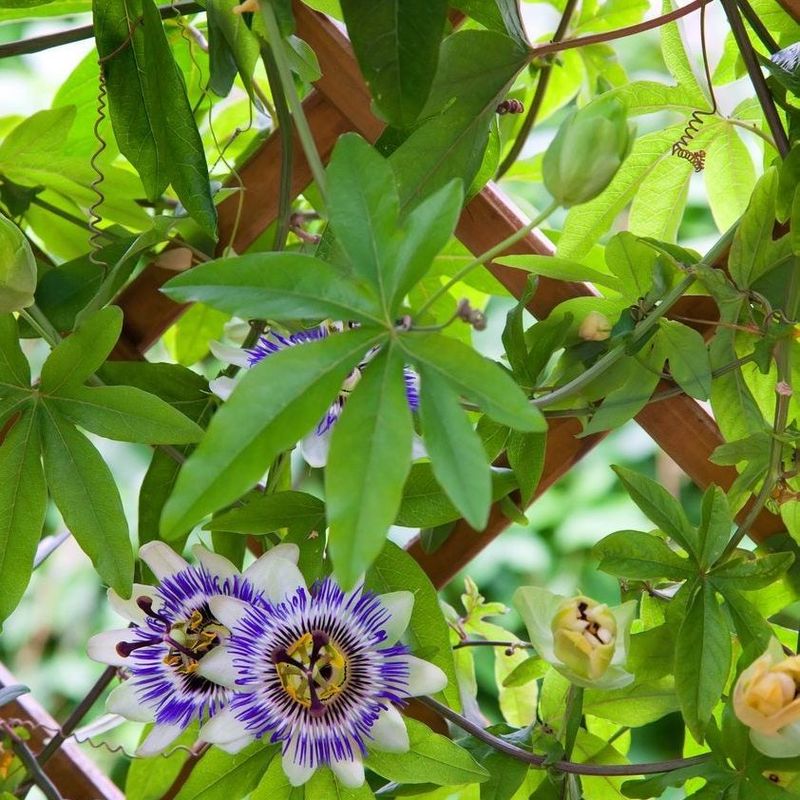
Installing the support before the plant goes in the ground is the step most gardeners skip and later regret. Maypop’s tendrils search for something to grip almost immediately after new growth begins.
A fence with horizontal wires, wooden rails, or wire mesh gives those tendrils a clear path upward and along the section of fence you want covered. Without a defined framework, young stems sprawl across the ground or tangle into neighboring shrubs, and redirecting an established vine is harder than guiding it from the start.
Once the support is in place, USDA NRCS documentation confirms that the vine climbs by tendrils and can be directed along fences and walls. Early in the first season, loosely tying new shoots to the fence with soft garden twine helps establish the direction of growth.
As the tendrils catch and grip on their own, the need for tying decreases. The goal in the first year is to build a framework of main stems along the fence, not to achieve full coverage immediately.
Coverage expectations should stay realistic. Growth in the first season is often modest while the root system establishes itself underground.
The second and third seasons typically bring noticeably stronger above-ground growth, but final spread still depends on sun exposure, soil quality, summer rainfall or irrigation, and how hard the vine was knocked back by the previous winter. USDA planting guidance and Texas SmartScape both frame the vine as a fence-covering candidate, but neither promises a dense living wall by the end of the first growing season.
A patient approach, combined with consistent early training, gives the best chance of building the display the fence line needs.
Manage the runners and protect the caterpillars
Underground runners are maypop’s most consistent management demand. The vine spreads by sending root suckers outward from the main plant, and new shoots can emerge several feet away from the original planting within a season or two.
USDA NRCS planting guidance recommends removing these suckers regularly, and Tennessee Smart Yards echoes that advice. Pulling or cutting unwanted shoots at the soil line every few weeks during the growing season keeps the vine where you want it without requiring major renovation.
Framing this as routine management rather than a sign that something has gone wrong is important. Maypop is vigorous, not invasive in every context, but it is also not self-contained.
Gardeners who plant it along a fence bordering a natural area, a neighbor’s yard, or a small, carefully maintained ornamental bed should check the perimeter consistently. NC State Extension notes the spreading tendency and recommends monitoring, especially in tighter landscapes.
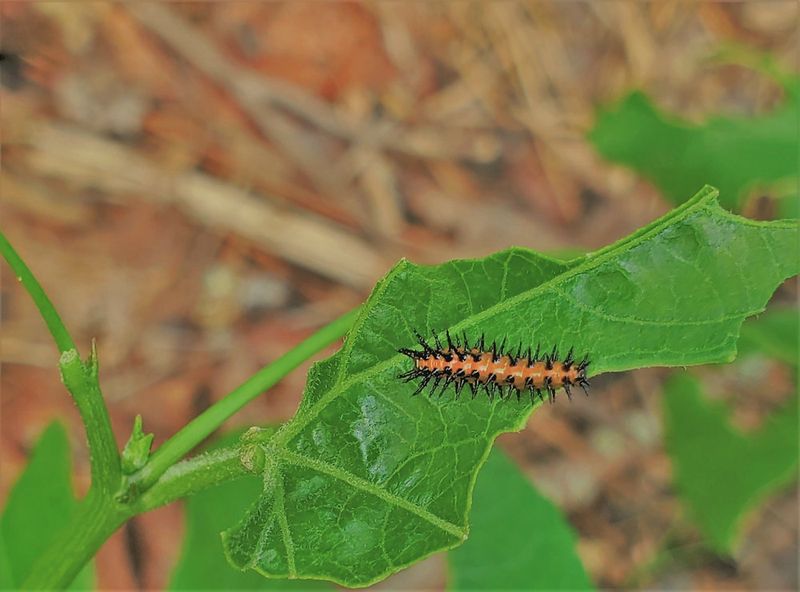
Foliage loss from caterpillar feeding is a separate issue that deserves a different response entirely. When orange-and-black Gulf fritillary caterpillars appear on the leaves and chewed stems become visible, that is the habitat working as intended.
The caterpillars are consuming the foliage because the vine is functioning as a host plant. Reaching for a broad-spectrum insecticide at that point eliminates the wildlife benefit the planting was designed to create.
If the caterpillar feeding becomes so heavy that the vine is significantly stripped, the plant typically recovers once the current generation pupates. Gulf fritillary life-cycle documentation and variegated fritillary records both show that Texas populations can produce multiple generations in a single warm season, so the vine may host successive waves of caterpillars.
Tolerating some leaf damage is part of the ecological trade-off that makes this planting genuinely useful rather than just ornamental.
Expect successive warm-season flowers, not year-round coverage
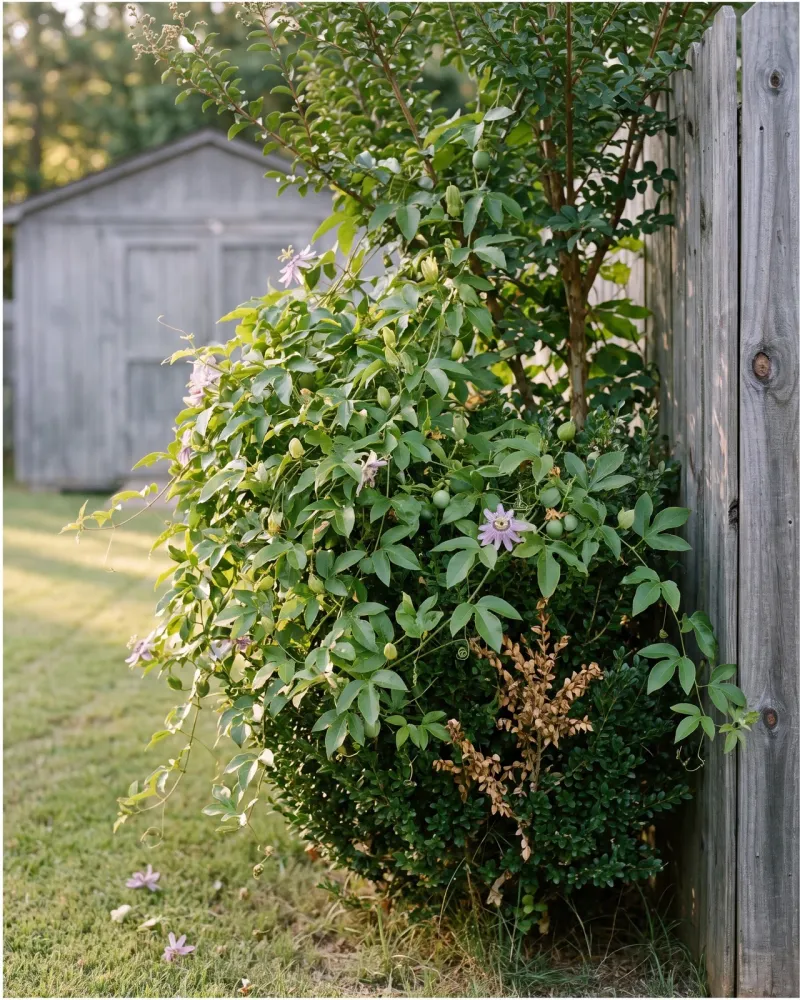
The flowering window for maypop is long by native-plant standards, but it is not continuous and it is not year-round. Published sources generally place the bloom period from June through September.
The Woodlands Township, Texas, pollinator guidance reports flowering from late spring through September or October in that part of the state, which reflects the longer warm season along the Gulf Coast. Gardeners in cooler or drier parts of Texas may see a shorter window.
Individual flowers are short-lived. Research on Passiflora incarnata floral biology describes each flower as lasting less than 24 hours.
The weeks-long display that makes the vine so striking comes from a succession of new buds opening over time, not from any single bloom staying open. On a well-established vine in full sun, new flowers can open daily during peak season, creating the impression of continuous color even though each flower is gone within a day.
Winter changes the picture completely. Maypop is herbaceous and deciduous in most Texas climates, meaning the above-ground growth dies back after frost.
NC State Extension and Tennessee Smart Yards both note that the plant may disappear entirely in winter and emerge late in spring, sometimes not showing new growth until the soil has warmed well into the season. A fence covered in maypop in August will look bare by December, and that is normal behavior, not plant failure.
Planning the fence line with that seasonal rhythm in mind – lush and flowering from early summer into fall, dormant and bare through winter – leads to realistic satisfaction rather than disappointment. U.S.
Forest Service wildflower documentation supports the June-through-September general range, which aligns with the warm-season gardening window most Texas homeowners already work around.
Check your Texas ecoregion and home-safety conditions
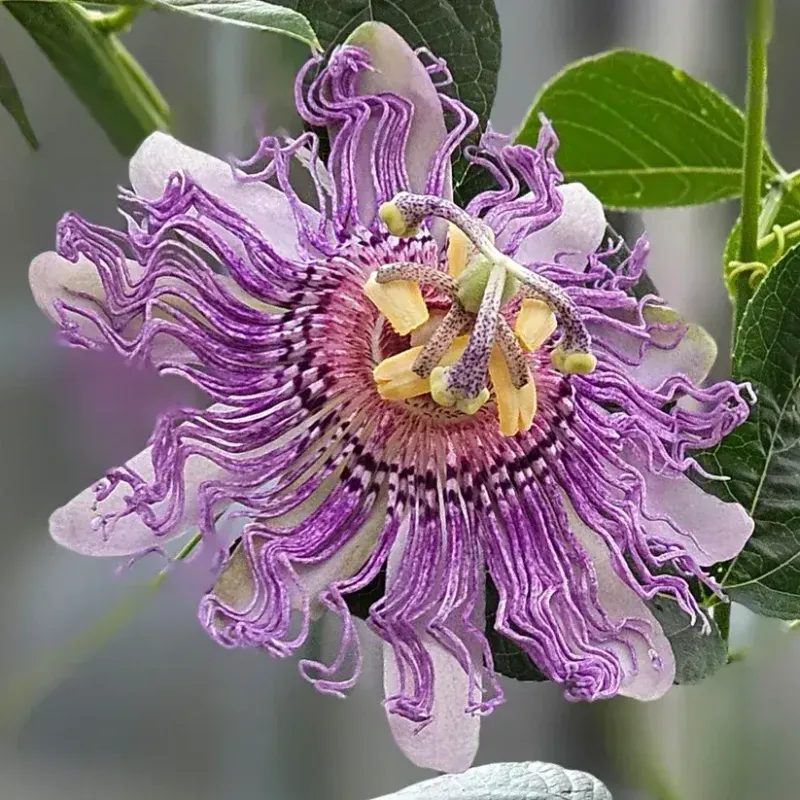
Texas is not one climate zone, and maypop does not perform identically across all of it. The state’s ecoregions range from the humid Piney Woods of East Texas to the semi-arid Edwards Plateau, the short-grass prairies of the Panhandle, and the desert conditions of the Trans-Pecos.
Texas SmartScape lists the vine as adapted for parts of the state, and the Native Plant Society of Texas includes it in regional plant offerings, but neither source guarantees uniform performance in every Texas county. Before planting, check with a local native-plant nursery, your county extension office, or a regional native-plant organization to confirm that Passiflora incarnata has a documented track record in your specific area.
University of Florida IFAS documentation notes that the species is native to the southeastern United States, which overlaps with East and Central Texas more directly than with the state’s western and northern edges. Factors including winter low temperatures, summer rainfall patterns, soil drainage, and proximity to natural areas all affect whether the vine establishes reliably and stays where you put it.
Fire safety is a separate consideration for homes in fire-prone settings. NC State Extension classifies the plant as highly flammable and notes it may be unsuitable for defensible space immediately around a structure.
Texas homeowners in areas with wildfire exposure should consult local fire-wise planting guidance before installing a dense vine along a fence that sits close to the house.
Safety questions also arise around plant parts. University sources, including NC State Extension, identify the leaves and stems as poisonous to humans because of cyanogenic compounds.
Ripe maypop fruit is described as edible in some sources, including University of Georgia Extension edible-landscape guidance, but correct identification of ripe fruit by someone familiar with the plant is essential before any consumption. Poison Control plant guidance is a useful first reference if there is any question about exposure.
Do not consume leaves, stems, or home-prepared teas made from any part of the plant.
Choose maypop when you want summer color and can manage its vigor
Maypop earns its place on a sunny fence line when the gardener goes in with clear expectations. Passiflora incarnata suits a fence that gets at least half a day of direct sun, sits away from small ornamental beds where runners would cause problems, and belongs to someone who wants fritillary caterpillars on the foliage and successive purple blooms from early summer into fall.
That is a specific profile, and it fits a good number of Texas yards.
The vine is not a match for every situation. NC State Extension documentation and multiple university sources are consistent: this plant spreads, dies back in winter, and requires ongoing sucker management.
It does not replace milkweed for monarchs – U.S. Forest Service monarch guidance is clear that monarch caterpillars need Asclepias species.
It does not provide year-round privacy screening. The leaves and stems are not safe to consume, and Poison Control remains a reliable reference for any plant-safety question.
For the right fence in the right Texas location, though, a well-established maypop delivers something genuinely hard to find: a native vine with showy warm-season flowers, documented Gulf fritillary host-plant value, and a deep root system that persists through Texas summers. A bare fence is just a starting point.