
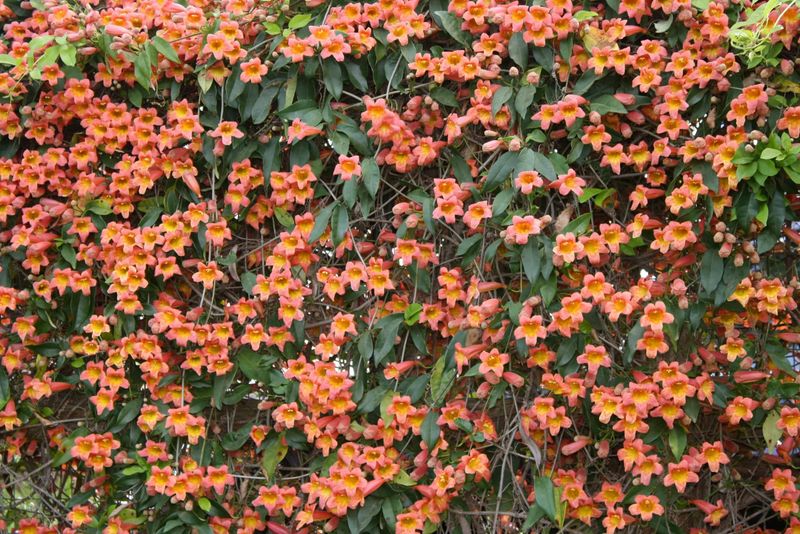
A woody vine that covers a fence with trumpet-shaped flowers and keeps its leaves through the hottest months sounds almost too good to be true for Texas gardeners. Crossvine (Bignonia capreolata) comes close to that promise in the right parts of the state, offering fragrant blooms, semi-evergreen foliage, and a toughness that earns its reputation in brutal summers.
The catch is that no vine is completely hands-off, and crossvine is no exception. Understanding what it actually delivers, and when, helps you get the most from one of the South’s most underused native climbers.
Crossvine Can Turn a Suitable Hot Fence into a Flowering Screen
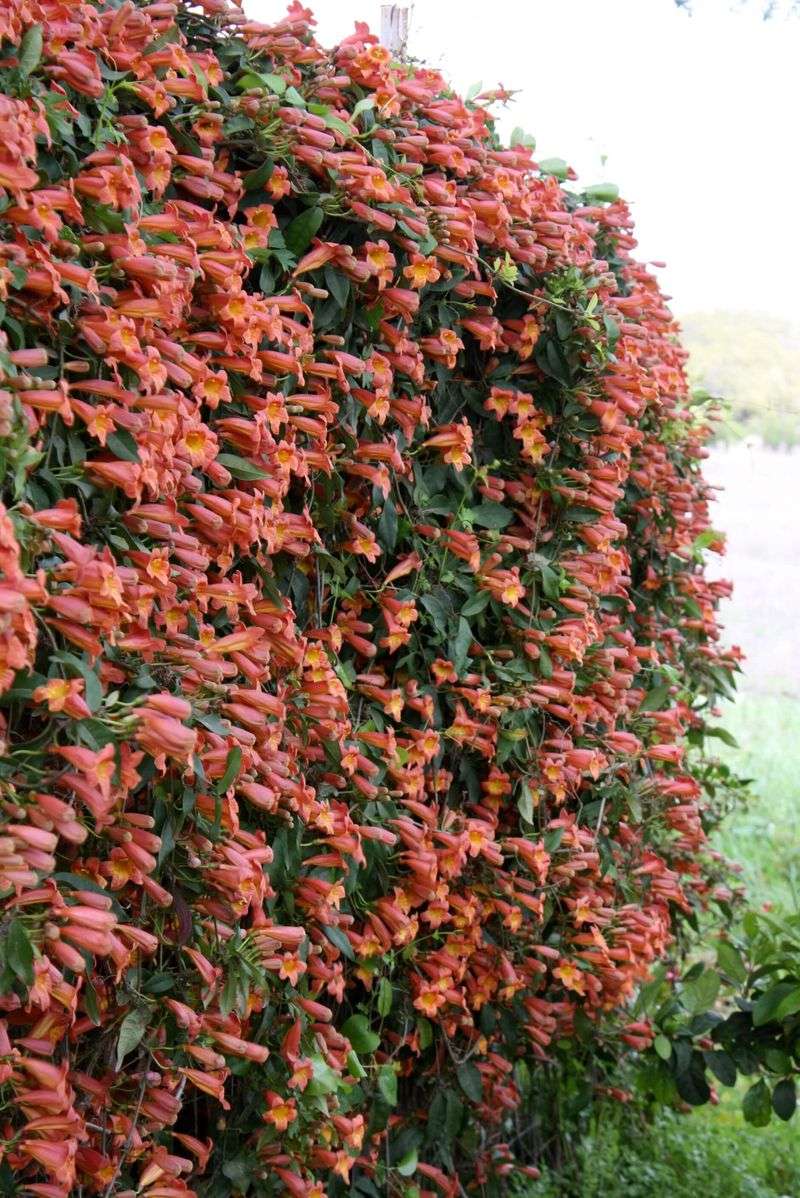
Crossvine earns its place on a hot Texas fence by doing several things at once: it climbs aggressively, produces clusters of trumpet-shaped flowers in shades of orange-red and yellow, and holds onto its leaves through most of the year. That combination gives gardeners both a seasonal floral display and a green privacy screen that persists even when temperatures climb past the point where many ornamental vines give up.
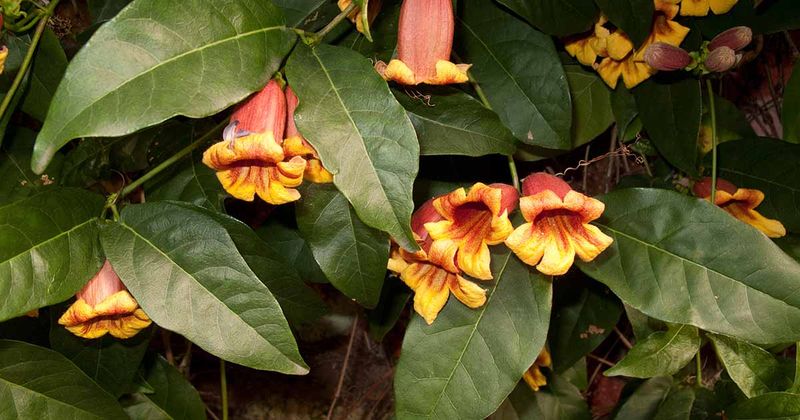
As the Native Plant Society of Texas notes, crossvine is a vigorous woody vine native to parts of Texas, including the East Central Texas Plains, the Edwards Plateau, and the Western Gulf Coastal Plain. Its flowers are fragrant, attracting hummingbirds and other pollinators that begin visiting as early as late winter.
The name “crossvine” comes from the cross-shaped pattern visible in a cross-section of the stem, a small detail that makes it easy to identify at the nursery.
What crossvine is not, though, is a universally adapted vine that blooms nonstop from spring through September. Its main flowering period runs from late winter through spring, and its summer value comes primarily from dense, semi-evergreen foliage rather than a steady parade of fresh blooms.
North Carolina State Extension’s plant profile confirms the vine’s fragrant flowers and heat tolerance while also making clear that it is a vigorous grower that needs real management. Think of crossvine as a high-impact native vine with an honest seasonal rhythm, not a magical summer-long bloomer.
Why Crossvine Fits Some Texas Sites—and Not Every Region
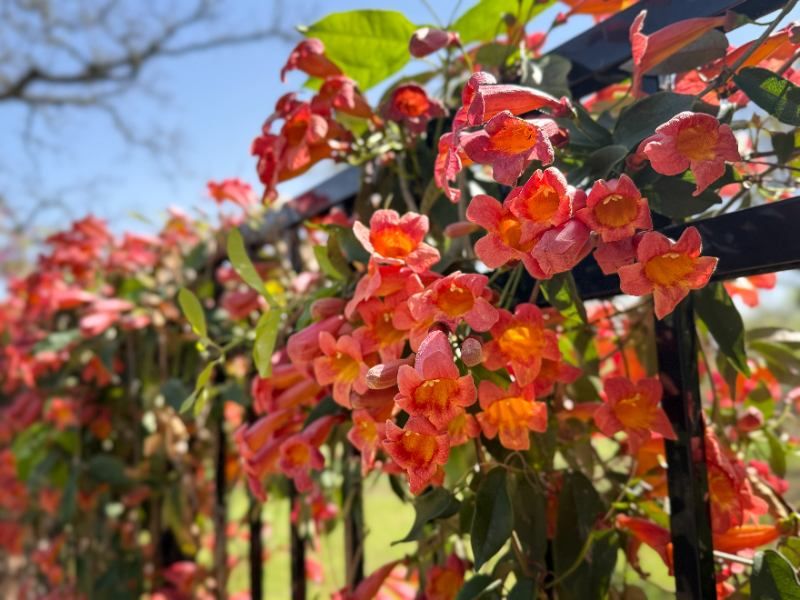
Texas is not one climate. The state spans shortgrass prairie, Chihuahuan desert, piney woods, coastal marshes, and everything in between.
A vine that thrives in East Texas’s humid, loamy soils can struggle badly in the alkaline caliche of West Texas or the windswept Panhandle. Crossvine belongs to the wetter, warmer eastern and central portions of the state, and gardeners outside those zones should confirm local suitability before buying a plant.
The Native Plant Society of Texas places crossvine in specific ecoregions rather than treating it as a statewide plant. For Austin-area gardeners, the City of Austin plant guide describes crossvine as having low water needs and semi-evergreen foliage, which matches its performance in the Hill Country’s eastern edge.
Gardeners in very dry Hill Country areas, far West Texas, or the Panhandle should not assume the same results without checking regional guidance first.
Full sun produces the heaviest flowering, but crossvine tolerates partial shade and a range of soil types, including occasional wetness. That flexibility is part of what makes it useful across a broad swath of the South.
For readers in Florida, UF/IFAS landscape guidance does list crossvine as a native option for certain Florida regions, but suitability still depends on local conditions, and Florida gardeners should verify through their county extension office before planting.
The Texas A&M Earth-Kind plant selector is a practical first stop for any Texas gardener who wants to match a vine to a specific county and soil type. Regional verification takes five minutes and saves a season of disappointment.
The Fragrant Show Arrives Before Peak Summer
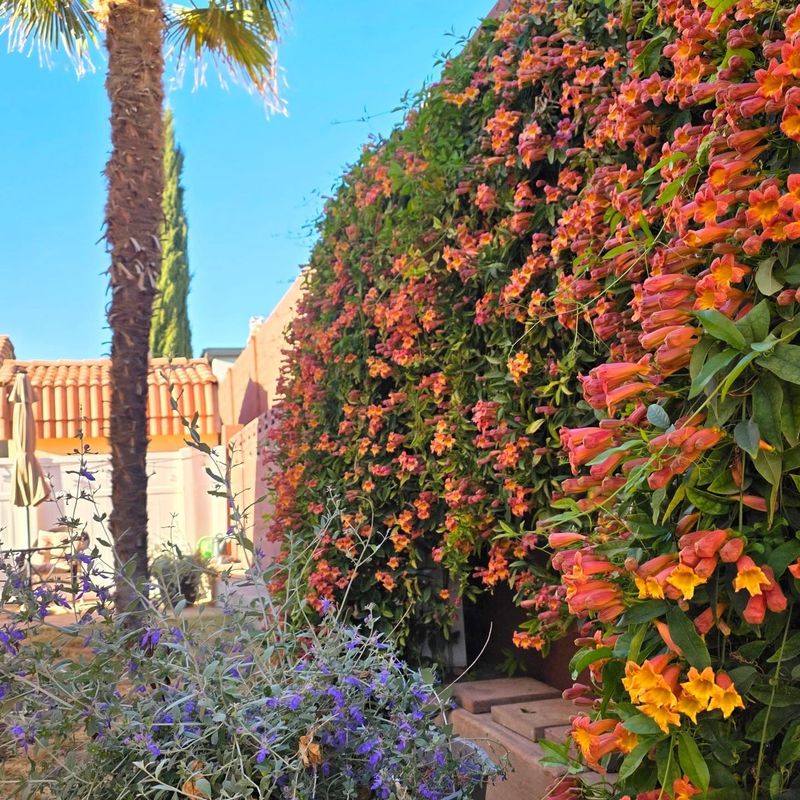
Gardeners who plant crossvine expecting a summer-long perfume show will need to recalibrate their expectations. The vine’s main bloom period falls in late winter through spring, generally running from around March through May in Texas, depending on the year and location.
That timing is not a flaw. It means crossvine flowers when relatively few other woody plants are blooming, making it an important early-season nectar source for hummingbirds returning from their winter range.
NC State Extension’s crossvine profile confirms the fragrant flowers and their strong appeal to hummingbirds and other pollinators. The trumpet shape is nearly perfectly engineered for hummingbird feeding, and a fence draped in orange-red blooms during March can become a reliable refueling stop for birds passing through.
Some Texas gardeners report scattered summer flowering, but that is sporadic rather than dependable, and it should not be the reason someone chooses this vine.
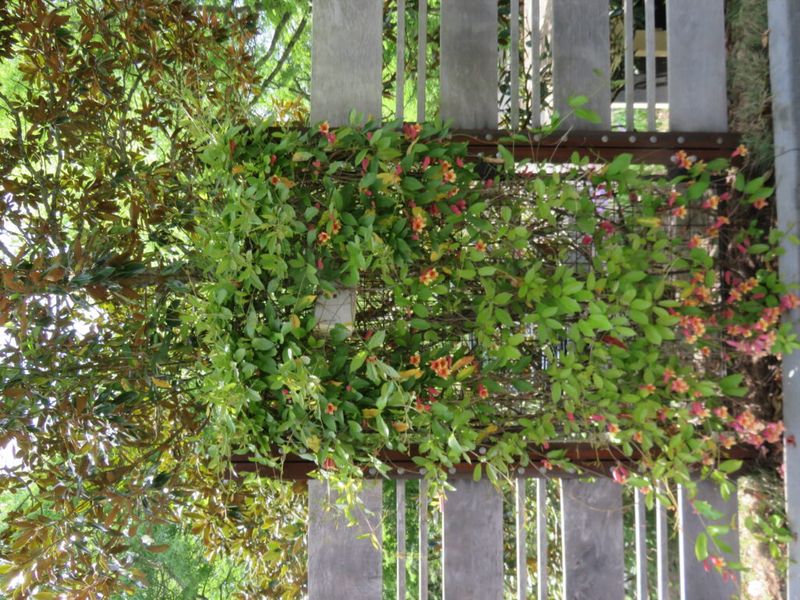
Once the spring flush fades, crossvine earns its summer keep through foliage. The leaves are semi-evergreen, meaning they tend to persist through mild winters and stay green through the hottest months, providing a living green screen on the fence even when no flowers are present.
The Native Plant Society of Texas describes this coverage as one of the vine’s practical strengths. Fragrance from crossvine is real but subtle in most garden settings.
Describing it as lightly fragrant flowers is more accurate than promising that it will fill the yard with scent. Plant it where you pass by regularly, near a gate or along a walkway fence, so you catch the fragrance up close during peak bloom.
A Sturdy Support and the Right Site Set the Vine Up to Climb
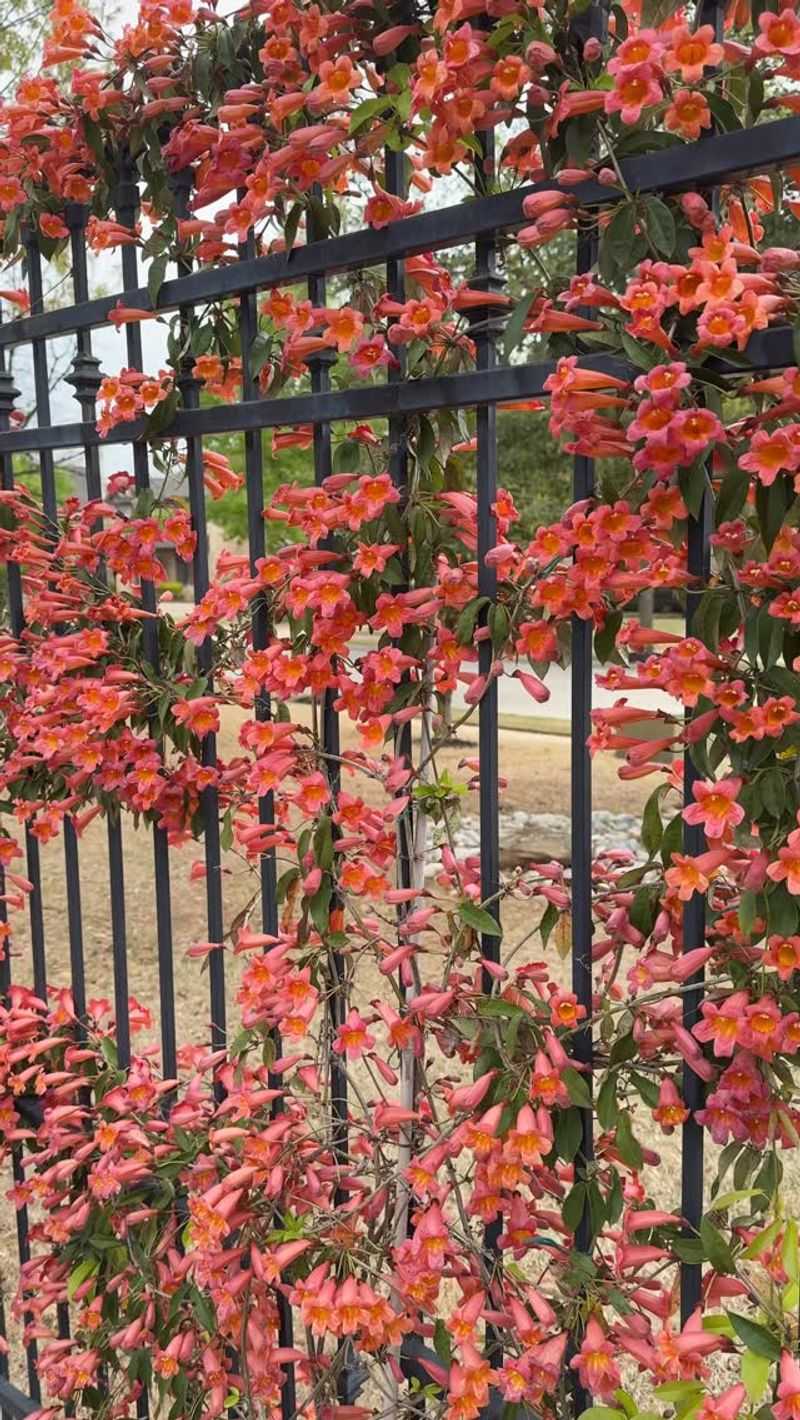
Crossvine climbs using tendrils tipped with small adhesive pads that grip wood, wire, chain-link, and rough masonry. That mechanism is efficient enough that a healthy vine can cover a standard fence panel within a couple of growing seasons.
The challenge comes later, when that same efficient grip extends the vine beyond its intended boundary onto eaves, tree branches, or neighboring structures.
According to NC State Extension, crossvine can reach roughly 30 to 50 feet in favorable conditions. That is not a small plant.
A chain-link fence works, but a lightweight trellis or thin bamboo stakes will eventually buckle under the weight of a mature vine. Cedar posts, metal pipe frames, sturdy wooden arbors, and heavy-gauge wire systems all hold up better over the long term.
Plan the support for the vine’s adult size, not its first-year size.
Site selection matters almost as much as the support structure. Austin’s plant guide recommends placing crossvine where its aggressive climbing habit can be directed and contained.
Full sun along the fence line produces the best flower coverage. A spot with at least six hours of direct sun daily gives the vine enough energy to bloom heavily during its spring window and push strong foliage growth through summer.
Well-drained soil prevents root rot in wet winters and allows the plant to access moisture efficiently during dry spells. Even a vine that tolerates varied soils will perform better when it is not sitting in standing water after heavy rain.
Directing the first few feet of growth by tying new stems to the fence gives the vine a clear path and reduces the chance that it wanders toward a nearby shrub or tree before the roots are established.
Heat Tolerance Still Requires Establishment Water
Calling crossvine drought-tolerant is accurate but incomplete. The description applies to a plant with an established root system that has had time to spread into the surrounding soil.
A vine planted last month has no such root system, and treating it like a cactus from day one is a reliable way to lose a plant that could otherwise thrive for decades.
During the first growing season, crossvine needs consistent irrigation. Deep, infrequent watering encourages roots to follow moisture downward into the soil rather than staying shallow where they are vulnerable to surface heat and rapid drying.
Texas A&M’s guidance on keeping vines watered emphasizes that even drought-adapted species need establishment support, and that water needs vary with soil type, weather patterns, plant age, and competition from nearby roots. A crossvine planted near a large tree, for example, faces more root competition and may need more supplemental water than one planted in an open fence line.
Once established, crossvine’s water needs drop considerably. The Texas A&M Earth-Kind landscaping plant list supports crossvine as a low-water-use plant for appropriate regions, but low water use is not zero water use.
During extended heat waves or drought conditions, even a mature crossvine can show stress. Leaves may curl slightly at the edges, and the vine may drop some foliage if conditions become severe enough.
Watching the plant rather than following a fixed watering schedule is the most reliable approach. NC State Extension’s profile describes crossvine as adaptable to varied conditions, but that adaptability has limits in extreme weather.
A deep soak every week or two during a dry summer stretch keeps the vine healthy without wasting water.
Control the Growth Before It Controls the Structure

Crossvine is vigorous in a way that rewards gardeners who stay ahead of it and frustrates those who plant it and walk away. Left entirely to its own devices, the vine will cover its intended fence, then reach for the nearest tree, eave, or neighboring structure.
Root suckers can emerge several feet from the base of the plant, starting new shoots in lawn areas or garden beds where they were not invited.
The City of Austin plant guide specifically describes crossvine as having a very aggressive climbing habit and recommends pruning to direct and control growth. That is not a warning to avoid the plant.
It is a reminder that the same energy that fills a fence in two seasons will also reach the roofline if nobody intervenes. Annual pruning after the spring bloom removes excess length, redirects wayward stems, and keeps the vine proportional to its support.
Root sucker management is a separate task. When new shoots appear in the lawn or nearby beds, cutting them at soil level or digging them out promptly prevents the vine from spreading laterally beyond the fence line.
Consistent attention during the growing season keeps this from becoming an overwhelming project.
There is also a fire-safety dimension to consider. NC State Extension rates crossvine as highly flammable.
Placing a dense, mature crossvine immediately against a home’s exterior, especially in areas of Texas where wildfire is a realistic risk, adds fuel directly to the structure. A fence or pergola set away from the house is a safer choice.
Gardeners in fire-prone areas should follow local defensible-space guidelines and avoid running any highly flammable vine along walls, under eaves, or onto the roof.
Crossvine Offers a Strong Combination, Not a Universal Winner
Plant shopping for a fragrant native vine in Texas often surfaces three names: crossvine, coral honeysuckle, and Carolina jessamine. Each has real strengths, but they are not interchangeable, and choosing between them depends on what matters most to a specific gardener in a specific location.
Coral honeysuckle (Lonicera sempervirens) is a legitimate option for heat-tolerant fence coverage and hummingbird attraction. NC State Extension’s coral honeysuckle profile is clear on one point: the flowers are not fragrant.
Anyone choosing coral honeysuckle for its scent is working from a misconception. It is a fine vine for wildlife and color, but it should not be the basis for a “fragrant native” planting.
Carolina jessamine (Gelsemium sempervirens) is the stronger fragrance candidate. Its sweetly scented yellow flowers and evergreen foliage make it a genuinely appealing option, and NC State Extension’s jessamine profile supports its fragrance and ornamental value.
However, all parts of Carolina jessamine are poisonous, and its pollen is toxic to honeybees. It is a vine that requires careful placement away from children, pets, and beehives.
Texas A&M identifies it as native to East Texas specifically, so gardeners in Central or West Texas face the same regional-fit question as they do with crossvine.
Crossvine sits in the middle of this comparison in the best possible way. Its NC State profile supports fragrant flowers, strong heat and drought tolerance, and genuine hummingbird value without the toxicity concerns attached to jessamine.
For gardeners who want a well-rounded combination of fragrance, coverage, wildlife appeal, and honest heat performance on a suitable site, crossvine delivers that package more consistently than either alternative. Regional fit and personal priorities can shift that calculus, but the combination crossvine offers is hard to match with a single alternative vine.
Choose Crossvine for Spring Fragrance and Summer Coverage
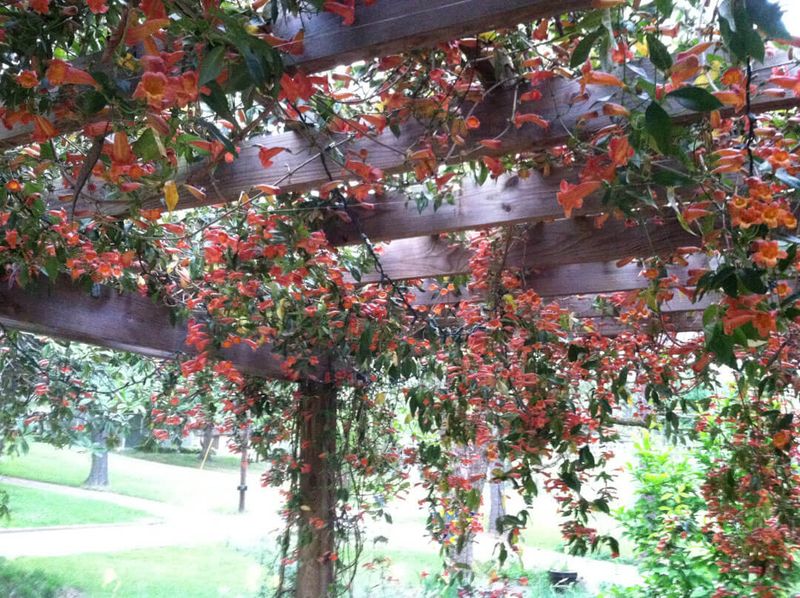
Crossvine is a well-supported choice for gardeners in suitable parts of Texas who want a fragrant, heat-tolerant vine on a sturdy fence or pergola. The payoff is real: lightly fragrant spring flowers that hummingbirds love, semi-evergreen foliage that carries the fence through summer, and a native toughness that holds up in the South’s punishing heat once the plant is established.
The honest version of that promise comes with conditions. Verify that crossvine fits your specific Texas region using the Texas A&M Earth-Kind plant selector before buying.
Water the plant consistently through its first growing season and during any extended drought afterward. Prune it annually after the spring bloom to keep it on the fence rather than the roofline.
Place it away from the house if you are in a fire-prone area. Expect fragrant flowers in spring, not all summer.
The Native Plant Society of Texas and NC State Extension both back crossvine as a strong performer for the right sites. That is not a guarantee for every yard in every Texas zip code, but for gardeners in East, Central, and coastal Texas with a solid fence and a willingness to manage an ambitious vine, crossvine delivers a combination of beauty and resilience that few ornamental climbers can match.
A fence that smells like spring for two months and stays green all summer is still a very good fence.