
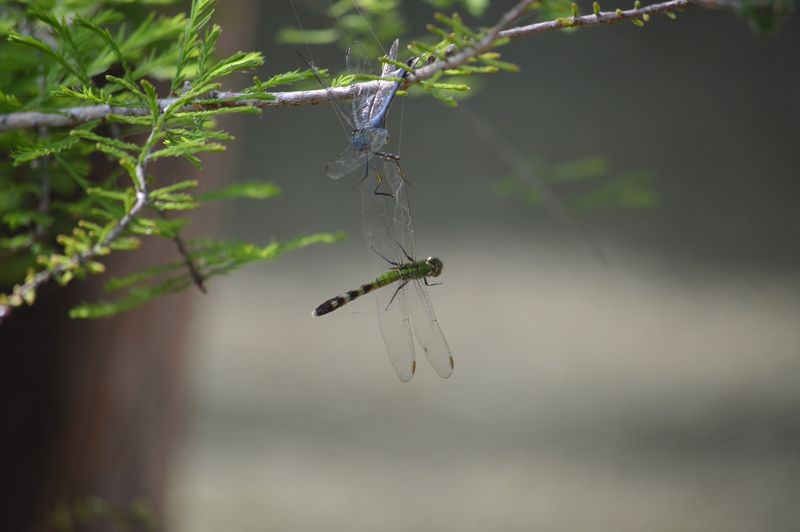
A Texas-native passionflower vine climbing a backyard fence is a genuinely beautiful thing, and the idea that it might also pull dragonflies in and push mosquitoes out makes it sound almost too good to be true. Honestly, parts of that promise are too good to be true, but the vine itself is still worth knowing.
Choosing the right passionflower species for your site, understanding what dragonflies actually need, and pairing the planting with real mosquito-control steps gives you something more useful than a garden myth.
Replace the mosquito-shield promise with a useful planting answer
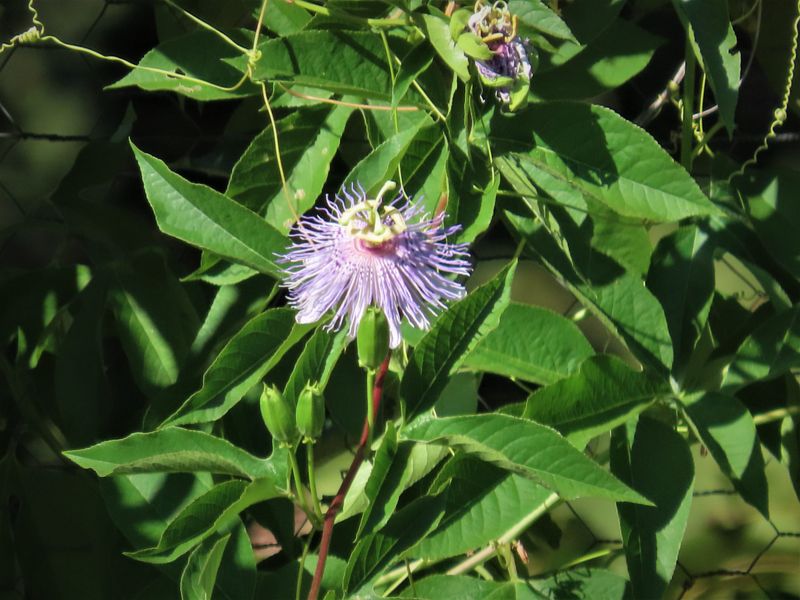
Garden headlines sometimes run ahead of the evidence, and the claim that a passionflower vine draws dragonflies in and sends mosquitoes packing is a good example. A Texas-native passionflower can genuinely improve a fence line for wildlife, but no research reviewed for this article establishes that planting one specifically attracts dragonflies or causes mosquitoes to leave a yard.
Two native species come up most often in Texas contexts. Texas Parks and Wildlife’s Wildscapes plant list places Passiflora lutea, the yellow passionflower, in the eastern third of the state, where it grows in moist woodland edges and dappled shade.
Passiflora incarnata, or maypop, is the more broadly documented option for heat, drought, and fence-line use across a wider swath of Texas. Neither species has a documented dragonfly-attraction effect.
Dragonflies do eat mosquitoes, and research on adult damselflies shows they are generalist predators whose diet reflects whatever prey is most abundant nearby, not selective mosquito hunters drawn by a specific plant. Mosquitoes also travel considerable distances from breeding sites and can enter a yard from neighboring properties, so a single vine cannot fence them out.
The practical answer has three parts: pick the passionflower species that fits your site conditions, support genuine dragonfly habitat separately if you want them around, and rely on water management and proven bite-prevention measures for dependable mosquito control. The vine earns its place on a fence through its documented wildlife value, not through promises it was never built to keep.
Choose the passionflower that matches your Texas site
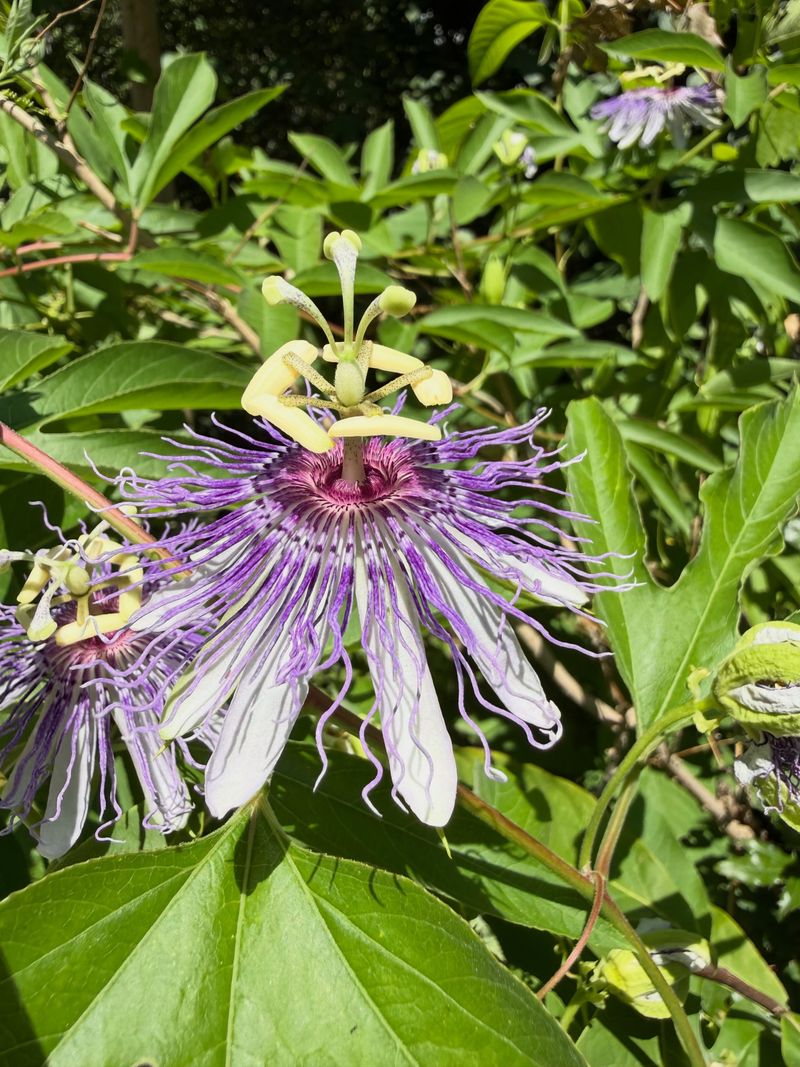
Not every passionflower behaves the same way in a Texas yard, and picking the wrong species for your conditions is the fastest path to disappointment. The two natives most relevant to Texas gardeners are quite different from each other in size, flower color, preferred habitat, and regional fit.
Passiflora lutea, the yellow passionflower, is a relatively compact climber with small yellowish-white flowers. The Texas Parks and Wildlife Wildscapes list associates it with the eastern third of the state, where it grows in old fields, stream edges, and woodland margins with reliable moisture and at least partial shade.
If your yard is in Central or West Texas, baking in full sun with thin or rocky soil, P. lutea is likely a poor match regardless of how much you want it to work.
Passiflora incarnata, commonly called maypop, is a different story. NC State Extension documents it as heat- and drought-tolerant, with showy purple-and-white flowers that can reach three inches across.
It occurs across much of Texas and climbs readily on fences, trellises, and other sturdy vertical structures, making it the more practical choice for Central Texas fence lines.
UF/IFAS Gardening Solutions describes P. incarnata as fast-growing and notes that some gardeners find it more vigorous than expected. That vigor is a feature on a bare fence but can become a problem along property edges or near other plantings.
Before you buy, check your site for sun exposure, soil drainage, available moisture, and how much space the vine can realistically occupy. Treating all passionflowers as interchangeable is how gardeners end up with the wrong plant in the wrong place.
The vine’s proven wildlife value runs through butterflies and pollinators
Where passionflower genuinely delivers for wildlife is in the butterfly garden. Both P. lutea and P. incarnata serve as larval host plants, meaning female butterflies lay eggs on the leaves and the caterpillars feed on the foliage as they develop.
NC State Extension identifies Gulf fritillary, zebra heliconian, and variegated fritillary butterflies as species that use passionflower as a host plant. In much of Texas, Gulf fritillaries are a reliable summer presence wherever the vine grows.
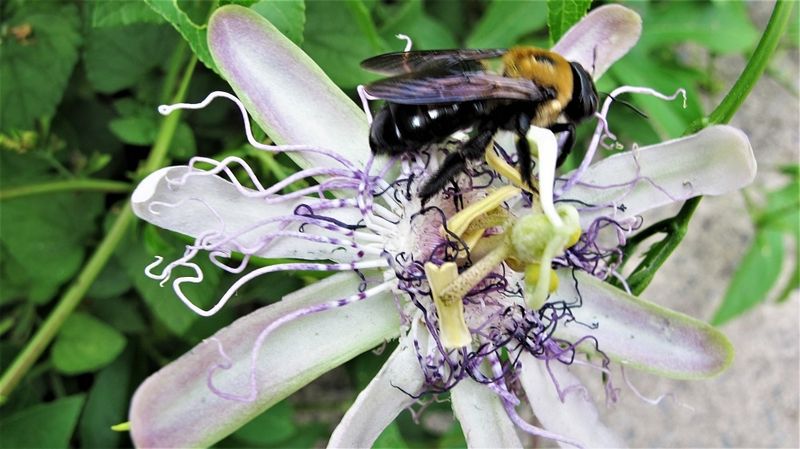
Bees visit the flowers for nectar and pollen, and the blooms of P. incarnata are large enough to attract multiple native bee species alongside honeybees. UF/IFAS Extension notes that the plant also supports hummingbirds and other pollinators, making a well-established vine a genuinely productive piece of a wildlife-friendly yard.
None of those documented visitors are dragonflies, and the vine should not be marketed as a dragonfly plant.
One thing to prepare for is caterpillar feeding. Gulf fritillary larvae can strip a passionflower vine down to bare stems during peak summer, and that kind of dramatic defoliation can alarm a gardener who was not expecting it.
Bare stems are not a sign that the plant is failing; they are evidence that the vine is doing exactly what a host plant is supposed to do. The vine typically rebounds when feeding pressure eases, and the cycle of growth, feeding, and regrowth is part of a healthy wildlife planting rather than a maintenance problem to be solved.
Dragonflies need suitable freshwater habitat to reproduce
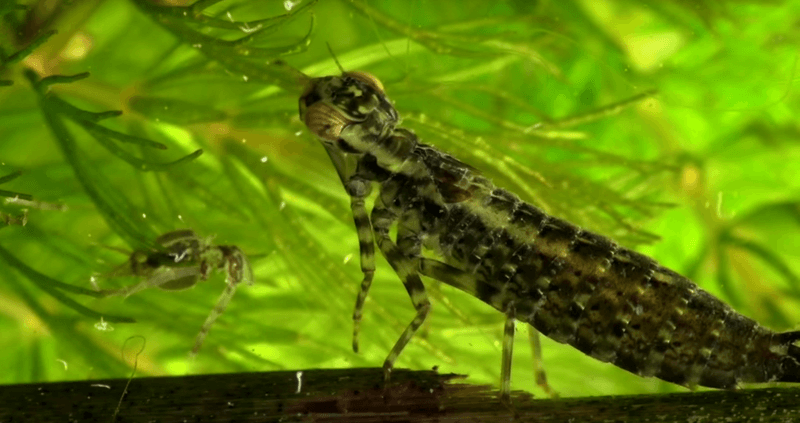
Seeing a dragonfly cruise through a backyard on a July afternoon is satisfying, but understanding why it showed up changes how you think about encouraging more of them. Dragonflies spend the majority of their lives underwater as aquatic nymphs, and that immature stage depends entirely on suitable freshwater habitat, not on what grows along a nearby fence.
Dragonfly and damselfly nymphs are active predators in the water column. NC State Extension’s beneficial-predators guidance describes nymphs consuming aquatic invertebrates, including mosquito larvae, over the months or years they spend developing before emerging as adults.
A 2023 meta-analysis of 31 controlled studies found an average of approximately 40 mosquito larvae consumed per nymph per day in experimental settings. That figure comes from controlled laboratory and mesocosm work, not from residential yards, so treating it as a guaranteed backyard outcome would overstate what the research actually shows.
Adult dragonflies do eat flying insects on the wing, mosquitoes included. However, research on adult damselflies in urban areas found that prey composition in their diet reflected what was most abundant in the local environment, confirming that they are generalist predators rather than mosquito-targeting specialists.
The habitat features that support dragonfly reproduction and development are distinct from those that support adult activity. Suitable freshwater, such as a pond, creek, wetland, or retention basin, is where nymphs live and develop.
Aquatic and emergent vegetation can provide both habitat structure and emergence sites where nymphs crawl out of the water and transform into adults. Sunny open areas and upright stems or perches support adult foraging and resting.
Penn State Extension’s pond guidance and UF/IFAS dragonfly habitat guidance both emphasize that adult dragonflies visiting a yard may have traveled from ponds, creeks, or wetlands on neighboring properties, and their presence does not confirm that a particular vine or garden feature caused them to appear.
Build dragonfly habitat without creating mosquito habitat
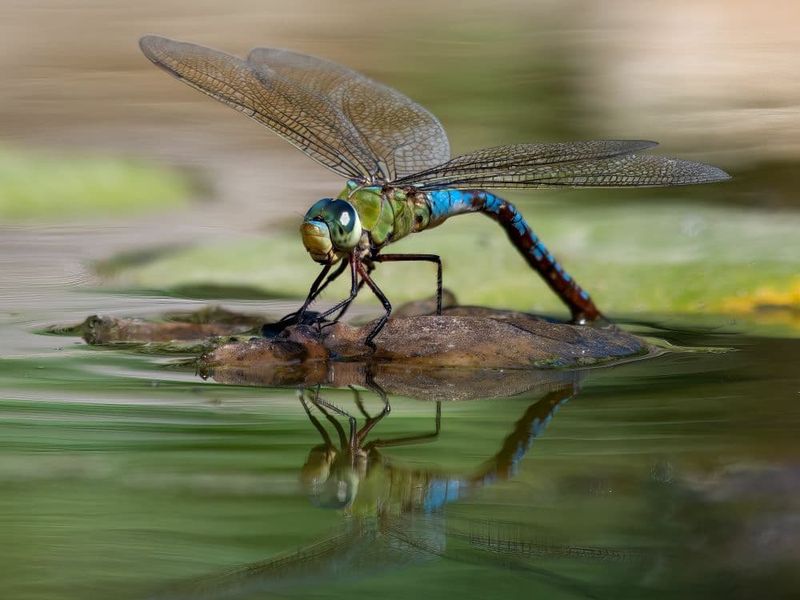
Any conversation about adding water to a yard to attract dragonflies has to start with a clear warning: a poorly designed or neglected water feature can produce more mosquitoes than dragonflies. The two goals are not automatically compatible, and the design choices you make from the start determine which outcome you get.
Penn State Extension’s backyard pond guidance recommends including native aquatic and shoreline plants, which provide habitat structure for nymphs and emergence sites for adults. A mix of submerged, floating, and emergent vegetation gives nymphs places to hunt and hide and gives emerging adults a surface to climb.
Open sunny areas near the pond matter for adult foraging and basking, and simple vertical perches such as upright stakes or natural stems give dragonflies a place to rest and watch for prey.
UF/IFAS dragonfly habitat guidance and UF/IFAS Extension Leon County both flag heavy fish stocking as a significant problem for dragonfly nymphs. Fish eat nymphs readily, and a pond loaded with ornamental fish is unlikely to support a meaningful dragonfly population.
If fish are part of the plan, keeping stocking levels modest gives nymphs a better survival chance.
Pesticide drift near the pond is another concern. Spraying insecticides around or upwind of a wildlife pond can harm the aquatic invertebrates that nymphs depend on and can affect the nymphs themselves.
Limiting spray applications in the immediate pond area is a straightforward protective step.
On the mosquito side, Virginia Cooperative Extension’s home pond guide recommends aeration or circulation as a mosquito-management tool for ornamental ponds. Moving water is less hospitable to mosquito egg-laying than still water, and a small pump or fountain can make a meaningful difference.
Any pond that lacks natural predators, circulation, or another management strategy can become a breeding site, so CDC guidance on mosquito control at home applies to backyard water features just as much as it does to buckets and birdbaths.
Remove the breeding water you can control
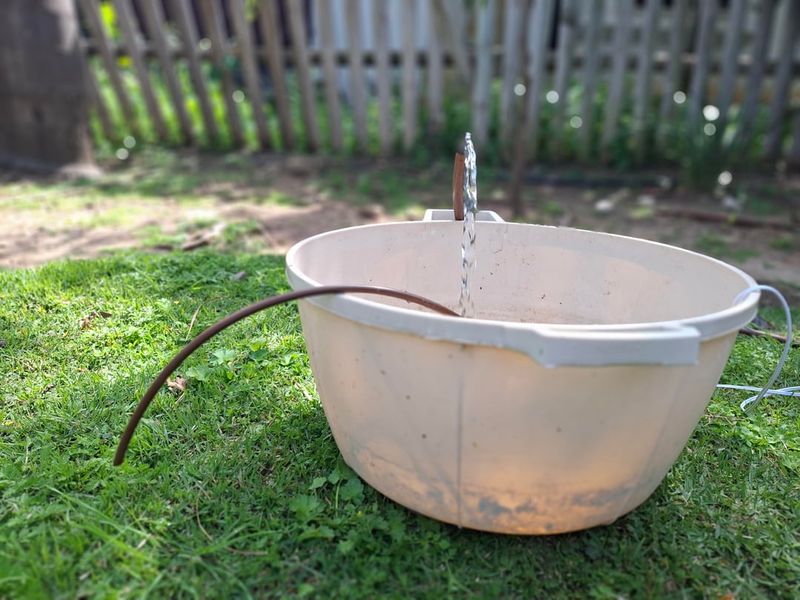
No vine, insect, or wildlife feature replaces the single most effective thing a homeowner can do about backyard mosquitoes: remove the water where they breed. Mosquitoes lay eggs in standing water, and even a small amount, less than an ounce in a bottle cap, can support larvae.
Getting rid of that water weekly is the intervention with the clearest evidence behind it.
CDC guidance on mosquito control at home recommends emptying and scrubbing, turning over, covering, or discarding water-holding containers at least once a week. The list of culprits is longer than most people expect: buckets, children’s toys, flowerpot saucers, birdbaths, old tires, low spots in tarps, clogged gutters, and corrugated downspout extensions all hold enough water to produce mosquitoes.
Scrubbing matters because mosquito eggs can stick to container walls and survive a simple dump-and-refill.
Some water simply cannot be removed. A rain barrel with a sealed lid, a decorative container pond, or a low area that floods after heavy rain may be difficult to eliminate entirely.
For water that cannot be dumped or covered, EPA guidance on Bti describes Bacillus thuringiensis israelensis as a naturally occurring bacterial larvicide that targets developing mosquito larvae specifically. Bti products are sold as dunks, bits, or granules and must be used according to the product label and any applicable site restrictions.
CDC’s larvicide guidance confirms Bti as an appropriate tool for residential standing-water situations where removal is not practical.
These steps work independently of what grows on your fence. NC State Extension’s mosquito-control guidance makes clear that mosquitoes can enter a yard from neighboring properties and from natural areas beyond your control, so source reduction on your own property is the layer of protection you can actually manage.
Dragonfly predation may reduce some larvae in a well-designed pond, but it does not substitute for eliminating the breeding containers that produce the mosquitoes biting you on the porch.
Manage the vine’s growth and its wildlife trade-offs
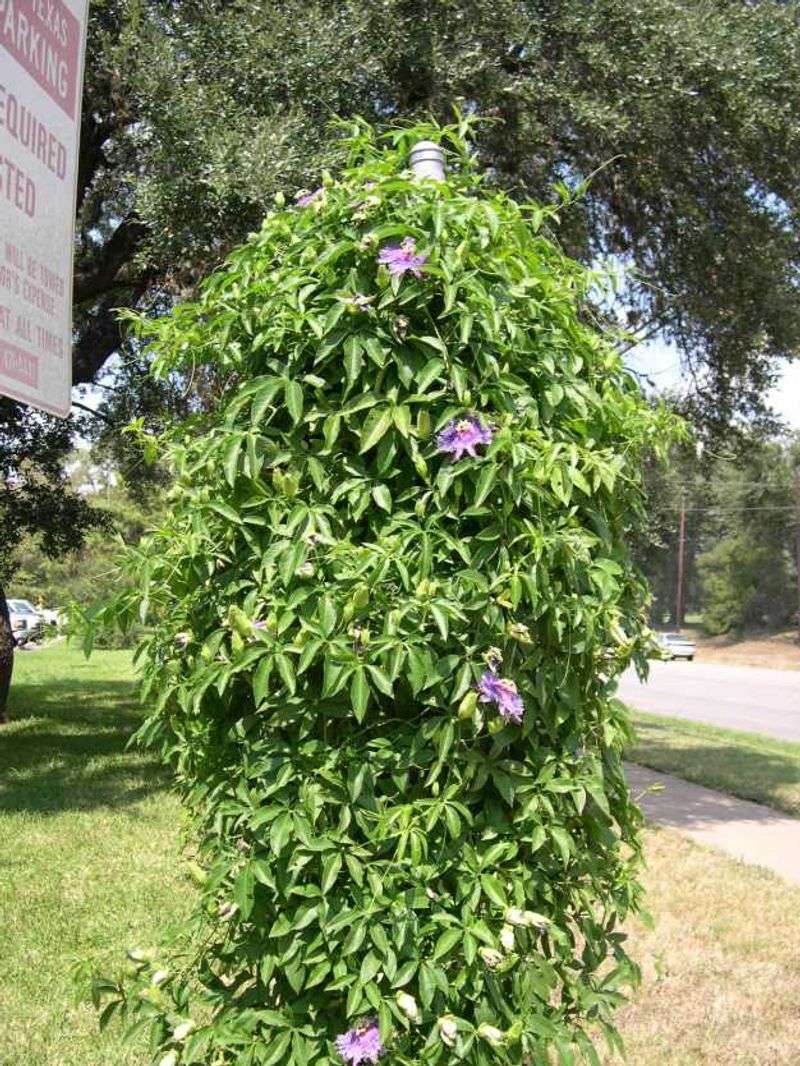
Passionflower vines are rewarding plants, but they are not passive ones. Passiflora incarnata in particular grows fast once established, and a fence line that looks appropriately covered in early summer can turn into an aggressive sprawl by August if the vine is not monitored.
Providing a sturdy support structure from the start, whether a wood fence, metal trellis, or wire system, prevents the kind of tangled collapse that happens when a fast-growing vine runs out of something solid to grip.
UF/IFAS Gardening Solutions describes P. incarnata as fast-growing and notes that some gardeners consider it more vigorous than expected. Penn State Extension’s guide to perennial vines reinforces the point that even well-behaved native climbers need periodic pruning to stay within their intended area.
In a Central Texas yard, that might mean cutting the vine back at the fence corners each season to keep it from spreading into adjacent beds or over neighboring structures.
Site conditions affect performance in ways that species labels alone do not capture. Soil moisture, drainage, heat load, shade, and available irrigation all influence how vigorously a particular vine grows and how well it handles a Texas summer.
P. incarnata is the more drought-tolerant option, but even it benefits from supplemental water during extended dry spells, especially in its first season.
Caterpillar feeding is the other trade-off worth naming clearly. UF/IFAS Extension’s purple passionflower profile describes how Gulf fritillary larvae can consume substantial amounts of foliage, sometimes stripping a vine to bare stems.
That is the plant working as a host plant, not failing as a landscape feature. The vine regrows, the butterflies complete their life cycle, and the cycle repeats.
Plan for it rather than fight it.
One firm safety boundary: NC State Extension’s toxicity profile for P. incarnata flags the plant as potentially poisonous to people, pets, and children if consumed, identifying cyanogenic glycosides as the toxic principle. Do not eat the leaves, prepare homemade remedies from plant parts, or encourage children or pets to sample the fruit.
Pair the planting with proven bite protection

A well-chosen passionflower on the right fence line is a genuine addition to a Texas yard. It supports fritillary butterflies, attracts bees, and adds visual structure through a long growing season.
What it cannot do is replace the mosquito-control steps that actually protect your family from bites and the diseases mosquitoes can carry.
The practical combination looks like this: match your passionflower species to your site conditions using the guidance in earlier sections, add a properly designed and maintained freshwater feature only if your yard has the space and you are committed to managing it so it does not become a mosquito source, and commit to weekly standing-water removal as the non-negotiable foundation. CDC’s mosquito control at home guidance covers the container-by-container checklist that makes the biggest difference.
For water that cannot be removed, EPA-approved Bti larvicides applied according to label directions target larvae without harming the pollinators visiting your vine. For personal protection when you are outdoors, CDC’s bite-prevention guidance recommends EPA-registered repellents, long sleeves and pants during peak mosquito hours, and well-fitted window and door screens.
A passionflower vine and a dragonfly foraging overhead make the yard a more interesting place to spend an evening; the repellent and the screened porch door are what keep you comfortable while you enjoy it.