
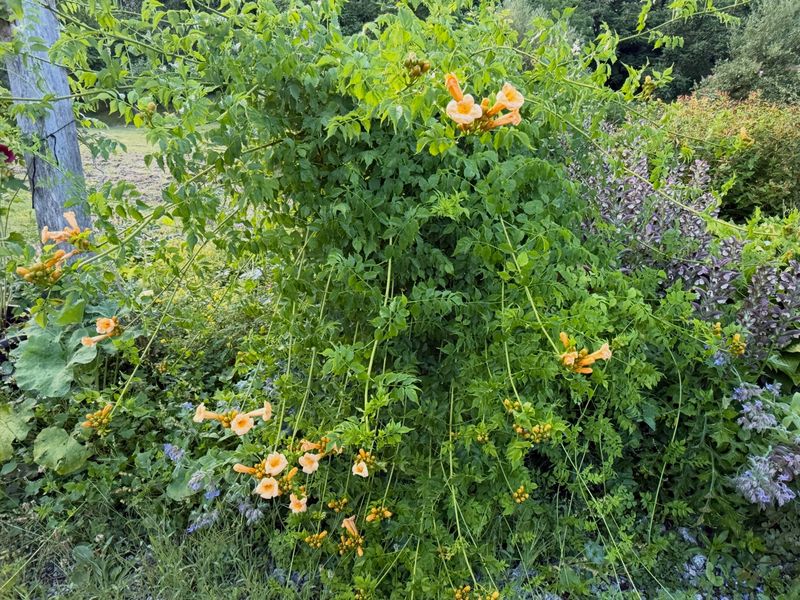
A headline claiming that a Texas native vine sends ticks packing sounds like exactly the backyard solution every homeowner wants. The idea is appealing, but the science behind it tells a different story.
No reliable study has shown that any named Texas-native vine, simply growing in a yard, drives ticks away from beds or play areas all season long. This article unpacks where the claim comes from, what the research actually says, and what you can do right now to make your yard genuinely less hospitable to ticks.
The alleged Texas vine has not been verified
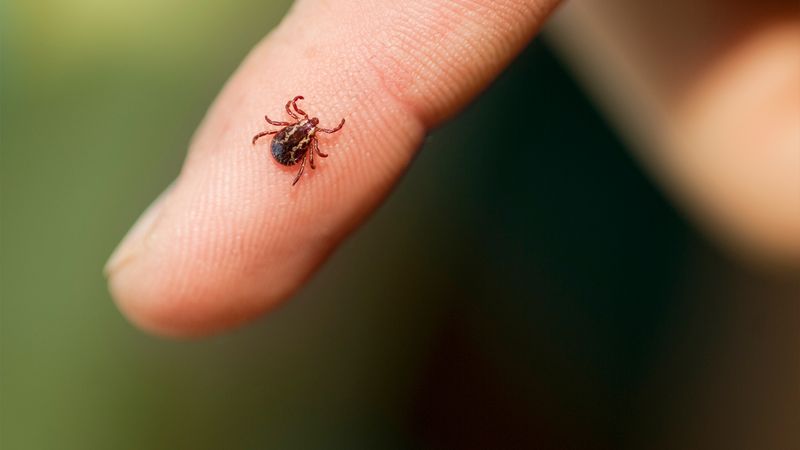
Somewhere between a laboratory bench and a gardening blog, a promising scientific idea got turned into a guarantee it was never meant to make. University of Maryland Extension is direct on this point: no known scientific studies show that particular plants, simply growing in a yard, effectively repel ticks.
That verdict applies to Texas-native vines just as much as it applies to any other ornamental planting.
The confusion usually starts with real chemistry. Some plants do contain compounds that, when extracted and concentrated, show repellent activity against ticks in controlled settings.
That is genuinely interesting science. The problem is the leap from “this compound affects tick behavior in a lab chamber” to “plant this vine and ticks will leave your yard all summer.” Those two statements are not the same claim, and the evidence for the second one does not exist.
Odor absolutely plays a role in how ticks find hosts. Ticks respond to carbon dioxide, body heat, humidity, and chemical signals, and researchers have studied whether certain scents can disrupt that process.
But disrupting tick behavior in a controlled experiment is a long way from proving that a vine growing along a fence line will keep an entire backyard clear of ticks for months at a time. The scent a living plant releases outdoors is inconsistent, diluted by wind, and nowhere near the concentration used in laboratory repellent tests.
Readers deserve a straight answer before spending money on plants or skipping other precautions. No Texas-native vine has been verified as a tick repellent for residential yards.
The rest of this article covers what the research does support, where the Texas torchwood story fits in, and which yard and personal-protection steps actually hold up.
Texas torchwood is a shrub, not the promised vine
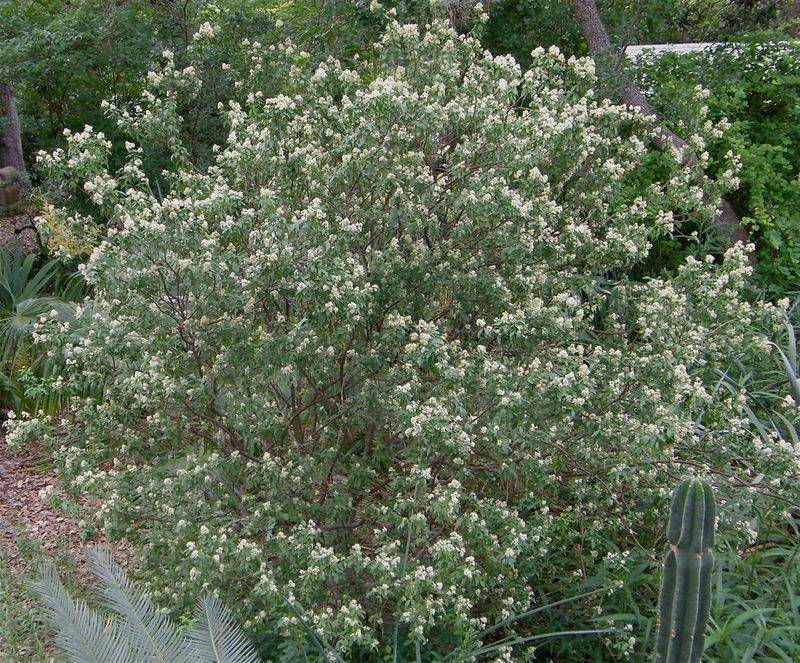
Texas torchwood, known botanically as Amyris texana, is the most likely plant behind the viral vine claim. It is a real Texas native with genuine scientific interest attached to it, but nearly every detail in the headline gets it wrong.
Torchwood is a shrub, not a vine, and the research connected to it concerns isolated chemical compounds studied primarily for mosquito repellency, not tick control in residential yards.
USDA Natural Products Utilization Research has investigated compounds derived from Amyris and related plants as part of a broader program looking for alternatives to synthetic insect repellents. Separately, USDA progress reports describe work on eastern red cedar oil and its activity against certain insects and tick species.
These are legitimate research threads, but they involve extracted or modified compounds tested under controlled conditions, not a living shrub planted in a backyard bed.
How does solid chemistry turn into a shaky garden claim? The path is short and easy to follow.
A researcher isolates a promising compound from a native plant. A science writer summarizes the finding.
A gardening site picks up the summary and skips the word “isolated.” By the third or fourth repost, the shrub has become a vine, the mosquito study has become a tick study, and the lab result has become a season-long yard guarantee.
Texas torchwood is worth knowing as a heat-tolerant native shrub with fragrant foliage and ecological value. What it is not is a proven tick deterrent for the home landscape.
Treating USDA chemistry research as evidence that planting this species will protect a play area misreads what the scientists actually found and what they were actually testing.
What laboratory tick-repellent studies actually show

Ticks are not passive hitchhikers waiting randomly for a host to brush past. They are actively navigating their environment using a set of sensory cues that researchers have spent decades trying to understand.
Temperature gradients, carbon dioxide plumes, humidity levels, host odors, and other chemical signals all guide a tick toward its next blood meal. That complexity is exactly why the idea of a scent-based repellent sounds plausible.
Laboratory studies have confirmed that some repellent compounds do interfere with tick behavior. Research published in PLOS ONE examined how repellents affect tick thermotaxis, the directional movement ticks use to track body heat from a potential host.
Other work has looked at how repellents disrupt responses to carbon dioxide or host-associated odors. A review of tick repellent mechanisms found that disrupting these navigational cues is one plausible way repellents work, though the exact mechanisms vary by compound and tick species.
Plant-derived compounds appear in this research too. A study on compounds from pondberry and related botanicals tested repellent activity against lone star tick nymphs and blacklegged tick adults under laboratory conditions, using extracted oils and treated surfaces rather than living plants.
Results from that study apply to those specific tick species under those specific test conditions. They do not automatically extend to American dog ticks, Gulf Coast ticks, or the mix of species a Texas homeowner might encounter.
The boundary matters and it is worth stating plainly. Evidence that a concentrated chemical compound alters tick movement in a sealed chamber does not prove that a vine growing in a garden bed changes conditions across a backyard.
The concentration, the delivery method, the distance from the source, and the open-air environment are all fundamentally different between a lab test and a residential landscape. Promising chemistry is not the same as proven yard protection.
A concentrated extract is not a planted landscape
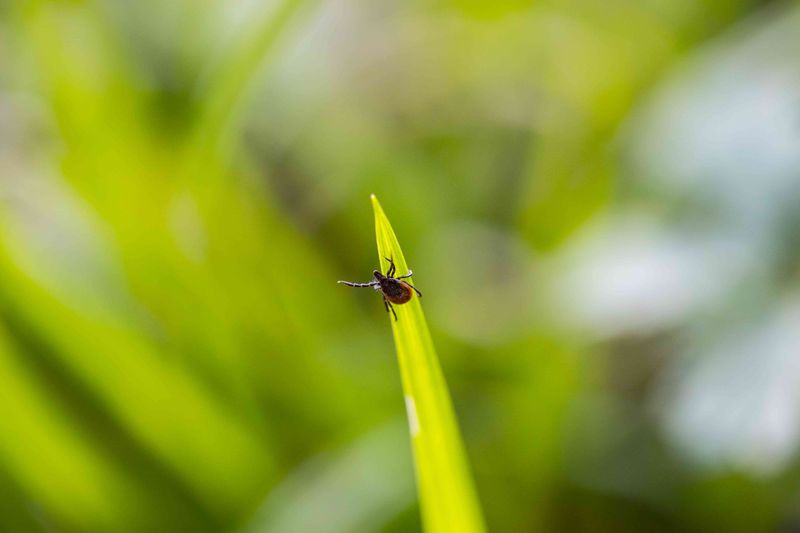
Picture a lab technician applying a measured dose of cedar oil to a filter paper strip inside a controlled chamber, then releasing ticks and recording how they move. Now picture a cedar shrub growing in a backyard corner on a breezy July afternoon in central Texas.
The compound is related, but almost nothing else about those two situations is the same.
University of Maryland Extension makes the distinction clearly: plant compounds may repel ticks when extracted and applied at sufficient concentrations, but that does not establish that the plant itself creates a protective yard-wide barrier. Concentration is the first problem.
A living plant releases volatile compounds continuously but at levels far below what researchers use in repellency tests. Wind, humidity, and temperature all affect how quickly those compounds disperse, and outdoor conditions can render them essentially undetectable within a few feet of the plant.
Delivery method is the second problem. Penn State Extension notes that many plant-derived repellents provide short-lasting protection even when properly formulated and applied directly to skin or clothing.
A living plant that passively releases scent into an open yard offers nothing close to the consistent, directed exposure that makes a repellent treatment work. Weather, plant chemistry variation across the growing season, and the behavior of different tick species all add further uncertainty.
Dense, aromatic plantings carry an additional irony. University of Maine Cooperative Extension and University of Vermont tick researchers both point out that dense vegetation, regardless of species, can create the shaded, humid microhabitat that ticks prefer.
A thick native planting that smells pleasant to a gardener may be doing nothing to discourage ticks and could even be improving conditions for them.
Rosemary, cedar, lavender, marigolds, and catnip all appear in popular tick-repellent plant lists. Research reviewed in Emerging Infectious Diseases confirms that some extracts from these plants show activity in controlled tests, but none of them have been shown to function as yard-level tick repellents when simply planted in garden beds.
Growing them is fine for many reasons. Counting on them to protect children playing nearby is not a safe assumption.
Reduce the habitat around beds and play areas

Habitat reduction is the most evidence-backed strategy available to homeowners, and it costs less than a plant order. Ticks spend most of their lives off a host, resting in leaf litter, tall grass, brush piles, and shaded, damp areas at the edges of lawns and wooded spaces.
Removing those conditions directly cuts the places ticks can survive and wait for a host to pass by.
CDC tick prevention guidance recommends keeping lawns mowed short, removing leaf litter and brush, and pruning dense vegetation to let in more sunlight and airflow. Ticks dry out quickly in sunny, open areas, so anything that reduces shade and increases air circulation makes a yard less welcoming to them.
Woodpiles, stone walls, and brush piles near recreation areas should be moved or cleaned up, since they attract the small rodents that serve as tick hosts and feeding sites.
Placement of play equipment matters too. University of Maine Extension recommends siting playgrounds, patios, decks, and seating areas away from wooded edges, dense shrubs, and damp debris accumulation.
A swing set pushed to the center of a sunny, mowed lawn sits in a very different tick-risk environment than one tucked against a brushy fence line or a shaded tree line.
A roughly 3-foot-wide strip of gravel or wood chips between a lawn and a wooded or brushy border is a commonly cited transition measure. The University of Rhode Island Tick Encounter Resource Center includes this step as part of an integrated yard management approach.
The strip works as a physical and visual reminder of where managed space ends and wilder habitat begins, and ticks crossing dry, open material are more exposed. Present it honestly as one component of a broader strategy, not as a standalone barrier.
In warmer parts of the South, tick activity can extend across a long portion of the year. UF/IFAS guidance for Florida yards recommends keeping lawns short, trimming vegetation, removing leaf litter and brush, and storing firewood off the ground, noting that warm conditions support extended tick seasons in that region.
Texas homeowners face their own regional variables, including different tick species, soil types, and climate zones, so consult local extension resources for Texas-specific timing and species information rather than assuming Florida conditions apply uniformly across state lines.
Reducing deer and rodent pressure helps too. Deer carry adult ticks across large areas, and mice and other small mammals feed the larval and nymph stages that are often the most abundant in residential yards.
Fencing gardens, removing bird feeders that attract rodents, and keeping pet food indoors all reduce the host traffic that sustains tick populations near homes.
Use layered protection even in a maintained yard
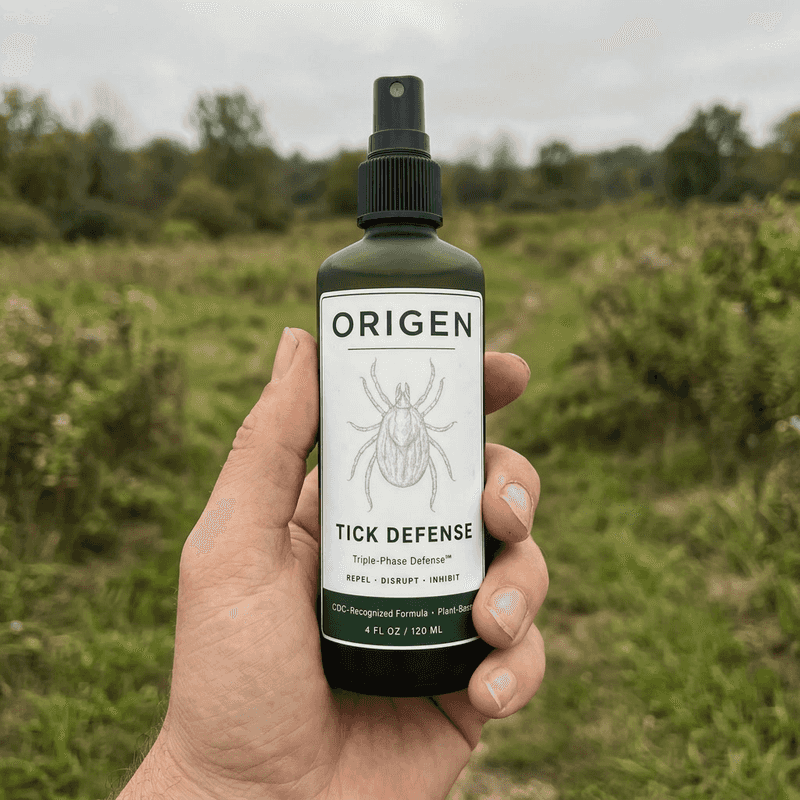
A well-managed yard lowers tick pressure. It does not eliminate it.
Ticks can travel on birds, deer, squirrels, and pets, and a single well-maintained lawn surrounded by wooded neighbors is not a sealed system. Personal protection stays necessary regardless of how carefully the yard is kept.
CDC recommends using EPA-registered repellents according to the product label, including products containing DEET, picaridin, IR3535, oil of lemon eucalyptus, para-menthane-diol, or 2-undecanone. Each of those active ingredients comes with its own label instructions, and label precautions are not interchangeable.
Oil of lemon eucalyptus and its synthesized equivalent para-menthane-diol, for example, are not recommended for children under three years of age. Always read the label for age restrictions, application frequency, and any use-specific warnings before applying any repellent product to a child.
Permethrin-treated clothing and gear provide a separate layer of protection. Permethrin binds to fabric fibers and can remain effective through multiple washes, making it useful for outdoor clothing, boots, and gear.
One firm rule: permethrin belongs on clothing and gear only. It must not be applied directly to skin.
Products formulated for clothing are different from skin-applied repellents, and the two should never be substituted for each other.
After every outdoor activity, a thorough check matters more than most people realize. CDC guidance on tick removal and prevention recommends checking the entire body, including under the arms, behind the knees, in and around the ears, inside the belly button, around the waist, and in the hair.
Clothing and gear should be checked too. Dry clothing on high heat for at least 10 minutes to kill any ticks that may have hitched a ride.
Showering soon after coming indoors can wash off unattached ticks and gives a natural opportunity to do a full body scan.
Pets need checking after every outdoor outing as well. Dogs and cats can carry ticks inside and drop them in living spaces before anyone notices.
If you find an attached tick on a person or pet, remove it promptly with fine-tipped tweezers, grasping as close to the skin as possible and pulling upward with steady, even pressure. Monitor for symptoms afterward and contact a healthcare provider if a rash, fever, or other concerns develop.
Choose plants for the yard, not as a fictional tick barrier

Texas native plants earn their place in a yard for real reasons. Many thrive through triple-digit summers with minimal water, support pollinators and songbirds, and add genuine beauty to a landscape that can be brutal to non-adapted species.
Those are honest arguments for planting natives, and they do not need exaggeration to hold up.
Calling any vine or shrub tick-proof without field evidence is a different matter entirely. University of Maryland Extension confirms that no known scientific studies show that plants growing in a yard effectively repel ticks, and that conclusion applies to native, aromatic, and botanically interesting species alike.
A plant can be native, fragrant, heat-tolerant, and ecologically valuable without also being a tick deterrent. Those are separate claims, and each one requires its own evidence.
The defensible approach combines several practical steps rather than relying on any single fix. Keep recreation areas open, sunny, and mowed.
Reduce leaf litter and brush at the edges where managed lawn meets wilder habitat. Use a transition strip of gravel or wood chips as one part of an integrated plan.
Follow tested-repellent labels when heading outdoors, and treat plant-based landscape choices as fundamentally different from EPA-registered repellent products. CDC’s layered tick prevention framework and landscape management guidance from University of Maine Extension both point in the same direction: no single tactic is sufficient, and the most reliable protection comes from stacking multiple measures.
Plant your yard for the reasons that actually hold up. A well-chosen native shrub or groundcover can make a Texas yard more resilient, more beautiful, and more hospitable to the creatures worth attracting.
Just do not ask it to stand guard against ticks. That job belongs to a combination of habitat management, tested repellents, and a thorough check before you head back inside.