

Planting a patch of native Texas wildflowers will not make mosquitoes pack up and leave your yard, but it can be one piece of a smarter habitat plan. Dragonflies are genuinely fierce hunters of flying insects, including mosquitoes, and building a yard that supports them starts with the right plants and the right water.
This guide walks through what native flowers can realistically do, what dragonflies actually need, and how to layer those pieces into a yard that works better for wildlife and for you.
What native wildflowers can—and cannot—do for mosquitoes
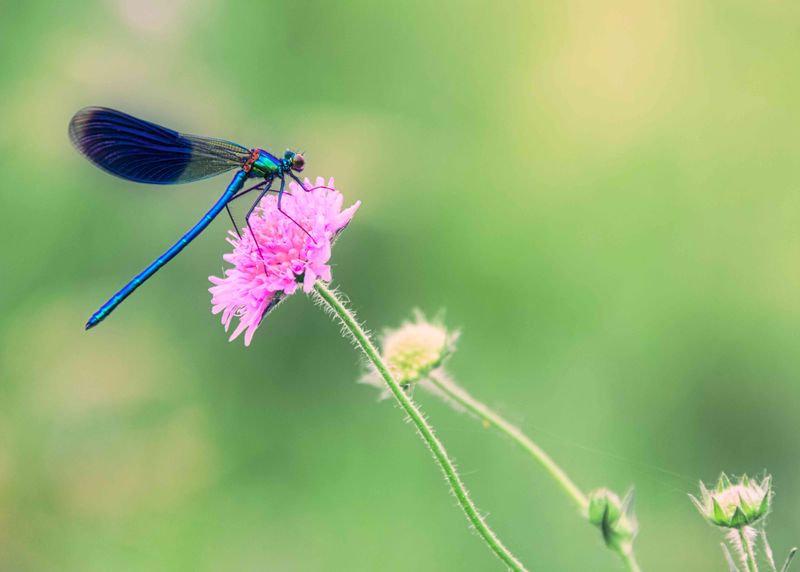
Native Texas wildflowers bring a lot to a yard: structure, color, habitat for small insects, and stems and leaves that visiting dragonflies can rest on or hunt near. Texas A&M’s field guide to common Texas insects notes that adult dragonflies eat mosquitoes, midges, flies, and other flying insects, and that they use nearby plants and surfaces as perches and emergence points.
A well-planted native bed can support that kind of activity by feeding the broader insect community that dragonflies hunt.
What flowers cannot do is repel mosquitoes on their own. University of Maryland Extension research is direct on this point: no plants available to home gardeners will actually repel all mosquitoes from a yard.
No specific Texas wildflower has been shown to drive mosquitoes away or guarantee that dragonflies will move in.
The realistic goal is a connected habitat system. Texas Parks and Wildlife’s Wildscapes program frames wildlife habitat as a combination of food, water, and shelter rather than any single planting.
Flowers contribute vegetation and insect-food-web support, but they work best alongside suitable water, sunny open edges, perching spots, and a yard that is not saturated with broad-spectrum insecticides.
Think of a wildflower bed as one layer of a larger plan, not a standalone solution. University of Florida IFAS extension guidance specifically warns that natural predators cannot consume every mosquito and should not be relied on alone to prevent mosquito-borne disease.
Setting that expectation at the start makes everything else in this guide more useful.
Why dragonflies need aquatic habitat as well as plants
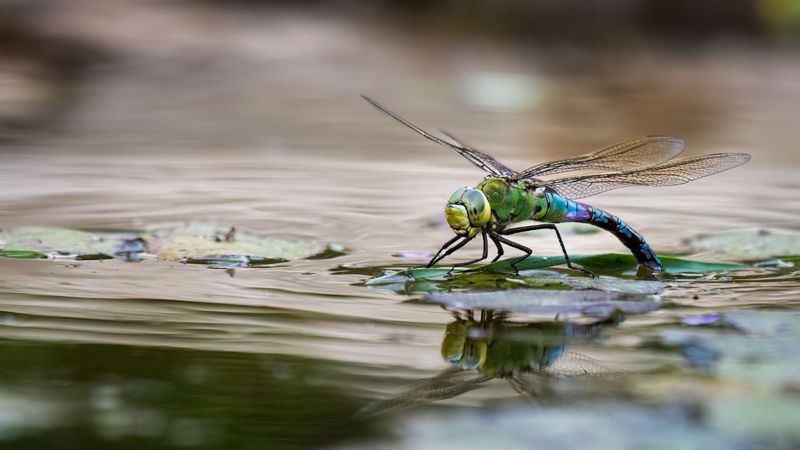
A flower bed alone will not support dragonfly reproduction, and understanding why starts with their life cycle. According to Texas A&M’s insect field guide, dragonfly nymphs are fully aquatic and may spend months or even years developing underwater before they emerge as adults.
During that time, they are active predators in the water column, hunting aquatic invertebrates and mosquito larvae. Without a suitable water body nearby, there is no nymph stage and no local dragonfly population.
When a nymph is ready to emerge, it crawls out of the water and onto a nearby plant stem, rock, or other surface. The adult then dries, hardens, and takes flight.
Those emergence surfaces matter, and a garden with upright stems, tall grasses, or woody perches near the water edge gives emerging adults a better chance of surviving that vulnerable transition.
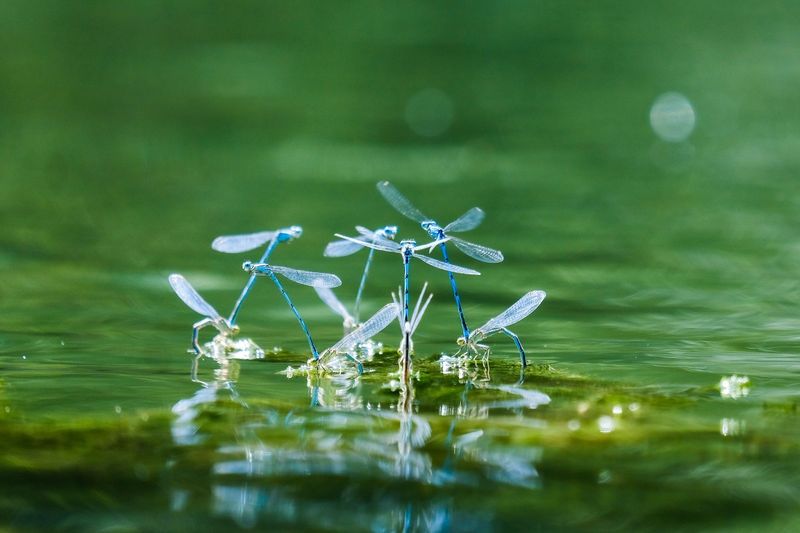
Adult dragonflies are not tied to the water the way nymphs are, but they do return to it for mating and egg-laying. University of Maryland Extension’s dragonfly habitat guide describes adults as patrolling sunny, open areas near water and perching on exposed stems and branches between hunting runs.
A wildflower patch near a managed water feature can support that kind of adult activity by providing perches, insect prey, and vegetated cover at the edges.
Flowers are not a nectar source for dragonflies the way they are for butterflies or bees. Dragonflies are strictly carnivorous and do not feed on pollen or nectar.
The value of native plants in this context is structural and ecological: they support the insects dragonflies hunt, they provide stems and surfaces for perching and emergence, and they create the kind of vegetated, layered edge habitat that dragonflies prefer. Water is the critical reproductive requirement that flowers simply cannot replace.
Choose native flowers by Texas ecoregion
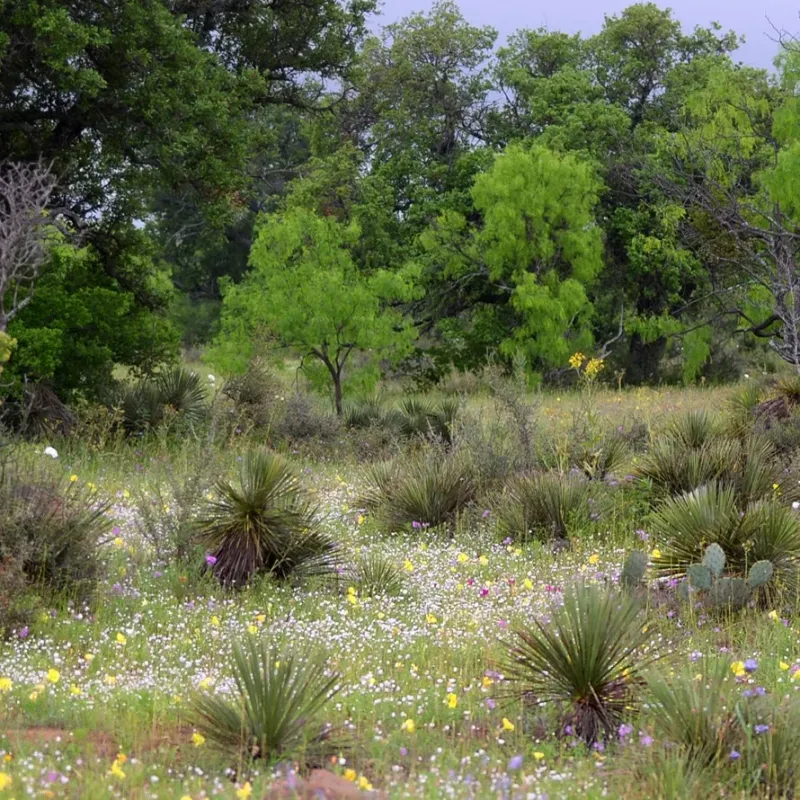
Texas is too ecologically varied for a single wildflower mix to suit every yard. The soil, rainfall, temperature range, and native plant communities shift dramatically from the piney woods of East Texas to the limestone hills of the Edwards Plateau to the coastal marshes of the Gulf.
Texas Parks and Wildlife’s plant guidance by ecoregion is the most reliable starting point for matching native flowers to your specific conditions, and the Texas A&M AgriLife Earth-Kind Plant Selector lets you filter further by county, soil type, and sun exposure. Verify any plant’s local fit before purchasing.
On the Edwards Plateau, where thin limestone soils and dry summers define the growing season, butterfly weed, Engelmann daisy, brown-eyed Susan, cedar sage, standing cypress, and greenthread are all regionally appropriate native options. These plants support native bees, beetles, and other small insects that form the prey base dragonflies hunt – not because the flowers attract dragonflies directly, but because a healthy insect community gives predators more reason to patrol the area.
Gardeners in the Blackland Prairies and North Texas have good options in purple coneflower, cardinal flower, scarlet sage, Texas bluebonnet, brown-eyed Susan, and Turk’s cap. Along the Gulf Coast, lance-leaf coreopsis, Gulf Coast penstemon, Indian paintbrush, meadow pink, and cardinal flower tend to perform well in the heavier soils and humid conditions near the coast.
Further south, South Texas yards can work with Engelmann daisy, scarlet sage, red gaillardia, purple phacelia, and heartleaf hibiscus. In the East Texas Pineywoods, winecup, coralbean, and halberd-leaf rose-mallow are native choices suited to the region’s acidic soils and higher rainfall.
Every plant listed here is presented as a native habitat and insect-support option, not as a proven dragonfly magnet or mosquito deterrent. The goal is a regionally appropriate plant community that makes the yard more ecologically useful overall.
How a managed pond can add the aquatic habitat dragonflies need
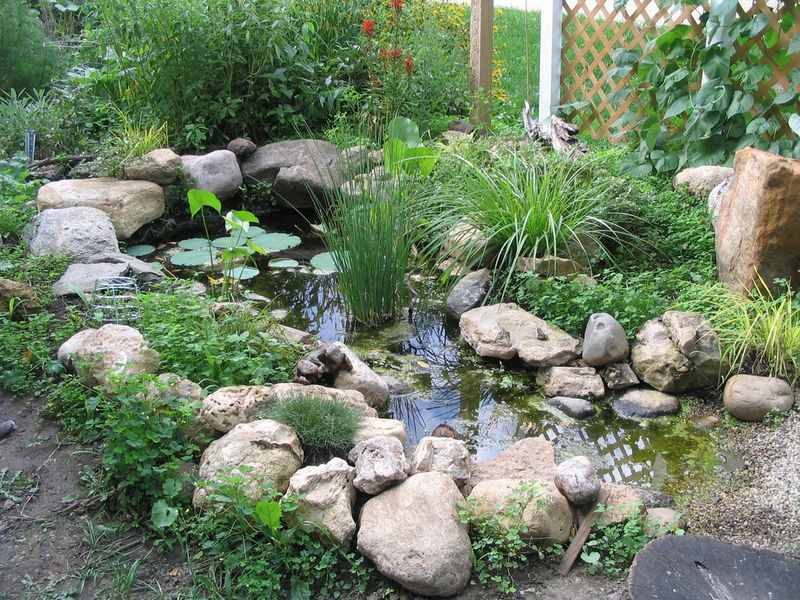
Adding a properly designed water feature is the single most meaningful step a Texas homeowner can take toward supporting a local dragonfly population. University of Maryland Extension’s dragonfly habitat guidance describes a pond with shallow edges and a deeper central area as useful for accommodating aquatic plants and providing refuge for nymphs.
Shallow margins allow emergent plants like rushes or native sedges to take hold, and those plants give nymphs climbing surfaces when they are ready to emerge as adults.
Sunny placement matters. Dragonflies are cold-blooded and depend on warmth to fly and hunt, so a pond tucked into permanent shade will see far less activity than one that receives several hours of direct sun each day.
Position flat rocks, bare stems, or wooden stakes near the water’s edge so adults have exposed perches for basking and watching for prey. Varied water depth – shallow at the margins, deeper toward the center – supports both aquatic plants and nymph refuges in a single feature.
A managed pond can improve habitat suitability, but it does not guarantee that dragonflies will appear or reproduce. Local dragonfly species, surrounding habitat, and regional conditions all influence whether a yard pond gets colonized.
What a well-maintained pond does do is remove one of the biggest barriers: the absence of any aquatic habitat at all.
Two cautions are worth keeping in mind. First, CDC guidance on mosquito control at home is clear that any standing water can become a mosquito nursery if left unmanaged, so a yard pond needs regular monitoring and, when necessary, appropriate larval treatment.
Second, stocking fish is not a straightforward solution. Fish can eat mosquito larvae, but they also prey on dragonfly nymphs and can fundamentally alter the pond community in ways that reduce, rather than support, dragonfly reproduction.
Texas Wildscapes habitat guidance emphasizes vegetation and structure as the foundation of wildlife ponds, not a universal fish prescription. Design for habitat first, and consider fish only after weighing the tradeoff.
The strongest mosquito evidence comes from dragonfly nymphs
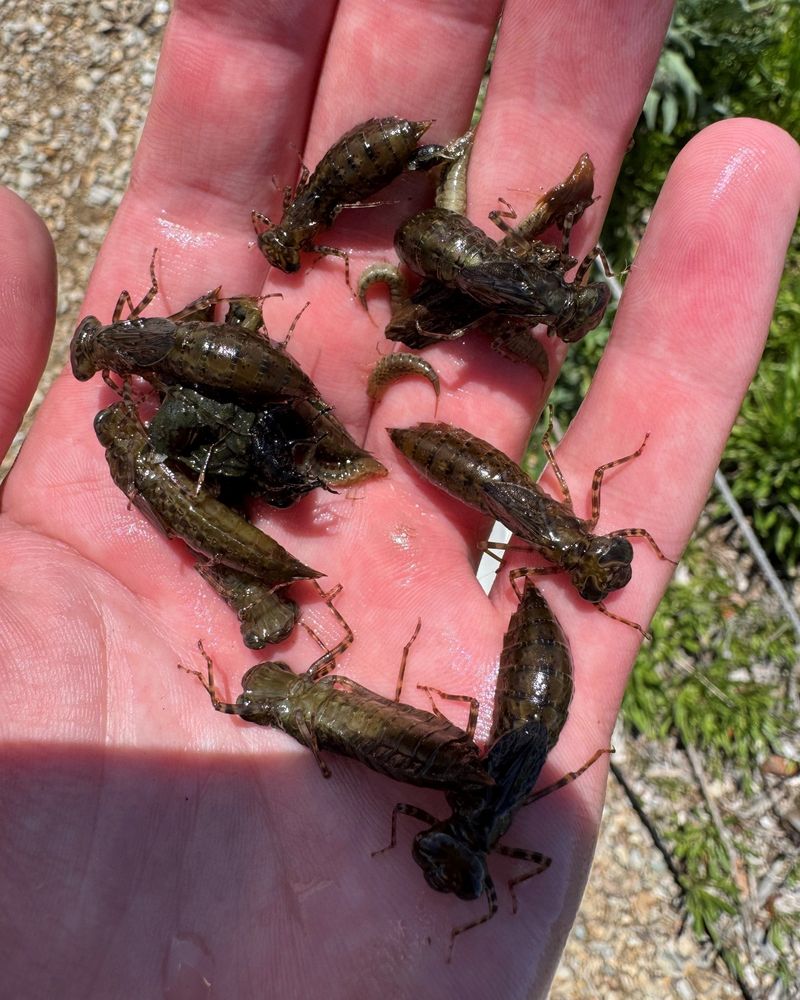
The most compelling data on dragonflies and mosquito control comes from the water, not the air. A 2023 meta-analysis of 31 studies found that a single odonate nymph – dragonfly or damselfly – consumed an average of about 40 mosquito larvae per day in experimental containers, reducing larval populations by roughly 45% per day under those conditions.
Those are meaningful numbers, but they come from controlled experiments, not Texas backyards. Real-world outcomes depend on pond size, nymph density, mosquito species, water temperature, and a range of other variables that no experiment can fully capture.
Adult dragonflies are a different story. They are genuine aerial hunters and mosquitoes are part of what they eat, but calling them reliable residential mosquito-control agents overstates what the research shows.
A gut-content study of 41 adult dragonflies and damselflies found mosquito remains in only four specimens, leading the authors to conclude that mosquitoes were probably not an essential part of the adult odonate diet. Adults are generalist hunters.
On any given patrol, they may take a moth, a midge, a winged ant, or a small fly just as readily as a mosquito.
A yard with more dragonflies does not automatically mean fewer mosquitoes if other prey are abundant. Texas A&M’s insect field guide lists midges, flies, and other flying insects alongside mosquitoes in the adult dragonfly diet, which reflects how opportunistic these predators actually are.
The practical takeaway is that nymph predation on mosquito larvae in a managed pond is where the strongest biological case for dragonflies as mosquito hunters lives. Adult predation over your patio is real but variable and should not be treated as a guarantee of fewer bites.
Building habitat that supports nymphs – through a well-designed water feature – is a more defensible strategy than hoping adult dragonflies will clear the air.
Protect the food web while removing mosquito nurseries
Building a yard that supports dragonflies and other beneficial insects only pays off if that yard is not simultaneously being knocked back by broad-spectrum insecticides. Many common yard sprays kill indiscriminately, taking out the beetles, flies, midges, and small insects that make up the food web dragonflies depend on.
Texas Parks and Wildlife guidance on native pollinators recommends reducing pesticide use where practical specifically to protect the insect communities that support broader wildlife. Cutting back on routine preventive spraying – especially during peak insect activity – protects the habitat investment you are making with native plants and managed water.
Reducing insecticide use does not mean ignoring mosquitoes. CDC recommends emptying, scrubbing, covering, or turning over any water-holding containers at least once a week to break the mosquito breeding cycle.
Buckets, saucers under pots, old tires, clogged gutters, tarps with pooled water, and any other container that holds even a small amount of standing water can produce large numbers of mosquitoes within a week. Source reduction is fast, free, and does not harm beneficial insects.
For water that cannot be emptied – a pond, a rain barrel with a screen, or a low spot that collects runoff – EPA-registered Bti products labeled for homeowner use target mosquito, black-fly, and fungus-gnat larvae without harming most other aquatic organisms. Bti works by producing proteins toxic to the larvae of those specific insects, making it a reasonable option for a managed wildlife pond when mosquito larvae are present.
Always follow the product label for correct dosage, timing, and reapplication intervals. Bti reduces larval populations but does not eliminate every mosquito.
The goal here is a yard that is genuinely safer for beneficial insects while still being actively managed against mosquito breeding. Those two things are not in conflict when source reduction and targeted larvicide use replace routine broadcast spraying.
Build a realistic Texas plan for fewer mosquito problems
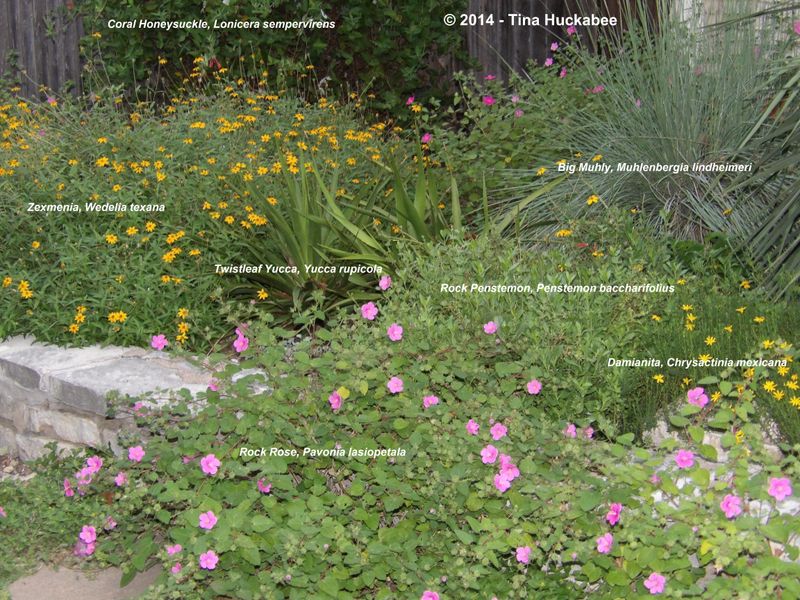
A practical Texas habitat plan starts with plant selection. Use TPWD’s ecoregion plant guidance to choose native wildflowers matched to your soil, rainfall, and sun conditions.
Layer plants by height to create the kind of vegetated edge structure that supports a range of insects and gives adult dragonflies something to hunt through and perch on. Add sunny, open spaces near any water feature so adults have room to patrol.
If you can maintain a water feature safely, a managed pond with shallow margins, emergent vegetation, and nearby perching surfaces is the most meaningful addition for dragonfly habitat. Monitor it regularly, treat mosquito larvae with label-directed Bti when needed, and skip the fish unless you have researched the tradeoff.
Empty or scrub all other water-holding containers every week without exception.
Cut back on broad-spectrum insecticide applications wherever you can, and keep personal protection in place regardless of how many dragonflies visit. University of Florida IFAS extension is clear that no predator feeds exclusively on mosquitoes and that natural predators cannot prevent every bite.
Screens on windows and doors, EPA-registered repellents applied to skin and clothing, and protective clothing during peak mosquito hours remain essential, as does following local public-health guidance during disease-alert periods. CDC’s mosquito-control guidance consistently lists these measures because habitat improvements and natural predators work alongside them, not instead of them.
Done well, this plan gives you a yard that is more ecologically alive, more interesting to watch, and somewhat less hospitable to mosquito breeding. A yard full of native plants and a well-tended pond will not make you bite-free, but it just might make your summer evenings noticeably more pleasant.