
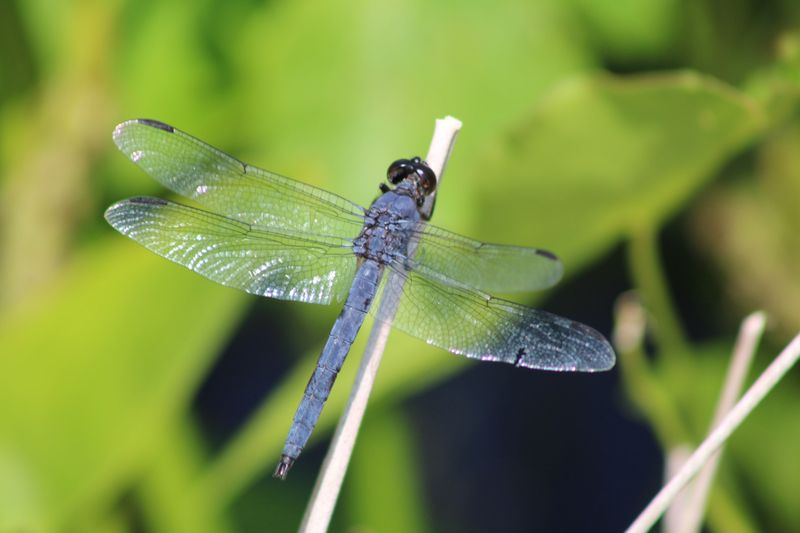
Mosquitoes are a real problem in California yards, and it makes sense to want nature’s help dealing with them. Dragonflies are impressive hunters that eat mosquitoes at every stage of their lives, so the idea of planting something that draws them in is genuinely appealing.
California gray rush is a native plant that can play a role in dragonfly habitat, but the full story is more nuanced than one plant doing all the work.
California gray rush suits some moist sites—but it is not a magic mosquito shield
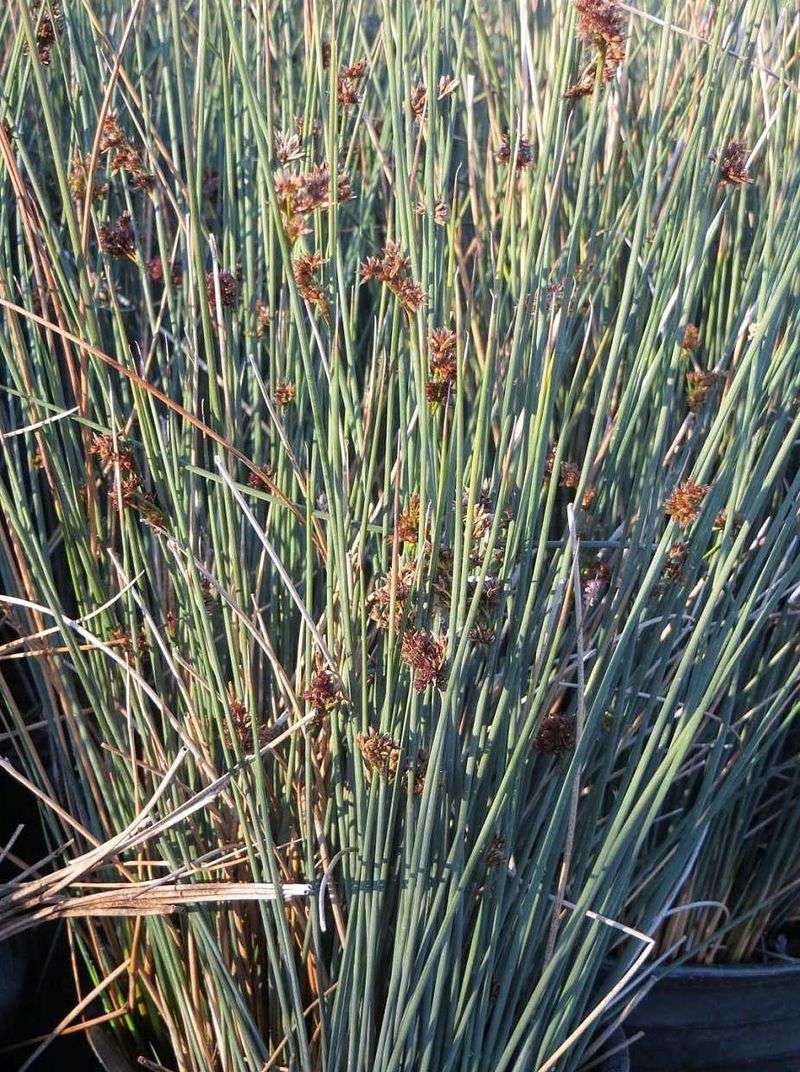
California gray rush, known botanically as Juncus patens and sometimes called spreading rush, is a California-native plant that grows naturally along stream banks, marshy flats, and pond margins throughout the state. Its upright, steel-blue-green stems give a pond edge clean vertical structure, and it handles both regularly wet soil and occasional dry spells once it has settled in.
For a homeowner with a moist or poorly drained corner of the yard, it is a practical, regionally appropriate choice.
Selecting it as the featured plant for this article is an editorial decision, not a declaration that it outperforms every other California native at a water feature. The Theodore Payne Foundation plant profile for Juncus patens describes it as well suited to marshy places, rain gardens, and heavy clay soils, which makes it a reasonable starting point for thinking about pond-edge habitat.
It is one useful habitat plant, not a stand-alone pest-control product.
Here is what the evidence does not support: planting California gray rush by itself will not summon dragonflies to your yard, and it will not quietly reduce mosquitoes on its own. No research has found that this species, planted alone, causes dragonflies to appear or mosquito numbers to drop.
According to Xerces Society guidance on backyard ponds, dragonflies need a suite of habitat conditions centered on water, not a single emergent plant. Gray rush can contribute to that habitat picture, but only when the right water feature, site conditions, and surrounding plantings are already in place.
Dragonflies need a complete watery life cycle
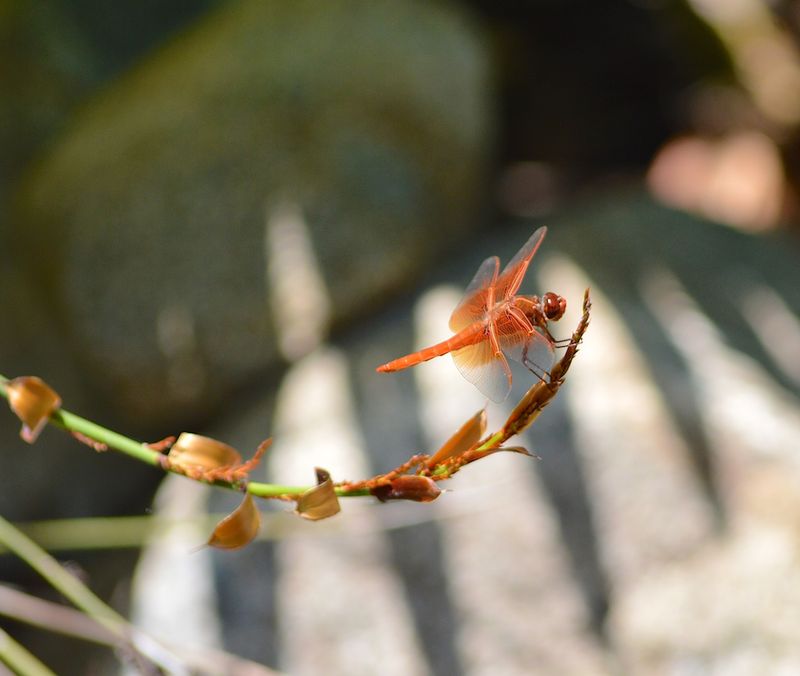
Dragonflies are not just flying visitors that pass through a yard. They are tied to fresh water for most of their lives, and the aquatic phase is actually the longer one.
Females lay eggs in or very near water, and once those eggs hatch, the larvae, called nymphs, live underwater for months or even years depending on the species. They breathe through gills, hunt other aquatic invertebrates, and only leave the water when they are ready to transform into adults.
That transformation, called emergence, happens on a vertical surface at the water’s edge. The nymph climbs out of the water, its exoskeleton splits, and the adult pulls free.
Emergent plants like California gray rush provide exactly the kind of upright stems that nymphs use for this process. Adults then use nearby vegetation for perching, hunting, and shelter.
According to the Xerces Society and Migratory Dragonfly Partnership habitat guidelines, a functional dragonfly habitat needs fresh water, shallow margins for egg-laying, emergent and submerged or floating vegetation, sunny open areas, wind shelter, and upland vegetation nearby for foraging and roosting.
Removing any one of those pieces can make the habitat unusable. A yard with only a rush plant and no water feature cannot support nymphs at all, because there is nowhere for eggs to be laid or for larvae to develop.
A pond without emergent vegetation may not offer enough emergence structure or perching for adults. Saying that gray rush attracts dragonflies is a shorthand that skips the real mechanism: the plant supports one piece of a habitat puzzle that has to come together as a whole before dragonflies can live and breed in a yard.
Framing matters here. Habitat support is real and worth pursuing.
Guaranteed attraction is not something a single plant can deliver, and expecting it to work that way will likely lead to disappointment and, potentially, a poorly managed water feature that breeds mosquitoes instead of hosting dragonflies.
Dragonflies can eat mosquitoes, but yards get no guaranteed result
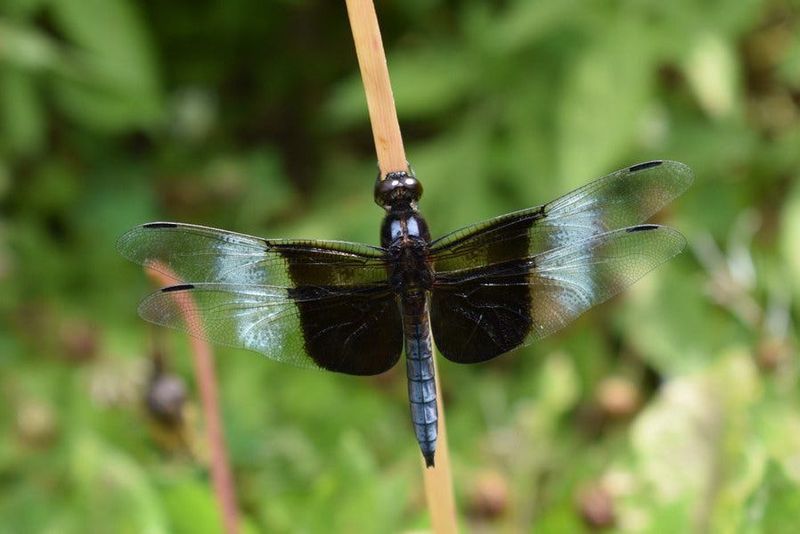
Dragonflies do eat mosquitoes, and that fact is not exaggerated. Both life stages are hunters, but they hunt differently.
Adult dragonflies are aerial predators that can catch flying insects, including adult mosquitoes, with impressive accuracy. Aquatic nymphs are ambush hunters underwater that prey on mosquito larvae sharing the same water column.
A 2023 meta-analysis published in a peer-reviewed journal found that dragonfly and damselfly nymphs consumed mosquito larvae in experimental containers, averaging roughly 40 larvae per nymph per day and producing about a 45 percent reduction under those controlled conditions. Those numbers are striking, but they come from laboratory and container experiments designed to measure predation rates, not from field studies measuring mosquito populations around California homes.
Real ponds have far more variables: hiding places for larvae, varying water temperatures, competing prey, and predator densities that are hard to control.
UC IPM is direct on this point: dragonflies and other opportunistic predators may feed on mosquitoes in stormwater and pond settings, but their effects are generally not enough by themselves to eliminate the need for mosquito-management measures. Dragonflies do not patrol a yard on a schedule or preferentially target the mosquitoes that are bothering you.
They hunt what is available and accessible in their territory.
Mosquitoes biting you on the back porch are often breeding in a neighbor’s yard, a blocked gutter down the street, or a saucer under a potted plant three feet away. Even a thriving dragonfly population at your pond cannot intercept every mosquito traveling in from outside its range.
Dragonfly habitat is genuinely worth building for biodiversity and ecological health, but it should not be sold as a mosquito-relief program with predictable results.
Place gray rush at a suitable pond, rain garden, or swale
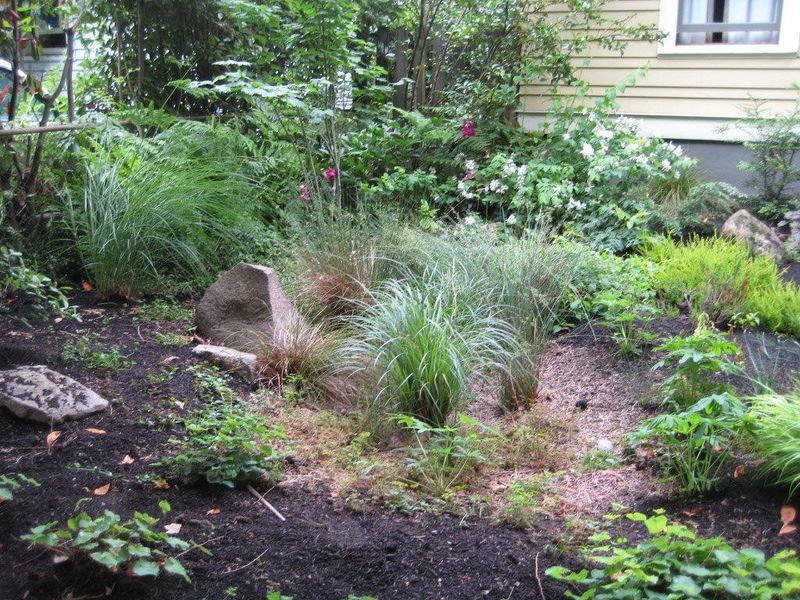
Placement is where the habitat design either works or falls apart. California gray rush belongs at the edge of a water feature, not in the middle of a dry planting bed on the promise that dragonflies will follow.
The plant is genuinely suited to pond margins, rain gardens, bioswales, and drainage areas where soil stays seasonally or regularly wet. It can handle drought once established, but that drought tolerance does not make it the right choice for a bone-dry corner of a Southern California hillside yard with no water feature nearby.
The Theodore Payne Foundation notes that Juncus patens spreads by rhizomes, meaning it can slowly expand outward from where it was planted. For a large rain garden or a naturalistic pond edge, that spreading habit fills in gaps nicely.
For a small, carefully edged formal water feature, you may want to plant it in a container submerged at the pond margin or plan to divide it every few years to keep it from crowding out other plants.
Gray rush works best as one layer in a more complete planting. Pair it with submerged oxygenating plants that keep water healthy, floating-leaf plants like native water lilies that provide shade and reduce algae, and upland native shrubs or grasses nearby that give adult dragonflies hunting perches and wind shelter.
The Xerces Society guidance on backyard pond habitat emphasizes that shallow margins, sunny open-water areas, and surrounding upland vegetation are all part of what makes a pond functional for odonates.
Before purchasing plants, check regional suitability. Native plant needs vary significantly between coastal fog zones, hot inland valleys, desert edges, mountain foothills, and fire-prone wildland interface communities.
The California Native Plant Society planting guidance recommends confirming that any chosen native matches your specific soil type, sun exposure, and local water availability before installation, especially given ongoing water restrictions in many California counties.
A dragonfly pond can still become a mosquito nursery
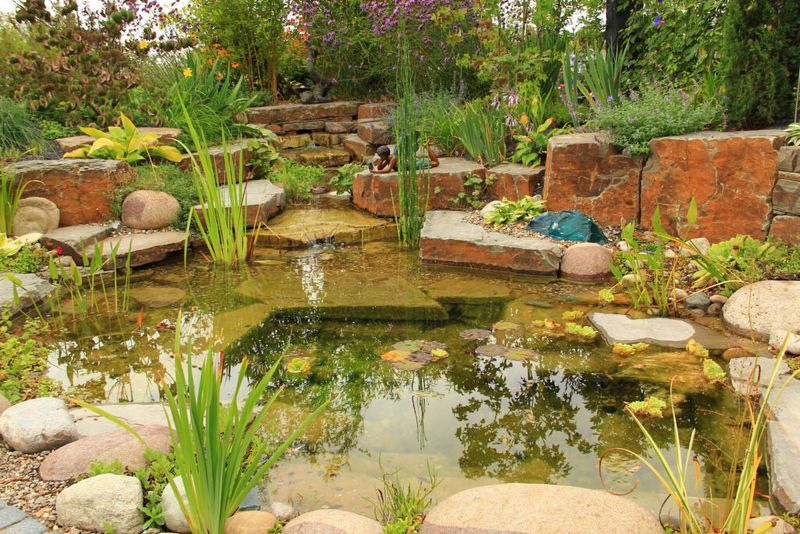
Adding water to a yard to support dragonflies is a worthwhile goal, but unmanaged water is one of the fastest ways to make a mosquito problem worse. Mosquitoes need standing water to complete their life cycle, and they are not selective about the source.
A decorative pond with stagnant water, organic debris piling up along the edges, and dense emergent vegetation crowding the open water surface can produce large numbers of mosquito larvae even when dragonflies are present.
Research in Southern California constructed wetlands found that vegetated zones could maintain high mosquito larval and adult production, and that predators were less effective at reaching larvae inside dense emergent stands. Gray rush and similar upright plants are not automatically mosquito-proof just because they are native.
Dense plantings can actually shelter mosquito larvae from the predators you are trying to encourage.
Safer pond design addresses this directly. UC Cooperative Extension guidance on managing mosquitoes in ponds and water gardens recommends keeping water moving with a fountain, waterfall, or recirculating pump, since mosquitoes strongly prefer still water for egg-laying.
Removing fallen leaves, excess algae, and decomposing plant material reduces the organic matter that mosquito larvae feed on. Designing the pond with a deeper central open-water section and steeper sides near the edges reduces the shallow, warm, slow-moving water that mosquito larvae favor.
Avoid letting emergent vegetation cover more than about one-third of the water surface, both to maintain open water for dragonfly nymphs to hunt effectively and to reduce mosquito-friendly habitat. Skim debris regularly, and inspect the pond margins after rainstorms when organic material tends to accumulate.
A well-maintained pond with good circulation, open water, and moderate vegetation can support dragonflies without handing mosquitoes a protected breeding zone at the same time.
Protect dragonflies while removing household breeding spots
One of the most counterproductive things a California homeowner can do around a wildlife pond is reach for a broad-spectrum insecticide when mosquitoes appear. Products that kill mosquitoes indiscriminately also kill dragonfly nymphs, water beetles, and other aquatic beneficial insects.
UC Cooperative Extension specifically recommends conserving dragonflies and other predators that have colonized a pond rather than spraying around the water’s edge. If you build the habitat and then spray it, you undermine everything the planting was meant to accomplish.
The more effective strategy is to eliminate the breeding sources that are actually producing the mosquitoes biting you. Invasive Aedes mosquitoes, which have spread across much of California and bite aggressively during the day, can complete their life cycle in a surprisingly small amount of water.
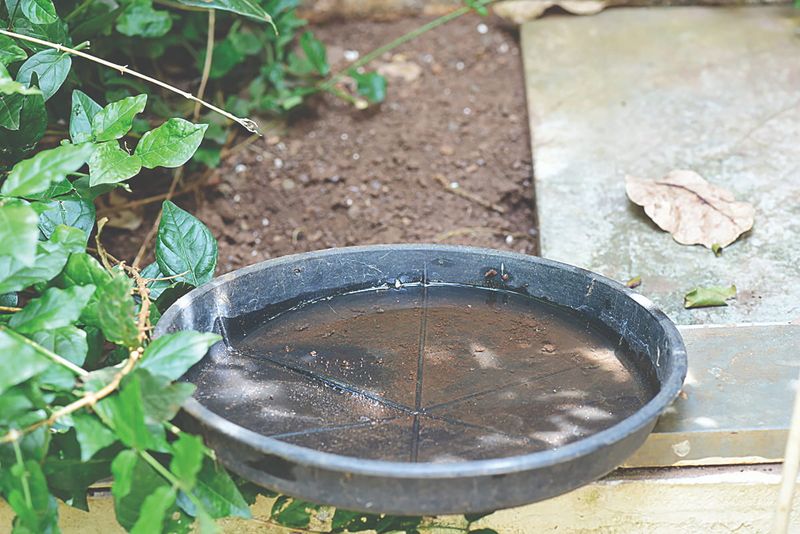
A saucer under a potted plant, a clogged rain gutter, a child’s toy left outside, an old bucket, or a low spot in a tarp can all become productive breeding sites. CDC guidance on home mosquito control recommends emptying, scrubbing, covering, or removing any container that holds water, and repeating that check at least once a week during warm months.
For water that genuinely cannot be drained or covered, such as a rain barrel without a tight-fitting lid or a low-lying area that collects runoff, Bacillus thuringiensis israelensis (Bti) products are a targeted option. Bti is a naturally occurring soil bacterium that kills mosquito larvae when they ingest it but does not harm dragonflies, fish, birds, or mammals.
Use any Bti product according to its label directions. One important clarification: Bti kills larvae in the water and does not affect the adult mosquitoes already flying around and biting.
The UC IPM mosquito management program frames source reduction as the most reliable household mosquito-control step, with biological controls like Bti as a complement for treated water sources, not a substitute for removing breeding sites. Combining a carefully maintained pond with weekly container checks is a more effective approach than either strategy alone.
Use gray rush as habitat support, not your only mosquito defense
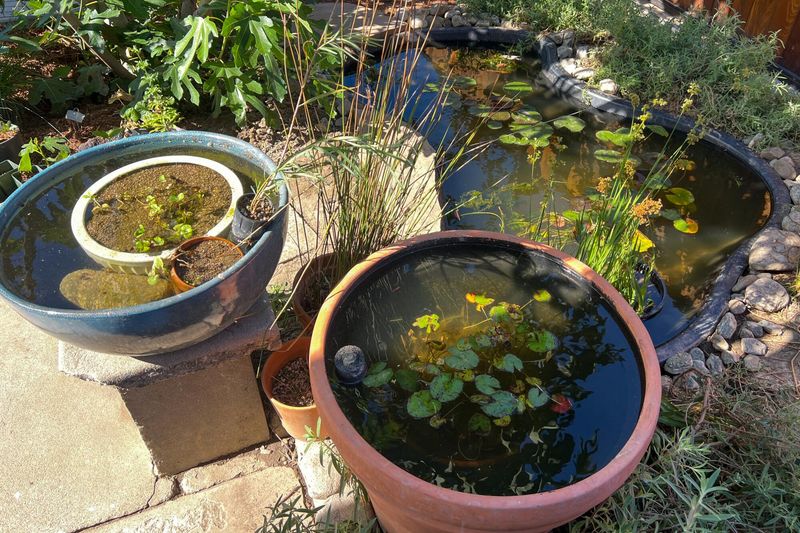
California gray rush earns its place in a yard that already has, or is ready to properly manage, a moist habitat feature. At a pond margin, rain garden, or bioswale with good circulation, appropriate vegetation layers, and regular maintenance, it contributes real structural value for dragonfly emergence and perching.
At a dry site with no water feature, it is simply the wrong plant for the wrong goal, and adding a pond solely on the hope that dragonflies will handle your mosquito problem sets up a likely disappointment.
Mosquitoes traveling in from neighboring yards, street drains, or unmaintained lots nearby are outside the reach of any dragonfly population you cultivate. UC IPM notes that mosquitoes can fly considerable distances from their breeding sites, which means reducing mosquitoes around your home requires addressing sources, not just adding predators.
Fewer biting mosquitoes is also not the same as reduced disease risk. California Department of Public Health guidance recommends EPA-registered repellents, long sleeves and pants during peak biting hours, and properly maintained window and door screens as the dependable tools for personal protection against mosquito-borne illness.
A practical priority order for California homeowners: confirm that gray rush or any other native plant suits your specific site and region using California Native Plant Society regional resources, then manage any water feature carefully, eliminate household breeding containers weekly, use personal protection when mosquitoes are active, and contact your local vector-control district when you suspect a larger breeding problem in the neighborhood. A yard that supports dragonflies is a healthier yard, but the dragonflies are the reward, not the solution.
Check the Theodore Payne Foundation profile for Juncus patens to confirm site fit before you plant.