
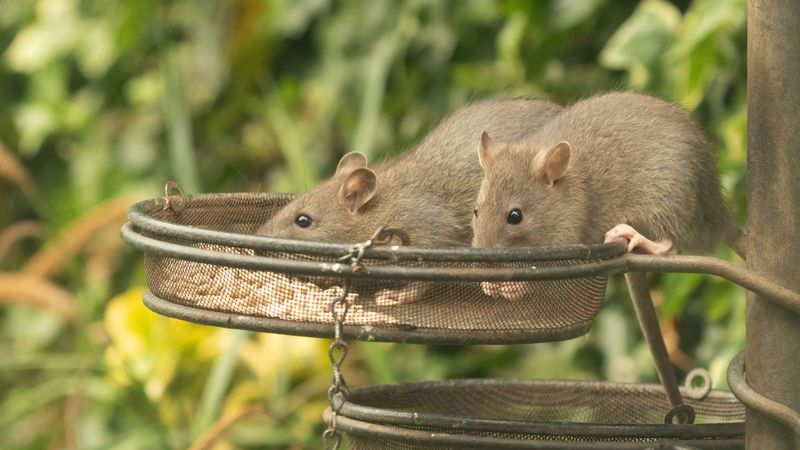
Many California homeowners who love feeding backyard birds never realize that a simple, well-meaning habit can quietly give rats a dependable place to eat. Spilled or accumulated birdseed beneath a feeder is one of the more overlooked food sources that pest-management experts and wildlife agencies point to as a potential rat attractant.
That does not mean your feeder is definitely the cause of every rat problem, but understanding the connection gives you a clear, practical place to start. A few targeted steps can reduce the risk without forcing you to give up on supporting local wildlife.
Spilled birdseed can become a dependable rat food source
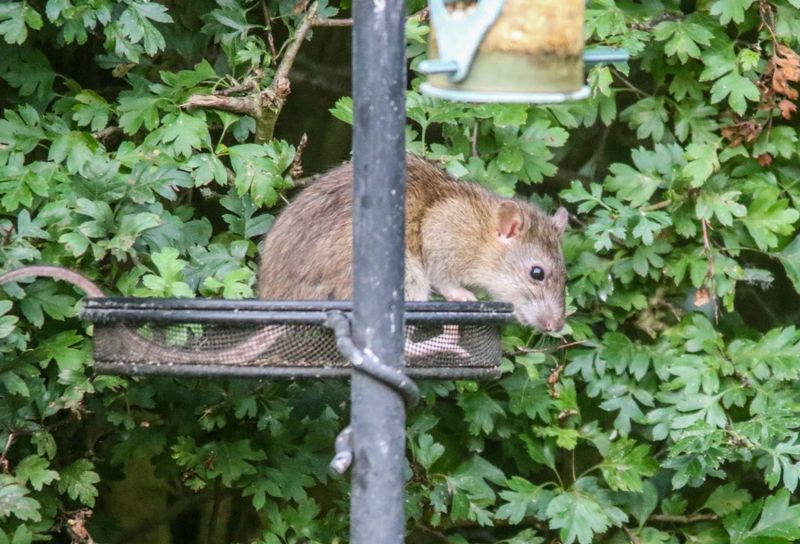
Feeding backyard birds is a genuinely wildlife-friendly choice, and most California homeowners who do it are trying to support the local ecosystem. The problem is not the intention.
The problem is what happens to the seed that misses the feeder or gets flicked out by foraging birds and collects on the ground below.
California’s Department of Fish and Wildlife notes that bird feeders can attract mice and rats, and UC Cooperative Extension specifically lists birdseed among the preferred foods of roof rats, which are common throughout California yards. That is not a fringe concern tucked inside a technical manual.
Those are two of the state’s primary wildlife and agricultural guidance sources flagging the same thing.
What makes birdseed particularly relevant is how it behaves as a food source. A feeder that gets refilled regularly, sits above ground with spillage collecting beneath it, and is never cleaned up creates something rats find very useful: a concentrated, predictable, repeatedly available meal.
King County Public Health identifies birdseed as one of the most common backyard rat food sources and specifically calls out spilled seed as difficult to fully eliminate once it becomes a habit.
None of that means a feeder automatically creates a rat infestation. A small amount of seed consumed quickly by birds during the day is a very different situation from a feeder that overflows nightly and leaves a carpet of seed on the ground.
The risk builds when food is repeatedly available, when spillage accumulates without cleanup, and when the yard also offers water, shelter, or easy access to a building. Birdseed is a credible and often overlooked piece of the puzzle, but it is one piece among several.
Why a feeder can become a rat stop
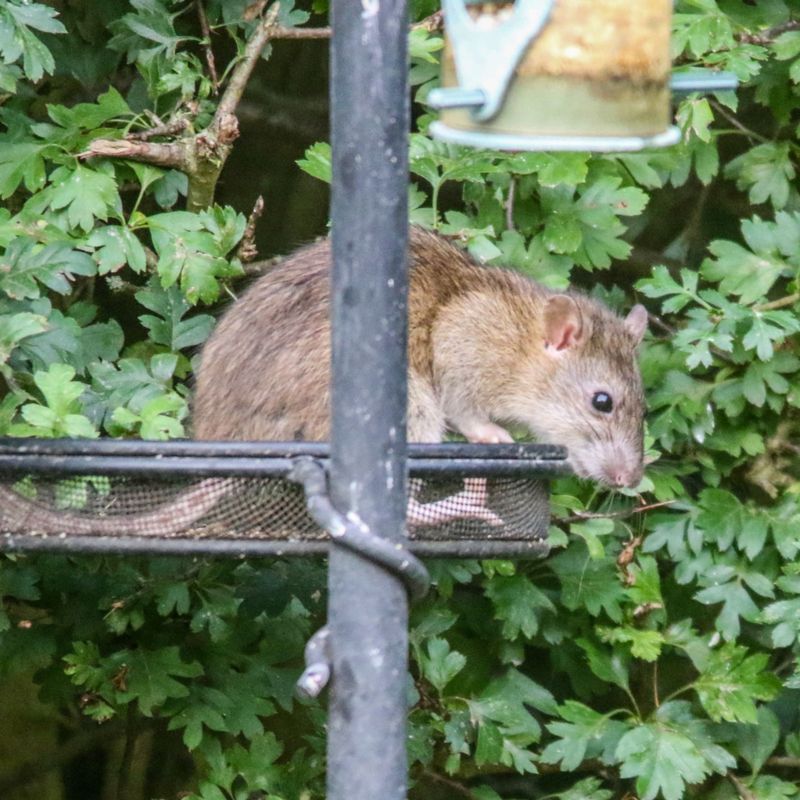
Rats are creatures of habit, and they are very good at finding reliable food. Once a rat discovers that a particular spot reliably offers an easy meal, it tends to return.
A bird feeder that spills seed onto the ground and stays filled overnight can function exactly like a rat feeding station, even if that was never the plan.
Research on supplementary feeding and rodent activity supports this pattern. A study published in Mammal Research found that greater food availability around supplementary feeding sites was associated with increased rat activity, though much of the direct field research comes from European settings rather than California specifically.
A related review on nutritional implications of feeding free-living birds also highlights how concentrated food sources around feeders can alter local wildlife populations in unintended ways. The core mechanism, repeated food availability drawing opportunistic foragers, is consistent across settings.
Timing matters too. Rats are nocturnal, which means the hours when your yard is quiet and dark are the hours when rat activity peaks.
King County Public Health advises against leaving seed in feeders overnight for exactly this reason. Seed that birds have not finished by dusk is seed that sits out through the highest-risk window.
Food availability becomes more consequential when a yard offers other resources alongside it. Dense shrubs, ivy, woodpiles, standing water from irrigation or a fountain, and gaps in a building’s foundation can all provide what rats need beyond a meal.
A feeder surrounded by those conditions is a more significant attractant than a feeder in an otherwise sparse yard. Cornell Lab’s Project FeederWatch experts note that rats repeatedly visiting a feeder site is a recognizable sign that the feeder has become part of their routine.
That is the condition worth addressing, not the mere presence of a feeder in a yard.
Use a temporary feeder pause as a practical test
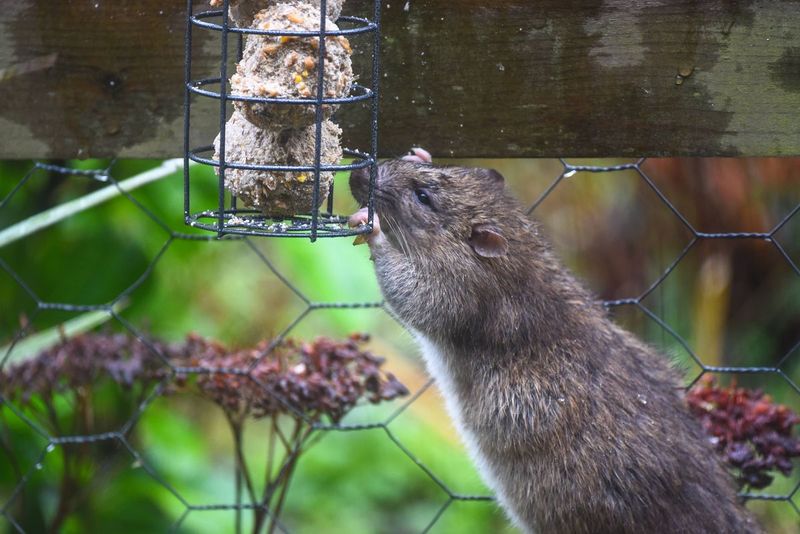
Taking the feeder down for a couple of weeks is one of the most practical first steps you can take when you suspect a feeder may be contributing to rat activity. Cornell Lab’s Project FeederWatch team suggests pausing for roughly two weeks when rats have begun repeatedly visiting a feeder site.
That window is a reasonable diagnostic interval, not a guaranteed eradication timeline. What you are doing is removing one food source and watching what changes.
The reset sequence matters as much as the pause itself. Remove the feeder, then rake or sweep up all accumulated seed beneath and around the feeding area.
Bag that material and dispose of it rather than leaving it in a pile nearby. Wipe down the feeder with a cleaning solution before storing it, and move any remaining bulk seed into a metal container with a tight-fitting lid.
Plastic bins, even heavy ones, are not reliably rodent-resistant because rats can gnaw through them. A metal trash can or a purpose-built metal seed bin gives you much better protection.
California’s Department of Fish and Wildlife goes further than a temporary pause and recommends not providing artificial food or water to wild birds at all, citing both disease transmission risks and nuisance-wildlife concerns. That is a stricter position than most bird-feeding guidance takes, and it is worth knowing if you are weighing whether to resume feeding after the pause.
Once the feeder is down and the area is cleaned, monitor the yard over the following days. Look for fresh droppings, gnaw marks, smear trails along walls or fences, or disturbed soil near a structure’s base.
UC IPM’s rat guidance explains that rats can travel considerable distances and that persistent activity after removing a food source often reflects other resources in the yard or on neighboring properties. If signs continue after two weeks without the feeder, the feeder alone was probably not the whole story, and a broader yard inspection becomes the next step.
If you keep feeding birds, reduce the food spillover
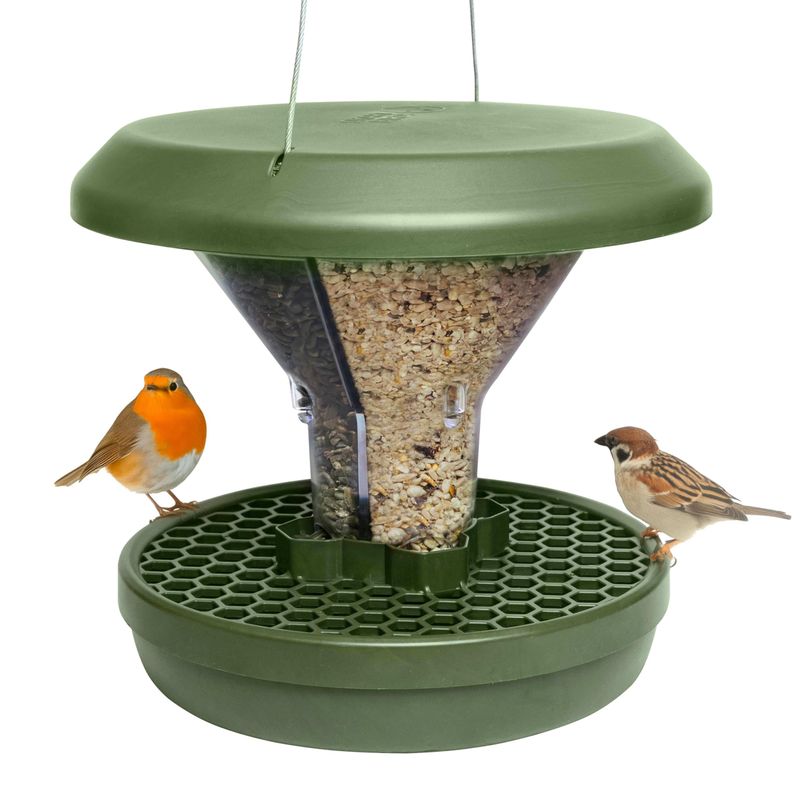
Stopping the feeder entirely is the most certain way to eliminate feeder-related food as a rat attractant, but plenty of homeowners want to keep feeding birds and are willing to manage the risk carefully. Lower-risk feeding is genuinely possible with a few consistent habits.
Start with the amount of seed you put out. Fill the feeder only with what birds are likely to eat before dark, and resist the urge to top it off every morning if seed is still sitting there from the day before.
Overfilling is one of the most common ways feeders produce excess spillage. King County Public Health recommends positioning feeders at least four feet above the ground and at least eight feet from branches, fences, rooflines, or other surfaces rats can use as a launch point.
That spacing makes direct access to the feeder harder, though it does not make the feeder rat-proof, and spilled seed on the ground remains accessible regardless of feeder height.
Cleaning up spilled seed frequently, ideally daily, is more protective than feeder placement alone. South Carolina’s Department of Natural Resources advises removing discarded seed beneath feeders as part of routine feeder hygiene, and Texas Parks and Wildlife connects regular cleanup to reducing wildlife conflicts around feeders.
Raking or vacuuming the ground beneath the feeder a few times a week removes the ground-level food source that matters most to nocturnal foragers.
Storing bulk seed in a metal container with a secure lid is non-negotiable if you buy in quantity. A bag of seed left in a garage or shed is an easy target.
Beyond rodent prevention, feeder hygiene protects the birds themselves. CDC guidance recommends cleaning feeders at least once a month, doing so outside or away from kitchen surfaces, and taking feeders down for two weeks if sick or dead birds appear nearby.
The U.S. Fish and Wildlife Service also notes that dirty feeders can spread disease among bird populations.
Keeping the feeder clean is good for the birds and reduces the buildup of old, damp seed that can attract additional pests.
Check the rest of the California yard
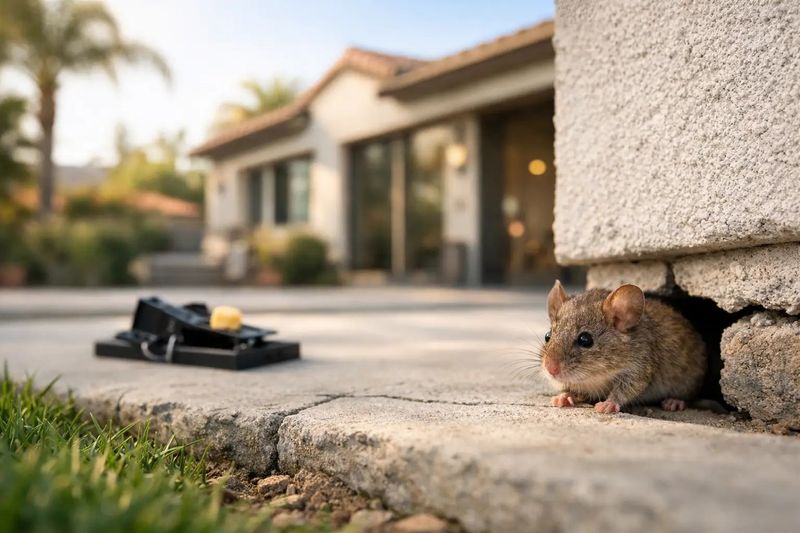
After pausing the feeder and cleaning the area, broaden the inspection rather than treating the feeder as the only possible explanation. Rats respond to multiple resources, and a yard that offers several of them alongside birdseed is a much stronger draw than any single item alone.
Work through the yard systematically. Check for fallen fruit under citrus, avocado, fig, or other fruit trees, since rotting fruit on the ground is a significant attractant.
Look at how pet food is handled: bowls left outside overnight are a well-known rat food source, and even a small amount left after evening feeding can matter. Examine garbage containers for secure lids, check compost bins for accessible food scraps, and look at chicken coops or rabbit hutches if applicable, since spilled feed and droppings around livestock areas are another common rat draw.
UC IPM’s comprehensive rat guidance covers all of these conditions and recommends addressing them together rather than one at a time.
Water sources deserve attention too. Irrigation puddles, leaky hose bibs, birdbaths, and decorative fountains all provide what rats need alongside food.
Dense plantings are a shelter concern. Ivy, bougainvillea, dense shrubs, and unpruned hedges against a building’s wall give roof rats exactly the kind of elevated, sheltered nesting habitat they prefer in California yards.
Woodpiles, stacked lumber, and debris piles near structures can serve the same function for Norway rats, which tend to burrow near ground-level cover rather than climb.
Rat identification shapes how you respond. Roof rats, which are slender, large-eared, and agile climbers, are the more common commensal species in California’s urban and suburban areas, nesting in trees, attics, and dense vegetation.
Norway rats are heavier-bodied and more likely to burrow near foundations, trash areas, or stored materials. Native California woodrats, sometimes called pack rats, have furry tails rather than the nearly hairless tails of commensal species and are not the same management problem.
King County Public Health’s feeder guidance also recommends sealing openings larger than one-quarter inch around a building’s exterior, since access points allow rats that are active in the yard to move indoors. Trim branches that overhang the roofline and pull vegetation away from the building’s exterior to reduce climbing routes.
Clean rodent signs safely and avoid unreliable fixes
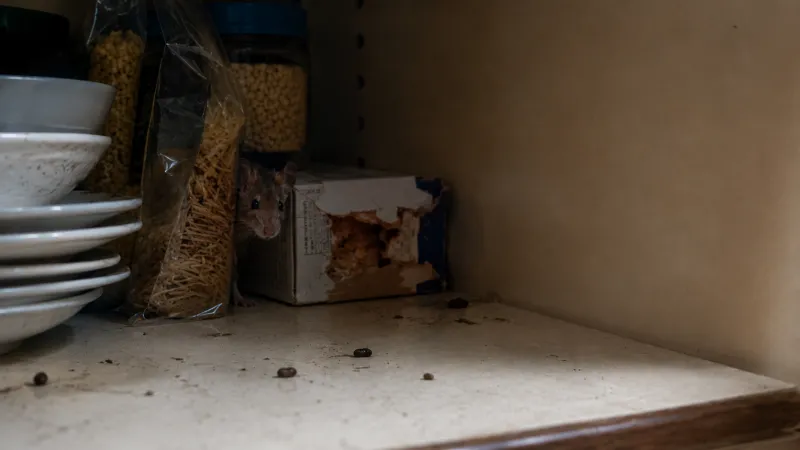
Finding droppings, nesting material, or gnaw marks means you need to clean the area, but the way you clean matters as much as the fact that you clean. Never sweep or vacuum rodent droppings or nesting material while it is dry.
Disturbing dry material sends particles into the air, and some of those particles can carry pathogens. CDC guidance on cleaning up after rodents specifies wetting the material thoroughly with a disinfectant or a freshly made solution of one part bleach to ten parts water, waiting about five minutes, then wiping it up with paper towels and disposing of them in a sealed bag.
Wash your hands thoroughly afterward, and wear gloves throughout the process.
Once the area is clean, resist the temptation to reach for popular but unreliable deterrents. Cayenne pepper, peppermint oil, predator urine, ultrasonic devices, and predator-sound recordings are widely sold as rat repellents, but UC IPM states plainly that no truly effective rat repellents are currently registered in California, that rats habituate quickly to frightening sounds, and that odor repellents do not solve rat problems for more than a short time.
Spending money on these products delays the steps that actually work.
Rodenticides are a more consequential topic. Rat poison can kill rats, but the risks extend well beyond the target animal.
Secondary poisoning, where a hawk, owl, coyote, or domestic pet eats a poisoned rat, is a documented problem in California. EPA guidance requires that consumer rodenticide products be used only inside the supplied bait station and strictly according to label directions.
The EPA’s rodenticide safety review details the wildlife risks that drove recent regulatory changes. California goes further: second-generation anticoagulant rodenticides face significant state-level restrictions, and first-generation products like chlorophacinone and warfarin carry their own California restrictions.
Before using any rodenticide, check current California Department of Pesticide Regulation rules for your product and setting. Snap traps placed in areas inaccessible to children and pets remain a practical, lower-risk mechanical option for addressing evident activity.
Start with the feeder, then manage the whole problem
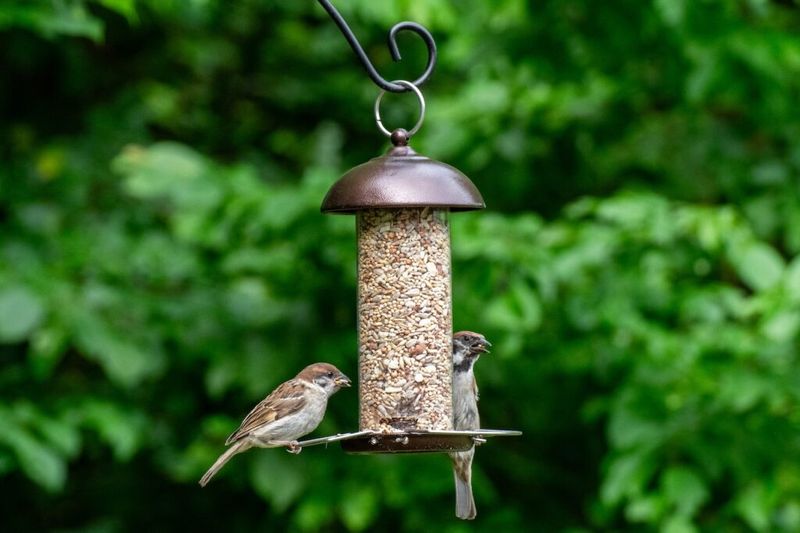
Removing accumulated seed and pausing the feeder is the right first move when you suspect a rat problem connected to backyard feeding. That single step tests whether the feeder was contributing a meaningful food source, and it removes one potential attractant while you assess the rest of the yard.
UC IPM’s integrated pest management framework treats food removal as the foundation, followed by water, shelter, and entry-point control. No single action replaces working through all four.
A feeder pause will not necessarily make rats already nesting nearby disappear. Rats that have been using your yard for food may also be using it or neighboring properties for shelter and water, and removing one resource does not automatically end their interest in the area.
Persistent signs after two weeks without the feeder are a signal to look harder at the full yard conditions covered in the previous section, and potentially to contact a licensed pest-control professional for a site assessment.
If you want to keep supporting birds after the reset, Cornell Lab’s feeder experts and the U.S. Fish and Wildlife Service both point toward intentional, hygienic feeding as a lower-risk approach: small quantities, regular cleanup, secure storage, and overnight removal when rats are a concern.
California’s Department of Fish and Wildlife encourages an alternative worth considering: planting native species that provide natural food and habitat for birds without creating the concentrated, ground-level spillage that feeders produce. A yard full of California natives that support insects, berries, and seeds gives birds something to visit without giving rats a predictable dinner spot.
That shift, from supplemental feeding to habitat, is often the most durable solution a California homeowner can make.