
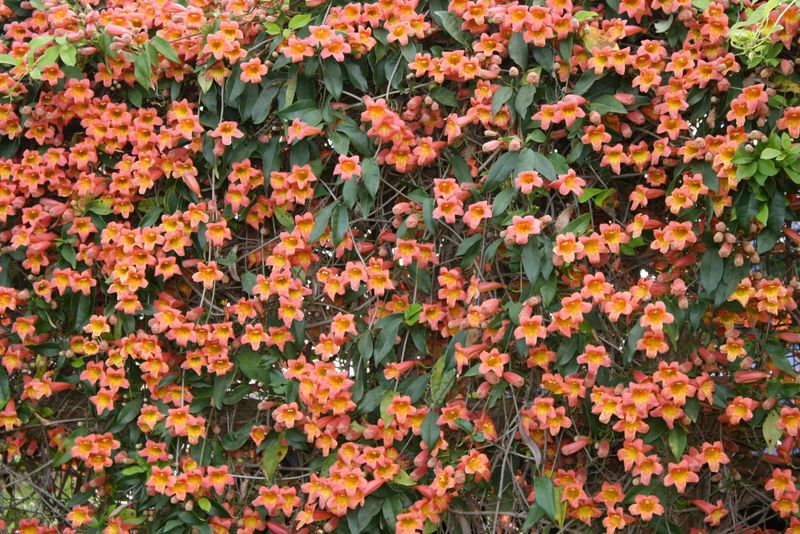
A bare fence is an open invitation for neighbors, foot traffic, and general nosiness to look right into your yard. Crossvine (Bignonia capreolata) is a native woody vine that can climb that fence fast, fill it with dense foliage, and get by on far less water once its roots settle in.
It won’t run itself on zero irrigation forever, but it can seriously cut down how often you reach for the hose after that first year or two. For Texas gardeners dealing with brutal summers and water restrictions, that’s a trade worth knowing about.
Crossvine is a strong native candidate for a Texas fence
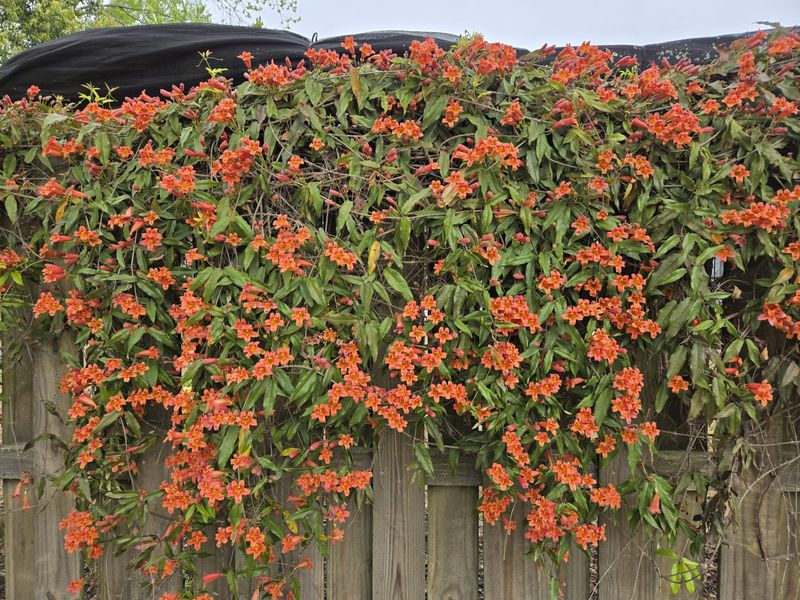
Crossvine, known botanically as Bignonia capreolata, is a perennial woody vine native to the southeastern and south-central United States. Texas Parks and Wildlife lists it among Texas plant species, confirming its native credentials rather than treating it as an introduced or adapted ornamental.
That native status matters for Texas gardeners because the plant’s roots evolved alongside the region’s soils, rainfall patterns, and temperature swings.
What makes crossvine a strong candidate for fence screening is the combination of traits it brings together: it climbs wood and chain-link supports using tendrils with adhesive pads, produces dense foliage capable of covering open fence panels, and earns drought-tolerant status from university and extension sources once its roots are fully established. The University of Arkansas Extension specifically describes it as a fast-growing, semi-evergreen vine suited for fences and other structures.
Few native vines check that many boxes at once.
That said, crossvine is one of the better native options for this purpose, not a guaranteed solution for every Texas yard. The evidence supports calling it a fast-growing, drought-tolerant native vine that can reduce irrigation needs after establishment.
It does not support calling it the single fastest or most effective native screen statewide, and it does not support a zero-irrigation promise. Newly planted crossvine needs consistent supplemental watering while its root system develops, and even mature plants may need water during prolonged, severe drought.
The University of North Florida Botanical Garden notes rapid growth in a good location, which is a useful indicator of potential, not a universal guarantee.
Its climbing habit can cover open fence panels
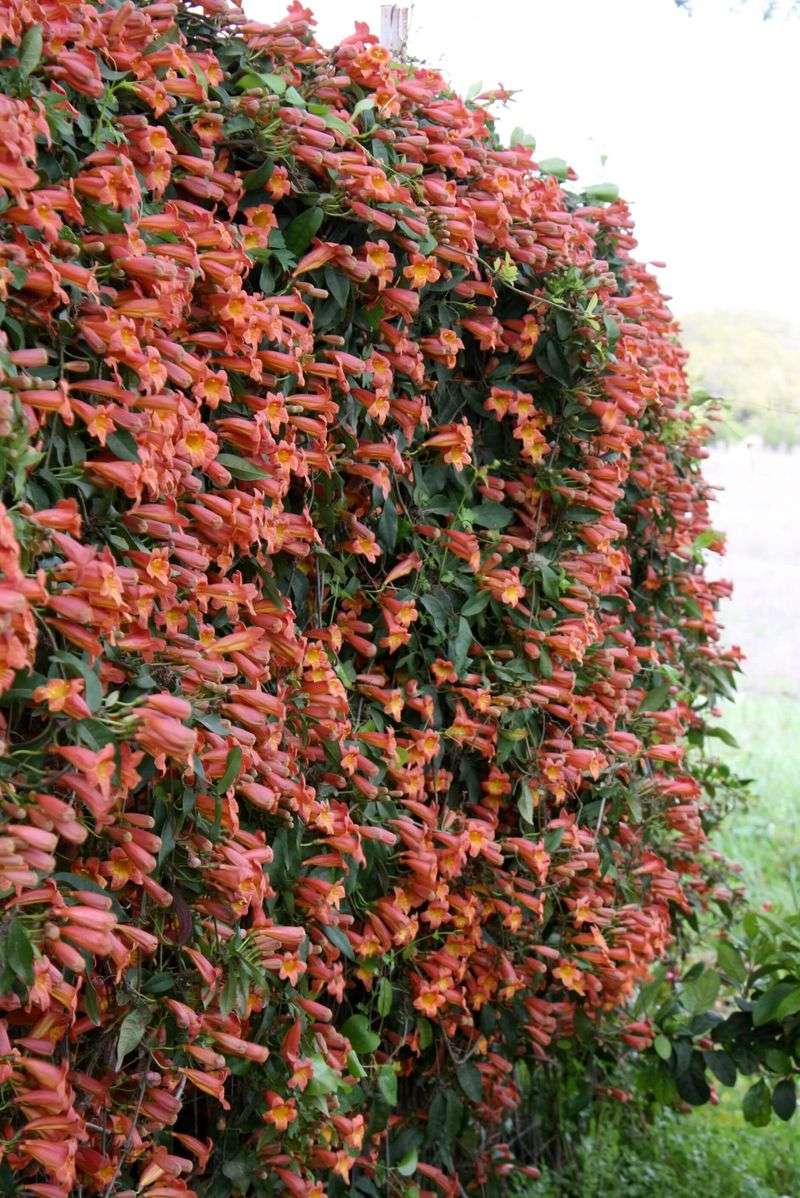
Unlike a shrub that grows outward from a single crown, crossvine moves upward and outward by gripping whatever surface it meets. Arkansas Extension guidance describes how crossvine uses tendrils tipped with adhesive pads to attach to wooden fences, chain-link fencing, masonry, and other structural surfaces.
Those pads grip firmly without needing wire or string to assist them, which makes installation simpler than training a vine that needs to be tied at every node.
Growth potential in a suitable site can be substantial. The University of North Florida describes rapid growth in favorable conditions, and the University of Tennessee reports a potential seasonal growth rate of 10 to 15 feet under good circumstances.
Both figures reflect what the vine can do when soil, moisture, sun, and support align well. A newly planted vine in heavy clay, reflected heat, or a dry first summer will likely grow more slowly, so those numbers are a ceiling for good conditions, not a floor for every situation.
The climbing habit also creates a specific coverage challenge worth planning around. Crossvine naturally wants to move upward, which means a single plant may race to the top of the fence while leaving the lower panels thin or bare.
University of Georgia Cooperative Extension guidance on native woody vines supports training and pruning to improve stem distribution, which means guiding young stems horizontally across the fence early in the plant’s life rather than letting them all reach for the top rail. Planting multiple vines spaced along the fence, rather than relying on one to spread across the entire run, gives more consistent coverage from bottom to top and fills gaps faster in the lower panels where privacy matters most.
The water-saving benefit begins after establishment
Planting a drought-tolerant vine and immediately stepping back from the hose is a mistake that costs the plant its best chance of thriving. Texas Extension guidance on native plant establishment makes the point directly: drought-tolerant natives only become drought tolerant after their roots have had time to settle into the surrounding soil.
A crossvine planted in spring or summer and left to fend for itself through a dry first season may struggle or fail, even though a three-year-old plant at the same location might shrug off weeks without rain.
During the establishment window, which can last one to two growing seasons depending on soil conditions, rainfall, and how well the planting hole was prepared, crossvine needs regular supplemental watering. Deep, infrequent watering encourages roots to push downward rather than staying near the surface, which is exactly the root architecture that supports drought tolerance later.
Mulching the root zone helps hold moisture between waterings and moderates soil temperature, both of which reduce stress on a young vine during a hot Texas summer.
Once established, the drought-tolerance story becomes more convincing. Texas A&M AgriLife Extension in Bexar County lists crossvine among drought-tolerant vines for the South Texas landscape.
The Texas Superstar program brochure reports excellent heat and drought tolerance for the cultivar ‘Tangerine Beauty’ once it is established, though that cultivar-specific claim should not be generalized to every crossvine variety without checking cultivar data. Even a well-established plant may need a supplemental drink during a prolonged, severe drought, so the honest promise here is lower irrigation demand, not zero irrigation under all conditions.
Match crossvine to the Texas site before planting
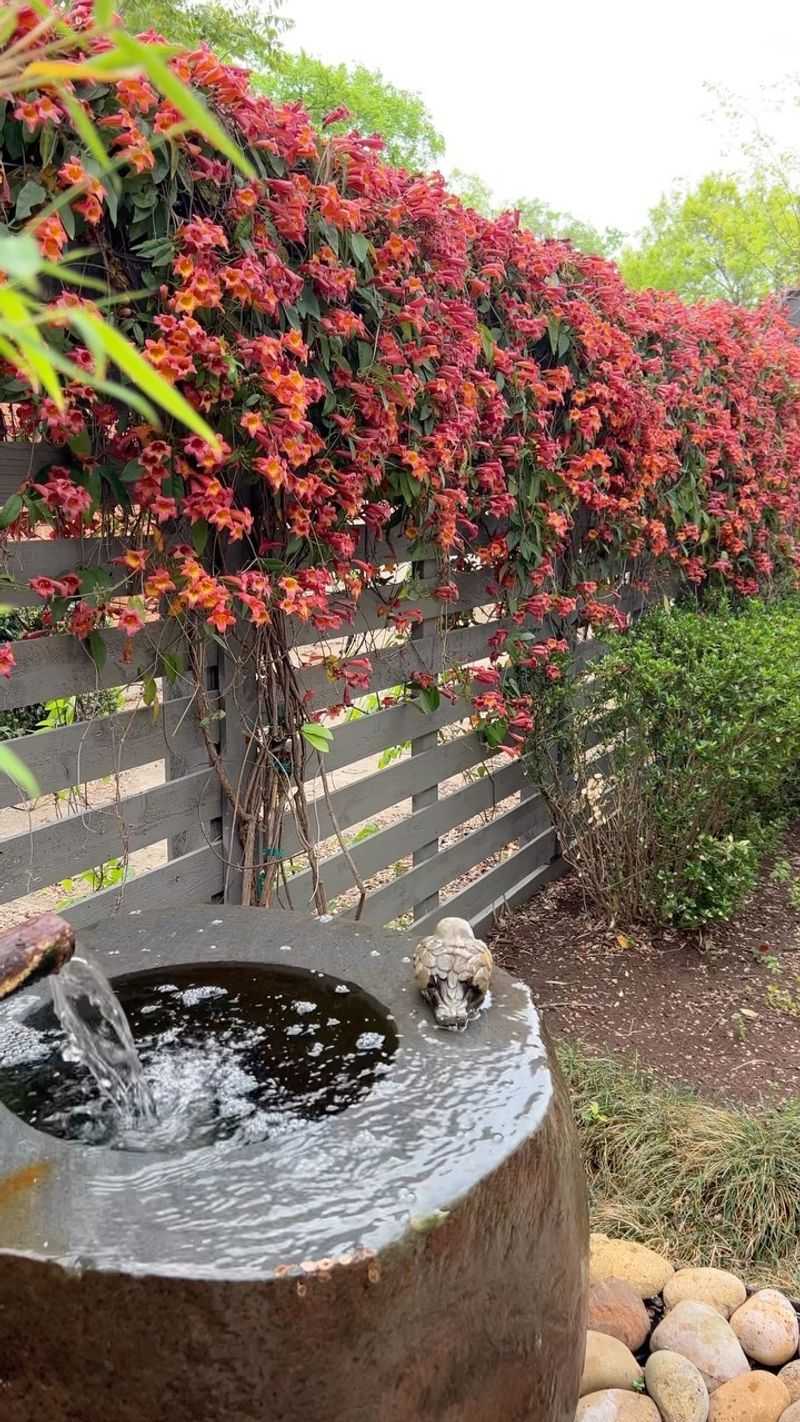
Texas is not one climate. The piney woods of East Texas receive more than 50 inches of annual rainfall, while parts of West Texas average fewer than 12.
The Gulf Coast deals with salt air, high humidity, and occasional hurricane-force winds, while the Hill Country sits on shallow rocky soil over limestone with intense reflected heat. Assuming crossvine will perform identically across all of these regions is a setup for disappointment, and the plant’s native status does not override those differences.
On sun and soil, crossvine is reasonably flexible. The Texas Parks and Wildlife Bayou Planting Guide notes that crossvine tolerates a broad range of soil textures, including sand, loam, clay, and rocky soils, and can grow in full sun to shade.
Flowering is generally more robust with more direct sun, so a fence that catches at least a half-day of direct light will support better bloom production than a fully shaded north-facing run. Well-drained soil is preferred, but the vine has shown adaptability across the soil types common to the Texas coastal plain and central regions.
NC State Extension’s plant profile and the University of North Florida both note that crossvine is described as evergreen in some sources and semi-evergreen in others, with foliage retention depending on winter cold, cultivar, exposure, and overall plant health. In the warmest parts of South Texas and along the Gulf Coast, winter leaf drop may be minimal.
In the Hill Country or North Texas, a hard freeze can strip foliage or cause dieback on exposed stems. Gardeners in colder Texas regions should treat crossvine as semi-evergreen rather than counting on a fully green winter screen, and they should confirm that their chosen cultivar is rated for the local minimum temperatures.
Spacing and training shape the finished screen
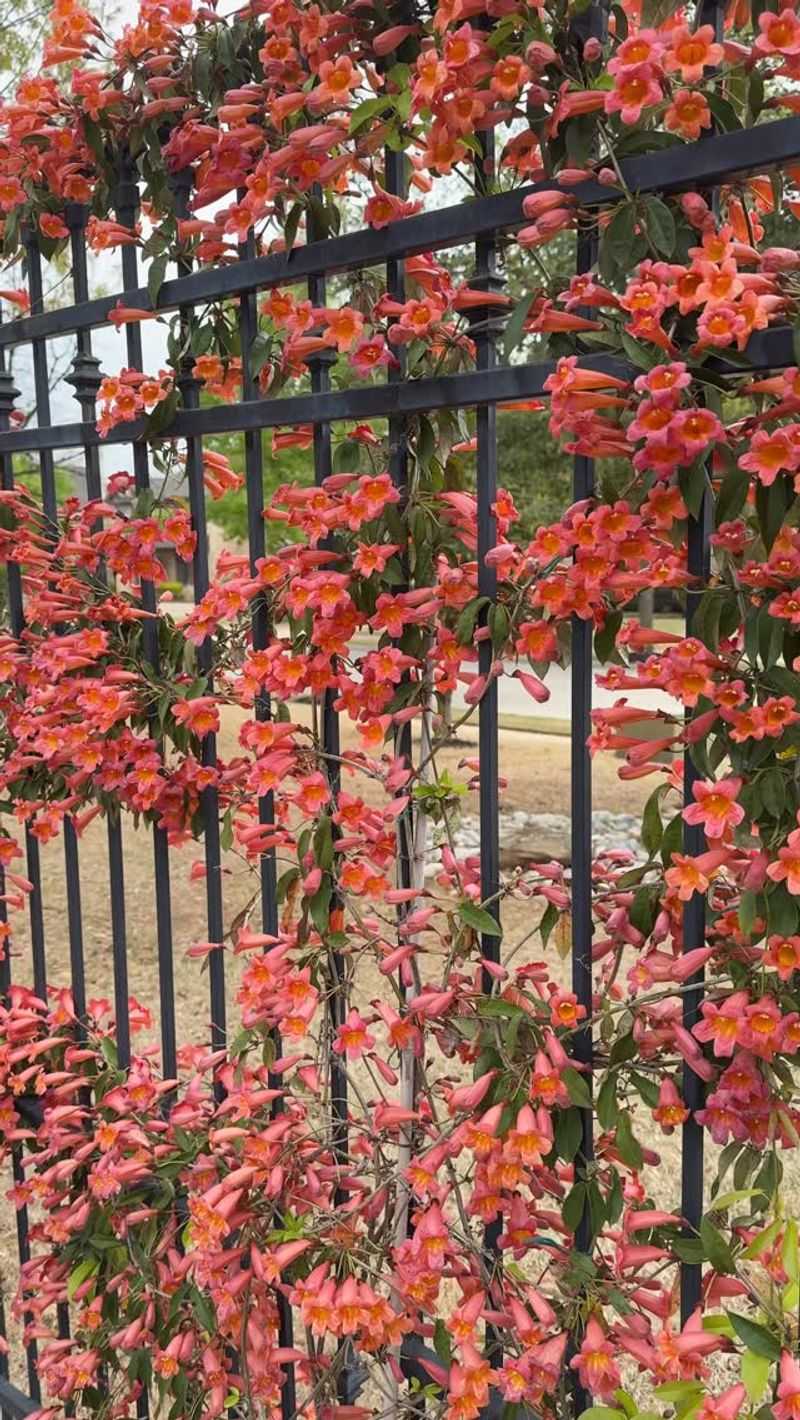
Getting the spacing right before the first vine goes in the ground saves a lot of corrective work later. Texas Parks and Wildlife’s Bayou Planting Guide gives crossvine a suggested spacing of approximately 6 to 8 feet.
That range is a useful starting point, not a universal prescription, because the right spacing depends on how quickly you want coverage, how large the plants will grow in your specific soil and sun conditions, and how much structural load your fence can handle as the vines mature and become woody.
Tighter spacing, closer to 6 feet, fills gaps faster and produces a more continuous screen sooner, which is useful when privacy is the primary goal. Wider spacing, toward 8 feet or beyond, works when the fence is lighter or when you have more time and want to give each plant room to develop fully before stems begin to overlap.
Either way, plan the spacing before planting rather than adding vines reactively when gaps appear, because mature plants do not relocate gracefully.
Training is where most of the real screening work happens. University of Georgia Extension guidance on native woody vines supports directing young stems horizontally across the fence surface rather than allowing them to climb straight up in a narrow column.
Use soft garden ties or clips to guide new growth along fence rails or wire, and redirect upward-reaching stems outward toward empty fence panels. The goal is to build a lateral framework of stems low on the fence first, then let the vine fill upward from that base.
Arkansas Extension confirms that crossvine attaches reliably to both wooden and chain-link fencing, so once stems are directed to a new panel, the vine’s adhesive pads take over and hold the stem in place without ongoing intervention. A fence screened by trained multiple vines will look fuller faster than one left to grow however the plant chooses.
A mature woody vine still needs boundaries and maintenance
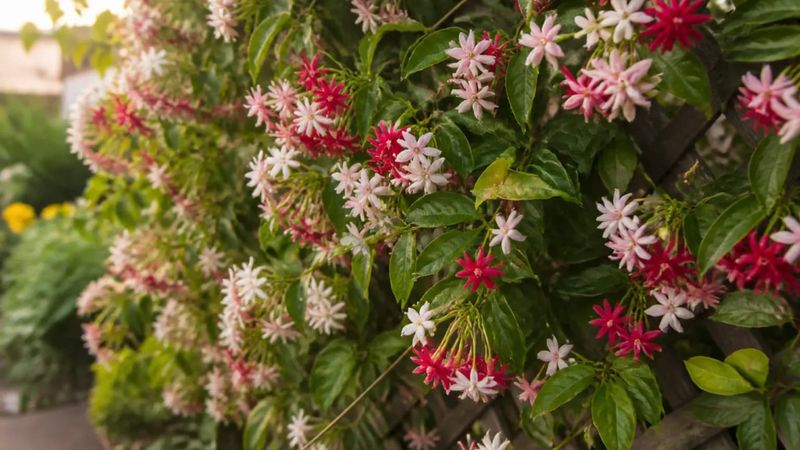
Crossvine earns its place on a fence, but it does not manage itself indefinitely. Before planting, check the fence’s structural condition honestly.
A mature woody vine adds real weight and can work its adhesive pads into gaps, cracks, and joints over time. Arkansas Extension cautions that crossvine should not be allowed to climb into trees or spread onto adjacent structures, and the same logic applies to neighboring fences, outbuildings, and overhead wires.
A vine that escapes its intended support becomes a maintenance problem rather than a privacy asset.
Pruning is the primary tool for keeping the plant within bounds and for maintaining its bloom quality. University of Georgia Cooperative Extension recommends pruning crossvine after it flowers rather than before, because the vine blooms on older wood.
Pruning before bloom removes the wood that carries next season’s flowers, resulting in a full green vine with little or no floral display. After the spring flush of blooms fades, cut back overlong stems, remove any growth reaching toward trees or structures you want to protect, and shape the lateral framework you built during training.
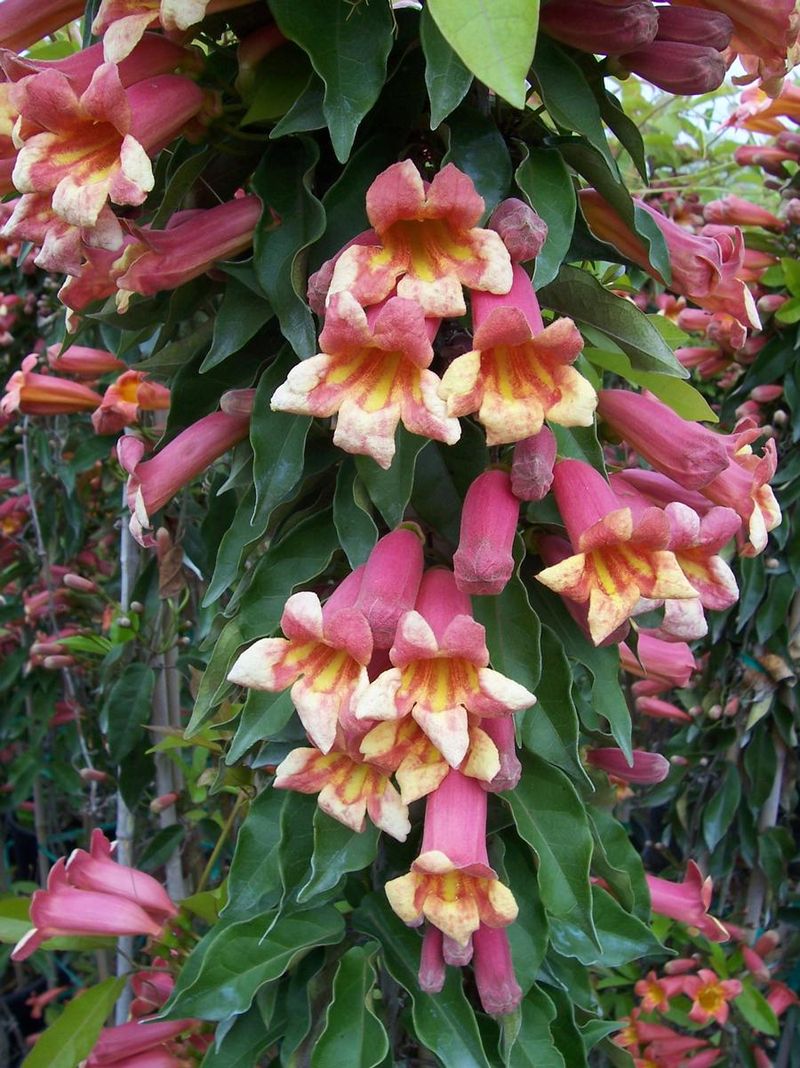
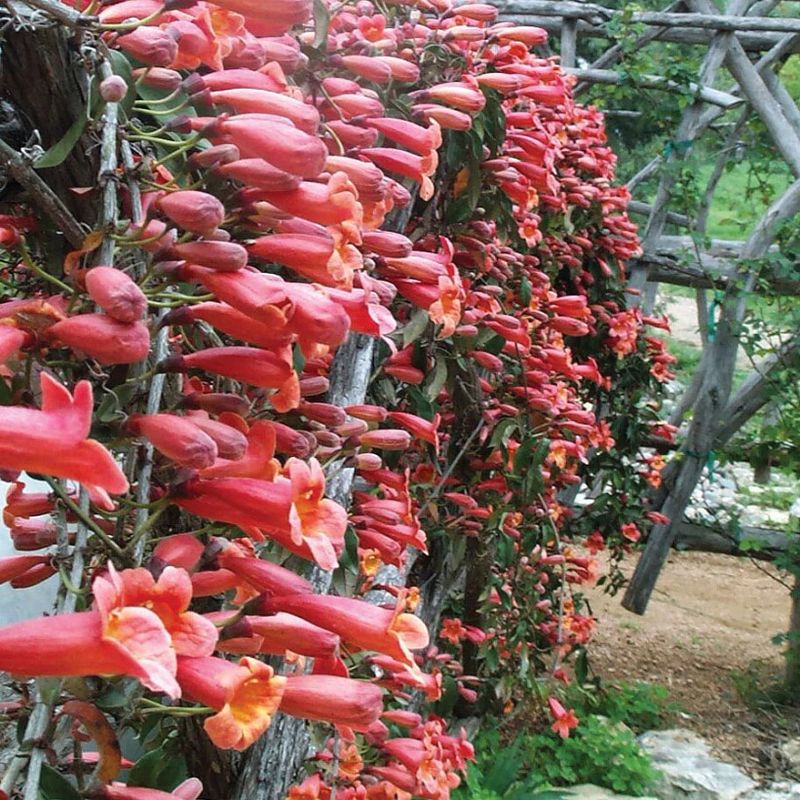
The blooms themselves are one of the plant’s most appealing traits beyond privacy. Crossvine produces clusters of tubular, two-toned flowers, typically orange-red on the outside and yellow inside, that are well-suited to hummingbird feeding.
Texas Parks and Wildlife notes the vine’s value to hummingbirds and pollinators, which means a well-maintained crossvine fence earns its keep in two ways: it screens the yard from view while also drawing wildlife that Texas gardeners generally want to encourage. Inspect the fence support structure annually as the vine matures, since woody stems become heavier each year and older fences may need reinforcement to carry the load.
Compare other vines by traits, not by unsupported rankings
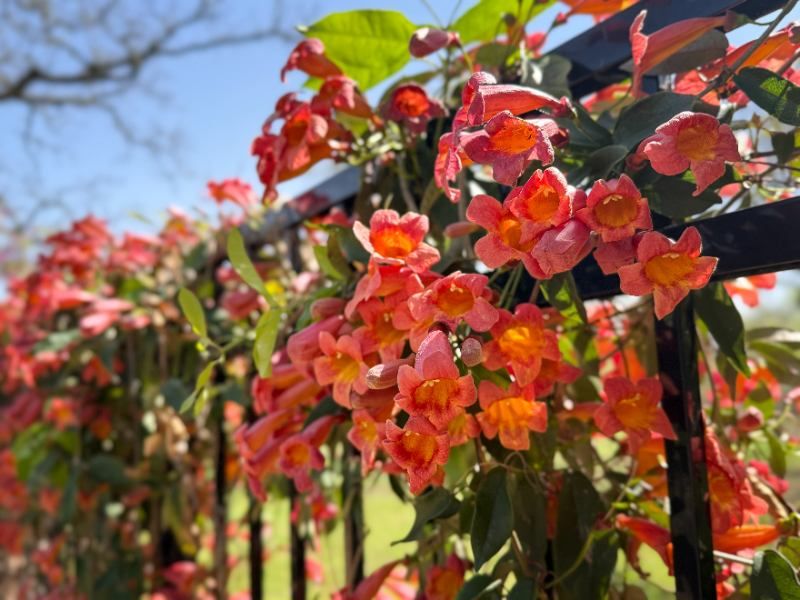
Trumpet creeper (Campsis radicans) comes up in almost every conversation about fast-growing native vines for Texas fences, and for good reason: it grows vigorously, produces showy orange flowers, and is genuinely native to the region. Texas Parks and Wildlife wildscapes plant lists include both trumpet creeper and crossvine as native options with wildlife value.
The two plants share enough traits that gardeners often treat them as interchangeable, but they differ in ways that matter for a fence-screening project.
The clearest documented difference is foliage retention. Trumpet creeper is deciduous, meaning it drops its leaves in fall and leaves the fence open through winter.
Crossvine, depending on the cultivar, winter temperatures, and the plant’s health, may hold its foliage through winter or drop only part of it, giving it a potential advantage for year-round screening in the warmer parts of Texas. NC State Extension and Arkansas Extension both describe crossvine as semi-evergreen, which is a more honest characterization than fully evergreen for most of Texas.
Trumpet creeper also has a documented tendency to spread aggressively through suckers and self-seeding, which can move it beyond the fence line into garden beds, lawn areas, and neighboring property. Crossvine requires pruning and control too, so neither plant is maintenance-free, but the spreading habit makes trumpet creeper a more active management commitment.
Which vine is the better fit depends on the specific site, the local climate zone, the desired winter appearance, and how much time the gardener can commit to annual pruning and boundary management, not on a single ranking that applies everywhere.
Use crossvine for a realistic lower-water screen
Crossvine earns a serious look from any Texas gardener who wants a native fence screen that pulls back on irrigation demand once it settles in. Choose it when the site offers reasonable sun, a structurally sound fence, and the patience to water consistently through the first growing season or two.
Texas Extension guidance is clear that drought tolerance only kicks in after the root system is established, so that early watering is the price of admission for everything that follows.
Train stems laterally from the start, keep the vine off trees and adjacent structures, and prune after flowering to maintain both the screen and the bloom display. Extension sources and Texas Parks and Wildlife planting guidance both support this approach as practical and regionally appropriate.
Plan for regional and seasonal variation: crossvine performs best in the eastern half and central portions of Texas, and winter foliage depends on cold exposure and cultivar.
The honest promise crossvine delivers is a potentially fast-growing, lower-water native screen, not a zero-maintenance privacy wall. Gardeners who match the plant to the site and put in the establishment work tend to get the better end of that deal.