
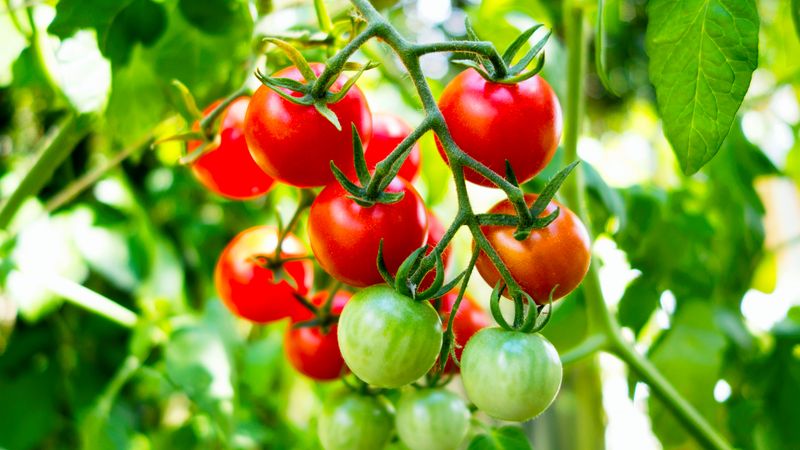
Late summer in North Carolina can be rough on tomato plants, and when the harvest slows down or stops, it is easy to assume something went terribly wrong. The truth is more complicated: heat, disease, plant type, and watering habits all play a role, and no single mistake guarantees a lost harvest.
What gardeners can control right now is how they manage moisture in the root zone, because letting soil swing from bone dry to waterlogged during a heat wave is one of the most common and correctable contributors to poor fruit set and fruit quality.
Moisture swings can compound late-summer heat stress
Gardeners who notice their tomatoes struggling in August are often told they made one fatal mistake, but that framing is too simple. Late-summer tomato problems in North Carolina rarely trace back to a single cause.
Heat, disease, insects, nutrient issues, and plant age all contribute, and the most productive thing a gardener can do is focus on what is actually within reach to fix.
One correctable contributor that shows up repeatedly is inconsistent root-zone moisture. When tomato beds cycle from very dry soil to saturation, or when plants receive only brief, shallow sips of water, roots struggle to take up what the plant needs during the most stressful part of the season.
That pattern can reduce fruit set, worsen fruit quality, and set the stage for several specific disorders.
NC State Extension’s home garden tomato guidance connects extreme soil-moisture fluctuations directly to blossom-end rot and notes that drought conditions can prevent fruit set altogether. Meanwhile, University of Florida IFAS irrigation guidance links insufficient or fluctuating water to plant stress, flower and fruit drop, and reduced harvest.
The consequence is not always a total failure, but the impact on late-summer yield can be significant.
Blossom drop, blossom-end rot, fruit cracking, and flower loss are all possible outcomes of moisture swings combined with heat. Irrigation is not the only lever, but it is one gardeners can adjust right now.
The goal is not to eliminate every possible problem but to reduce the pressure that poor moisture management adds on top of what heat is already doing to the plant.
Sustained heat can reduce fruit set while vines remain green
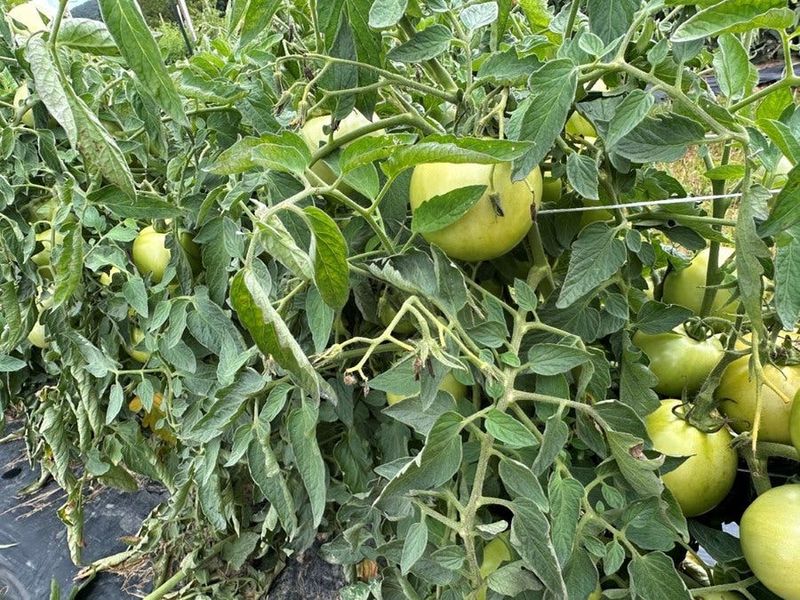
A tomato vine can look perfectly green and lush while quietly failing to produce fruit. During North Carolina’s hottest weeks, that is not unusual, and understanding why helps gardeners respond without panic or unnecessary intervention.
Extended daytime temperatures above roughly 90 degrees Fahrenheit, combined with nighttime temperatures that stay above about 70 degrees, are conditions associated with blossom drop and poor fruit set. NC State Extension’s vegetable gardening handbook identifies these approximate thresholds as warning conditions, not a precise on-off switch.
Cultivar, humidity, wind, plant health, and soil moisture all shape how a given plant responds, so two gardens on the same street may see different results during the same heat wave.
Beyond blossom drop, heat stress can affect developing fruit in several ways. Penn State Extension’s overview of heat stress and tomatoes describes how high temperatures may cause flower abortion, reduced fruit set, smaller or lower-quality fruit, uneven ripening, and sunscald on fruit exposed to direct sun.
These are not signs that the plant is dying; they are signs that the plant is under pressure.
Gardeners sometimes react to a production pause by pulling plants out or giving up on the season. A healthier response is to maintain appropriate moisture and canopy cover and wait for temperatures to moderate.
Established plants that remain adequately watered and free of serious disease can resume setting fruit once nighttime temperatures drop. That recovery is possible, not guaranteed, but it is a realistic outcome for plants that stay in reasonably good shape through the heat.
Match the visible symptom to the likely problem
Before adjusting irrigation or reaching for any product, it helps to correctly identify what is actually happening on the plant. Several late-summer tomato problems look similar at a glance but have different causes and different responses.
Blossom drop means flowers fall off the plant without ever becoming fruit. Heat, drought stress, and other stressors can trigger it, and it is entirely separate from blossom-end rot.
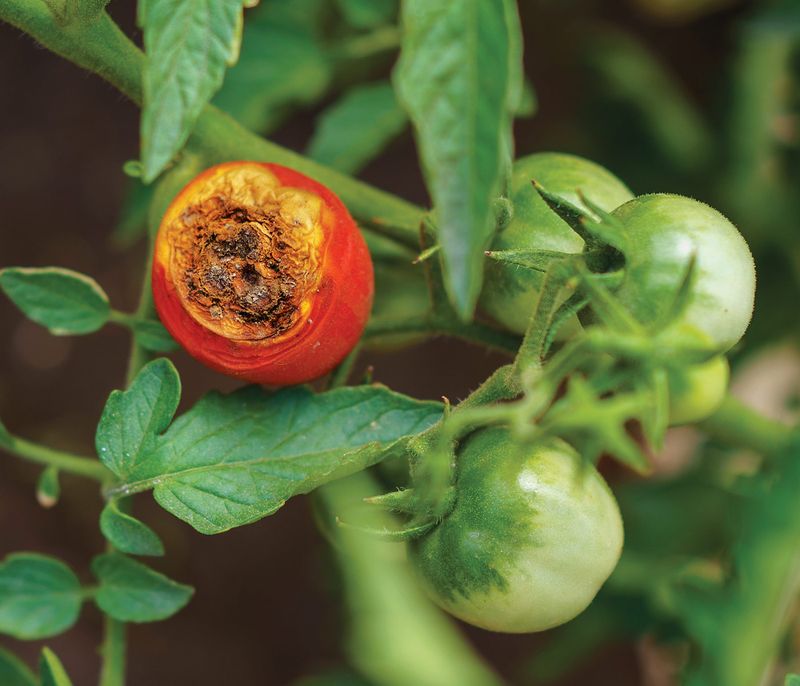
Blossom-end rot is a physiological disorder that appears as a dark, sunken, leathery area on the blossom end of a developing fruit. NC State Extension’s tomato production guidance associates blossom-end rot with inadequate calcium movement in the plant, which is frequently tied to uneven soil moisture rather than a simple calcium shortage in the soil.
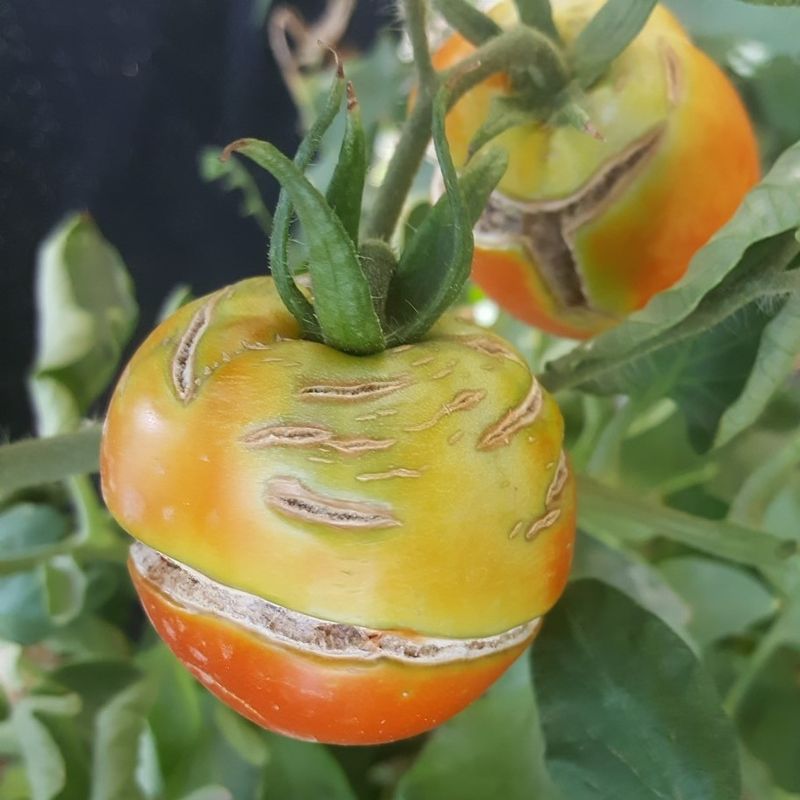
Fruit cracking is a different problem again. It typically occurs when a period of drought is followed by heavy watering or rainfall, causing fruit to expand faster than the skin can stretch.
Sunscald produces pale, papery patches on the sun-exposed side of fruit and is most common when foliage is lost or removed, leaving fruit without shade.
Reaching for a calcium spray is a common reaction to blossom-end rot, but University of Georgia Cooperative Extension’s commercial tomato handbook notes there is little evidence that foliar calcium applications reliably correct the disorder. Similarly, Florida IFAS irrigation guidance points to consistent soil moisture as the more dependable approach.
Soil testing is the appropriate first step before adding any lime, gypsum, or calcium product, since adding nutrients without knowing existing levels and soil pH can create new problems rather than solve existing ones.
If the plant shows spotted leaves, stem lesions, sudden wilt across multiple branches, or widespread dieback, that pattern calls for a broader diagnosis. Disease, insects, and root problems can produce symptoms that resemble moisture stress, and adding water will not fix them.
Set irrigation by soil conditions, not a fixed calendar
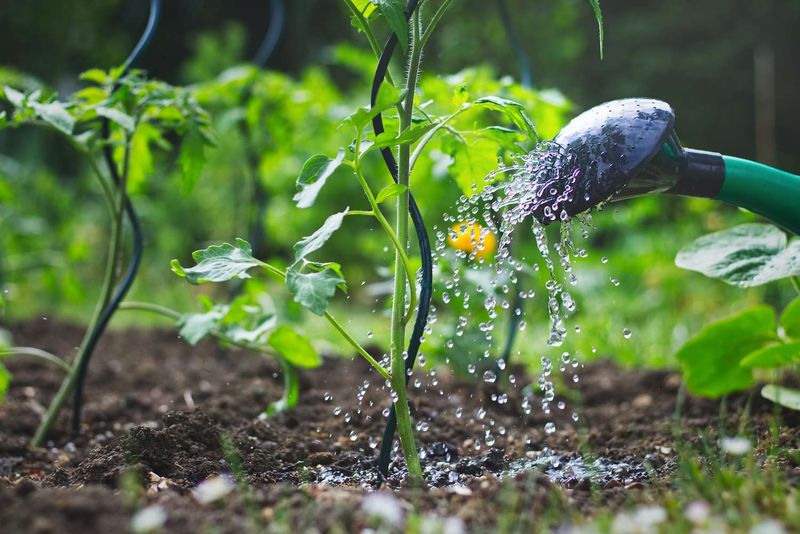
A useful starting point for tomato irrigation during fruiting is approximately 1.5 inches of water per week, counting whatever rainfall the garden receives. NC State Extension’s home garden guidance uses this benchmark and also recommends soaking the soil to a depth of 6 to 8 inches at roughly seven-day intervals, adjusted for weather and soil conditions.
That depth target matters because shallow watering leaves roots concentrated near the surface, where they are most vulnerable to heat and drought.
The weekly benchmark is a guideline, not a timer setting. Sandy soils common in the Coastal Plain drain quickly and typically need more frequent attention than heavier clay soils in the Piedmont.
NC State’s vegetable gardening handbook specifically notes that sandy soils require more frequent watering than clay, and the right schedule for one garden may be wrong for another just a few miles away.
Containers and raised beds add another layer of variability. Both can dry out faster than in-ground beds, especially during hot weather, and may need water more often than the seven-day interval suggests.
University of Florida IFAS irrigation guidance recommends adjusting frequency and duration based on plant size, season, soil type, and evaporative demand, rather than following any fixed schedule.
The most reliable way to judge when to water is to check the soil directly. Push a finger or a trowel into the top 1 to 2 inches of soil before turning on any irrigation.
If it feels adequately moist, the plant probably does not need water yet, regardless of what day of the week it is. If it is dry and crumbly at that depth, it is time to water deeply and slowly.
Checking in the morning or evening gives a more accurate read than checking in the heat of the afternoon, when surface evaporation is at its peak.
Use appropriately timed deep watering to moderate moisture swings
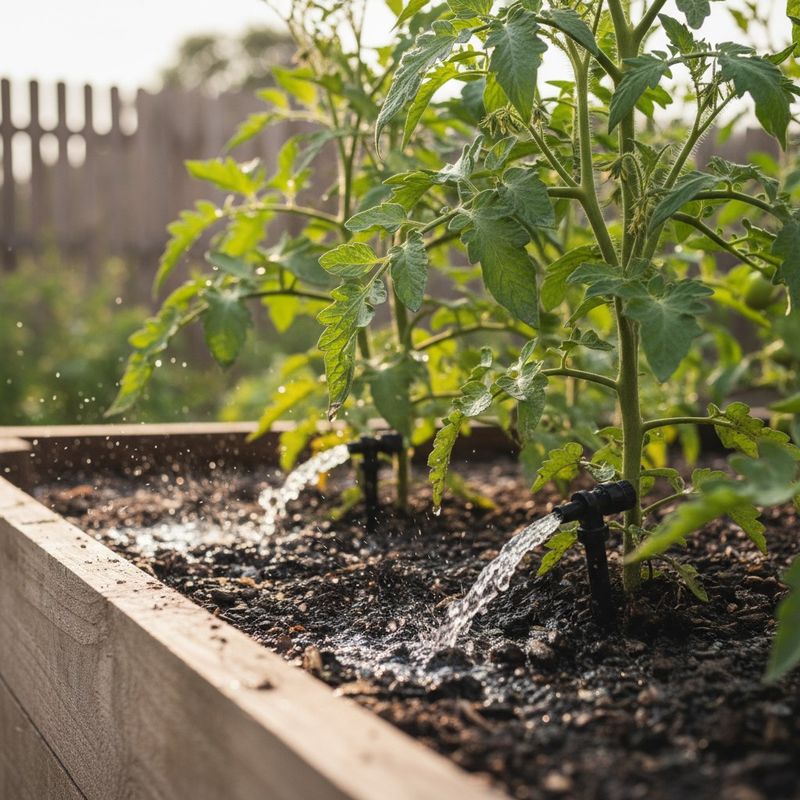
Knowing the right irrigation target is only part of the equation. How water is applied matters as much as how much is applied, and the method can determine whether water actually reaches the root zone or is lost to runoff and evaporation before it gets there.
Applying water slowly at the soil surface gives it time to soak in rather than sheet off. Drip irrigation lines and soaker hoses are well suited to this because they deliver water directly to the root zone, reduce evaporation, and keep foliage dry.
NC State’s vegetable gardening handbook recommends watering at the soil surface rather than spraying foliage when practical, and Florida IFAS irrigation guidance similarly favors root-zone delivery methods for edible landscapes.
Frequent, shallow watering creates a different problem. When only the top inch or two of soil gets wet each time, roots have little reason to grow deeper.
They stay near the surface, where they are most exposed to heat, rapid drying, and temperature swings. Shallow-rooted plants are harder to keep consistently moist and more vulnerable to stress during the weeks when heat is most intense.
Midday wilting is not a reliable prompt for heavy irrigation. Tomato plants can droop during a hot afternoon even when the root zone holds adequate moisture, simply because the plant is losing water through its leaves faster than roots can supply it.
NC State Extension’s diagnostics handbook notes that extended wilting is not normal, while Florida IFAS guidance observes that excessive heat can cause temporary wilting even in well-hydrated plants. Check the soil in the morning or evening before deciding the plant needs a heavy drink.
If the root zone is still moist and wilting disappears once temperatures drop, the plant is likely managing.
Deep, slow watering helps moderate moisture swings only when gardeners adjust the timing and volume to match actual soil conditions, rainfall, drainage, and weather. No method works well on autopilot during a North Carolina August.
Protect the soil and canopy during extreme heat
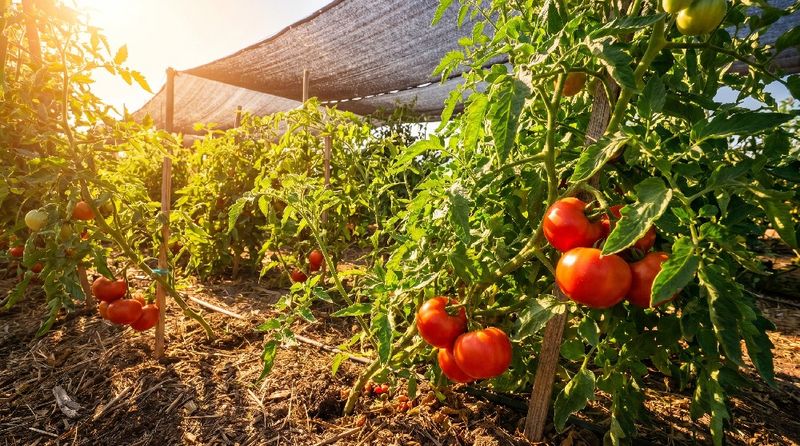
Correcting irrigation is the foundation, but two additional steps can meaningfully reduce the heat and moisture pressure tomatoes face during late summer: protecting the soil with organic mulch and keeping the plant’s natural canopy intact.
Mulching with compost, straw, or shredded leaves slows evaporation from the soil surface, moderates soil-temperature swings, and helps buffer the moisture cycles that contribute to blossom-end rot and cracking. NC State Extension’s tomato guidance recommends organic mulch as a standard practice for home tomato beds, and NC State’s vegetable gardening handbook reinforces its value for moisture retention.
A bonus benefit: mulch reduces soil splash onto lower leaves, which matters because NC State’s Septoria leaf spot guidance identifies soil splash as one way that pathogen spreads to foliage.
The canopy the plant grows naturally is also worth protecting. Tomato foliage shades developing fruit and reduces the surface temperature of the fruit itself.
When leaves are removed or lost to disease, fruit on the exposed side can develop sunscald, which shows as pale, papery, or white patches. University of Georgia Cooperative Extension’s tomato production handbook specifically recommends against excessive pruning to preserve this canopy cover, especially during hot periods.
Temporary shade cloth is another option during extreme heat waves. Penn State Extension’s heat stress guidance lists shade cloth as one tool for reducing heat load on plants.
The key word is temporary. Tomatoes need substantial direct sun to produce well, and NC State recommends at least six hours of sunlight per day.
Shade is a supplement during the worst heat, not a substitute for the sun the plant needs the rest of the time.
Know when more water could make the problem worse
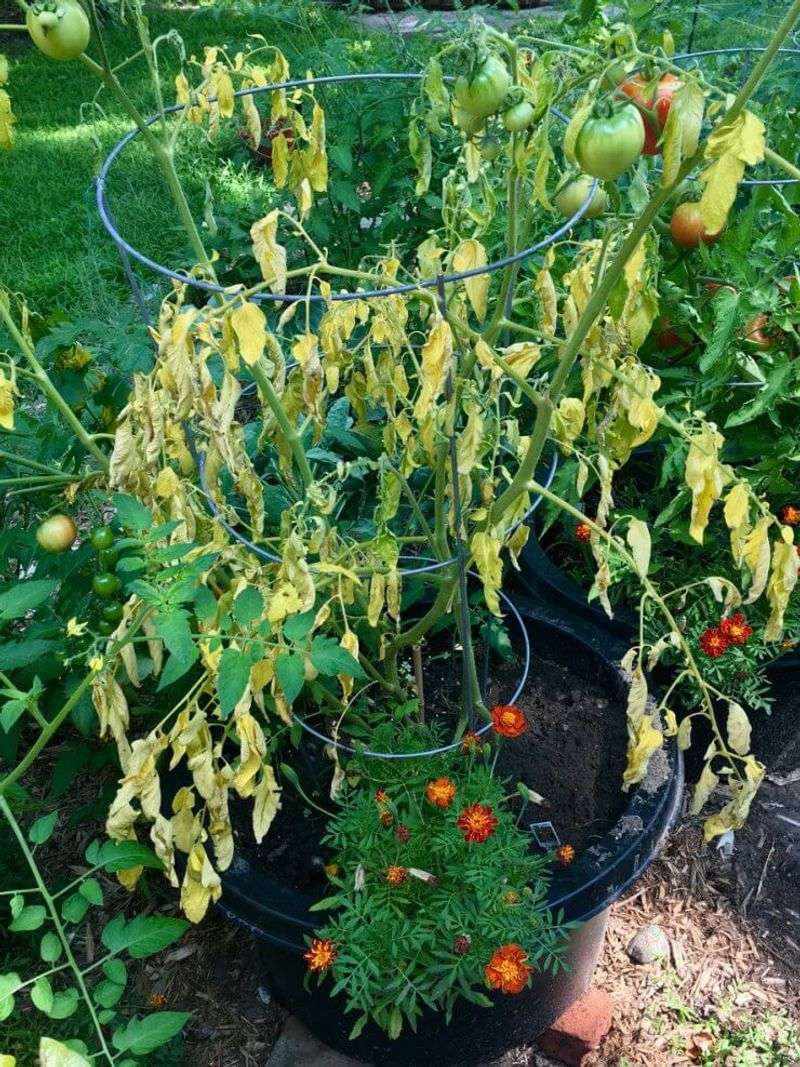
The practical advice to water more consistently can easily tip into overwatering if gardeners apply it without checking conditions first. More water is not always the right answer, and in some situations it can actively worsen the plant’s condition.
University of Florida IFAS irrigation guidance warns that overwatering can produce symptoms that closely resemble underwatering, including wilting and leaf yellowing, because saturated soil reduces oxygen around roots and impairs the plant’s ability to take up water and nutrients. Waterlogged conditions also increase the risk of root rot, certain fungal diseases, and pest problems that thrive in wet soil.
Fruit splitting, which happens when water uptake surges after a dry period, is another consequence of uneven moisture that can be made worse by heavy, poorly timed irrigation.
When a plant shows spotted leaves, stem lesions, sudden wilt across multiple branches, or widespread dieback, those symptoms call for a broader look rather than an immediate increase in water. NC State Extension’s tomato guidance lists a range of diseases, insects, nutrient problems, and environmental disorders that can reduce yields, and many of them produce signs that overlap with moisture stress.
Late-summer disease pressure is a real and separate concern in North Carolina. Warm temperatures, high humidity, rainfall, and wet foliage create favorable conditions for diseases like Septoria leaf spot.
NC State’s Septoria leaf spot publication notes that reducing leaf wetness, staking plants for air circulation, mulching, and removing infected lower leaves are all relevant management steps alongside irrigation decisions. Overhead watering is not the sole cause of tomato disease, but keeping foliage wet for extended periods can contribute to pathogen spread in humid conditions.
The practical takeaway is to check the soil before watering, look at the whole plant when something seems wrong, and resist the impulse to add water as a first response to every symptom. Diagnosis before action protects the plant from the additional stress that overwatering can create.
Account for variety, region, and the possibility of recovery
A late-summer slowdown in tomato production does not always point to a problem that needs fixing. Sometimes the plant is simply doing what it was bred to do.
Determinate varieties are designed to set most of their fruit in a concentrated window, then wind down. When a determinate plant stops producing in late summer, that may reflect normal crop progression rather than heat damage or irrigation failure.
Indeterminate varieties, by contrast, keep flowering and fruiting as long as conditions allow. University of Georgia Cooperative Extension’s tomato production handbook covers this distinction, and knowing which type is growing in a given bed changes how a gardener should interpret a late-season lull.
Where in North Carolina a garden sits also matters. Mountain gardens may face earlier cool nights and shorter heat windows than Piedmont gardens, while Coastal Plain beds can deal with sandy soil, higher humidity, and a longer stretch of intense heat.
NC State Extension’s planting calendar explicitly states that recommended dates are guidelines and should be adjusted for local weather, which means no single watering schedule or management plan applies equally across the state.
For gardeners whose plants are still healthy and green, a measured recovery is possible once temperatures moderate. Penn State Extension’s heat stress guidance notes that plants may resume fruit set when conditions improve, and NC State’s tomato guidance supports maintaining appropriate moisture and plant health through the heat as the foundation for that possibility.
No treatment guarantees another harvest, but a plant that enters the cooler weeks of September in reasonable health has a genuine chance to produce again. The best position to be in when temperatures finally ease is a garden where the soil has been consistently moist, the canopy is largely intact, and the roots have had room to go deep.