
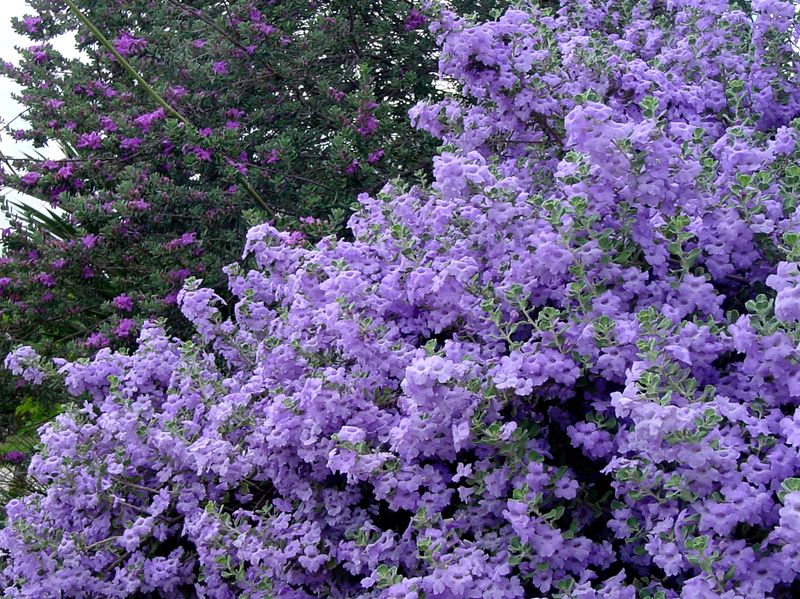
Somewhere in Texas, a silvery shrub is blooming after a summer storm, and chances are good that your neighbor has no idea what it is or why it suddenly exploded in purple flowers. That shrub is cenizo, also called Texas sage or barometer bush, and it has earned a quiet reputation as one of the toughest, most self-sufficient plants a Texas gardener can put in the ground. The title above makes a bold promise, and cenizo comes close enough to keep things interesting, but the real story is a little more honest and a lot more useful.
Meet Cenizo, the Shrub Behind the Mystery
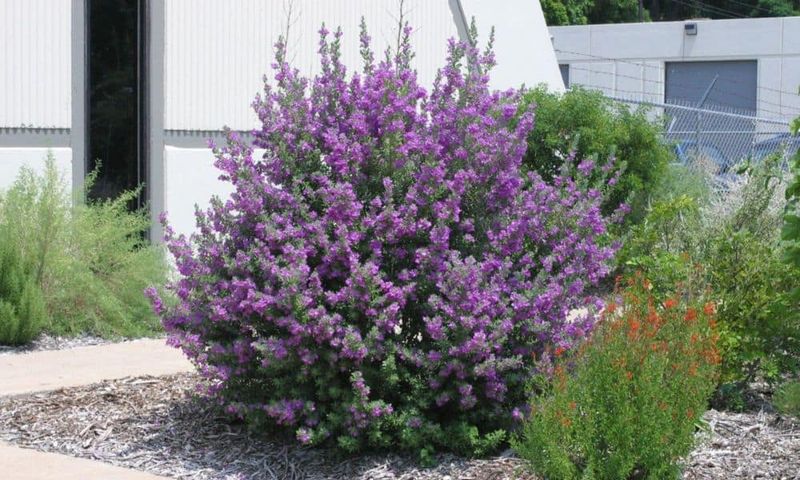
Cenizo, known by its scientific name Leucophyllum frutescens, is the shrub behind the headline. You may have heard it called Texas sage, Texas ranger, or barometer bush, and all three names point to the same plant: a compact, evergreen native with soft, silvery-gray leaves and bursts of pink-to-purple tubular flowers that appear in warm-season pulses. The North Carolina Extension plant profile for Texas barometer bush describes it as a low-maintenance shrub with high heat and drought tolerance, valued for its silvery foliage as much as its flowers.
Before you reach for the spice rack, stop. The name “Texas sage” is a common name only. University of Arkansas Extension confirms that cenizo is not culinary sage and is not a member of the Salvia genus at all. It belongs to the figwort family, which makes it a botanical cousin of snapdragons rather than kitchen herbs.
Do not cook with it, and do not expect it to smell like your Thanksgiving stuffing.
What cenizo actually offers is a tidy package of landscape virtues: drought tolerance after establishment, minimal fertilizer needs, and enough visual texture to anchor a planting bed through the long Texas summer. The Native Plant Society of Texas lists it as a reliable shrub for low-water landscapes in suitable regions, and Texas Tech’s plant resources profile echoes that assessment.
The headline’s promise of a garden that runs itself needs a correction, though. Cenizo is an excellent anchor plant for the right site, but no single shrub manages an entire garden. Think of it as the reliable backbone of a low-water design rather than a one-plant solution, and you will get far more out of it.
Match the Plant to the Texas Site
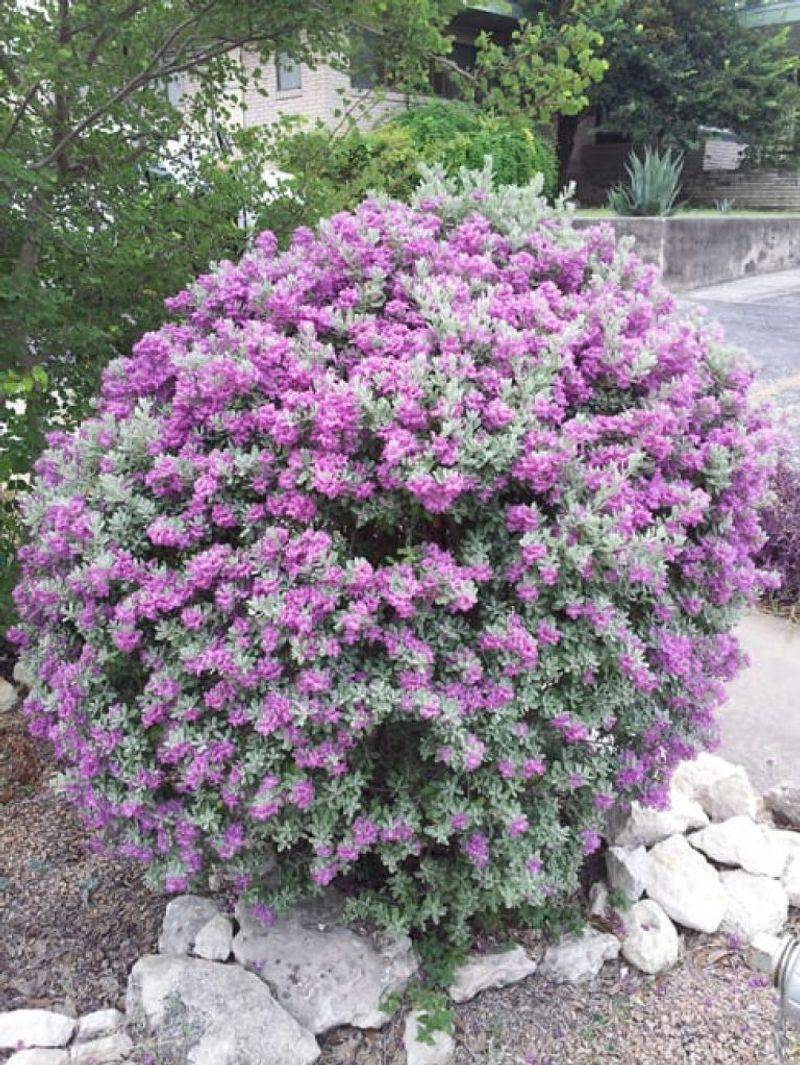
Cenizo does not perform equally well across all of Texas, and understanding where it thrives is the most important decision you will make before buying a single plant. The Native Plant Society of Texas notes that Leucophyllum frutescens is native primarily to the Rio Grande Plain, the Chihuahuan Desert, and the Edwards Plateau. Those are dry, often limestone-influenced regions with strong sun, low humidity, and well-drained soils. Cenizo is widely planted elsewhere in Texas, but gardeners outside its native range should expect to work a bit harder to keep it happy.
Site selection comes down to two non-negotiable conditions: full sun and well-drained soil. Extension guidance recommends dry, rocky, calcareous, or alkaline ground as especially appropriate. A south- or west-facing slope with caliche or sandy loam is ideal. What you want to avoid is any spot that holds water after rain, any low point in the yard that acts like a bowl, or any irrigated lawn zone where the soil stays moist for days at a time.
Gulf Coast gardeners face a trickier situation. Higher humidity, heavier and more frequent rainfall, and poorly draining soils all work against cenizo. Texas Tech’s landscape profile and Extension sources both point to moisture stress as a key risk factor. The plant can survive in Houston or Beaumont with careful placement, but it will not be the effortless anchor it becomes on a dry Hill Country slope.
Cenizo can reduce your irrigation needs and often requires relatively little maintenance once it has settled in, but those benefits apply specifically to suitable sites under the right regional conditions. Planting it in the wrong spot does not unlock those advantages; it just creates a struggling shrub that needs more attention than a well-matched alternative would.
Give New Plants the Water They Need
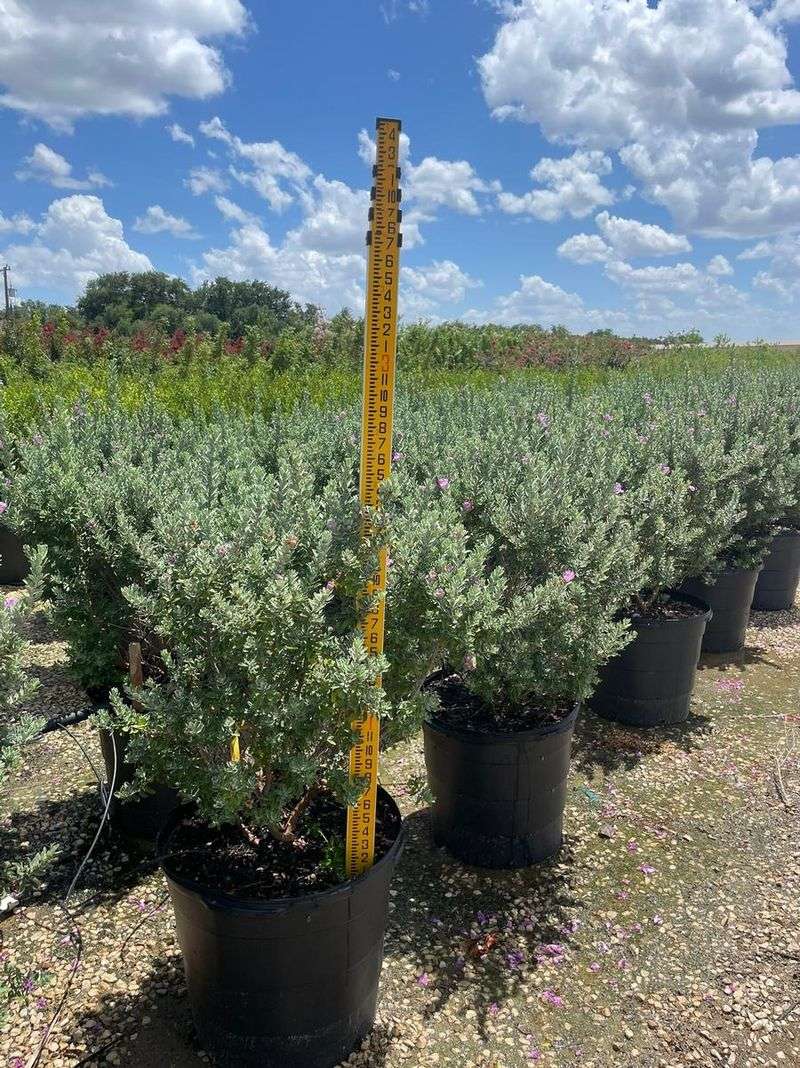
Cenizo’s reputation for drought toughness is real, but it applies to established plants with a developed root system, not to a shrub you just pulled from a nursery pot last Tuesday. Newly installed cenizo needs regular supplemental irrigation while its roots push out into the surrounding soil. Skipping that water during the first season because the plant is “supposed to be drought tolerant” is one of the most common ways to lose it.
Austin Water’s WaterWise landscaping guidance recommends planting new native shrubs during spring or fall rather than during intense summer heat, when establishment stress is highest. That is a sensible regional benchmark for Central Texas, though the right planting window in your part of the state will depend on your local conditions. Austin’s water-saving tips also note that mature native plantings can use substantially less water than traditional turf, which is a meaningful long-term payoff once establishment is complete.
During that first growing season, water deeply and then allow the soil to dry out between sessions. You are training the roots to reach downward rather than staying shallow. Once the plant shows strong new growth and has been in the ground through a full warm season, you can begin tapering irrigation. At that point, rainfall and occasional deep watering during extended dry spells will usually be enough.
The bigger danger is actually overwatering. Extension sources warn that persistently wet soil or poor drainage can cause serious problems, including cotton root rot, a soilborne disease that is difficult to manage once it takes hold. Pair your cenizo with a 3-to-4-inch layer of mulch to moderate soil temperature and retain moisture without waterlogging the root zone. Group it with other low-water natives so your irrigation zones match the plants’ actual needs, and you will be building a landscape that Texas water-conservation planning supports as a genuinely efficient system rather than a single-plant shortcut.
Plan for Its Size and Natural Shape
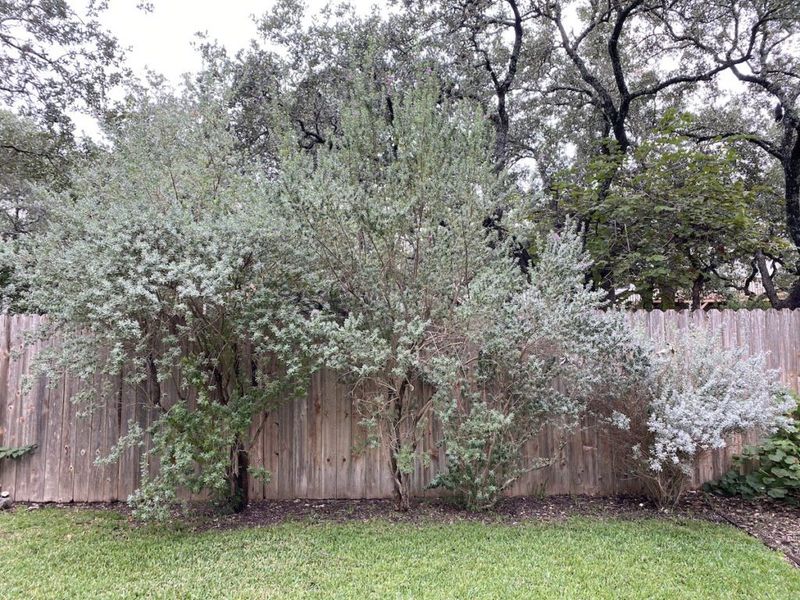
Cenizo grows slowly, but it does grow. Give it a few years in the right spot and you can expect a plant that reaches roughly 5 to 8 feet tall and spreads 4 to 5 feet wide, depending on the species and cultivar. The Native Plant Society of Texas and Texas Tech’s landscape profile both note that some specimens can exceed those dimensions. Plant it with that eventual footprint in mind rather than cramming it against a foundation, a narrow walkway, or a crowded mixed bed where it will need constant cutting back.
Fertilizer is not part of the routine. Extension guidance advises against fertilizing established Texas sage, and feeding it with a high-nitrogen product can push soft, fast growth that is more vulnerable to pests and disease. The plant is adapted to lean soils, and that is exactly what it prefers.
Pruning deserves a careful approach. Texas A&M AgriLife’s pruning guidance makes the case for purposeful, selective cuts rather than mechanical shearing, and that philosophy fits cenizo well. Because flowers form on new wood, repeated hard shearing into a tight formal hedge will reduce blooms and leave you with a dense, boxy shape that fights the plant’s natural growth habit. A light hand with loppers, removing crossing branches or shaping the outer silhouette once a year, preserves both the flowers and the soft, rounded form that makes cenizo visually distinctive.
Native plant guidance from the LCRA reinforces the idea of working with a plant’s natural character rather than against it. Cenizo earns its low-maintenance reputation partly because it does not need aggressive intervention, but only if you place it where it has room to be itself from the start.
Expect Flower Flushes, Not a Constant Show
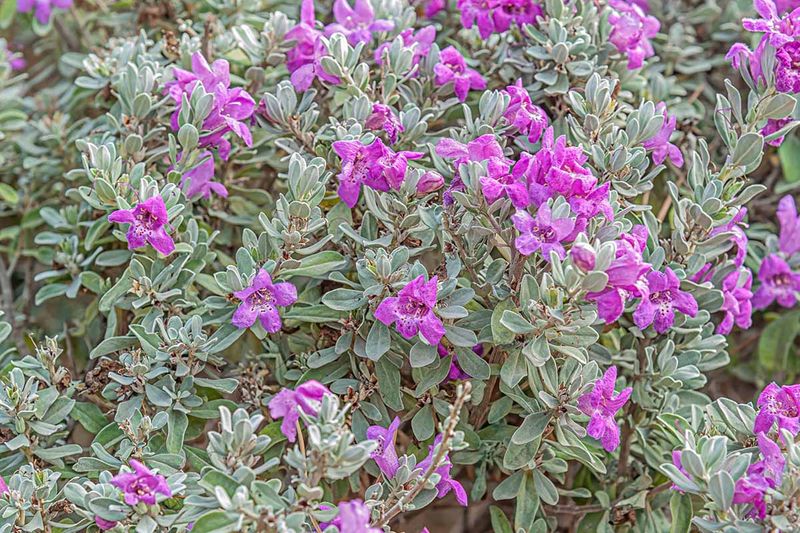
Cenizo does not bloom on a schedule you can mark on a calendar. The flowers arrive in flushes during the warm season, often appearing suddenly after a period of rain, high humidity, or a shift in atmospheric conditions. Extension records describe these bursts as intermittent rather than continuous, meaning the shrub can spend long stretches looking silver-gray and quiet before erupting in pink-purple color almost overnight. If you plant cenizo expecting a nonstop floral display, the gray weeks between blooms will disappoint you.
That gray-green interval is not a problem. The silver foliage holds its own as a textural contrast in a mixed planting, and the anticipation of the next bloom flush is part of what makes cenizo interesting to grow in Texas. Learning to read the shrub as a seasonal performer rather than a perennial bloomer shifts your expectations in a useful direction.
Here is where the “barometer bush” nickname enters the picture. Texans have long noticed that cenizo seems to bloom right before or after rain, which gave rise to the idea that it predicts weather. Texas Standard explored this piece of plant lore and found that while flowering may correlate with increased humidity or drops in atmospheric pressure, both of which can accompany incoming rain, the plant does not reliably predict rainfall. Treat the rain connection as a charming piece of Texas garden folklore rather than a weather forecast you would stake your weekend plans on.
What the nickname does capture accurately is the plant’s sensitivity to environmental cues. Cenizo is reading its surroundings and responding to them, which is exactly what a well-adapted native plant does. That responsiveness is part of its appeal, even if it does not come with a guarantee of tomorrow’s precipitation.
Use Cenizo as One Layer of Wildlife Habitat
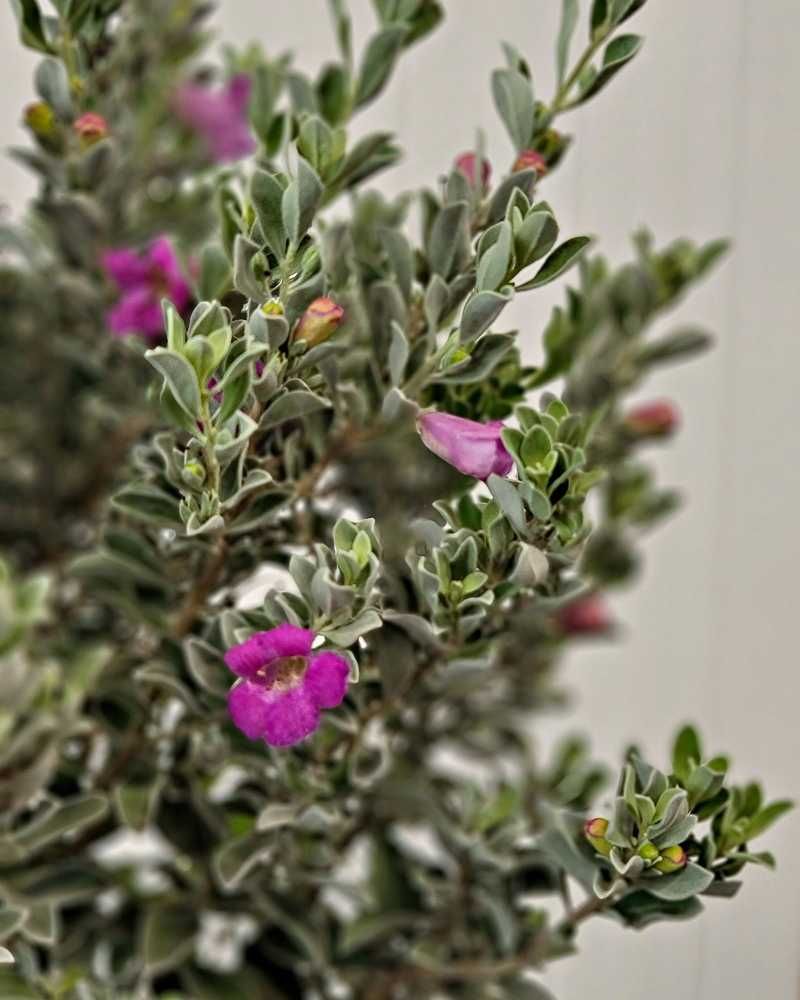
Cenizo pulls real wildlife weight in a Texas yard. When it blooms, the tubular flowers attract bees and hummingbirds, and Austin’s pollinator garden habitat requirements specifically list cenizo as a plant that supports these visitors. The Native Plant Society of Texas also documents that cenizo serves as a host plant for the Theona checkerspot butterfly and the calleta silkmoth, which means the plant does more than offer nectar. It provides a place for specific insects to complete part of their life cycle, which is a more meaningful ecological contribution than simply attracting passing visitors.
Those are genuine benefits, but they come with a practical ceiling. Cenizo alone does not create a functioning pollinator habitat or a complete wildlife garden. Austin Parks and Recreation’s wildlife habitat guidance outlines what a living yard actually requires: multiple plant species providing food across different seasons, structural layers from ground covers to canopy, water sources, and spaces where wildlife can reproduce and shelter. A single shrub, however useful, cannot supply all of those needs at once.
Texas Parks and Wildlife’s native bee guidance reinforces that point directly, recommending a diversity of blooming plants that provide pollen and nectar across the growing season. Native bees in particular benefit from floral variety because different species have different tongue lengths, flight periods, and nesting requirements that no single plant can match.
The practical takeaway is to place cenizo in the shrub layer of a broader native design. Pair it with early-season wildflowers that bloom before cenizo wakes up, grasses that provide nesting material, and late-season plants that carry pollinators into fall. Cenizo contributes meaningfully to that system, but it works best as a component rather than a complete solution.
Let the Right Plant Do the Right Job
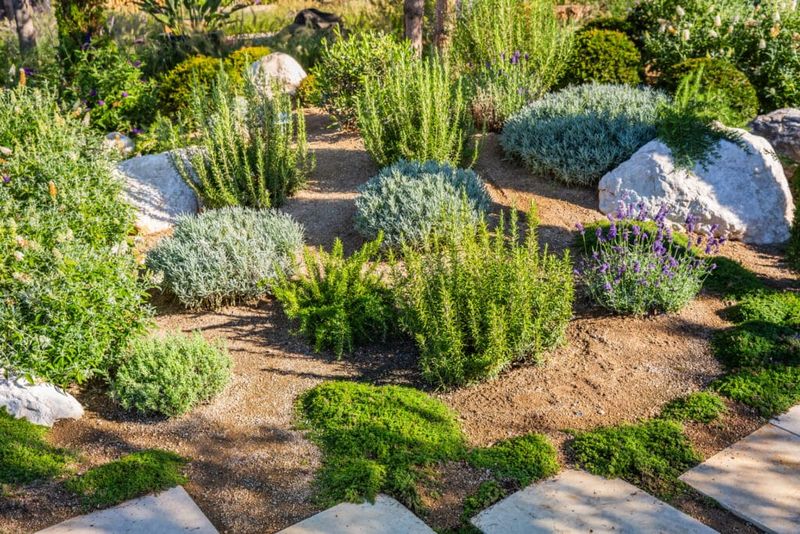
Cenizo earns its reputation when the site earns it first. If your yard offers full sun, reliable drainage, and regional conditions close to the Rio Grande Plain, Chihuahuan Desert, or Edwards Plateau, cenizo is a strong candidate for the shrub layer of a low-water landscape. Give it establishment water during its first growing season, choose a planting window that avoids peak summer stress, and then step back. Cenizo’s documented drought tolerance and low fertility requirements will begin to reduce your routine irrigation and maintenance load once the roots settle in.
What cenizo cannot do is replace the other decisions that make a low-water landscape actually work. The Native Plant Society of Texas’s native garden guide and Texas water-conservation planning resources both point to the same core practices: group plants by water need, use mulch, select species that match your specific ecoregion, and irrigate efficiently. Texas Parks and Wildlife’s Wildscapes tips add that habitat value comes from layered, diverse plantings, not from a single species doing heavy lifting alone.
Austin Watershed Protection’s landscaping resources frame the goal well: a landscape that fits the land it sits on. Cenizo fits a specific kind of Texas land very well, and on that land, it can carry the shrub layer, reduce your watering schedule, and bloom with spectacular timing after summer storms. The headline’s promise was always a little too good to be entirely true, but the plant behind it is genuinely worth knowing.