
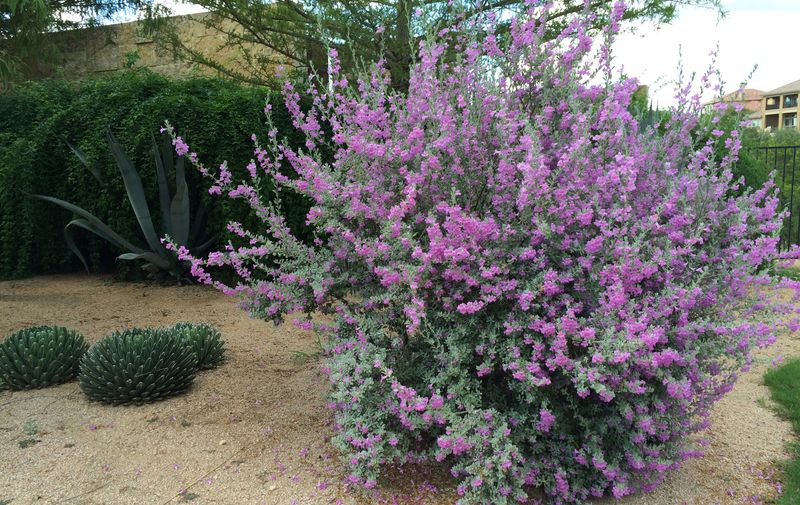
Every fall, Texas gardeners get a narrow window to put plants in the ground before summer heat returns, and one shrub stands out as a strong choice for the right yard: Texas sage, also called cenizo or Texas ranger (Leucophyllum frutescens). This tough, silver-leafed native thrives in the sunny, dry, well-drained landscapes common across Central, South, and West Texas.
Planting it in early or mid-fall can give its roots a calmer start than the stress of peak summer heat, though the real story is a bit more nuanced than simply “cool weather makes it root faster.”
Fall can give Texas sage a lower-stress start
Gardeners often hear that fall is the best time to plant shrubs, and for Texas sage, the reasoning holds up in most situations. The advantage is not that cool weather itself speeds up root growth.
Roots generally prefer warm soil, and growth slows as soil temperatures drop too low. What fall actually offers is a combination: cooler air reduces the amount of water a newly transplanted shrub loses through its leaves, while the soil often stays warm enough for roots to keep growing and spreading.
Peak summer heat puts a newly planted shrub under real pressure. The foliage is losing water fast, the root ball is still confined, and the plant has to work hard just to stay alive before it can put energy into growing new roots.
That pressure is manageable with careful irrigation, but it demands more effort from both the plant and the gardener. Summer planting can succeed, especially with consistent watering and some afternoon shade in the hottest locations, so the goal here is not to rule it out.
Texas A&M AgriLife fall planting guidance explains that woody plants installed in fall have time to develop roots before the following summer’s heat and dry periods arrive. University of New Hampshire Extension notes that roots continue growing in fall as long as the soil stays above roughly 40 degrees Fahrenheit, while cooler air keeps the plant from losing water as quickly as it would in July.
UMass Extension and University of Georgia Extension both point to this combination of warm soil and reduced water stress as the reason fall often gives shrubs a better rooting window than the height of summer. The honest framing is a lower-stress establishment opportunity, not a guarantee that Texas sage roots faster simply because the calendar says October.
Texas sage suits sunny, sharply drained sites
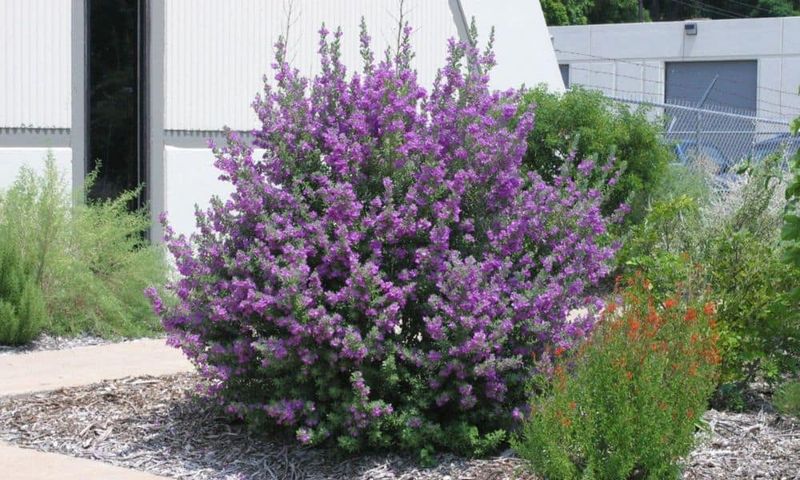
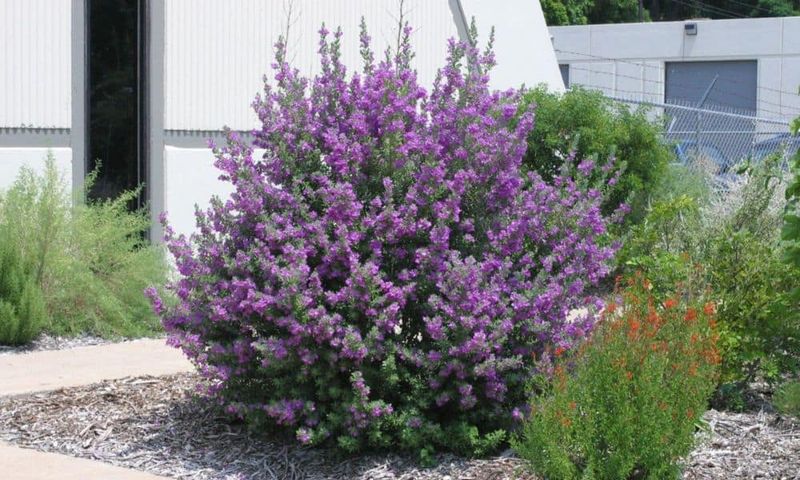
Before settling on cenizo as a fall addition to the yard, it helps to know exactly what kind of plant it is and where it performs best. Texas sage (Leucophyllum frutescens), also called cenizo or Texas ranger, is an evergreen shrub native to the Rio Grande Plains, Edwards Plateau, and Chihuahuan Desert regions of Texas and adjacent northern Mexico.
It is not native throughout every part of the state, and gardeners in colder northern Texas locations, persistently humid landscapes, or poorly drained yards may find it less dependable than those in its core range.
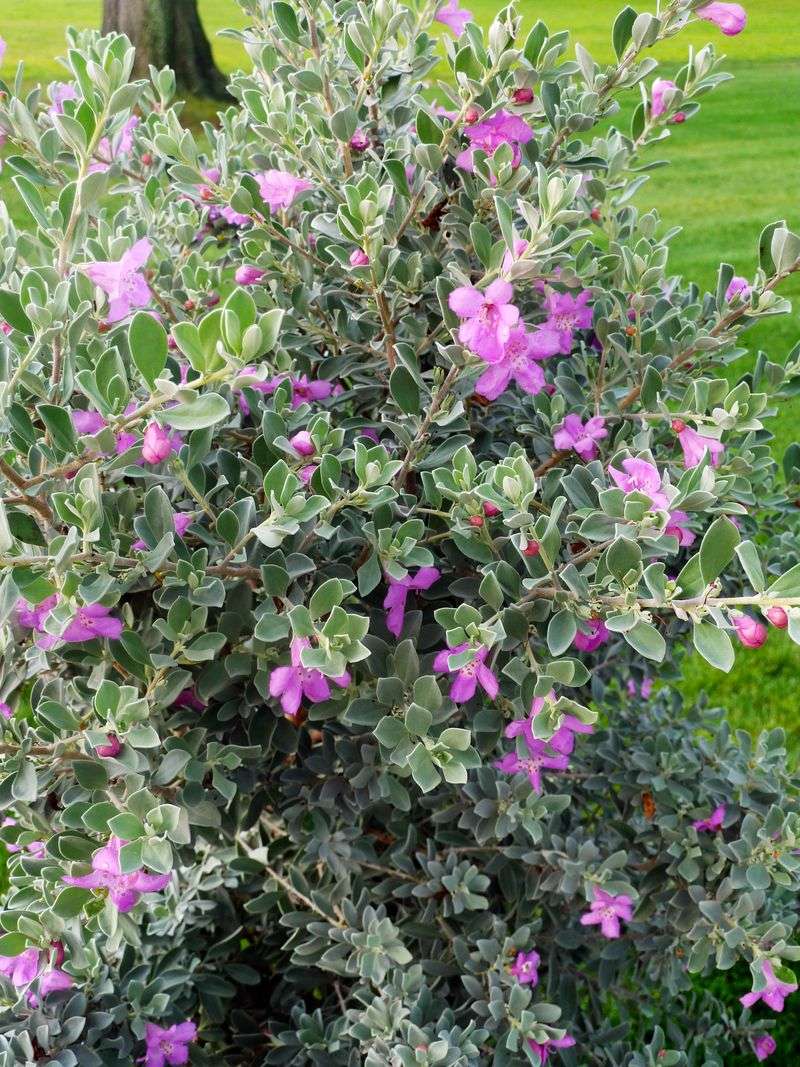
In the right spot, cenizo is a standout. The Native Plant Society of Texas describes it as a full-sun shrub adapted to dry, rocky, often alkaline soils, with silvery-gray foliage that reflects heat and reduces water loss.
Texas SmartScape lists it as low-water and valuable for wildlife, including butterflies and nectar-seeking insects that visit its lavender to purple blooms. Texas A&M’s rangeland plant database records mature plants reaching roughly 8 feet tall in favorable conditions, though cultivar and site both affect the final size.
Most container-grown specimens available at Texas nurseries mature somewhere between 5 and 8 feet tall and 4 to 6 feet wide, making them a practical choice for privacy screens, informal hedges, or dry borders. NPSOT’s cenizo profile emphasizes that drainage matters more than soil richness: cenizo thrives in lean, well-drained ground and struggles when roots sit in moisture for extended periods.
The Missouri Botanical Garden plant finder echoes the preference for full sun and excellent drainage, noting that heavy or wet soils are a poor match. Gardeners outside its strongest adaptation range, particularly in East Texas or locations with frequent rainfall and clay-heavy soils, should evaluate their site carefully before committing to cenizo.
Choose a fall window before local hard freezes
Picking the right fall planting date for cenizo is not a matter of circling one day on a statewide calendar. Texas covers too much ground for that approach to work.
The general rule is to plant after the most intense summer heat has passed but while the soil is still warm, and to finish before the local onset of sustained freezing weather or hard freezes.
Texas A&M AgriLife guidance supports fall as a productive planting season for woody shrubs, while the Cameron County Master Gardeners shrub guide notes that timing should account for regional freeze patterns and local soil conditions. South Texas gardeners often have a longer fall window, sometimes stretching into November, while North Texas gardeners may need to act in September or early October before temperatures drop sharply.
The Hill Country and West Texas fall somewhere in between, with freeze timing that varies by elevation and local weather patterns.
Texas sage is evergreen, which matters for timing. UMass Extension and Iowa State University Extension both note that evergreen shrubs planted too late in fall can face added winter stress before their roots have had time to settle in.
The recommendation is early to mid-fall, not any convenient date in late fall. University of New Hampshire Extension reinforces that soil warmth, not just air temperature, determines whether roots can continue to grow after planting.
Waiting until the soil has turned cold reduces the window for any establishment gain, so gardeners who miss the early fall sweet spot in their area should weigh whether a late planting or waiting until early spring makes more sense for their specific location.
Install the shrub at the correct depth
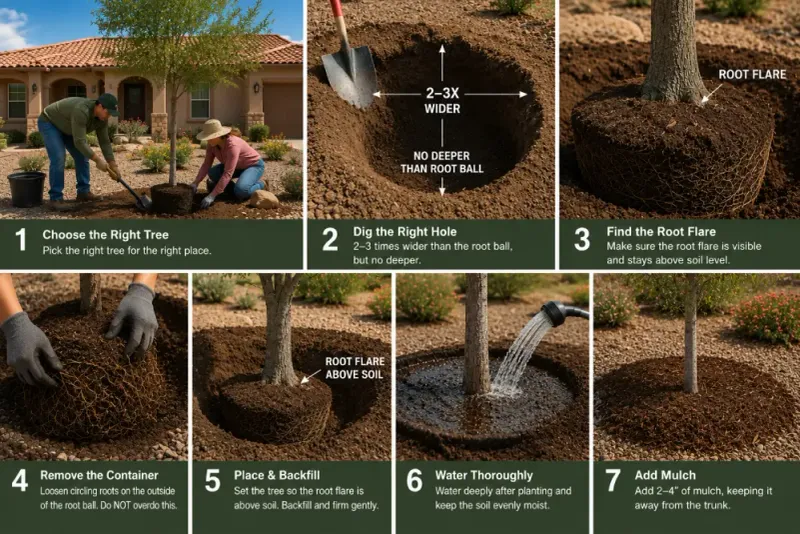
Getting cenizo into the ground correctly makes a bigger difference than most gardeners expect. Start by selecting a spot with excellent drainage.
If water pools in the area after rain, even briefly, that location is not suitable for Texas sage. In heavy or compacted soils, consider raising the planting area slightly or choosing a different spot rather than amending the soil to the point where a water-holding pocket forms around the roots.
Dig a hole roughly two to three times as wide as the root ball but no deeper than the container. Iowa State University Extension’s shrub planting guide recommends setting the root ball so the top of it sits at or very slightly above the surrounding soil level rather than below it.
The trunk and root flare, the point where the stem widens at the base, should stay above the soil line. Burying that flare invites moisture to collect against the bark and can cause long-term problems, including root and crown rot.
Once the shrub is positioned correctly, backfill with the original soil rather than a heavily amended mix. Texas A&M Earth-Kind landscaping guidance supports using native soil for backfill because it encourages roots to grow outward into the surrounding ground rather than staying confined to a richer pocket.
Water the shrub thoroughly right after planting to settle the soil and eliminate air pockets around the roots. After that first deep watering, shift to monitoring the soil and watering during dry periods rather than following a fixed daily schedule.
Texas A&M AgriLife and the Cameron County shrub care guide both note that new plantings need moisture during dry spells but that excessive or poorly timed irrigation can do as much harm as too little water, particularly for a shrub as sensitive to wet conditions as cenizo.
Water and mulch without creating root problems
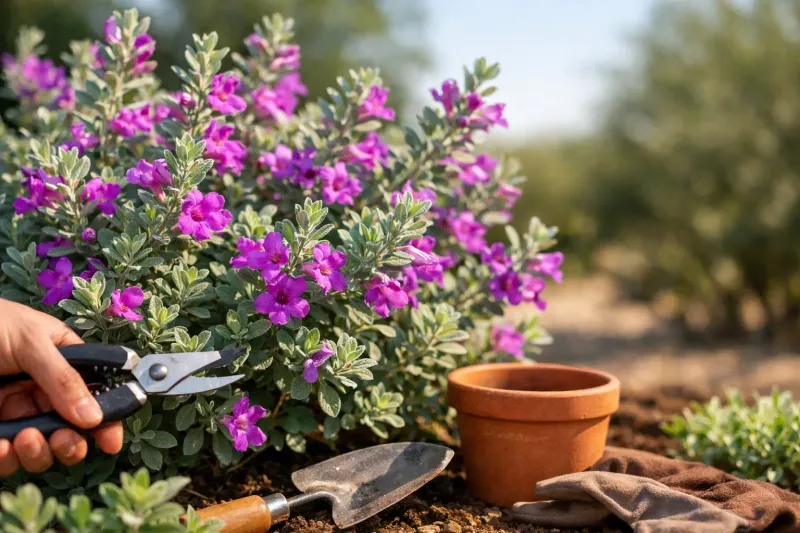
Cooler fall weather does lower the amount of water a newly planted shrub loses through its foliage, but it does not eliminate the need for irrigation. A cenizo that goes several weeks without rain or supplemental watering during a dry fall stretch will struggle to push roots into the surrounding soil.
Check the ground at the root ball every few days and water when the top few inches feel dry, adjusting frequency based on actual weather rather than a fixed schedule.
Texas A&M AgriLife advises that new plantings need watering during dry spells through their first season, while the same extension system cautions that excessive moisture can damage roots. For Texas sage specifically, that caution carries extra weight.
The Native Plant Society of Texas cenizo profile and the NPSOT cenizo western-plant article both flag susceptibility to cotton root rot and other root problems when cenizo is kept too wet or planted in poorly drained soil. Heavy or prolonged irrigation in a yard that does not drain freely can accelerate those problems rather than support establishment.
Mulch applied around the base of the shrub helps conserve moisture and moderates soil temperature at the root zone, which is useful in both warm and cool weather. Keep the mulch layer to about 2 to 3 inches deep and leave a clear gap of several inches between the mulch and the stem.
Piling mulch against the trunk traps moisture against the bark and can encourage rot. NPSOT’s native landscape guide supports this approach for native shrubs in Texas yards.
On fertilizer: skip it at planting unless a soil test or a local horticulture professional identifies a specific need. Native-plant guidance for cenizo explicitly warns against unnecessary fertilizing, which can push leafy growth the plant’s root system is not yet ready to support.
Set realistic expectations for growth and flowering
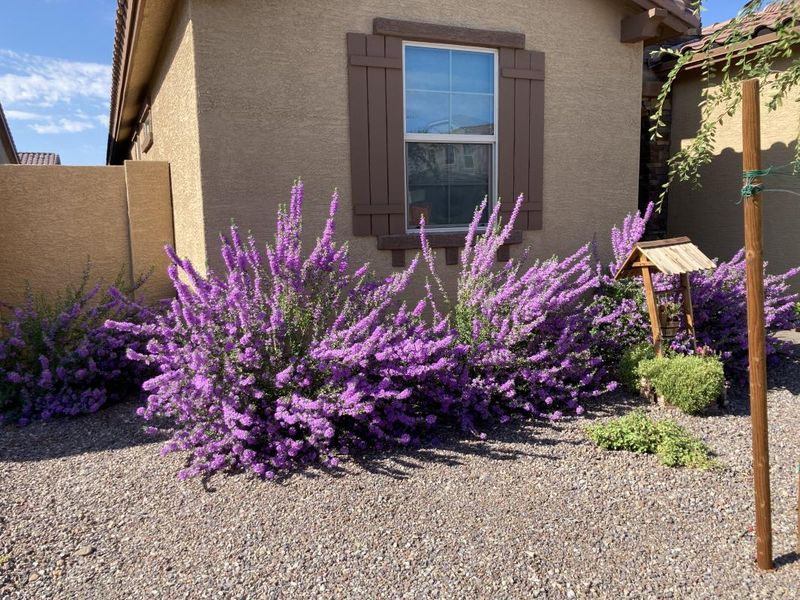
A fall planting gives Texas sage a calmer start, but it does not compress the timeline for becoming a full, blooming shrub. Cenizo is relatively slow-growing, and Texas SmartScape notes that the plant may take up to two years to become fully established and bloom reliably.
Expecting a mature hedge or a flush of purple flowers by the following spring sets up disappointment.
During the first year, the visible signs of progress are often subtle. The shrub may hold its foliage, put out modest new growth, and stay relatively compact while its roots expand into surrounding soil.
Flowering can be sparse or absent until the plant has settled in. That is normal behavior, not a sign that something went wrong.
Judging a newly installed cenizo by the flower count in its first season misses the point of the fall planting strategy, which is building root infrastructure before heat arrives, not delivering an immediate landscape result.
Summer planting is worth mentioning here because some gardeners assume it is always a poor choice. With consistent irrigation and some afternoon protection from intense afternoon sun, cenizo planted in warmer months can still establish successfully.
The difference is that the plant faces higher water demand and more foliage stress from the start, so the gardener carries more of the workload during those first weeks. University of New Hampshire Extension and Texas A&M AgriLife both frame fall as a lower-stress window rather than the only viable season.
A fall-planted Texas sage that gets proper site selection, correct installation depth, and attentive watering through dry spells has a reasonable chance of arriving at its second summer in a stronger position than one rushed into the ground in July without adequate support.
Decide whether cenizo belongs in your fall plan
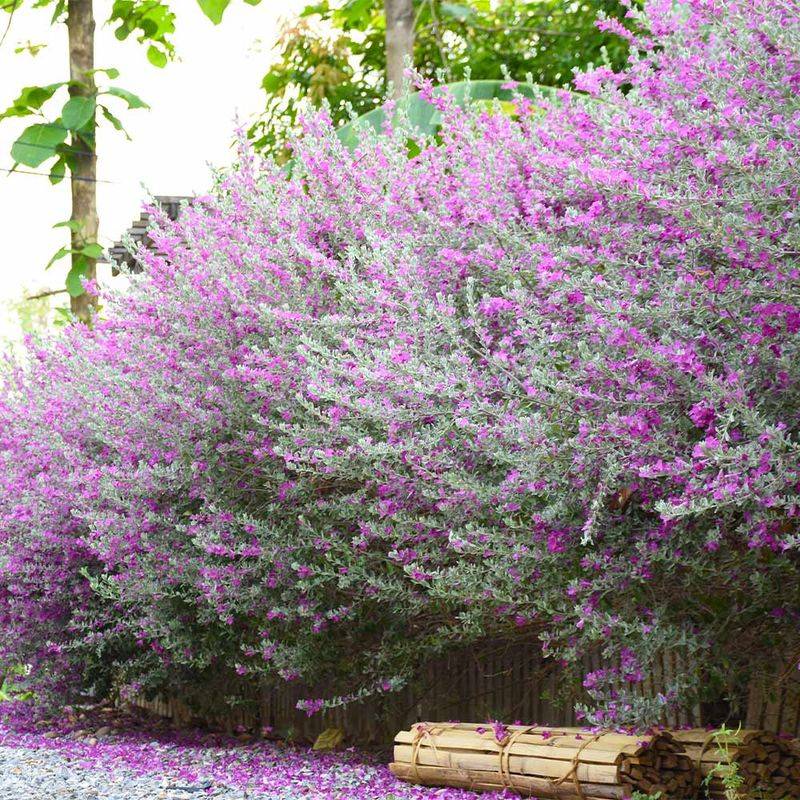
Cenizo earns a place on the fall planting list when the conditions match what it actually needs. A sunny spot, well-drained soil, and a location in Central, South, or West Texas where the shrub is well adapted give it the best chance of long-term success.
Texas SmartScape and the Native Plant Society of Texas both confirm it as a low-water, wildlife-friendly native for suitable sites, not a universal fix for every Texas yard.
The real benefit of planting now is a lower-stress establishment window, not faster roots caused by cool air, instant blooms, or the ability to skip irrigation. Texas A&M AgriLife frames fall planting as an opportunity for woody plants to develop roots before the following summer’s heat and dry periods arrive, which is a practical advantage worth using when the timing and site line up.
The action sequence is straightforward. Verify that the site drains well and receives full sun.
Plant while the soil is still warm and before local hard freezes threaten. Water during dry spells through the first season and keep mulch away from the stem.
Then give the shrub time, up to two years, before drawing conclusions about its performance. A cenizo that gets all of those things right will repay the patience with silver foliage, periodic purple blooms after rains, and decades of low-maintenance toughness in a Texas landscape.