
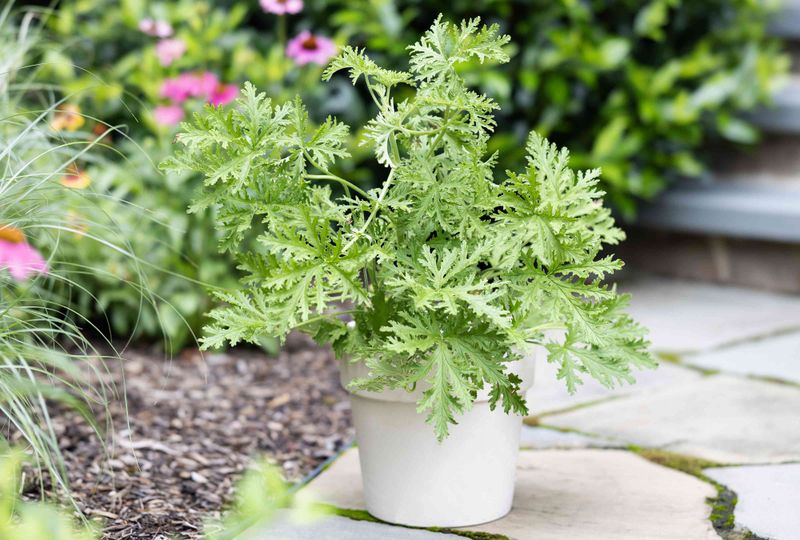
Every summer, a leafy little plant starts showing up at Texas nurseries with a bold promise printed right on the tag: keep this near your patio and mosquitoes will leave you alone. The plant is real, the scent is pleasant, and the appeal is easy to understand when you are trying to enjoy an evening outside without getting eaten alive. But before you swap your bug spray for a potted plant, the evidence behind that promise deserves a closer look.
The popular “mosquito plant” is usually citronella geranium
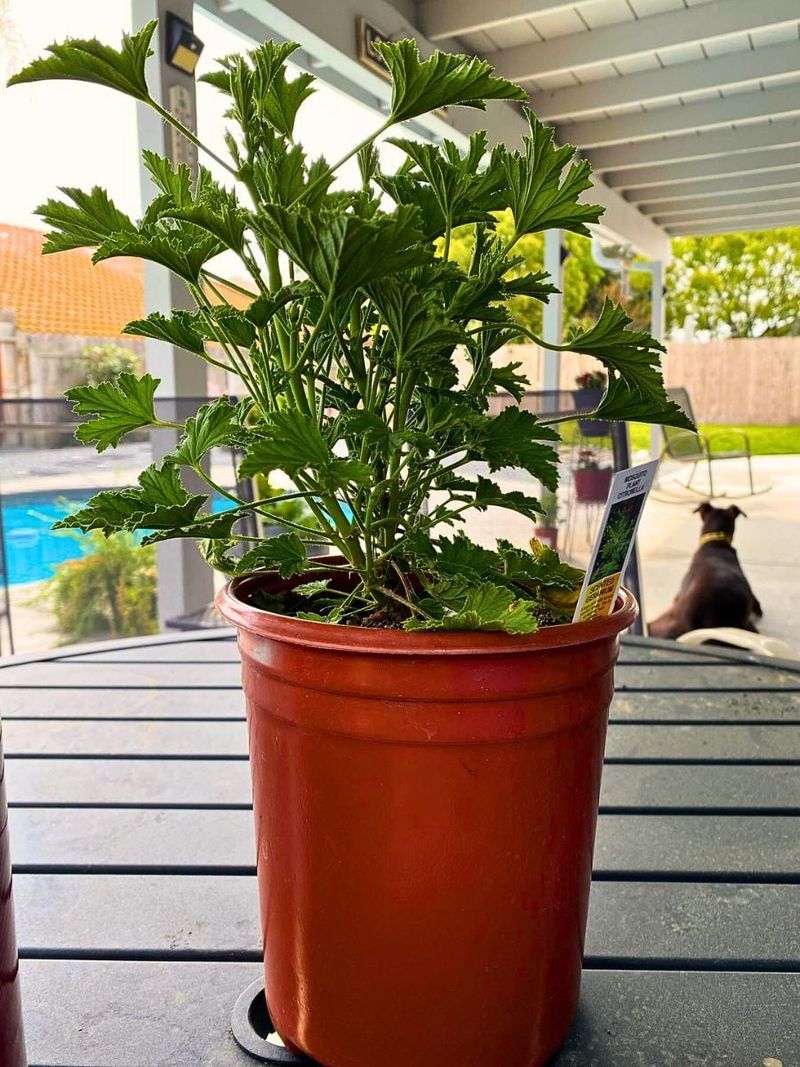
Walk into almost any Texas garden center in late spring and you will find a fuzzy-leafed plant labeled “mosquito plant,” “citronella plant,” “citrosa,” or “lemon geranium.” The plant behind those tags is almost always a scented Pelargonium cultivar, most commonly Pelargonium ‘citrosum’ or ‘citrosa.’ Pinch a leaf and you get a sharp, lemony fragrance that gardeners genuinely enjoy.
Identifying it is the easy part. EPA’s citronella fact sheet notes that retail names for citronella-related plants and products are applied inconsistently, so a tag reading “citronella” does not guarantee a specific species or a specific level of repellent activity. The same plant may be sold under four different names at four different stores in the same city.
That naming freedom is part of why the mosquito-control promise spread so widely. Shoppers see “mosquito plant,” assume the label means the plant repels mosquitoes, and carry it home. Iowa State University Extension points out that simply planting scented species nearby, including citronella geranium, has not been shown to keep mosquitoes away.
None of that makes the plant a bad purchase. Citronella geranium is a reasonable ornamental for a sunny Texas patio. It tolerates heat, produces attractive foliage, and smells pleasant when a breeze moves through it. The problem is not the plant itself but the claim attached to it.
Knowing what you are buying, a fragrant Pelargonium rather than a proven mosquito barrier, puts you in a much better position to enjoy it without being disappointed when the mosquitoes show up anyway.
Citronella geranium is not true citronella grass
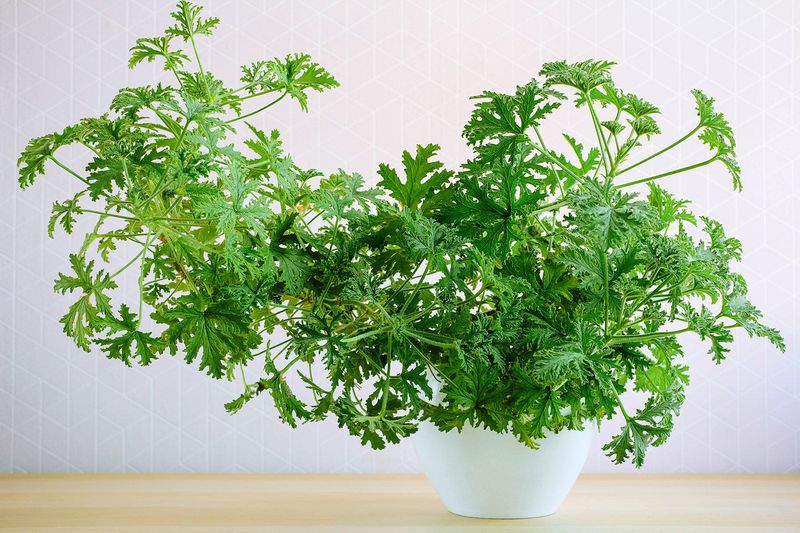
One of the stickiest pieces of confusion around the mosquito plant is what the word “citronella” actually refers to. Commercial citronella oil, the kind used in candles, sprays, and torches, is distilled primarily from two tropical grasses: Cymbopogon nardus and Cymbopogon winterianus. These tall, clumping grasses look nothing like the leafy Pelargonium sitting in a four-inch pot at the checkout counter.
The EPA’s reregistration fact sheet for oil of citronella makes clear that the registered active ingredient is the distilled oil from those specific grass species. A scented Pelargonium does contain aromatic compounds, including some geraniol and citronellol, but its chemical profile is not the same as the standardized oil derived from citronella grass, and it is not the source of the candles on your patio table.
Garden centers are not required to flag this distinction, and the word “citronella” on a plant label carries no regulatory definition that ties it to Cymbopogon. The National Pesticide Information Center’s citronella fact sheet explains that oil of citronella products are derived from the grass, not from ornamental geraniums, and that the two should not be treated as equivalent sources of mosquito protection.
For Texas gardeners, the practical takeaway is straightforward. Buying a citronella geranium does not give you the same active ingredient as an EPA-registered citronella candle or spray. The plant shares part of a name and part of a scent profile with those products, but that overlap does not make it a substitute. Knowing the difference keeps you from placing your outdoor confidence in the wrong container.
The evidence does not show that one potted plant makes a patio mosquito-free
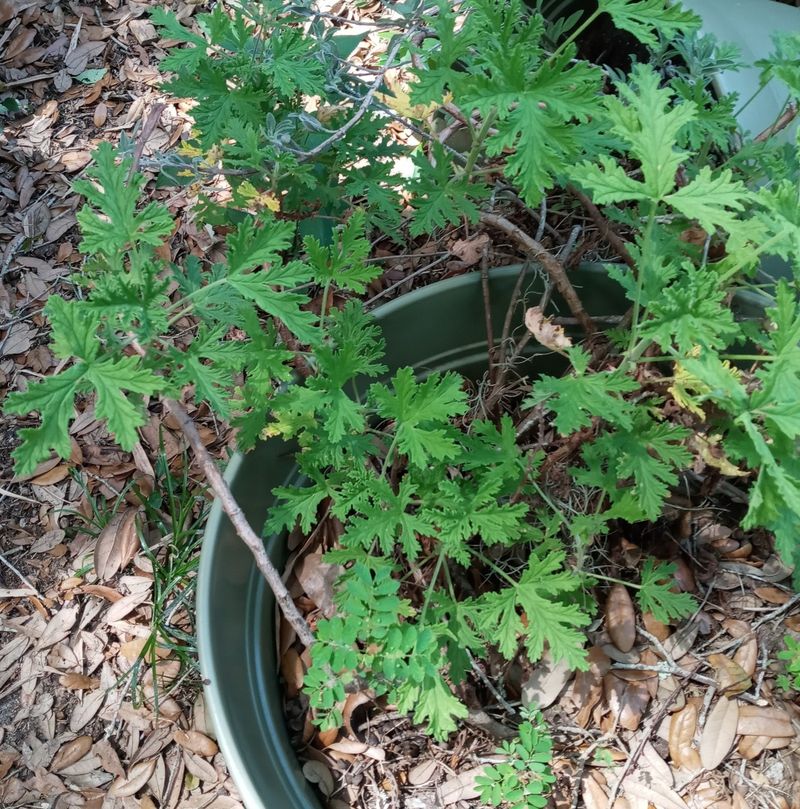
Here is what the research actually found. A peer-reviewed field study published in the Journal of the American Mosquito Control Association tested Pelargonium x citrosum ‘Van Leenii’ against adult Aedes albopictus and Culex quinquefasciatus in Florida. That study concluded that the mosquito plant failed to repel either species under the conditions tested. The mosquitoes were not deterred by the presence of the plant.
A companion analysis published in the same journal evaluated the citrosa plant’s essential oil composition and tested it in field conditions. That field evaluation found no significant repellent effect from the intact plant, including the claim that it created a protective zone around it. The marketed idea of a ten-foot mosquito-free radius was not supported.
These studies were conducted in Florida, not Texas, and they focused on two specific mosquito species. Texas is home to more than 85 mosquito species, and results from any single study cannot be stretched to cover every species or every backyard setting across the state. The science does not say that citronella geranium repels zero mosquitoes under every conceivable condition. It says that the field evidence for reliable patio-wide protection is not there.
Iowa State University Extension guidance reinforces this point directly: simply planting scented species, including citronella geranium, lemon thyme, and citrosa, in or near a patio does not repel mosquitoes. The promise of an all-summer result from a single potted plant is not something the evidence can support, and framing it that way sets up a lot of itchy summer evenings for Texas families who trusted the tag.
Oil and extract studies do not prove that a living plant protects a patio
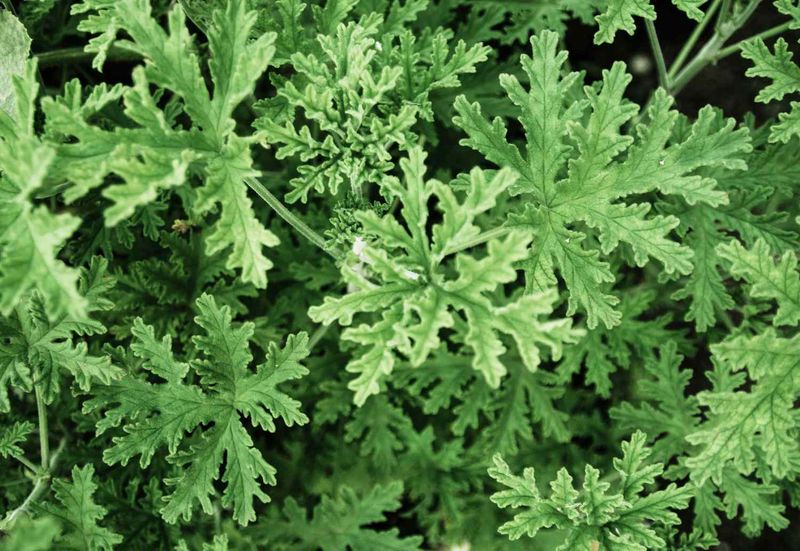
Spend a few minutes searching online and you will find studies showing that citronella compounds can repel mosquitoes. Those results are real, but the details matter a great deal before applying them to a potted plant on your back porch. A review of plant extracts and oils as mosquito repellents found that repellency varied substantially depending on the mosquito species tested, the concentration of the compound used, the formulation applied, and the method of exposure. A result from one species in one concentration under controlled lab conditions does not transfer automatically to a different species breathing the ambient air near a potted plant on a humid Texas evening.
Formulated products, including sprays, candles, diffusers, and wristbands, are designed to deliver a specific concentration of active ingredient in a consistent way. Research evaluating citronella and citronellal compounds has found measurable repellency from those formulated applications, but that evidence describes the oil or extract performing work in a delivery system, not a living plant passively releasing aromatic compounds into open air.
An intact citronella geranium has not been shown to release enough repellent compounds to provide reliable protection across even a small seating area. The plant does produce aromatic oils in its leaves and stems, but without mechanical disruption, such as crushing or bruising the foliage, those compounds stay mostly locked inside the plant tissue. Extension horticulture guidance notes that even crushing the leaves provides much weaker protection than a product that has been developed, tested, and labeled for mosquito repellency.
Crushing leaves and rubbing plant material on skin is not a safe workaround. Citronella-related compounds can irritate skin and cause allergic reactions in some people, and an unprocessed plant part is not an evaluated repellent formulation. Positive lab results for citronella oil deserve acknowledgment; they just do not add up to a proof that a living plant on your patio will keep mosquitoes away.
Remove the standing water around your patio every week
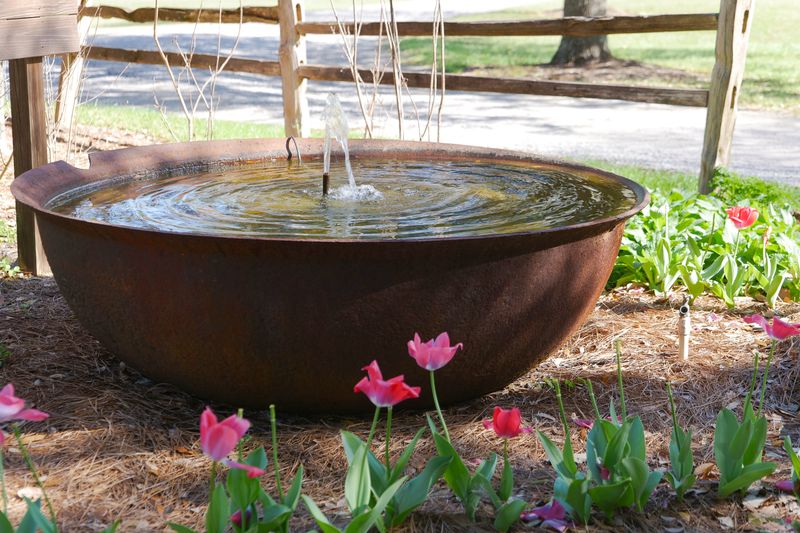
Mosquitoes do not need a pond to breed. A bottle cap of water sitting in a flowerpot saucer for a week is enough for a female to lay eggs, and those eggs can hatch into biting adults within days in the heat of a Texas summer. Every water-holding item left on or near a patio is a potential nursery, and the single most effective thing a homeowner can do is take that resource away.
CDC’s mosquito control guidance recommends a weekly routine: empty and scrub, cover, turn over, or throw out anything that holds water. On a Texas patio that list gets long fast. Flowerpot saucers, buckets left under a downspout, kids’ toys, birdbaths, tarps pooling rainwater, trash containers without lids, old tires, and even clogged rain gutters overhead all qualify. Scrubbing matters because mosquito eggs can stick to container walls and survive drying, only to hatch when water returns.
Shaded spots deserve extra attention in Texas heat. Mosquitoes prefer to rest in cool, dark, humid areas, and the space under patio furniture, inside a carport, or along a garage wall can hold water-collecting containers that get overlooked for weeks. A five-minute walk-through every seven days catches problems before they become clouds of adults.
For water-holding containers that genuinely cannot be emptied or covered, such as a decorative fountain or a large rain barrel, a labeled larvicide is the appropriate tool. EPA notes that Bti, a naturally occurring bacterium, targets mosquito larvae and has minimal toxicity to honey bees when used as directed. Follow the product label exactly for dosage, reapplication intervals, and safety precautions. Source reduction is the foundation; everything else builds on top of it.
Combine personal repellents with screens and protective clothing
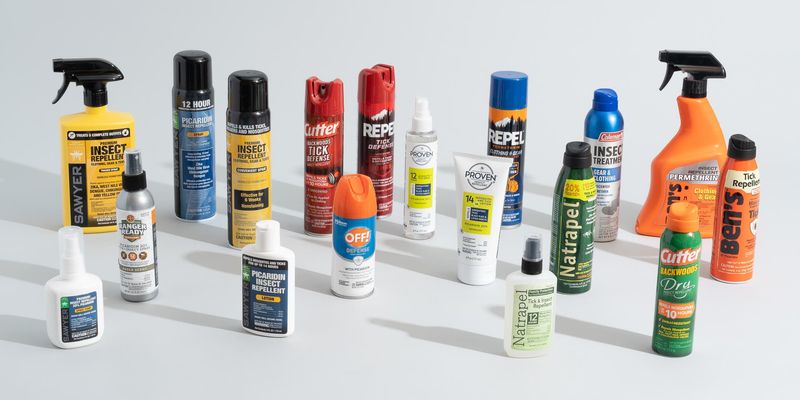
Source reduction cuts the mosquito population at the source, but it cannot eliminate every biting adult that drifts in from a neighbor’s yard, a drainage ditch, or a nearby field. For those mosquitoes, personal protection is the practical answer. CDC recommends EPA-registered repellents containing active ingredients such as DEET, picaridin, IR3535, oil of lemon eucalyptus, PMD, or 2-undecanone for protection against mosquito bites. CDC also notes that the effectiveness of many non-EPA-registered “natural” repellents is unknown.
Reading the product label is not optional. Labels specify where to apply the repellent, how much to use, how often to reapply, and how to use the product safely around children. A repellent applied correctly and reapplied on schedule gives you far more reliable coverage than any passive plant sitting in a corner. EPA’s framework for skin-applied repellents evaluates both efficacy and safety for each registered product and use pattern, which is exactly the kind of oversight that a garden-center plant tag does not carry.
Physical barriers add another layer of protection without any chemistry at all. Screens on doors, windows, and porch enclosures keep mosquitoes out of living spaces. Air conditioning reduces the need to sit in open air during peak biting hours, typically dawn and dusk. Long sleeves and long pants, even lightweight ones, cover skin that repellents might miss.
CDC guidance on home mosquito control points out that adult mosquitoes commonly rest in dark, humid areas, including beneath patio furniture, inside carports, and along garage walls. A quick spray of a labeled adulticide into those resting spots, following the product label for safety, can reduce the number of mosquitoes waiting to bite when evening arrives. Stacking these methods gives you a realistic chance at a comfortable patio, not a single-plant shortcut.
Grow the plant for fragrance, not as your mosquito-control plan
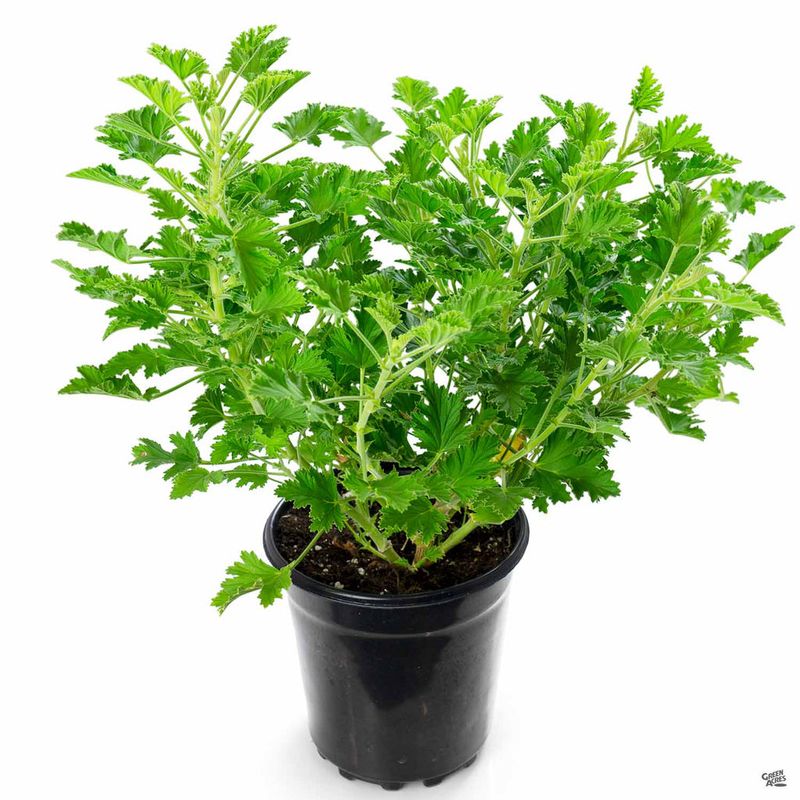
Citronella geranium is a perfectly reasonable patio plant for a Texas gardener who wants fragrant foliage and attractive greenery that can handle the heat. Grow it for those reasons and you will not be disappointed. Grow it expecting a mosquito-free summer and the bugs will make that disappointment obvious by July.
Extension guidance is consistent on this point: the plant is not a substitute for source reduction, personal repellents, or physical barriers. Do not crush the leaves and apply them to your skin as a repellent workaround. The foliage is not an evaluated formulation, and citronella-related compounds can irritate skin or trigger allergic reactions in some people.
A dependable patio routine looks like this: walk the yard weekly and eliminate standing water, apply an EPA-registered repellent before sitting outside, use screens where possible, and reach for a labeled control product when a specific problem warrants it. The citronella geranium can sit in that corner and smell wonderful. Just let the proven tools do the actual work.