
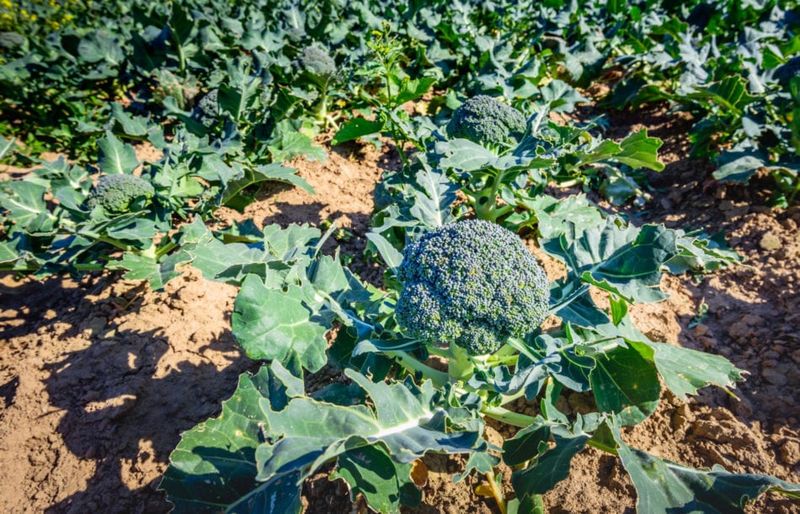
Most gardeners in North Carolina pack up their seed trays by midsummer, but one cool-season crop can still reward you with a satisfying fall harvest if you time it right. Broccoli, especially a sprouting or side-shoot-producing type, can give you a firm central head and then keep producing smaller shoots for weeks afterward.
The catch is that timing depends heavily on where you live in the state, and a late start can push the whole plan past its best window. Read on to find out whether broccoli still makes sense for your garden this season and exactly how to pull it off.
Broccoli fits one specific fall-harvest goal
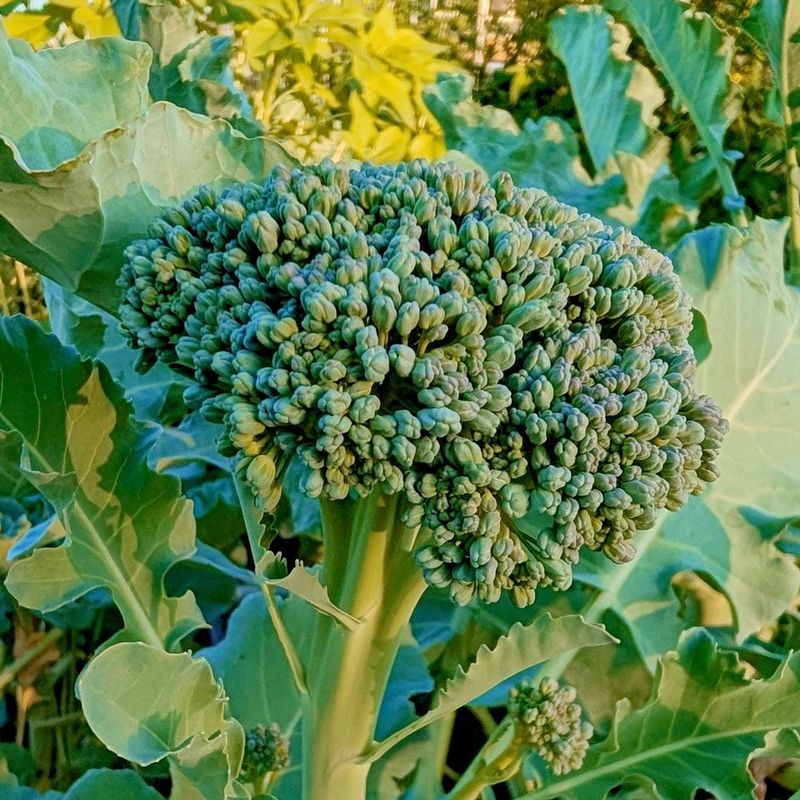
Plenty of cool-season vegetables earn a spot in a North Carolina fall garden, including cabbage, kale, collards, cauliflower, and lettuce. Broccoli stands out for one particular goal: a gardener who wants a central head followed by additional pickings from the same plant will find broccoli hard to beat.
That repeated-harvest pattern is what makes it the editorial focus here, not a claim that it is the only sensible seed to sow.
Broccoli is a cool-season crop that NC State identifies as well-suited to fall production in North Carolina. NC State Extension’s vegetable gardening handbook lists broccoli among the vegetables that perform well in a fall garden, and the same guidance notes that fall plantings often escape the worst pest and disease pressure of summer.
The plant is not heat-loving, so gardeners establish it in late-summer warmth with the expectation that it will mature as temperatures cool into fall.
Two broad categories of broccoli exist, and they behave differently after the first cut. Standard heading types focus most of their energy on producing one larger central crown.
They can generate side shoots after harvest, but the follow-up pickings tend to be modest.
Sprouting broccoli is bred differently. University of Minnesota Extension’s sprouting broccoli guide explains that sprouting types generally produce smaller initial crowns and then deliver more numerous repeated shoots over a longer picking window.
If the side-shoot harvest matters as much to you as the central head, a sprouting cultivar is worth seeking out.
Neither type guarantees a continuous or massive output. Head size and shoot production depend on timing, cultivar, spacing, moisture, nutrition, and weather.
Broccoli earns its place in this article because it fits the specific central-head-plus-side-shoot goal better than most other fall options, not because it outperforms every crop in every garden.
Check your region before you start seed
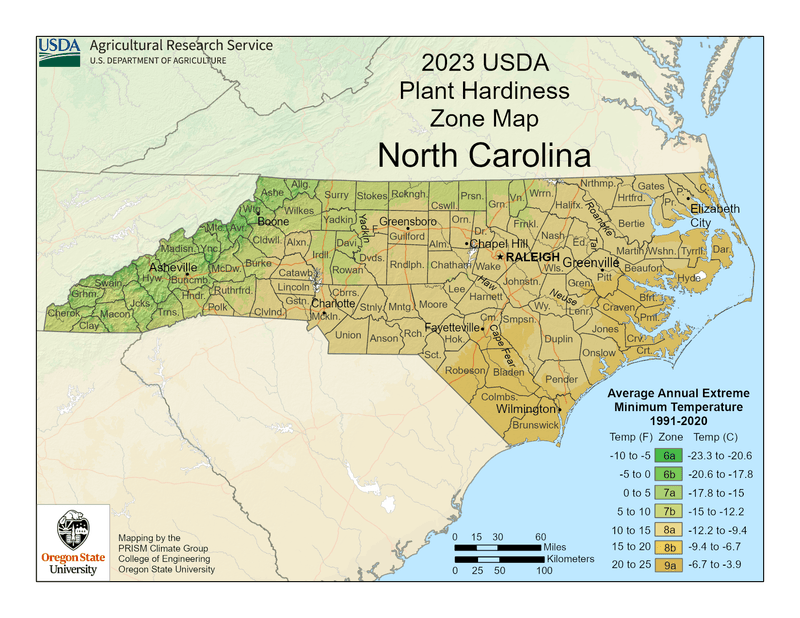
Where you live in North Carolina matters more than the calendar date when you are deciding whether to start broccoli indoors right now. The state stretches from sea-level barrier islands to mountain peaks above 6,000 feet, and those differences translate into meaningfully different fall planting windows.
NC State’s broccoli production guide gives a fall transplant window of approximately August 1 through September 15 for eastern North Carolina. That range is the most clearly supported figure in the published extension literature for the state, and it is the benchmark this article uses.
Gardeners in the coastal plain and eastern Piedmont should treat that window as their primary reference and count backward from September 15 when deciding whether indoor sowing still makes sense.
The broader NC State vegetable gardening handbook notes that August is the core month for establishing fall gardens across much of the state, but also acknowledges that dates shift: earlier in the mountains, later toward the coast. NC State’s community food gardening handbook reinforces that local conditions drive the schedule rather than a single statewide rule.
The practical takeaway is that no single date applies from Manteo to Murphy, and assuming otherwise is one of the more common fall-garden mistakes.
The mountain situation deserves special attention. NC State’s commercial broccoli production guidance states outright that fall broccoli planting is not recommended in western North Carolina.
The western North Carolina planting calendar for annual vegetables does show a limited transplant window, but the two sources do not fully agree, and that tension has not been resolved in a way that makes a confident fall-broccoli recommendation for mountain gardeners. If you garden in the mountains, treat fall broccoli as a conditional experiment at best, and consult your local Cooperative Extension office before committing seed-starting space and time to it.
For everyone else, the most reliable next step is to pull up the planting calendar that applies to your county, find the broccoli transplanting cutoff, and then do the arithmetic described in the next section before you fill a single cell tray.
Count backward from transplanting
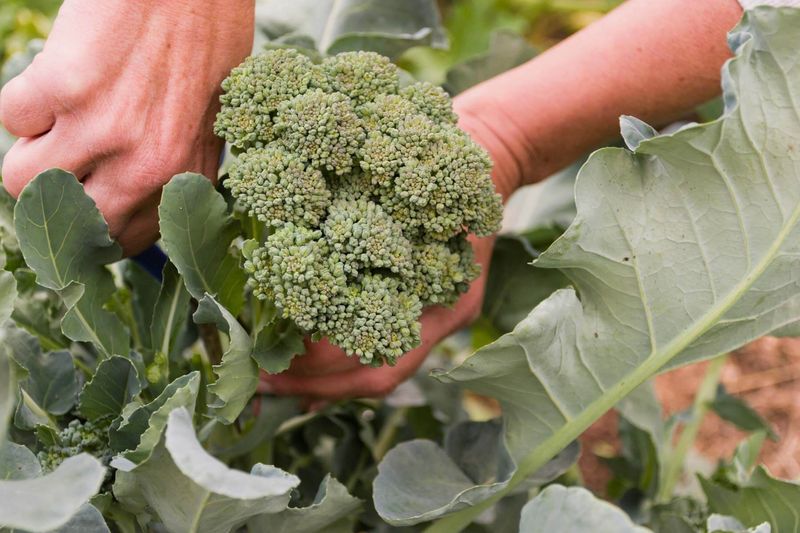
Before you fill a seed tray, work through the numbers. NC State’s broccoli production guidance states that transplants are generally ready for the garden four to five weeks after seeding indoors.
That period is non-negotiable: the seedling needs time to develop a strong root system and enough leaf area to handle the stress of transplanting into a hot late-summer garden.
Penn State Extension’s fall vegetable guide makes a point that catches many gardeners off guard: days to maturity on a seed packet generally refers to the time after transplanting, not the date the seed goes into the tray. So if your chosen cultivar says 60 days to maturity, you need to add four to five weeks of indoor seedling time on top of that 60 days when you calculate whether your fall window is long enough.
Here is how the math works in practice. Take your local transplanting cutoff, say September 15 for eastern North Carolina, and count backward four to five weeks.
That puts your latest indoor sowing date around mid-to-late August. A gardener starting seed on August 30 would be pushing transplants into the garden around early October, after the recommended eastern window has closed.
That does not make fall broccoli impossible, but it does mean the crop may not reach full maturity before cold nights arrive and head quality suffers.
University of Georgia Extension’s fall vegetable gardening guide recommends starting broccoli indoors five to six weeks before the planned outdoor planting date for Southern gardens, which aligns with the NC State figure and reinforces the importance of working backward rather than forward from today’s date.
If your arithmetic shows you have already missed the indoor-sowing window, do not despair. A transplant purchased from a local garden center, if one is available and appropriately sized, can let you skip the indoor phase.
Check your local calendar for the next viable broccoli window before buying anything, and keep expectations realistic if you are planting close to the cutoff.
Choose an early cultivar for the available runway
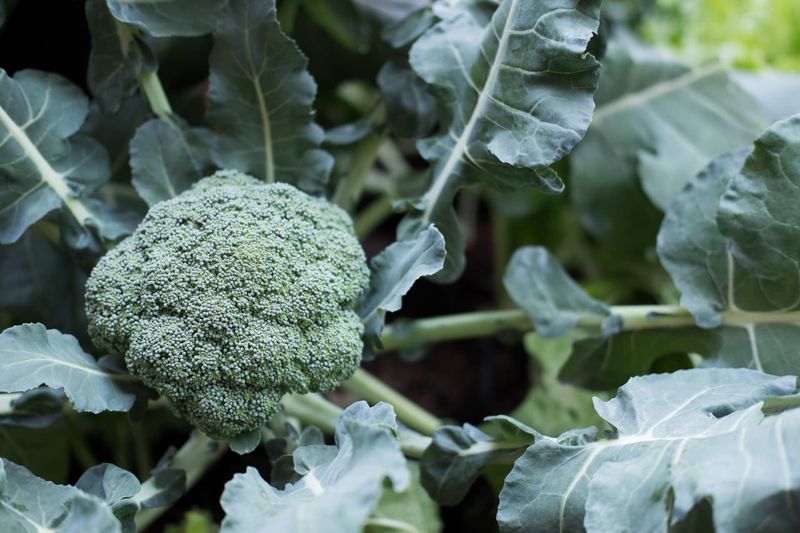
Cultivar choice can make or break a fall broccoli planting when the available growing window is tight. NC State emphasizes this point directly: NC State’s broccoli cultivar selection guide for North Carolina notes that choosing the right variety is especially important in the state because fall windows are relatively narrow and late-summer heat can deform or prematurely open heads if the plant is not well-matched to local conditions.
For a late planting, look for cultivars with days-to-maturity figures in the 55-to-70-day range after transplanting. Shorter seasons give the plant a better chance of producing a usable central head before cold weather tightens its grip.
Read the seed packet carefully and remember that the days-to-maturity clock starts after transplanting, not after sowing indoors.
The choice between standard heading broccoli and sprouting broccoli also matters here. Standard types such as many commercial hybrids put most of their energy into one larger central crown.
If your primary goal is a single impressive head for the table, a standard type may suit you. If you want the plant to keep producing after that first harvest, a sprouting type is worth considering.
Minnesota Extension’s sprouting broccoli overview confirms that sprouting types are bred for repeated shoot production rather than one large crown, so they fit the repeated-harvest goal described in this article.
University of Georgia Extension’s home garden broccoli guide recommends selecting cultivars suited to fall planting and checking local performance records when possible. Your local Cooperative Extension office or a reputable regional seed supplier can often point you toward varieties with a track record in your part of North Carolina, which is more reliable than choosing based on catalog photos alone.
Raise sturdy seedlings and harden them gradually
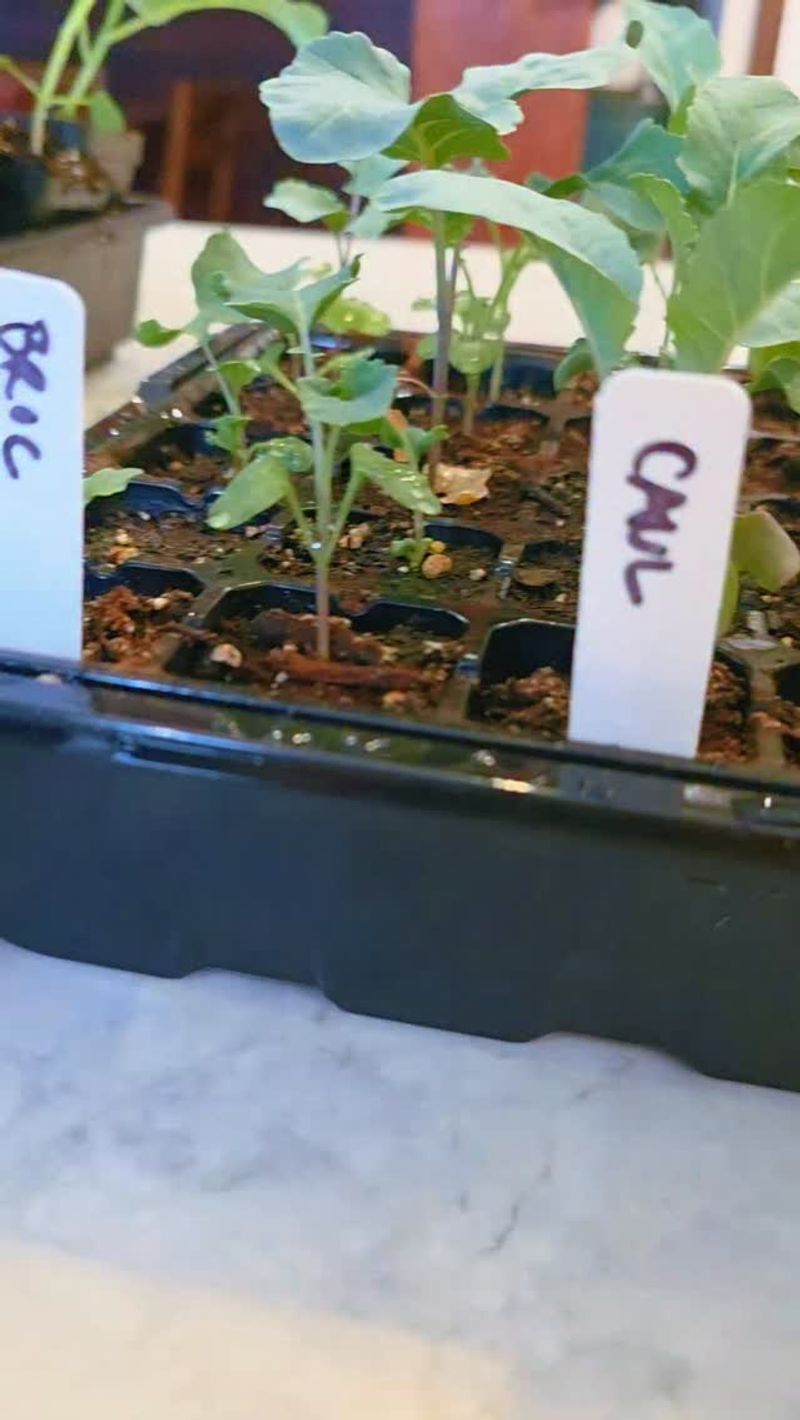
A strong transplant starts with the right growing medium. NC State Extension’s propagation handbook warns against using garden soil in seed trays: it is too heavy, drains poorly, and may carry pathogens that kill seedlings before they have a chance to establish.
Use a sterile, lightweight seed-starting mix instead, and fill clean cell trays or small pots that allow adequate drainage.
Light is the other variable that separates compact, useful transplants from tall, floppy ones. Broccoli seedlings need strong, consistent light from the moment they germinate.
A sunny south-facing window can work, but a supplemental grow light positioned a few inches above the tray produces more even, stocky growth. Weak light leads to etiolated stems that bend and struggle once they meet outdoor wind and sun.
Plan to keep seedlings indoors for roughly four to five weeks, then move them to the garden. Penn State Extension’s transplant guide recommends a gradual hardening process before any indoor-grown plant goes into the ground.
Start by setting the tray in a sheltered outdoor spot for an hour or two each day, then gradually increase exposure to sun, wind, and temperature swings over seven to ten days. Moving plants directly from a climate-controlled room to a hot August garden without that transition invites wilting, sunscald, and setback that can delay the whole schedule.
Resist the temptation to let seedlings grow larger than about four to six weeks old before transplanting. Utah State University’s brassica production problems guide notes that oversized or root-bound transplants are more prone to buttoning, a condition in which the plant forms a tiny, premature head instead of a full-sized crown.
An appropriately sized, vigorous transplant with a compact root ball and four to six healthy leaves will outperform a larger, stressed one almost every time.
Protect the crop from heat, crowding, and drought
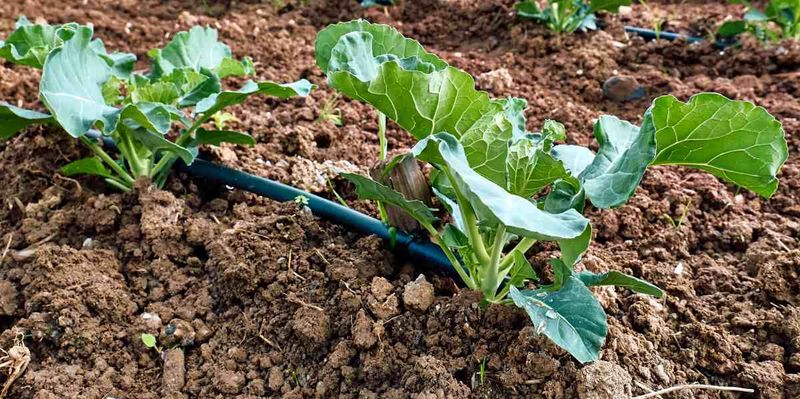
Getting the outdoor site right before transplanting gives broccoli its best shot at forming a quality central head. The crop needs full sun, generally six to eight hours of direct light per day.
Shady spots reduce head size and slow the growth rate at a time when every day of the fall countdown matters.
Soil preparation is equally important. UGA Extension’s home garden broccoli guide recommends fertile, well-drained soil with a pH in the range of approximately 6.0 to 6.8.
A soil test from your local Cooperative Extension office is the most reliable way to know where your garden stands before you add any amendments. Commercial broccoli production figures for fertilizer rates do not translate cleanly to a backyard bed, so base your fertilizer decisions on the soil test results and follow the product label directions rather than guessing at rates.
Spacing affects both head size and side-shoot production. NC State’s cool-season production garden guide recommends spacing broccoli plants approximately 18 inches apart for typical home garden situations.
Crowding plants to fit more into a bed tends to backfire: heads stay smaller, air circulation decreases, and side-shoot development after the first harvest is suppressed.
Consistent moisture is one of the factors most directly under a gardener’s control. Utah State University’s broccoli guide notes that drought stress and uneven watering during head formation contribute to loose, misshapen, or bitter heads and can trigger premature flowering.
Apply two to three inches of mulch around each plant after transplanting. Mulch conserves soil moisture, moderates soil temperature during the hot weeks of establishment, and reduces the frequency of watering needed to keep the root zone stable.
Heat itself is worth acknowledging plainly. NC State’s broccoli production guide explains that broccoli is planted into late-summer heat so it can mature as temperatures fall, not because it thrives in warmth.
Excess heat during the period when heads are forming is one of the primary reasons fall broccoli disappoints: the plant rushes to flower before a proper head develops, leaving the gardener with a loose, open cluster of yellow blooms instead of a tight green crown.
Harvest the crown to encourage more shoots
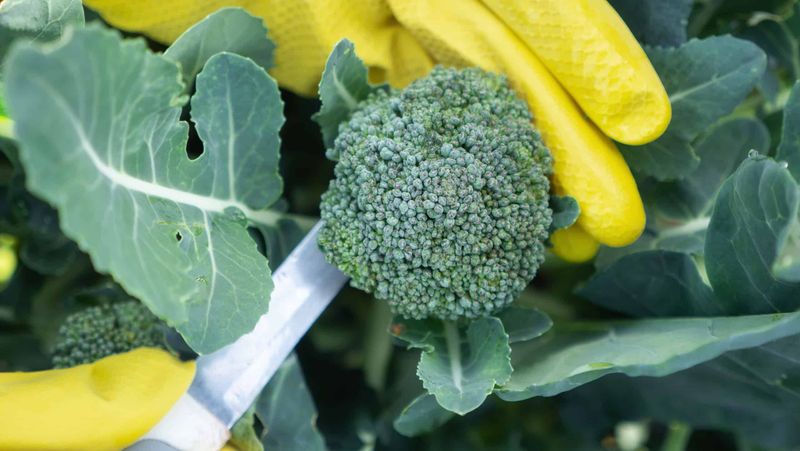
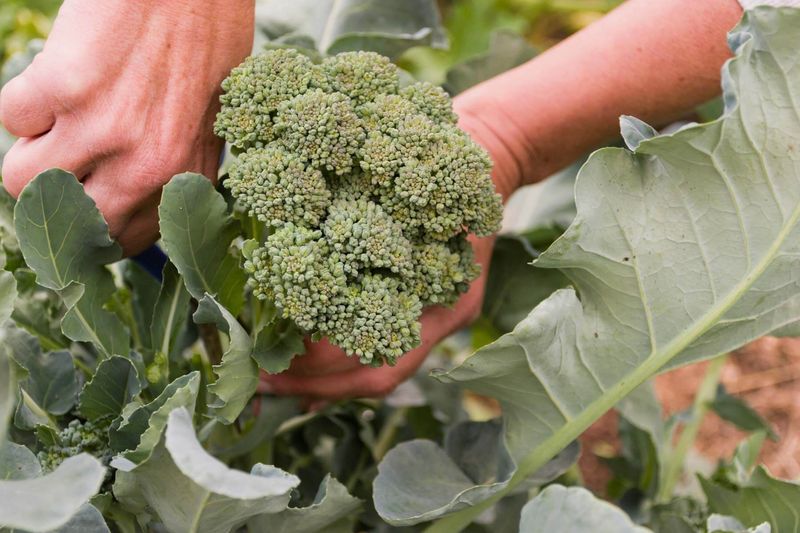
Timing the first cut correctly is what separates a one-and-done harvest from a plant that keeps producing. The central head should come off while the buds are still tightly closed and dark green.
Once the individual flower buds begin to separate, loosen, or show yellow, the head is past its prime for eating and the plant’s energy has already shifted toward flowering.
UGA Extension’s broccoli guide advises cutting the central head with a sharp knife or garden shears, leaving several inches of stem on the plant. That remaining stem carries the lateral buds that develop into side shoots.
Prompt harvesting of the central head signals the plant to redirect energy into those side branches, which is the mechanism behind the repeated-harvest pattern that makes broccoli useful well beyond its first picking.
NC State’s vegetable gardening handbook confirms that cutting the main head encourages secondary heads on many broccoli varieties. The side shoots that follow are smaller than the central head, typically two to four inches across depending on cultivar and plant health, but they are equally good to eat and can extend the harvest by several weeks into fall.
How much follows the first cut depends on cultivar, weather, plant health, and how consistently the shoots are harvested. Minnesota Extension’s sprouting broccoli resource notes that sprouting types are bred specifically for repeated shoot production and will generally outperform standard heading types in this regard.
Standard types can still produce useful side shoots, but the quantity and duration tend to be more limited. Harvest every shoot promptly as it reaches a usable size: leaving mature shoots on the plant encourages flowering, which slows or stops further production.
Make the timing decision before you sow
The single most useful thing you can do before opening a seed packet is check your local planting calendar and do the arithmetic. NC State’s broccoli production guide puts the eastern North Carolina fall transplant window at roughly August 1 through September 15.
If you are still within that range, choose an early cultivar, count backward four to five weeks from your cutoff date, and sow if the numbers work out.
If that window has already passed for your location, starting seed indoors now will likely produce transplants too late for a quality fall head. In that case, a locally available, appropriately sized transplant purchased from a garden center is a reasonable alternative if you can find one, but do not assume retailers will have suitable plants in stock.
NC State’s vegetable gardening handbook and your county’s Cooperative Extension office are the most reliable sources for knowing when the next viable broccoli window opens in your area.
Mountain gardeners face additional uncertainty. As noted earlier, NC State production guidance does not recommend fall broccoli planting in western North Carolina, and the western NC planting calendar shows only a narrow window.
Treat fall broccoli as a conditional experiment in the mountains and seek local guidance before committing.
Broccoli earns its place in this article because no other common fall crop matches its combination of a central head harvest followed by repeated side-shoot pickings. That pattern is real and worth pursuing, but it depends on getting the timing right, choosing a suitable cultivar, and giving the plant what it needs once it is in the ground.
A well-timed plant in good soil, watered consistently and harvested promptly, is the closest thing to a reliable fall reward broccoli can offer.