
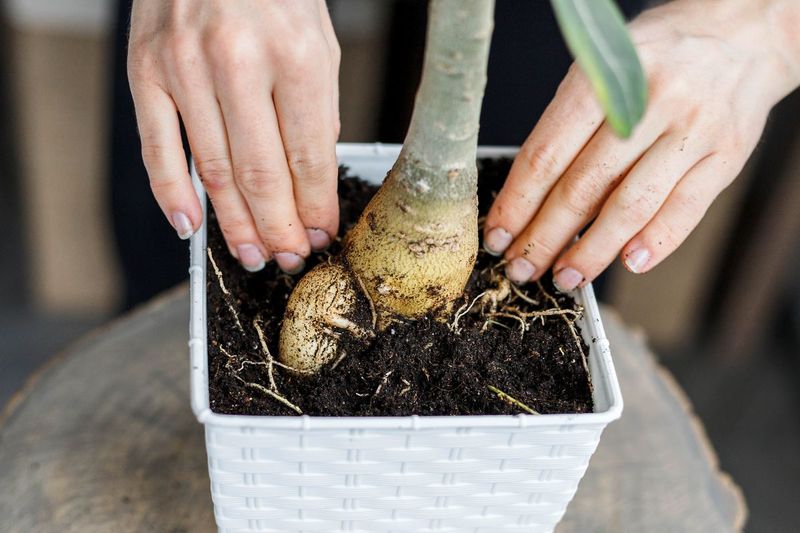
Growing desert rose from cuttings in Florida sounds straightforward until your fresh cutting turns soft and collapses before a single root appears. The problem trips up even experienced gardeners, partly because the usual advice points at Florida’s humid air as the culprit, when the real trouble is usually happening much closer to the cutting itself.
One practical step, letting a mature or semi-hardwood cut end dry and seal before it ever touches potting mix, can meaningfully reduce that risk. But it works best as part of a wider moisture-control approach, not as a guaranteed fix on its own.
Why Florida humidity is not the whole rot story
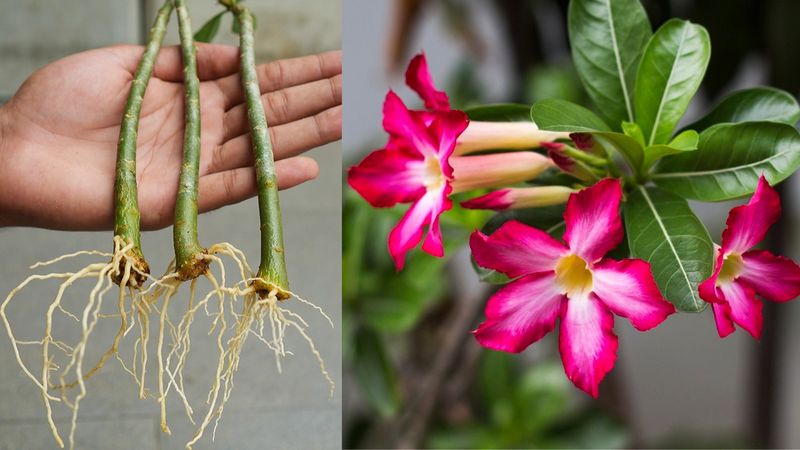
Blaming Florida’s air for rotting desert rose cuttings is tempting, but the connection is more complicated than it first appears. Ambient outdoor humidity is not the same thing as moisture pooling on a fresh wound or sitting in a waterlogged pot.
Those are three distinct conditions, and only the last two reliably create the wet, low-oxygen environment where rot-causing organisms thrive.
A 2012 University of Florida master’s thesis on Adenium rooting tested cuttings under mist, which is about as humid a rooting condition as you can create, and still achieved 90 to 100 percent rooting success across several treatments. That outcome tells you something important: high humidity around the leaves did not automatically cause failure.
What mattered more was whether the cut surface and the medium stayed excessively wet.
UF/IFAS guidance on Adenium cultivation consistently emphasizes drainage and avoiding waterlogged soil as primary concerns. Stagnant air around a cutting, saturated media with poor aeration, a wound left open and moist, contaminated tools, low temperatures, or tissue taken from a stressed plant can all contribute to failure.
Penn State Extension notes that excessive humidity can encourage disease, but the key word there is excessive, meaning conditions where moisture accumulates rather than simply conditions where Florida air feels sticky. A well-drained setup with good airflow around the pot can perform reliably even in a humid Florida summer.
The goal is to manage wetness at the wound and in the medium, not to somehow lower the humidity of the entire outdoors.
Match the preparation method to the cutting
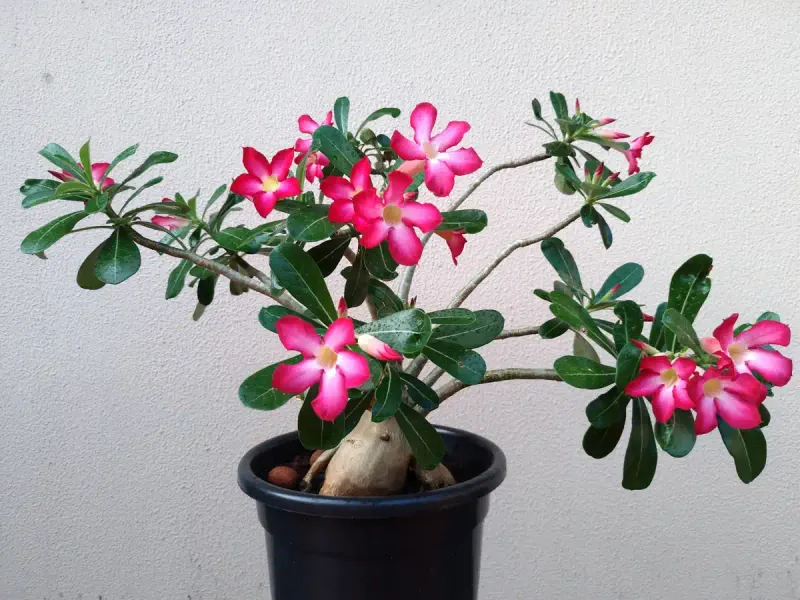
Not every desert rose cutting needs the same treatment before it goes into the medium, and applying one universal rule can actually hurt your results. The type of cutting you take determines how you should handle it from the moment it leaves the parent plant.
Mature or semi-hardwood cuttings, the kind taken from firm, older stem sections rather than the soft growing tip, are the ones that benefit most from being allowed to dry before planting. University of Arizona Cooperative Extension guidance on Adenium draws a clear distinction: fresh leafy or soft-tissue cuttings should be inserted into the rooting medium promptly rather than left to sit and dry.
Letting a soft, leafy cutting callus for too long can cause it to lose too much moisture before roots ever form.
Iowa State Extension’s succulent propagation guidance favors callusing for succulents generally, but Adenium’s range of cutting types makes it worth slowing down and identifying what you actually have in your hand before deciding how to proceed. A firm, woody section with little or no leaf growth at the cut end is a good candidate for drying.
A tip cutting still carrying a cluster of leaves is a different situation entirely.
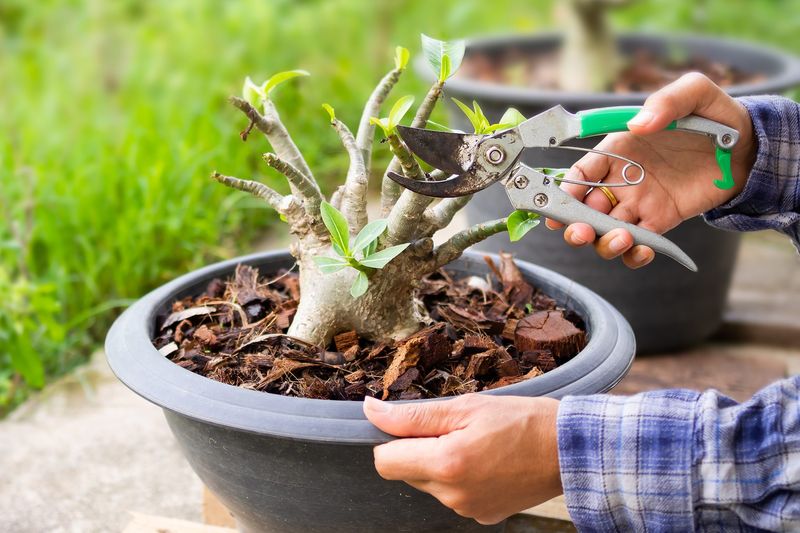
Regardless of cutting type, preparation basics stay the same. Use a clean, sharp blade, sanitized between cuts, to avoid dragging pathogens from one surface to another.
Remove any leaves or foliage that would end up buried below the medium surface, since buried organic matter invites decay. Handle the cutting carefully and work quickly once the cut is made.
One safety note that many gardening guides skip: Adenium produces a toxic latex sap that can irritate skin and is dangerous if ingested. The ASPCA lists desert rose as toxic to dogs, cats, and horses, and NC State Extension confirms the plant’s toxicity to humans as well.
Wear gloves every time you cut or handle the plant, avoid touching your face, wash any sap off your skin promptly, and keep cuttings well out of reach of children and pets.
Let a mature or semi-hardwood cut surface dry before planting
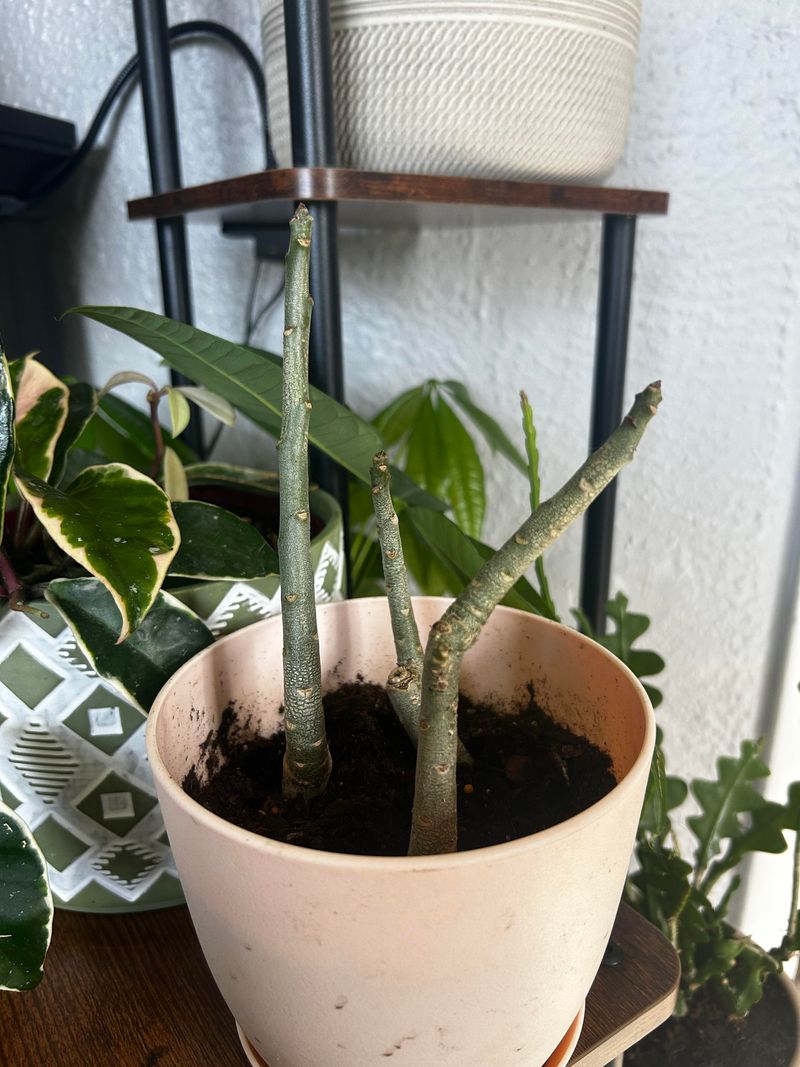
For a mature or semi-hardwood cutting, the single most useful moisture-control move you can make happens before the cutting ever touches the potting mix. After you make a clean cut, set the cutting aside in a warm, dry spot out of direct harsh sun and let the fresh cut end dry until a dry, slightly toughened layer forms over the wound.
Iowa State Extension identifies callusing as a rot-risk-reduction step for succulent cuttings, and the reasoning is practical: an open, moist wound placed directly into even a moderately damp medium gives decay organisms an easy entry point. A dried, sealed surface is far less vulnerable to that kind of moisture contact.
How long the drying takes varies with the cutting’s thickness, the temperature, and airflow in your space. Thicker stems generally take longer than slender ones.
Rather than counting days, check the cut end: it should look and feel dry, not shiny or damp. Arizona Extension’s Adenium guidance supports allowing the cut to dry before insertion into the rooting medium, consistent with how other drought-adapted succulents are handled.
Callusing is a risk-reduction step, not a guarantee. A callused cutting placed into saturated, poorly drained media, kept at low temperatures, or taken from diseased plant material can still fail.
The drying step works as part of a system that includes clean tools, appropriate medium, and careful moisture management after planting. Think of it as closing one significant door to rot rather than locking every door at once.
Build a small, airy rooting setup
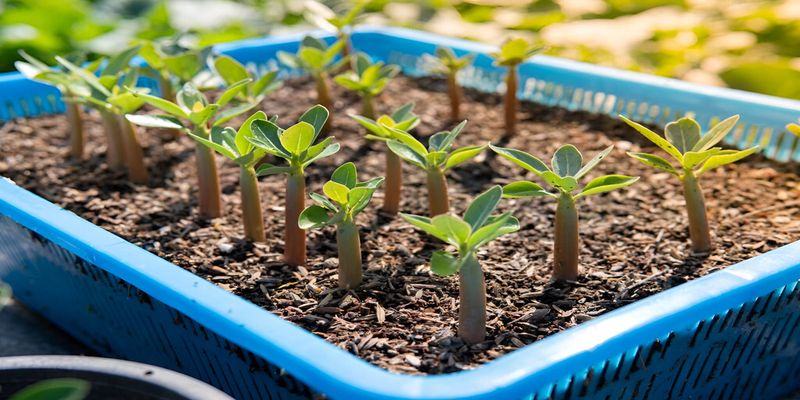
Once the cut surface has dried, the container and medium you choose will do as much work as any other part of the process. A large pot filled with standard potting soil surrounding a single unrooted cutting is one of the most common ways Florida gardeners accidentally set themselves up for failure.
Illinois Extension recommends small individual containers for succulent cuttings specifically to prevent the medium from staying too wet around the base of the stem. A small pot with drainage holes limits the total volume of moist medium in contact with an unrooted cutting, which means less standing moisture and faster drying between waterings.
The medium itself matters just as much as the container size. UF/IFAS guidance on Adenium stresses drainage and warns against waterlogged conditions, and Arizona Extension specifies that Adenium media should drain very well.
Perlite, pumice, coarse sand, or a commercial succulent and cactus mix with good particle size all work as rooting media. Straight peat or dense potting mixes that compact and hold water are poor choices for this stage.
Penn State Extension states that propagation media should be moist rather than saturated, and that principle applies directly here. When you water the cutting in after planting, aim for evenly damp, not dripping.
Then let the top of the medium dry slightly before watering again. There is no universal schedule that fits every Florida home and every season, so checking the medium by touch rather than following a fixed calendar is the more reliable approach.
Make sure every container you use has at least one functioning drainage hole. Water that pools at the bottom of a sealed container will eventually wick back up into the medium and keep the stem base persistently wet, undoing the benefit of your fast-draining mix.
Use an enclosure to limit leaf water loss, not to soak the wound
Clear bags and humidity domes get a bad reputation in desert rose propagation circles, but the problem is rarely the enclosure itself. The problem is what happens inside it when moisture is not managed carefully.
Unrooted cuttings that still carry leaves lose water through those leaves even when no roots are present to replace it. An enclosure slows that water loss and can help a leafy cutting stay turgid long enough for roots to form.
Penn State Extension notes that humidity enclosures serve this exact purpose in houseplant propagation, reducing the stress on a cutting that cannot yet draw water from the soil.
The risk enters when condensation drips directly onto the stem base, when the medium becomes and stays saturated under the dome, or when stagnant air inside the enclosure creates the kind of wet, still conditions that favor rot. The fix is not to throw the dome away.
Arizona Extension permits enclosed terrarium-style rooting chambers for Adenium and does not treat them as automatic failure points.
If you notice heavy condensation pooling on the cutting or the medium surface staying visibly wet day after day, lift or tilt the dome briefly to allow some airflow and let excess moisture escape. When you do remove the enclosure eventually, do it gradually over several days rather than all at once, giving the cutting time to adjust to lower humidity without sudden moisture stress.
Warmth and light round out the enclosure setup. UF/IFAS lists 75 to 95 degrees Fahrenheit as Adenium’s preferred temperature range, so a warm spot with bright, indirect or filtered light is the right placement during rooting.
Avoid direct midday Florida sun beating through a clear dome, which can overheat the cutting rapidly. The goal inside the enclosure is stable warmth and reduced leaf water loss, not a soaked stem base.
Interpret new growth and rooting aids cautiously
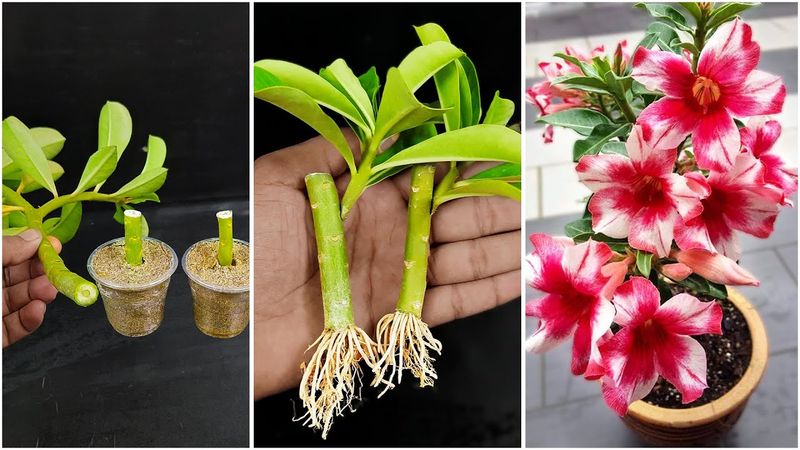
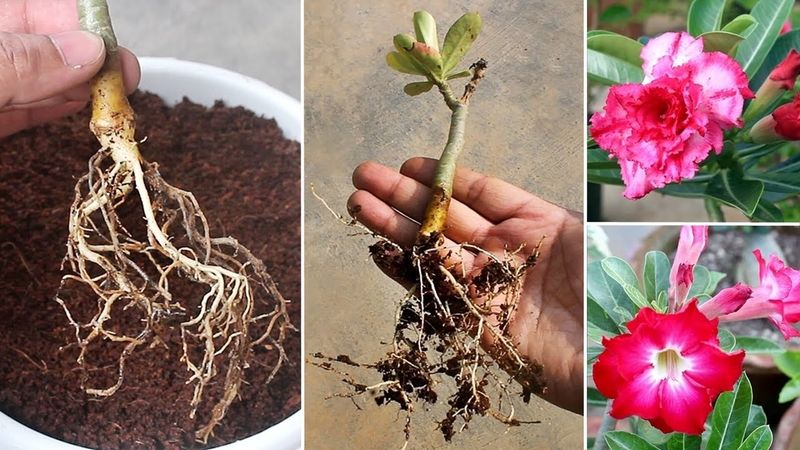
Seeing a fresh set of leaves push out from your cutting feels like a win, and it might be, but new growth alone does not confirm that a reliable root system is in place. Desert rose cuttings store energy in their stems, and that stored energy can fuel early leaf or bud production before a single root has anchored the cutting in the medium.
Switching to a normal watering schedule the moment you see new leaves is one of the more common ways a seemingly successful cutting fails in the weeks that follow. A gentle tug test, where you apply very light upward pressure to the stem, can give you a rough sense of whether resistance has developed, but even that method has limits.
Root development should be confirmed cautiously, and any increase in watering frequency should happen gradually rather than all at once.
Rooting hormone is another topic worth keeping in perspective. The University of Florida Adenium rooting thesis found that untreated control cuttings rooted at 90 to 100 percent in several treatments, which means hormone is not a requirement for success.
Certain IBA hormone concentrations did improve root number or perform better in specific trial conditions, so it remains a reasonable optional tool. What it cannot do is substitute for clean tools, proper drainage, or careful moisture management.
If you are propagating because you want a plant that looks just like the parent, cutting propagation will preserve the parent’s genetics faithfully. Arizona Extension notes, however, that plants grown from cuttings may not develop the same quickly swollen caudex, the thick base often associated with seed-grown desert rose specimens.
The cutting will grow into a healthy flowering plant, but the dramatic trunk shape may develop more slowly or differently than it would from seed.
Use callusing as one moisture-control step, not a guarantee
Pulling everything together, the sequence for a mature or semi-hardwood desert rose cutting looks like this: prepare the cutting safely with gloves and a clean blade, remove foliage that would sit below the medium, let the cut surface dry and callus, then plant into a small container with drainage holes and a fast-draining, airy medium. Keep the medium moist but never saturated, provide warmth and bright indirect light, and protect the plant from any risk of freezing temperatures.
Iowa State Extension supports callusing as a rot-risk-reduction step for succulent cuttings, and UF/IFAS confirms that Adenium needs excellent drainage and protection from cold. In Florida, year-round outdoor placement suits USDA Zones 10B through 12, while gardeners in cooler parts of the state should bring cuttings indoors or provide protection when temperatures approach freezing.
Callusing cannot overcome every obstacle. A cutting taken from diseased or stressed tissue, placed into contaminated medium, kept too cold, or surrounded by saturated soil can still rot regardless of how well the cut end dried.
Arizona Extension also reminds growers that fresh leafy or soft-tissue cuttings may need prompt insertion rather than a drying period, so apply the callusing step only where it fits the cutting type.
The most reliable thing Florida gardeners can do is shift attention away from the humidity in the air and toward the wetness at the wound and in the pot. Control those two things well, and your cutting has a genuinely better chance of rooting rather than rotting.