
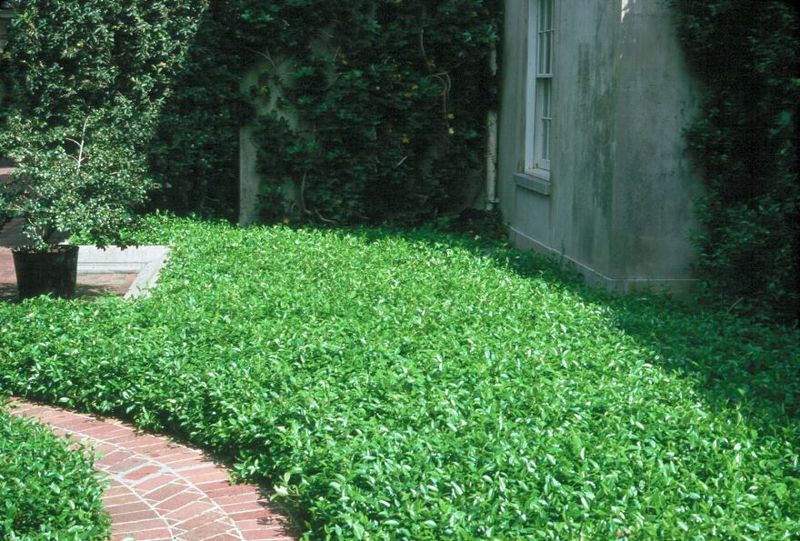
Pulling weeds from a Texas flower bed in July is nobody’s idea of a good time, and most homeowners are ready for a better solution. Asiatic jasmine has earned a strong reputation in North-Central Texas as a dense, evergreen ground cover that crowds out new weed growth once it fills in.
Getting there takes some real preparation and patience, but the payoff is a low-growing green carpet that handles much of the weed-blocking work for you. This article walks through how the plant works, where it performs best, and what it honestly cannot do.
Why Asiatic jasmine fits this Texas ground-cover job
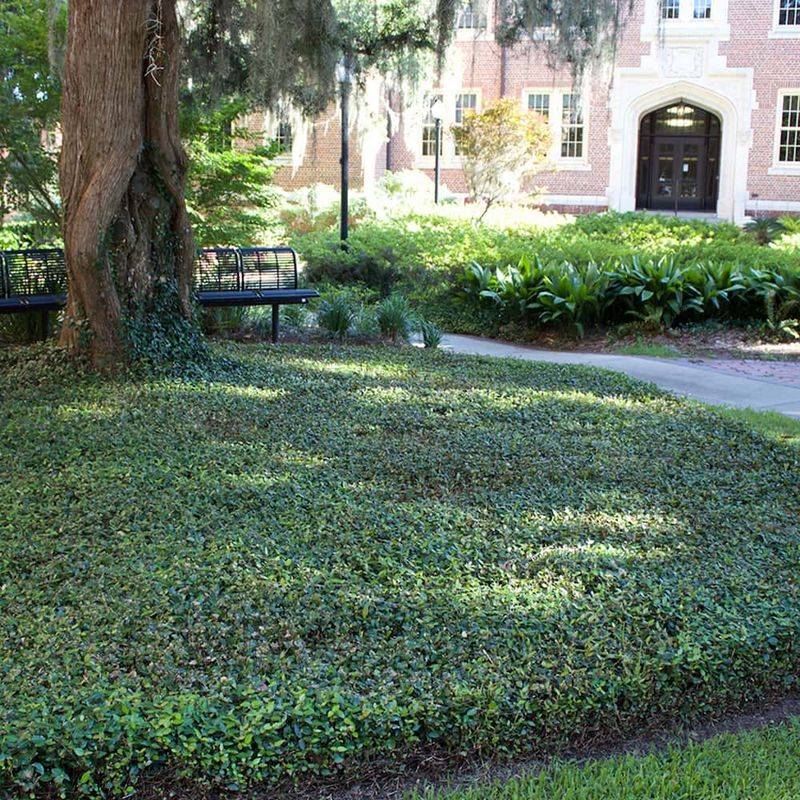
Asiatic jasmine, botanically known as Trachelospermum asiaticum, goes by several names at Texas nurseries: dwarf jasmine, Japanese star jasmine, and small-leaf Confederate jasmine are all common tags on the same plant. It is a nonnative, evergreen, vining ground cover that spreads steadily across the soil surface rather than climbing.
Florida’s UF/IFAS invasive species assessment confirms its nonnative, ornamental status, and Texas sources place it firmly in the adapted-but-not-native category.
For North-Central Texas in particular, this plant has become a go-to option for homeowners who want something other than bare mulch between shrubs. Texas SmartScape describes it as a lawn substitute and erosion-control plant that grows aggressively enough to make companion planting difficult once established.
That same vigor is precisely what makes it useful for weed suppression: a planting that has filled in leaves very little open soil for weeds to colonize.
Texas A&M’s Earth-Kind plant-selection guidance lists Asiatic jasmine as an evergreen ground cover suited to multiple Texas regions, which is encouraging, but the strongest real-world performance data comes from North-Central and East Texas sites. Calling it the single best ground cover for all of Texas would overstate the case; conditions in the Panhandle, arid West Texas, and the Rio Grande Valley differ significantly from the DFW corridor.
The visual payoff that keeps gardeners sharing photos of this plant is real: a mature planting forms a continuous, dark-green carpet that looks tidy year-round under normal conditions. Reaching that point, though, depends on proper site selection, thorough bed preparation, and consistent care during the first growing seasons.
The green carpet is a realistic outcome, not an automatic one.
How a filled-in mat reduces weed pressure
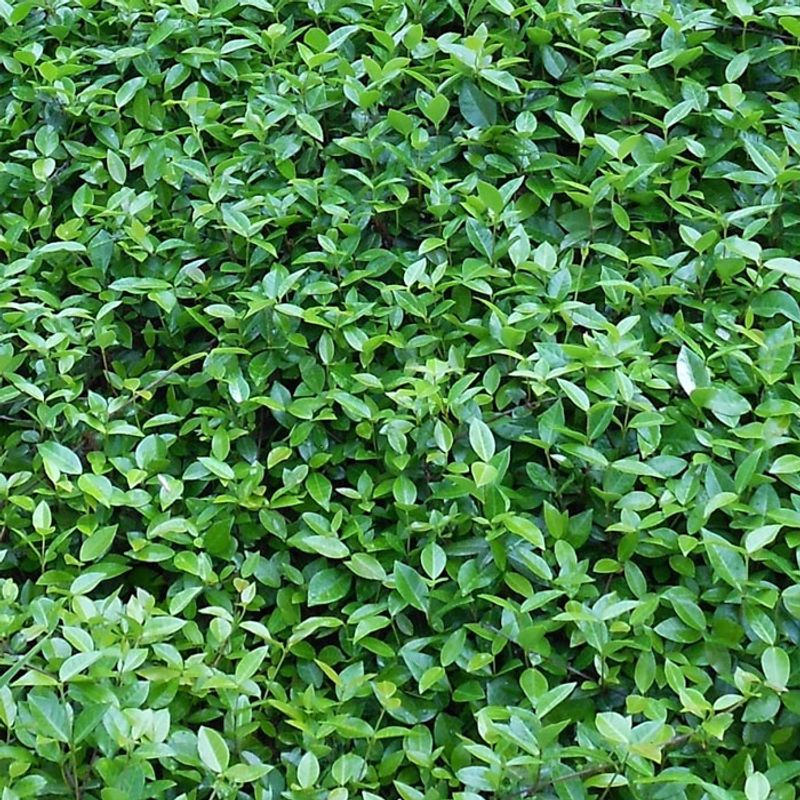
Ground covers suppress weeds through straightforward competition, not through any chemical toxicity. A mature Asiatic jasmine planting occupies the soil surface so thoroughly that weed seeds landing on top of it struggle to reach mineral soil, and seedlings that do germinate get very little light.
Research on herbaceous perennials as weed-suppressive ground covers identifies reduced light transmission at the soil surface and dense canopy closure as the primary mechanisms behind this effect. Asiatic jasmine, with its overlapping small leaves and horizontal spread, delivers both.
The strongest Texas-specific evidence comes from a highway landscape study. A Texas Department of Transportation landscape report described an established Asiatic-jasmine planting as very effective at preventing most weed invasion, a notably strong finding for a roadside setting.
That same report noted, however, that bermudagrass still appeared in places within the planting. That detail matters: most weed invasion is not all weed invasion, and bermudagrass is precisely the kind of persistent, spreading grass that finds a way through even dense plantings.
The distinction between suppressing new weed establishment and defeating entrenched perennial weeds is critical. Asiatic jasmine works best as a barrier against seeds and small seedlings that would otherwise colonize bare soil.
Weeds that arrive with rhizomes, stolons, tubers, or deep root systems already in place are a different problem entirely. Mississippi State Extension’s weed-management guidance for ornamental beds is direct on this point: ground covers compete with weeds for resources, but established perennial weeds must be managed before or alongside a new planting, not after.
A filled-in mat, then, is genuinely useful for keeping a clean bed clean. Its power lies in holding territory, not in reclaiming ground that aggressive weeds already control.
Prepare the bed before planting
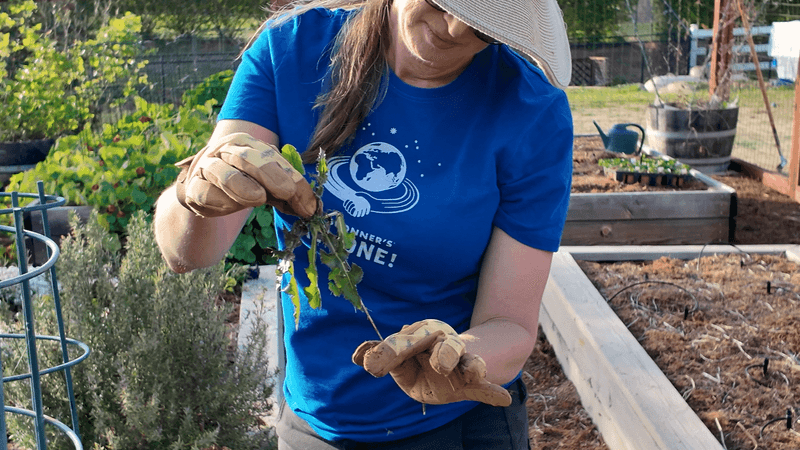
Bed preparation is the step that determines whether Asiatic jasmine becomes a weed-blocking carpet or just another plant struggling alongside the weeds. Before a single plug goes in the ground, every perennial weed in the planting area needs to come out.
That means digging out bermudagrass runners, pulling nutsedge tubers, and tracing any visible roots of deep-rooted broadleaf weeds. Young ground covers simply cannot outcompete established perennial weeds that already have extensive root systems in place.
Clemson Extension’s ground-cover factsheet makes this plain: proper site preparation is foundational to ground-cover success, and the bed should be cleared and improved before planting begins. Soil drainage also deserves attention at this stage, because Asiatic jasmine will occupy the same spot for many years.
If the area holds standing water after rain, amending with organic matter or adjusting the grade before planting will prevent long-term problems that are much harder to fix once the bed is established.
Soil loosening and light organic amendment can improve rooting, especially in the compacted clay soils common across much of North-Central Texas. The goal is not a perfect garden-show bed but a workable root zone that lets new plants establish quickly, since faster establishment means faster canopy closure and faster weed suppression.
Extension guidance on weed management in ornamental beds reinforces that cultural preparation is the first line of defense, not a backup to herbicides.
For readers who prefer to avoid herbicides entirely, thorough hand removal and soil tillage before planting is the path forward. UF/IFAS ground-cover guidance notes that physical removal of existing weeds, combined with a well-chosen ground cover, is a viable long-term strategy.
The key is doing the physical work before planting, not hoping the ground cover will do it for you.
Let the planting close its gaps
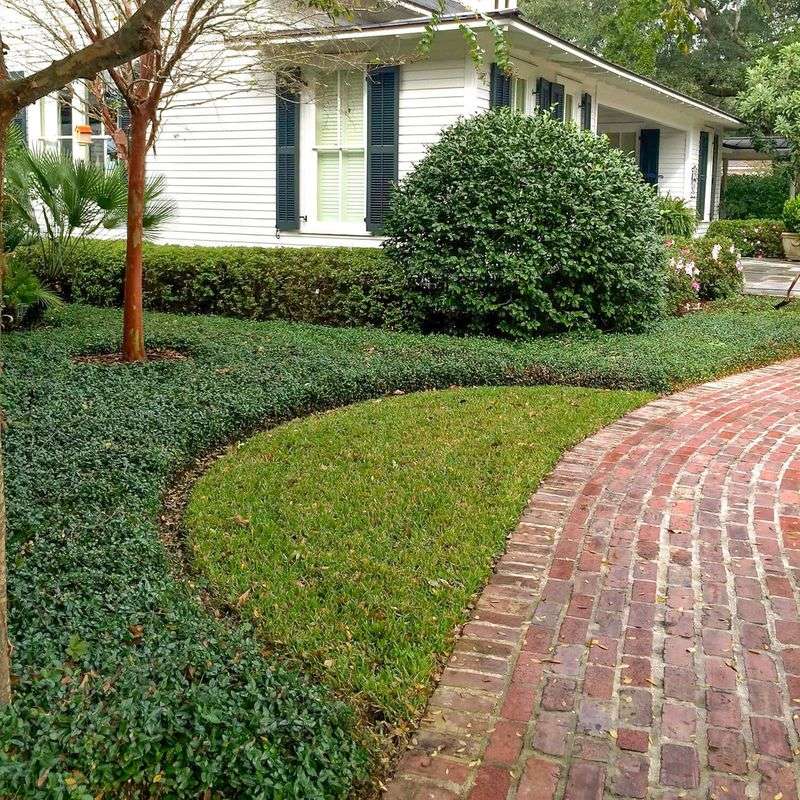
Asiatic jasmine has a reputation for slow starts. Texas Tech’s plant resources guide describes it as slow to establish before spreading steadily once it gets going, which is a fair characterization for most sites.
During that early phase, the bare soil between plants is exactly the kind of open territory that weed seeds exploit. Consistent watering and regular hand-weeding between young plants are not optional extras; they are the work that protects the investment until the canopy closes.
Clemson Extension recommends planning for near-complete coverage by the end of the third growing season as a general benchmark for ground-cover beds. That target applies to ground covers broadly, not specifically to Asiatic jasmine on every Texas site.
Cultivar choice, plant spacing, soil quality, irrigation availability, shade levels, drought pressure, and regional climate can all push the timeline earlier or later. A well-watered planting in partial shade on amended soil may close noticeably faster than the same cultivar planted in compacted, dry ground under full summer sun.
Spacing decisions directly affect both cost and coverage speed. Planting closer together speeds canopy closure but requires more plants upfront.
Rather than following a single universal spacing number, the best approach is to check the mature spread listed for the specific cultivar you are buying and use that as your guide. Nursery staff familiar with local performance can also give you a realistic sense of how fast a particular selection spreads in your area’s conditions.
Mulch is a practical ally during establishment. Mississippi State Extension recommends at least two inches of mulch, applied over permeable weed fabric where appropriate, to reduce early weed pressure while plants spread.
A layer of hardwood or pine bark mulch between young plants keeps the soil surface less hospitable to weed seeds without smothering the spreading stems. Mississippi State’s general ground-cover spacing guidance confirms that closer spacing produces faster coverage but at higher initial cost, so the right balance depends on your budget and how quickly you want results.
Match Asiatic jasmine to the Texas site
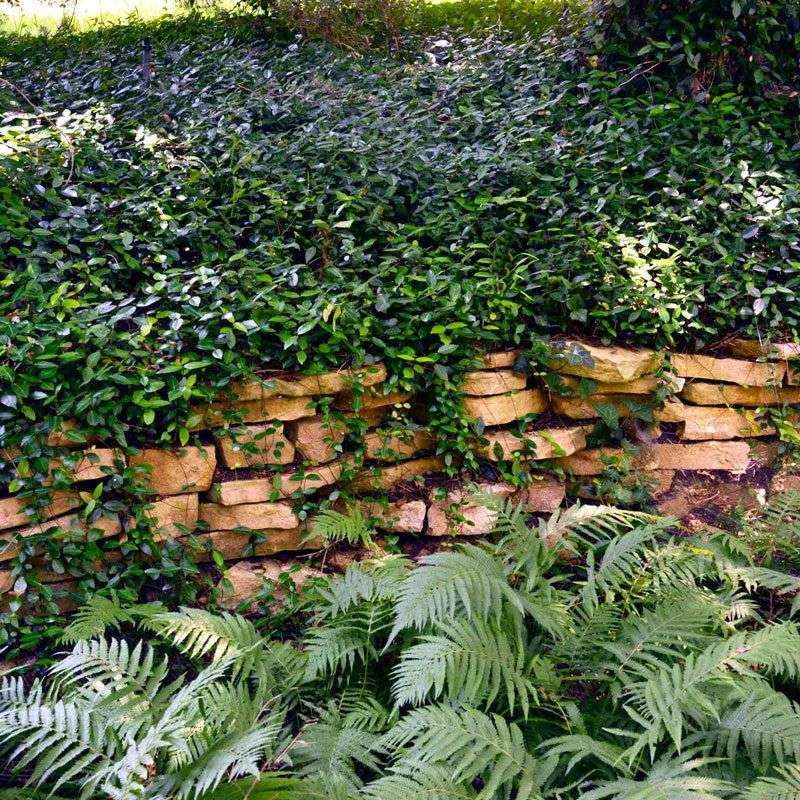
Asiatic jasmine handles full sun to partial shade and tolerates the heat that wilts many other ground covers during a Texas August. Its soil adaptability is genuine: it performs reasonably well in a range of textures and pH levels, which matters in a state where soils shift from black clay in the DFW area to sandy loam in East Texas.
Texas Tech’s landscape information sheet notes high heat tolerance and adaptable soil requirements, along with a low water need, but also flags low cold tolerance as a meaningful limitation.
Low water need is not the same as zero water need. Texas SmartScape specifically states that Asiatic jasmine requires supplemental water during droughts, and during establishment, regular irrigation is essential regardless of rainfall.
In regions of Texas where summer drought is severe and municipal water restrictions are common, gardeners need a realistic irrigation plan before committing to this plant. The same source notes that extended freezes can brown the foliage, and while the plant may recover, year-round green performance is not guaranteed after a hard winter.
Texas is a climatically diverse state, and a plant that thrives in the Dallas-Fort Worth corridor faces different conditions in the Panhandle, the Hill Country, the Gulf Coast, or arid West Texas. Texas A&M’s Earth-Kind plant selector divides the state into distinct planting regions for exactly this reason.
Before planting, check which region your property falls in and confirm that Asiatic jasmine is well-suited to local winter minimums, summer drought intensity, and typical soil conditions. In desert regions, some afternoon shade may be beneficial rather than optional.
Partial shade under large trees is often where this plant looks its best in Texas yards. The canopy moderates temperature, reduces evaporation, and creates the kind of dappled light where Asiatic jasmine spreads reliably without the stress of peak summer sun.
Matching the plant to a site where it can thrive, rather than forcing it into a difficult location, is what produces the dense carpet that homeowners keep photographing.
Contain the cover after it establishes
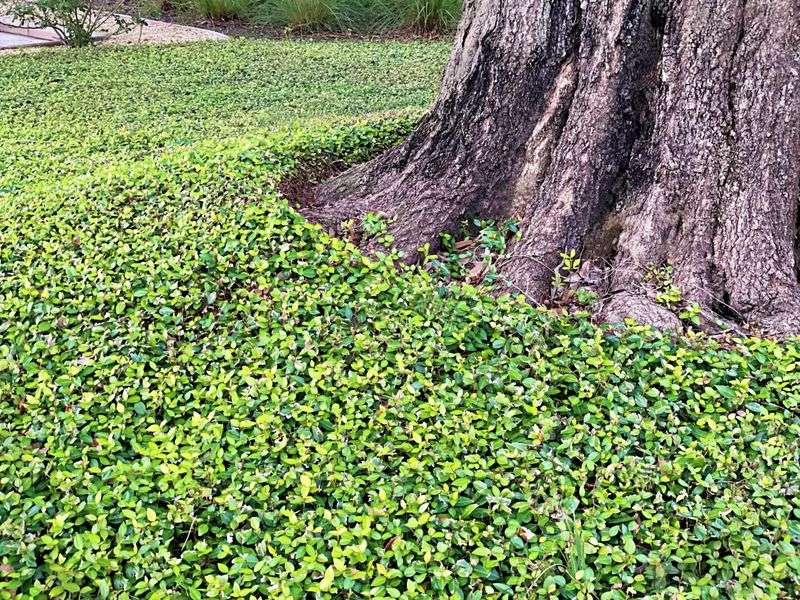
A dense Asiatic jasmine planting is doing exactly what you want it to do when it covers every inch of bed space, but that same vigor becomes a management challenge at the edges. Texas SmartScape warns that Asiatic jasmine can make it difficult to grow companion plants alongside it, and the reason is straightforward: the plant spreads aggressively and does not naturally stop at a boundary you have in mind.
Without periodic edging, it will move into lawn areas, across walkways, around tree trunks, and into adjacent beds where it is not welcome.
Mowing or trimming the planting once or twice a year is enough to keep it low and compact. A string trimmer or a rotary mower set to a height of about four inches can shear the top growth and encourage a denser, tidier form.
UF/IFAS ground-cover maintenance guidance supports periodic trimming as a standard practice for vigorous, spreading evergreen ground covers, and Asiatic jasmine responds well to it.
Edging along hard surfaces, lawn margins, and bed borders is a separate task from the annual trim. A manual half-moon edger or a power edger run along sidewalks and driveways keeps the planting where it belongs without damaging the stems inside the bed.
Pay particular attention to spots where the ground cover approaches tree trunks: vines that climb or wrap around bark can create problems for the tree over time, so keeping a clear buffer around trunk bases is worth the extra few minutes.
Clear physical boundaries, whether a steel edging strip, a brick mow strip, or a regularly maintained cut line, make long-term containment much easier. Think of the annual trim and the edge maintenance as the trade-off for not pulling weeds every weekend.
Once the planting is established and contained, that trade-off strongly favors the ground cover.
Know what the carpet cannot control
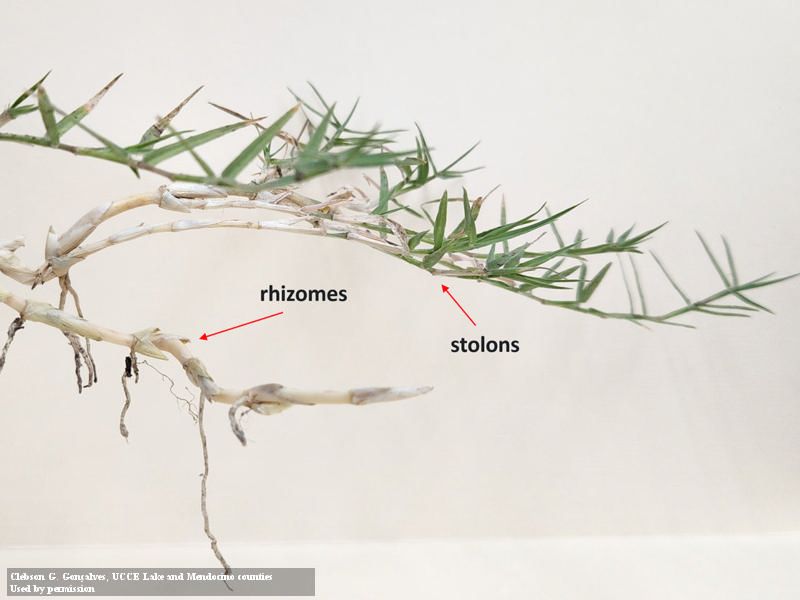
An established Asiatic jasmine mat handles a lot, but it is not a permanent solution to every weed problem in the bed. The Texas Department of Transportation landscape report that praised Asiatic jasmine’s weed-blocking performance also recorded bermudagrass appearing within the planting.
Bermudagrass spreads by above-ground stolons and underground rhizomes, and those structures can push through or under even a thick ground-cover mat. Nutsedge is similarly persistent, sending up shoots from underground tubers that are difficult to remove completely by hand.
Weeds with this kind of below-ground persistence require a different response than the annual weed-seed flush that the ground cover handles well. Hand removal is the safest option near ornamental plantings, though it is most effective when done consistently before tubers or rhizomes multiply.
Clemson Extension’s ground-cover guidance notes that weed management remains part of ground-cover maintenance, particularly in the years before full coverage is achieved.
Some gardeners consider targeted herbicide use for persistent weeds that hand removal cannot fully control. If you go that route, read the product label completely before applying anything near Asiatic jasmine.
EPA regulations require that pesticide labels carry legally binding directions and precautions, including information about which plants may be injured. Nonselective herbicides, including glyphosate-based products, can damage or kill ornamental ground covers if they contact the foliage or stems.
Always follow label directions for application rate, timing, and protective measures.
One product category to keep entirely off the table for homeowner use: paraquat. EPA states that paraquat products have no approved homeowner uses and may only be applied by trained, certified applicators.
Mississippi State Extension’s landscape weed-management publication covers both cultural and targeted chemical options in detail and is worth reading before making any treatment decision. The realistic expectation for a well-established Asiatic jasmine planting is a dramatic reduction in routine weed pressure, not a weed-free bed that never needs attention again.
Choose it for the conditions, not the headline
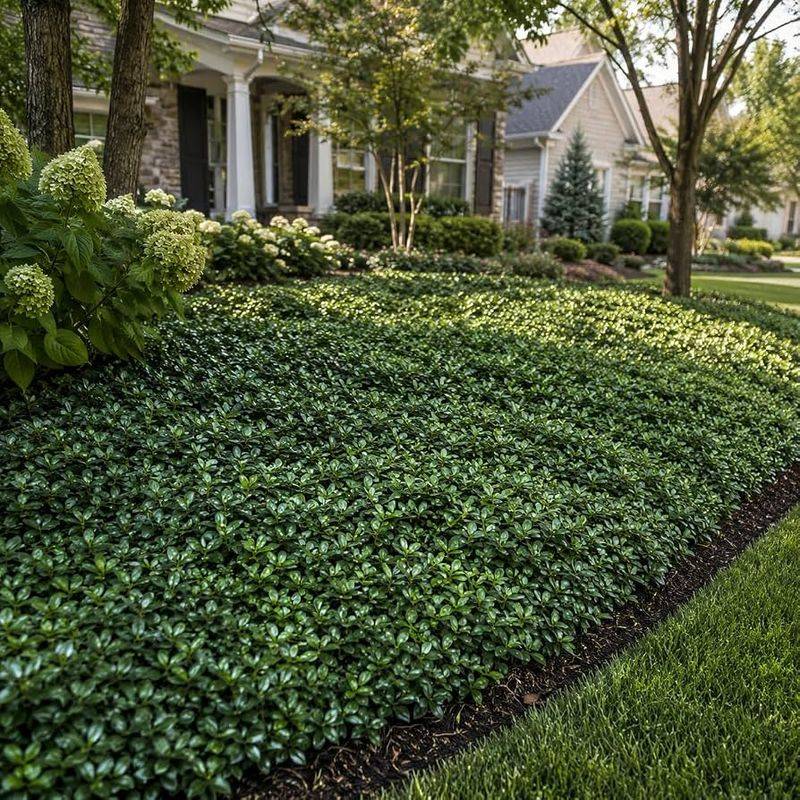
Asiatic jasmine earns its place in a Texas landscape when the site genuinely suits it: moderate to good rainfall or reliable irrigation, North-Central or East Texas regional conditions, and a gardener willing to prepare the bed thoroughly and manage the edges once the planting matures. Texas SmartScape’s profile and the Texas transportation landscape report together paint an honest picture: strong weed suppression after establishment, with some persistent weeds still requiring attention.
The payoff that makes this plant worth the effort is real. A dense evergreen mat, properly established, keeps much of the new weed growth from gaining ground season after season.
Clemson Extension’s ground-cover guidance frames the expectation well: prepare the site, protect the planting while it fills in, and the ground cover does the heavy lifting once the gaps close. That is the honest version of the headline, and for the right Texas site, it is still a very good deal.
A green carpet that handles most of the weed blocking, trimmed twice a year and edged at the borders, beats pulling weeds every summer weekend. Choose the plant for the conditions it thrives in, and it will largely deliver on that promise.