
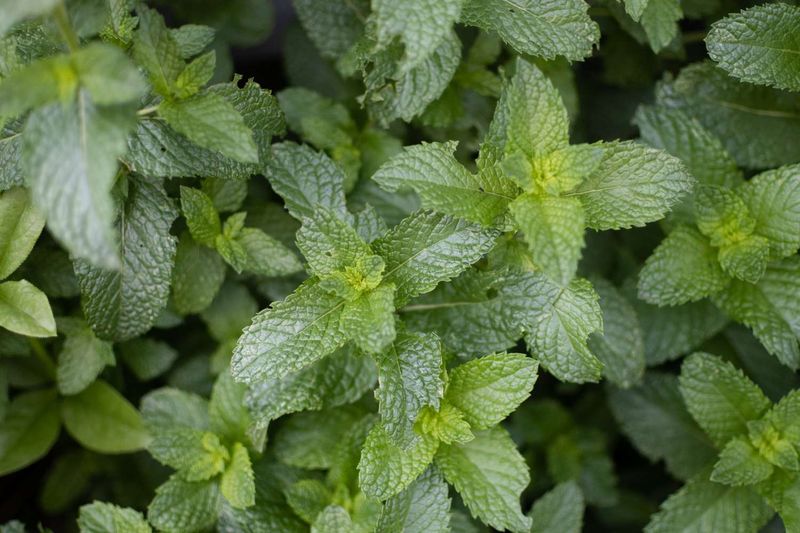
Summer on a Texas porch can feel like sharing your favorite chair with uninvited guests – specifically wasps building nests right where you want to relax. A lot of homeowners have heard that one potted peppermint plant will keep wasps away all season without any spray, and that idea is worth examining closely.
Peppermint oil has shown real, if limited, repellency against some social wasps in research studies, but a living plant on your porch is a different thing from a measured dose of concentrated oil in a lab trap. Here is what the evidence actually says, and what else you can do to make your porch less appealing to nesting wasps this summer.
A Potted Peppermint Plant Is Worth Trying—With Modest Expectations
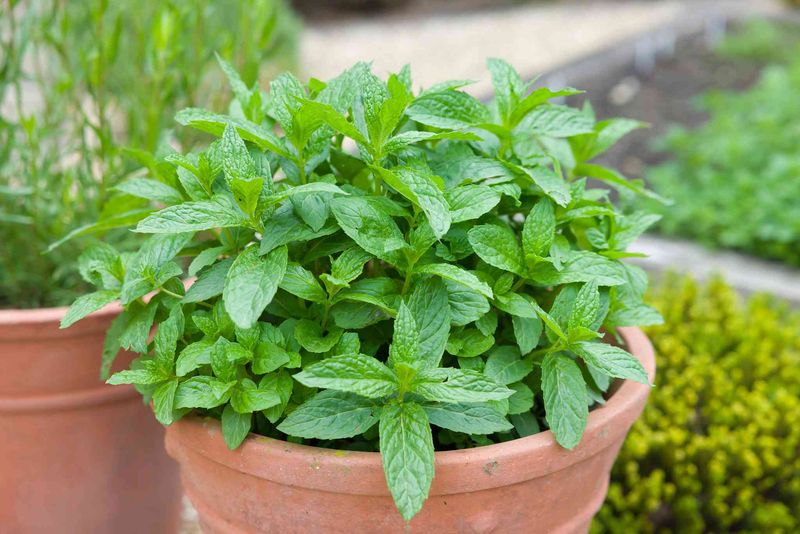
Potted peppermint earns its place on a Texas porch as a useful herb and a low-spray experiment, not as a proven wasp-exclusion device. The recommendation to try it comes from two sources: limited research showing that peppermint essential oil repelled certain social wasp species in field tests, and Texas A&M horticultural guidance confirming that peppermint, spearmint, and orange mint are practical container herbs for Texas gardens.
Those two facts together make peppermint a reasonable thing to try – they do not make it a guarantee.
What the research found, specifically, is that a peer-reviewed study testing 21 essential oils against yellowjackets and paper wasps identified peppermint among oils with significant spatial repellency in attractant-baited trap tests. That is a real finding.
What it does not show is that placing a potted plant near your porch swing will prevent queens from selecting a sheltered eave or vent louver as a nest site. The jump from “peppermint oil repelled foraging workers near a baited trap” to “one plant keeps wasps away all summer” is larger than most gardening articles let on.
A healthy peppermint plant also gives you fresh leaves for tea, a pleasant scent on warm evenings, and a container herb that costs a few dollars and requires no pesticide. Those benefits exist whether or not the plant nudges any wasp away from your porch.
Treat it as an optional add-on to a broader prevention routine, and your expectations will stay realistic. Texas A&M Aggie Horticulture lists mints among hardy perennial herbs well-suited to container culture in Texas, which at least confirms the plant can survive here – a practical starting point for any porch experiment.
The Research Tested Peppermint Oil, Not a Living Plant
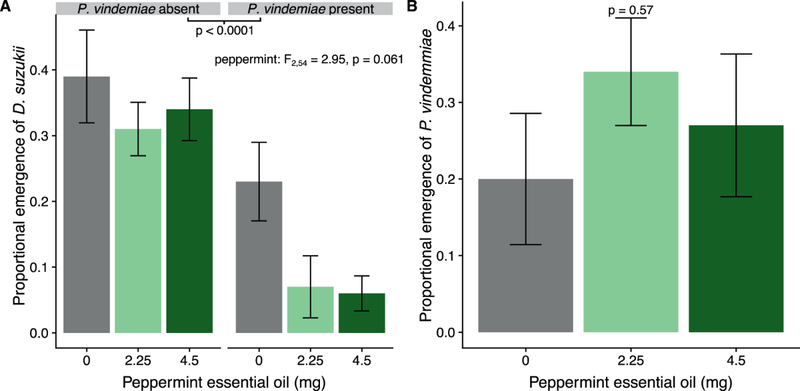
Understanding what the science actually measured changes how you interpret any peppermint-wasp claim. Researchers did not set up potted plants near porch furniture and count nests.
They used attractant-baited traps and applied measured quantities of essential oil or plant extracts to test whether foraging wasp workers would avoid the scent. That is a useful method for screening candidate repellents, but it is a controlled experiment, not a simulation of a Texas porch in August.
The 2013 field study on essential oils and social wasp repellency tested 21 oils against yellowjackets and paper wasps and found that 17, including peppermint, produced significant repellency at the trap level. That is a meaningful result.
However, the same research framework cannot tell you how many plants you would need, how close they would have to be, or whether the volatile compounds released by a living plant would ever reach concentrations comparable to what the researchers applied.
A separate screening study adds an important caution. That screening of repellents against vespid wasps found that most tested samples were not consistently repellent across every test run, that repellency dropped sharply with dilution, and that catmint leaves – which share some chemistry with peppermint relatives – actually attracted wasps when they provided sugar.
Repellency, in other words, is not a stable property that a plant broadcasts reliably into the surrounding air.
A living peppermint plant releases volatile compounds gradually and variably, depending on temperature, humidity, wind, how recently it was watered, and whether it has been pinched or stressed. Hot Texas afternoons can volatilize scent compounds faster, but wind disperses them just as quickly.
Neither study establishes that a potted plant creates a durable repellent zone around a porch, prevents queens from scouting nest sites, or remains effective through a full Texas summer.
Different Texas Wasps Behave Differently
Calling every flying stinger a “wasp” and assuming one plant deters all of them is where a lot of porch advice goes wrong. Texas is home to several distinct groups, and their behaviors, nesting habits, and responses to scent are not interchangeable.
Knowing which type you are dealing with changes both your deterrence strategy and your safety decisions.
Social species – primarily paper wasps and yellowjackets – are the ones most relevant to porch nesting problems. They build colonies, assign workers to defend the nest, and respond aggressively when the nest is disturbed.
Texas A&M’s guide to paper wasps, yellowjackets, and solitary wasps describes paper wasps as common around structures and capable of delivering painful stings when a nest is threatened. Yellowjackets are smaller and more likely to forage near food, which is why they show up at cookouts.
Both groups were represented in the essential oil repellency studies, so the research has at least some relevance to them specifically.
Mud daubers and most solitary wasps operate entirely differently. Texas Parks and Wildlife guidance on social versus solitary species explains that solitary wasps do not defend a shared colony.
A mud dauber building a clay tube on your porch wall is not a sting risk in the same way a paper wasp colony under an eave is, and there is no reason to assume peppermint affects it at all.
Bald-faced hornets are social and aggressive near their nest, but they typically build large, papery aerial nests rather than the small startup nests under eaves that early removal can address. The peppermint repellency research focused on selected vespid workers in baited-trap conditions – it did not test every Texas species, and results from one group cannot be extended confidently to another.
Before deciding how to respond to any wasp on your porch, identifying the species helps you choose the right level of concern and the right course of action.
Protected Porch Spots Can Matter More Than Any Plant
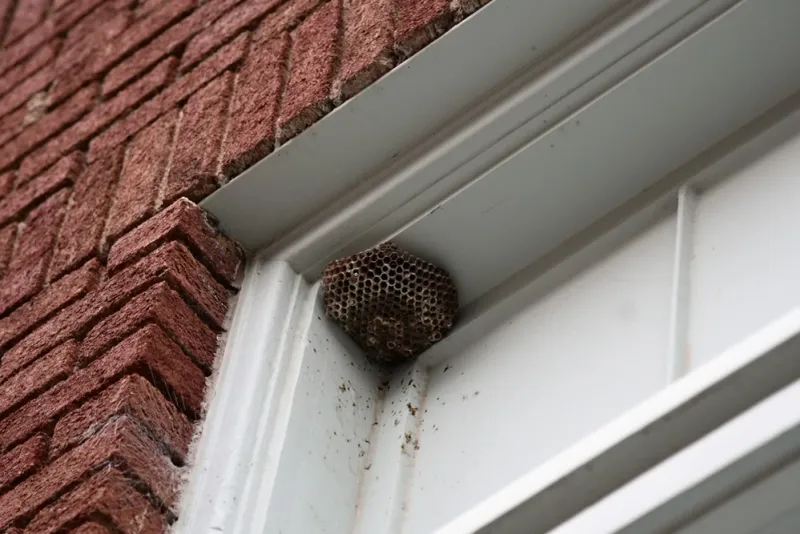
Queens choosing a nest site are not primarily responding to scent. They are looking for structural protection: a surface that holds a comb securely, a sheltered spot that stays dry during rain, a microclimate that does not overheat young, and a location that reduces predator exposure.
Those conditions exist independently of what you have growing in a pot nearby.
Texas A&M’s IPM Action Plan for Paper Wasps identifies the most common nesting locations around structures: eaves, exterior window corners, vent louvers, decks, and fence posts. Every one of those sites offers overhead cover, a firm attachment surface, and some degree of shelter from weather and direct sun.
A peppermint pot on the porch steps addresses none of those structural conditions.
Research on wasp nest-site selection reinforces the point. A study on Mischocyttarus wasps nesting in anthropized environments found that social wasps adapt readily to human structures when those structures offer the physical conditions they need.
Separately, research on wasp nesting and habitat features shows that structural protection, substrate type, temperature regulation, and predator avoidance all factor into where a queen decides to build.
A peppermint plant may reduce the number of foraging workers circling near your seating area on a given afternoon, if it has any effect at all. That is different from preventing a queen from tucking a startup nest into the gap between a porch light and a soffit.
Wall voids, hollow fence posts, porch light housings, and protected corners under deck boards are all spots where a scent from a pot a few feet away is unlikely to reach a meaningful concentration. Addressing those sites through inspection and early removal, rather than relying on any plant, is what actually changes the nesting outcome.
Keep Peppermint Healthy and Contained in a Texas Pot
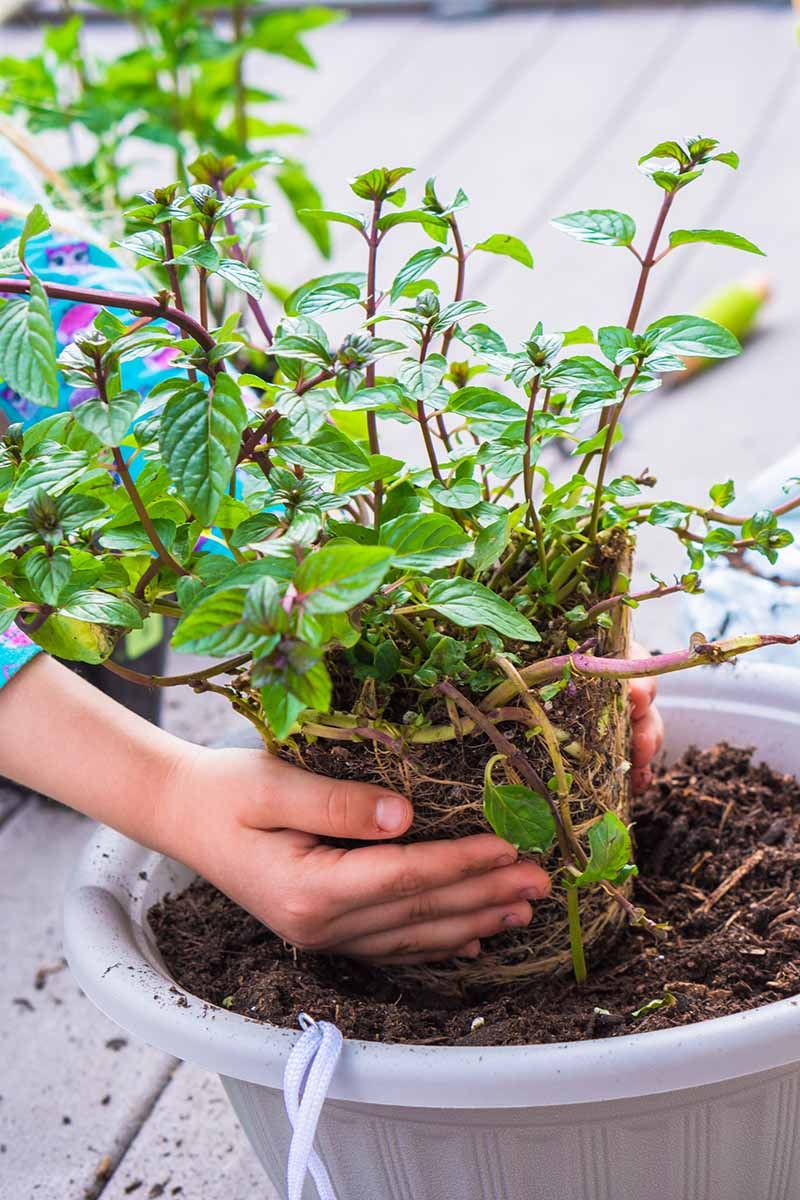
Growing peppermint on a Texas porch is straightforward once you understand two things: it needs regular water, and it will escape into your garden beds if you let it. Container culture solves the second problem completely, and it also makes the plant easy to move, replace, or harvest throughout the season.
Texas A&M Aggie Horticulture lists peppermint, spearmint, and orange mint as perennial herbs that perform well in Texas, preferring sun but tolerating some shade. On a covered Texas porch, morning sun with afternoon shade is often ideal – it keeps the plant from wilting during the hottest part of the day while still giving it enough light to grow vigorously.
A south- or east-facing porch exposure tends to work well through the summer months.
Moisture is the bigger management challenge. UGA Cooperative Extension’s herb guide describes mint as highly invasive and recommends container culture specifically to contain its spreading root system.
That same guidance notes that mint prefers consistently moist soil. On a hot Texas porch in July, a small pot can dry out within a day, so check soil moisture regularly and water before the plant shows stress.
A drought-stressed peppermint plant is also more vulnerable to oil-related phytotoxicity if you ever consider applying any peppermint oil product nearby – stressed foliage burns more easily than healthy foliage.
NC State Extension’s profile of Mentha x piperita notes that peppermint performs best with adequate moisture and can decline in dry conditions. Choose a pot large enough to hold moisture between waterings – at least a one-gallon container, preferably larger – and use a quality potting mix rather than garden soil, which compacts in containers.
Pinching back flower buds keeps the plant in a vegetative state longer and prevents it from going to seed. A well-maintained plant is a better porch herb and a more reasonable deterrence experiment than a wilted, stressed one.
Inspect for Small Nests and Remove Porch Attractants
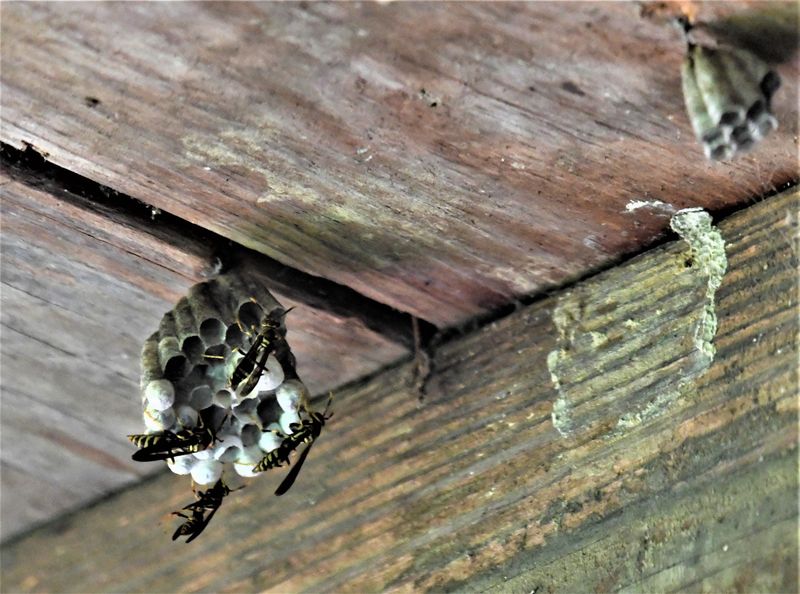
No plant handles prevention as directly as a twice-monthly walkthrough of your porch in spring. Catching startup nests when they are small – just a few cells and one or two workers – is far more effective than any scent deterrent, because small nests can be removed safely and quickly before a colony grows large enough to defend aggressively.
Texas A&M’s IPM Action Plan for Paper Wasps recommends starting inspections in spring and conducting them twice monthly through July to catch nests before they grow. Continuing inspections through August and September is a reasonable additional precaution as the season extends, though twice-monthly checks through July is the schedule cited in Texas A&M’s guidance.
Focus your inspection on eaves, window corners, vent louvers, porch light housings, deck undersides, and fence posts – the spots where paper wasps most commonly attach startup nests.
When a nest is still small and located somewhere accessible – meaning you can reach it easily without climbing, without disturbing the colony, and without putting yourself at risk – early removal can significantly limit the size of the colony you deal with later. Iowa State Extension’s guide to early-season wasp management notes that paper wasps are often nonaggressive away from the nest but recommends addressing nests while they are small and before the queen has produced many workers.
If a nest is already occupied or in a hard-to-reach spot, skip the DIY approach and call a professional.
Food attractants on the porch are a separate issue worth addressing directly. Yellowjackets in particular forage near protein and sweet foods, so outdoor meals and trash become magnets.
Cover food during cookouts, keep garbage and recycling containers closed with tight-fitting lids, and wipe down tables and chairs to remove food residue after eating outside. Rinse recycling before it sits in an outdoor bin.
These steps do not prevent nest construction in structural sites, but they reduce the daily foraging traffic that makes a porch feel wasp-heavy even when no nest is nearby.
Use Caution Around Established or Inaccessible Colonies
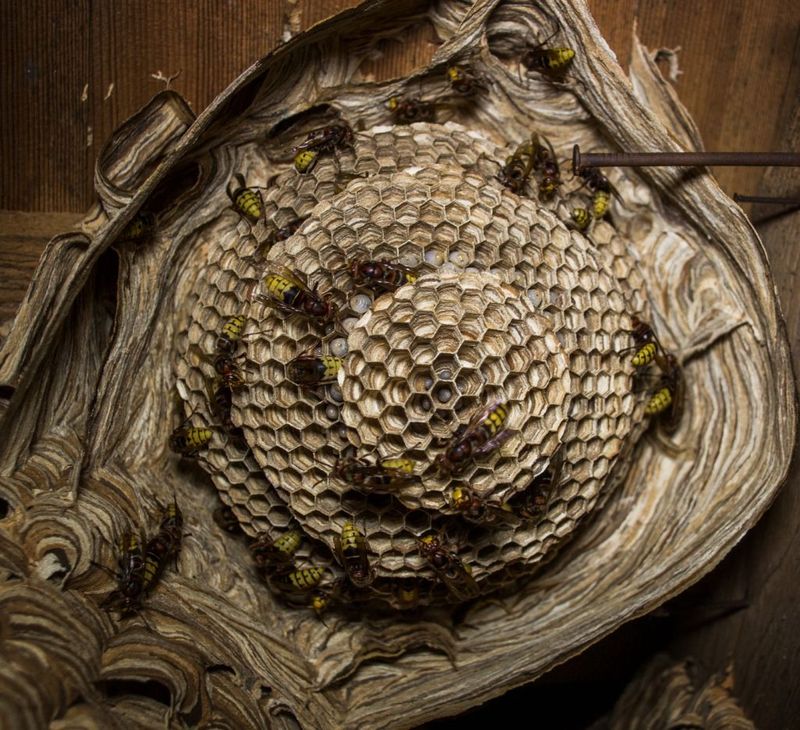
Removing a small startup nest with two or three cells is a different task from dealing with a mature colony that has been building since spring. Once a paper wasp nest is large, the number of workers defending it increases sharply, and disturbing it without preparation puts you at real risk.
Routine DIY removal is not the right approach for every situation.
Texas A&M’s paper wasp and yellowjacket guide describes a qualified treatment approach for established nests in accessible locations: treat in the late evening when wasps are less active and visibility is lower, maintain distance, apply treatment thoroughly, and wait until wasps are no longer active before attempting removal. Even with those precautions, the guidance is clear that large, inaccessible, or wall-void colonies should be handled by a licensed pest management professional.
Trying to knock down a mature nest in a high-traffic area is not a task to approach casually.
CDC guidance on stinging insects for outdoor workers emphasizes that anyone with a known sting allergy should be especially cautious around wasp colonies and should have an epinephrine auto-injector available. For households with allergic members, a professional should handle any established colony rather than a homeowner attempting treatment.
Do not approach a nest if you are uncertain of your reaction to stings.
One specific warning: if wasps are entering and exiting through a gap in a wall, soffit, or other void, do not seal that opening while the colony is active. Texas A&M Extension entomology guidance cautions that sealing an active entrance before treatment can force wasps to find another exit, which may push them further into the structure or into living spaces.
Peppermint oil is not a substitute for nest treatment. Applying undiluted or concentrated essential oil to an active nest, porch surfaces, pets, skin, or food areas is not safe.
Florida Extension’s guide to natural pest products states plainly that plant-derived oils should be handled with the same caution as other pesticides – they can cause phytotoxicity on stressed plants, irritate skin, and vary widely in composition and effectiveness. Natural does not mean harmless, and a peppermint pot is a garden herb, not a treatment tool.
Protect Pollinators While You Manage Porch Wasps
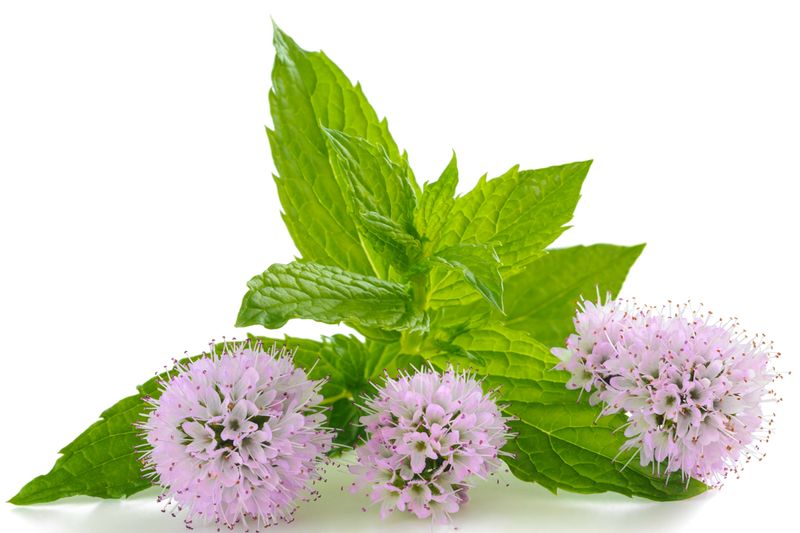
Peppermint that is allowed to flower does not just sit quietly on your porch. The small white blooms attract bees, native pollinators, and yes – sometimes wasps.
That is worth knowing before you decide whether to let your plant flower or pinch it back to keep it in a vegetative state.
Wasps themselves are not purely a nuisance. Texas A&M notes that paper wasps and other species serve as predators of caterpillars and other garden pests, and many wasp species contribute to pollination.
Texas Parks and Wildlife emphasizes the ecological role of native pollinators, including solitary wasps, in supporting healthy landscapes. A mud dauber on your porch wall or a solitary wasp visiting a flower is not a safety problem – it is part of a functioning yard ecosystem.
The right framing for porch wasp management is intervention when a colony creates a direct safety risk, not elimination of every wasp in sight. A social paper wasp nest directly over a frequently used door or a play area is a legitimate concern.
A mud dauber tube on a back fence post is not. Calibrating your response to the actual risk keeps you from using more pesticide than a situation warrants.
When pesticide use is necessary, follow the product label carefully. EPA pollinator protection guidance advises reducing pesticide use in areas where pollinators are active and observing bee-protection directions on product labels.
Avoid spraying any product – including products marketed as natural – on or near blooming plants when pollinators are present. A low-spray approach to porch wasp management is a reasonable goal, but it requires making careful choices about when and whether to spray, not assuming that plant-based products carry no risk.
Use Peppermint as an Extra, Not a Nest-Proof Solution
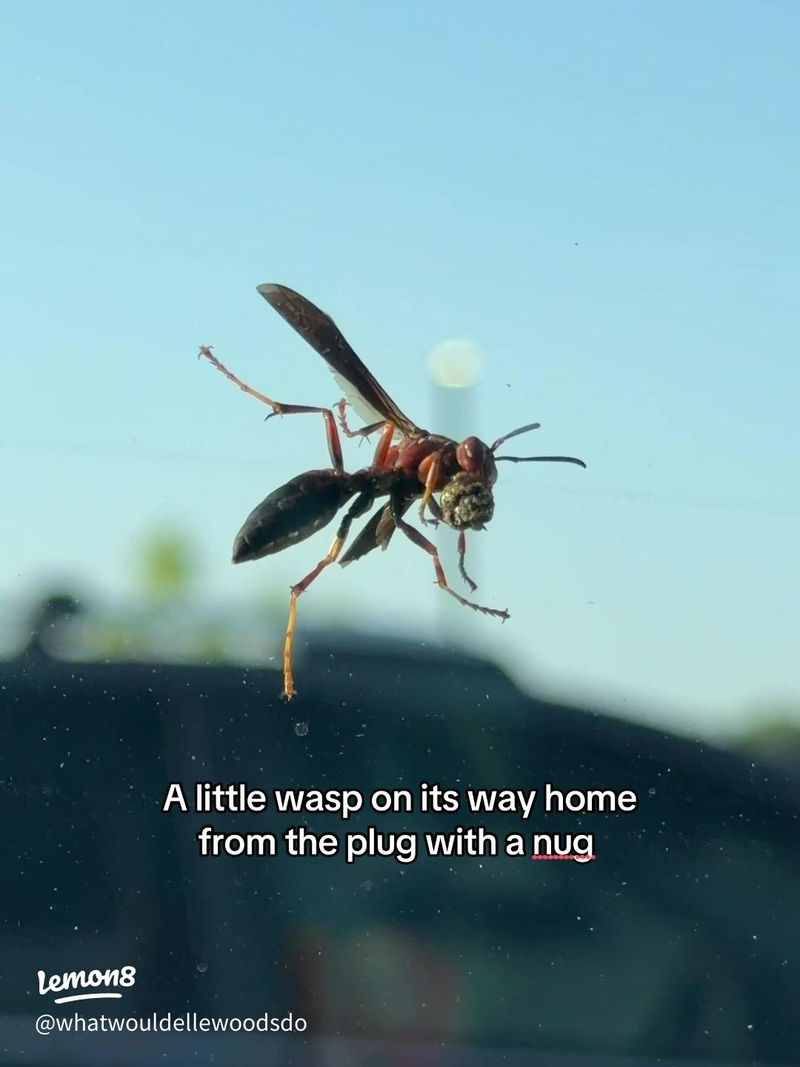
A potted peppermint plant is a reasonable thing to add to a Texas porch this summer. Peppermint oil has shown limited repellency against some social wasps in field-trap research, and the plant itself is easy to grow in a container and costs little.
Those are real reasons to try it.
What no study has shown is that a living peppermint plant prevents paper wasps from building nests on a Texas porch, works against every wasp species in the yard, or remains consistently effective through a full summer of heat, wind, drought stress, and variable growing conditions. The plant is a supplement to a prevention routine, not a replacement for one.
Texas A&M’s paper wasp IPM guidance – twice-monthly inspections beginning in spring through July, early removal of small nests when safe, and consistent attractant control – addresses the conditions that actually drive nesting decisions.
Combine the peppermint pot with regular spring monitoring, keep food and trash covered, and call a professional when a colony is large or a household member has a sting allergy. The plant may contribute something useful at the margins.
The inspection routine is what actually keeps a summer porch manageable.