
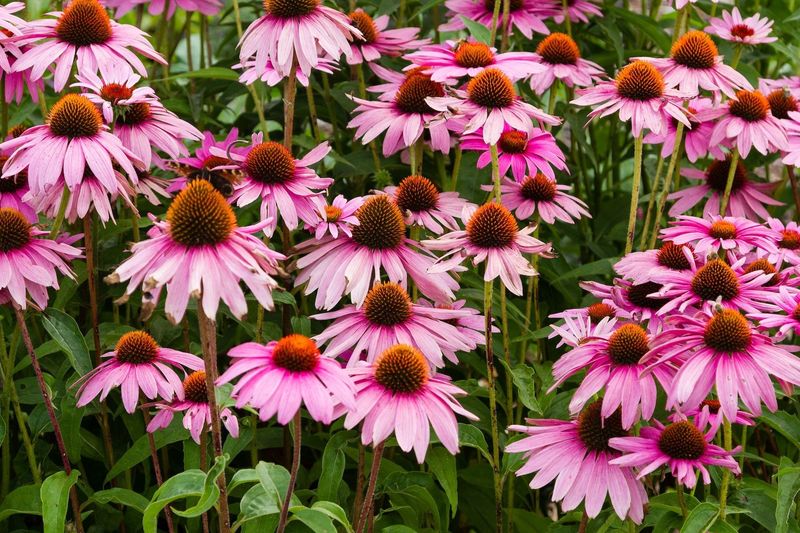
Purple coneflowers are one of the easiest perennials to grow in North Carolina, and many gardeners want more of them every season. The one thing that can quietly work against that goal is removing every spent flower head before fall sets in.
Leaving a few healthy, mature seed heads standing through fall gives goldfinches a food source and gives dropped seeds a real chance to sprout as volunteer plants next spring. The parent plant will almost certainly return on its own regardless, but those bonus seedlings are the part of the equation that depends on what you do right now.
Leave several mature seed heads standing
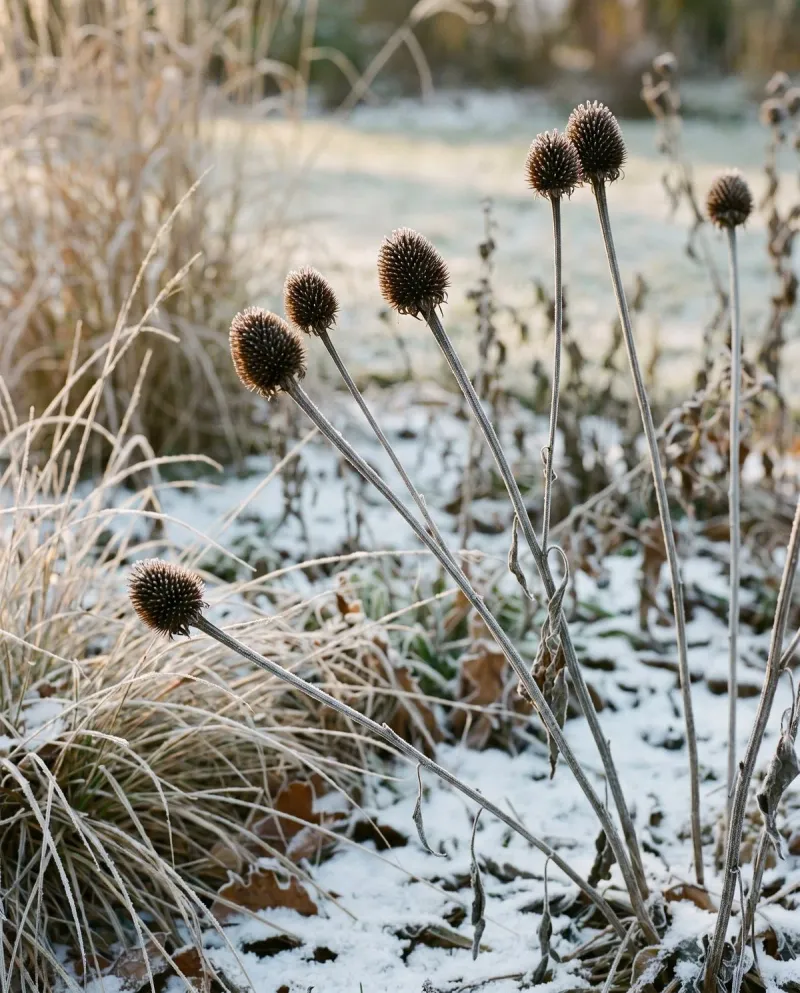
Most North Carolina gardeners deadhead their purple coneflowers all season long to keep the beds tidy, and that habit works fine through summer. Once late summer tips into fall, though, pulling off every spent flower head before the seeds mature removes the very thing that gives the plant a chance to spread on its own.
The better move is to stop deadheading a portion of your plants once the petals fade and the central cones dry to a dark brown, spiky finish.
Aim to leave several healthy, fully mature heads on each straight-species Echinacea purpurea plant. NC State Extension notes that purple coneflower will reseed itself in the garden, and that reseeding depends on mature seed remaining available through fall.
Heads that are still soft or green in the center have not finished ripening, so patience matters here.
The practical tradeoff is a less tidy look through October and November. For most North Carolina yards, that is a reasonable exchange for the wildlife value and the possibility of new plants.
Extension guidance on coneflower reseeding is direct: deadheading reduces seed production and lowers the odds of volunteer seedlings appearing the following spring.
This advice applies most reliably to the straight species, not to every coneflower sold at a garden center. Named cultivars and hybrids can behave differently, and some produce little usable seed.
If you are growing plain Echinacea purpurea, the kind with single rosy-purple petals and a classic spiky cone, coneflower growing guidance from Iowa State Extension confirms that avoiding full deadhead removal is the key to supporting natural reseeding. The less-than-perfect fall silhouette is a small price for a plant that may reward you with free seedlings come spring.
Dried heads give birds and seedlings something to use
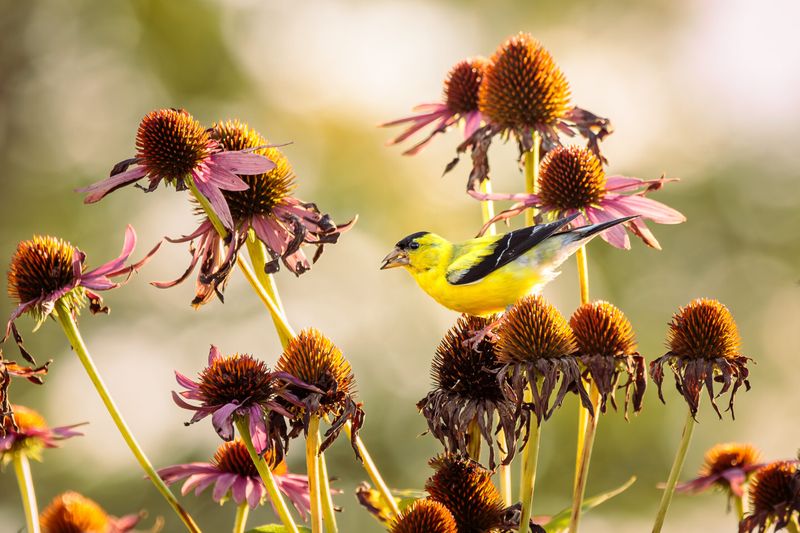
When the petals drop and the cone dries completely, the seed head becomes a small pantry for wildlife. Goldfinches are the most visible visitors, clinging to the stiff stems and working the seeds out of the cone with practiced efficiency.
Watching them pick through a dried head in October is one of the better arguments for leaving the garden a little rough through fall.
Bird feeding is not a guaranteed path to more coneflowers, though. Clemson Extension’s Echinacea factsheet notes that birds and rodents may consume much of the available seed before any of it reaches the soil.
What bird activity can do, in some cases, is scatter a portion of the seed around the base of the parent plant or nearby. Seeds that land on suitable soil and avoid being eaten have a reasonable chance of germinating the following spring.
The wildlife value extends beyond seed supply. NC State’s landscaping for wildlife guide identifies purple coneflower as a native plant that provides seed for birds and nectar for pollinators across the growing season.
Leaving the heads standing through fall and into winter extends that contribution well past the last bloom.
Seedling production from bird-scattered seed is a possibility, not a certainty. Some years the goldfinches arrive early and clean out every cone before a single seed hits the ground.
Other years a few seeds escape and show up as small rosettes near the parent plant the following April. Treating the dried heads as a dual-purpose feature, food for birds and a low-odds seed bank for the soil, sets a realistic expectation and makes the untidy winter silhouette feel worthwhile rather than just neglected.
Cutting the plant back does not usually kill it
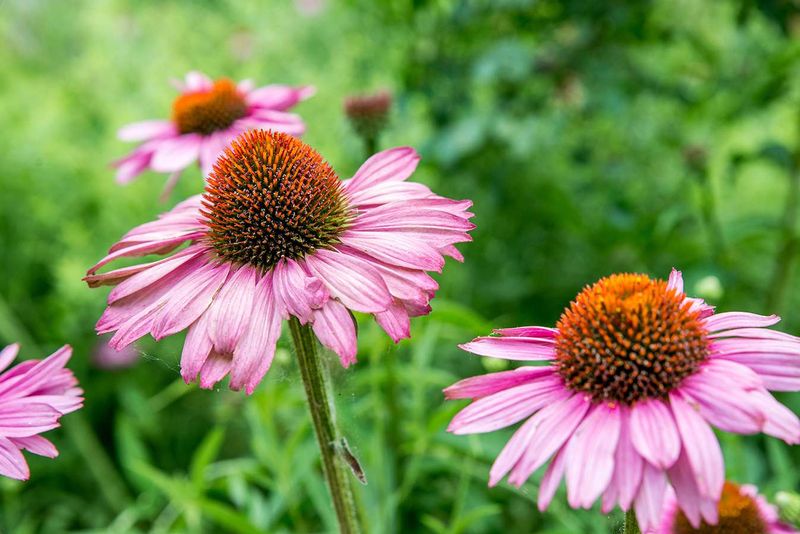
Before going further, one thing in the article title deserves a correction. Cutting back your purple coneflowers in fall, or deadheading every flower through the season, will not stop an established plant from coming back the following year.
Purple coneflower is a hardy perennial that overwinters from its crown, the cluster of growth at or just below the soil surface. Clemson Extension’s Echinacea factsheet confirms that established plants return reliably as perennials; the crown survives winter in North Carolina’s Piedmont, mountains, and coastal plain without needing the seed heads left intact.
What changes when you remove all the mature heads is the opportunity for new, self-sown plants to appear. The original plant’s survival and the arrival of volunteer seedlings are two separate outcomes.
Mixing them up leads gardeners to either panic-skip their fall cleanup or feel falsely reassured that leaving the heads is optional for the plant’s health.
The honest framing is this: deadheading or cutting spent stems in fall is fine for the established perennial. The cost is paid in potential seedlings, not in the parent plant’s return.
Gardeners who want a spreading colony of coneflowers over time need to think about seed, soil, and birds. Gardeners who simply want their existing plants to come back next season can trim the stems without worry, as long as they leave the crown undisturbed at the soil level.
Open soil improves the odds of volunteer seedlings
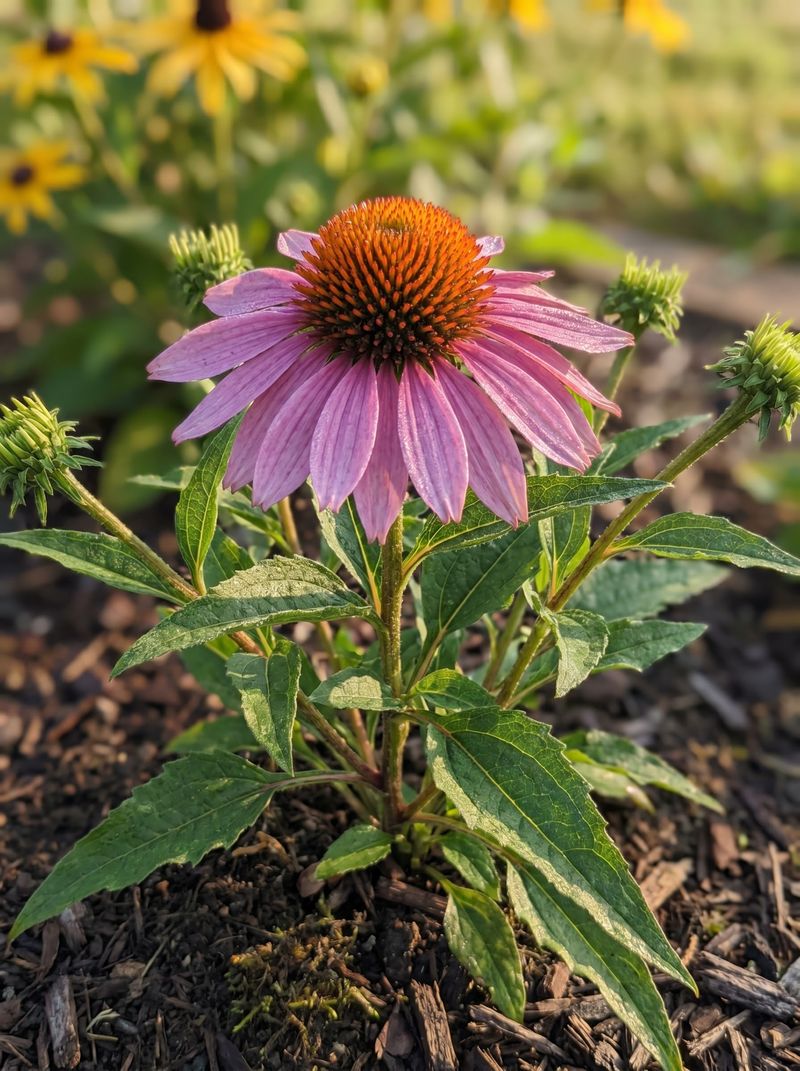
Seed that falls from a dried coneflower head still has several obstacles to clear before it becomes a plant. Soil conditions around the parent plant make a bigger difference than most gardeners expect.
Extension guidance on coneflower reseeding specifically notes that volunteer seedlings are more likely to establish where seed reaches relatively open, suitable soil rather than dense groundcover, thick mulch, or turf.
In practical terms, that means a few things worth checking in your North Carolina beds this fall. A thick layer of bark mulch, more than an inch or two deep around the base of the plant, can prevent seeds from making contact with soil at all.
Heavy groundcovers like liriope or ajuga running through the bed create competition that small seedlings rarely survive. Grass encroaching from a nearby lawn edge is another barrier.
None of these conditions stop the parent plant from returning, but they can quietly prevent any seedlings from ever getting started.
Purple coneflower prefers well-drained soil and performs best in full sun to partial shade, as NC State’s plant profile notes. Conditions vary across North Carolina’s mountains, Piedmont, and coastal plain, so gardeners in heavier clay soils or shaded beds may find volunteer establishment harder regardless of seed availability.
Lightly raking a small area near the parent plant to expose some bare soil in fall can give dropped seeds better contact, without disturbing the crown.
Avoid working the soil deeply near the base of an established plant. The goal is surface exposure for seeds, not a full bed renovation.
Even with open soil nearby, reseeding is never guaranteed. NC State’s wildlife landscaping guide frames native plants like coneflower as long-term investments in habitat rather than instant-fill solutions, which is the right mindset when waiting to see what volunteers appear next spring.
Cultivar type changes the result
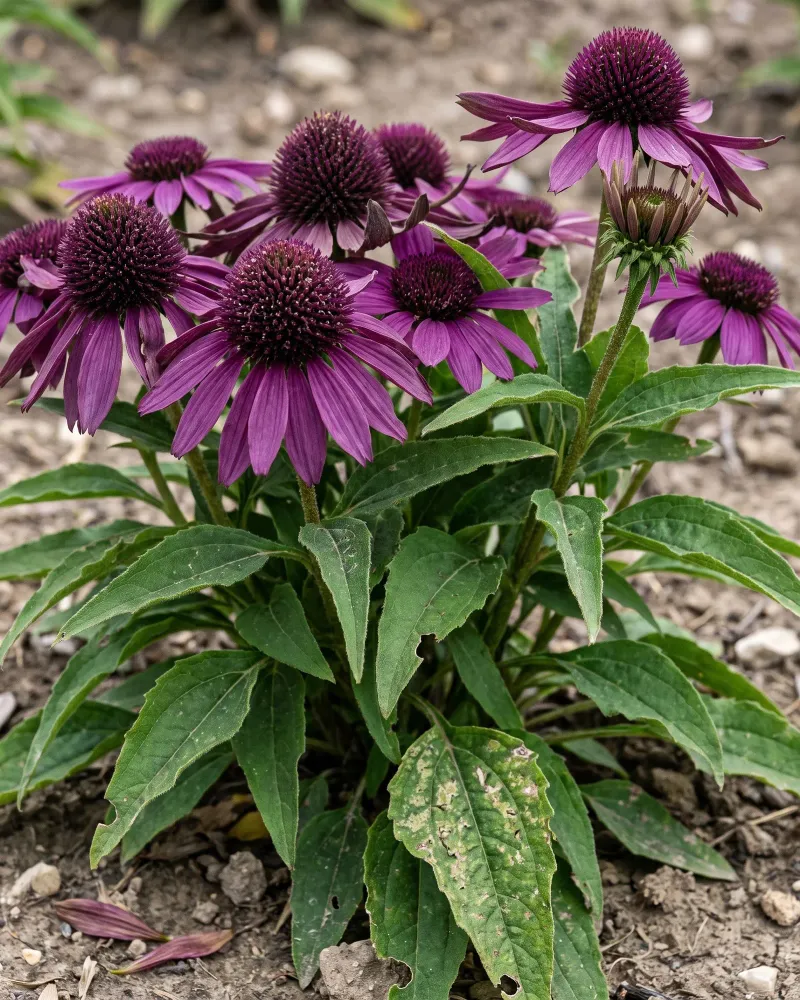
Not every plant labeled “coneflower” at a North Carolina garden center will behave the same way in fall. The reseeding habit that makes Echinacea purpurea such a reliable self-spreader belongs most dependably to the straight species, the plain purple-petaled, single-flowered form with the spiky orange-brown cone.
NC State Extension lists eastern purple coneflower as a plant that can reseed itself in the garden, a distinction that does not automatically extend to every cultivated variety sold under the Echinacea name.
Named hybrids and ornamental selections are a different category. Extension guidance on Echinacea cultivars notes that seedlings from named varieties may not resemble the parent plant.
A gardener who grows a coral-colored or white-flowered named cultivar and lets the heads go to seed may end up with seedlings that revert toward the straight-species purple form rather than matching the original. That is not a problem if the goal is simply more coneflowers, but it matters if preserving a specific color or form is the point.
Double-flowered and pompom-type selections present an even sharper limitation. An Ohio State Echinacea trial report found that some pompom selections produce no seeds at all, and it advises gardeners who want to maintain a cultivar’s appearance to deadhead mature heads rather than allow reseeding, since offspring will likely differ.
For double-flowered types, the modified flower structure that creates the full, ruffled look often crowds out or eliminates the reproductive parts that produce viable seed.
The takeaway for North Carolina gardeners is straightforward. If you are growing straight-species Echinacea purpurea, leaving mature heads in fall gives you a real, if uncertain, shot at volunteer seedlings.
If you are growing a named hybrid, a double-flowered selection, or a specialty cultivar, do not count on reseeding to expand your planting. Division or purchasing new plants will give you more reliable results for those types.
Use a wildlife-friendly fall cleanup
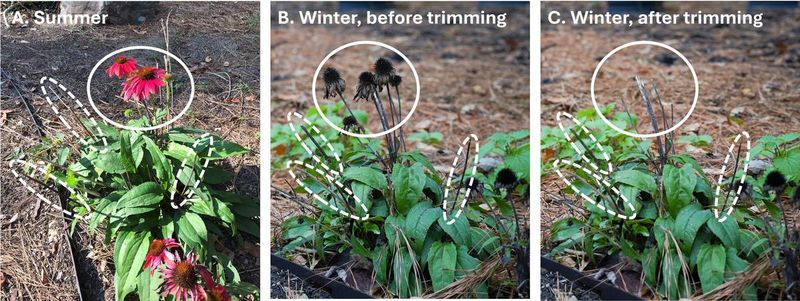
Fall cleanup in a North Carolina coneflower bed does not have to be all-or-nothing. A practical routine keeps the garden from looking abandoned while still supporting birds, bees, and the possibility of next year’s volunteer seedlings.
Start by walking the bed and identifying which heads look healthy and fully dried. Those stay.
Remove only material that is visibly diseased, rotting, or clearly damaged.
Pay particular attention to any flower head that looks unusual rather than just spent. Green, malformed petals, leafy growth inside the flower head, or a generally distorted appearance can signal aster yellows, a disease spread by leafhoppers.
Clemson Extension’s aster yellows factsheet and Extension guidance on aster yellows in coneflowers both advise removing and discarding affected plants rather than saving seed from them or composting the material. Infected plants will not recover, and saving seed from them risks spreading the problem.
When it comes to the stems themselves, resist the urge to cut everything to the ground for a clean winter look. NC State’s pollinator habitat guidance recommends trimming first-year perennial stems to leave roughly 12 to 24 inches standing, then leaving them undisturbed so stem-nesting bees can use the hollow or pithy sections through winter.
NC State’s garden cleanup for pollinators article reinforces this point: a partial, staged cleanup beats a full November scalping for supporting native bee populations.
A reasonable North Carolina fall routine looks like this: leave several healthy, dried coneflower heads intact, cut diseased or damaged material and bag it for disposal, trim remaining perennial stems to knee height rather than the ground, and hold off on a thorough cleanup of stem debris until late winter or early spring when overwintering insects have had a chance to move on.
Check for seedlings in spring or save seed yourself
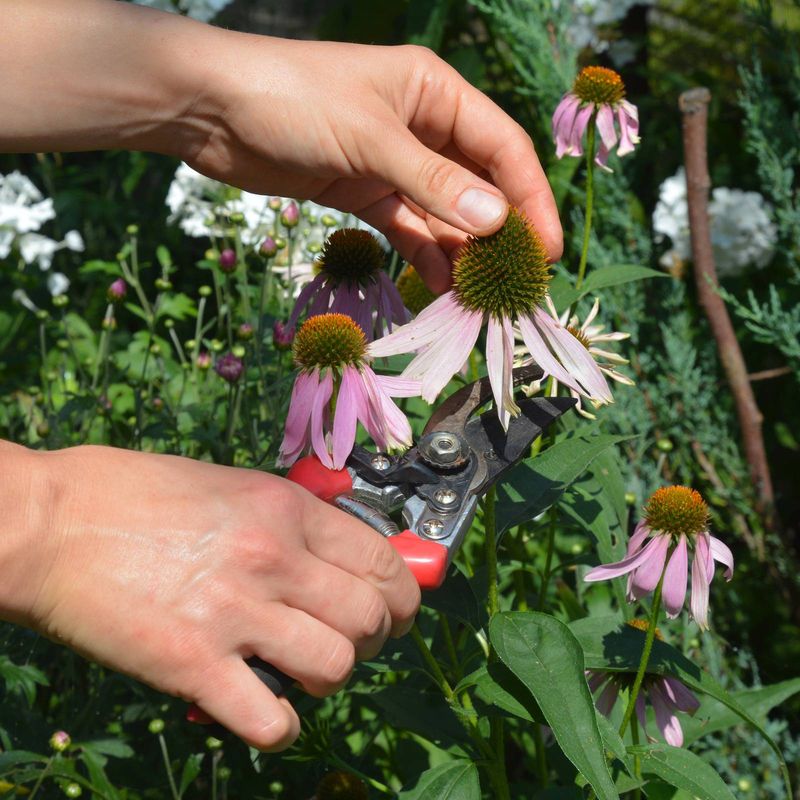
Come spring, slow down before you start weeding around last year’s coneflowers. Small Echinacea seedlings emerge as flat, slightly fuzzy rosettes close to the soil, and they are easy to pull by mistake when the bed looks messy in March or April.
Give the area around each parent plant a second look before removing anything. If seedlings appear, they can be left in place or carefully moved to a new spot while they are still small, no more than a few inches tall, when transplanting stress is lowest.
Some beds will produce no volunteers at all, even with mature heads left standing through fall. Extension reseeding guidance is honest about this: birds, rodents, soil conditions, mulch depth, and weather all affect whether any seed becomes a seedling.
If spring arrives with no new plants, that does not mean something went wrong with the fall routine. It may simply mean the seed was eaten, landed in the wrong spot, or did not find conditions favorable for germination that particular year.
Gardeners who want more control over the process can save seed deliberately rather than relying on natural reseeding. Rutgers Extension’s seed-saving guidance recommends harvesting dry, crisp coneflower heads before birds remove all the seed, wearing gloves, and combing the seed free from the cone.
Collect into a paper bag or envelope and store in a cool, dry place.
When sowing collected seed, keep it shallow. USDA guidance for eastern purple coneflower gives approximately one-eighth to one-quarter inch as the appropriate planting depth.
Cold stratification is not always required: published research on Echinacea seed dormancy and Utah State seed germination studies both note that commercial seed lots often have low dormancy and can germinate without a cold period, while wild-collected or more dormant lots may benefit from winter conditioning. Sowing outdoors in fall lets natural temperature cycling handle that question without extra effort.
Treat new coneflowers as a bonus, not a promise
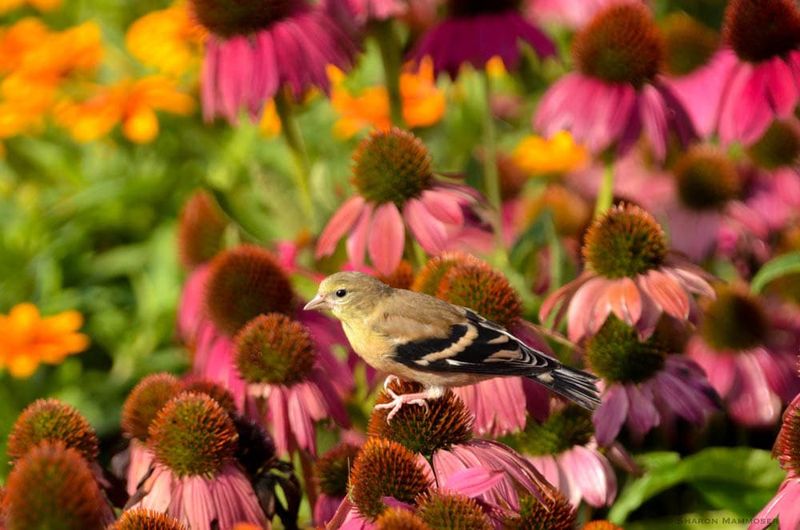
Pulling this all together, the fall action that gives straight-species purple coneflowers the best chance to spread on their own is simple: leave several healthy, fully mature seed heads standing rather than cutting every one off. Those dried heads feed goldfinches through fall and winter, and any seed that escapes bird feeding and lands on open, suitable soil may produce volunteer seedlings the following spring.
What leaving the heads will not do is determine whether the established plant returns. Clemson Extension confirms that purple coneflower is a perennial that overwinters from its crown, so the parent plant’s survival is largely independent of what happens to the seed heads.
Remove diseased or abnormal material regardless, and do not save seed from heads showing possible aster yellows symptoms.
A bed full of coneflowers next spring is not guaranteed by any fall routine. Birds, soil conditions, mulch depth, cultivar type, and plain weather luck all have a say.
The better framing is that leaving mature heads in fall keeps the door open for new plants while feeding the birds that show up to take advantage of it. Any seedlings that appear are a genuine bonus, not a predictable harvest.