
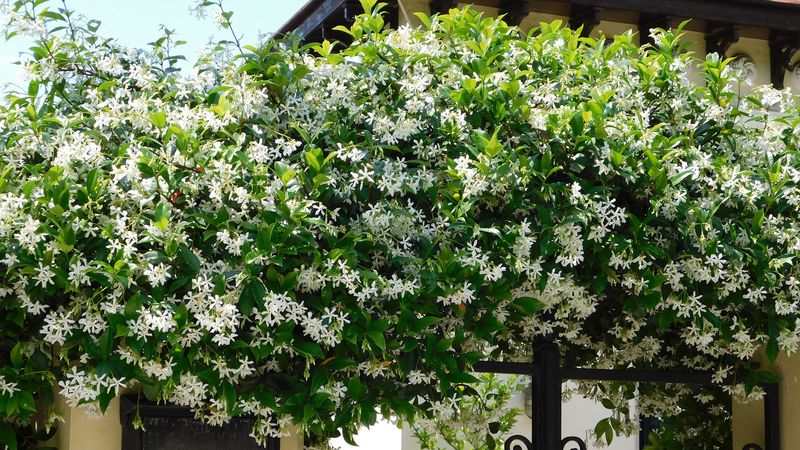
Confederate jasmine fills North Carolina fences and trellises with fragrant white flowers every spring, but this evergreen vine from Japan and China needs some thoughtful attention as summer winds down. Many gardeners assume one quick treatment will lock in winter survival, but the real picture is more practical and more specific to where you live in the state.
Getting a few simple habits right before cold weather arrives can make a real difference, especially for young plants, containers, and anyone gardening west of the Piedmont.
Count back from your local average first frost
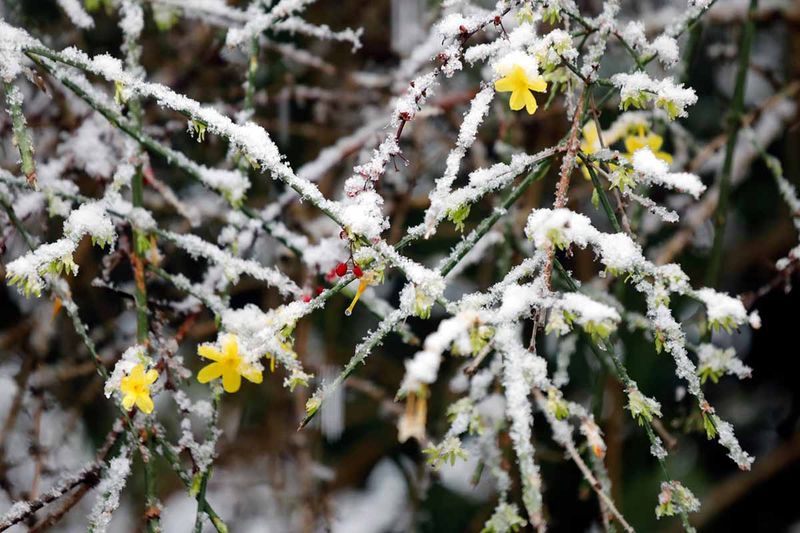
No single product or treatment is required before fall to keep Confederate jasmine alive through a North Carolina winter. NC State’s plant profile for Trachelospermum jasminoides lists it for the Coastal and Piedmont regions and recommends spring fertilizer only when soil fertility is actually low – not a mandatory pre-fall feeding.
The vine is a nonnative evergreen from Japan and China, and what it needs most as temperatures drop is the absence of vulnerable soft growth, not a last-minute boost from a bottle.
The most useful timing tool you have is your local average first-frost date. Rather than picking a universal calendar date like August 15, count back from that frost window and use it to guide your decisions about fertilizer, pruning, and watering.
The goal during this period is to let the plant slow naturally, avoid pushing tender new shoots, and head into cold weather with firm, mature growth intact.
NC State’s nursery winter-preparation guidance explains that plants need time to acclimate gradually to cold, and that practices interfering with that process – including late-season growth stimulation – raise the odds of winter injury. Counting back from your local frost date gives you a concrete window for action, not a false sense of security from a single product.
Established in-ground vines have a real advantage here. Their root systems are deep, well-insulated by surrounding soil, and accustomed to the site.
Young plants set out in the past year or two have shallower roots with less thermal protection, and container-grown jasmine faces an even steeper challenge because the entire root ball can freeze when air temperatures drop far enough. Both groups need closer attention than a mature, well-rooted vine climbing a sunny, sheltered wall.
Late nitrogen can leave new growth exposed
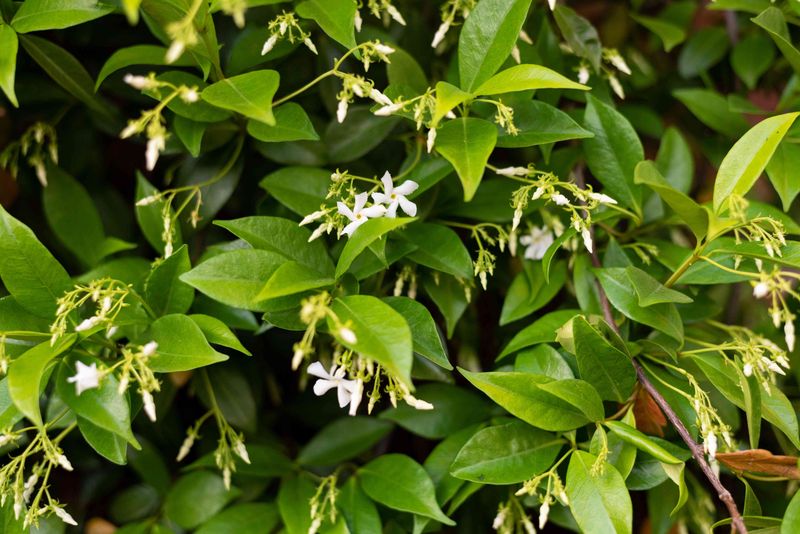
Fertilizer decisions are where a lot of fall mistakes happen with Confederate jasmine. The core concern is quick-release nitrogen applied during warm, rainy late-summer weather, which can push a flush of soft new growth just as the plant should be slowing down.
That tender tissue has not had time to firm up, and when a cold snap arrives, it is the first thing to die back.
NC State’s winter-preparation publication explains that excess fall nutrients combined with warm temperatures and rainfall can prolong growth and leave soft tissue vulnerable to frost. The risk is real, but the solution is not to panic about every fertilizer product you have ever applied.
The distinction that matters is between unnecessary, high-nitrogen, fast-release products applied late in the season and properly managed feeding based on what the plant actually needs.
NC State’s guidance on fertilizing trees and shrubs makes an important clarification: healthy plants are not automatically predisposed to winter injury by fall fertilization when the application follows a soil test and uses slow-release products. The problem is excess, not the calendar month.
For most established Confederate jasmine in the Piedmont and Coastal Plain, the smarter question is whether fertilizer is even needed. NC State’s woody ornamentals handbook notes that established plants often need little added nitrogen, and that pale or yellowing foliage – which many gardeners treat with fertilizer – can just as easily signal a watering problem, compacted soil, or root stress.
Before reaching for a fertilizer bag as summer ends, check whether the vine is actually growing poorly or just resting as days shorten. If growth looks healthy and the soil is reasonably fertile, skipping fall fertilizer entirely is a defensible choice.
Pruning belongs after flowering, not before winter
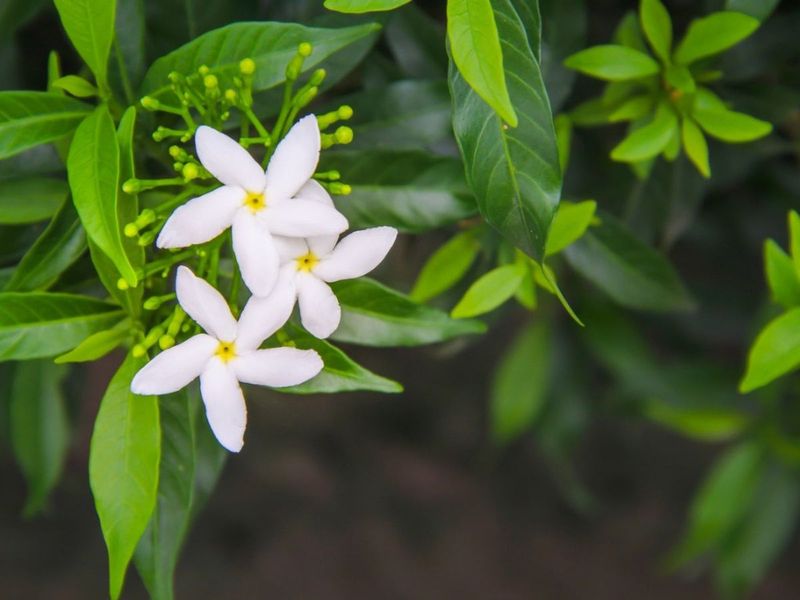
Reaching for the pruning shears in fall feels productive, but it is one of the more reliable ways to create problems for Confederate jasmine heading into winter. NC State’s plant profile recommends pruning after flowering to control size – not before cold weather arrives.
There are two practical reasons for that timing. First, University of Arkansas Cooperative Extension guidance on Confederate jasmine notes that cutting back the vine at the wrong time can remove growth associated with the next season’s flowering.
Second, pruning cuts stimulate new growth at the wound site, and any soft shoots that emerge as temperatures are falling have almost no time to harden before frost hits them.
NC State’s nursery winter-preparation guidance advises avoiding pruning within six weeks of the average local first-frost date. That is a general guideline for woody plants, not a Confederate-jasmine-specific rule with a hard legal deadline, but it maps well onto the vine’s situation: any major shaping that close to frost risks triggering regrowth that cannot toughen in time.
If the vine has a few dead or crossing stems that genuinely need removal, light cleanup is less likely to cause problems than a heavy shearing. Nonessential shaping – trimming for tidiness, reducing spread, or training new runners – is better postponed until after bloom the following year.
The vine does not need to look perfect going into winter; it needs to keep the firm, mature growth it has already produced.
Water the root zone before severe cold
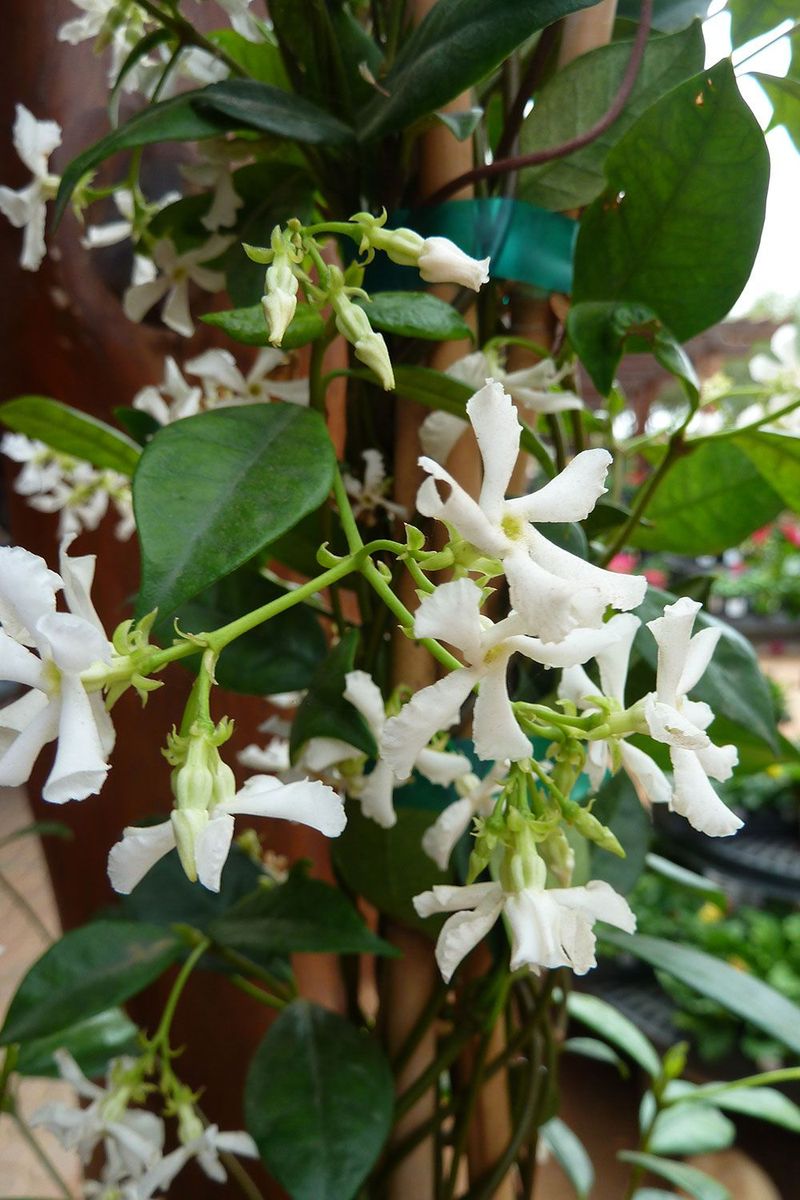
Confederate jasmine keeps its leaves all winter, and that creates a challenge most people do not think about until they see brown foliage in February. Evergreen leaves continue losing water through tiny pores even when air temperatures are cold, and when the soil is frozen or very cold, roots cannot replace that moisture fast enough.
The result is winter desiccation – leaf scorch and dieback caused by dehydration rather than direct freeze damage.
NC State’s woody ornamentals handbook identifies winter desiccation as a real concern for broadleaf evergreens, especially during bright, windy cold spells when foliage water loss accelerates. The practical response is straightforward: check the soil moisture before a hard freeze or a period of strong cold winds, and water the root zone thoroughly if it is dry.
Moist soil holds heat better than dry soil, which adds a small but real buffer around the roots.
The caution here runs in both directions. NC State’s winter-preparation guidance does not recommend deliberately reducing water in fall to force the plant to harden.
Severe drought stress going into winter can deplete the stored carbohydrates and nutrients a plant draws on during cold months, leaving it less resilient rather than tougher. The target is balanced moisture – soil that is neither waterlogged nor bone dry when cold weather settles in.
Young plants and containers need more frequent checks than established in-ground vines. A container’s root ball is surrounded by air on all sides, so it can freeze much faster than soil does, and it can also dry out quickly on windy winter days when the foliage is still losing moisture.
Moving containers to a sheltered spot and monitoring soil moisture through winter are both worth the effort for jasmine grown in pots.
Use mulch to steady the root zone
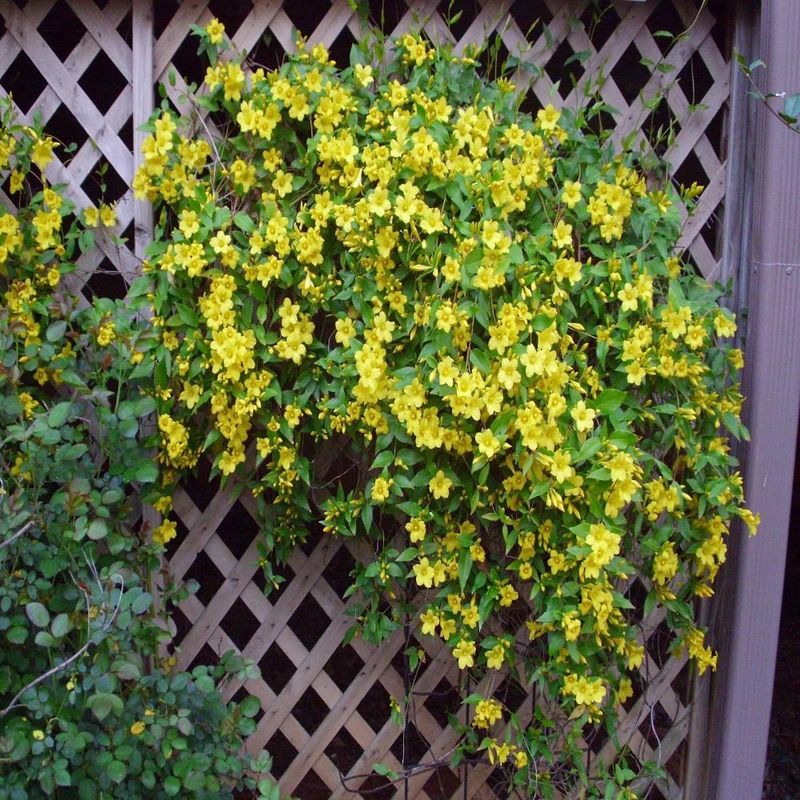
Mulch earns its place in fall not by forcing winter hardiness but by keeping root-zone conditions more stable. A roughly three-inch layer of organic mulch – pine bark, shredded leaves, or wood chips – slows the rapid soil temperature swings that can stress roots more than steady cold does.
It also helps retain moisture between waterings, which matters for an evergreen vine that keeps losing water through its foliage all winter.
NC State’s woody ornamentals handbook recommends keeping mulch at least six inches away from the trunk or crown of a woody plant. Piling it against the stems traps moisture against bark that needs to breathe, encourages rot, and can shelter rodents that chew on plant tissue during winter.
A donut shape around the root zone, not a volcano against the stem, is the right form.
Depth and timing both matter more than most gardeners realize. NC State’s nursery winter-preparation guidance notes that applying mulch before a plant has naturally slowed its growth can keep soil temperatures warmer than expected and actually delay cold acclimation.
For landscape plants, the practical solution is to refresh or apply mulch after the vine has slowed on its own as days shorten and temperatures cool, rather than layering it on heavily in early fall as a supposed hardening treatment.
Mulch is a supporting tool, not a substitute for good site conditions. A vine planted in poorly drained soil, a wind-exposed location, or a zone colder than it can reliably handle will not be saved by mulch alone.
Use it as part of a broader approach rather than treating it as the single answer to winter risk.
North Carolina location determines winter risk
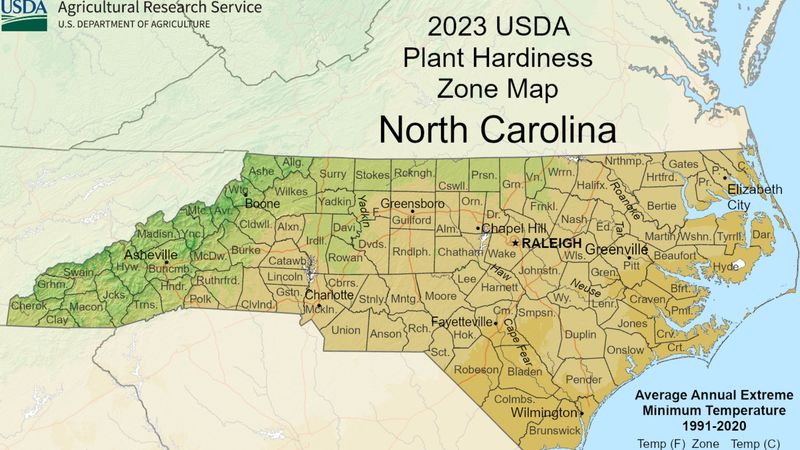
Where you garden in North Carolina shapes how much winter risk your Confederate jasmine actually carries. NC State lists the plant for the Coastal and Piedmont regions, covering USDA Zones 8a through 10b, and does not include the Mountain region in its recommended range.
That is a meaningful distinction. A well-sited vine on a Wilmington fence faces a very different winter than the same species planted in Boone or at elevation in the western counties.
Site conditions within any region can raise or lower risk considerably. Wind exposure strips moisture from evergreen foliage faster than calm conditions, amplifying the desiccation problem.
Poor drainage keeps roots wet during freezes, which can cause more damage than cold air alone. A south- or west-facing wall that absorbs and radiates daytime heat gives the vine a microclimate advantage that a north-facing fence does not.
Container-grown plants face a different and more serious challenge. NC State’s winter-preparation guidance explains that container root balls can freeze far more readily than in-ground soil and that foliage desiccation becomes a serious risk when roots lose access to liquid water.
Moving pots to a sheltered garage wall or unheated shed during hard freezes reduces but does not eliminate the risk.
For gardeners in colder areas or exposed sites who want to push the vine’s limits, cultivar selection matters. The ‘Madison’ cultivar is recognized as more cold-hardy than the standard species.
NC State’s JC Raulston Arboretum lists it as hardy to Zone 7, and University of Georgia extension reporting describes it as a cultivar developed specifically for colder parts of Georgia. Even ‘Madison’ offers no guarantee at sites outside its reliable range.
When a hard freeze is forecast, NC State’s woody ornamentals handbook recommends watering dry soil beforehand, sheltering small evergreens from wind and direct winter sun, supporting covers so the fabric does not rest directly on foliage, extending the cover to ground level to trap soil warmth, and removing covers each morning before temperatures climb to prevent overheating underneath. These steps can reduce damage, but they work best as part of a thoughtful overall approach rather than as last-minute rescues for a plant already stressed by poor site choice or inadequate preparation.
Follow a short pre-winter checklist
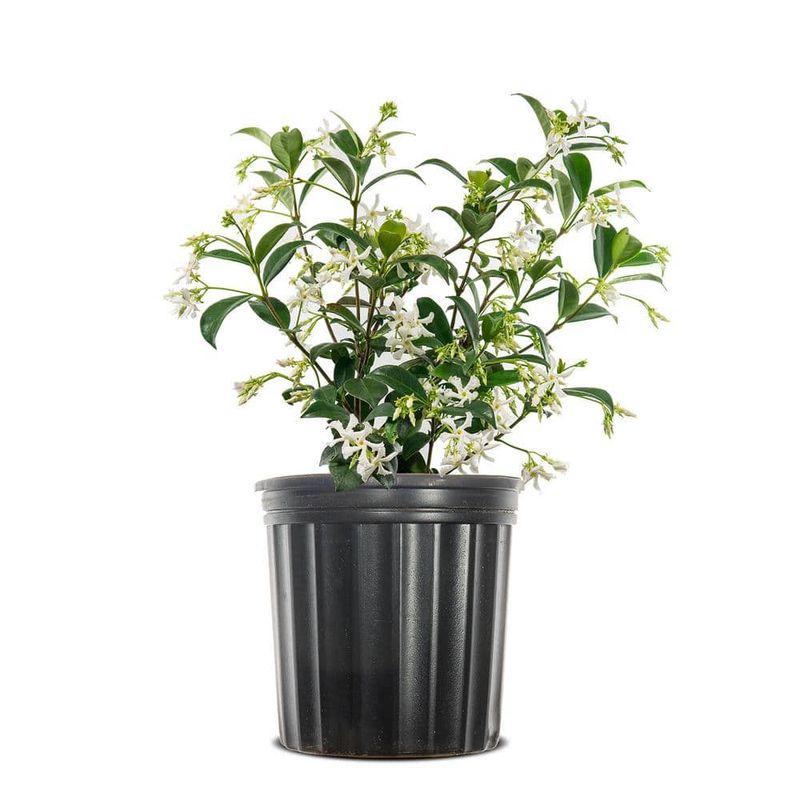
Putting together a short sequence of checks before your local frost window closes is more useful than any single product claim. Start by looking up your area’s average first-frost date and counting back roughly six weeks – that window is when the decisions below matter most.
Walk the vine and look for soft, actively growing shoot tips. If new growth is still pushing, avoid quick-release nitrogen and hold off on any pruning that is not strictly necessary.
NC State’s nursery winter-preparation guidance and its fertilizer guide for trees and shrubs both support letting the plant slow naturally rather than pushing it with late-season stimulation.
Check the soil moisture around the root zone. If it is dry and a cold front is approaching, water it thoroughly before the temperature drops.
Refresh the mulch ring to about three inches deep, keeping it clear of the crown by at least six inches, as NC State’s woody ornamentals handbook recommends. For young plants or containers, plan where you will move or cover them before the first hard freeze arrives, not after.
None of these steps guarantee a damage-free winter, particularly for vines growing in colder mountain counties, exposed sites, or pots left outdoors through hard freezes. Confederate jasmine is most reliable in the Coastal Plain and Piedmont, and the best winter preparation begins with choosing a sheltered, well-drained site in the right part of the state.
Good habits reduce the odds of a rough winter; they do not rewrite the climate.