
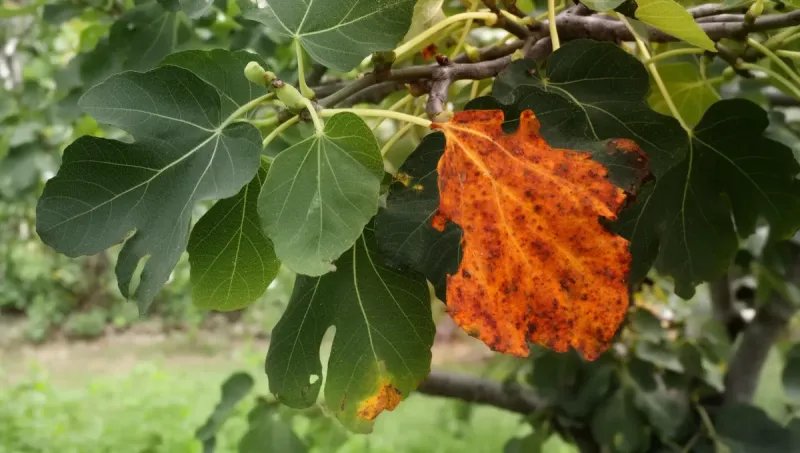
Walk under a fig tree in October and you may spot leaves with rusty brown freckles scattered across the ground. Fig rust is a leaf disease that often goes unnoticed until late summer, when leaves start yellowing and dropping early.
There is one simple job that fits this time of year, and it takes only a rake and a bucket. Here is what that job is, what it can do, and what it cannot.
Rust leaves recognizable clues, but spots alone do not confirm it
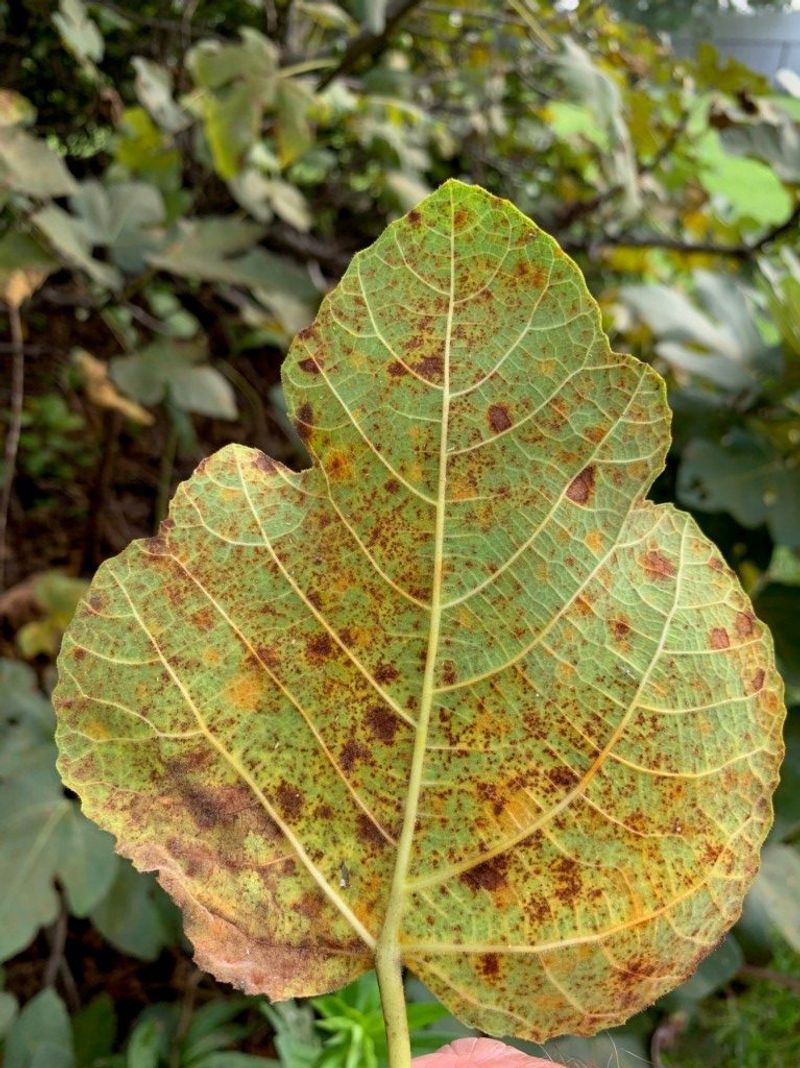
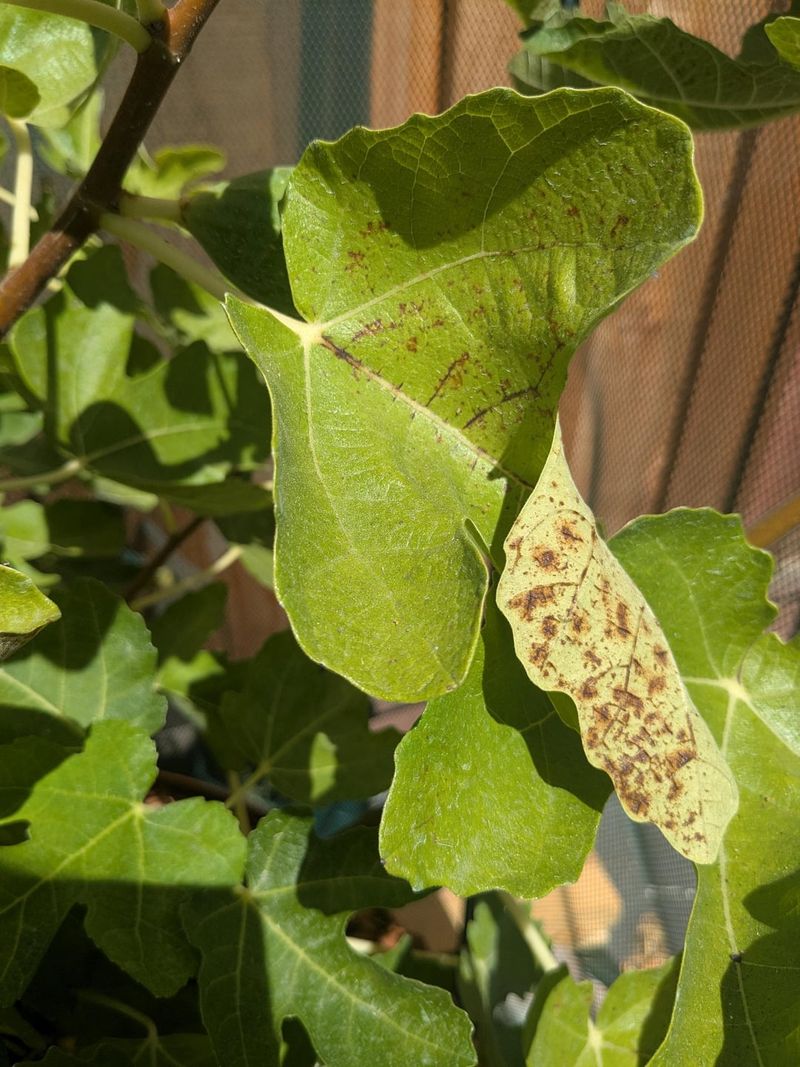
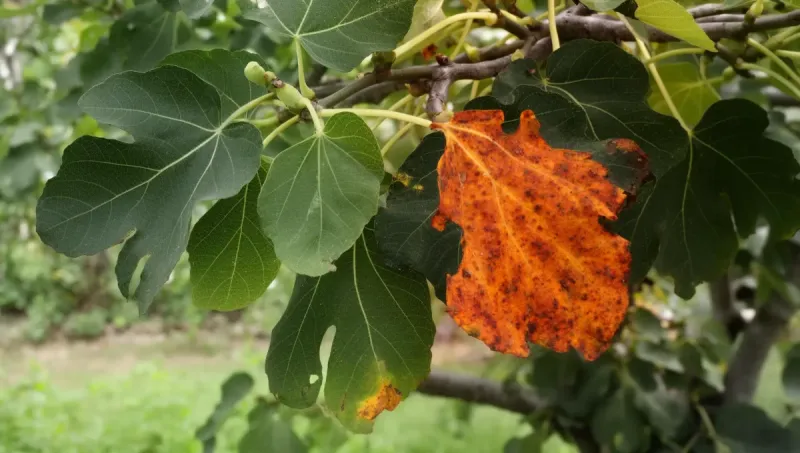
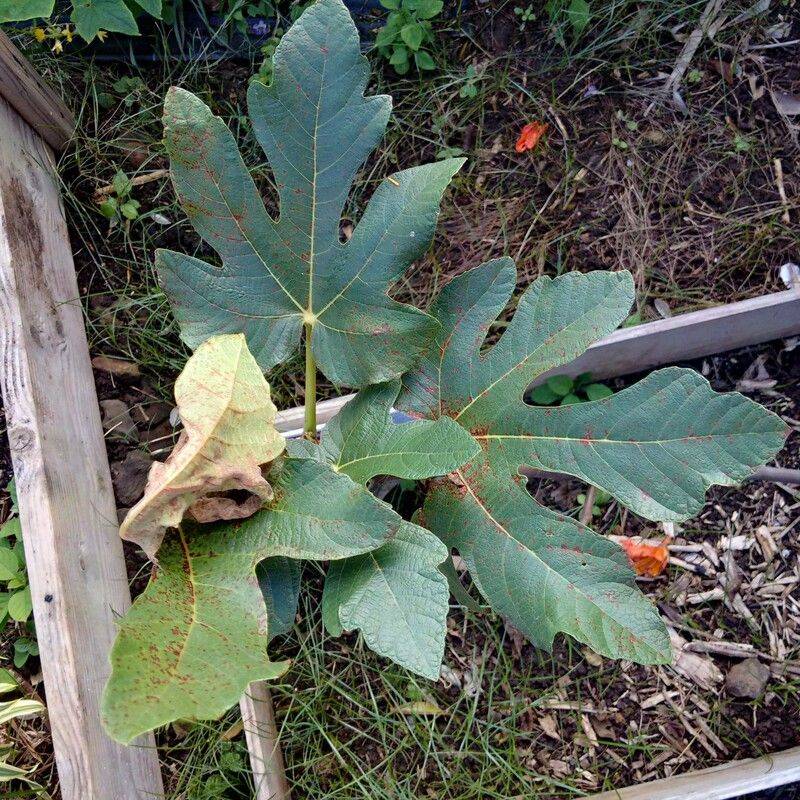
Fig rust tends to start small. Arkansas Extension describes tiny yellowish spots that grow larger and turn reddish-brown over time.
Flip a suspicious leaf over and you may find dusty, yellow-orange or brown raised bumps on the underside. Those bumps are a helpful clue.
As the problem builds, heavily affected leaves can turn yellow and fall earlier than they should. University of Georgia Extension lists this early leaf drop among the signs gardeners see.
That is why a fig tree can look thin by autumn even when the fruit season went fine.
Before you decide your tree has rust, slow down. A single yellow leaf or one brown spot proves very little.
Virginia Cooperative Extension notes that sunburn, other leaf spots, sooty mold, and fig mosaic virus can all cause similar looking symptoms.
A better approach is to look for a pattern. Check several leaves on different branches, especially the undersides, and notice whether the spotting matches the progression described above.
If you are still unsure, take a few leaves in a sealed bag to your county Cooperative Extension office and ask for help with identification.
Rust mainly affects foliage, not fruit directly
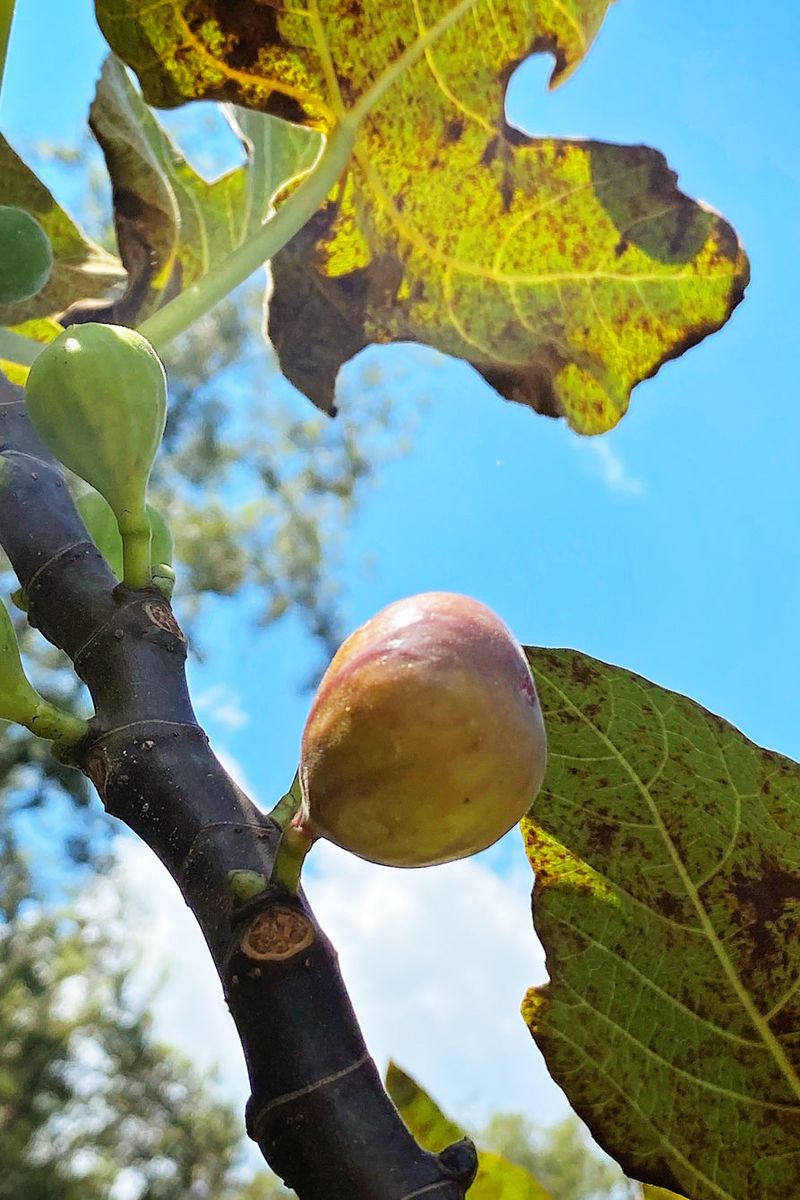
Fig rust is a leaf problem. According to University of Georgia Extension, the disease targets foliage rather than attacking the fruit itself.
So the figs you pick are not being infected the way the leaves are.
Leaves still matter a great deal to the fruit, though. They make the sugars that feed the tree and the crop.
When a tree loses many leaves early, or loses them year after year, it can end up weakened, and that may show up as smaller or lower quality figs.
UF/IFAS Extension adds that heavy defoliation from rust can lead to premature ripening and reduced cold tolerance. Those are possible results of serious leaf loss, not guaranteed ones.
Plenty of backyard trees carry some rust and still produce a decent harvest. A few spotted leaves in autumn are not a crisis.
Keep an eye on how early the leaves drop and how thin the canopy looks, and use those notes to judge whether the problem is minor or worth more attention next year.
The useful fall task is removing affected fallen leaves
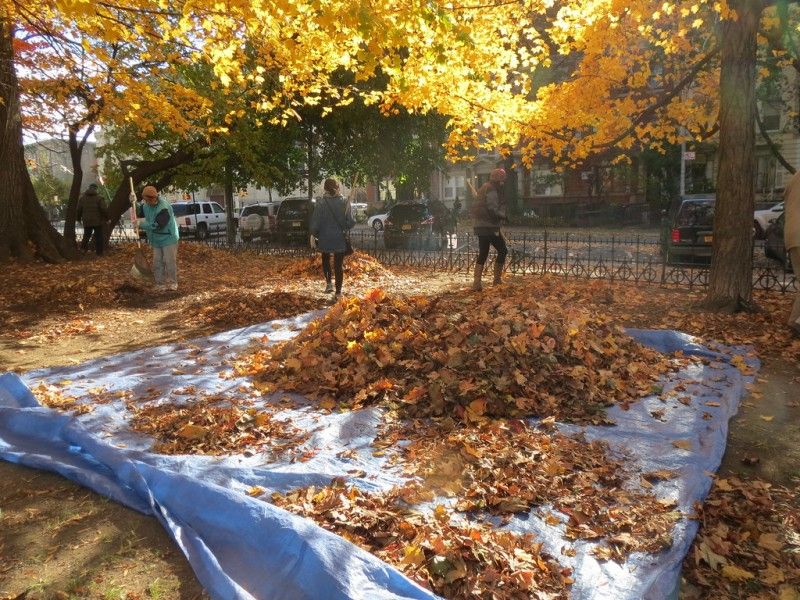
Here is the job for October: rake up the fallen fig leaves that show rust and take them out of the area. Look for the reddish-brown spots and the dusty bumps on the undersides.
Focus on the ground right under the canopy, where most of the leaves land.
University of Georgia Extension recommends this fall cleanup for fig rust. It is guidance from Georgia, not a rule or a trial specific to North Carolina, but fig growers in the Piedmont and coastal plain deal with a similar disease.
Bag the leaves or haul them away rather than leaving them in a pile at the base of the tree. Gloves are enough protection, and a leaf rake or a bucket makes the work quick.
You can do it in one short session, then check again after another round of leaf drop.
Remember what this task is. It is sanitation, meaning you are cleaning up material that may carry the disease.
It is not a treatment for the tree, and nothing gets applied to the plant.
Cleanup cannot cure rust on attached leaves
Picking up fallen leaves helps in one specific way. It may reduce how much disease material hangs around, which can lower carryover from one season to the next.
It does nothing for leaves still attached to the branches, and those leaves will keep their spots.
Nor can cleanup promise a rust-free year. Spores can arrive from neighboring trees, and weather decides a lot about how a disease behaves.
Treat the task as one helpful habit rather than a shield.
The title of this article suggests rust will take over every leaf by fall. That is too strong.
Arkansas Extension says severe infections can cause extensive or early leaf drop, but it does not say every tree or every leaf will be hit.
Some trees lose only a scattering of leaves. Others lose far more.
Georgia’s guidance frames cleanup as a sensible fall step, not an eradication method. A practical example: if your tree dropped half its leaves by September, rake them now, but do not expect the remaining leaves to recover.
Plan next season’s management around timing and the product label
Fall cleanup and spring spraying are two separate ideas. If you want to think about chemical prevention, the timing matters more than the product name.
Arkansas Extension describes one or two neutral-copper applications when the first leaves reach full size, usually in May or early June, with a second round three to four weeks later.
That is regional guidance, not a verified North Carolina schedule. Our mountains, Piedmont, and coast all warm up at different times, so a tree’s leaf timing can differ quite a bit across the state.
Sources also disagree. UF/IFAS Extension mentions a Bordeaux mixture during the growing season.
A Texas A&M AgriLife Extension response said it knew of no fungicides approved for figs in that case, though copper materials may help when applied at disease onset.
Because of that, no spray is universally approved or safe for figs. Do not choose a product just because it contains copper, neem, or sulfur.
The EPA explains that the label directions control where and how a pesticide may be used, including on food crops.
Before buying anything, read the label for fig use and follow every direction, including the rate and any preharvest interval. Spraying will not promise a rust-free tree, and a late-season spray will not repair leaves already damaged.
Your county Extension office can help you weigh options for your area.
Remove fallen leaves now and reassess next season
Rake up the spotted fallen leaves this month and haul them off, as University of Georgia Extension advises. Think of it as tidying, not curing.
When spring arrives, confirm the symptoms and read any product label before deciding on a plan.
A fig tree forgives a lot, and a clean base is a good place to start.