
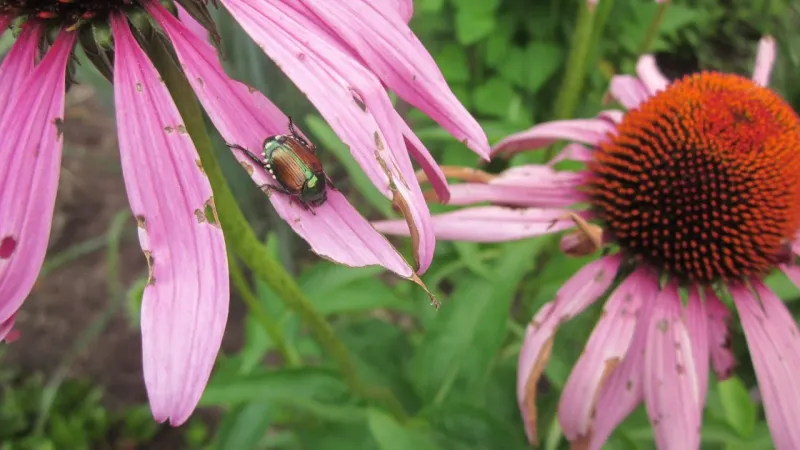
Japanese beetles can turn a healthy rose bush or grapevine into a skeleton of stems in just a few days, and once they show up in a North Carolina yard, gardeners understandably want to act fast. The good news is that two straightforward steps, one aimed at protecting plants right now and one aimed at making your lawn less hospitable to the next generation, can meaningfully reduce the damage.
Neither step requires a spray can, and neither promises a beetle-free yard, but together they give you real leverage over a pest that otherwise multiplies on its own schedule.
Replace the all-or-nothing premise with two practical goals
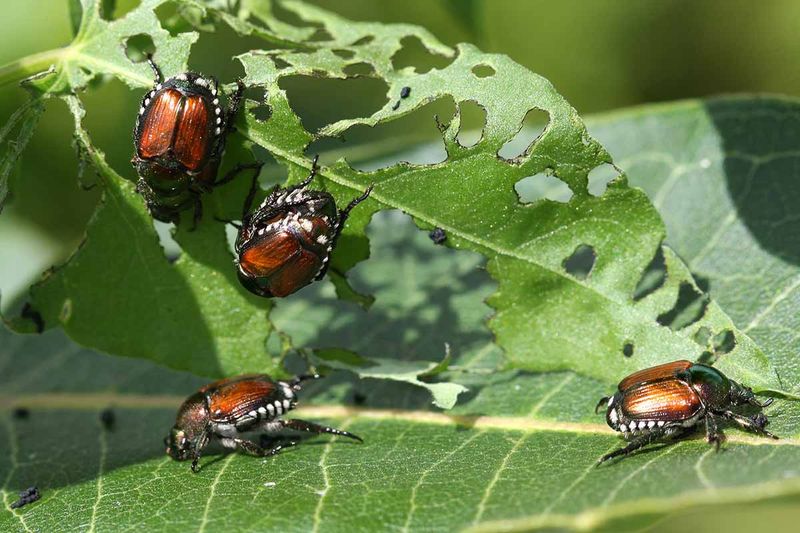
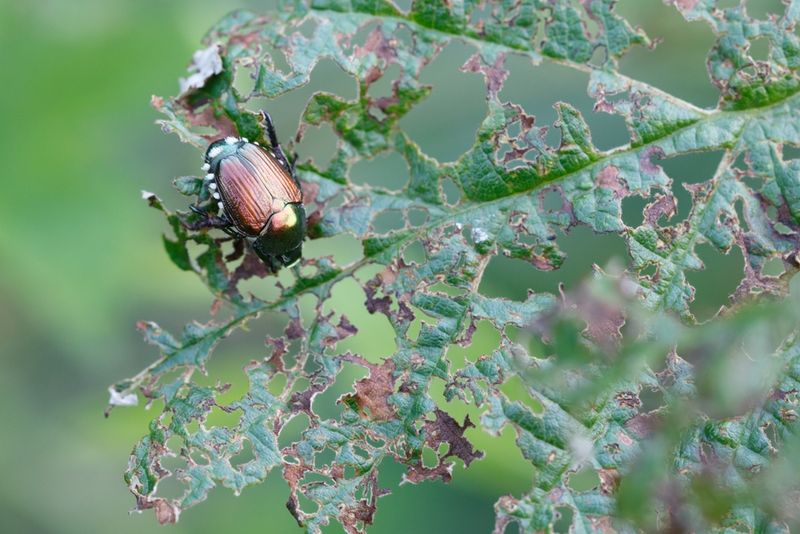
Japanese beetles create two separate problems that call for two different responses, and mixing them up leads to wasted effort. Adult beetles feed on the foliage, flowers, and fruit of more than 300 plant species right now, chewing the tissue between leaf veins and leaving behind that distinctive lace-like skeleton.
Meanwhile, mated females drop into grass or moist soil to lay eggs, and the grubs that hatch spend weeks feeding on grass roots before overwintering and emerging as next summer’s adults.
Knowing that separation matters. Protecting a rose bush today is a plant-damage problem.
Reducing how many beetles emerge from your lawn next June is a soil-moisture and timing problem. NC State Extension’s Japanese beetle profile confirms that the species generally completes one generation per year, which means decisions made during the egg-laying window carry forward to the following season.
Here is the catch that keeps many gardeners frustrated: the first beetle you spot in your yard does not tell you precisely when females are actively laying eggs. NC Cooperative Extension’s pest alert and NC Forest Service insect records both show that adult emergence in North Carolina can begin as early as late May or early June, varying by location and seasonal temperatures.
Early arrivals are often males scouting for mates, not females actively depositing eggs. Treating that first sighting as a universal trigger for changing your watering schedule can mean acting too early, or in the wrong part of the state entirely.
Penn State Extension notes that adult feeding damage, while alarming in appearance, is often cosmetic on otherwise healthy ornamentals. Severe feeding can reduce plant vigor or fruit yield, but a skeletonized leaf does not automatically mean a dying plant.
Keeping those two facts, cosmetic versus lethal, and current damage versus next-year recruitment, clearly in mind lets you prioritize the right action at the right time instead of reaching for the nearest pesticide.
Time reduced lawn watering to egg laying
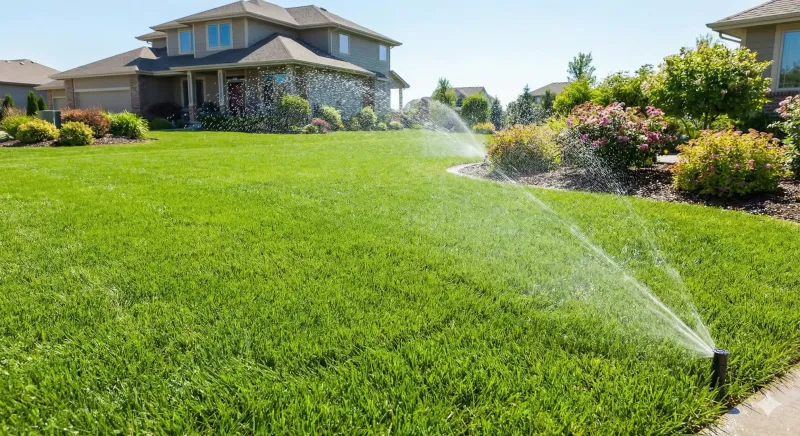
Female Japanese beetles prefer to lay eggs in moist, well-irrigated turf. When the upper inch or two of soil stays consistently wet through July and into early August, it creates near-ideal conditions for eggs to survive and young grubs to establish.
Skipping unnecessary irrigation of established turf during that window, when the grass can safely tolerate some drying, removes one of the conditions that supports egg and young-grub survival.
NC State Extension’s turf beetle guidance specifically identifies lawn moisture management as a practical cultural tool, and University of Minnesota Extension explains that frequent shallow watering supports egg and grub survival while occasional deep watering better supports turf health when irrigation is necessary. The practical takeaway: if you have been running sprinklers on a set schedule regardless of rainfall, the egg-laying period is a good time to pause that routine for established grass.
July through early August is a reasonable general estimate for North Carolina, but it is not a fixed calendar rule. Virginia Cooperative Extension notes that local weather, soil temperature, and the timing of adult flight all shift the egg-laying window from year to year and place to place.
A hot, dry early summer can push emergence and egg laying earlier; a cooler, wetter spring can delay it. Watching when large numbers of adult beetles appear in your specific area, rather than going by a fixed date, gives you a more useful signal.
NC State’s tobacco pest management notes on Japanese beetles reinforce that this approach may reduce local egg and grub survival, but it is a population-reduction measure, not an eradication strategy. Rainfall alone can rehydrate soil, and nearby properties that continue irrigating freely can sustain eggs and grubs across the fence.
The goal is to make your turf less hospitable during the relevant window, not to guarantee zero beetles the following summer.
Protect plants and turf that cannot dry out
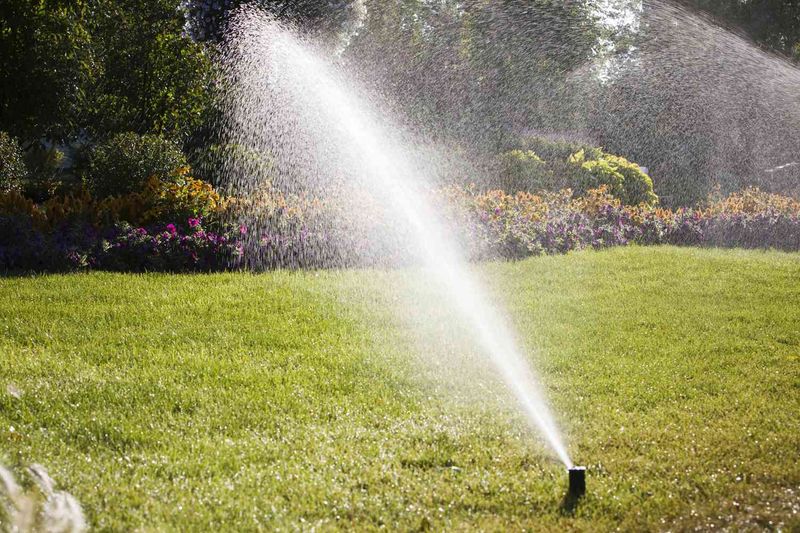
Reducing unnecessary lawn irrigation during the egg-laying window does not mean putting every plant in your yard on a water diet. Newly seeded or sodded turf needs consistent moisture to establish roots, and letting it dry out during that critical period can kill the grass before beetles ever become a factor.
The moisture recommendation applies specifically to established turf that can safely tolerate some drying without lasting damage.
NC State’s turf beetle resource and the NC State arthropod pest guide both frame the cultural control as skipping unnecessary irrigation, not as landscape-wide drought stress. Drought-stressed trees, food crops, container plants, and any ornamental that requires regular water to survive should keep receiving what they need.
Plant health comes first; pest management is a secondary consideration.
Vegetable gardens are a clear example where this trade-off tips toward irrigation. Tomatoes, peppers, squash, and other food crops need steady soil moisture for fruit development, and withholding water to deter beetle egg laying in a nearby patch of grass is not a reasonable exchange.
Water those beds on their normal schedule and focus the reduced-irrigation strategy on the lawn sections where established turf is the target.
One more honest limit worth naming: even if you manage your own lawn’s moisture perfectly, University of Minnesota Extension points out that rainfall and irrigation on neighboring properties can sustain egg and grub survival across your property line. The strategy reduces favorable conditions on your turf, but it cannot control what happens two doors down.
That is not a reason to skip the practice; it is a reason to hold realistic expectations about how much it can accomplish.
Hand-pick adults to limit damage this season
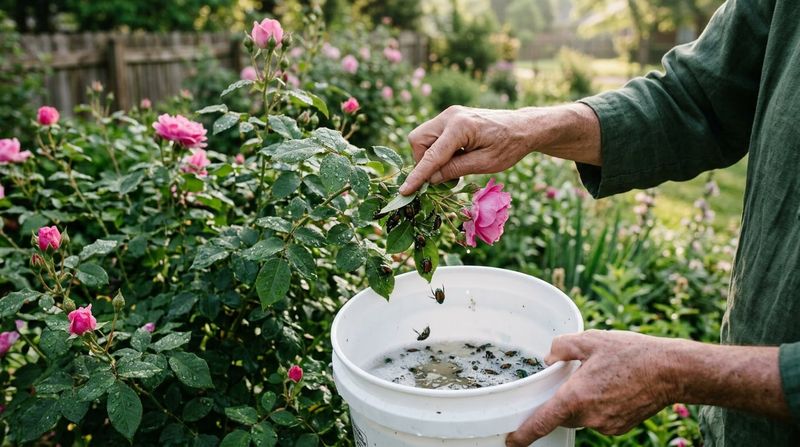
While the lawn-moisture strategy works on the next generation, your plants need help right now. Hand-picking is the most reliable low-chemical response for a small home landscape, and it works better than many gardeners expect when done consistently.
Go out to your most vulnerable plants, roses, grapes, linden trees, and similar beetle favorites, and knock or shake the beetles directly into a container of soapy water. The soap breaks surface tension and the beetles drown quickly.
Morning and evening are the most productive collection times. NC State Extension notes that beetles are cooler and less active during those hours, making them slower to fly and easier to dislodge.
Midday collection is not impossible, but expect more beetles to escape into flight before they hit the water. A consistent daily check during peak feeding season makes a noticeable difference over the course of a week.
University of New Hampshire Extension’s research spotlight on hand-picking found that early removal can reduce feeding damage and may limit the feeding-related odors and aggregation pheromones that draw additional beetles to the same plant. Beetles release compounds when feeding that signal to others that a food source is available; fewer beetles on a plant means fewer chemical cues attracting the next wave.
University of Minnesota Extension’s managing Japanese beetle feeding guidance is direct about the limits: hand-picking reduces present adult feeding damage but does not eliminate the wider local population. Adults can fly in from neighboring yards, so clearing beetles from your rose today does not mean the same plant will be untouched tomorrow.
The practice protects plants this season; it is not a population-elimination tool, and pairing it with the lawn-moisture strategy gives you coverage on both fronts.
Use barriers selectively and skip beetle traps for control
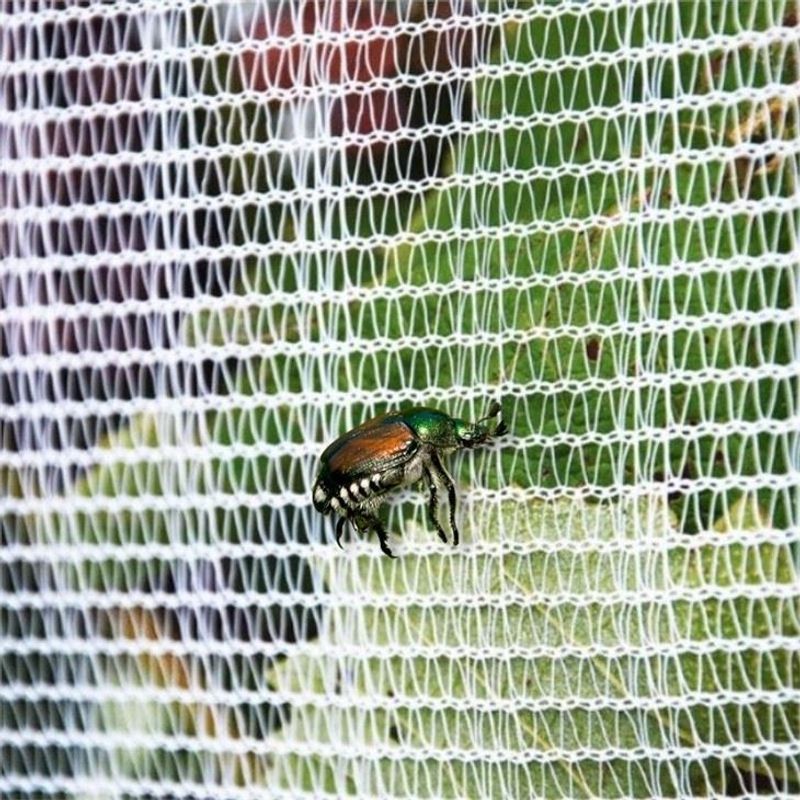
Fine mesh netting offers straightforward physical protection for plants that beetles favor and that do not need pollinator access to function. Blueberry bushes after fruit set, ornamental shrubs, and nonflowering vegetables can be covered with row-cover fabric or fine insect netting during peak beetle season.
The barrier simply keeps adults off the foliage without any chemical involvement.
The important exception: do not net blooming fruit trees, squash, cucumbers, or any plant that requires bees for pollination. NC State Extension flags this clearly, and it is easy to overlook in the urgency of seeing beetles on a plant.
A covered blueberry bush with no ripe fruit to protect, or a rose you are willing to keep unflowered temporarily, is a reasonable candidate. A covered squash plant is a plant that will not set fruit.
Beetle traps are a separate question, and the extension consensus on them is consistent. Iowa State University Extension explains that traps use floral and sex-pheromone lures that are highly attractive to beetles, often drawing in more beetles than the trap captures.
University of Kentucky Entomology and UK Extension’s alternatives guide both report increased feeding damage on desirable plants near trap locations. For a home garden, placing a trap near your roses is likely to make the beetle problem on those roses worse, not better.
Traps can serve as monitoring tools to confirm that adults are flying in your area, which can help you time the reduced-irrigation and hand-picking responses. If you use one for that purpose, place it well away from plants you want to protect.
As a control method, though, they are a poor fit for most home landscapes. Homemade repellents made from garlic, hot pepper, or orange extract fall into the same category: UK Extension’s alternatives research reports poor effectiveness for several such products, and they are not a reliable substitute for physical removal or moisture management.
Inspect for grubs before considering treatment
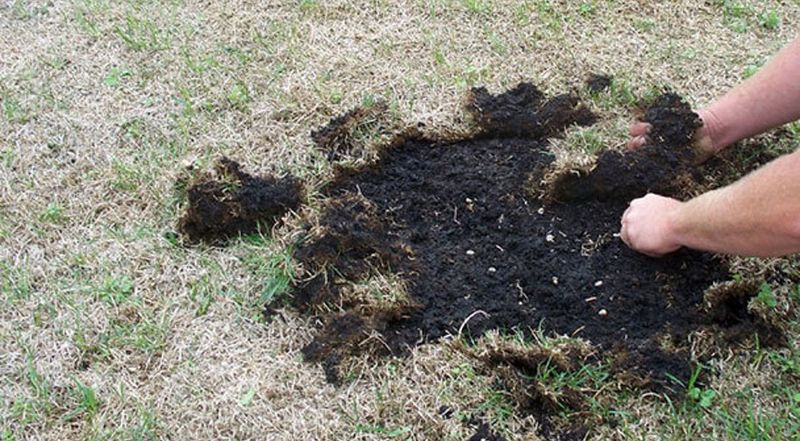
Seeing adult beetles on your plants does not automatically mean your lawn is full of grubs, and treating turf without checking first wastes money and puts unnecessary pesticide into the soil. A turf inspection takes about ten minutes and gives you actual information to work with.
Use a sharp spade or trowel to cut and peel back several one-square-foot sections of turf in areas where the lawn has felt spongy underfoot, turned brown in patches, or pulled up easily, signs that roots may have been chewed through.
Maine Cooperative Extension’s IPM publication on Japanese beetles describes commonly cited thresholds in the range of five to ten grubs per square foot, though the right threshold for your lawn depends on turf condition, grass type, and grub species present. A thick, well-rooted stand of tall fescue may tolerate a higher count without visible damage; a thin, drought-stressed lawn may show injury at lower densities.
USDA APHIS program guidance uses lower thresholds in specific regulatory contexts, which illustrates that there is no single universal number.
NC State’s arthropod pest guide for North Carolina turf distinguishes between preventive applications, timed near peak adult flight or before egg hatch when grubs have not yet established, and curative treatments applied when young grubs are actively feeding near the soil surface. Timing matters for both approaches, and the product label controls the legal application window, rate, and irrigation requirements.
One thing worth stating plainly: treating your lawn for grubs will not necessarily protect your ornamental plants from adult beetles next summer. University of Wisconsin-Madison Extension points out that adult beetles are strong fliers and can arrive from untreated properties nearby.
Grub treatment addresses the population developing in your own turf; it cannot stop adults that hatched somewhere else from landing on your roses. Inspect first, treat only if the count justifies it, and keep expectations grounded in what a lawn treatment can and cannot reach.
Choose targeted treatment only when the evidence supports it
When hand-picking, reduced irrigation, and physical barriers have been applied and a grub inspection shows counts above your turf’s damage threshold, a targeted treatment may be appropriate. The decision sequence matters: identify the site, confirm the target pest and its life stage, then select a product labeled for that specific use.
NC State’s turf pest guide ties treatment timing to the pest’s life stage, because a product effective on young grubs near the surface may not perform the same way on fully developed grubs deeper in the soil.
Label compliance is not optional. EPA insecticide guidance and product label examples with pollinator restrictions make clear that legal rates, permitted application sites, required irrigation steps, and pollinator precautions vary by formulation and can change.
Never apply a pesticide to a flowering plant when bees or other pollinators are foraging, and never assume a rate from a different product or an older label applies to what you have in hand.
Broad-spectrum insecticides can harm beneficial insects along with beetles, so keeping any treatment as targeted as possible protects the pollinators and predatory insects that work in your favor throughout the season. University of Minnesota Extension and Virginia Cooperative Extension both frame pesticide use as a last step after cultural and physical controls, not a first response to adult sightings.
The realistic goal across all of these steps is fewer favorable conditions and less damage, not a beetle-free yard. A well-timed combination of hand-picking, selective irrigation management, and grub inspection puts you ahead of most of your neighbors, which is often the most a home gardener can honestly expect from a pest that flies freely across property lines.