
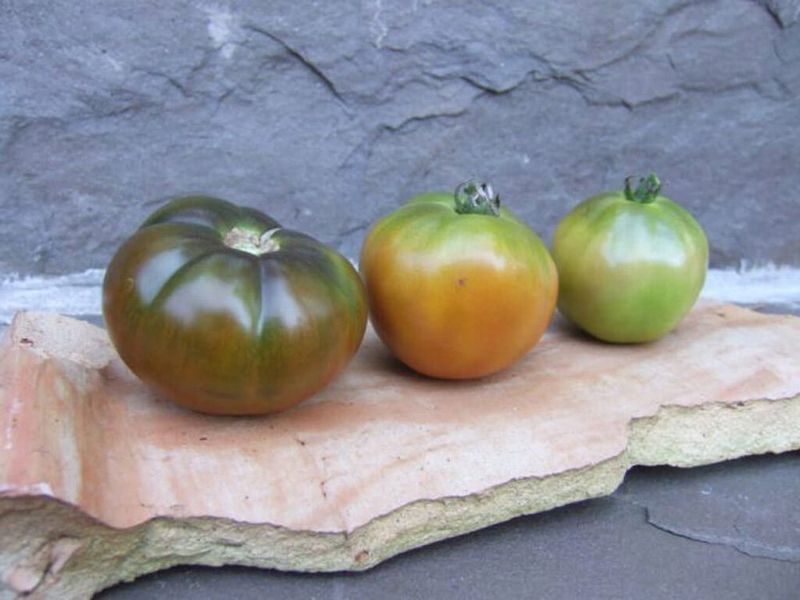
Every fall, North Carolina gardeners watch the calendar with one eye and their tomato vines with the other, wondering which green fruit still has a chance before cold weather arrives. Removing new blossoms when frost is approaching is one of the most useful steps you can take to redirect the plant’s energy toward fruit that is already developing.
That said, it is not a magic fix or a requirement for every plant, and late tomatoes can still ripen without it when the season allows enough time. What follows is a practical guide to using blossom removal as part of a broader frost-management plan, tailored to the very different conditions across North Carolina’s mountains, Piedmont, and Coastal Plain.
Use Blossom Removal as the Primary Late-Season Step
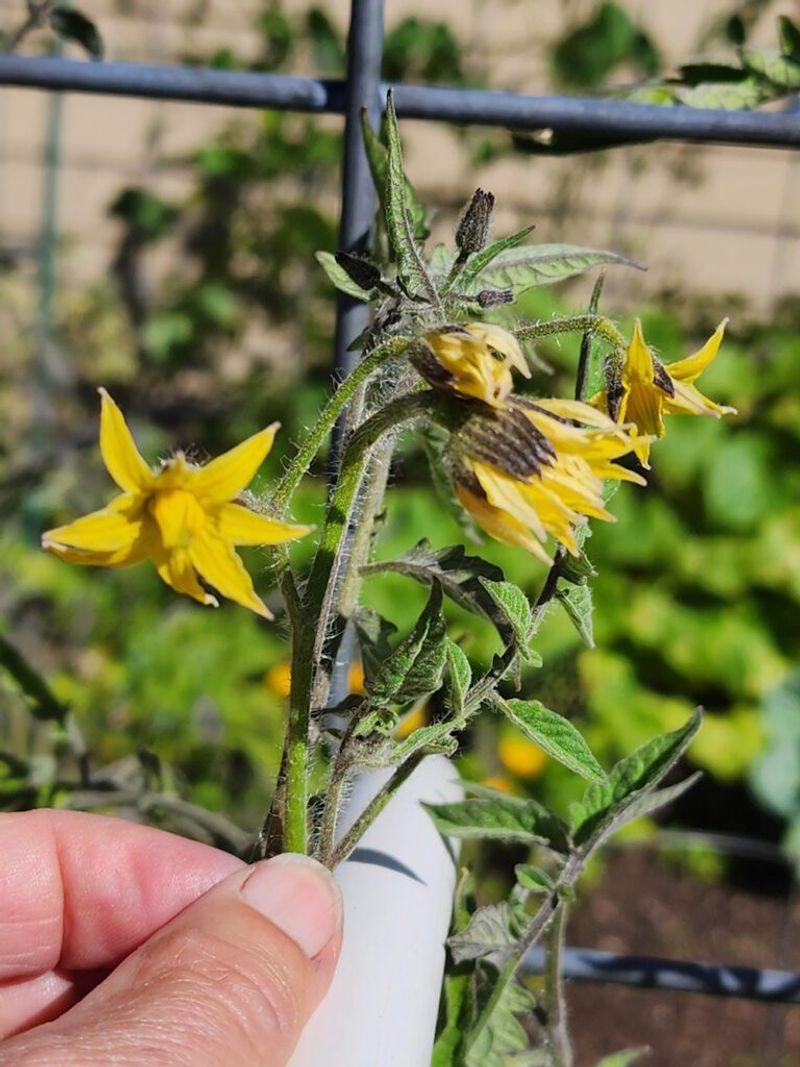
Pinching newly opened tomato flowers off the vine sounds almost too simple, but it addresses a real problem: every blossom that opens in the final weeks of the season is unlikely to produce a tomato that matures before frost catches up with it. Oregon State University Extension’s tomato growing guide recommends removing new blossoms and immature tomatoes that will not ripen before frost, specifically so the plant stops investing in late fruit set.
The logic is straightforward: a tomato plant has a limited supply of time, water, and energy late in the season, and new flowers represent a future claim on all three.
When you remove those flowers, the plant can put more of its remaining resources toward fruit that already has a head start on the vine. That shift will not guarantee every existing tomato ripens, but it can improve the odds for the ones that are closest to maturity.
Think of it as editing the plant’s workload rather than punishing it.
A few qualifications matter here. Blossom removal is a useful strategy when frost is genuinely close, not something to do at the first sign of cooler nights in August.
Illinois Extension’s Good Growing podcast addresses late-season tomato management and reinforces that stopping new flower production is a practical way to focus the plant. And NC State Extension’s home garden tomato guide notes that indeterminate tomatoes keep flowering and setting fruit until frost or other adverse conditions intervene, which is exactly why the intervention makes sense for those varieties as the season winds down.
Determinate types, which finish most of their production in a shorter window, may not benefit as much from the same approach.
Time the Job From Your Local Frost Outlook
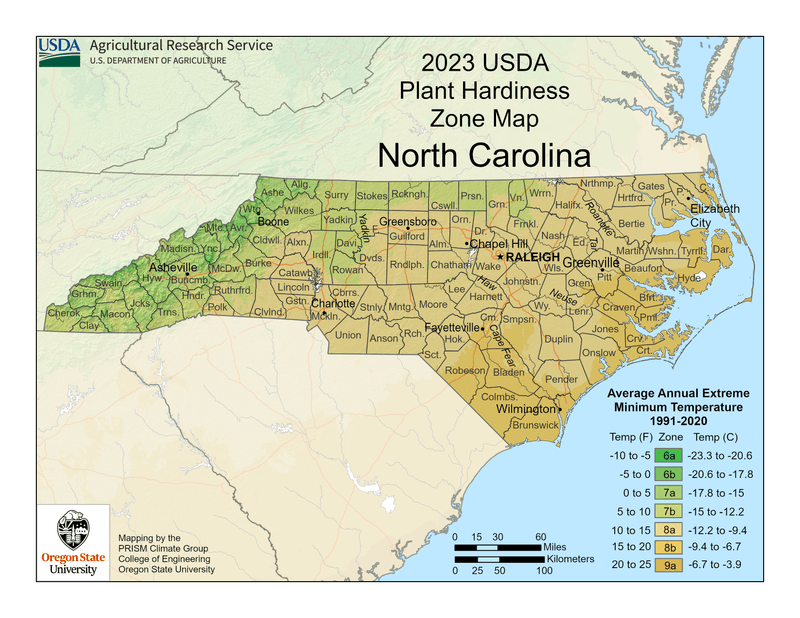
North Carolina is not one climate. A gardener in Boone or Blowing Rock may face a killing frost weeks before someone tending tomatoes in Wilmington or the lower Coastal Plain, and a low-lying garden on the valley floor can frost earlier than a hillside plot just a short drive away.
Using a single statewide calendar date to decide when to remove blossoms would mean acting too early in some places and too late in others.
The most reliable starting point is your local frost outlook. NWS Raleigh’s frost and freeze maps, built from 1991-2020 climate data, show earliest, median, and latest dates for 36-degree frost events, 32-degree freezes, and 28-degree hard freezes across the state.
Those maps let you see what is historically likely in your area and compare that to the current extended forecast. Checking both gives you a much better sense of your actual window than any rule of thumb.
Extension guidance offers flexible planning benchmarks rather than one fixed date. Oregon State University Extension recommends removing new blossoms and unpromising small fruit roughly 30 days before expected frost, which is a reasonable target for blossom-only removal.
Illinois Extension’s late-season tomato guidance discusses topping vigorous indeterminate plants, which involves cutting back growing tips as well as removing flowers, and places that step roughly six to eight weeks before expected frost. The difference reflects how much you are doing: removing only new blossoms is a lighter intervention and can happen closer to your frost date, while topping requires more lead time because it is a more aggressive change to the plant’s growth pattern.
Count backward from your local forecast or your area’s median first frost date, not from a fixed September or October date on a national gardening calendar. Mountain gardeners may need to act in late August or very early September, while Coastal Plain gardeners might have until October or beyond.
Your frost map and your current weather app together are better guides than any generalized advice about when early fall begins.
Remove Only Fruit That Has No Realistic Time to Mature
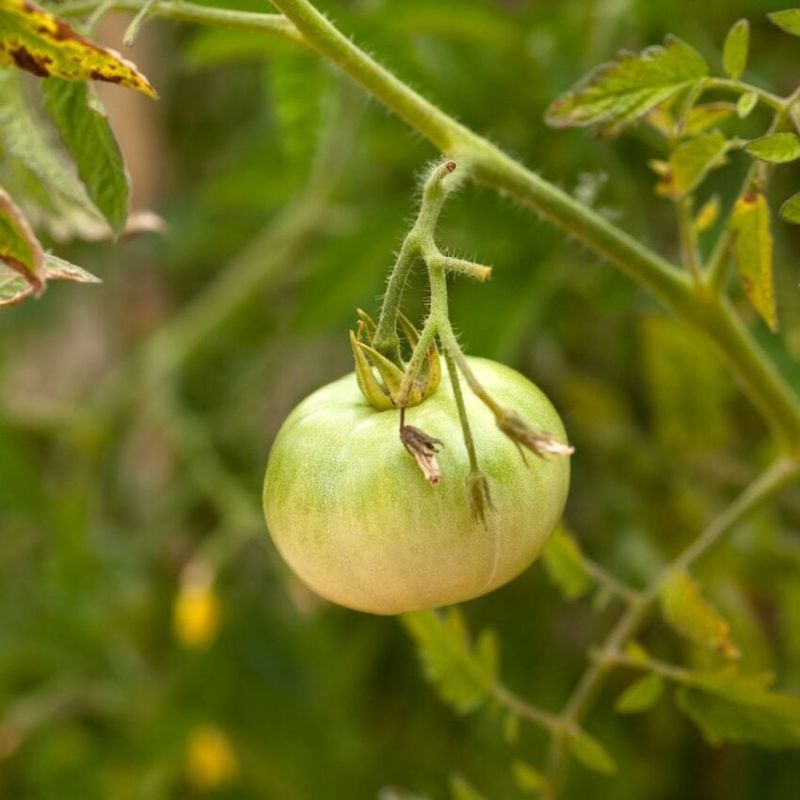
Once you have removed new blossoms, the next question is whether any of the small fruit already on the plant deserves the same treatment. The answer depends on size and timing.
A tomato the size of a marble or a small grape, with several weeks still needed to develop, is unlikely to reach a usable stage before frost. Removing it is a reasonable cleanup step that keeps the plant from spending time on a fruit that was never going to deliver.
Larger green tomatoes are a different story. A fruit that has already sized up and feels firm and full has invested weeks of the plant’s resources, and it deserves the chance to finish.
Leave those on the vine when your frost window still allows time for development. Oregon State University Extension’s tomato guide frames the removal decision around what can realistically ripen before frost, not around stripping everything small off the plant.
Cultivar matters here more than many gardeners realize. NC State Extension notes that tomato ripening times vary considerably, with early types maturing in roughly 50-65 days after transplanting, mid-season types in 66-80 days, and late types in more than 80 days under favorable conditions.
A small fruit on a fast-maturing cherry tomato has a much better shot at finishing than a small fruit on a large beefsteak type that needs many more weeks of warm weather. Factor in your specific variety when deciding what to pull and what to keep.
Removing a blossom or a tiny fruit cannot speed up the ripening of another tomato that is not ready. Illinois Extension’s fruit problem discussion reinforces that plant resources shift gradually, and there is no shortcut that forces a half-developed tomato to rush through the process.
The goal of selective removal is to stop new resource commitments, not to accelerate the ones already underway.
Reserve Topping for Vigorous Indeterminate Plants
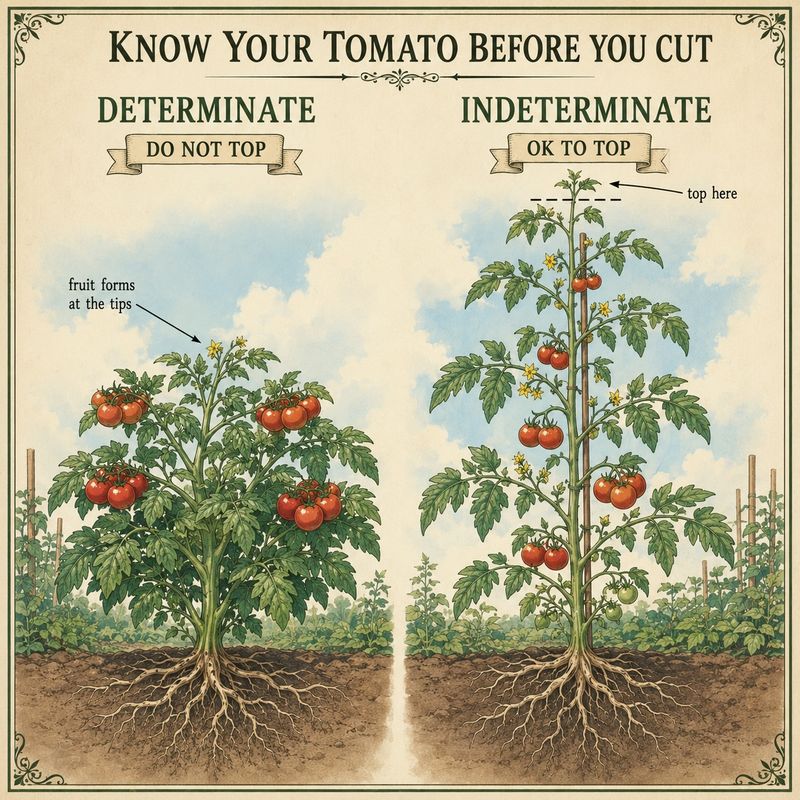
Topping a tomato plant means cutting off the growing tip of the main stem, and sometimes of side branches, to stop upward growth and new flowering. For the right plant at the right time, it can be a useful late-season move.
For the wrong plant, it is unnecessary at best and damaging at worst.
Indeterminate tomatoes keep producing new stems, leaves, flowers, and fruit all season long until something stops them, whether that is frost, disease, or a gardener’s pruning shears. NC State Extension confirms that indeterminate varieties continue flowering and fruiting until frost or other adverse conditions, which is why cutting back the growing tips can make sense as the frost window closes in.
Stopping that upward push means the plant is no longer reaching for new growth that will never pay off before cold arrives.
Determinate tomatoes work on a different schedule. They are bred to produce most of their crop over a concentrated period and then naturally slow down.
Illinois Extension’s pruning guidance for tomatoes and peppers advises that determinate varieties generally should not have their suckers removed, and the same principle applies to late-season topping. Cutting back a determinate plant can reduce the leaf area it needs to finish its existing fruit without offering any meaningful benefit in return.
Even on a vigorous indeterminate plant, topping is an optional escalation rather than a required step. Illinois Extension places this practice roughly six to eight weeks before expected frost, which means it requires more planning lead time than simple blossom removal.
If your frost date is already close, removing new blossoms is the more practical first move. Topping is for gardeners who catch the window early enough for the plant to redirect its energy over several weeks, and it still cannot promise that every tomato already on the vine will finish ripening before cold arrives.
Protect the Leaves and Keep Late-Season Care Steady
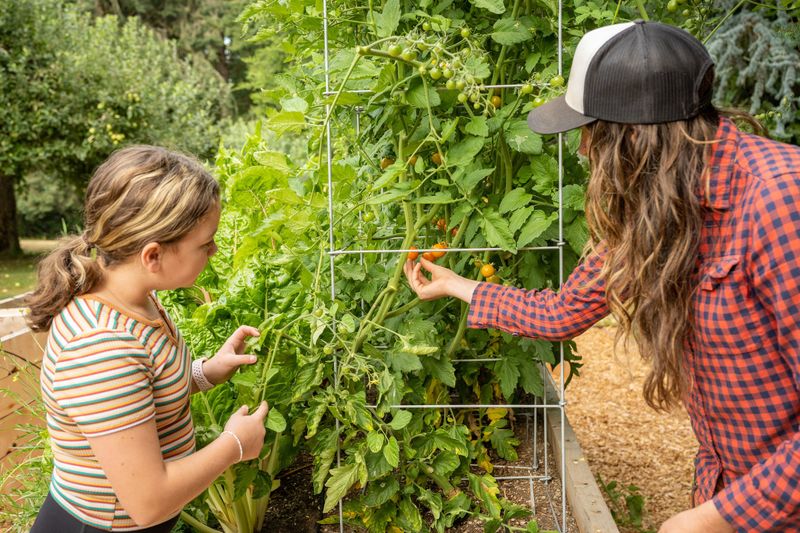
After removing blossoms and any hopeless small fruit, some gardeners feel the urge to keep cutting. Stripping off large amounts of healthy foliage is a mistake that can set the plant back rather than help it.
Leaves are where the plant manufactures the sugars that fuel fruit development, and removing them in bulk reduces the plant’s ability to finish what is already on the vine.
University of Illinois Extension’s tomato growing resource warns that severe pruning can increase cracking and that pruning stress may worsen blossom-end rot. Exposing fruit suddenly by removing surrounding foliage can also lead to sunscald, particularly during warm fall days when the sun is still strong enough to damage unprotected skin.
Removing a few yellowing or diseased leaves is reasonable maintenance; taking off healthy green growth is not.
Consistent watering matters just as much in fall as it did in summer. NC State Extension recommends soaking the soil to roughly 6 to 8 inches at approximately seven-day intervals, adjusted for your soil type and current weather.
Letting the plant dry out severely in hopes of forcing ripening is not a reliable strategy for home gardeners, especially in the variable heat and rain patterns common across North Carolina in fall.
Fertilizer decisions deserve the same caution. University of Minnesota Extension’s tomato guidance notes that excess nitrogen encourages leafy growth at the expense of fruit maturity.
Utah State University Extension pest and plant health guidance similarly cautions against casual late-season nitrogen applications. Rather than adding fertilizer as a general fall boost, base any application on a soil test result.
Late nitrogen applied without that guidance can push the plant toward producing new growth instead of finishing the fruit already developing on the vine.
Harvest and Protect Tomatoes Before a Freeze
Frost and freeze are not the same thing, and the difference matters when you are deciding whether to harvest or cover your tomatoes. The National Weather Service uses roughly 36 degrees Fahrenheit for a frost event, 32 degrees for a freeze, and 28 degrees for a hard freeze.
NWS Raleigh’s frost and freeze maps display all three thresholds separately so you can see what your area typically faces and when. Tomatoes can suffer chilling injury and cell damage before temperatures actually hit 32 degrees, so do not wait for ice on the ground before acting.
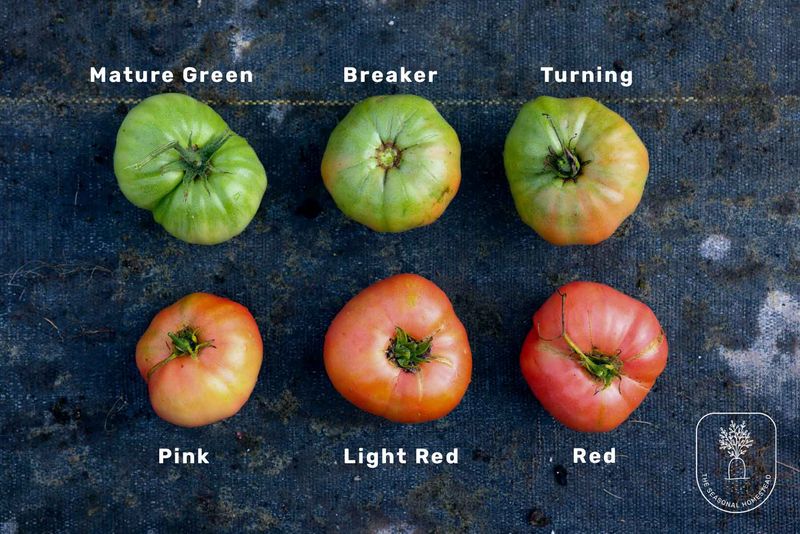
When a damaging freeze is in the forecast, harvest mature-green and partially colored tomatoes before exposure. A mature-green tomato is one that has reached full size and developed its internal gel, even if the skin is still entirely green.
University of Minnesota Extension confirms that mature-green tomatoes often ripen satisfactorily indoors, while truly immature green fruit that has not yet reached full development may remain flavorless or fail to ripen properly. Knowing the difference saves you from filling a bowl with fruit that will never be worth eating.
UC Davis postharvest research on tomatoes explains that tomatoes respond to ethylene, and placing a ripe tomato near mature-green fruit can nudge the ripening process along. Temperature and maturity at harvest matter more than light, so store harvested tomatoes in a single layer at room temperature, away from cold windowsills or refrigerator temperatures that can halt ripening and degrade texture.
Illinois Extension’s tomato resource reinforces that chilling temperatures damage quality and recommends room-temperature storage for ripening.
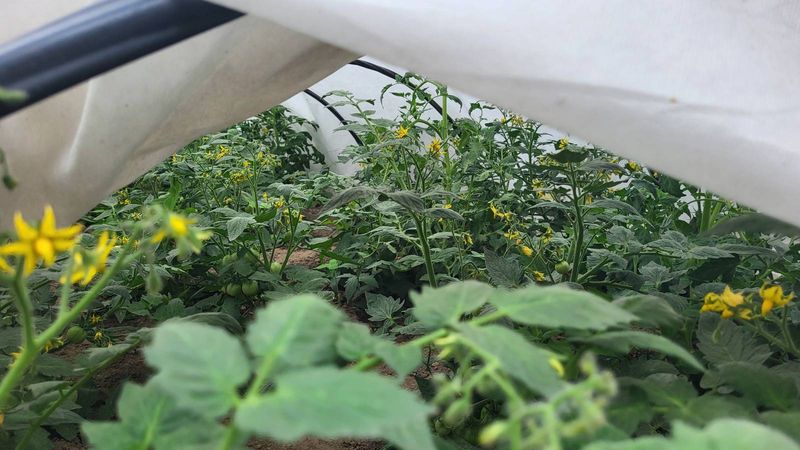
For tomatoes still on the plant when a light frost is forecast but a hard freeze is not, temporary protection can buy more time. NC State Extension’s season extenders guide recommends cloches, row covers, and low tunnels, with covers closed at night and opened or removed during the day for ventilation.
Plastic left over plants in warm daylight can overheat and damage the very fruit you are trying to protect. Used correctly, season extenders may add several weeks of fall production under the right conditions.
The Practical Rule for Saving the Late Crop
Putting the whole strategy together comes down to a short sequence of decisions timed to your local conditions. Start by checking your area’s frost outlook using the NWS maps and your current extended forecast, then count backward to figure out how much growing time is realistically left.
NWS Raleigh’s frost probability maps give you a data-backed starting point rather than a guess.
From there, remove new blossoms on the vine, then walk the plant and pinch off any fruit too small to have a realistic chance. Leave well-developed green tomatoes in place.
Oregon State University Extension’s guidance frames this as redirecting the plant’s remaining time and energy rather than stripping it. Preserve healthy foliage, keep watering consistently, and skip the late nitrogen.
NC State Extension’s home garden tomato guide supports steady care through the end of the season as the foundation for finishing existing fruit.
When a damaging freeze is forecast, harvest mature-green tomatoes and bring them inside to ripen at room temperature rather than gambling on one more night. The goal of this entire approach is not to guarantee a full harvest but to stop the plant from spending its final weeks on fruit that was never going to make it, while giving the tomatoes that have a real chance the best possible conditions to finish.
A little focused editing of the vine, paired with honest weather awareness, goes further than any single action taken in isolation.