
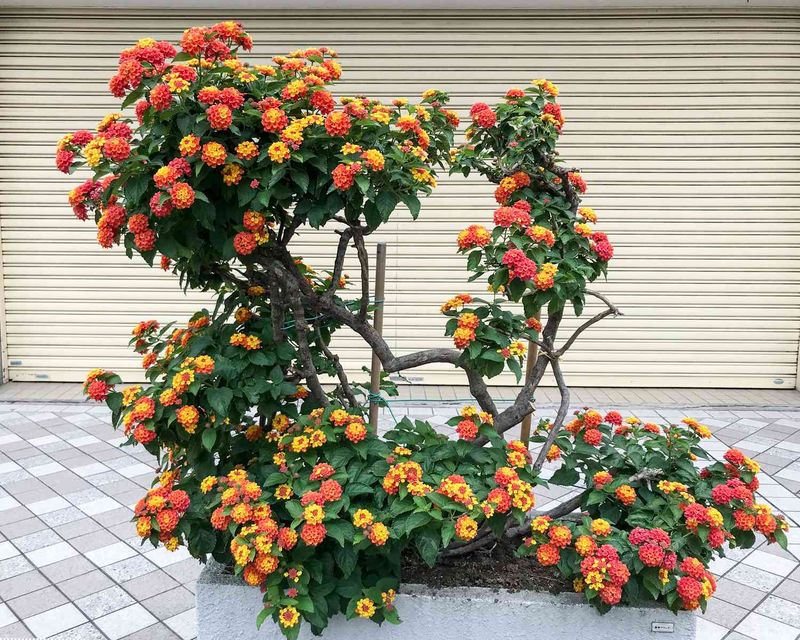
Most patio plants in Texas give up sometime around mid-July, when the concrete radiates heat like a skillet and the thermometer refuses to drop below 90 even at night. Texas lantana, known botanically as Lantana urticoides or Lantana horrida, is one of the few flowering plants that can keep blooming through those conditions when it is grown in the right container with the right care. Knowing which lantana to buy, how to set it up, and what to expect through summer and into winter makes the difference between a pot that keeps performing and one that quietly fails.
Why Texas lantana fits a hot patio
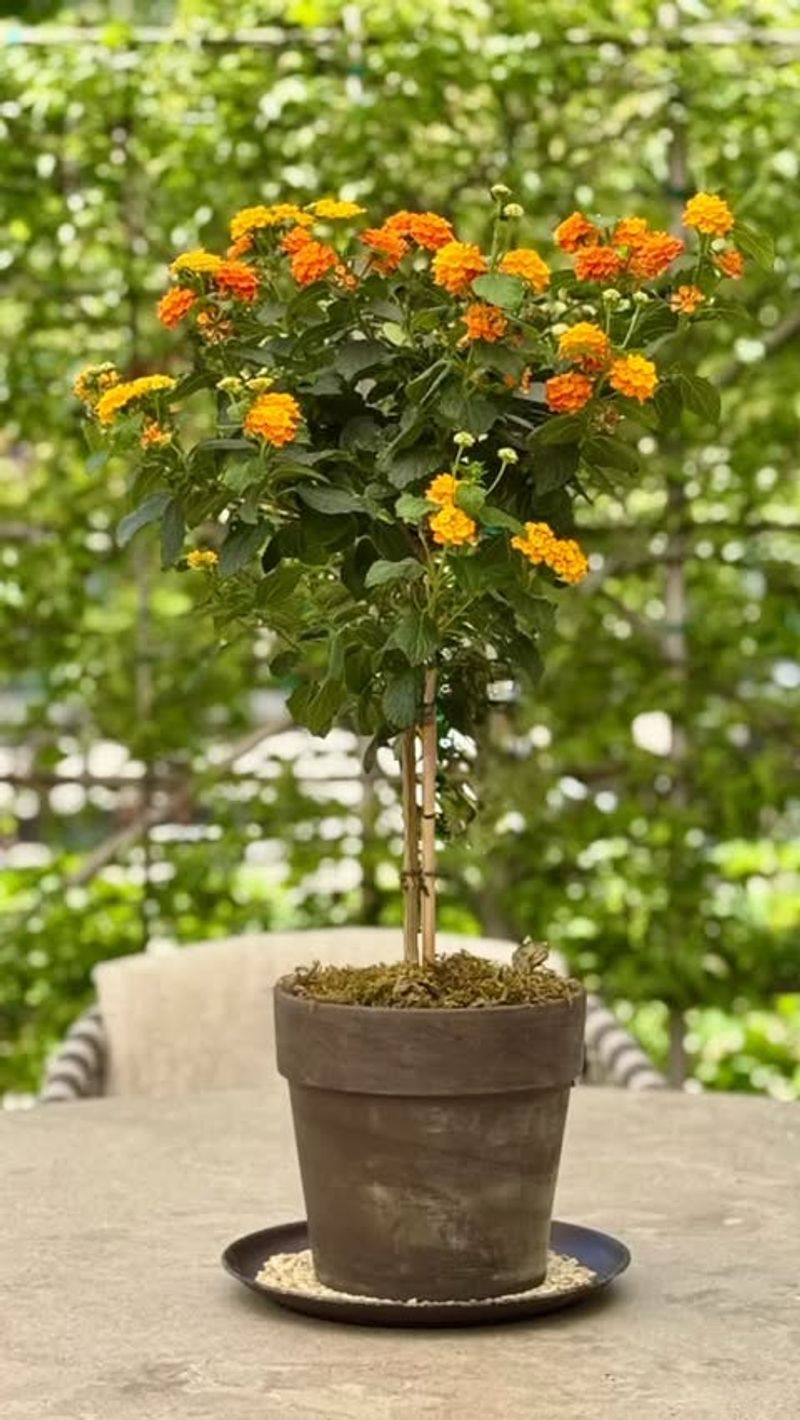
Texas lantana earns its place on a sun-baked patio not because of a single flashy trait, but because several of its documented characteristics work together under conditions that eliminate most other flowering plants. Texas A&M AgriLife Extension identifies it as a Texas-native plant suited to full sun, drought conditions after establishment, and container growing when the pot is large enough to support the root system. That combination is genuinely rare among plants that also flower reliably from spring through fall.
Texas SmartScape describes it as a plant that loves Texas heat and can continue flowering as temperatures climb, which matches what gardeners across the state observe when the setup is right. The botanical names to look for are Lantana urticoides and Lantana horrida, both used for the native Texas species. Checking the tag matters because not every plant sold simply as “lantana” shares these traits.
A container plant faces harder conditions than the same species growing in the ground. Pots heat up faster, dry out faster, and give roots less insulation from temperature swings. Even an established Texas lantana can wilt during a heat wave if the pot is too small, the irrigation falls behind, or hot wind strips moisture faster than the roots can absorb it. Texas Superstar plants like this one are evaluated across Texas ecoregions, but no program can promise that a container plant stays untouched through every brutal stretch of summer.
The honest promise is dependable performance when the container, placement, and watering routine are matched to the plant’s actual needs.
Match the lantana form to your container
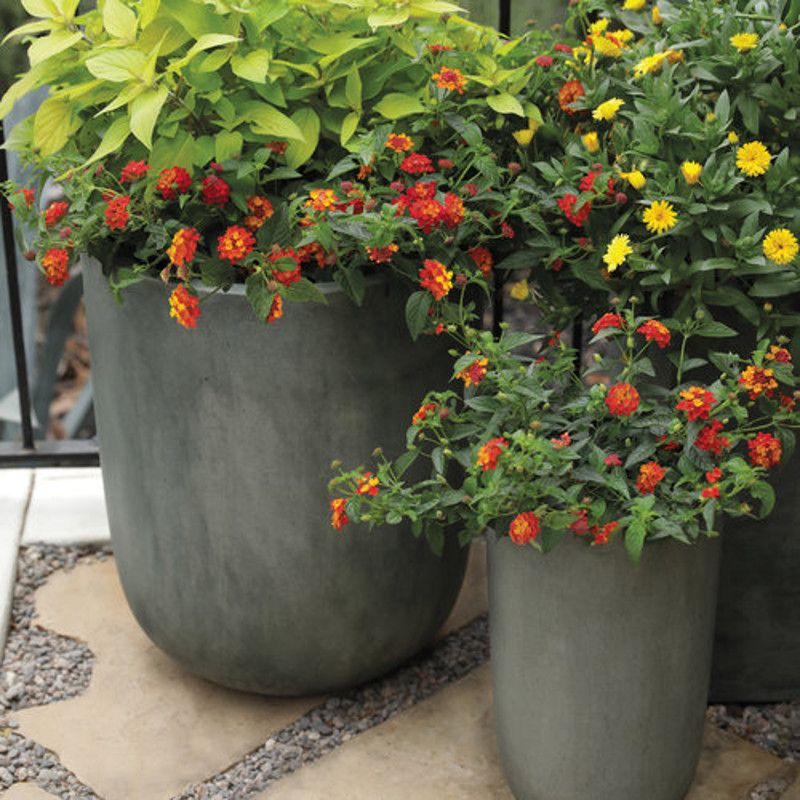
Picking up any lantana at the garden center and expecting it to behave the same way is a mistake worth avoiding before you spend money on a pot and potting mix. Two forms show up most often in Texas nurseries, and they suit different container goals. Upright Texas lantana, sold under the botanical names Lantana urticoides or Lantana horrida, is the native species. It grows into a rounded, sometimes woody shrub that can reach several feet tall and wide when conditions are favorable, making it a strong vertical presence in a large container but not a natural spiller.
Trailing lantana, Lantana montevidensis, is a different species entirely. Texas A&M’s Travis County Extension describes it as a reliable Central Texas bloomer from spring through fall that works well in a container. Its stems arc outward and downward, making it the better choice when you want growth to spill over the pot’s rim and soften the edges. It is not the same plant as native Texas lantana, so gardeners who want a Texas-native planting should not assume the trailing form qualifies.
Austin’s watershed protection plant guide lists it separately from native Texas lantana for exactly that reason.
A third name comes up frequently and deserves a clear warning: Lantana camara. This is a non-native species that Texas Invasives lists as invasive in Texas. It may look similar at the garden center, but planting it in a container where seeds or cuttings could spread to natural areas is a problem worth avoiding. Always read the botanical name on the tag before buying, not just the common name, and choose Lantana urticoides, Lantana horrida, or Lantana montevidensis based on the shape your container needs.
Texas A&M AgriLife Extension recommends the native upright form for container growing in large pots.
Build a container that buffers heat
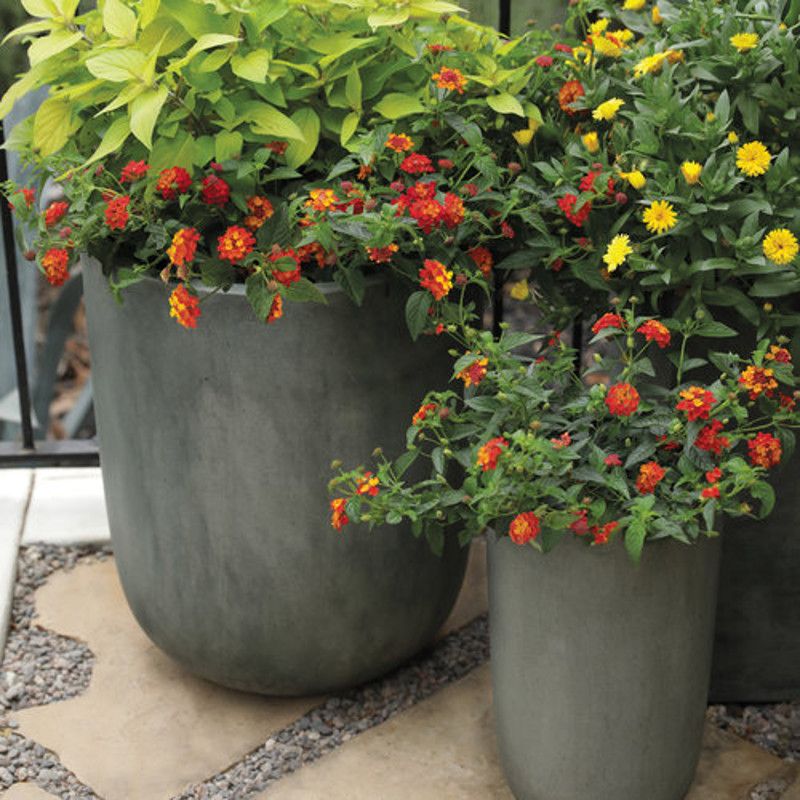
Getting the container right matters as much as choosing the correct plant. Texas A&M AgriLife Extension specifically calls Texas lantana appropriate for a large container, and the word “large” is doing real work there. A bigger pot holds more potting mix, which means more moisture reserve, more root room, and more thermal mass to buffer the temperature swings that happen when a pot sits in direct sun on a concrete patio. University of Arizona extension guidance notes that containers smaller than roughly 14 inches across can be extremely difficult to keep moist in direct summer sun, and that larger pots require less frequent irrigation overall.
Drainage holes are not optional. Without them, excess water pools at the bottom of the pot, displaces oxygen from the root zone, and sets up conditions for root disease. University of Arizona’s desert container gardening guide explains that poorly drained containers deprive roots of oxygen and encourage root rot even in plants that tolerate dry conditions well. Pair drainage holes with a free-draining commercial potting mix rather than garden soil, which compacts in a container and slows water movement.
After watering, let the excess drain fully and do not set the pot in a saucer that collects and holds standing water.
Patio conditions add stress that even a well-drained pot cannot fully cancel. Dark-colored containers absorb more heat than light or glazed ones, which can push root-zone temperatures well above air temperature on a hot afternoon. Concrete and stucco walls reflect heat back onto the pot from multiple directions. Hot, dry wind accelerates water loss from both the soil surface and the plant’s leaves simultaneously.
University of Georgia Extension recommends using larger containers, ensuring drainage, and considering shelter from hot wind when placing containers in exposed locations. Choosing a lighter pot color, elevating the container slightly off the concrete surface to allow airflow underneath, and positioning it where it avoids the worst afternoon reflected heat are practical steps that help the plant’s heat tolerance actually translate to a full, attractive display.
Give lantana full sun, then manage exposure
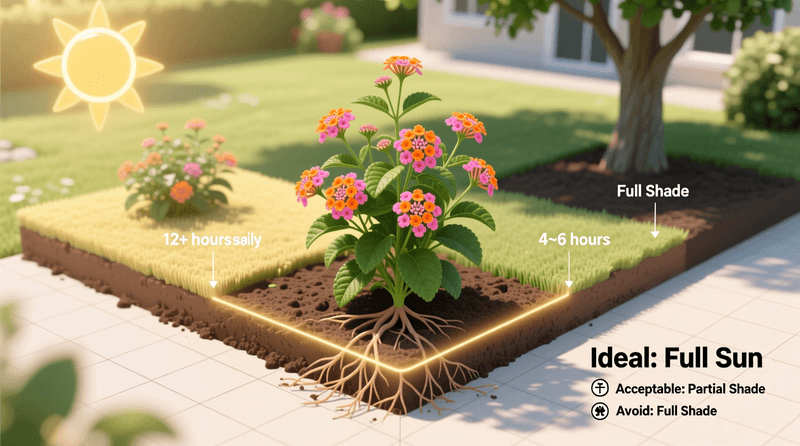
Full sun is the starting point, not a negotiable preference. Texas A&M AgriLife Extension states that Texas lantana needs at least six hours of direct sunlight daily, and that full sun produces the best flowering. Placing it where it gets less than that to spare it from the heat is counterproductive. A partially shaded lantana produces fewer flowers, stretches toward available light, and loses the compact form that makes it attractive in a pot.
That said, a Texas patio in July is not simply “sunny.” Concrete reflects heat upward, walls bounce radiant heat sideways, and the air temperature a few inches above the pot surface can exceed what a thermometer in the shade reads by a wide margin. University of Arizona’s desert container gardening resource and University of Georgia Extension both note that reflected heat from hard surfaces and hot wind can raise root-zone temperatures and accelerate water loss faster than most plants can compensate, even heat-tolerant ones.
When a heat wave pushes conditions past what the watering routine can keep up with, moving the container to a spot with afternoon shade for a few days is a reasonable emergency response. Shade in that context is a short-term tool to reduce stress during an exceptional event, not a permanent placement strategy. Once temperatures moderate, return the pot to full sun so flowering stays strong. The goal is to give the plant the sun it needs while managing the surrounding conditions well enough that the roots stay cool and moist enough to keep up with the heat above.
Water according to the pot’s conditions
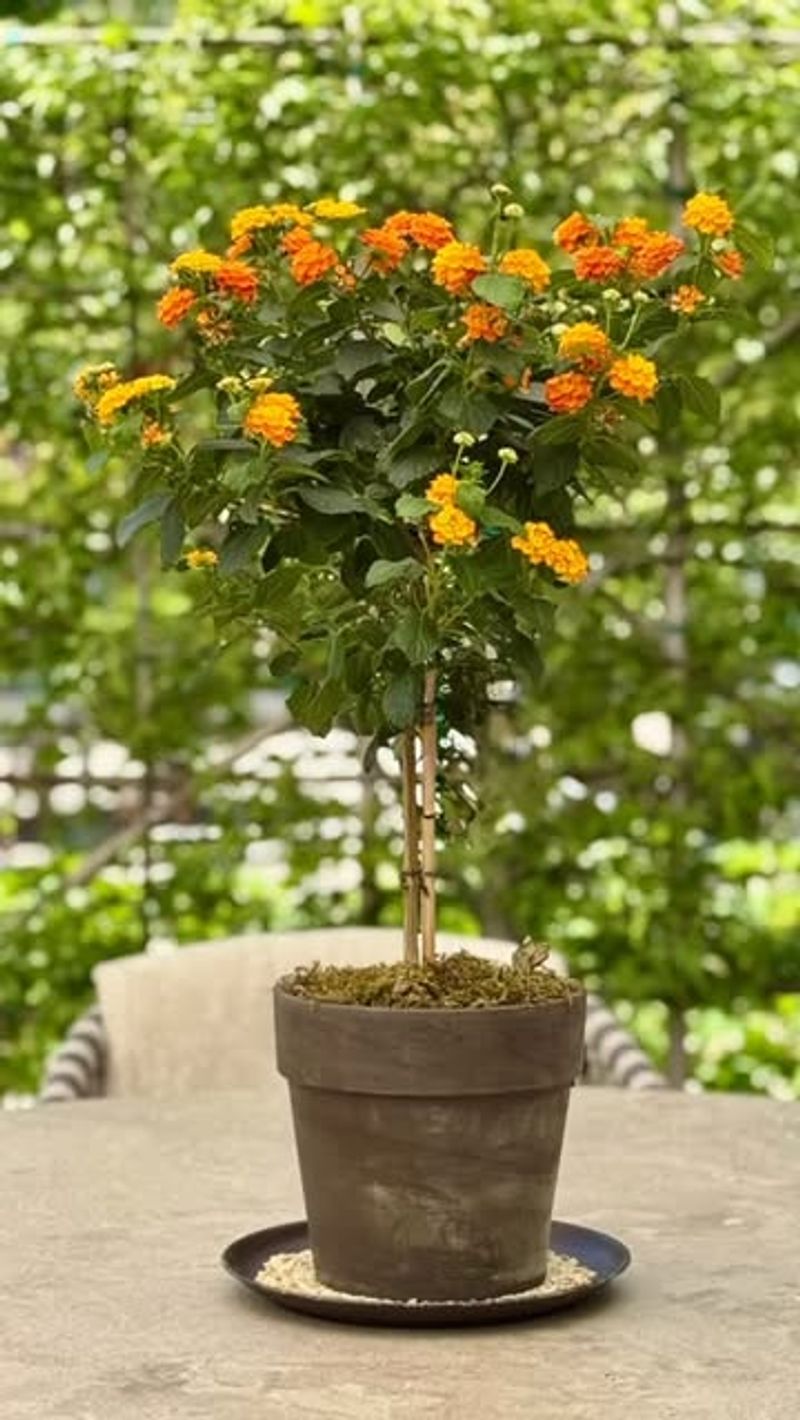
Drought tolerance is a real trait of established Texas lantana, but it describes what the plant can survive, not what it prefers in a container. A pot sitting in full sun on a Texas patio in August is not the same environment as in-ground soil with a deep root system drawing from a larger moisture reservoir. The potting mix heats up, dries out faster, and gives the roots far less buffer against missed waterings than garden soil does.
Texas A&M AgriLife Extension recommends a deep weekly watering during summer heat for established Texas lantana in general, but container guidance from University of Minnesota Extension makes clear that full-sun containers may need daily watering and sometimes more than once a day during extreme heat. Those two pieces of guidance are not contradictory. They reflect the difference between an in-ground plant and a pot exposed to full sun and radiant heat from concrete. In a Texas patio setting, assume the container end of that range is more likely during peak summer.
The method matters as much as the frequency. Water thoroughly each time, adding enough that excess flows freely from the drainage holes. That approach pushes water through the entire root zone rather than wetting only the top inch or two. University of Minnesota’s lantana guide and University of Arizona’s desert container resource both advise checking the upper layer of potting mix again after it begins to dry rather than following a rigid calendar.
Stick a finger an inch or two into the mix. If it feels dry at that depth, water again. If it still feels moist, wait and check the next day.
Two habits to avoid: letting the root ball dry out completely and repeatedly, which stresses roots and can cause the plant to drop leaves and flowers, and leaving the pot sitting in a saucer of standing water after irrigation. Standing water at the bottom of the pot keeps the lowest roots waterlogged and oxygen-deprived, which can cause damage even while the surface of the mix looks dry. Tip out the saucer or raise the pot so it drains freely after each watering.
Use pruning and fertilizer to support new growth
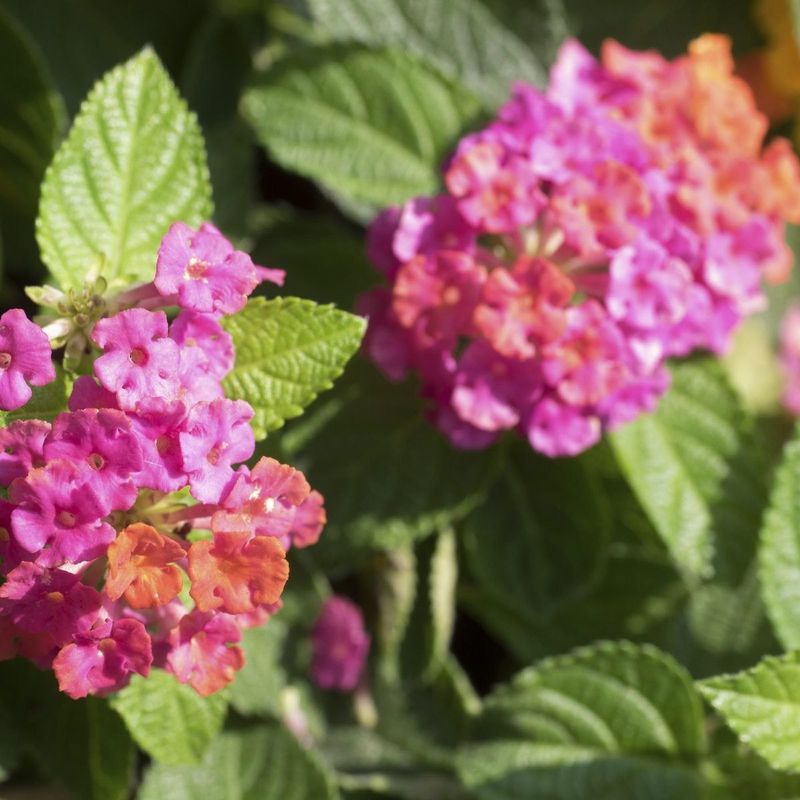
Two straightforward tasks keep a container lantana looking dense and producing flowers rather than becoming a tangle of long stems with blooms only at the tips. The first is a hard cutback in early spring. Texas A&M AgriLife Extension recommends cutting Texas lantana back to roughly eight inches before new growth begins. That reset encourages the plant to push out multiple fresh stems from the base, which produces a fuller shape and more flowering sites than leaving old woody growth in place.
Skipping the spring cutback typically results in a plant that looks leggy by midsummer.
Through the growing season, trimming long stems as needed helps maintain a compact form and can encourage another flush of blooms. Lantana tends to flower on new growth, so removing spent flower clusters and shortening stems that have grown past the edge of the pot keeps the display tighter and more productive. This is light maintenance rather than a second hard cutback, done whenever the plant starts to look stretched or uneven.
Fertilizer plays a supporting role for container-grown plants. Texas A&M notes that an additional fertilizer application can benefit Texas lantana in a container, and gives a monthly application of a general water-soluble 20-20-20 fertilizer, used according to its label, as a practical example. University of Arizona extension guidance on drought and extreme heat cautions that fertilizing stressed plants can worsen their condition, so hold off during the worst heat waves and resume when the plant is actively growing and the weather moderates. More fertilizer is not always better.
Excess feeding builds up salts in the potting mix, which can damage roots and reduce the plant’s ability to absorb water. Follow the label rate and treat fertilizer as a supplement to adequate light, water, and container volume rather than a fix for any of those missing elements.
Plan for flowers, freezes, pests, and safety
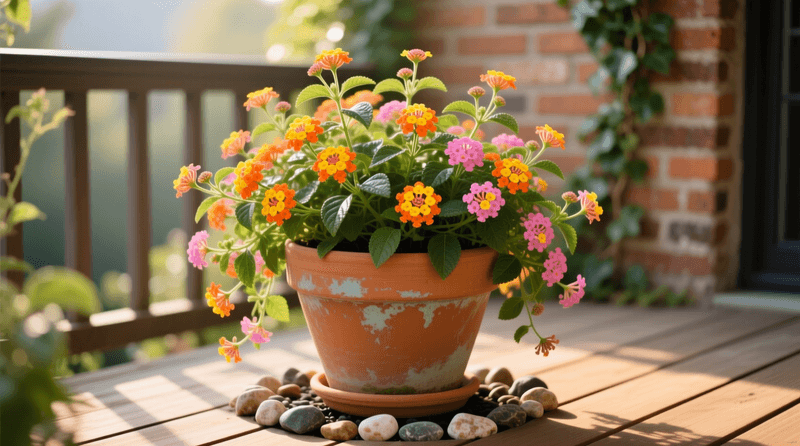
One of the genuine rewards of Texas lantana on a patio is the wildlife it draws. Texas Parks and Wildlife and Texas A&M AgriLife Extension both document its value as a nectar source for insects and hummingbirds, and as a food or host plant for some butterfly species. That activity is most visible during the spring-through-fall flowering window when conditions support continuous blooming.
Winter is a different story. Texas lantana is deciduous and can go dormant or die back after frost. A container is more exposed to cold than in-ground soil because the roots have no ground insulation below them. In mild winters across South Texas, the plant may remain semi-evergreen, but a hard freeze in Dallas, San Antonio, or anywhere in the Panhandle can kill it to the ground.
Travis County Extension notes that trailing lantana may die back after frost and regrow in spring, and the same pattern applies to the upright native form. Texas Superstar evaluates plants across multiple ecoregions, but results in the Rio Grande Valley, Houston, and the High Plains are not interchangeable. Know your region and plan for the possibility of winter dieback in the container.
Pests and disease are occasional rather than constant concerns. Texas A&M lists spider mites as a possible issue, and University of Minnesota Extension notes that whiteflies and powdery mildew can also appear. If something looks wrong, identify the problem before treating. Label-directed treatment with appropriate protective equipment is the right approach; routine preventive pesticide applications are not necessary or recommended.
Safety deserves careful handling here. Much of the published toxicity information for lantana specifically covers Lantana camara. NC State Extension and Austin’s grow green plant guide identify Lantana camara berries and plant parts as toxic or poisonous. Whether those findings apply equally to Lantana urticoides or Lantana horrida is not always clearly stated in the same sources.
Verify the species on your plant tag, and regardless of species, keep berries and plant material away from children, pets, and grazing animals as a precaution until you can confirm what you have.
Make a qualified heat-season choice
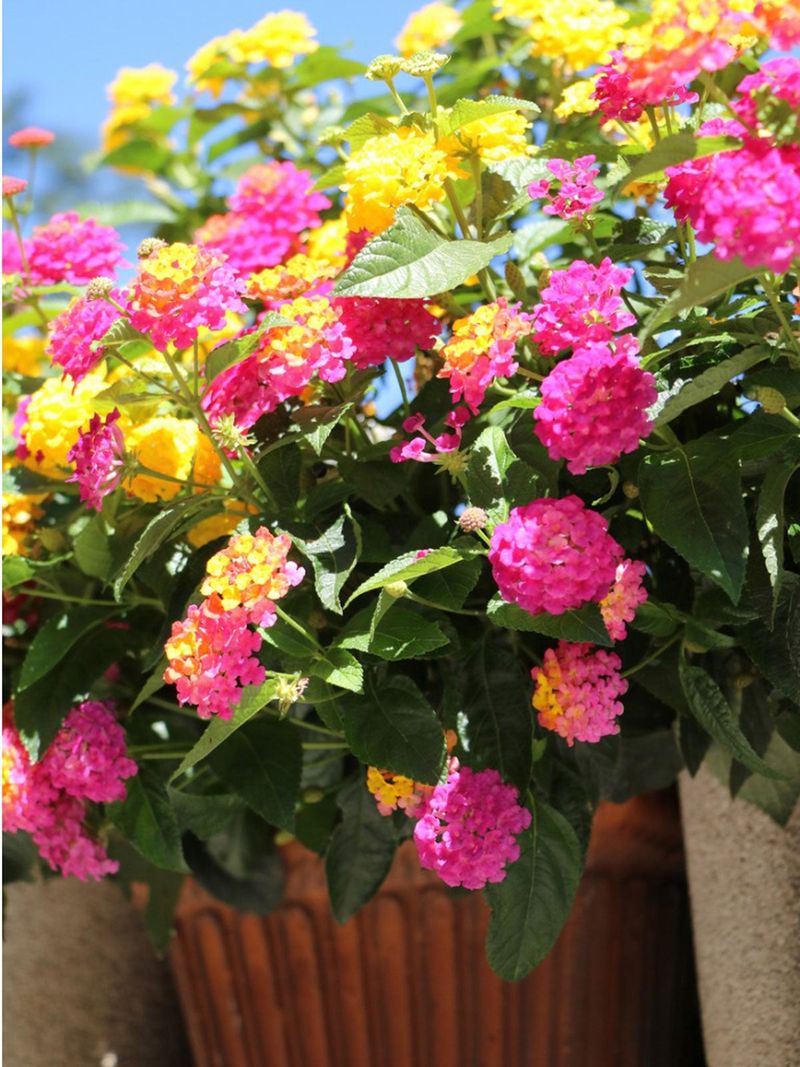
Choosing Texas lantana for a hot patio container is a well-supported decision, not a guarantee of a perfect display through every heat wave. The plant earns its recommendation through documented traits: Texas-native origin, full-sun performance, post-establishment drought tolerance, and spring-through-fall flowering when the setup supports it. Texas A&M AgriLife Extension and Texas Superstar both back it as a reliable performer in Texas conditions.
Making it work comes down to matching the container and care to what the plant actually needs. Use a large pot with drainage holes and a free-draining commercial potting mix. Place it where it receives at least six hours of direct sun. Check the potting mix moisture frequently rather than watering on a fixed schedule, and water thoroughly each time until excess drains from the bottom.
University of Arizona’s desert container guide reinforces that container success in hot climates depends on pot size, drainage, and moisture management more than on any single plant trait. Adjust for regional freezes and plan for possible winter dieback.
Texas lantana gives gardeners a fighting chance at a patio pot that keeps flowering when everything else has quit – but the plant still needs a partner who pays attention.