
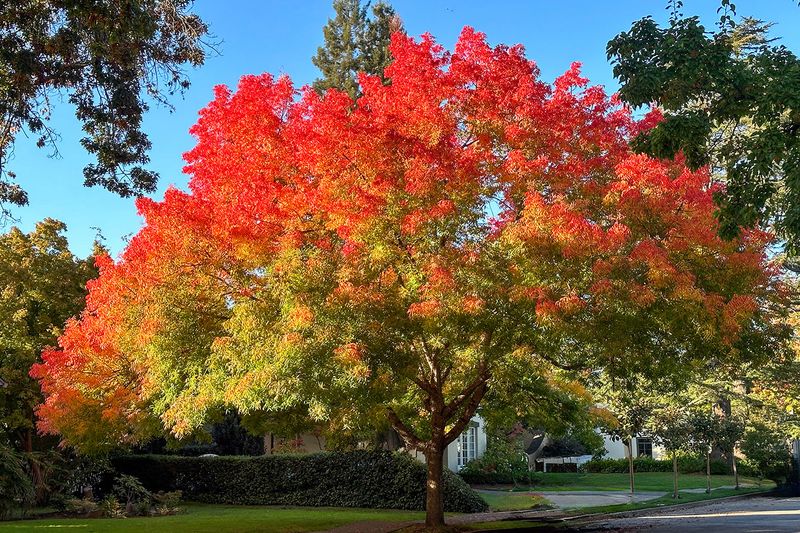
Summer heat in California is no joke, and for homeowners watching their air conditioning bills climb, finding a natural way to keep a house cooler sounds almost too good to be true. Chinese pistache is a deciduous shade tree that shows up in California streetscapes and residential yards precisely because it handles heat well, spreads a broad canopy, and drops its leaves in winter to let the sun back in.
Planting one strategically on the west or southwest side of a home can reduce how much direct sun hits the walls and windows, which may take some pressure off the air conditioner during the hottest months. The results depend on the tree’s maturity, placement, and your specific home, but the basics are straightforward enough to act on.
What Chinese pistache can—and cannot—do for a California yard
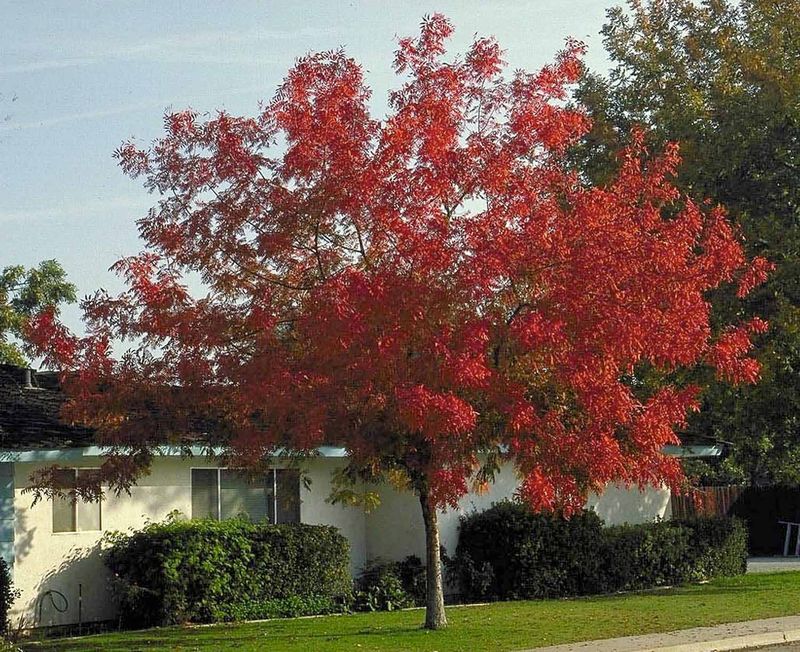
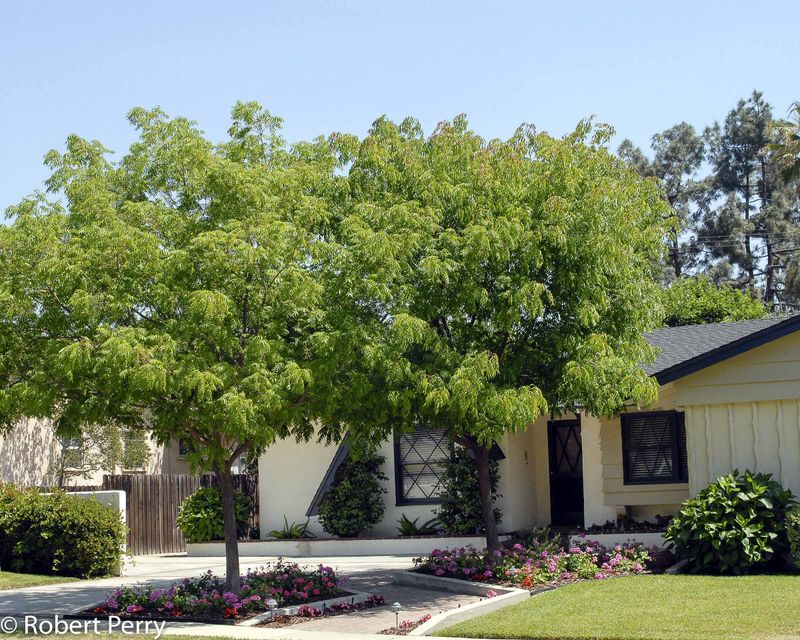
Chinese pistache (Pistacia chinensis) is not a secret statewide planting trend, but it is a well-established presence in California landscapes for good reasons. UC Cooperative Extension describes it as a common California street and residential tree that delivers abundant summer shade, and that reputation is built on a combination of traits that few other trees match all at once.
The tree is deciduous, meaning it leafs out in spring, holds a broad rounded canopy through the hottest months, and then drops those leaves in fall. That seasonal rhythm is useful for a homeowner trying to balance summer cooling with winter warmth: the bare winter canopy allows sunlight to reach the house when you actually want solar heat gain.
That benefit is real, though how much it matters depends on your climate zone, the orientation of your home, and how much of the southern or western wall the canopy actually covers.
On the practical side, Chinese pistache tolerates full sun and adapts to several soil types. Once established, it handles California heat and dry summers reasonably well.
UC IPM notes that mature height can range from 35 feet up to 50 or even 60 feet depending on the cultivar and growing conditions, so the commonly cited 30-to-35-foot residential estimate is a starting point rather than a ceiling. Confirming the mature size of the specific cultivar you are buying matters before you commit to a planting location.
What Chinese pistache cannot do is guarantee a cooler house or a lower energy bill on its own. UC Master Gardener guidance points to southwest placement as the sweet spot for shading a one-story home in summer, but that benefit builds over years as the canopy matures.
A young sapling provides almost no meaningful shade on a wall or roof. Think of Chinese pistache as one strong California candidate for a residential cooling tree, not as a universal solution or the only tree worth considering.
Place the canopy where summer sun hits the house
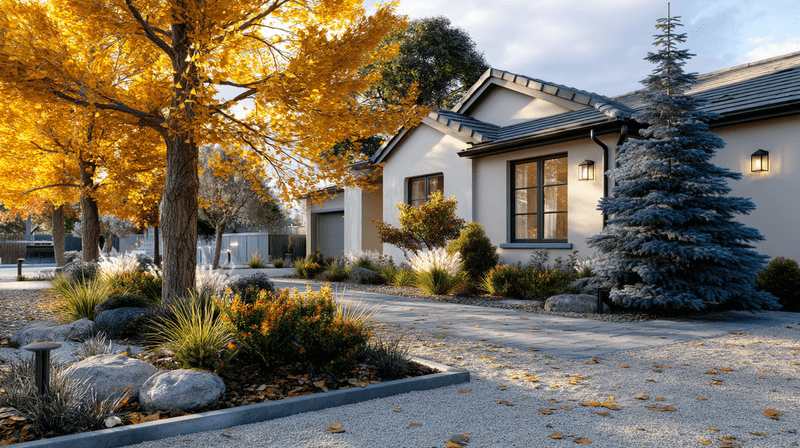
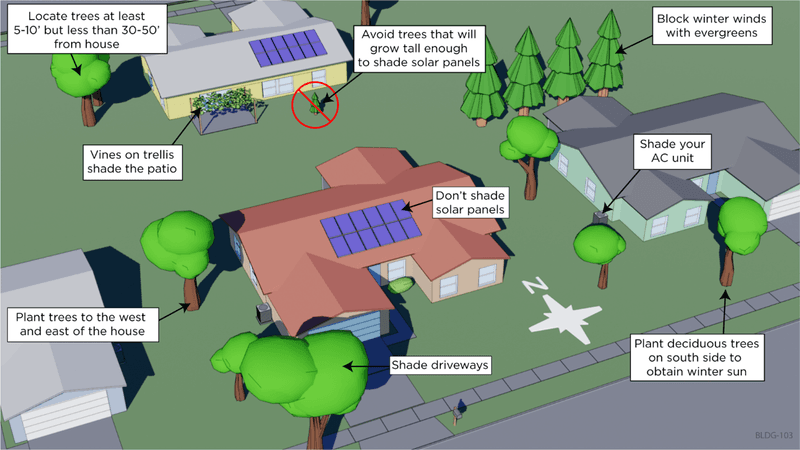
The species label on the nursery tag matters less than where you put the tree. For California homes, US Forest Service research on California residential tree placement consistently identifies west and southwest exposures as the highest-value locations for summer energy savings.
That is where afternoon sun hammers walls and windows hardest in the long California summer, and a canopy that intercepts that sun before it reaches the house reduces heat gain at the source.
East-side placement can also help by blocking morning sun, though morning sun is generally less intense than afternoon sun and the energy savings are smaller. Southern placement is trickier.
A tree on the south side of a home can provide summer shade, but if it also blocks winter sun after leaf drop, it may increase heating demand during cooler months. In mild coastal climates where winter heating is minimal, that trade-off may not matter much.
In colder inland valleys or foothill communities, it is worth thinking through before digging.
Canopy shape matters too. A broad, rounded crown shades a larger area of wall, roof, and pavement than a narrow or columnar form at the same height.
California’s Cool California tree guide notes that when a tree is planted farther from a building, height becomes more important because the shadow needs to reach farther to cover the wall or roof. A shorter tree planted close to the house may shade a window effectively; a taller tree farther away can shade a larger portion of the roof.
Home orientation, window size, and roof overhang all affect how much a well-placed tree actually helps. A house with large west-facing windows and minimal overhang gains the most from a tree that shades those windows during peak afternoon heat.
Walk around your home on a hot afternoon and note where the sun is hitting hardest. That observation, more than any general rule, will tell you where a shade tree would do the most work.
The cooling and bill-saving evidence depends on mature shade
The numbers that circulate around tree-shade energy savings often get detached from the specific studies that produced them, which leads to expectations that real yards cannot meet. The most-cited California figure comes from a US Forest Service simulation that modeled three strategically placed trees around a California home, two on the west side and one on the east.
Under those modeled assumptions, annual cooling energy dropped by 10% to 50%, or roughly 200 to 600 kilowatt-hours, translating to about $30 to $110 in savings at the study’s assumed rates. Three mature trees, specific placement, modeled conditions: those details are what produced that range, not a single newly planted sapling.
A separate Sacramento study, reviewed by the National Institute of Standards and Technology, found an 18% reduction in summertime electricity use associated with a single established shade tree on the west side of a home. That finding involved a 30-year-old tree, meaning decades of growth had produced the canopy responsible for the savings.
A tree planted this spring will not replicate those results next August.
The mechanism behind the savings is straightforward. Shade blocks direct solar radiation from hitting walls, windows, roofs, and pavement.
Less solar radiation absorbed by those surfaces means less heat transferred into the home. Vegetation also cools outdoor surfaces through evapotranspiration, releasing water vapor that reduces ambient air temperature around the house.
Both effects are real, but neither guarantees a specific number of degrees indoors or a specific dollar amount on a utility bill.
Indoor results depend on factors a tree cannot control: how well the home is insulated, the efficiency of the air conditioning system, the size and orientation of windows, whether the home has a cool roof, and how the local climate compares to the study locations. Cooling savings from shade are also not the same as total annual energy savings.
A deciduous tree reduces summer cooling demand, but in some climates and placements it may also reduce winter solar gain, which can nudge heating costs upward. In most California climates where air conditioning dominates the energy bill, the summer benefit generally outweighs that winter trade-off, but the balance varies by location.
Screen the planting site for roots, utilities, and wildfire exposure
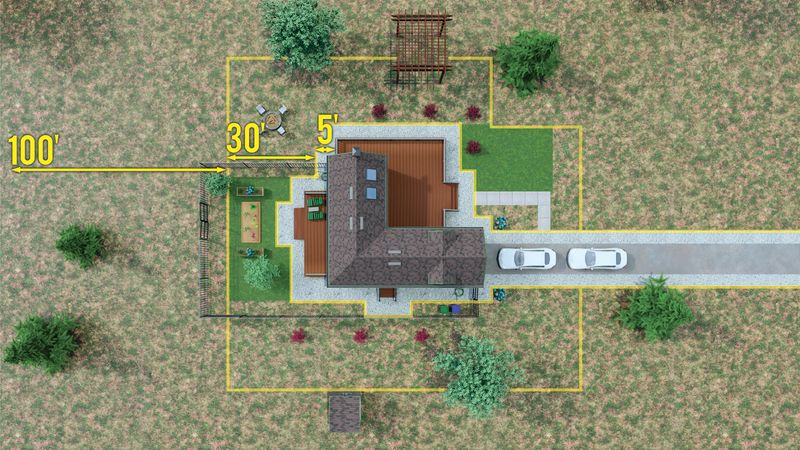
Before buying a tree, walk the intended planting spot and think through what is above it, below it, and around it. Overhead, look for power lines, eaves, and roof overhangs that a maturing canopy will eventually reach.
Below ground, call 811 before digging anywhere. That free service marks underground utilities including gas, water, electric, and cable lines, and it is required by law in California before excavation.
A tree planted over a buried line can cause serious problems as roots grow over decades.
UC Master Gardener guidance recommends placing Chinese pistache about 15 feet from buildings as a starting point, but that figure is not a universal rule for every yard. The right setback depends on the cultivar’s mature canopy width, the foundation type, nearby paving, soil drainage, and the presence of underground drains or irrigation lines.
Larger trees generally need more room. UC IPM notes that most tree roots occupy the upper two feet of soil and can extend well beyond the canopy edge.
Chinese pistache roots are not considered especially aggressive, but no large tree is risk-free near a foundation, sidewalk, or drain when planted too close.
The International Society of Arboriculture recommends checking for paving, structures, and utilities as part of any site assessment before planting a large tree. Give the root zone adequate unpaved soil area so roots can spread without being forced toward structures by compaction or hardscape.
For homeowners in fire-prone communities, wildfire safety can override cooling goals entirely. CAL FIRE defensible-space guidance identifies the first five feet around a structure as an ember-resistant zone where combustible material should be minimized, and the next 30 feet as a zone where plants should be well-spaced and free of dead material.
A tree should not create a continuous fuel path from surrounding vegetation to the house. Local jurisdictions sometimes impose stricter standards than the state baseline, so checking with your county or city fire department before planting near a structure is a practical step, not an optional one.
Establish the tree before expecting its benefits
Drought-tolerant is not the same as plant-it-and-walk-away. Chinese pistache earns its low-water reputation after it has settled into the soil and developed a substantial root system, a process that typically takes two to three years or more depending on the tree’s size at planting, the soil type, summer heat, and how consistently the tree is watered during that window.
Proper planting depth is the first thing to get right. UC Cooperative Extension planting guidance and ISA tree-planting standards both emphasize exposing the root flare, the widening at the base of the trunk where it meets the root system, at or just above the finished soil grade.
Planting too deep buries the flare, which can suffocate roots and make the tree vulnerable to rot and disease over time. Dig the hole wide rather than deep, and backfill with the native soil you removed.
Apply roughly two to three inches of wood chip mulch in a ring around the tree, extending out to the drip line if possible, but keep the mulch a few inches away from the trunk itself. Mulch conserves moisture, moderates soil temperature, and reduces competition from grass and weeds.
Piling it against the trunk, sometimes called a mulch volcano, traps moisture against the bark and invites decay.
UC water-use guidance notes that even plants classified as low-water still need regular irrigation during establishment. For Chinese pistache, that means deep, infrequent watering adjusted for your soil type, ambient heat, wind exposure, and any summer rainfall.
Sandy soils drain faster and need more frequent watering; clay soils hold moisture longer but can waterlog roots if overwatered.
Young Chinese pistache trees sometimes develop weak or irregular branching, which can lead to a lopsided canopy or structurally vulnerable limbs as the tree grows. UC Cooperative Extension and UC Master Gardener tree-care guidance both support early structural pruning to encourage a strong central structure and a rounded, balanced canopy.
Topping, cutting back main branches to stubs, is not a substitute for that training. It creates multiple weak sprouts at the cut, disfigures the tree, and does not produce the broad shading canopy you planted the tree to achieve.
Match the cultivar and species to the local site
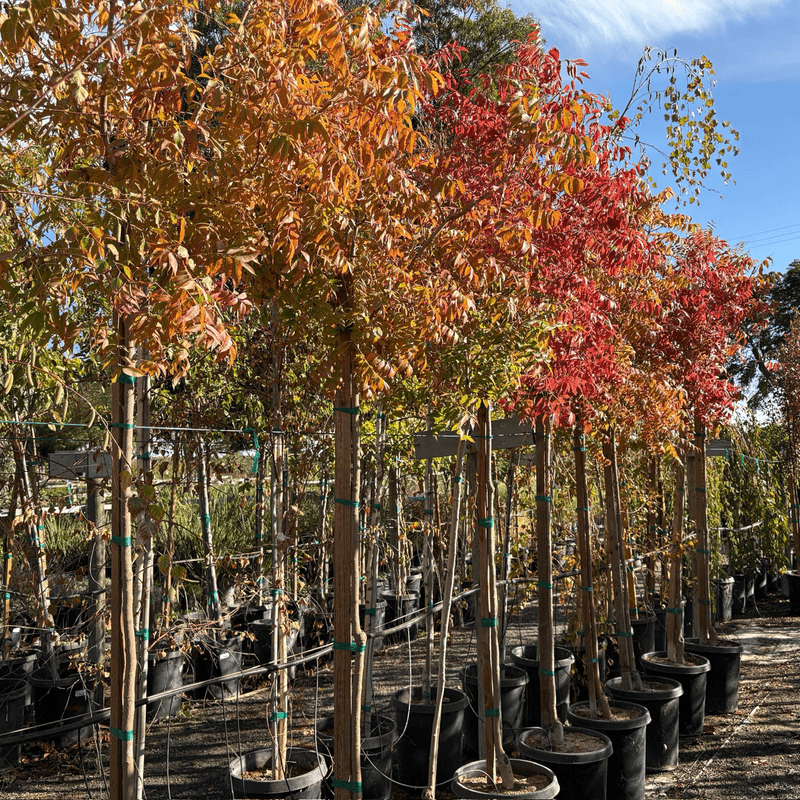
Picking up any Chinese pistache at the nursery and assuming it fits your yard skips several questions worth answering first. Mature size is the most important.
UC Cooperative Extension notes that mature dimensions vary by cultivar and growing conditions, and the difference between a 35-foot tree and a 60-foot tree is significant when you are calculating setbacks from the house, the fence, the driveway, and the property line.
One cultivar worth knowing is ‘Keith Davey,’ a male selection that does not produce fruit clusters. Female Chinese pistache trees, when a male is nearby for pollination, bear small red-to-blue berries that are ornamental and inedible for people but can provide food for birds.
If you prefer a tidier yard without fallen fruit, a named male cultivar is the practical choice. If supporting local birds matters more to you, a female tree has something to offer, though Chinese pistache is not a California native, and native trees generally have deeper documented relationships with local wildlife.
Coast live oak, for example, supports a far wider range of native insects and birds in California than any introduced species.
California’s Cool California tree-selection guide makes clear that no single species is the right answer for every yard. Local climate zone, soil drainage, water-use classification, municipal tree lists, and fire-safety requirements all belong in the decision.
UC water-need guidance notes that Chinese pistache has low water requirements in many California regions but moderate needs in parts of the Low Desert, so the same tree performs differently depending on where you live.
Before finalizing a purchase, check whether your city or water district has a recommended or approved tree list. Many California municipalities offer rebates for planting qualifying shade trees, and those lists have already been screened for local climate fit, water use, and sometimes fire safety.
That is a faster route to a well-matched tree than starting from scratch with a species name alone.
Use this decision test before planting
Run through four questions before the tree goes in the ground. First: can the site support the mature canopy and root system without threatening structures, utilities, paving, or fire safety?
If the answer is no, adjust the location or choose a smaller tree. Second: does the spot put the canopy where summer sun strikes the home, generally the west or southwest side?
The Forest Service placement research is clear that location drives the cooling benefit more than the species label does.
Third: are you prepared to water and prune the tree through its establishment years, not just plant it and expect drought tolerance to kick in immediately? The long-term payoff requires getting the tree through its first few summers.
Fourth: does the planting plan comply with local defensible-space rules? CAL FIRE requirements and local fire ordinances can restrict what goes where near a structure, and those rules take priority over any cooling goal.
If all four answers check out, Chinese pistache is a reasonable candidate for a California yard that needs west-side summer shade. Check the Cool California tree guide and your local water district’s approved list to confirm the species fits your climate zone and qualifies for any available rebates.
The realistic outcome of a well-placed, mature tree is less solar heat gain on your walls and windows and potentially lower summer cooling demand, not a guaranteed temperature drop or a fixed dollar savings. That is still worth planting for, as long as you go in with your eyes open and a good spot picked out.