
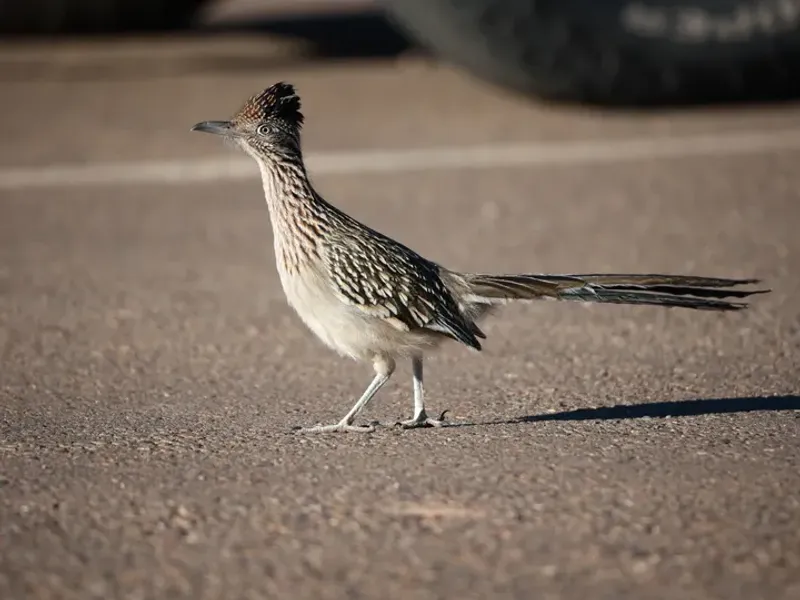
Spotting a roadrunner dart across your Texas yard once is a thrill, but seeing it again and again along the same fence line or patch of open ground is something different entirely. That pattern might mean the bird has incorporated your property into a regular route it travels across a much larger stretch of land. Understanding what those repeat visits actually tell you, and what they do not, can help you make smarter decisions about your yard and the wildlife passing through it.
Your yard is probably one stop in a much larger range
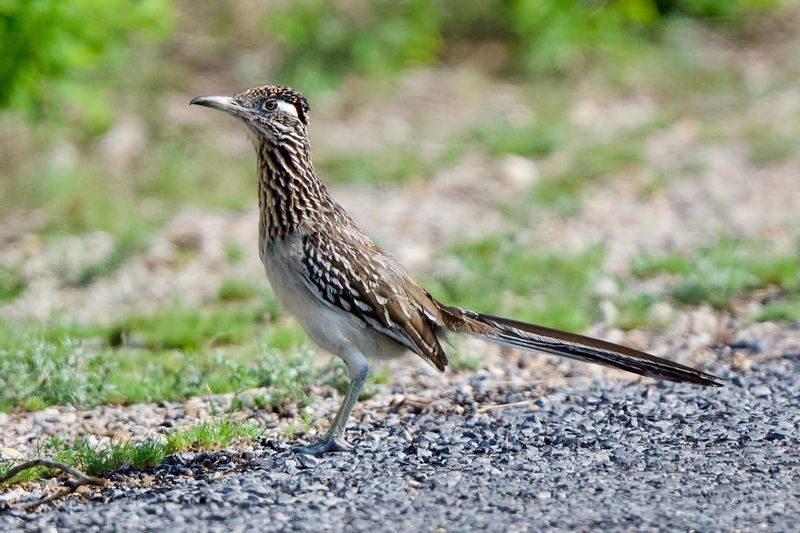
Most people who spot a Greater Roadrunner returning to their yard day after day assume the bird has settled in for good. The reality is more interesting and a bit more humbling for property owners. A USGS study on Greater Roadrunner home range dynamics found average home ranges of roughly 43 hectares in west Texas, while north-central Texas research documented median ranges closer to 80 to 90 hectares. A typical residential lot covers less than a fraction of one hectare, so the yard a reader thinks the bird has claimed is almost certainly just one stop on a circuit that crosses several properties, roads, drainage areas, and open patches of land.
Home range and territory are not the same thing, and the difference matters here. A home range is simply the area an animal uses over time. A territory is the portion it actively defends against rivals. The Texas studies measured home ranges rather than the precise edges of defended territories, so the research does not support the idea that a roadrunner has drawn a property line around any particular backyard.
Greater Roadrunners are also far more adaptable across Texas than their desert reputation suggests. Texas Parks and Wildlife describes the species in East Texas swamplands and pine areas, Hill Country limestone terrain, brush country south of San Antonio, and the mesquite and prickly pear habitats of West Texas. A yard anywhere across this range, whether it backs up to a creek, a caliche road, or a cedar brake, could serve as a useful stop without fitting any single desert template.
Repeated visits are meaningful, but they say the yard offers something worth returning to, not that the bird has planted a flag. Think of it as a regular waypoint rather than a home address.
A repeated route reveals regular use
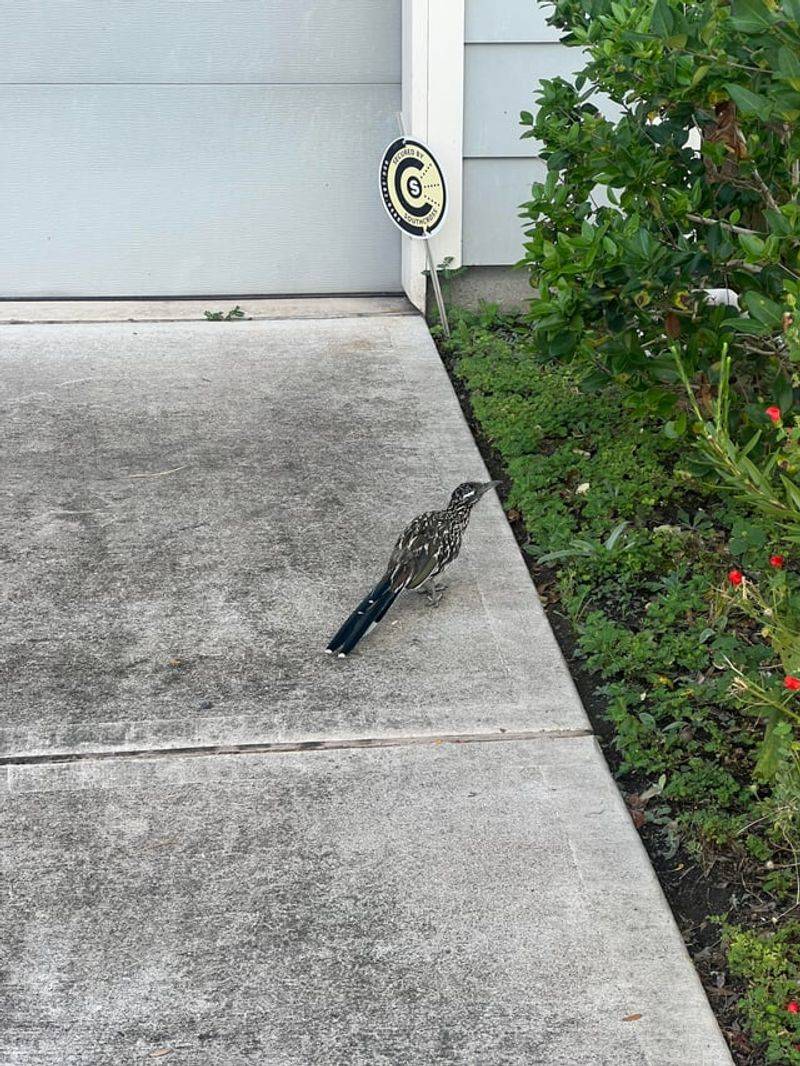
Rather than counting how many times a roadrunner has appeared, pay attention to where it goes each time. A bird that consistently trots along the same side yard, follows the same stretch of driveway edge, or cuts through the same gap in a fence is showing you something far more useful than a raw tally of sightings.
Cornell Lab of Ornithology’s Greater Roadrunner life history notes that the species spends most of its time on the ground and commonly moves along roads, paths, streambeds, and other open corridors while hunting. That behavioral tendency means a consistent ground-level route through your yard is exactly what you would expect from a bird using the property as part of a larger circuit. The route may connect brushy cover on one side of the block to open hunting ground on the other, or link a drainage channel to a vacant lot two streets away.
Seeing the bird use the same corridor on multiple occasions supports the idea that your yard lies along a familiar travel path, but it does not prove a nest is nearby or that the bird defends the property as a territory. Roadrunners can be surprisingly easy to miss because they run low and fast, so a route you only recently noticed may have been in use for weeks or months before you caught on. The repetition of the path itself, not the number of times you happened to see it, is the more reliable signal of regular use.
Familiar hunting spots can explain repeat visits
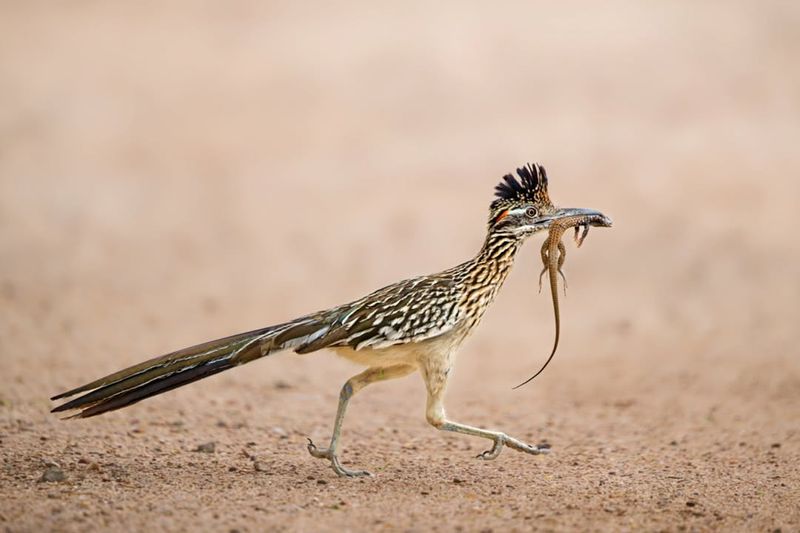
Open ground mixed with scattered shrubs, trees, or mesquite is exactly the kind of terrain a Greater Roadrunner prefers for hunting, and a yard that provides that combination becomes a practical stop rather than a random one. When the same bird keeps turning up in the same corner of the yard or the same sunny patch near the garden bed, it is often because prey concentrates there.
The diet of a Greater Roadrunner is impressively broad. Cornell Lab of Ornithology and the National Audubon Society both document a menu that includes insects, lizards, snakes, rodents, frogs, scorpions, centipedes, small birds, eggs, carrion, fruit, and seeds. That range means almost any Texas yard with some bare ground and a few brush piles or native plantings can supply something worth hunting, regardless of whether the yard was designed with roadrunners in mind.
Seasonal shifts matter here, too. Prey availability changes through the year as insects emerge, lizards become active in warm weather, and rodent populations fluctuate. A roadrunner may visit a yard heavily during one season and less often during another, simply because the hunting is better at certain times. That kind of seasonal variation does not mean the bird has abandoned the yard or that it was never a regular visitor.
Texas Parks and Wildlife and USGS Patuxent Wildlife Research Center both note the species’ opportunistic feeding habits, reinforcing that no single plant, pest population, or landscape feature is the sole explanation for a roadrunner’s presence. Concentrated prey, a connected route, and suitable open ground all contribute together.
The same perch and coo add another clue
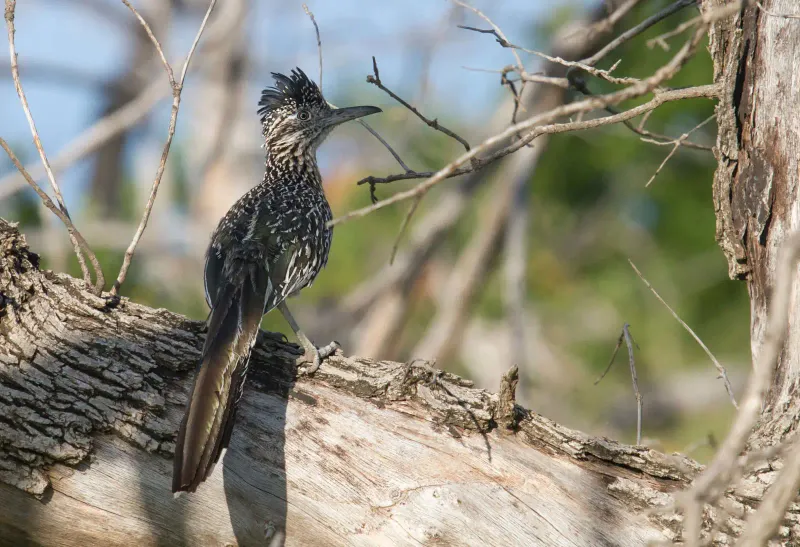
Fence posts, rock outcroppings, low shrub tops, and even roof edges all serve as scanning platforms for a Greater Roadrunner that wants to survey its surroundings before moving on. A bird that returns to the same elevated spot repeatedly is not doing so by accident.
Watching from a perch and calling are behaviors that go together. Cornell Lab of Ornithology’s identification guide describes the Greater Roadrunner’s call as a low, descending series of coos, nothing like the cartoon’s “beep-beep.” The Audubon Society similarly describes the species producing a dovish cooing that carries well in open terrain. If you hear that sound from the same corner of the yard morning after morning, especially paired with a visible bird on the same post or limb, that combination adds meaningful weight to the idea that the yard sits within the bird’s regular area.
A recurring perch-and-call pattern is useful evidence, but it cannot tell you where the bird’s range ends or whether it is defending the property as a territory. Calls serve multiple functions, including communication between mates and general territorial advertisement across a wide area. The perch itself is the more telling detail because it suggests the bird finds that particular vantage point reliably useful, which points toward habitual use of the yard as a whole.
A pair or family adds context to the pattern
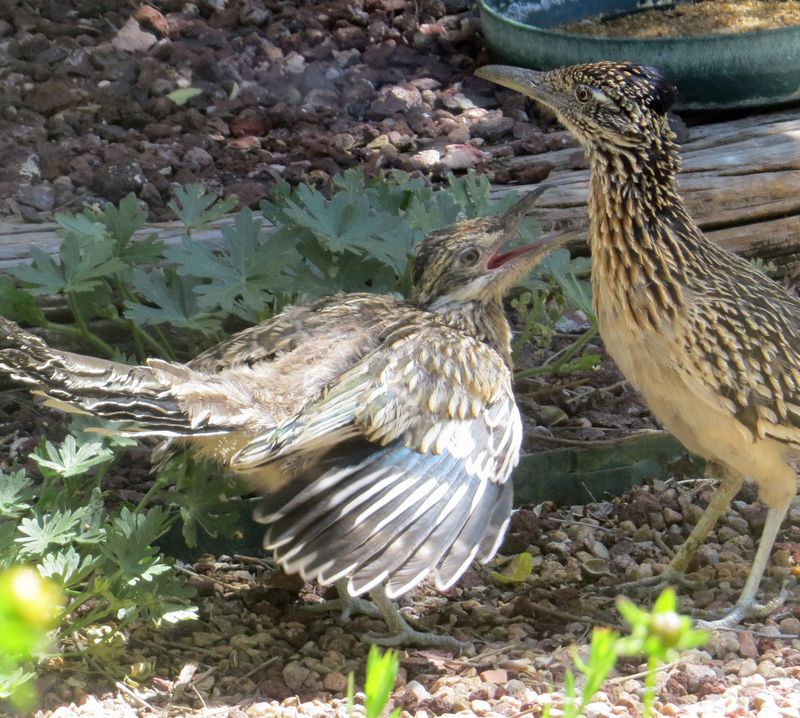
Seeing two roadrunners where you usually see one shifts the picture considerably. A pair moving through the yard together, especially if both birds appear calm and purposeful rather than chasing each other, is worth noting as a stronger social signal than a solo visitor.
The Audubon Society notes that Greater Roadrunner pairs may defend territory throughout the year, not just during breeding season. USGS Patuxent Wildlife Research Center records that young birds can leave the nest after roughly 18 to 21 days but may continue traveling with adults while being fed and trained. That means a slightly smaller or less confident bird accompanying an adult could be a juvenile from a recent brood rather than a second unrelated adult.
Multiple roadrunners in a yard could reflect a bonded pair, a family group in the weeks after fledging, or even temporary range overlap between two unrelated birds moving through the same corridor. Cornell Lab of Ornithology confirms that wandering juveniles do occur, so a second bird is not automatically proof of a nesting pair or a permanent family unit on the property.
What a pair or family group does confirm is that the yard is being used by birds with a social relationship, which raises the likelihood that nearby breeding activity is underway somewhere within the surrounding landscape. The yard may be one section of a shared range rather than the center of it.
Nest-material transport can signal nearby breeding activity
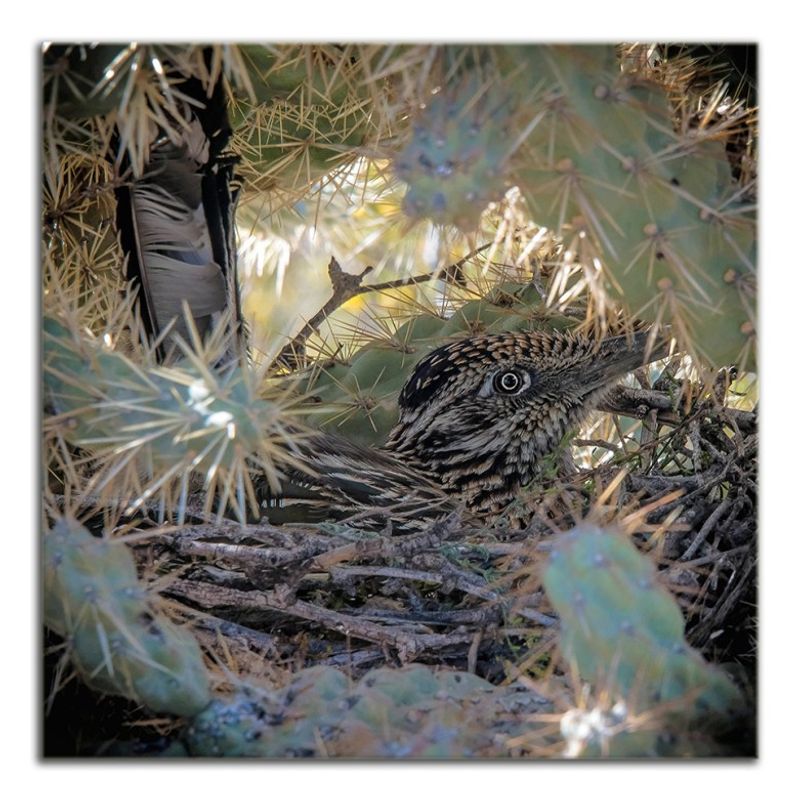
Ordinary shrub use looks nothing like what a roadrunner does when it is building a nest nearby. The difference worth watching for is repeated, purposeful transport of material toward a specific patch of cover.
Sticks, dry grass, leaves, feathers, snakeskin, and similar items carried repeatedly toward a cactus clump, a thorny shrub, a dense bush, or a low tree are a meaningful behavioral signal. Cornell Lab of Ornithology describes Greater Roadrunner nests as typically concealed a few feet off the ground inside exactly those kinds of thorny or dense structures. Texas Parks and Wildlife similarly notes nests placed in prickly pear cactus, yucca, and dense shrubs across the state.
Repeated material transport is a stronger indicator of nearby breeding activity than simply seeing the bird perch near a shrub, but it does not guarantee the nest is on your property. The bird may be building in a neighbor’s yard, a brushy easement, or a vacant lot just beyond the fence. Treat this behavior as evidence that breeding activity is occurring somewhere close by within the bird’s range.
Whatever you do, do not investigate. U.S. Fish and Wildlife Service guidance on bird nests makes clear that active nests with eggs or young are protected, and Texas Parks and Wildlife nongame species regulations cover Greater Roadrunners under state protections. Do not trim the shrub to look inside, do not touch or move eggs or young, and do not clear vegetation near a suspected active nest.
If you have a specific concern about a nest in a hazardous location, contact Texas Parks and Wildlife or a licensed wildlife rehabilitator for guidance suited to your situation.
Tracks identify a visitor but not its history
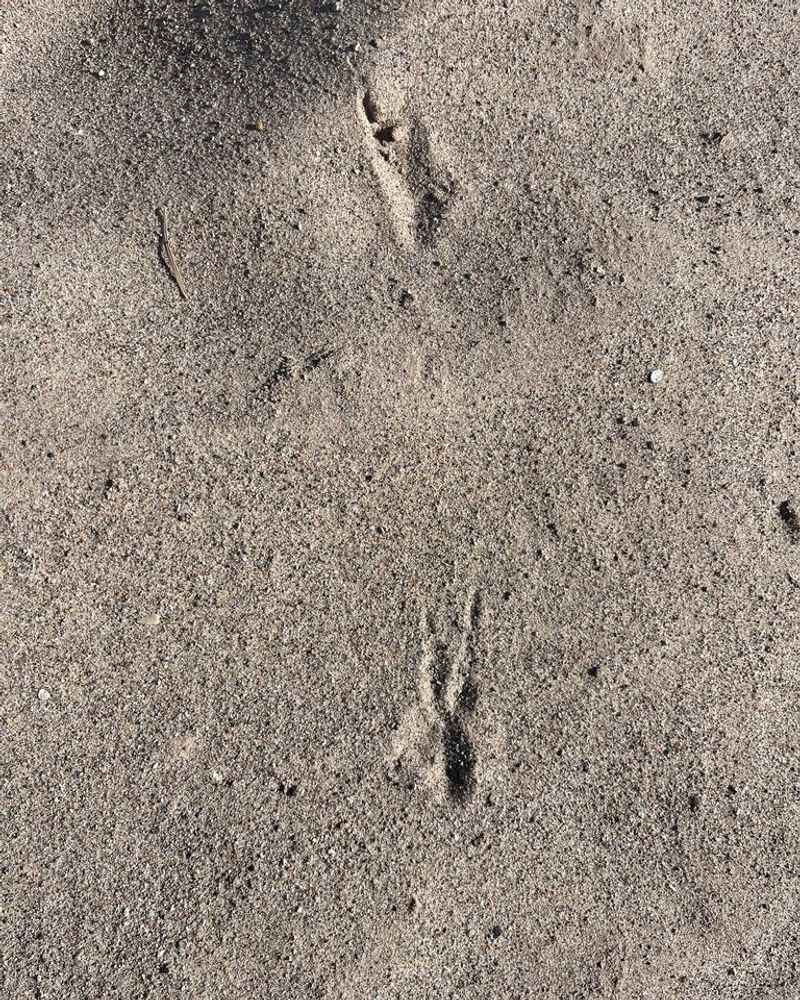
Finding unusual tracks in a soft patch of garden soil or along a muddy drainage edge can be a satisfying confirmation that a roadrunner has passed through. The print is distinctive enough to narrow down quickly: two toes point forward and two point backward, creating an X-like shape that differs clearly from the three-forward prints left by most common yard birds.
Texas Parks and Wildlife mentions this zygodactyl foot arrangement as a useful identification feature. Once you know what to look for, a fresh set of roadrunner tracks in bare soil near a garden bed or along a fence line is fairly easy to distinguish from sparrow or dove prints.
What tracks cannot tell you is how long the bird has been using the yard, whether it returns on a regular schedule, or where its range begins and ends. A single set of prints might belong to a bird passing through once on its way somewhere else, or to a regular visitor that happened to cross soft ground that day. Tracks are best used as confirmation layered on top of the behavioral evidence described in the other sections of this article, not as a stand-alone diagnosis. A few X-shaped prints in the garden are a useful data point, but they become genuinely informative only when combined with repeated sightings, a consistent route, and other behavioral clues observed over days or weeks.
Protect suitable habitat without trying to keep the bird
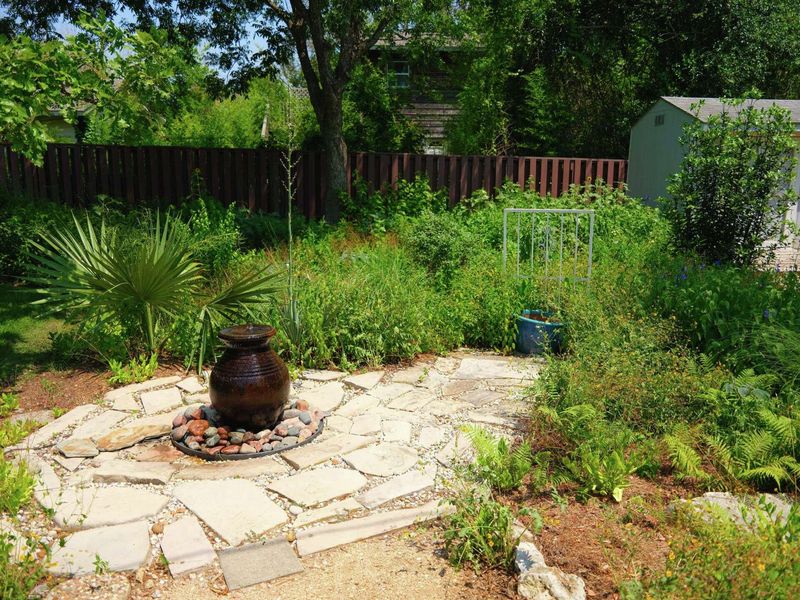
Once you recognize that a roadrunner may be using your yard regularly, the most useful thing you can do is make the yard a reasonably safe and functional stop, without trying to engineer the bird’s presence or remove every hazard that might also be a food source.
Start with the basics. Texas Parks and Wildlife wildlife habitat guidance recommends providing food, water, shelter, and nesting habitat for birds generally. For water, keep any birdbath or shallow basin no more than three inches deep, change the water regularly, and clean the container to prevent algae and mosquito breeding. That guidance applies to birds broadly and does not promise that a roadrunner will use a birdbath, since the species gets much of its moisture from prey.
Retain some open ground and native cover where it is safe to do so. A yard with patches of bare caliche or sandy soil alongside native shrubs and low trees gives a ground-hunting bird the open running room and cover it uses naturally. You do not need to rewild the entire property to make it functional.
Pesticide use deserves careful thought. EPA guidance on reducing pesticide impacts on wildlife and EPA pesticide safety tips both recommend integrated pest management, identifying a pest before treating it, using nonchemical controls where practical, and following every label. Do not leave snakes, rodents, or venomous insects untreated out of concern for the roadrunner’s food supply. A health or safety hazard in your yard needs to be addressed appropriately.
Equally, do not use rodenticide bait in locations where wildlife can access it, since a poisoned rodent can harm a bird that eats it.
Keep cats indoors or in secure enclosures. Texas Partners in Flight personal action guidance and Texas Partners in Flight backyard guidance both identify free-ranging cats as a major threat to birds. Prevent dogs from chasing the bird as well. Texas Parks and Wildlife habitat resources support native planting as the foundation of bird-friendly yard management.
Do not put out raw meat, pet food, or live prey to attract the roadrunner; native habitat is the safer and more sustainable approach.
Read the pattern, not a property line
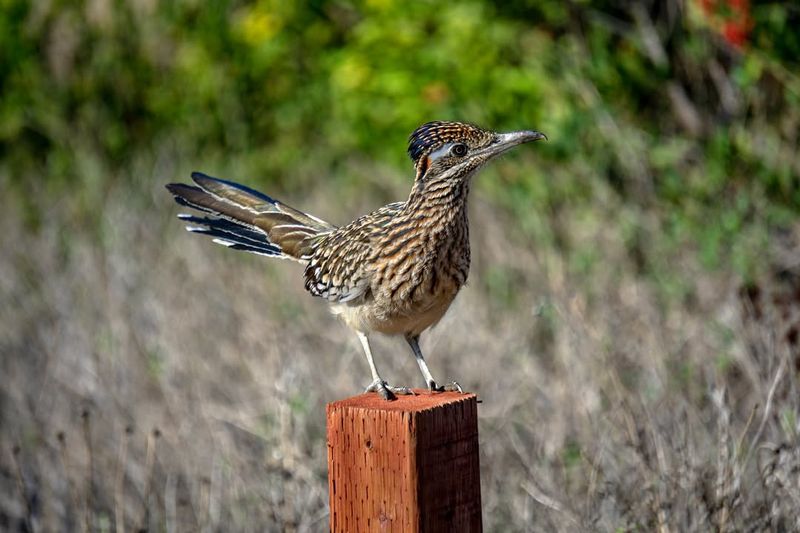
No single clue settles the question of whether a Greater Roadrunner is using your yard regularly. A consistent ground route, repeated hunting in the same open patch, a familiar perch paired with that low descending coo, signs of a pair or family group, transport of nest material toward dense cover, and tracks in soft soil all become more meaningful when they occur together over days or weeks rather than in isolation.
Seasonal movement, concentrated prey, nearby habitat, and the artificial boundaries of a property line all complicate the picture. USGS home range research and west Texas habitat studies both show that the area one bird uses routinely stretches far beyond any single lot. Cornell Lab of Ornithology confirms that roadrunners travel open corridors connecting patches of suitable cover across a wide landscape.
What the evidence points toward is a bird that has incorporated your yard into a broader route, not one that has staked a claim to your address. That distinction is actually more interesting, because it places your yard inside a living, moving system that extends well beyond your fence line.