
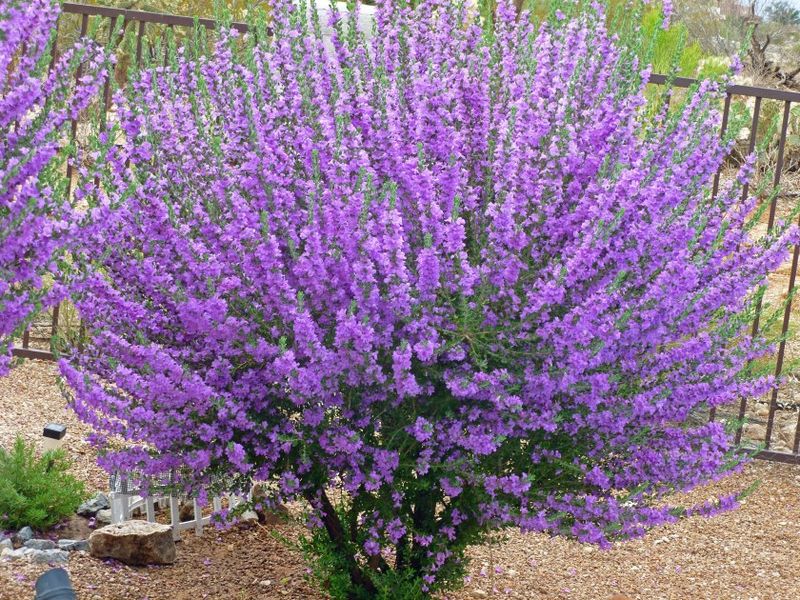
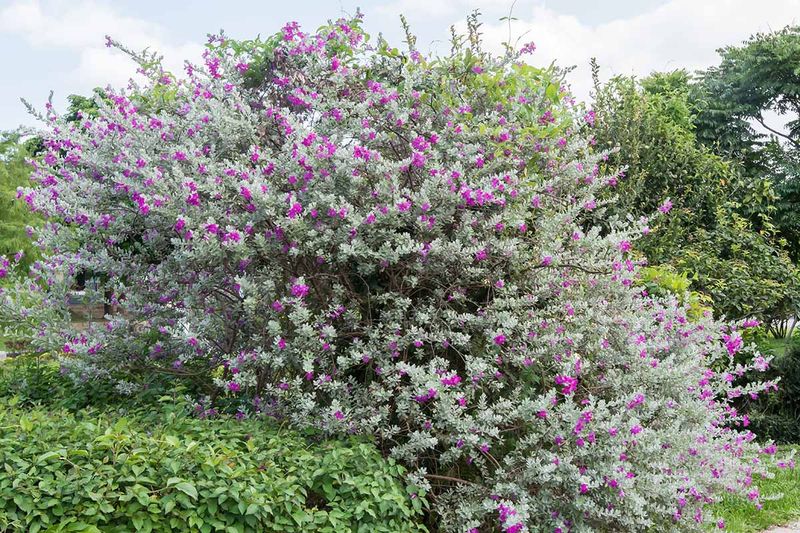
Somewhere in a sun-baked Texas yard, a silver-leafed shrub sits quietly through weeks of summer heat, then flushes with small purple flowers after a summer rainstorm rolls through. That shrub is Texas sage, and once you know it, you will spot it everywhere from Hill Country roadsides to suburban front beds.
Few plants deliver this kind of low-effort drama in a climate that punishes almost everything else.
Texas sage is the silvery shrub behind the purple flush
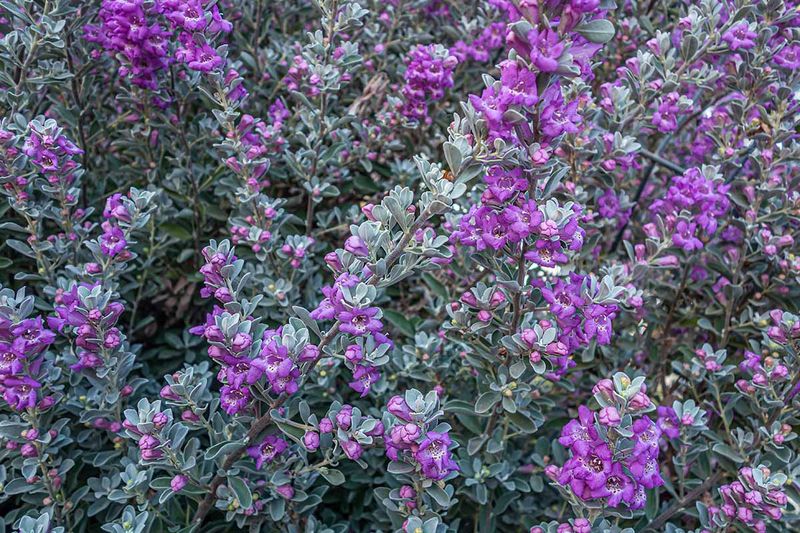
Meet Leucophyllum frutescens, the plant behind the silvery foliage and storm-chasing purple flowers that gardeners across the Southwest have admired for generations. Most people know it as Texas sage, but the list of common names runs long: cenizo, Texas ranger, Texas purple sage, silverleaf, and barometer bush all refer to the same species.
Knowing those names matters, because nursery tags and garden-center signage are inconsistent, and a shopper who asks only for “Texas sage” might accidentally walk out with a culinary sage from the genus Salvia, which is an entirely different plant family with different cultural needs.
The foliage is the first thing that catches the eye. Tiny hairs cover the leaves, giving them a gray-green to silvery sheen that holds its color through the worst of a Texas summer.
Flowers are small, bell- or tube-shaped, and most commonly purple or lavender, though cultivars exist with pink or white blooms. The plant grows in a naturally rounded mound, and North Carolina Extension’s plant profile for Texas barometer bush places the typical mature size at roughly 6 to 8 feet tall and wide, while noting that some plants and cultivars can grow larger.
The species is native to Texas, New Mexico, and northern Mexico, meaning it evolved for rocky, alkaline terrain with low rainfall and intense sun. In 2005, the Texas Legislature officially designated Texas purple sage as the State Native Shrub, a recognition of its deep roots in the regional landscape.
That designation reflects cultural and ecological significance, not a promise that every Texas yard will support it equally. Site conditions still determine whether the plant thrives or struggles, and that distinction matters more than any official title.
Why does it bloom after a summer storm?
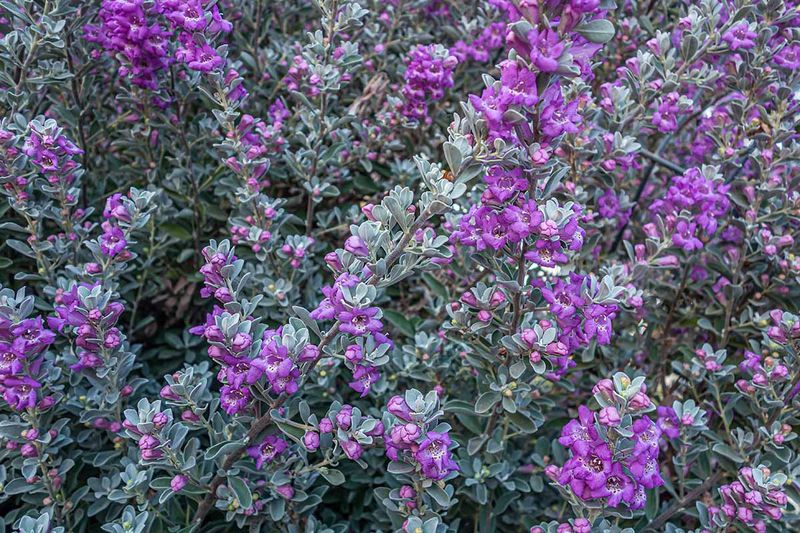
Gardeners who grow Texas sage long enough develop a ritual: check the shrub the morning after a summer storm, because there is a real chance it will be covered in small purple flowers. The connection between rainfall and bloom is genuine and widely observed, but the timing is less precise than the nickname “barometer bush” might suggest.
Flowers can appear before a storm, after one, or during a stretch of elevated humidity with no rain at all. Some plants skip a flush entirely despite seemingly ideal conditions.
Extension guidance on Texas barometer bush describes the bloom pattern as intermittent summer-to-fall flushes associated with rainfall, changes in humidity, or related weather shifts. The exact physiological trigger has not been pinned down in horticultural literature, so “barometer bush” is best understood as a colorful observation rather than a scientific claim.
What is clear is that the shrub does not bloom continuously; it produces short, sometimes intense episodes of color, then returns to its silver foliage baseline.
Bloom intensity and timing also shift by cultivar, plant age, preceding drought stress, and regional climate. A cenizo growing in the arid Trans-Pecos may respond differently to a storm cell than one planted on the more humid Gulf Coast.
The practical takeaway is to expect flowering as a seasonal bonus tied loosely to late-summer and fall weather patterns, rather than as an event that follows every storm on a predictable schedule. That honest framing sets realistic expectations and still leaves plenty of room to enjoy the show when it happens.
Its main garden value is silver structure with occasional color
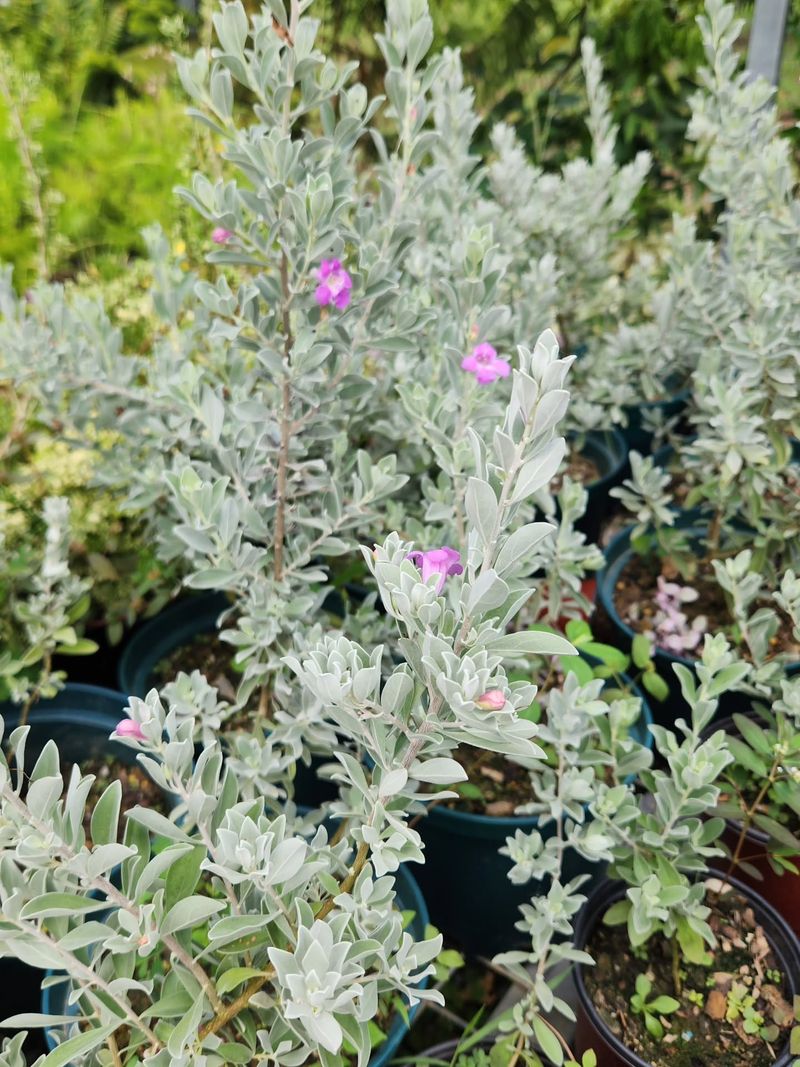
Between bloom episodes, Texas sage earns its place through structure, not color. The silver-gray foliage works as a natural foil against darker green plants, warm-toned gravel mulch, or the bleached limestone that shows up in so many Texas beds.
That contrast holds through months of summer heat when flowering annuals have surrendered, making the shrub a reliable anchor for a low-water border.
Flower color varies more than most gardeners expect. The species most often produces purple or lavender blooms, but cultivars exist with pink, white, and other shades.
Size variation is equally significant: a mature specimen can reach the commonly cited range of about 6 to 8 feet tall and wide, though some plants in favorable conditions push beyond that. Selecting a cultivar sized for the available space prevents the need for heavy corrective pruning later.
Wildlife connections add another layer of value. The flowers attract bees, native bees, hummingbirds, and beneficial insects, and Texas Parks and Wildlife’s South Texas Wildscapes reference identifies the shrub as a larval host plant for the Theona checkerspot butterfly.
A gardener who plants Texas sage for its drought tolerance ends up supporting a small web of pollinators and butterflies as a side benefit. That layered payoff, silver structure through the season plus periodic color plus wildlife habitat, is what separates it from purely decorative shrubs that offer little beyond their bloom window.
Full sun and excellent drainage make the difference
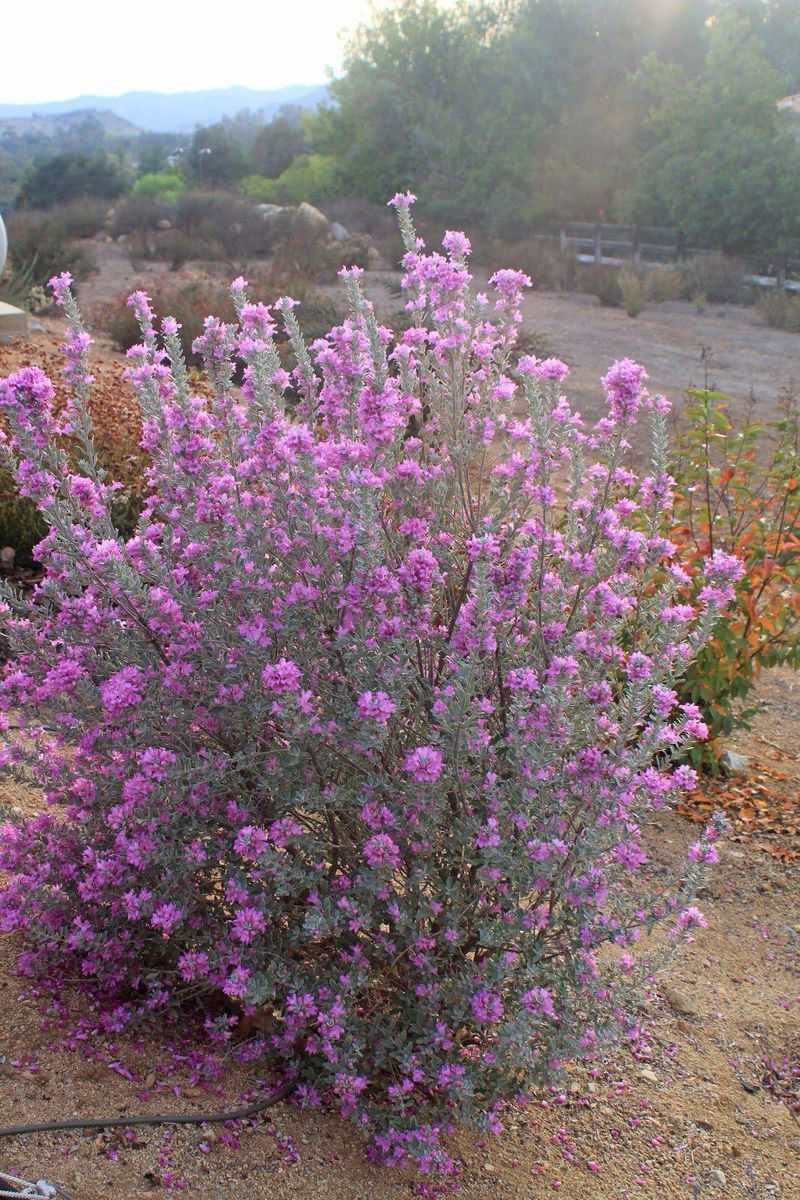
Siting is where most Texas sage failures begin. The shrub evolved on rocky, alkaline hillsides under relentless sun, and it has not shed those preferences in cultivation.
A spot that receives roughly six or more hours of direct sun daily is the starting point; less than that and the plant tends to grow loosely, bloom poorly, and become more vulnerable to root problems in wet weather.
Drainage matters as much as sunlight. Texas sage roots do not tolerate sitting in saturated soil, and North Carolina Extension’s barometer bush profile specifically flags overwatering and poorly drained soil as pathways to serious root issues including cotton root rot.
Rocky slopes, raised beds, and beds amended with coarse grit or decomposed granite all give the roots the air movement they need. Clay-heavy soils in parts of East Texas or the Blackland Prairie demand extra attention to drainage before planting.
Regional differences across Texas are real and consequential. The Texas A&M Earth-Kind Plant Selector advises matching plant choices to specific regional conditions, and cenizo is a clear example of why that advice holds.
Arid and central or west Texas sites with low rainfall and alkaline soils are close to the plant’s native habitat. The more humid Gulf Coast introduces higher nighttime temperatures, persistent moisture, and reduced air circulation, all of which raise the stakes on drainage and sun exposure.
Gardeners outside Texas who want to try the shrub, including those in Florida moonlight or low-water garden designs, face a similar calculation: full sun and sharp drainage are non-negotiable regardless of geography.
Water deeply while it establishes, then step back
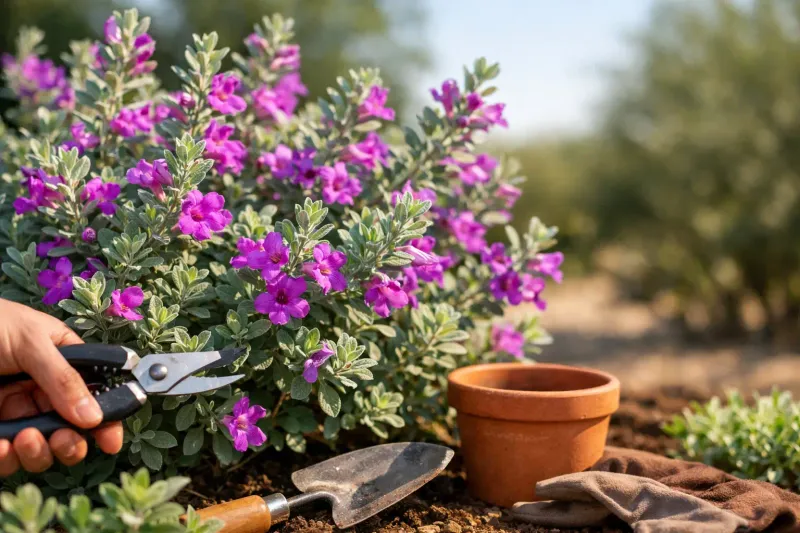
Young Texas sage plants need help getting through their first summer. During the establishment period, which typically spans the first growing season after planting, supplemental irrigation every week or two during hot, dry stretches gives roots time to reach deep into the soil profile.
The goal is never to keep the soil continuously moist; it is to encourage roots to follow water downward so the plant can eventually sustain itself.
Once established, the watering calculus shifts dramatically. UC Davis Arboretum’s cenizo profile recommends deep, infrequent irrigation and letting the soil dry between waterings, a pattern that mirrors the plant’s native rainfall regime.
Frequent shallow watering keeps roots near the surface, where they are more vulnerable to heat and more likely to sit in moisture after a storm. Adding irrigation right after a rainstorm is unnecessary and can push moisture levels into a range the roots cannot handle.
Poor drainage combined with excess water is the most reliable way to kill an otherwise tough plant. Extension guidance points to overwatering and waterlogged soil as contributors to cotton root rot, a serious fungal disease.
If water pools around the base of the shrub after rain, the right fix is improving the site, either by amending the soil, adding drainage infrastructure, or relocating the plant, not by reducing water and hoping for the best. Watering more to compensate for a drainage problem only deepens it.
Light pruning protects the next bloom display
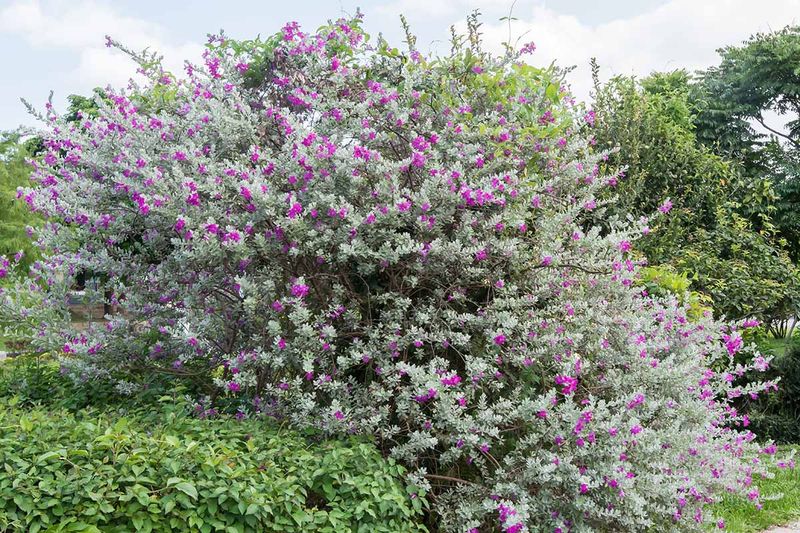
Left alone in a well-suited spot, Texas sage tends to build a clean, rounded form without much help. That natural habit is one of the plant’s practical strengths: a shrub that does not need constant shaping saves time and reduces the risk of pruning-related problems.
Many gardeners find that the only cuts they make are to remove a dead branch or thin a crossing stem.
When shaping is genuinely needed, early spring is the safer window. University of Arizona Arboretum guidance on cenizo notes that flowers develop on current-season or new wood, which means that cutting heavily into the shrub just before a bloom period can eliminate the growth that would have carried the flowers.
A selective approach, removing a few stems at a time rather than shearing the entire canopy, keeps the plant’s shape in check without sacrificing the next flush of color.
Repeated hard shearing is the pruning mistake that causes the most long-term damage. It forces the plant into an unnatural box shape, promotes dense interior growth that resists air movement, and removes the new wood repeatedly before it can flower.
After a cold winter, some frost-damaged tip growth may need cleaning up in spring; cut back to healthy wood and let the plant fill in naturally. The realistic maintenance picture is a plant that needs occasional assessment rather than a regular pruning schedule, which suits most Texas homeowners just fine.
Choose a cultivar that fits your region and space
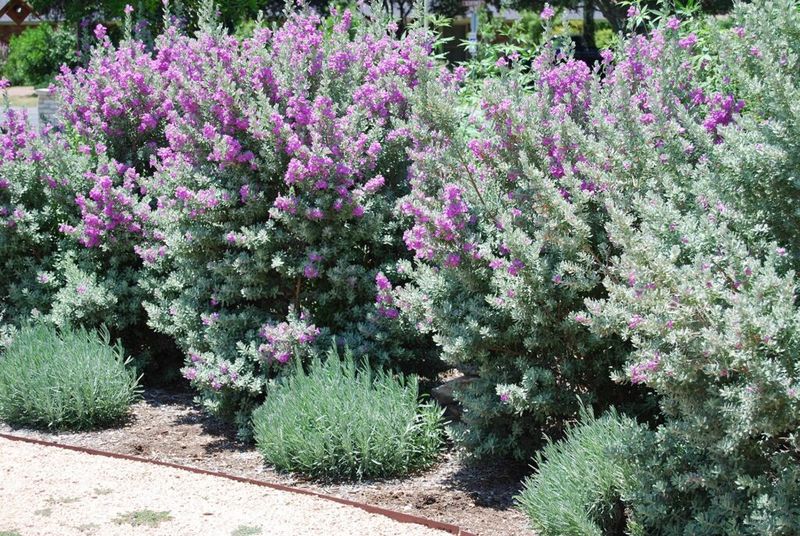
Walking into a nursery and asking for “Texas sage” can produce several different plants. The genus Leucophyllum includes multiple species and hybrid cultivars, many of which are sold under overlapping common names.
Some labeled as Texas sage may be Leucophyllum langmaniaeL. laevigatum, , or named selections bred for compact size, deeper flower color, or improved tolerance for humidity. Checking the scientific name and cultivar on the tag before buying is the only reliable way to know what you are getting.
Cultivar differences are not cosmetic. Height can range from compact selections under 4 feet to large shrubs that approach or exceed 8 feet.
Flower color spans purple, lavender, pink, and white. Some cultivars tolerate heavier or moister soils better than others; a few were selected specifically for performance in the more humid eastern reaches of the plant’s range.
North Carolina Extension’s barometer bush profile also clarifies that the species can behave as evergreen or semi-evergreen depending on winter temperatures, drought stress, and regional climate, so gardeners in colder zones or areas with hard freezes should expect some leaf drop in severe winters.
Southern gardeners outside Texas have options too. UF/IFAS Extension’s Texas sage fact sheet describes the species as suitable for Florida landscapes under the right conditions and notes that it is not a problem species in terms of invasiveness.
That suitability comes with the same requirements it carries in Texas: full sun and very well-drained soil. Texas sage is not Florida-native, and calling it such would be inaccurate; it is a well-adapted nonnative that performs reliably when sited correctly.
Plant it for dependable silver foliage, not guaranteed storm timing
Texas sage earns a spot in a sunny, sharply drained landscape by being reliably present through the harshest stretch of the Texas year. The silver foliage works all season; the purple flowers are a seasonal bonus, and a welcome one, but they arrive on the plant’s schedule rather than yours.
The three essentials hold regardless of cultivar or region: appropriate siting with full sun and excellent drainage, restrained watering that respects the plant’s low-water culture as confirmed by both UC Davis Arboretum cenizo guidance and North Carolina Extension’s barometer bush profile, and minimal pruning that preserves the new wood where flowers develop. Get those three right and the plant largely takes care of itself.
Rain-linked flowering is a pattern worth watching for, not a performance guarantee. A gardener who plants Texas sage expecting an instant purple spectacle after every storm will occasionally be disappointed; one who plants it for its structural silver presence will always be satisfied, and occasionally delighted.