
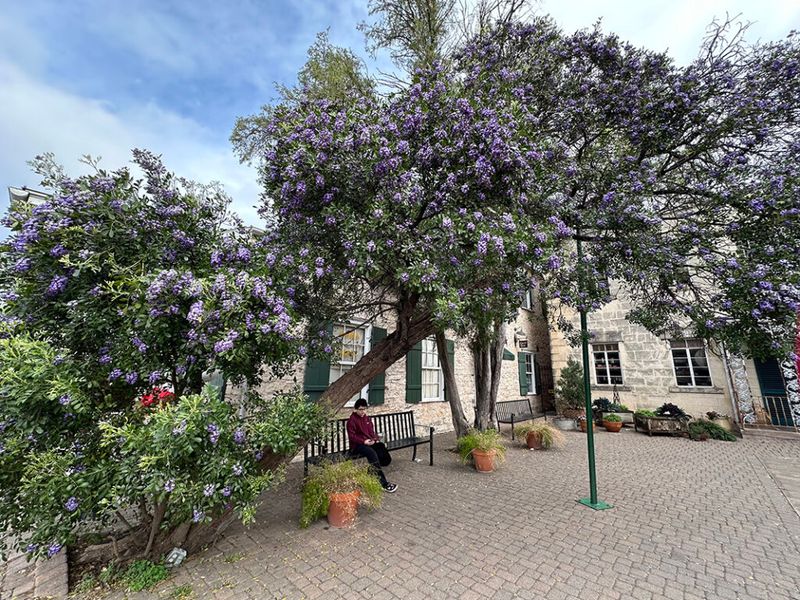
Cracked patios and lifted walkways are a common headache when the wrong tree goes in the wrong spot. The good news is that Texas has plenty of small native trees whose roots behave themselves near concrete, so you get shade and beauty without a costly repair bill later.
These trees also shrug off triple-digit heat, tough soils, and water restrictions like natives should. Here are seven Texas-friendly picks that stay pretty above ground and polite below it.
1. Texas Mountain Laurel
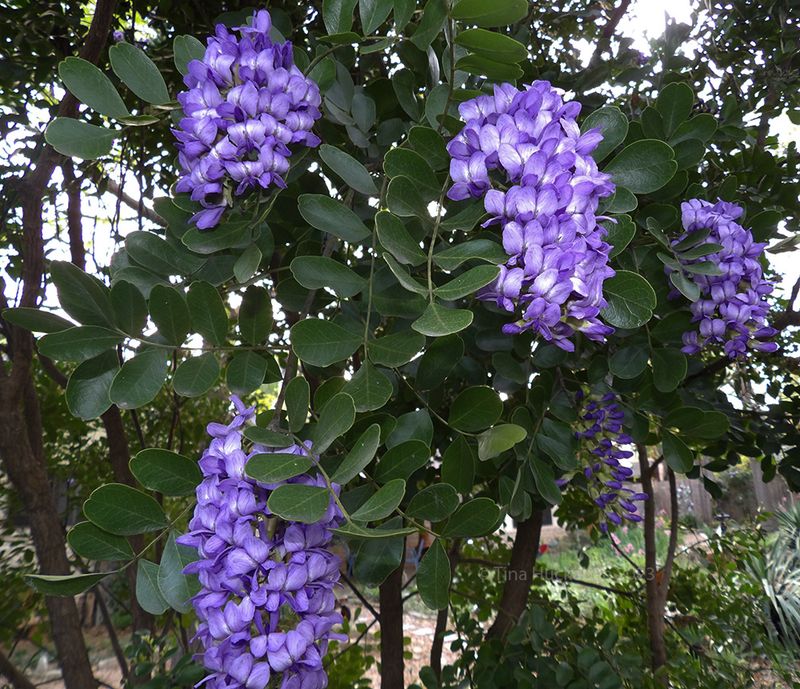
Come early spring, this evergreen puts on a show of purple flower clusters that smell just like grape soda, and folks stop to sniff them right off the branch. It stays compact, often topping out around 15 to 25 feet, which keeps its root system modest and manageable.
Because it grows slowly and prefers the rocky, alkaline soils common across Central Texas, its roots dig deep for water rather than spreading wide and shallow toward your walkway. That habit makes it a safe bet just a few feet from a patio edge.
Fun bit of history: the seeds inside those pretty pods are bright red and hard as pebbles, and Texans have used them in crafts for generations. Give it full sun and sharp drainage, and it will reward you with almost no fuss and even less pruning.
2. Mexican Plum
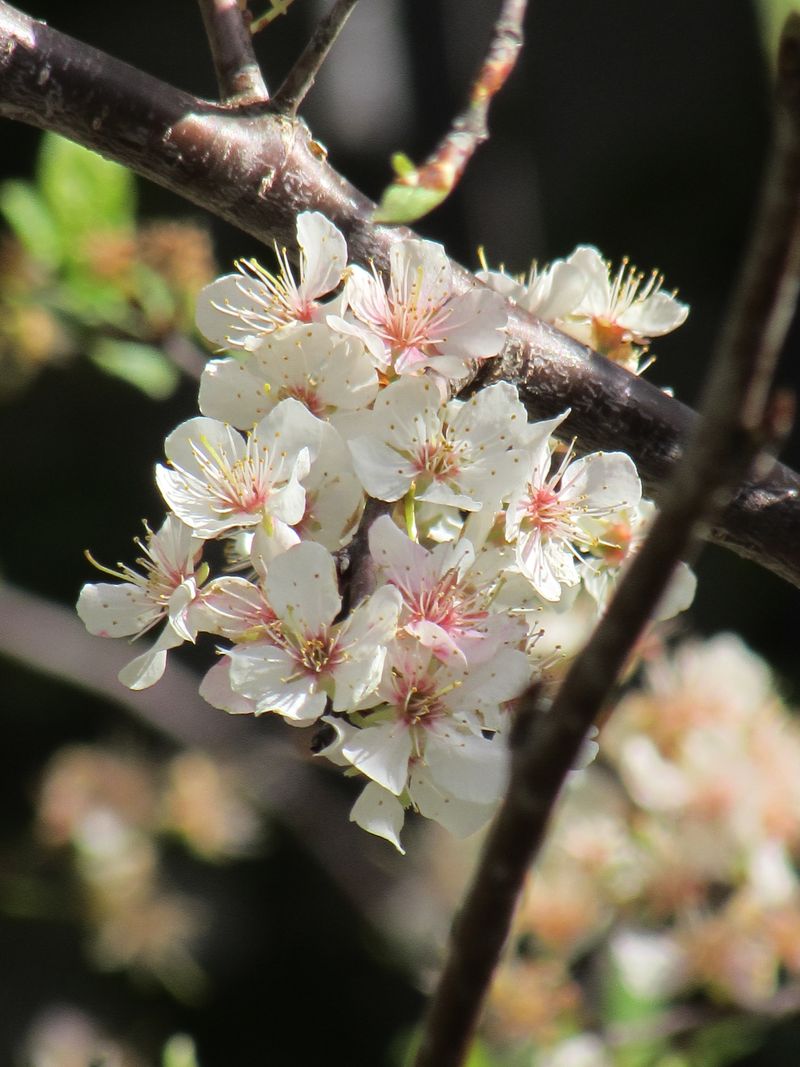
Long before most trees wake up, the Mexican Plum bursts into a cloud of white, sweetly scented blossoms that pull in early bees looking for a meal. Reaching only about 15 to 20 feet, it fits tucked into a corner near the driveway or path without any drama.
Its roots run deep and controlled, so you get a tidy little shade tree that will not heave your concrete over the years. In fall the leaves turn warm shades, and small plums appear that birds and the occasional cook happily gather.
Native across much of Texas, it handles clay and limestone soils that would stump fussier ornamentals. Plant it where you can enjoy that spring perfume from a window, and it will earn its keep season after season.
3. Eve’s Necklace
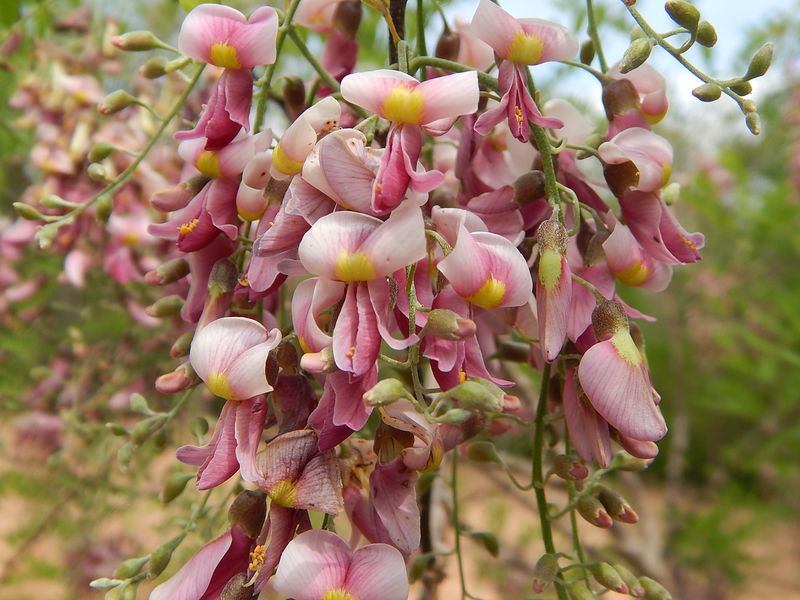
Named for the string of shiny black seed pods that dangle like beads on a necklace, this understated cousin of the Mountain Laurel deserves more attention. Its soft pink, pea-shaped flowers hang in loose clusters during spring, giving it a graceful, almost delicate look.
Staying slim and around 15 to 25 feet tall, it slips neatly into narrow spaces beside a walkway or courtyard where a bulky tree would never work.
The roots stay well-mannered and non-invasive, so nearby pavers and edging remain undisturbed. It tolerates part shade, which is handy for that spot on the north side of the house that most trees hate.
Deer tend to leave it alone too, a real perk in Hill Country neighborhoods.
4. Rusty Blackhaw Viburnum
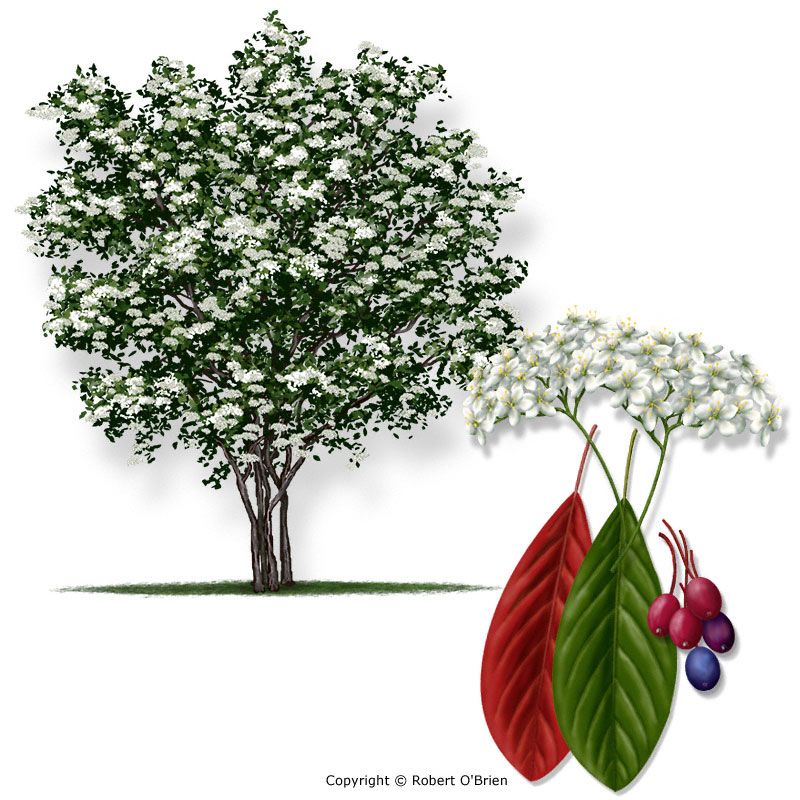
Here is a native that quietly does everything: white spring flowers, glossy summer leaves, fiery red-purple fall color, and dark berries that songbirds devour. Rusty Blackhaw usually stays under 20 feet, making it a versatile little tree for smaller yards.
Its compact, deep root system means you can plant it near a seating area or path without worrying about lifted stones down the road.
Adaptable to sun or partial shade and comfortable in a range of Texas soils, it thrives from the eastern woods to the edges of the Hill Country. If you want one plant that feeds wildlife and looks good in every season, this is a smart, low-maintenance answer.
5. Possumhaw Holly
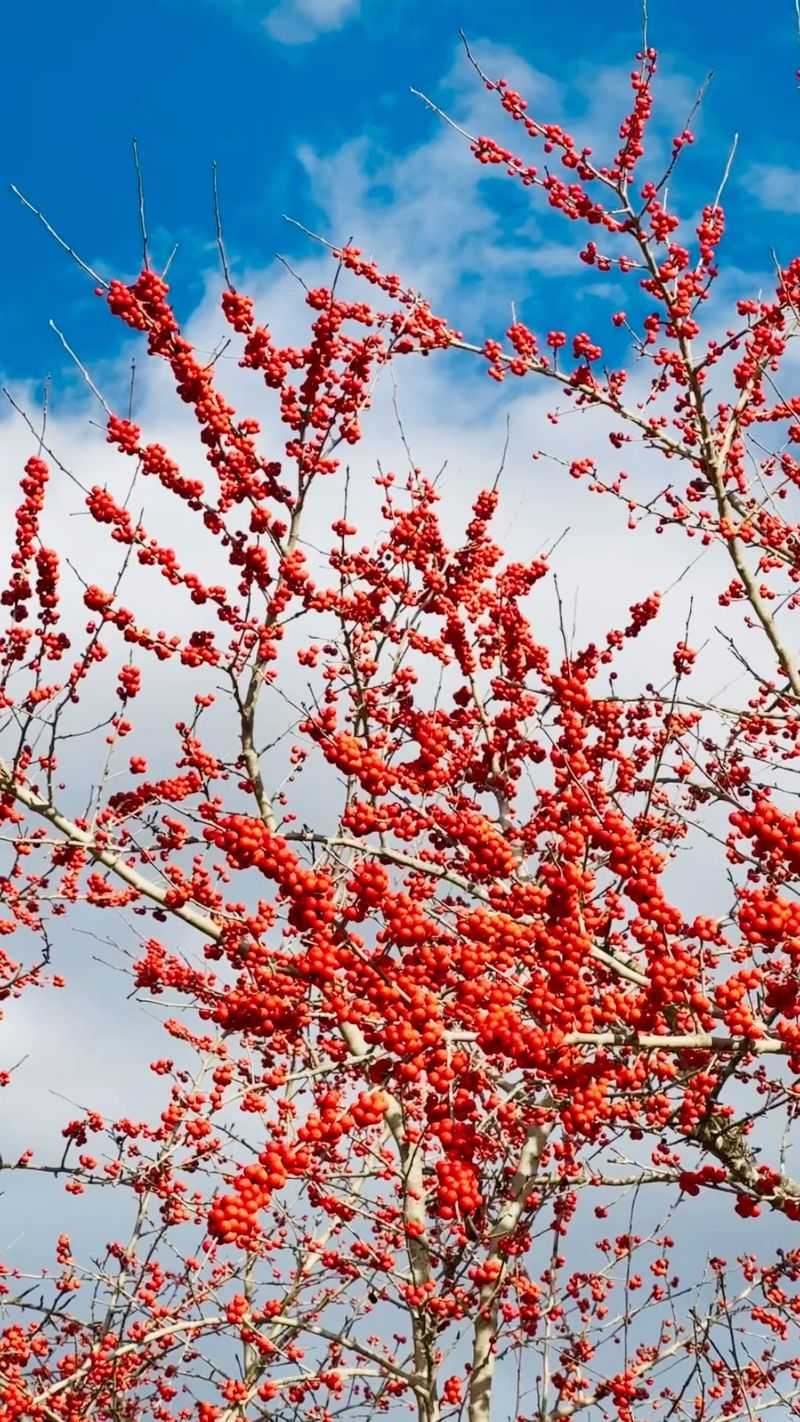
Once its leaves drop in late fall, the Possumhaw Holly turns into a firework of red berries clinging to bare gray branches, brightening the gray days of a Texas winter. Cedar waxwings and robins strip those berries when other food gets scarce.
Growing to about 15 to 20 feet, it keeps a slender profile and a restrained root system that plays nicely with nearby hardscape.
You will want a female tree for the berry display, with a male somewhere in the neighborhood for pollination. It handles wet spots and dry ones alike, shrugging off both flooding and drought, which suits the swings of Texas weather.
Set it where winter berries can be seen from the porch for a season-long treat.
6. Texas Redbud
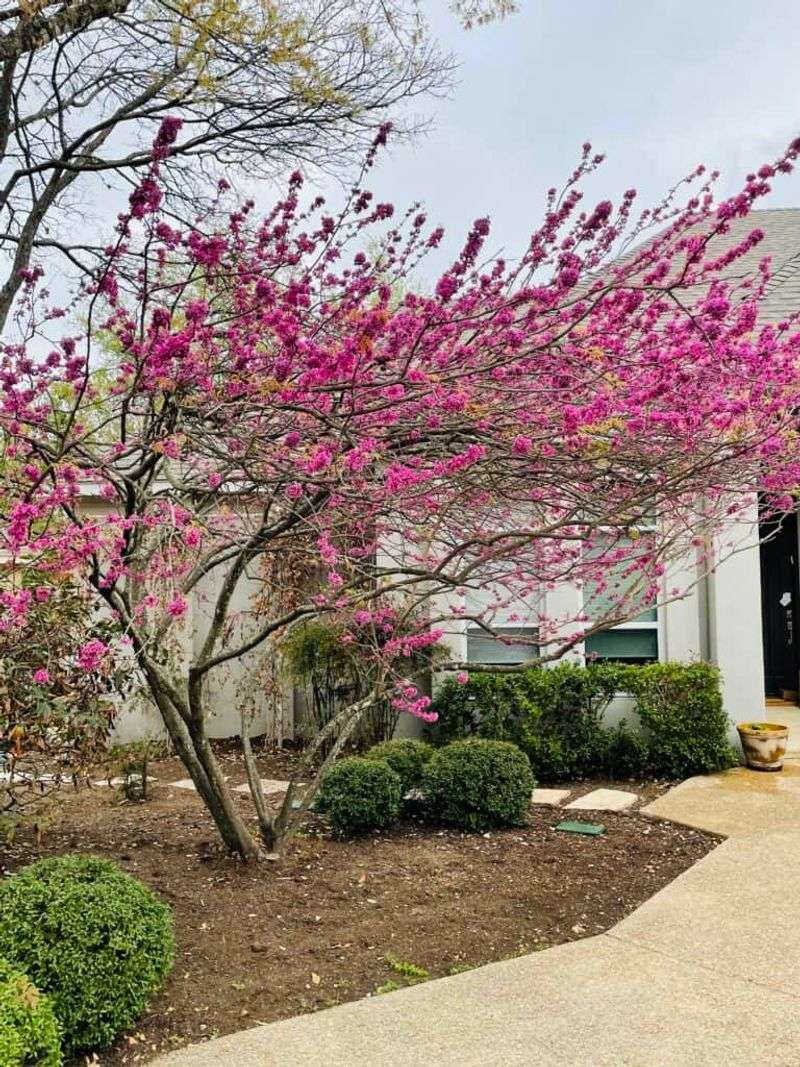
Nothing announces spring in Texas quite like a Redbud lighting up magenta-pink flowers right on its bare branches before a single leaf appears. The Texas variety has thicker, glossier heart-shaped leaves that stand up to heat and reflected glare better than its eastern relatives.
At roughly 15 to 20 feet, it is a natural fit for framing an entry, softening a patio corner, or shading a small sitting spot.
Its roots stay reasonable and deep-seeking, so cracked walkways are not part of the deal. Give it decent drainage and a little afternoon shade in the hottest zones, and it will bloom faithfully every year while asking for very little water once established.
7. Yaupon Holly
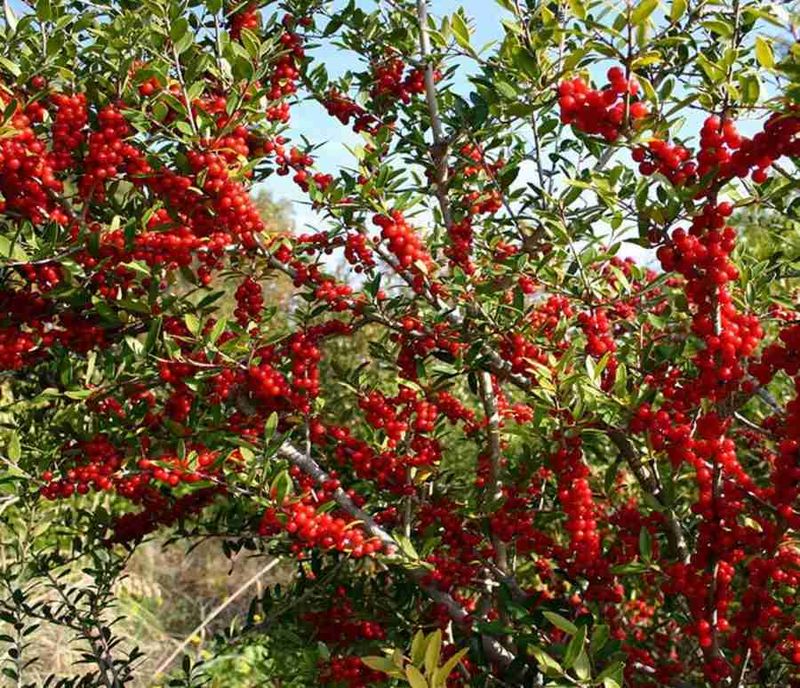
Tough as they come, the Yaupon Holly survives drought, poor soil, salt spray on the Gulf Coast, and the kind of neglect that kills lesser plants. Trained as a small multi-trunk tree, it reaches around 12 to 20 feet with an evergreen screen of small leaves and cheerful red winter berries.
The root system stays contained and well-behaved, so it works beautifully near patios, walls, and walkways.
Here is a quirky fact: its leaves are the only native North American plant that naturally contains caffeine, and people have brewed them into tea for centuries. Female plants carry the berries that birds love, and the dense growth doubles as nesting cover.
For a hardworking evergreen that asks almost nothing, it is hard to beat.