
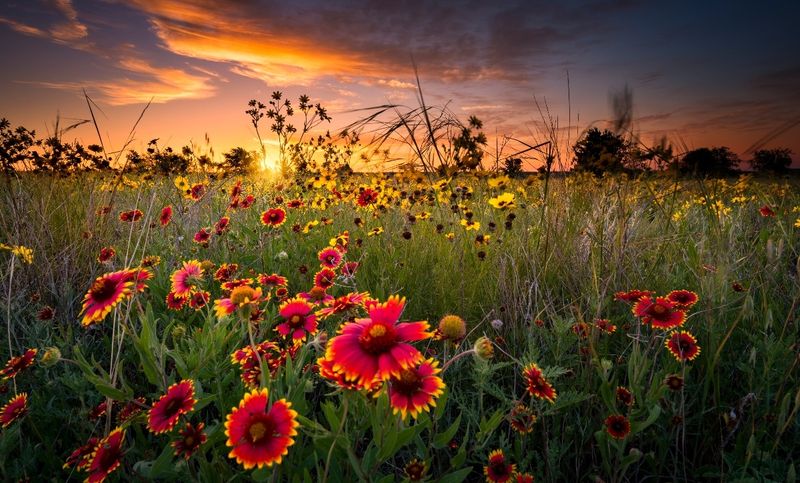
Texas summers can feel like an oven, with days of triple-digit heat and city water restrictions that make keeping a garden alive seem impossible. The good news is that some flowers actually thrive in that punishing weather without any help from your hose. These tough native and adapted plants have survived Texas droughts for generations, and they can bring color to your yard when everything else has given up. Here are nine flowers that keep blooming through the worst heat, even when you forget to water them.
1. Texas Lantana
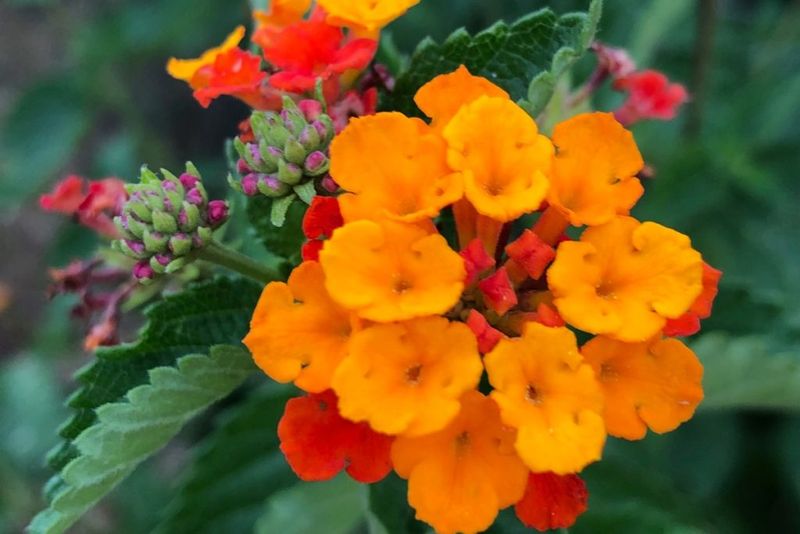
Bees and butterflies show up like clockwork the moment Texas lantana starts throwing out its clusters of orange and yellow blooms. This scrappy native shrub laughs at the kind of July afternoon that wilts everything around it.
Once its roots settle in during the first season, lantana asks for almost nothing. No supplemental water, no fussing, no rich soil. It handles rocky ground and reflected heat from driveways and walls without missing a beat.
The color show runs from spring all the way to first frost, which is a long stretch of payoff for a plant you basically ignore. A word of caution for families with curious kids or pets, though: the berries are not safe to eat, so plant it where nibbling is unlikely.
Texans who want a low-effort pollinator magnet tend to circle back to lantana year after year, and its ability to shrug off drought is exactly why.
2. Blackfoot Daisy
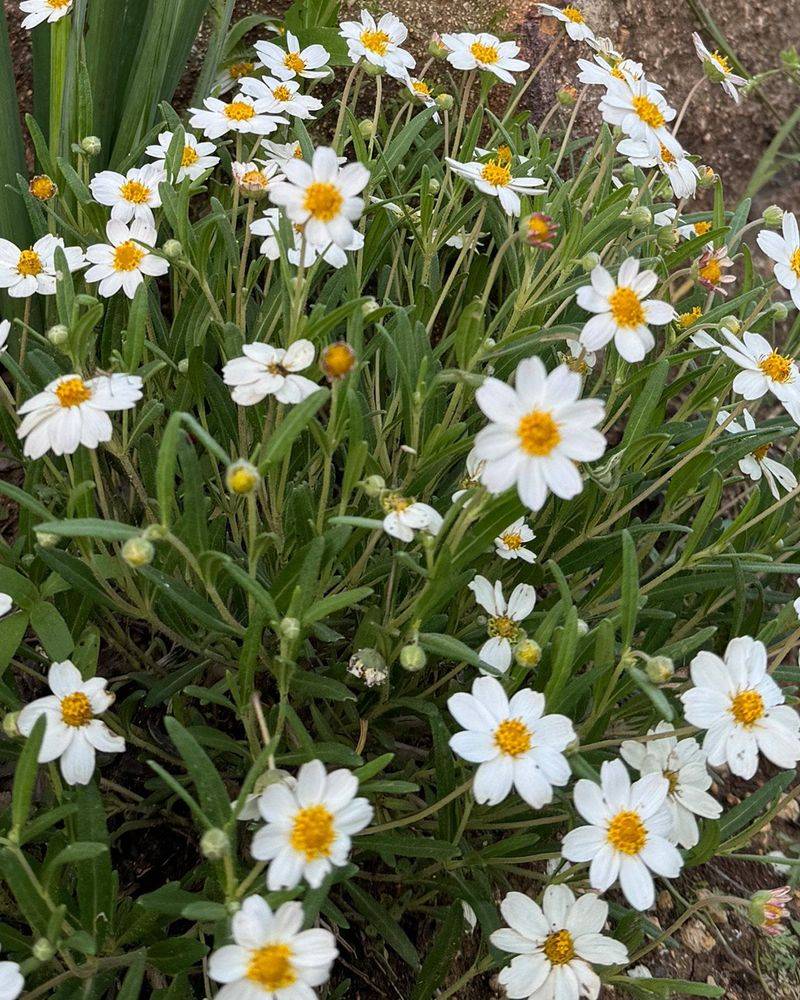
Picture a tidy little mound covered in cheerful white daisies with sunny yellow centers, holding strong while the thermometer climbs past 100. That is blackfoot daisy, one of the most underrated tough guys in the Texas plant world.
Native to the rocky, limestone-heavy soils of Central and West Texas, it actually prefers lean, gritty ground that would starve fussier flowers. Too much water and rich soil can rot it out, so neglect is genuinely the kindest thing you can offer.
Blooms carry a light honey scent, and they keep coming from spring into fall with barely a pause. The plant stays compact, usually under a foot tall, which makes it a favorite for borders, rock gardens, and those hot spots near the sidewalk.
For anyone battling water restrictions and blazing sun, this daisy delivers steady color while sipping next to nothing.
3. Esperanza (Yellow Bells)
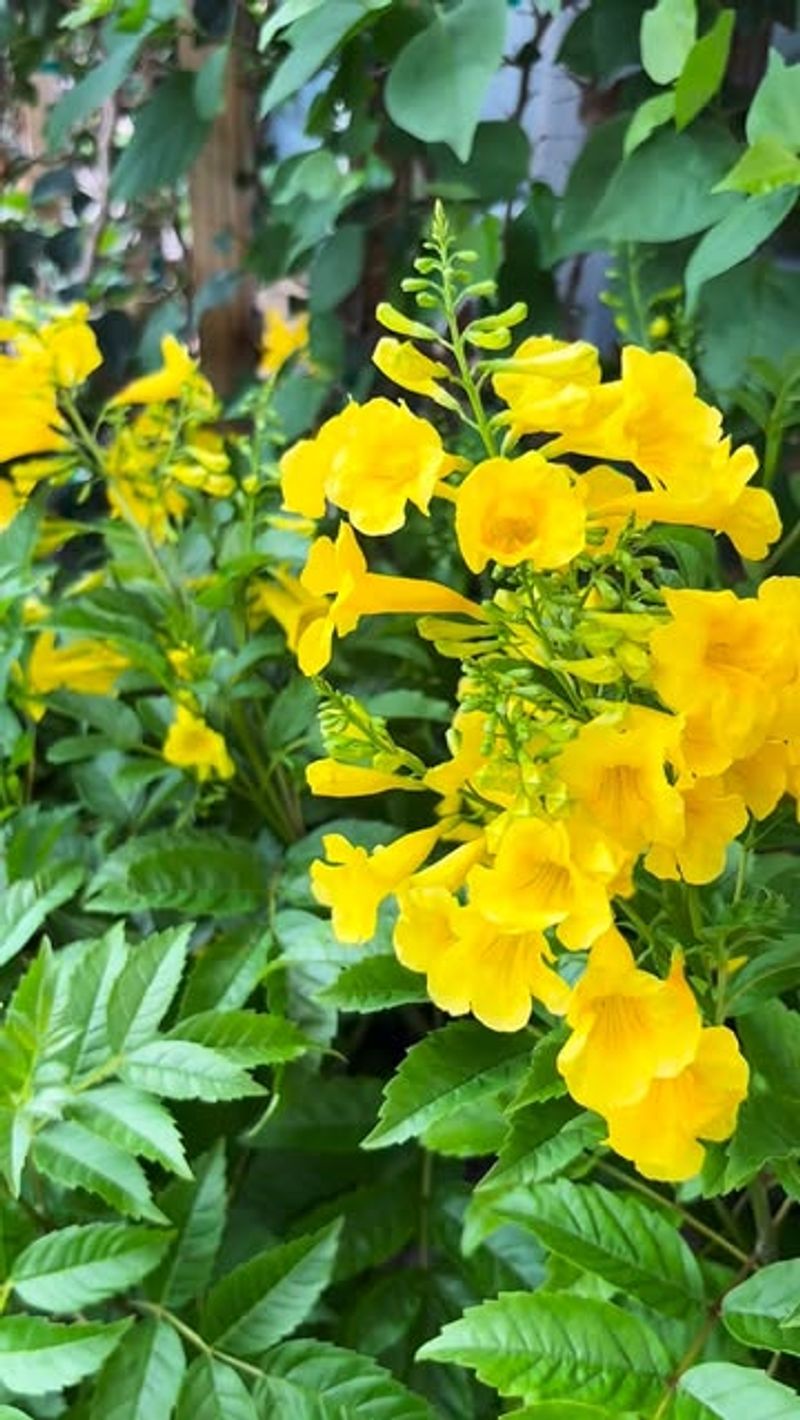
Few plants say Texas summer quite like esperanza, with its bright trumpet-shaped yellow flowers waving in the heat like little bells. The name even means hope in Spanish, and it earns that title by blooming when hope for the rest of the garden feels lost.
Come heat, drought, and poor soil, this shrub just keeps producing flowers from late spring until frost. Hummingbirds treat it like a roadside diner, stopping in all season long.
Give esperanza a sunny spot and it rewards you with fast growth, sometimes reaching several feet tall in a single season. In colder parts of the state it may die back in winter, but it bounces right back when the warmth returns.
Because it can reduce your watering chores to nearly zero once established, esperanza has become a go-to for Texans who want big, bold color without a big water bill.
4. Indian Blanket (Firewheel)
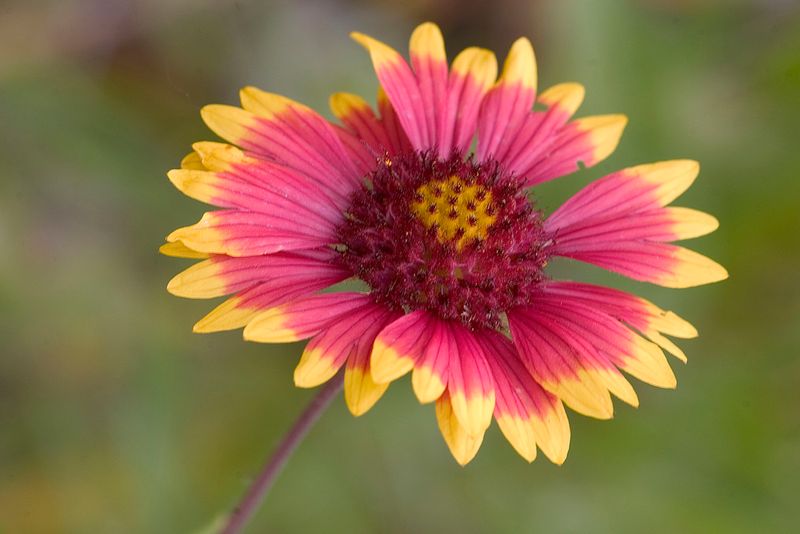
Drive along a Texas highway in late spring and you will spot sweeps of red and yellow blooms dancing in the wind. Indian blanket, sometimes called firewheel, is the wildflower behind that fiery roadside glow.
An official state wildflower of Texas, it thrives on total neglect. Poor soil, blazing sun, and zero irrigation are exactly the conditions where it puts on its best show.
The pinwheel-shaped flowers wear bands of crimson tipped with gold, and they reseed themselves readily, so a small patch this year can become a meadow next year. That self-sowing habit means you plant once and enjoy the display for seasons to come.
Pollinators adore it, and the seed heads later feed birds. For a genuinely hands-off splash of color that celebrates Texas heritage, firewheel is hard to top.
5. Purple Coneflower
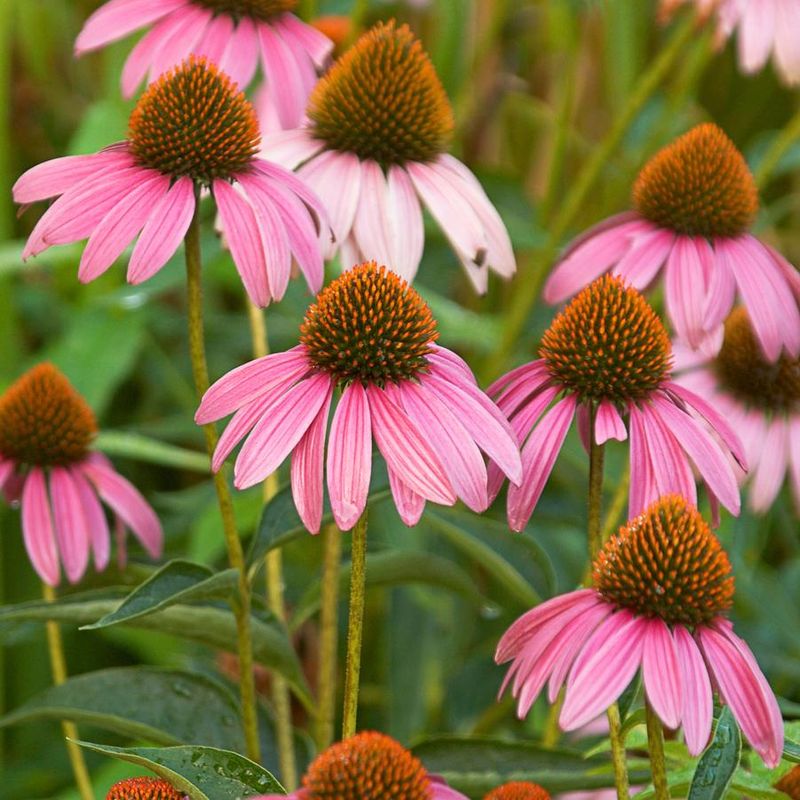
Sturdy stems topped with rosy-purple petals and a spiky copper cone: that is the purple coneflower, a prairie native that treats a Texas dry spell as just another Tuesday. It stands tall while thirstier flowers flop over in the heat.
Beyond its good looks, this plant is famous as the echinacea used in herbal remedies, giving it a story that goes back generations on the American prairie.
Deep taproots let it pull moisture from far below the surface, which is the secret to its drought endurance. That same root system means it hates being moved, so pick its spot and let it settle in for the long haul.
Butterflies swarm the blooms in summer, and if you leave the spent cones standing, goldfinches will pick at the seeds through fall. Reliable, upright, and undemanding, coneflower earns its place in any low-water Texas bed.
6. Turk’s Cap
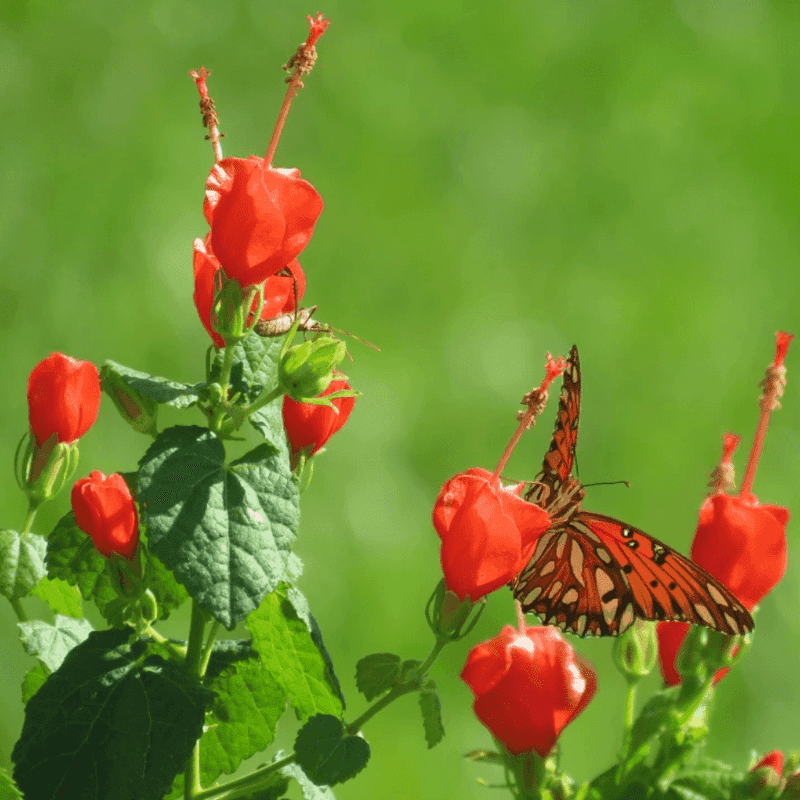
In the shady corners where most flowers sulk, Turk’s cap steps up with its quirky red blooms that never quite open all the way, twisting instead into a shape like a little turban. It is one of the rare Texas natives that shrugs off both heat and shade.
Hummingbirds and butterflies can’t resist those swirled scarlet flowers, and the plant keeps offering them from summer clear into autumn. Later it forms small red fruits that some folks say taste faintly like apple.
Once established under a live oak or against a north-facing wall, Turk’s cap survives on rainfall alone in most years. It spreads gently to fill space, giving you a lush, tropical look without a tropical water demand.
For gardeners fighting dry shade, a spot that seems impossible to plant, this cheerful native may help fill the gap with almost no effort.
7. Autumn Sage (Salvia greggii)
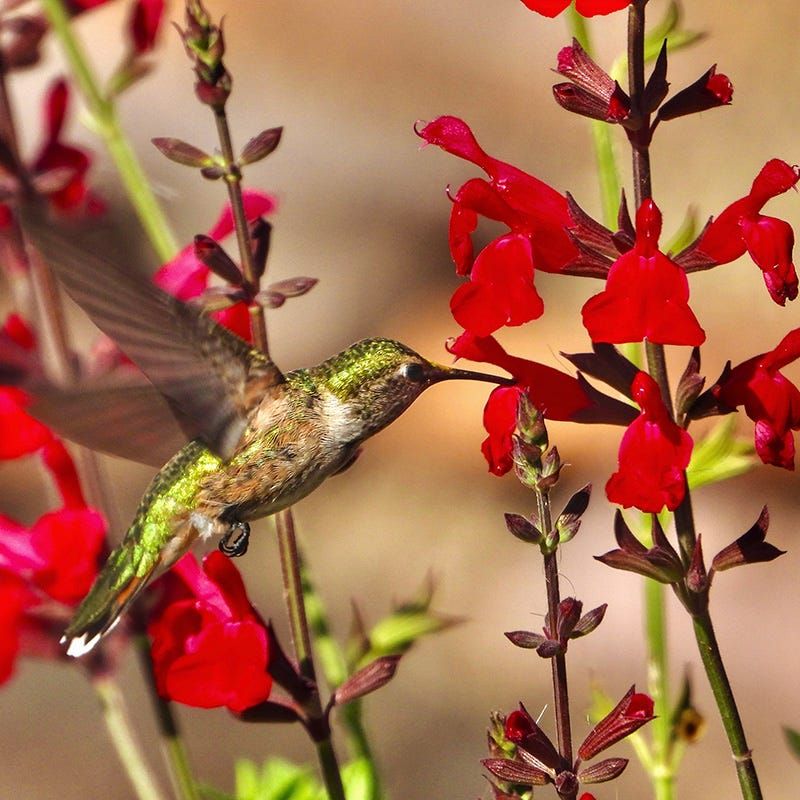
Don’t let the name fool you: autumn sage blooms far beyond fall, pumping out tubular flowers in red, pink, coral, or white through the hottest stretches of a Texas summer. This little shrub is a workhorse in xeriscape yards across the state.
Native to the rocky hills of West Texas and the Hill Country, it wants sun, good drainage, and to be left alone. Overwatering is one of the few ways to kill it.
Hummingbirds practically claim it as their own, buzzing from bloom to bloom all season. A quick shearing after the first flush of flowers keeps the plant tidy and encourages a second wave of color.
Salvia greggii proves you don’t need a sprinkler running to have a yard full of movement and color. Plant a few in different shades and you get a hummingbird playground that basically waters itself.
8. Mexican Feather Grass with Winecups
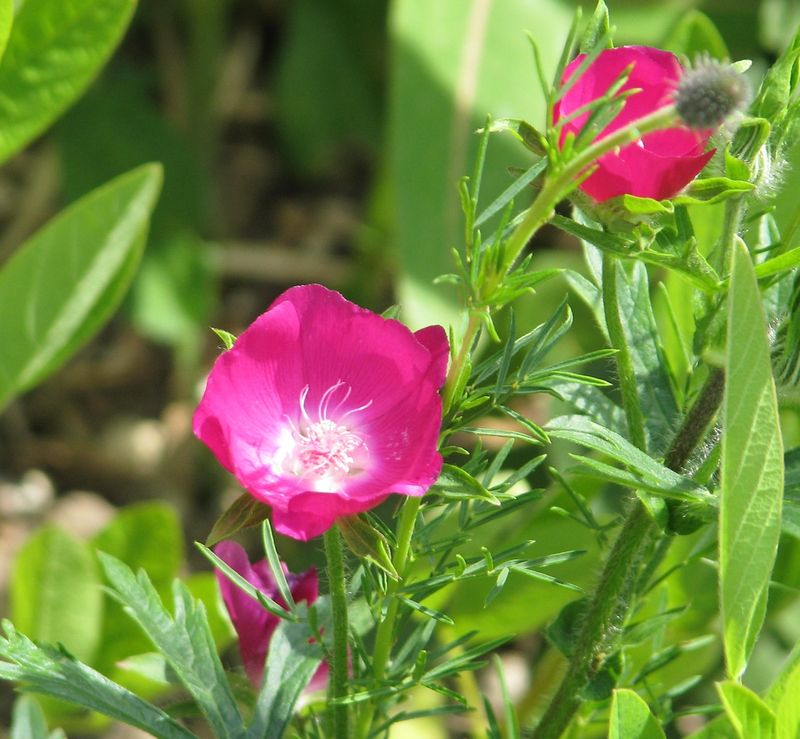
Pairing wispy Mexican feather grass with sprawling winecups gives you a combination that flows and blooms through the harshest Texas heat without a drop from the hose. The grass sways like water in the wind while the winecups spill magenta, chalice-shaped flowers across the ground.
Winecups, a true Texas native, send down a deep taproot that keeps them going through drought and reflected pavement heat. They bloom from spring into summer and reseed politely to return each year.
The feathery grass adds soft texture and golden movement, catching evening light in a way that makes a dry bed look intentional and alive. Together they create a layered, meadow-like feel with essentially zero irrigation.
Anyone reimagining a struggling lawn as a tougher, water-wise landscape will find this duo does the heavy lifting while looking effortless.
9. Black-Eyed Susan
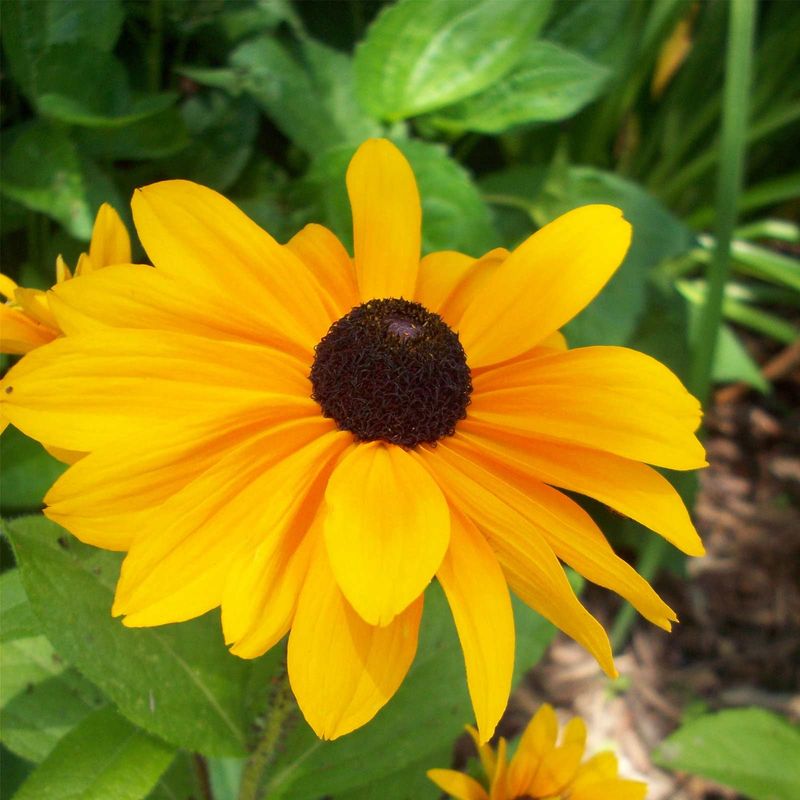
Golden petals fanning out around a dark chocolate center, black-eyed Susan brings that classic sunny-meadow cheer to Texas yards that bake all summer long. It is the kind of flower that just looks happy, even at high noon in August.
Tough and adaptable, it takes clay, sand, or rocky ground and keeps blooming from early summer into fall on rain alone once it is rooted. The plant reseeds freely, so a single planting often becomes a growing colony.
Did you know these blooms were among the wildflowers Lady Bird Johnson championed to brighten Texas roadsides? That legacy still shows up every summer in ditches and fields across the state.
Butterflies feed on the flowers and songbirds later raid the seed heads, making black-eyed Susan a full-service plant that costs you nothing but a little patience.