
Some Texas water providers will pay you to pull out your grass and replace it with a drought-tolerant planting bed, but the details are local, conditional, and tied to the specific utility serving your address. As of the August 23, 2026 research snapshot, programs from providers like LCRA, Austin Water, Kyle, Boerne, and San Antonio Water System each follow their own rules, payment structures, and funding limits.
No single statewide offer exists, so the first step is knowing who actually bills you for water and what that provider currently offers.
The qualifying swap turns irrigated turf into a planting bed
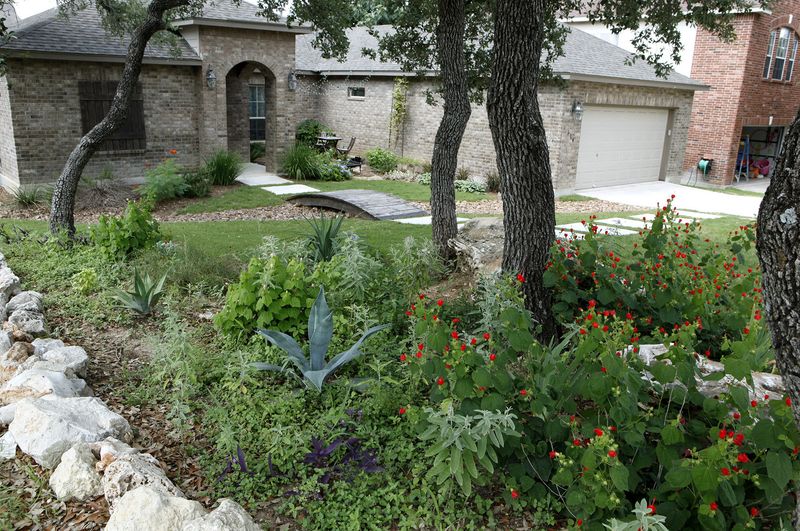
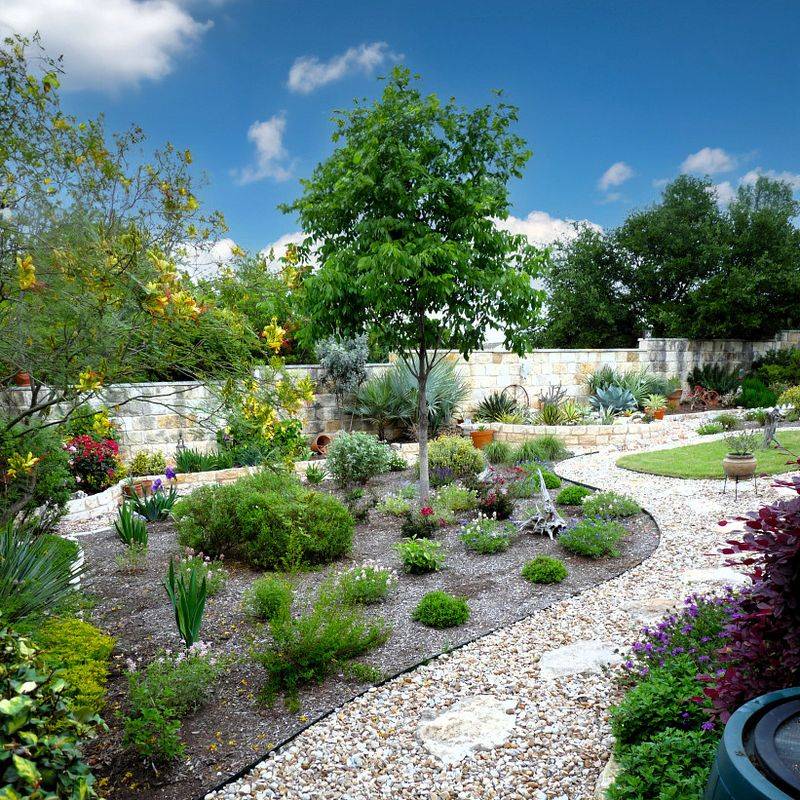
Pulling out grass and replacing it with rocks, synthetic turf, or a different grass variety is not the swap these programs fund. The conversion that qualifies with multiple Texas water providers is turning healthy, irrigated turfgrass into a native or regionally adapted, drought-tolerant planting bed, and modifying the irrigation system that served that area in a way the provider specifically requires.
Irrigation treatment is where the rules diverge sharply by provider. LCRA’s WaterSmart program requires that the replacement area contain no automatic irrigation.
San Antonio Water System’s cited 2026 fall offer requires removing automatic sprinkler heads or drip lines from the project area. Other providers may differ, and capping or redesigning the system is not automatically acceptable unless the serving provider expressly permits it.
Ask your provider before touching a single pipe.
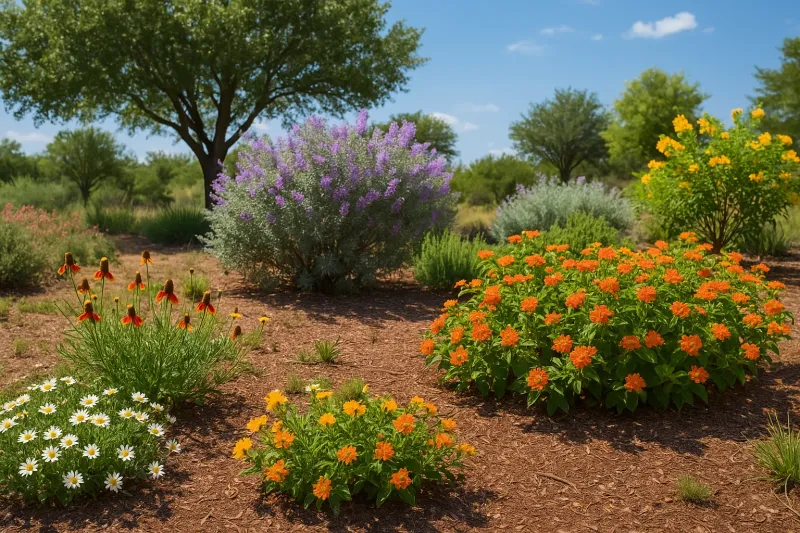
The landscape itself also has to match the program’s definition of qualifying plants. A bed filled with drought-tolerant native perennials, ornamental grasses, and adapted shrubs is the target.
Gravel-only yards, rubber mulch, and artificial turf do not satisfy most of these programs, and Austin Water’s WaterWise Landscaping Rebate guidance specifically excludes artificial turf and permeable concrete from its rebate.
Water-smart landscaping is sometimes misread as the complete removal of all grass and the installation of a gravel desert. EPA WaterSense guidance on landscape design describes water-smart yards as spaces zoned by plant water need, not necessarily turf-free.
The programs described here target a specific, measurable change: replacing active irrigation demand with a planted bed that survives on far less water. That distinction shapes every rule that follows.
The serving water provider controls the offer
Before quoting a dollar amount to a neighbor or planning a project budget, pull out the water bill and find the name of the serving utility. Eligibility, payment amounts, minimum project sizes, application windows, and funding availability all belong to that specific provider, not to a general Texas program.
The variation across current programs is substantial. LCRA’s WaterSmart residential rebate offers $0.50 per square foot, up to $2,000, for converting at least 200 square feet of healthy turf to native garden beds or drought-tolerant landscaping, and limits participation to LCRA customers or residents served by listed LCRA water customers.
Austin Water lists up to $3,000 for its own turfgrass conversion program under separate eligibility rules. These two programs serve overlapping geography but operate independently, so a homeowner cannot assume that living near Austin means qualifying for either one without checking the water bill first.
Payment method is another variable that matters. Kyle’s pilot program reimburses $1 per square foot up to $250 and expressly states that approved reimbursements are issued by check.
Boerne’s program credits eligible water customers at $1 per square foot with a 100-square-foot minimum and a $500 annual combined cap, but it applies those funds as credits on the water bill rather than a separate payment. San Antonio Water System’s 2026 fall WaterSaver offer provides $150 per 200-square-foot conversion up to $600, but the payment arrives as plant-purchase coupons, not a general cash disbursement.
Seasonal windows add another layer of uncertainty. SAWS’s fall 2026 offer was scheduled for coupon distribution beginning August 15, 2026, with redemption closing November 1.
Funding for first-come, first-served programs can run out before the window closes. Verify current availability, application status, and any funding caps directly with the provider before building a project plan around a specific payment amount.
Healthy irrigated turf determines whether the project fits
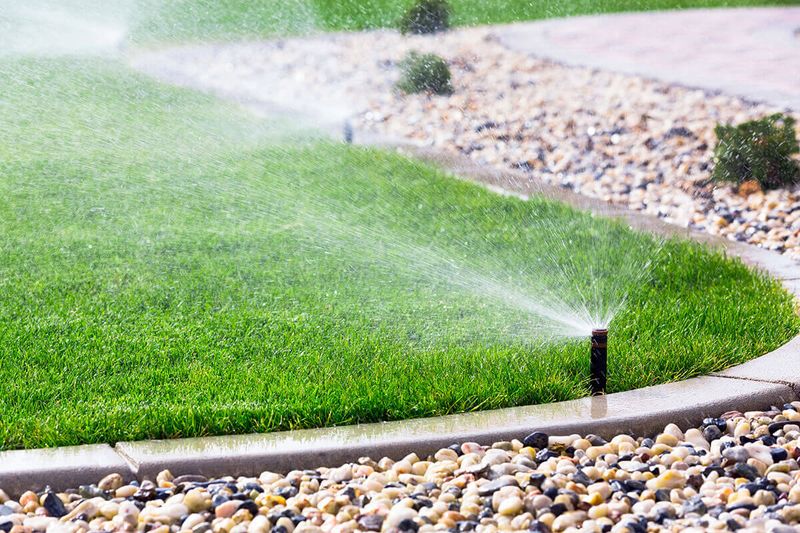
These programs exist to reduce active irrigation demand, not to subsidize general landscaping improvements. That purpose explains why healthy, currently irrigated turf is a recurring qualification rather than a minor detail.
Austin Water requires that healthy turf cover at least 75% of the proposed conversion area and states directly that dead lawns do not qualify. LCRA and Boerne similarly require healthy turf in the project footprint.
A yard that already lost its grass to drought, neglect, or pest damage does not represent the same water savings opportunity as a maintained, irrigated lawn. Providers are paying to eliminate future irrigation use, so the project area needs to demonstrate that active use is currently happening.
If a section of the yard is already patchy, dead, or has never had irrigation, confirm with the provider whether that area is eligible before including it in the application.
Turf-to-turf swaps also fall outside the cited rules. Austin specifically states that converting turfgrass to a drought-tolerant grass variety is not currently eligible, noting that savings between grass types are inconsistent because homeowners often overwater dormant turf.
Corinth’s WaterWise program likewise prohibits replacing turf with another turf type. The replacement must be a planted bed of native or adapted species, not a different grass.
Minimum square footage, approved plant categories, mature plant-cover targets, customer account requirements, and material exclusions also vary by provider. Austin requires more than 50% mature plant cover in the finished bed.
Some programs exclude rock, rubber mulch, or hardscape from the eligible area. Confirm every one of these details with the serving provider before finalizing the design, because a bed that does not meet the plant-cover or material rules at the time of inspection may not receive payment.
Apply and document the project before disturbing the lawn
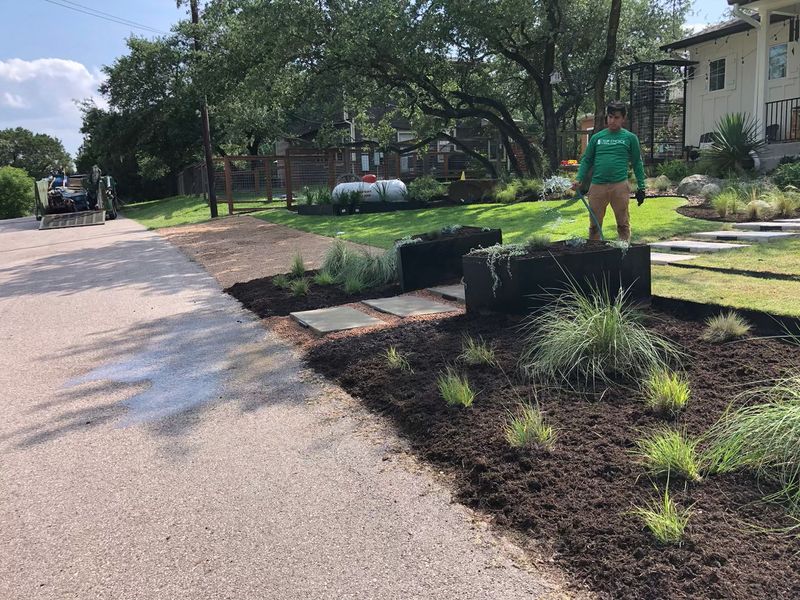
The sequence matters as much as the project itself. Apply to the serving water provider and obtain any required preapproval before removing turf or beginning construction.
Austin Water states that work started before approval will not qualify. LCRA requires preapproval and a post-completion inspection.
Kyle also requires approval before any work begins. Starting the project early, even with the best intentions, can disqualify the entire application.
Ask the provider one additional question during the application process: whether materials purchased before approval are eligible for reimbursement. The answer varies by program, and assuming materials are covered before confirming that rule could cost money.
Get the answer in writing or take detailed notes of the conversation, including the date and the name of the representative.
Documentation is the other half of a safe application. Take clear, well-lit photographs of the existing lawn before any work begins, capturing the turf condition and the irrigation components in the project area.
Save itemized receipts for every eligible purchase, including plants, soil amendments, mulch, and any contractor labor if the program covers it. Photograph the irrigation removal or capping step as it happens, and take final completion photographs that show the finished bed from multiple angles.
LCRA, Kyle, Austin Water, and SAWS all explicitly require or request versions of this documentation package. Some programs include an inspection step where a provider representative or third party verifies the before and after conditions.
Keep every photograph, receipt, and written communication organized and accessible until the payment, bill credit, or coupon is fully received and confirmed. Discarding records before that point creates risk if a question arises during processing.
Choose plants for the Texas site, not a statewide checklist
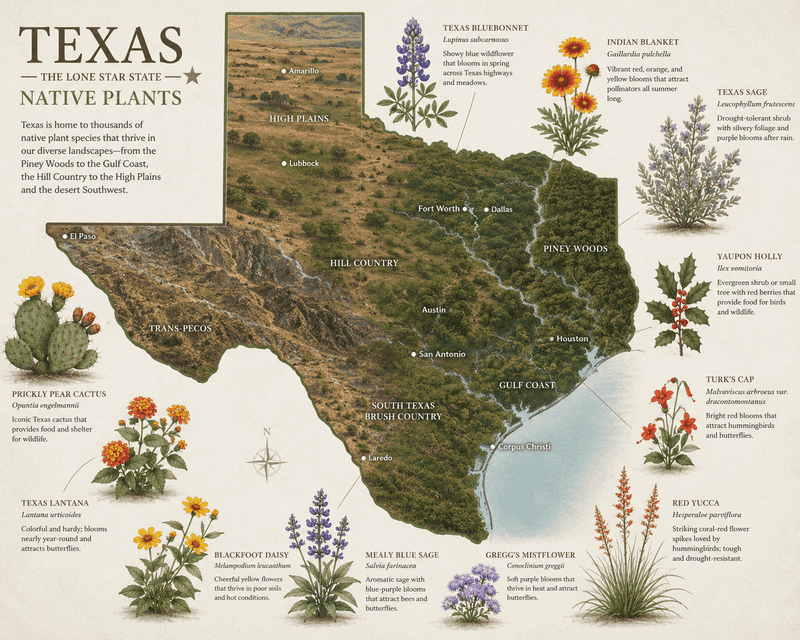
No single plant list works across all of Texas. A Central Texas limestone yard, a Gulf Coast property with heavy clay and high humidity, an East Texas site shaded by pine canopy, and a Panhandle landscape facing cold winters and alkaline soils each call for different plants.
Texas Parks and Wildlife notes that native plants are generally better adapted to local soils, precipitation, and climate, but native status alone does not guarantee compatibility with a particular site’s sun exposure, drainage pattern, or soil chemistry.
Start the design process by evaluating the actual conditions of the project area: how many hours of direct sun it receives, whether the soil drains quickly or holds water, what the soil texture and pH look like, and which ecoregion the property falls within. Kyle’s program documentation acknowledges the different soil and ecoregion conditions even within its own service area, which illustrates how much conditions can shift across relatively short distances in Texas.
Texas A&M AgriLife Extension’s xeriscape guidance recommends grouping plants by water need and matching selections to site-specific conditions rather than applying a regional formula.
Soil preparation deserves real attention before planting. Austin Water recommends tilling the bed to six inches and incorporating compost-amended soil to improve structure and drainage.
LCRA’s landscape guidelines also recommend improving soil and applying mulch across the bed surface. A three-to-four-inch layer of organic mulch slows evaporation, moderates soil temperature, and suppresses weed competition during the establishment window when new plants are most vulnerable.
Also check the provider’s approved-plant requirements before purchasing. Some programs specify that plants must appear on an approved list or meet a minimum percentage of native species.
Buying plants that do not meet those criteria before confirming the rules can result in a bed that passes visual inspection but fails the program’s plant-category test at the time of review.
Remove persistent turf and follow the irrigation rule exactly
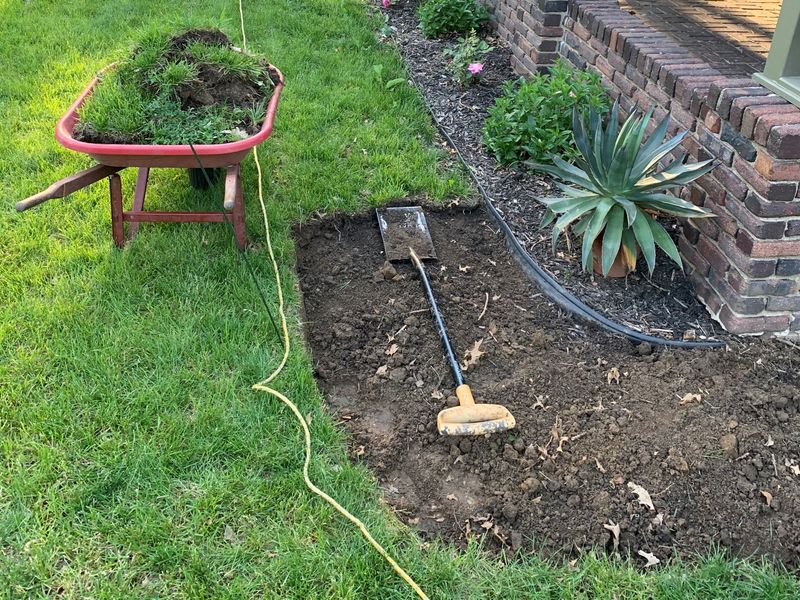
Getting rid of established turfgrass is harder than it looks, and cutting corners at this stage can undo months of planning. Bermuda grass is the most persistent offender in Texas yards.
Small root fragments left in the soil will resprout, and a bed that looks clean at planting can be overrun within a single growing season. Austin Water recommends killing or digging out Bermuda grass, tilling the area, waiting for regrowth, and repeating the process as many times as needed before planting.
Patience at this step protects the investment in plants and soil amendment that follows.
Several turf-suppression methods are documented in the programs covered here. Sod cutting removes the grass and its root zone mechanically.
Tilling breaks up the remaining root mass and exposes fragments to heat and drying. Sheet mulching with cardboard or several layers of newspaper smothers existing vegetation by blocking light while the organic material breaks down and feeds soil biology.
Solarization, which involves covering the area with clear plastic during the hottest weeks of summer, uses solar heat to kill grass and weed seeds in the upper soil layer. SAWS recommends solarization or sheet mulching for its program participants, and Austin Water lists all of these options as viable approaches.
Irrigation removal is a separate and equally important step. Follow the serving provider’s exact requirement, not a general interpretation.
LCRA requires that the replacement area contain no automatic irrigation. SAWS requires removing automatic sprinkler heads or drip lines from the project area.
Other providers may allow capping or system modification, but that permission must come directly from the provider in writing before the work is done. Photographing the removal process, including the components taken out and the capped or closed lines, creates the documentation record that supports the application at inspection.
Plant in spring or fall and water through establishment
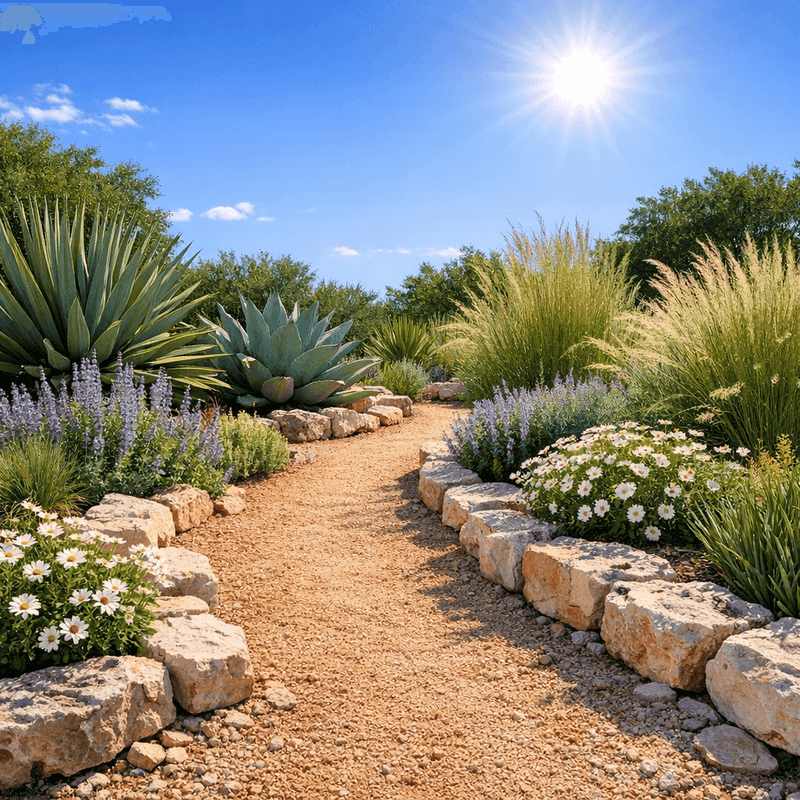
Timing a new planting bed for the hottest stretch of a Texas summer creates an immediate problem: new roots cannot absorb water fast enough to keep pace with transpiration demand during triple-digit heat. Austin Water excludes summer installation from its program and identifies spring and fall as the appropriate planting windows.
Kyle’s program documentation states that fall is generally the preferable season and warns that summer planting is not advised because new plants require extra water to establish. Matching the installation window to the provider’s guidance also keeps the project aligned with any seasonal program deadlines.
Native and adapted plants are not drought-proof from the moment they go in the ground. They need consistent supplemental irrigation while their root systems develop, which typically takes one to two growing seasons depending on species, soil, and rainfall.
Texas Parks and Wildlife notes that trees in particular usually need more water during the establishment period, even species that are highly drought-tolerant at maturity. Underwatering during establishment kills plants that would otherwise thrive for decades.
A practical establishment watering schedule for most Texas sites involves deep, infrequent irrigation rather than light daily sprinkles. Deep watering encourages roots to grow downward toward more stable soil moisture instead of staying shallow where soil dries out fastest.
As plants develop root depth and canopy coverage, the frequency and volume of supplemental irrigation can decrease gradually.
The goal of the conversion is to reduce long-term irrigation demand, not to eliminate water from day one. A newly planted native bed that receives appropriate establishment care will reach a point where it survives on rainfall alone during mild periods and needs only targeted supplemental water during extended heat or drought.
That long-term reduction is the water savings the rebate is designed to capture, and protecting new plants through establishment is what makes it achievable.
Treat the payment and water savings as conditional benefits
The financial benefit from a turf conversion program depends on several factors that are only fully known after the project is complete and inspected. Approved square footage, local payment caps, eligible materials, required inspection results, and available funding all shape the final amount.
Payment form varies too: Kyle issues a check, Boerne applies a bill credit, and SAWS distributes plant-purchase coupons rather than general cash. Treating any of these as equivalent before confirming the provider’s current rules leads to budget miscalculations.
Water savings follow a similar pattern. Austin Water estimates that converting 500 square feet of turfgrass could save up to 930 gallons per month, but frames that figure as dependent on site and watering conditions.
The prior lawn’s irrigation schedule, the efficiency of the old system, local rainfall, soil permeability, plant selection, and ongoing maintenance all influence actual savings. A peer-reviewed study of a California turf-replacement program published in the Journal of Soil and Water Conservation found meaningful savings but also identified confounding variables that make site-specific predictions difficult.
The Texas savings potential is real and documented, but no provider or study can guarantee a specific reduction for a specific property.
Boerne’s program page and Kyle’s pilot program both remind applicants that funding is limited and subject to change. Programs verified as active in August 2026 may have closed, changed terms, or exhausted funding by the time a reader applies.
The action sequence that protects against all of these variables is straightforward: find the name of the serving water provider on the water bill, read the live program rules on that provider’s website, photograph the existing turf before touching anything, apply and obtain approval, confirm the irrigation requirement and the purchase-eligibility rule, install the approved bed using the documented method, and retain every receipt and photograph until payment is confirmed. A yard that goes through that sequence has done everything within the homeowner’s control.
What happens after that belongs to the program.