
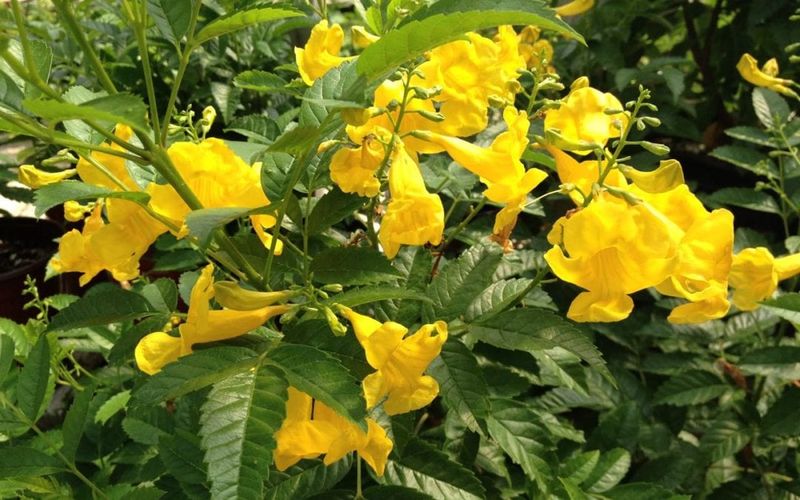
By late August, most Texas gardens look tired. The grass has gone crispy, flowers have quit, and even hardy shrubs seem ready to give up under those triple-digit days. But a handful of tough Texas plants ignore the heat and keep throwing out color when everything around them fades. Knowing which ones to plant means your yard can stay alive and buzzing with pollinators all the way through the worst of summer.
1. Texas Lantana
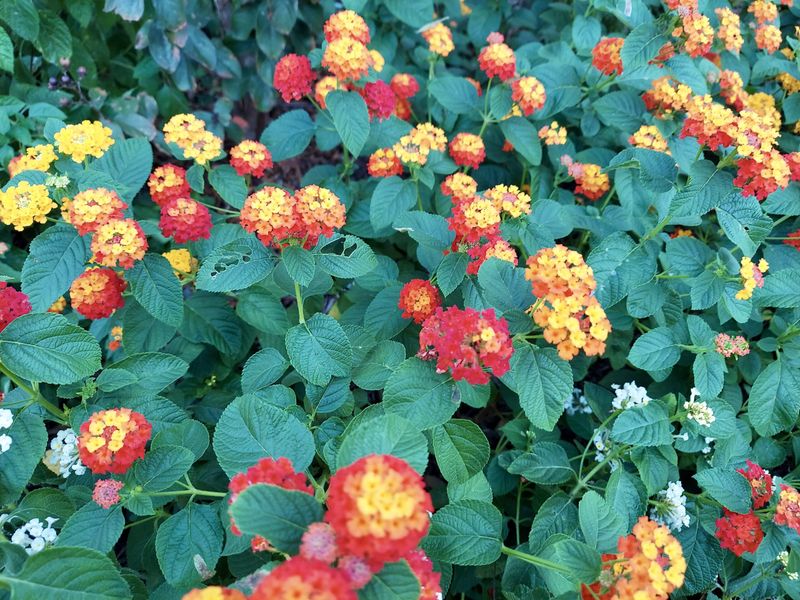
Drive down any country road in August and you will spot bright clusters of orange and yellow flowers glowing along fence lines while everything nearby has turned brown. That toughness is exactly why Texas lantana earns a spot at the top of this list.
Native to the state, it laughs at heat that would flatten a rose bed. Once its roots settle in, it needs almost no extra water, which makes it a friend to anyone gardening under city watering restrictions.
Butterflies treat it like an all-you-can-eat buffet, so a single patch can bring painted ladies and swallowtails right up to your porch. Fun fact: the wild native version is sometimes called calico bush because its flower clusters shift color as they age, going from yellow to orange to red on the same head.
2. Esperanza (Yellow Bells)
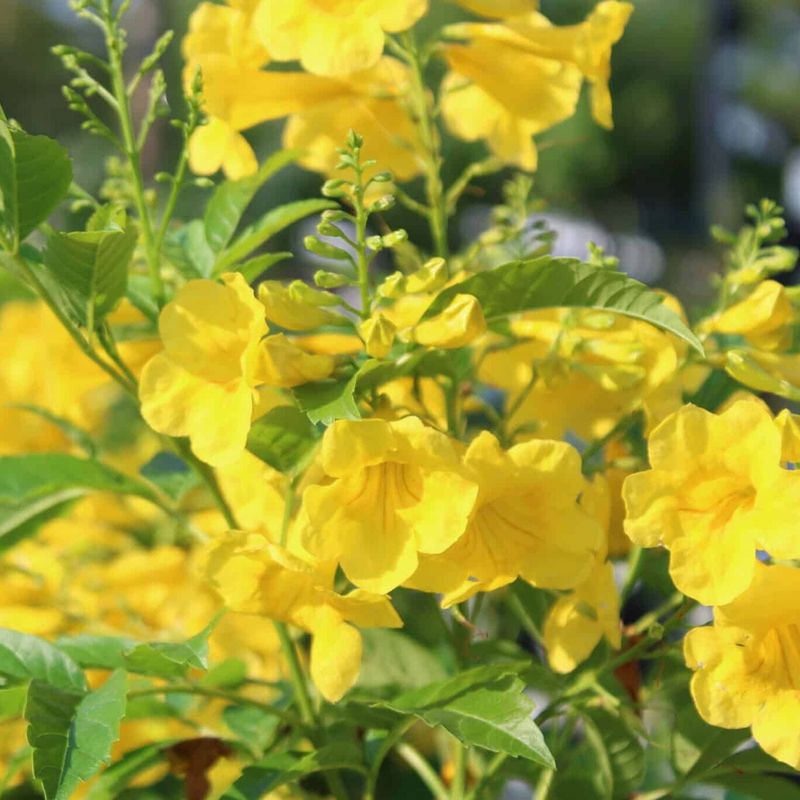
Picture a shrub covered in trumpet-shaped golden flowers that seem to get louder the hotter it gets. Esperanza, whose name means hope in Spanish, does its showiest work in the dead heart of a Texas summer.
While tender annuals melt in the August furnace, this native keeps pushing out fresh yellow bells week after week. It thrives in poor, rocky soil that frustrates fussier plants, and it shrugs off drought like it barely noticed.
Hummingbirds and bees flock to those blooms, turning a single shrub into a tiny, humming ecosystem you can watch from a shady chair. Cut it back after a rare freeze and it bounces right back the next spring, taller and fuller than before.
3. Pride of Barbados
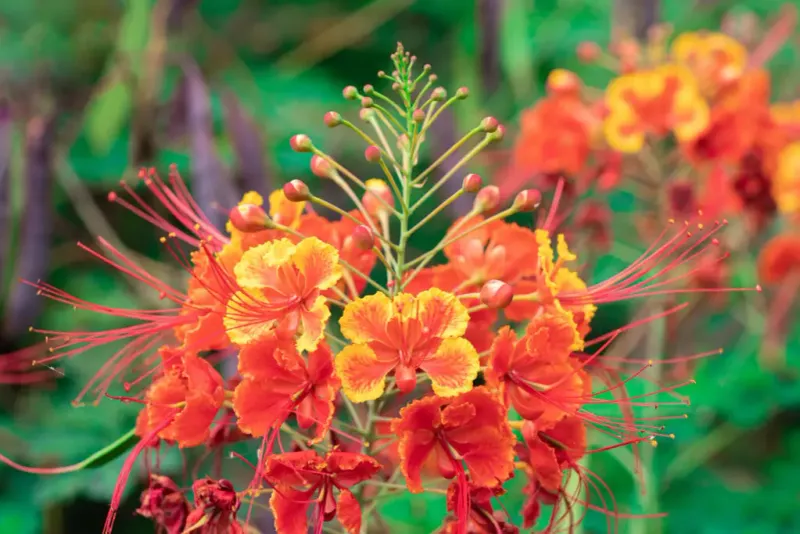
If you want a plant that looks like a tropical firework going off in your yard, this is the one. Pride of Barbados throws up flame-colored blooms of red, orange, and yellow that only intensify as the temperature climbs.
Most flowering plants slow down in extreme heat, but this one treats a scorching August afternoon as showtime. It handles the reflected heat off driveways and brick walls that cooks other plants alive.
Gardeners along the Gulf Coast love it because it recovers fast from storms and shrugs off drought once established. Swallowtail butterflies cannot resist those fiery flowers, and the fern-like leaves add a soft, feathery texture that keeps the whole plant looking fresh long after neighboring beds have surrendered.
4. Turk’s Cap
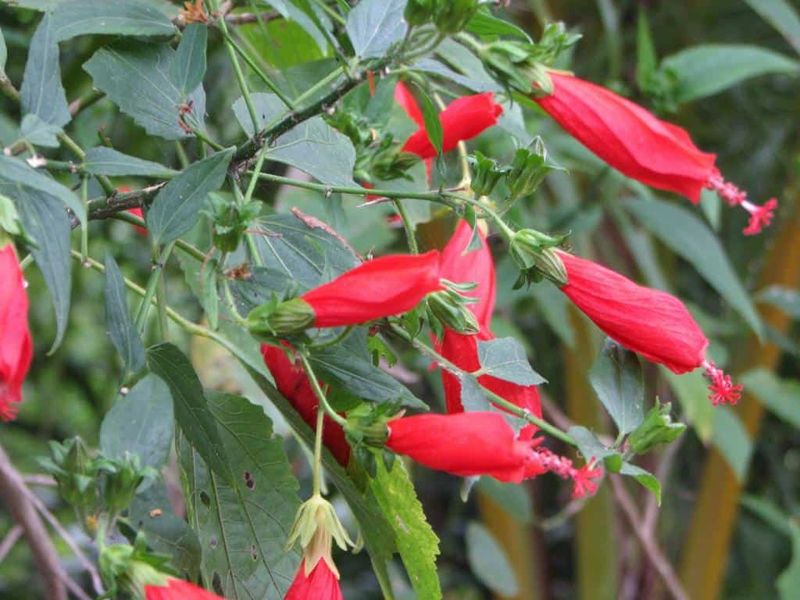
Ever notice the one shady corner where nothing seems to bloom? Turk’s cap is the answer, because this native happily flowers in dappled shade where most August performers refuse to grow.
Its little red blooms never fully open, staying curled like a tiny turban, which is where the name comes from. That quirky shape is built for hummingbirds, who probe the flowers all summer long.
Tough as it is charming, Turk’s cap keeps going through drought and heat with barely any fuss, and it even produces small red fruit that birds enjoy in fall. For gardeners battling both harsh sun in some beds and deep shade in others, it fills the spot other bloomers cannot.
5. Purple Coneflower
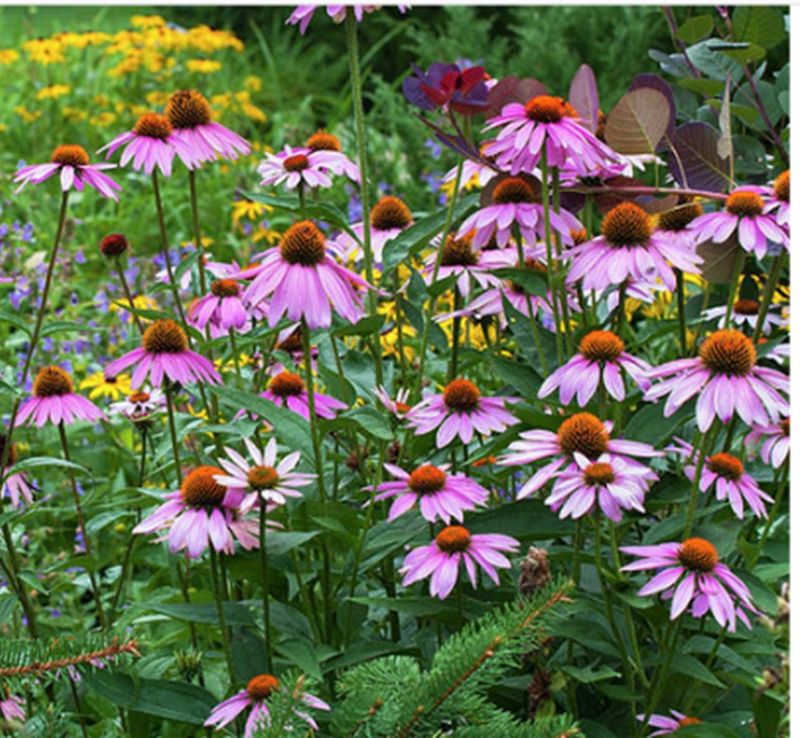
There is something reassuring about a flower that stands tall and daisy-like when the lawn around it has gone to straw. Purple coneflower, a prairie native, keeps its pinkish-purple petals and spiky orange centers going strong deep into the summer.
Its deep taproot reaches down for moisture, which is why it can ride out weeks with no rain and still bloom. Bees and butterflies work the flowers by day, and if you leave the seed heads standing, goldfinches will pick at them later.
Beyond the good looks, it doubles as a plant with a long history in home remedies, though its real gift to a Texas yard is stubborn, dependable color. Deadhead a few spent flowers and it will keep sending up more well into the hottest stretch of the calendar.
6. Firebush
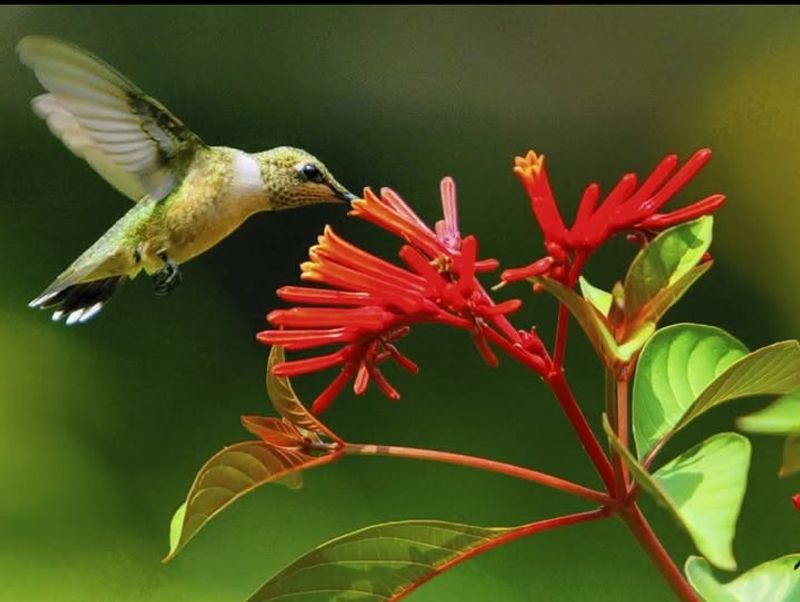
Named for the way its foliage and flowers glow like embers, firebush turns up the heat exactly when the calendar does. Slender tubular red-orange blossoms cover the plant through the sweatiest weeks of August.
Hummingbirds practically fight over it, and gulf fritillary butterflies drift in for the nectar, making it one of the busiest wildlife stops in a summer garden. It thrives in full, unforgiving sun and asks for very little water once its roots are set.
Along the coast it grows into a large, lush shrub, while inland it may die back in winter and return with the warmth. Either way, the show it puts on during peak heat, when so many plants have quit, is hard to beat.
7. Gregg’s Mistflower
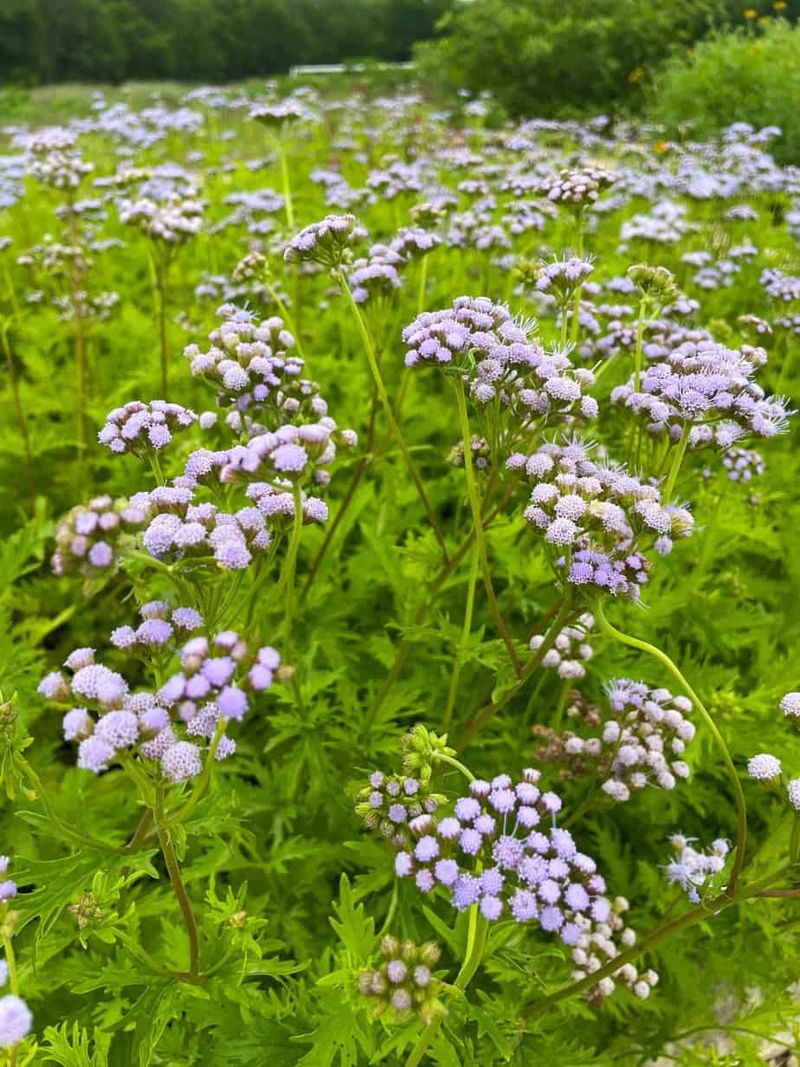
Soft, fuzzy clouds of powder-blue flowers are a rare sight in an August Texas garden, and that is what makes Gregg’s mistflower so special. While most heat survivors bring reds and yellows, this low-growing native adds a cool blue tone that stands out in the harshest light.
Its real claim to fame, though, is monarchs. During fall migration, the flowers act like a magnet, and a healthy patch can be blanketed in orange wings.
Drought does not slow it down, and it spreads to form a tidy groundcover that keeps blooming when the mercury refuses to drop. Plant it once, keep it in check, and you will have a butterfly hotspot that carries color from the depths of summer straight through the cooler months.