
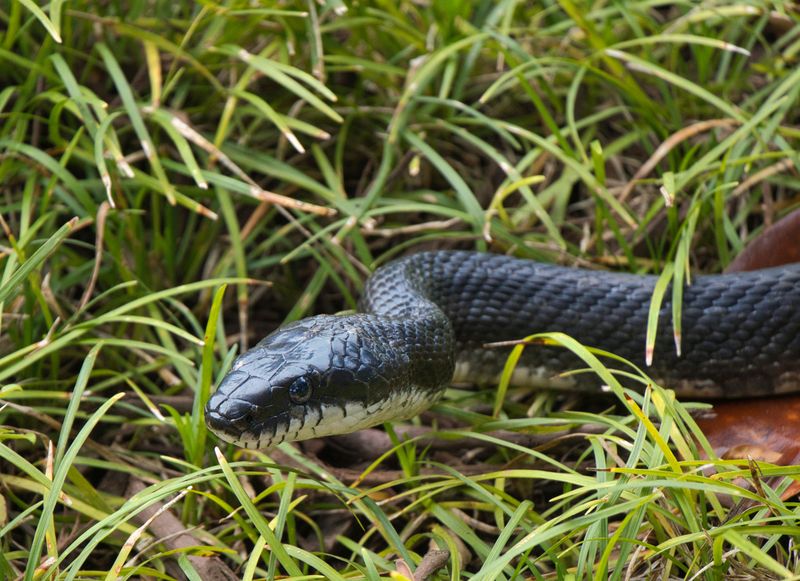
Spotting a large snake near your shed or garage can stop you cold, but that animal coiling through your yard may already be hunting the mice living in your walls. The Texas rat snake is one of the most common large nonvenomous snakes in the state, and it does eat rodents.
Before you decide whether to shoo it away or leave it alone, though, you deserve an honest picture of what one snake can actually do for a rodent problem, and what it cannot.
A rat snake near the building may be following available prey
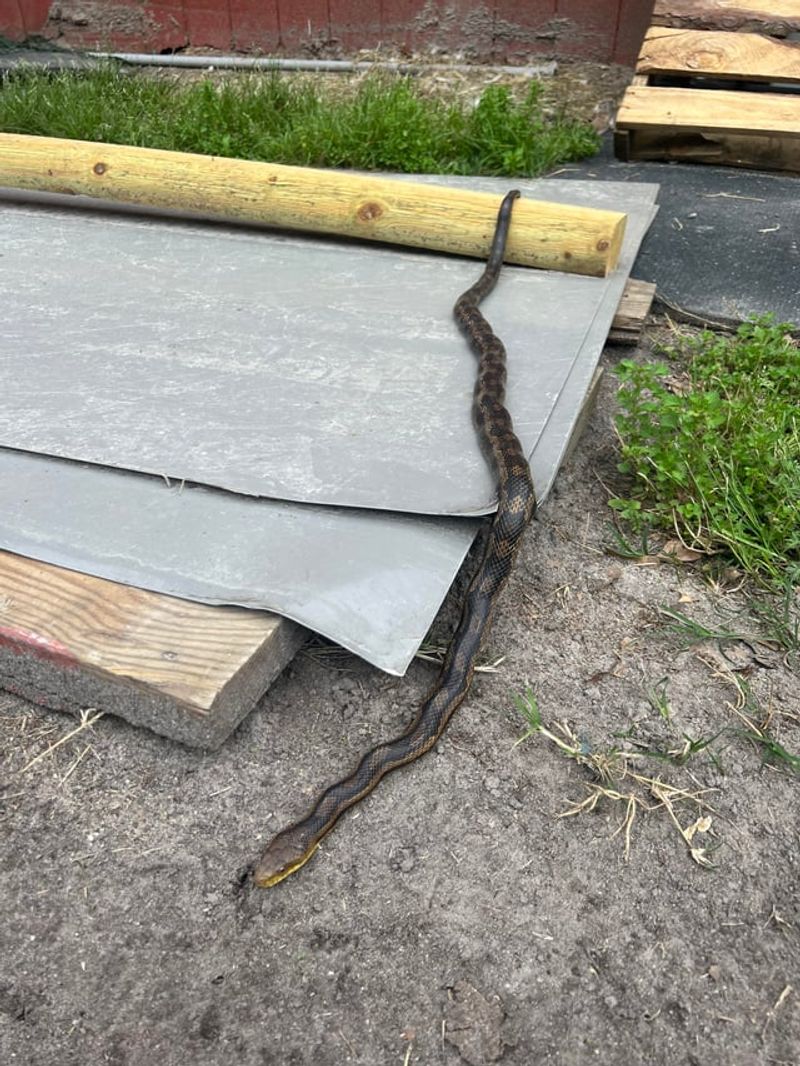
Finding a large snake draped across a woodpile or pressed against the foundation of a shed is unsettling, but the animal almost certainly did not choose that spot at random. The Texas rat snake, sometimes listed in older government records as Elaphe obsoleta lindheimeriiPantherophis obsoletus and now more commonly catalogued under by taxonomic authorities such as the Integrated Taxonomic Information System, is one of the most widespread large nonvenomous snakes in Texas.
Common names shift depending on the source, so use “Texas rat snake” first and treat any scientific name as a useful but changing label.
What draws the snake to a structure is usually food. Texas Parks and Wildlife identifies rat snakes as predators of mice, voles, cotton rats, and similar rodents, while a Texas Commission on Environmental Quality risk assessment describes the species as an effective predator of disease-spreading rodents and a recognized part of terrestrial food webs.
A snake near a barn, garage, or garden shed is most likely responding to the smell and movement of prey that already live there.
Presence is a signal, not a guarantee of pest control. University of Florida IFAS guidance on residential snake encounters notes specifically that rat snakes often turn up inside structures when rodents are present, and that the snake may leave on its own once the rodent source is removed.
The snake found your yard because your yard had something worth hunting, which means the more useful question is not how to move the snake but what is feeding the rodents that attracted it.
The 190-mouse figure is an unsupported promise
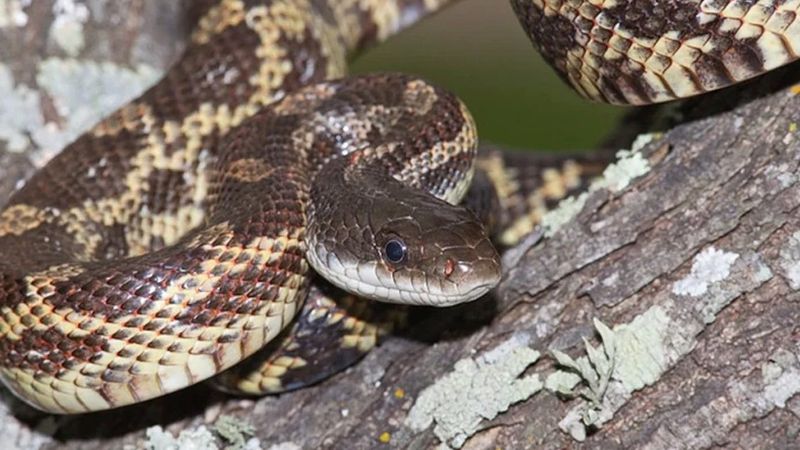
A figure of “up to 190 mice a year” has circulated in gardening content as a reason to welcome rat snakes, and the number sounds precise enough to be reassuring. The Old Farmer’s Almanac’s piece on beneficial garden reptiles repeats a version of this claim, but the article provides no study, calculation, or species-specific field measurement to support it.
A number without a source is a guess dressed as a fact, and this one should not be treated as a reliable feeding rate for wild Texas rat snakes.
Real feeding rates depend on several variables that shift constantly in the wild. A larger, older snake can consume bigger prey less often and still meet its energy needs.
Prey availability changes with the season and with whatever rodent population happens to be near the snake’s current range. Diet composition matters too: rat snakes eat more than mice, so meals of birds, eggs, squirrels, or other prey do not add to a mouse tally even when the snake is actively hunting.
A snake that moves away from a property after a week contributes far fewer meals to your yard than one that stays through a full Texas summer.
Two other data points are sometimes borrowed to support high feeding estimates, but neither applies directly here. Captive-care guidance for North American colubrid snakes estimates that a roughly half-kilogram snake may need only 20 to 40 mice per year to survive in a controlled setting, which is far below 190 and reflects minimum maintenance rather than wild hunting behavior.
Separately, a study on Australian eastern brown snakes estimated substantial rodent consumption by that species, but eastern brown snakes live in a different ecosystem, belong to a completely different family, and the researchers themselves note that feeding rates vary with species, body size, habitat, and prey availability. Neither figure can be transferred to a wild Texas rat snake as an annual mouse count.
Rodent meals do not equal guaranteed rodent control
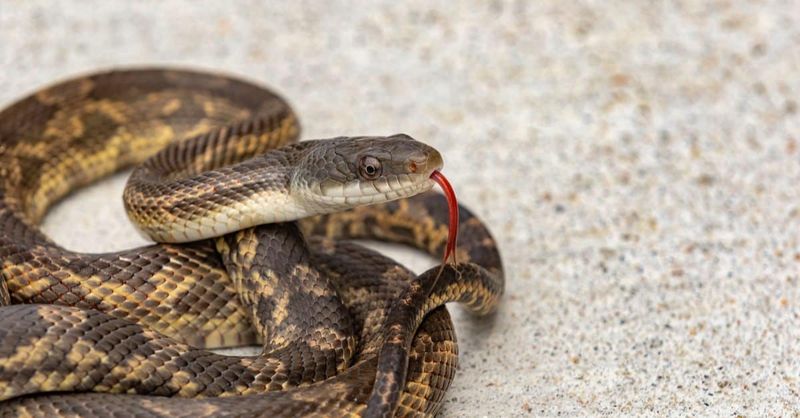
Rat snakes genuinely eat rodents, and that part of the story holds up. Texas Parks and Wildlife background materials for educators confirm that rat snakes consume mice, rats, and similar small mammals as part of a varied diet.
The key word is “varied.” These snakes are generalist predators, meaning a meal on any given day might be a bird nestling, an egg, a squirrel, an amphibian, or a reptile rather than a mouse. Counting the snake as a dedicated mouse-removal service misrepresents how it actually hunts.
Even when a snake does eat mice consistently, the math between meals consumed and mice prevented is not straightforward. A USGS study on black rat snake ecology in Maryland and the Australian eastern brown snake research both point to the same complication: prey populations reproduce, habitat conditions shift, snakes move through territories rather than patrolling fixed properties, and predation pressure from a single snake rarely suppresses a rodent population that has good food and shelter.
A mouse eaten today does not guarantee one fewer mouse next month if the remaining population keeps breeding.
Practical limits reinforce this point. A snake cannot seal the gap under a garage door, move a bag of spilled birdseed, or clean up the nesting material mice built inside a wall cavity.
CDC guidance on integrated pest management frames rodent control as a combination of exclusion, sanitation, and targeted trapping rather than reliance on a single predator. The snake may be one useful part of the local food web, but it cannot substitute for the steps that actually cut off rodent access and food supply.
Respond to the snake without creating a second hazard
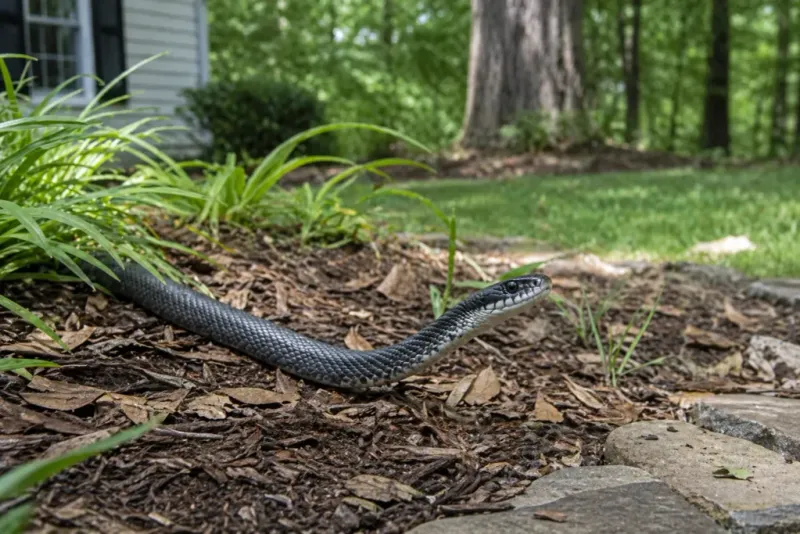
Seeing a snake near your back door tends to produce one of two reactions: freeze or grab something to hit it with. Both responses create problems.
Texas Parks and Wildlife snake etiquette guidance is clear that most bites happen when people try to handle or kill snakes, and that the safest first move is always to back away and give the animal space.
Identification is genuinely difficult in Texas. Texas Parks and Wildlife warns that there is no single foolproof visual rule for telling a venomous snake from a nonvenomous one.
Head shape, pupil shape, and body color can all be misleading, especially on a partially visible snake under a porch or in a dark corner of a garage. Texas has multiple large, dark, and visually similar snake species, and some of them are venomous.
If you are not certain of the identification, treat the snake as unidentified and keep everyone away.
For a snake that has been confidently identified as a nonvenomous rat snake and is in an open area, the best option is simply to wait. Most snakes move on within minutes to hours once they feel unobserved.
UF/IFAS guidance on residential snake encounters describes a broom-and-large-container method for guiding a confirmed nonvenomous snake out of a structure, but only when the person can maintain a comfortable distance throughout. For any situation involving an unidentified snake, a possible venomous species, a confined space, or children and pets nearby, contact a qualified wildlife removal professional rather than attempting the job yourself.
UF/IFAS identification guidance reinforces that professional help is the right call when species identification is not certain.
Seal the building and remove what attracts rodents
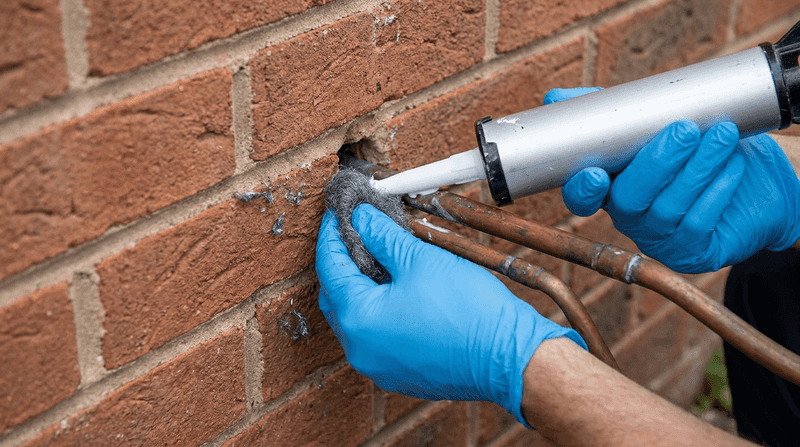
Once you know a rat snake near your property is responding to available prey, the productive question shifts from “how do I move the snake” to “what is feeding the rodents.” Removing those conditions is the most reliable way to reduce both the rodent problem and the snake encounters that follow from it. CDC guidance on sealing buildings against rodents is a practical starting point: mice can squeeze through an opening roughly one-quarter inch wide, so any gap around pipes, vents, door frames, or foundation cracks is a potential entry point worth closing with hardware cloth, steel wool, caulk, or metal flashing.
Food storage is equally important. Birdseed left in an open bag in a garage, pet food in a bowl overnight, and unsecured garbage cans are all reliable rodent attractants.
Move all of those into tightly sealed metal or heavy plastic containers. Remove brush piles, old lumber stacks, and unused equipment from around outbuildings because those structures give rodents the shelter and nesting material they need to establish themselves close to your home.
When rodents are already active inside a structure, exclusion and sanitation come before anything else. CDC integrated pest management principles support using properly placed snap traps for active infestations rather than waiting for a predator to solve the problem.
Snap traps are effective, inexpensive, and do not carry the secondary-poisoning risk associated with rodenticide baits. Place them along walls and behind appliances where rodents travel, check them daily, and dispose of catches in sealed bags.
Sanitation matters throughout the process: clean up droppings, nesting material, and any carcasses using a wet-disinfection approach rather than dry sweeping, which can send contaminated particles into the air and increase exposure risk.
Avoid rodent poison where predators and pets can reach the prey
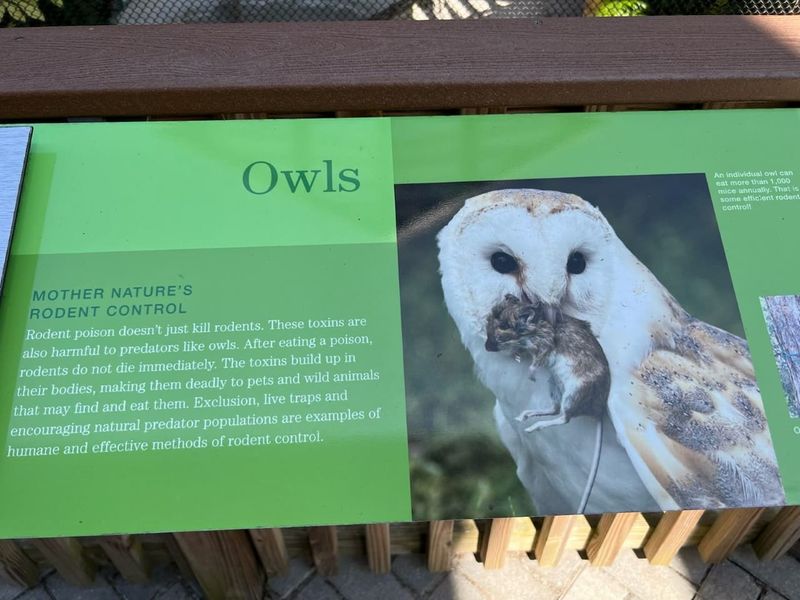
Rodenticides can seem like a fast fix, but they carry a risk that is easy to overlook when a snake is living near your property. EPA’s rodenticide pesticide safety review specifically addresses secondary exposure, meaning the poisoning of nontarget animals that eat rodents which have already consumed bait.
Reptiles, hawks, owls, foxes, and domestic pets are all vulnerable, and the risk does not disappear just because the poisoned rodent crawls away before dying.
UF/IFAS residential snake guidance advises against using poisons specifically because poisoned rodents can be scavenged by wildlife or pets before anyone realizes the hazard. A rat snake that eats a bait-affected mouse near your shed is exposed to the same compounds the mouse consumed.
The combination of leaving a snake in place and using rodenticide bait nearby is not a safe pairing.
Attracting snakes deliberately carries its own problems. Leaving pet food outside, allowing birdseed to spill and accumulate, keeping garbage containers open, or letting debris piles build up near structures does not make a yard more snake-friendly in a useful way.
Those conditions draw rodents first, and rodents draw snakes. CDC rodent-prevention recommendations treat all of those attractants as targets for removal, not as habitat enhancements.
Exclusion, sealed food storage, and snap traps remain the safer and more effective foundation for rodent management around homes where children, pets, or wildlife are present.
Let the snake be a neighbor, not an extermination plan
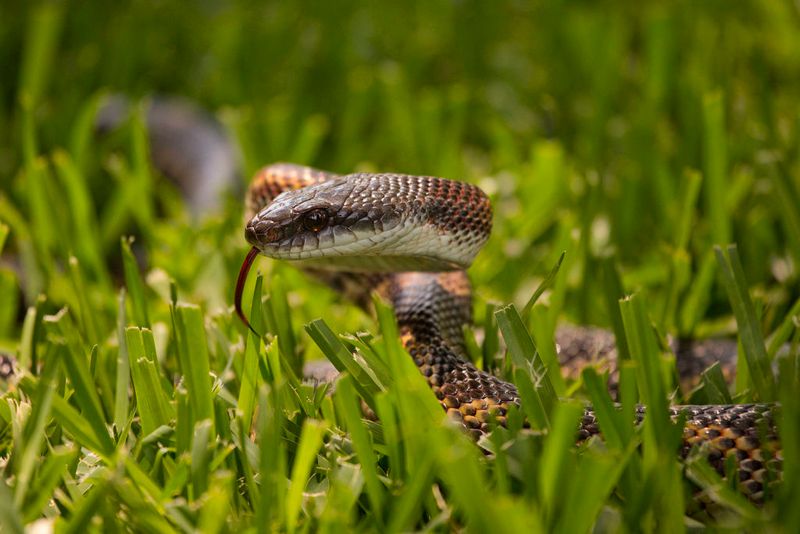
A Texas rat snake moving through your yard is a genuine predator doing genuine predator work. Texas Parks and Wildlife recognizes rat snakes as beneficial components of the local food web, and that recognition is warranted.
The honest version of the story, though, is that one snake consuming some rodents near a property is not the same as one snake solving a rodent problem. No reliable field evidence supports assigning a wild Texas rat snake a figure of 190 mice per year, and no diet study converts meals into a proven reduction in your yard’s rodent count.
The practical approach is straightforward. Give a confirmed nonvenomous snake space and let it leave on its own.
Verify identification before taking any action, and call a wildlife professional when you are not certain. Make exclusion, food control, sanitation, and appropriately placed snap traps the foundation of your rodent management, because those steps address the conditions that attract rodents in the first place.
UF/IFAS guidance and CDC rodent-prevention recommendations both point toward the same conclusion: the snake is one predator in a complex yard ecosystem, not a contracted exterminator. Integrated pest management works because it combines multiple strategies rather than betting everything on one.
A yard that supports a rat snake while also sealing its gaps and securing its food is doing something genuinely useful for both rodent control and local wildlife. That combination is more honest than any single number ever was.