
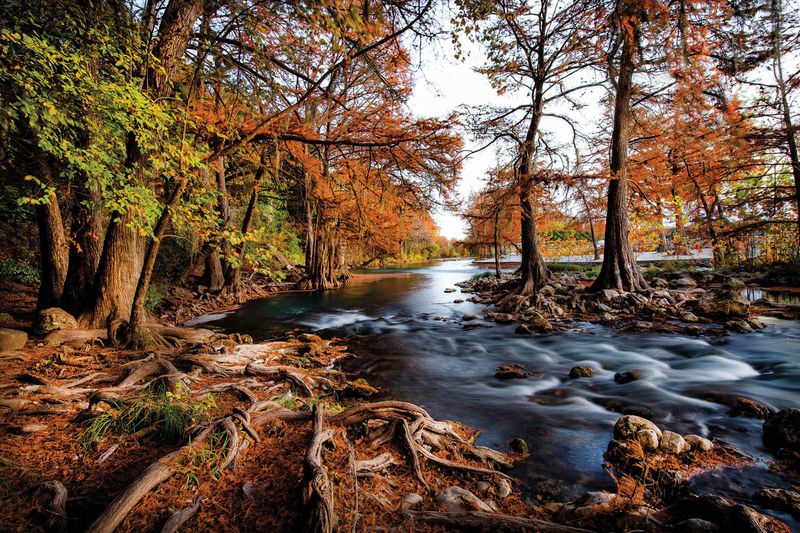
Most people think you have to fly to Vermont to see red and gold leaves. Texas has its own hidden pockets of fall color, from fiery bigtooth maples in the Hill Country to golden cypress along the rivers of East Texas.
Knowing where and when to go can turn an ordinary November weekend into a trip you will talk about for years. Here are ten state parks worth the drive, plus tips on timing and the native trees that make each one special.
1. Lost Maples State Natural Area
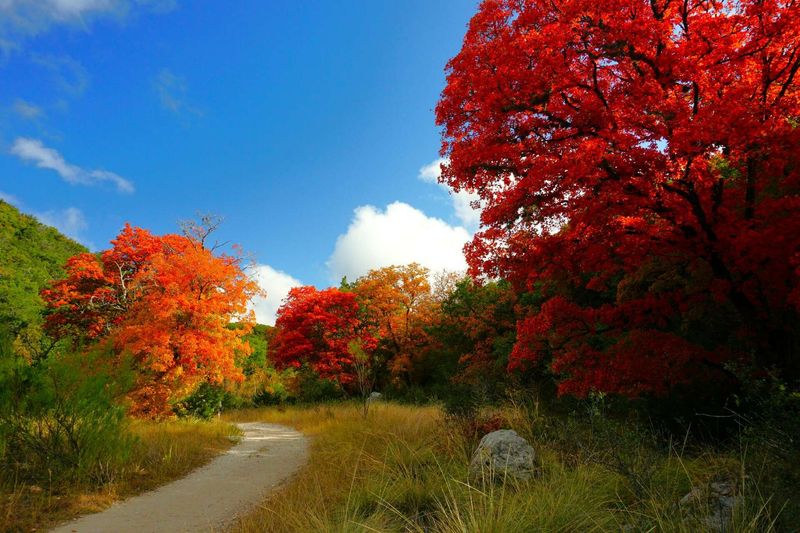
Ask any Texan where to see real fall color, and nine out of ten will point you toward Vandale. Tucked in a canyon near that tiny town, Lost Maples protects a rare stand of bigtooth maples left over from a cooler Ice Age climate.
Those maples can blaze scarlet, orange, and butter yellow, usually peaking in early to mid-November. The park even posts weekly foliage reports in fall, so you can check before you load the car.
Crowds are the catch. Weekend parking fills early, so plan a weekday visit or reserve a day pass online through Texas State Parks.
The East Trail and Maple Trail deliver the best color with the least climbing. Bring a jacket, since canyon mornings can feel surprisingly crisp compared with San Antonio.
2. Garner State Park
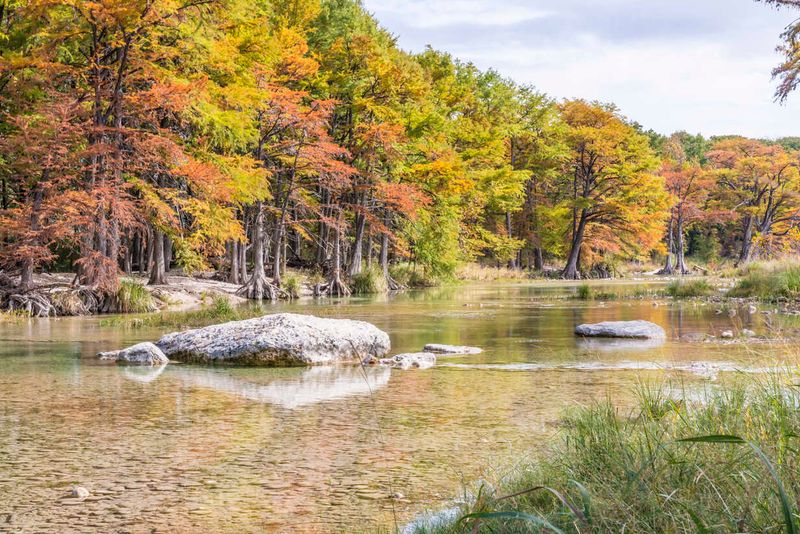
Summer belongs to tubers and jukebox dances at Garner. Come late autumn, though, the Frio River turns quiet and the bald cypress lining its banks fade to a coppery cinnamon.
Only about 30 minutes from Lost Maples, Garner makes an easy second stop on the same weekend. Its hills also hold scattered maples and sumac that flash red against evergreen junipers.
Hike Old Baldy for a sweeping view of the valley in color. The climb is short but steep, so take it slow and bring water even in cooler weather.
3. Caddo Lake State Park
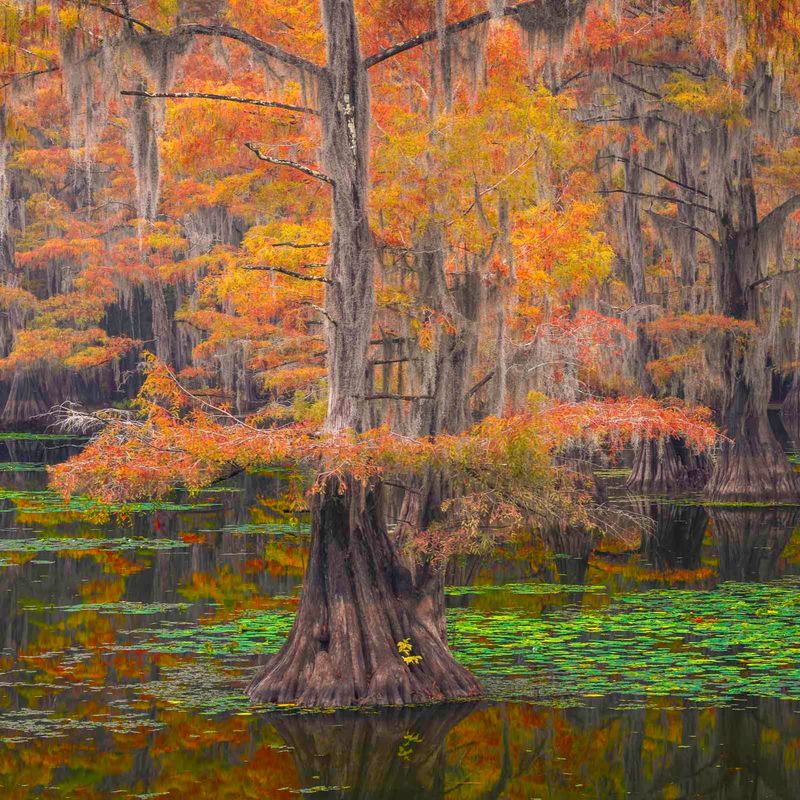
Picture Spanish moss hanging from ancient trees, a misty bayou, and needles glowing like rust. That scene is Caddo Lake in late November, and nothing in New England looks quite like it.
Bald cypress here can be hundreds of years old. As the weather cools, their feathery needles shift from green to a deep russet before dropping for winter.
The best way to see it is from the water. Rent a canoe at the park and follow the marked paddling trails, or book a guided boat tour from nearby Uncertain.
Peak color tends to arrive in mid to late November. Bring bug spray anyway, since East Texas mosquitoes do not always read the calendar.
4. Daingerfield State Park
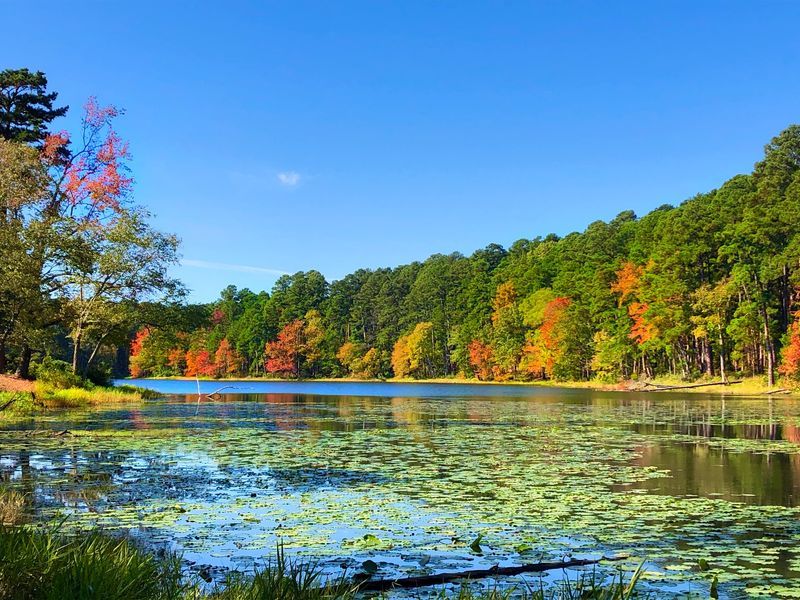
If any Texas park feels like a slice of Connecticut, it is this one. Daingerfield wraps an 80-acre lake in a mixed forest of sweetgum, oak, hickory, and maple.
Sweetgums steal the show. A single tree can hold purple, red, and gold leaves at once, and the lake doubles the effect on calm mornings.
Cabins here go fast in November, so book early. The loop trail around the lake is about 2.5 miles and mostly gentle, good for kids and grandparents alike.
5. Tyler State Park
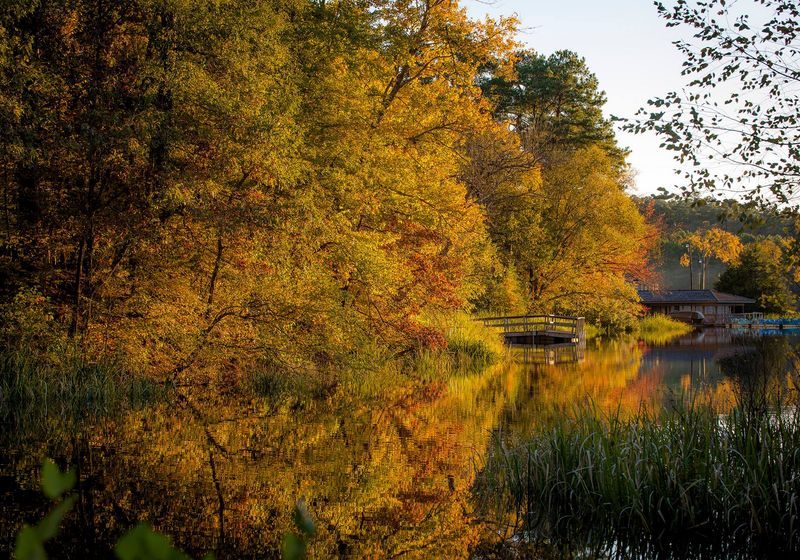
Tyler already wins hearts in spring with azaleas and dogwoods. Fewer people realize those same dogwoods turn a rich wine red in fall.
Mixed among tall pines, the hardwoods create a layered look: green above, fiery below. Hickories add bright yellow, and sweetgums fill in with everything else.
The 2.5-mile Whispering Pines Nature Trail is a favorite for color. Mountain bikers love the park too, so stay alert on shared paths.
Gardeners, take notes. Flowering dogwood and sweetgum both grow well in East Texas acidic soils, so a visit here doubles as a planting idea session for your own yard.
6. Martin Dies Jr. State Park
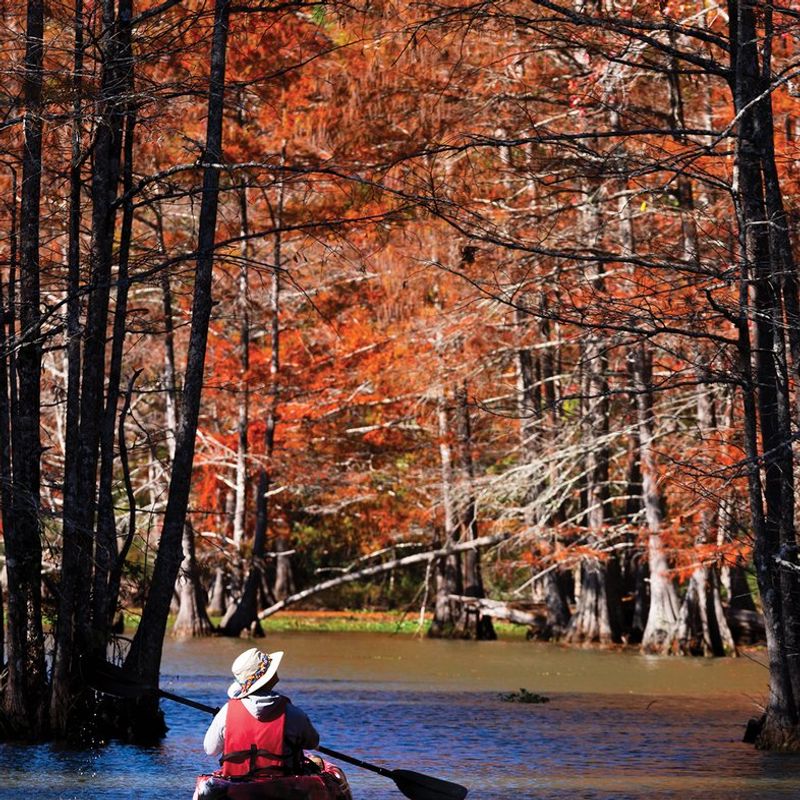
Swamp color is its own kind of beautiful. At Martin Dies Jr., bald cypress, water tupelo, and red maples mix along the edge of B.A.
Steinhagen Lake near Jasper.
Tupelo leaves can turn a startling crimson, while swamp red maples add pops of scarlet. Color here often shows up later than in North Texas, sometimes running into early December.
Paddle the Walnut Slough trail for close views. Keep an eye out for herons, egrets, and the occasional alligator sunning on a log.
7. Guadalupe River State Park
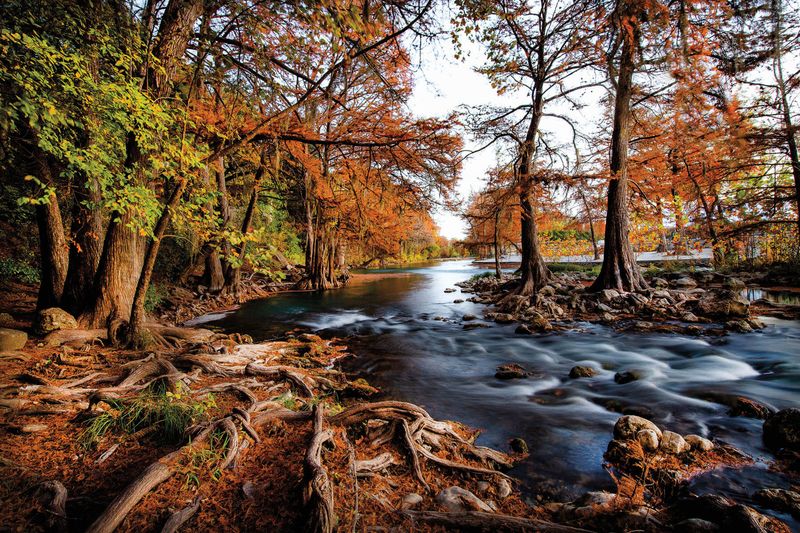
Here’s a park that gives you color with barely any drive from San Antonio. Towering bald cypress line four miles of the Guadalupe River, and by late November they glow a warm terracotta.
The contrast is what makes it memorable. Orange trees, pale limestone bluffs, and emerald water make a combo you will not find up north.
Walk the river trail early, before the sun gets harsh. Afterward, stop by nearby Honey Creek State Natural Area on a guided Saturday hike for even more cypress and sycamore color.
8. Palo Duro Canyon State Park
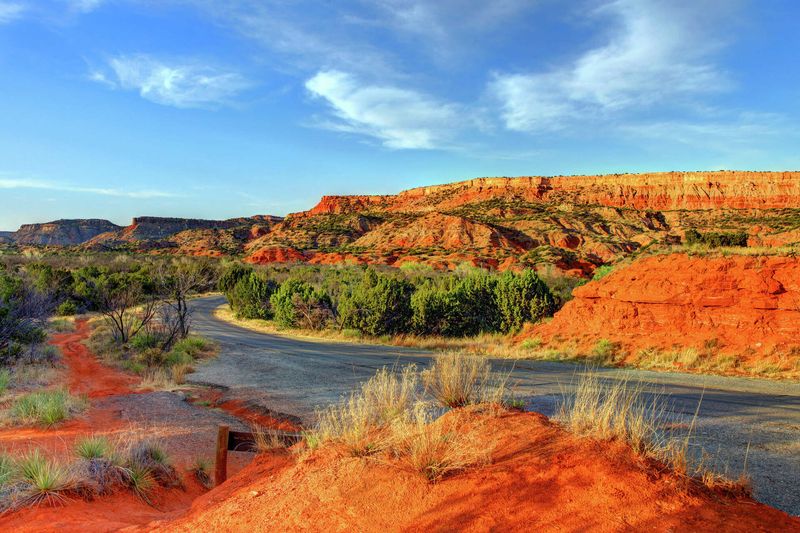
Red rock and gold leaves. Palo Duro, the second-largest canyon in the country, pairs its striped cliffs with cottonwoods that turn bright yellow along the canyon floor.
Up in the Panhandle, color comes earlier than the rest of the state, often late October into early November. Western soapberry and hackberry add extra gold.
Drive the park road slowly and stop at the overlooks. For a hike, the Lighthouse Trail is famous, but trails along the creek offer the most cottonwood color with less exposure.
9. Davis Mountains State Park
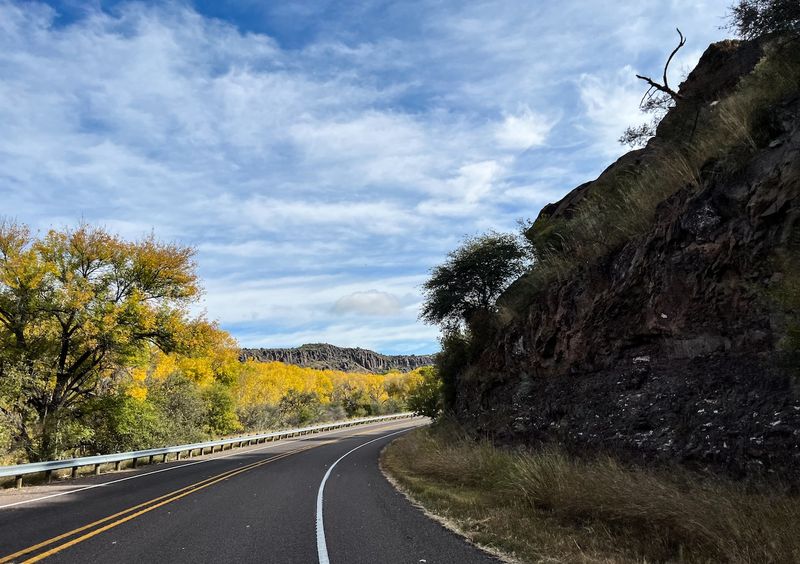
Far West Texas surprises people. At over 5,000 feet, the Davis Mountains run cooler, and that elevation brings fall color most Texans never see.
Look for golden grasslands, cottonwoods along Limpia Creek, and scattered maples and oaks in shady draws. It is subtle, more amber than neon, but stunning in that wide-open light.
Drive Skyline Drive at sunset for the best views. Then stay up, since nearby McDonald Observatory hosts star parties and the night skies here are some of the darkest in the state.
10. Village Creek State Park
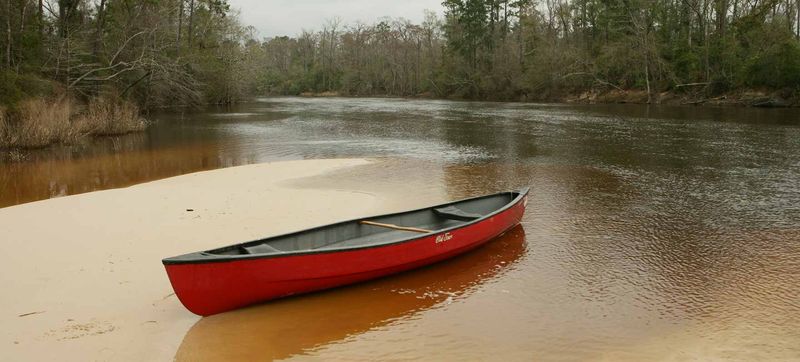
Last on the list, yet a favorite for families near Beaumont. Village Creek sits in the Big Thicket, one of the most diverse forests in North America.
Red maples, sweetgums, and cypress light up along a tea-colored creek with white sandbars. Peak usually lands from late November to early December, giving Gulf Coast folks a late-season treat.
Bring a kayak or rent one nearby for a lazy float. Then take your inspiration home: red maple and sweetgum are both Texas-friendly trees, and fall is the best time to plant them so roots settle in before summer heat returns.