
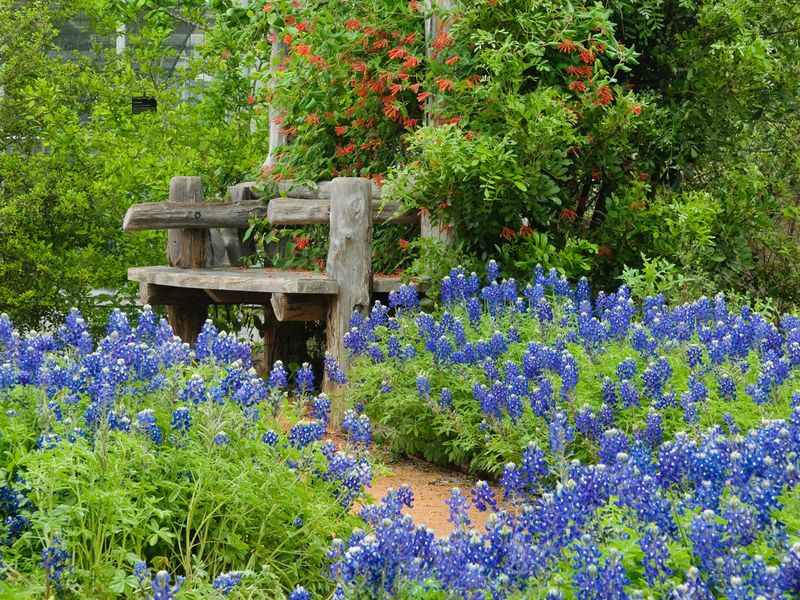
Every spring, stretches of Texas highway turn vivid blue with blooming bluebonnets, and plenty of homeowners wonder whether that same color could work in their own yard. The short answer is yes, for the right site.
Lupinus texensis, the Texas bluebonnet most people picture, is an annual wildflower that can settle into a sunny, well-drained spot and put on a reliable seasonal show when conditions line up. Getting there takes a little planning, a fall sowing date, and honest expectations about what this beloved flower can and cannot do.
Why bluebonnets stay visible along managed roadsides
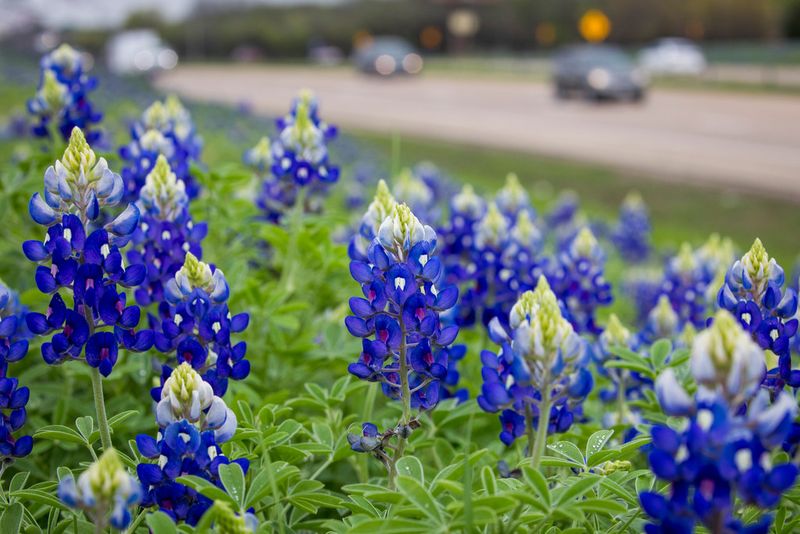
Most Texans can picture the scene: a highway shoulder carpeted in blue from one curve to the next, the color so saturated it almost looks painted on. That familiar sight belongs primarily to Lupinus texensis, the Texas bluebonnet, though the name “bluebonnet” actually covers several native Texas lupine species.
The Texas State Historical Association notes that the Texas Legislature recognizes all of the state’s native bluebonnet varieties as the official state flower, making Lupinus texensis the most recognized member of a broader botanical family.
What keeps those roadside displays reliable year after year is largely a matter of deliberate management rather than wild fortune. TxDOT’s wildflower program sows roughly 30,000 pounds of wildflower and native grass seed along Texas roadsides annually, covering more than 5,000 species.
Crews time their mowing strategically, delaying cuts in areas where flowers are blooming so plants can set seed before equipment moves through.
That management detail matters for how you read the spring headlines. TxDOT’s own reporting frames roadside bluebonnets as the product of ongoing seeding and vegetation care, not a species bouncing back on its own across the state.
Roadside abundance shifts with rainfall, soil conditions, development pressure, and local mowing decisions, so a spectacular bloom along one corridor says nothing definitive about conditions fifty miles away.
For homeowners, the practical takeaway is encouraging. The same annual flower that TxDOT works to keep visible along highways can earn a place in a suitable yard when gardeners apply similar basic logic: put seed in the ground at the right time, choose a site with good sun and drainage, and give the plants a chance to complete their life cycle.
That is a real gardening opportunity, even if it is not the sweeping statewide comeback story the spring color might suggest.
A returning patch is not a perennial plant
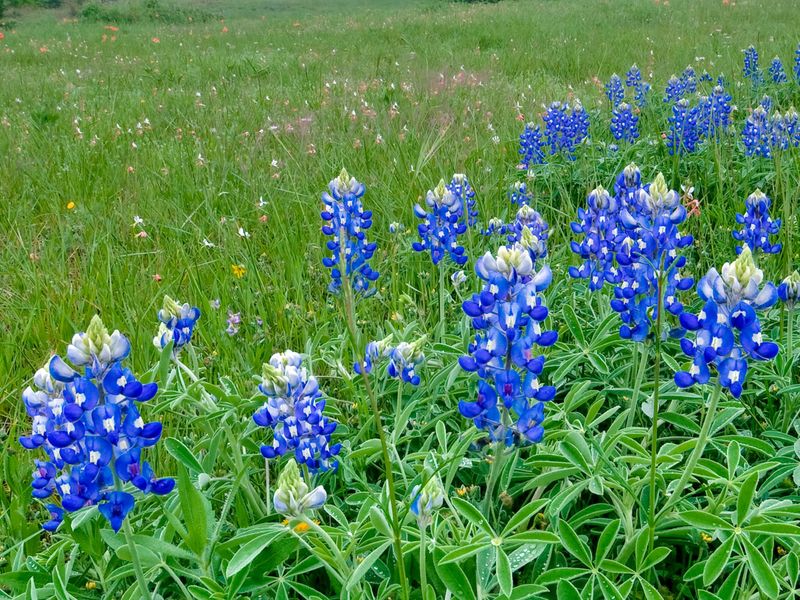
One of the most common misconceptions about bluebonnets is that the same plants come back every spring like a perennial. Lupinus texensis is an annual.
Each individual plant germinates, grows, flowers, sets seed, and dies within a single growing season. What looks like a faithful return is actually a fresh generation sprouting from seed left behind by the previous year’s plants.
That distinction shapes how you care for a patch. University of Texas botanical records confirm the annual nature of the species, and the Chicago Botanic Garden’s plant finder notes that the species can persist in a location through reseeding and a seed bank that stays viable in the soil for multiple years.
So a patch that skips a difficult season is not necessarily gone for good; dormant seed may still be present and waiting for better conditions.
Year-to-year variation is real and sometimes dramatic. Fall and winter rainfall heavily influence how many seeds germinate and how well seedlings survive until spring.
A dry fall can thin a display considerably, while a wet one can produce a carpet that stops traffic. TxDOT’s planting guidance acknowledges that bloom timing shifts across the state, with southern Texas flowering earlier and northern Texas later, adding another layer of regional variability.
Mowing at the wrong time is one of the easiest ways to break the reseeding cycle. Cutting plants before pods mature removes the seed crop that would feed next year’s display.
Competition from dense turf or aggressive weeds can crowd out seedlings before they establish. Understanding the annual cycle upfront saves a lot of frustration when a patch performs differently from one year to the next.
Choose an open Texas site before you buy seed
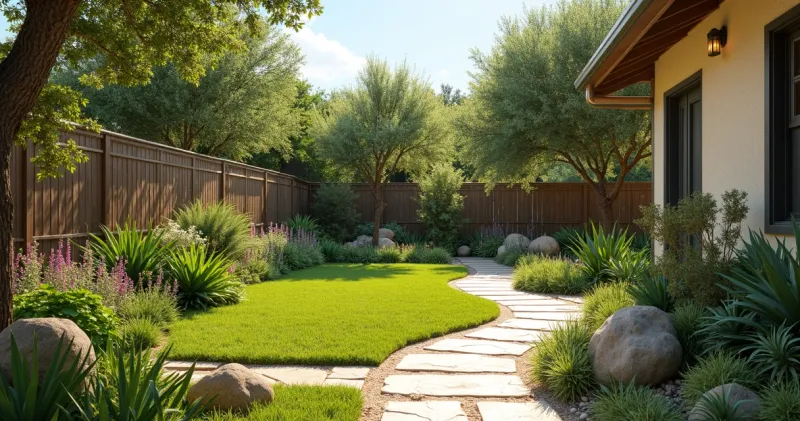
Before spending money on seed, walk your yard and ask one honest question: does this spot get full sun and drain quickly after rain? Those two factors matter more than anything else for bluebonnet success.
TxDOT’s planting guidance points to alkaline, moderately fertile, well-drained soil as favorable, while TPWD’s Post Oak Wildscape plant list confirms that sands, loams, clays, and limestone soils can all support bluebonnets when drainage is adequate. The soil texture is less important than what happens to water after a hard rain.
Good candidate spots include a sunny border along a driveway or fence line, a south- or west-facing slope, or a small open area you want to convert from bare ground or thin turf into seasonal color. Shaded beds, heavily irrigated mixed borders, and areas crowded by Bermuda grass or other aggressive turf are poor matches.
Bluebonnets need open ground and enough light to develop their low rosette before sending up a flower spike.
Texas is too ecologically varied for one-size-fits-all seed advice. The Hill Country, the Post Oak Savanna, the Gulf Coast prairie, and West Texas all have different soils, rainfall patterns, and plant communities.
TxDOT maintains a regional seed list covering 11 natural vegetative regions, and buying seed matched to your region gives you a meaningful head start over a generic statewide mix.
TPWD also cautions that commercially available wildflower mixes sometimes include non-native species. Reading the label and confirming the packet contains native species suited to your area protects both your planting investment and the local plant community around your yard.
Fall is the moment to sow
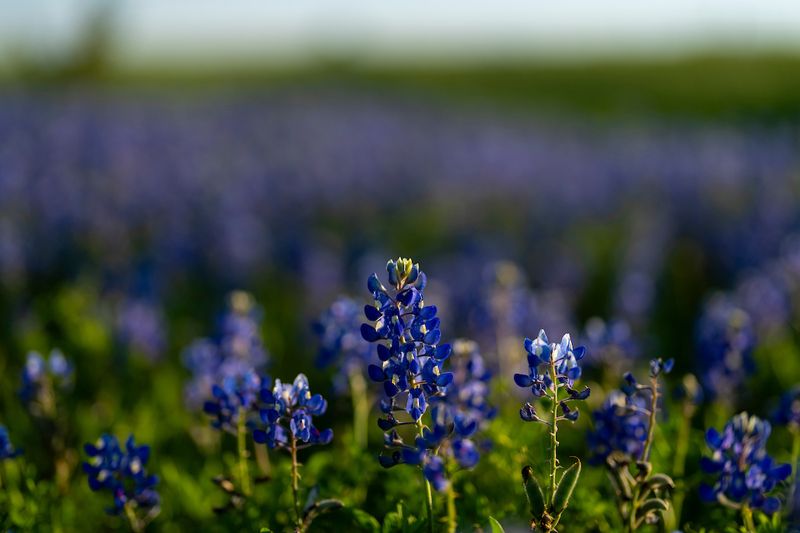
Timing matters more than technique for most first-time bluebonnet growers. In Texas, fall is the sowing window for spring flowers.
TxDOT’s planting guidance gives September 1 through December 15 as the planting period, with earlier fall sowing generally preferred so seedlings have time to develop their root systems before cold weather slows growth. A seedling that spends the winter as a sturdy rosette will flower more reliably than one sown late and scrambling to catch up.
Site preparation comes first. If you are sowing into an existing lawn area, mow or scalp the grass as low as possible and rake out thatch so seed can reach bare soil.
Bluebonnets germinate poorly when they land on a thick mat of organic material. In a cleared border or a bare patch, loosen the surface lightly without deep tilling that brings weed seeds to the top.
Seed-to-soil contact is the single most important mechanical factor. Scatter seed evenly across the prepared area, then press it firmly into the surface or cover it with no more than about one-quarter inch of soil.
Deeper burial can prevent germination. TxDOT specifically warns against soaking or puncturing the seed coat before sowing.
Some older gardening sources recommend scarification, but TxDOT’s guidance says mechanical disturbance can damage the seed. Follow the directions on your specific seed packet rather than applying any one method universally.
Bloom timing shifts across Texas, so adjust your expectations by region. Southern Texas can see flowers as early as late February, while northern areas may not peak until April or even early May.
Local weather, particularly fall and winter rainfall, also shifts the calendar in ways no planting date can fully predict. Treat the September-to-December window as your framework, but let your regional conditions and seed-source instructions guide the exact date.
Establishment takes moisture, not constant irrigation
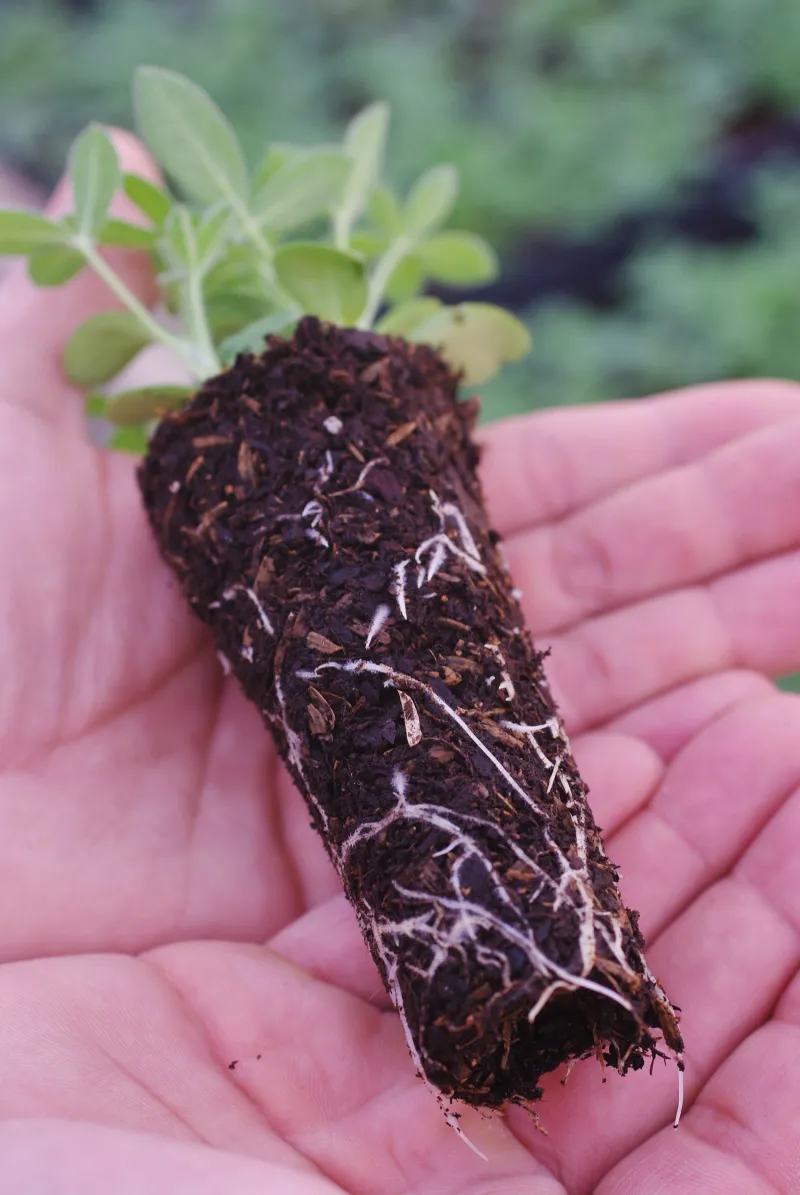
Newly sown bluebonnet seed needs moisture to germinate, but the goal is not a permanently wet bed. TxDOT recommends a gentle initial watering after sowing, followed by light watering approximately every three days for about three weeks when rain does not arrive on its own.
Once seedlings are visibly established, natural rainfall typically carries them through the cool season without supplemental water.
Fertilizer is a different matter. TxDOT’s guidance says routine fertilizing may encourage lush foliage at the expense of blooms, so skip the granular feed you might use on other garden beds.
Bluebonnets are adapted to relatively lean soils, and pushing nitrogen can work against the flower display you are trying to create.
Soil biology can also play a role. TPWD notes that bluebonnets form a nitrogen-fixing relationship with Rhizobium bacteria in the soil, and the TxDOT Roadside Vegetation Management Manual identifies the bacterial association as one factor that can affect establishment in a new location.
If a site has never supported bluebonnets or related legumes, the necessary bacteria may be scarce. Some seed suppliers sell inoculant products, though results vary and the bacterial association is only one of several establishment variables.
Poor drainage, competition from weeds or turf, late sowing, and mismatched seed are at least as likely to cause a disappointing first season as any soil biology issue. When a planting underperforms, work through the checklist: Was the site sunny enough?
Did water pool after rain? Was thatch removed before sowing?
Was the seed matched to the region? Diagnosing the actual cause gives you a real path forward rather than a guess.
Let the flowers finish the job
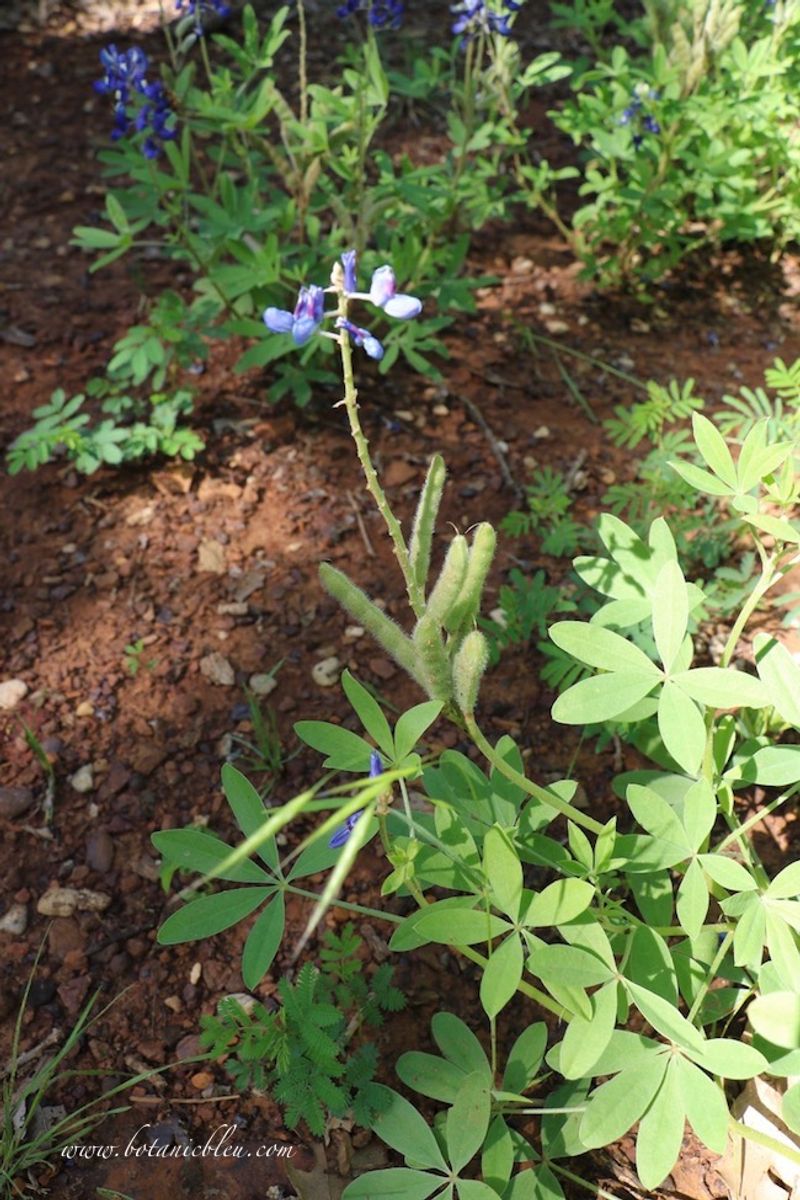
After the blue fades, the temptation to tidy up the bed is understandable. Resist it a little longer.
The seed pods forming on each plant are next year’s display, and cutting the plants down before those pods ripen and split removes the seed crop that would otherwise fall to the ground and carry the patch forward.
TxDOT’s guidance recommends waiting until the dead brown foliage is visually offsetting the beauty of the display before mowing. For larger areas, it suggests mowing to approximately 4 to 6 inches rather than cutting to the ground, which leaves some structure while allowing dispersed seed to settle into the soil.
For a home bed or border, simply leaving the plants in place until the pods have dried and begun to open naturally achieves the same result.
Brown, declining foliage is a normal part of the annual cycle, not a sign that something went wrong. Each plant has completed its purpose once it has flowered and set seed.
The patch’s future depends on those seeds reaching bare or lightly covered soil where they can germinate the following fall. Dense mulch applied immediately after mowing can interfere with that contact, so hold off on heavy mulching in the seeding area until after the natural dispersal window has passed.
Reseeding is not a guarantee. Dry summers, compacted soil, and competition from returning turf can all reduce how many seeds successfully germinate in autumn.
Keeping at least some bare or thinly vegetated soil in the bed gives fallen seed the best shot at making contact with the ground and cycling into the next generation.
A bluebonnet bed works best as a regional planting
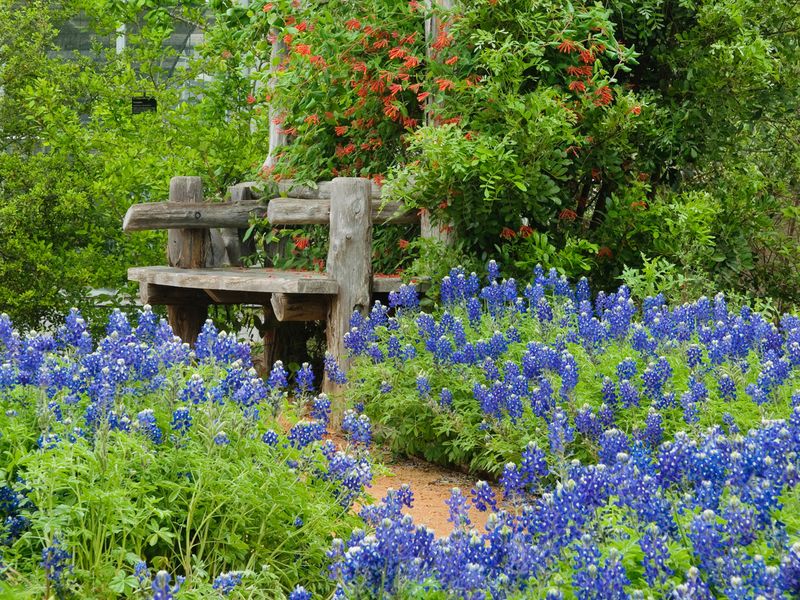
Bluebonnets attract bees and other flower-visiting insects during their spring bloom window, and that pollinator activity is a genuine plus for any home yard. TPWD’s Post Oak Wildscape plant list identifies bluebonnets as a species that supports pollinators, and the flowers are visibly busy with native bees when in peak bloom.
That value is real, but a single-species patch has limits.
A spring-only annual cannot support wildlife across the full calendar the way a mixed planting does. TPWD encourages gardeners to research regional native seed mixes and avoid non-native species when building habitat.
Pairing bluebonnets with other regionally appropriate natives, such as Indian paintbrush, black-eyed Susan, prairie verbena, or native grasses suited to your Texas ecoregion, extends the bloom window and provides the food, shelter, and host-plant diversity that a broader range of insects and birds actually needs.
Regional fit also matters for seed sourcing. TxDOT’s regional seed list is a practical starting point for matching plant choices to local soils and rainfall patterns across Texas’s 11 natural vegetative regions.
Seed labeled for Central Texas may not be the best fit for a yard in the Pineywoods or the Trans-Pecos.
Gardeners outside Texas should check regional resources before planting. Kew’s Plants of the World Online lists Lupinus texensis as native to Texas, Oklahoma, Louisiana, and northeastern Mexico, and introduced in Florida.
Florida gardeners should consult the Florida Native Plant Society’s database for locally appropriate lupines and wildflowers rather than defaulting to a Texas-native species that was not part of Florida’s original landscape.
Bring home the memory, not the roadside risk
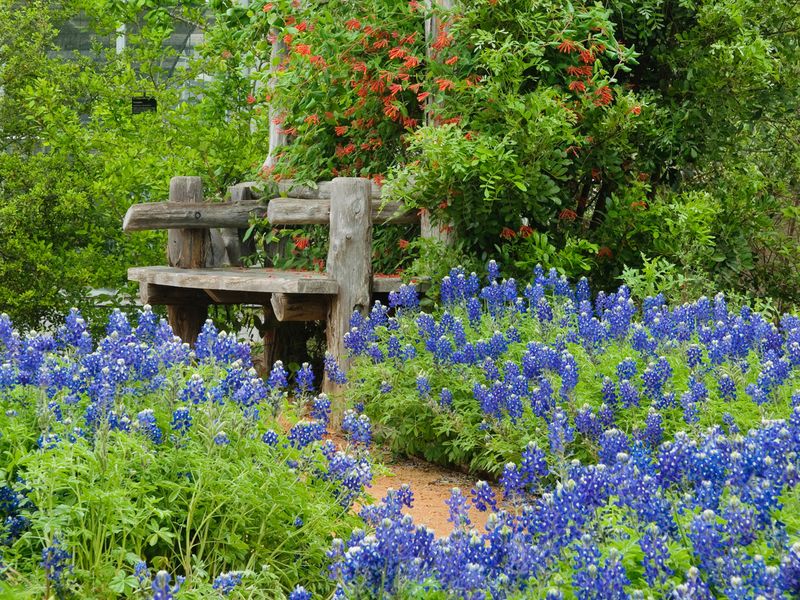
A sunny, well-drained Texas yard can recreate the seasonal blue display that generations of Texans have pulled over to photograph, and doing it at home removes the safety headaches that come with roadside viewing. Texas DPS advises against stopping in traffic lanes, crossing active roadways, or parking on the road shoulder to reach wildflower patches, and those risks are real every spring along busy highways.
When you do visit roadside displays, TPWD advises against picking or digging plants from public lands, and trespass and damage-to-government-property rules apply along managed roadsides regardless of what any informal tradition suggests. The practical answer is to enjoy the view from a safe pullout and grow your own patch at home where you can photograph, enjoy, and manage the plants on your own terms.
TxDOT’s planting guidance gives homeowners a clear, achievable path: full sun, good drainage, fall sowing, light establishment watering, no routine fertilizer, and patience through the seed-maturation phase. Bluebonnets are a compelling low-input annual for the right site, not a guaranteed showstopper for every yard or a newly discovered garden secret.
Texans have admired this flower for generations, and with a little honest site assessment, that admiration can move from the highway shoulder to your own front border.