
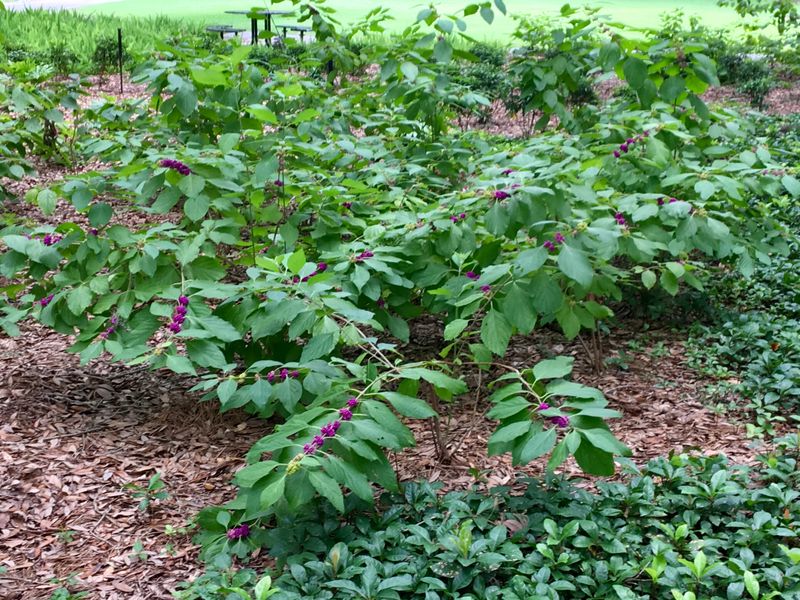
A Texas backyard can feel like a safe haven for kids and dogs, but ticks can show up even in a well-kept lawn. One native shrub has been quietly generating research interest because its leaf compounds repelled ticks in a laboratory setting. Before you rush to plant it as a cure-all, though, the real story is more nuanced and more useful than the headlines suggest.
Ticks can reach a Texas play area in several ways
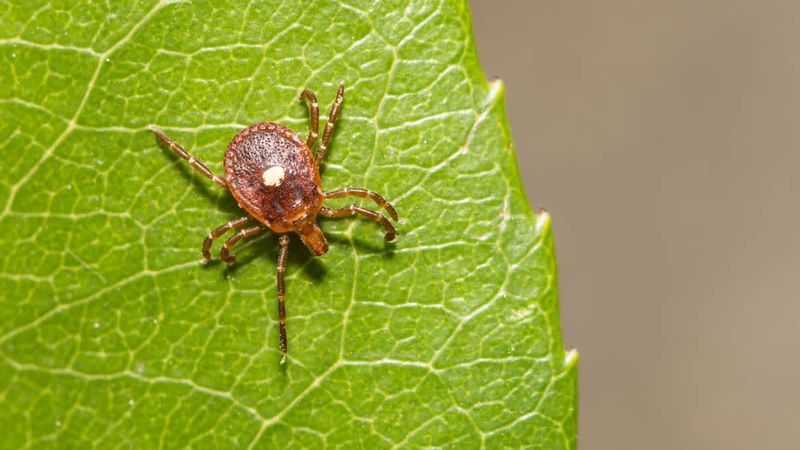
Plenty of Texas families assume ticks are mostly a deep-woods problem, something to worry about on hiking trails but not in the backyard. That assumption can leave kids and dogs unprotected. Ticks hitchhike into residential yards on deer, squirrels, raccoons, stray cats, and neighborhood dogs, and they can also arrive on clothing or gear after a trip to the park.
The lone star tick is one of the most relevant species for Texas families. CDC tick distribution data confirms that lone star ticks are widely established across the South, including Texas, and they are known for aggressively seeking out human hosts. Unlike some species that wait passively, lone star ticks actively move toward people and animals. They can transmit pathogens linked to ehrlichiosis and tularemia, and bites have been associated with STARI and alpha-gal syndrome.
Tick activity in Texas does not follow a tidy spring-and-summer schedule. Depending on the species, local weather, and geography, ticks can be active during mild stretches in fall and winter as well. Families near wooded edges, creek bottoms, or properties with regular wildlife visitors face higher contact risk than those in dense suburban neighborhoods, but no yard is completely off-limits.
Play zones near lawn edges, brushy borders, or tree lines create the highest-risk overlap between where children spend time and where ticks concentrate. CDC prevention guidance notes that ticks do not jump or fly but instead wait on grass blades and low vegetation for a host to brush past. Understanding how ticks arrive and where they linger is the first step toward a prevention plan that actually works, because no single plant or shortcut can address all of those entry points at once.
American beautyberry is the native shrub behind the research
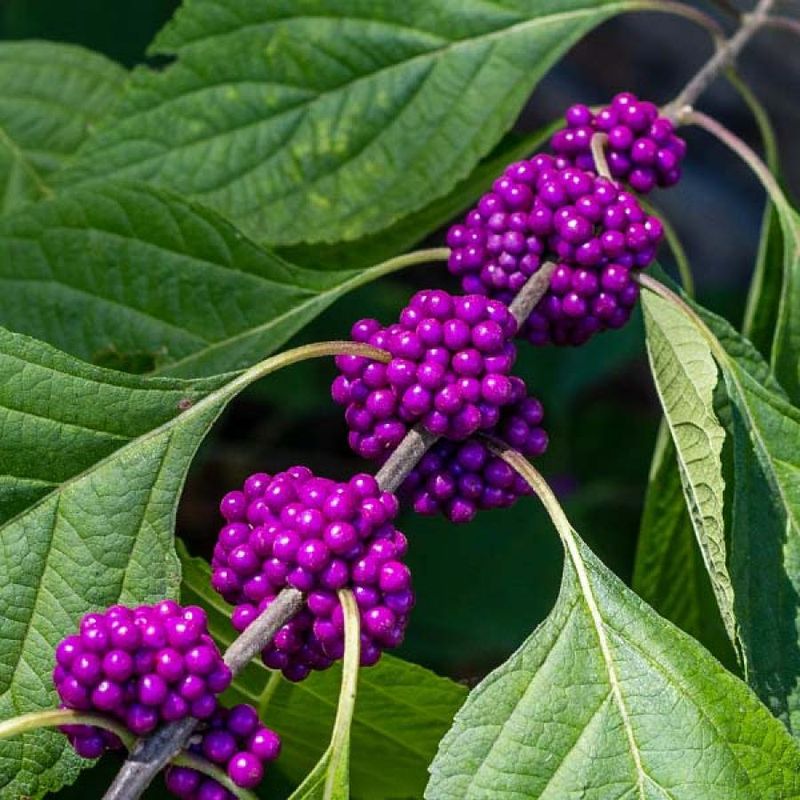
American beautyberry, known botanically as Callicarpa americana, is the native Texas shrub at the center of tick-repellent research. It grows naturally across the southeastern United States, including eastern and central Texas, where it thrives in the understory of pine and mixed forests. The USDA NRCS plant guide describes it as a perennial deciduous shrub generally reaching about one to two meters tall, with distinctive clusters of bright purple berries that ripen in late summer and fall.
Those berry clusters are the plant’s most recognizable feature. They wrap tightly around the stems in dense, jewel-like whorls that catch the eye long after the leaves have dropped. Birds, including mockingbirds, robins, and cedar waxwings, rely on the fruit as a food source, and white-tailed deer browse the foliage. For Texas homeowners trying to attract wildlife while keeping the landscape low-maintenance and regionally appropriate, beautyberry offers genuine ecological value independent of any tick-related benefit.
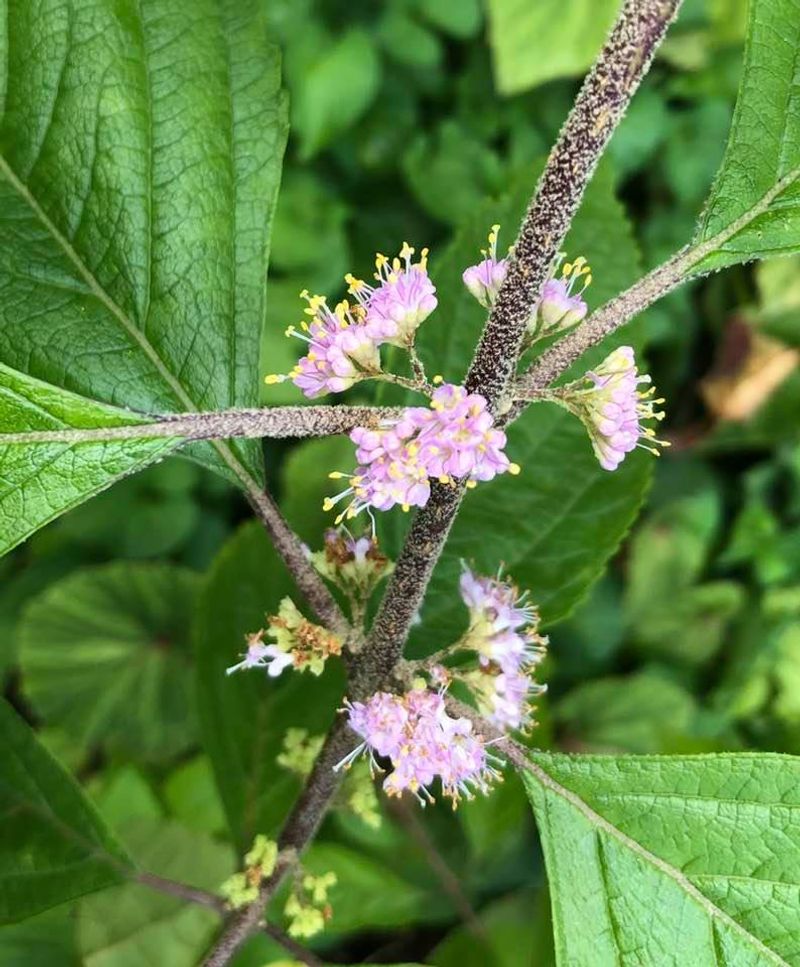
According to the Native Plant Society of Texas listing, American beautyberry is suited to part shade to shade conditions with medium moisture requirements, and it typically blooms between May and July. The small pink-to-lavender flowers are not showy by most garden standards, but they support pollinators before the berries take over as the main visual draw through fall.
The shrub’s native status matters beyond aesthetics. Plants that evolved in Texas conditions tend to support local food webs in ways that ornamental imports cannot. Beautyberry fits naturally into a layered planting design alongside other native understory species. Its value as a landscaping choice stands on its own merits, which is worth keeping in mind as you read about the tick research, because the two conversations, what beautyberry does for your yard ecologically and what its isolated compounds did in a laboratory, are genuinely separate.
The laboratory result belongs to isolated compounds

The tick-repellent story traces back to a 2007 study conducted by USDA researchers. They isolated two compounds from American beautyberry leaves: callicarpenal, a terpenoid aldehyde, and intermedeol, a sesquiterpene alcohol. Both chemicals had been identified in beautyberry before, but this study specifically tested whether they could repel ticks under controlled laboratory conditions.
The method is important to understand. Researchers applied measured concentrations of each compound to treated cloth, then wrapped that cloth around a finger. Tick nymphs were given the choice to move toward or away from the treated surface. The published USDA study found that at a concentration of 155 nanomoles per square centimeter of treated cloth, callicarpenal repelled approximately 98 percent of blacklegged tick nymphs and intermedeol repelled about 96 percent.
Those numbers are striking, and they generated the media coverage that has kept beautyberry in gardening conversations ever since.
The results against lone star tick nymphs, however, told a different story. At a higher test concentration, callicarpenal repelled only about 20 percent of lone star nymphs, and intermedeol reached roughly 40 percent. Given that the lone star tick is the species Texas families are most likely to encounter in their backyards, that contrast matters considerably. The peer-reviewed record of this study confirms both sets of results were part of the same experiment.
Reading those percentages, it is tempting to picture a beautyberry hedge forming a protective ring around a play set. The experiment does not support that picture. The compounds were purified, measured precisely, and applied directly to cloth at concentrations that cannot be assumed to match what a living shrub releases into the air on a hot Texas afternoon. The study established that these molecules have repellent activity under specific laboratory conditions.
That is genuinely interesting science, and it stops well short of a yard-protection claim.
A living shrub has not been proven to form a tick barrier
Moving from a laboratory result to a real-world yard claim requires bridging a wide gap, and that bridge has not been built yet for American beautyberry. The 2007 USDA study tested purified compounds at known concentrations on treated cloth. It did not measure how much callicarpenal or intermedeol an intact, living beautyberry shrub releases into the surrounding air. It did not test whether those emissions, if they occur in meaningful quantities, travel far enough to affect ticks moving through a lawn.
It did not measure how quickly any scent dissipates in Texas heat, how many shrubs would need to grow together to produce a detectable effect, or whether planting density changes tick behavior at all.
Ticks locate hosts using a combination of chemical signals, temperature gradients, vibration, and moisture cues. Carbon dioxide exhaled by people and animals is a particularly strong attractant, and host-specific odors play an important role as well. Research into tick chemosensory biology, including reviews of how ticks detect and respond to volatile compounds, and studies of volatile chemicals and tick-host interactions, confirms that host-seeking is a complex, multi-cue process. A study of tick responses to carbon dioxide and host odor further illustrates how powerfully those cues drive tick behavior.
Describing beautyberry compounds as potentially affecting parts of that process is reasonable based on the laboratory data. Calling a living shrub a navigation blocker or a scent barrier is not.
University Extension experts specifically caution that no scientific studies demonstrate that particular plants repel ticks when growing in a landscape. Ticks can also enter a yard on mobile animal hosts that move freely regardless of what is planted along the border. A deer carrying ticks does not stop at a beautyberry hedge.
None of this makes American beautyberry a bad choice for a Texas yard. The shrub’s native habitat value remains real. The laboratory findings remain genuinely interesting and worth watching as researchers continue to explore natural repellent compounds. The honest framing is simply this: beautyberry is a plant with laboratory-studied compounds, not a proven perimeter defense, and treating it like one could leave families less protected than they need to be.
Match beautyberry to the Texas site where it can thrive
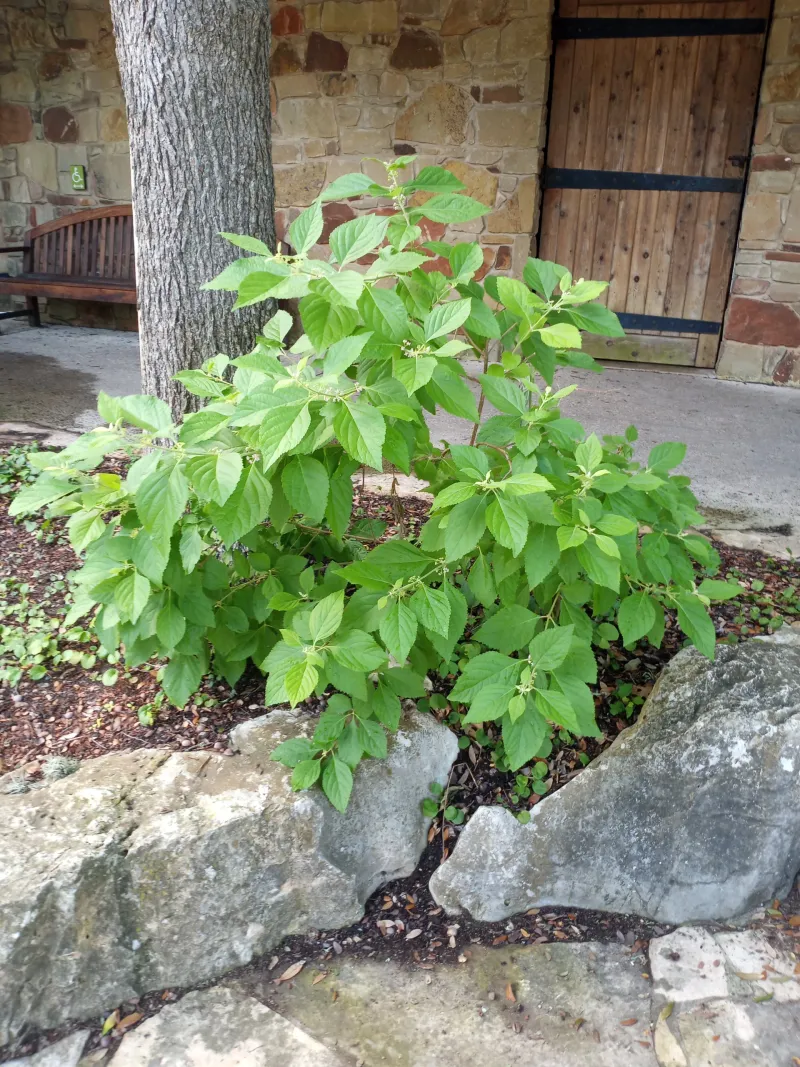
Getting beautyberry to perform well in a Texas yard starts with matching it to the right conditions. The Native Plant Society of Texas lists it as suited to part shade to shade with medium moisture requirements. In practice, that means beautyberry does best under the filtered light of taller trees or along the shaded north or east side of a structure, rather than baking in full western sun all afternoon.
Missouri Botanical Garden’s horticultural profile notes that beautyberry adapts to full sun or part shade and tolerates drought and clay soil once established. That established caveat is significant. During the first growing season, the shrub needs consistent moisture to develop a root system capable of handling Texas summers. Clay soils common in the Houston area and parts of the Hill Country can work well as long as drainage is adequate, since beautyberry does not tolerate waterlogged roots.
Once established, the shrub handles moderate drought, but prolonged periods of triple-digit heat without rain can reduce berry production and cause temporary defoliation. That is a normal stress response, not a sign of plant death, and most shrubs recover when conditions improve. Still, a plant stressed by drought will not look its best, and gardeners in West Texas, the Panhandle, or other arid regions should plan for supplemental irrigation rather than assuming beautyberry will thrive with no help at all.
The USDA plant guide places beautyberry’s native range in the southeastern United States, which corresponds most closely to eastern and southeastern Texas. Gardeners in those regions will generally have the easiest time establishing it. Central Texas gardeners can succeed with the right site and some extra attention during dry spells. The shrub is a poor match for extremely arid or exposed sites without irrigation infrastructure, so a realistic site assessment before planting will save frustration later.
Create a low-cover play zone instead of trusting one shrub

Reducing tick encounters in the places where kids and dogs actually spend time requires modifying the habitat itself, not just adding a plant. CDC yard management guidance lays out the core steps: remove leaf litter regularly, clear tall grass and brush around the home’s perimeter, mow the lawn on a consistent schedule, and place a roughly three-foot-wide barrier of wood chips or gravel between the lawn and any adjacent wooded or brushy area. That barrier creates a dry, open zone that ticks are reluctant to cross because they need humidity and vegetation to survive while questing for a host.
Where play equipment sits in the yard matters more than most families realize. Swing sets, sandboxes, and lawn chairs positioned near tree lines or brushy edges are in the highest-risk zone. Moving them toward the center of a mowed, sunny lawn significantly reduces the chance that a questing tick will reach a child at play. Shade is comfortable for kids, but shade also keeps the ground cooler and more humid, which is exactly what ticks prefer.
Texas A&M AgriLife tick-control guidance adds a practical layer specific to Texas conditions. Inspecting pets and their resting areas is especially important because dogs and outdoor cats are efficient tick transporters. If treatment is needed, AgriLife recommends applying products only in the areas where ticks are actually present or where pets spend concentrated time, rather than treating the entire lawn as a default. Any treated area should dry fully before children or animals return, and product labels should be followed carefully with attention to pollinators, runoff, and local municipal rules that may restrict certain applications.
Taken together, these habitat steps give families a far more reliable route to fewer tick encounters in a play zone than any single plant can provide. Beautyberry can absolutely be part of a thoughtfully designed native landscape, but the mowing schedule, the leaf-litter removal, and the equipment placement are doing the heavier lifting on tick risk in the spaces where children and dogs spend their time.
Check children, clothing, gear, and dogs after outdoor activity

A reliable tick-check routine is one of the most effective tools a family has, and it remains necessary whether or not beautyberry grows anywhere near the yard. After any outdoor activity, including time spent in the backyard, children should be checked thoroughly: behind the knees, around the waistband, in the belly button, behind the ears, along the hairline, and in the armpits. Ticks are small and easy to miss, especially nymphs, which can be no larger than a poppy seed.
CDC guidance on tick checks and prevention recommends tumble-drying clothing on high heat for at least ten minutes after outdoor activity. That step kills ticks that may have hitched a ride without attaching. Showering within two hours of coming indoors may help reduce the risk of Lyme disease transmission and gives adults and older children a natural opportunity to scan their own skin. Gear like backpacks, jackets, and blankets used outside should be checked as well.
Dogs deserve the same attention. Check between toes, around the collar, inside the ears, and under the tail after every outing, including backyard time. Dogs cannot tell you when a tick is attached, and they can carry ticks indoors and deposit them on furniture, carpets, and bedding. Veterinarian-recommended flea and tick prevention products for pets add another layer of protection that no plant-based approach currently replaces.
For skin protection on people, EPA-registered repellents have been evaluated for both safety and effectiveness when used as directed. Active ingredients with solid evidence include DEET, picaridin, IR3535, oil of lemon eucalyptus, PMD, and 2-undecanone. One important note for parents: oil of lemon eucalyptus and PMD should not be applied to children under age three. Always follow label directions, apply repellents to exposed skin and clothing rather than under clothing, and reapply as instructed when spending extended time outdoors.
Enjoy beautyberry without asking it to do the impossible
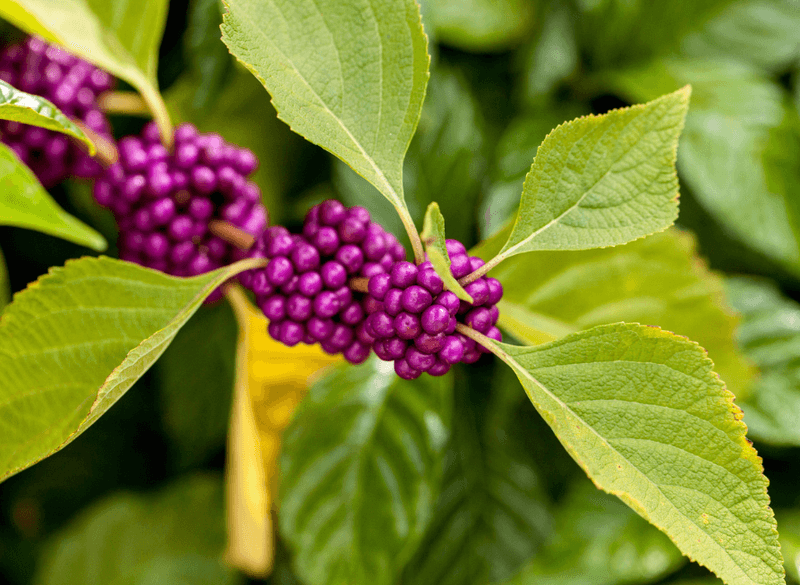
American beautyberry earns a place in a Texas native garden on its own terms. It supports birds and pollinators, it fits naturally into shaded understory plantings, and it carries genuine scientific intrigue because of what researchers found in its leaves. The 2007 USDA laboratory study on callicarpenal and intermedeol is real, peer-reviewed, and worth knowing about. What it is not is proof that a growing shrub protects a backyard.
Extension experts are consistent on this point: no studies have demonstrated that plants repel ticks when growing in a landscape. That gap between laboratory chemistry and residential protection is not a minor footnote. Families who rely on a planting as their primary defense may skip the checks, skip the repellent, and skip the habitat work that actually reduces tick contact in play zones.
The better approach pairs beautyberry with the steps that carry stronger evidence: mowed, sunny play zones, cleared leaf litter and brush, a wood-chip border along wooded edges, consistent tick checks for children and dogs, pet prevention products, and EPA-registered repellents used as directed whenever local conditions support tick activity. Beautyberry adds ecological value and fits that plan well. A plant with fascinating leaf chemistry and a yard full of purple berries in September is a genuinely good thing, just not a perimeter fence.