
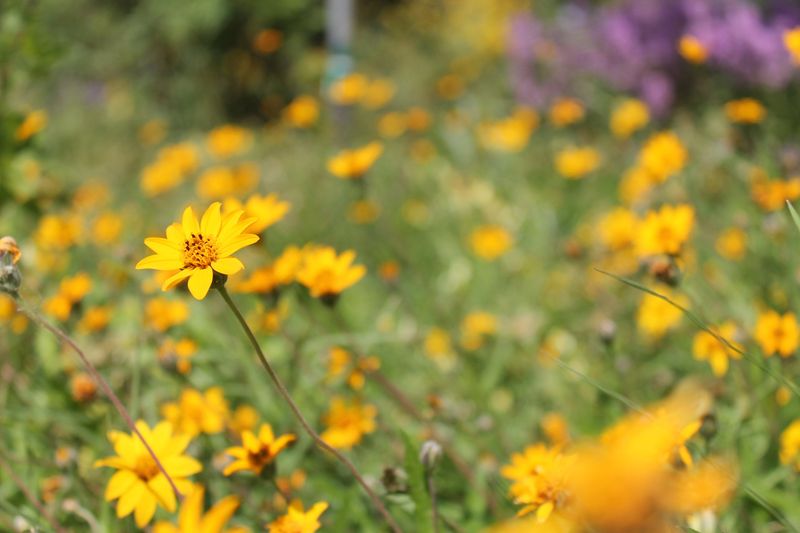
When a Texas summer turns brutal and watering restrictions kick in, most yards start looking rough fast. Orange zexmenia is a native perennial subshrub that can keep producing cheerful yellow-orange flowers through much of the warm season, even as thirsty turf and poorly adapted ornamentals go downhill around it.
Learning how to plant and establish it correctly is the key to getting that low-water payoff.
Orange zexmenia is the native plant behind the promise
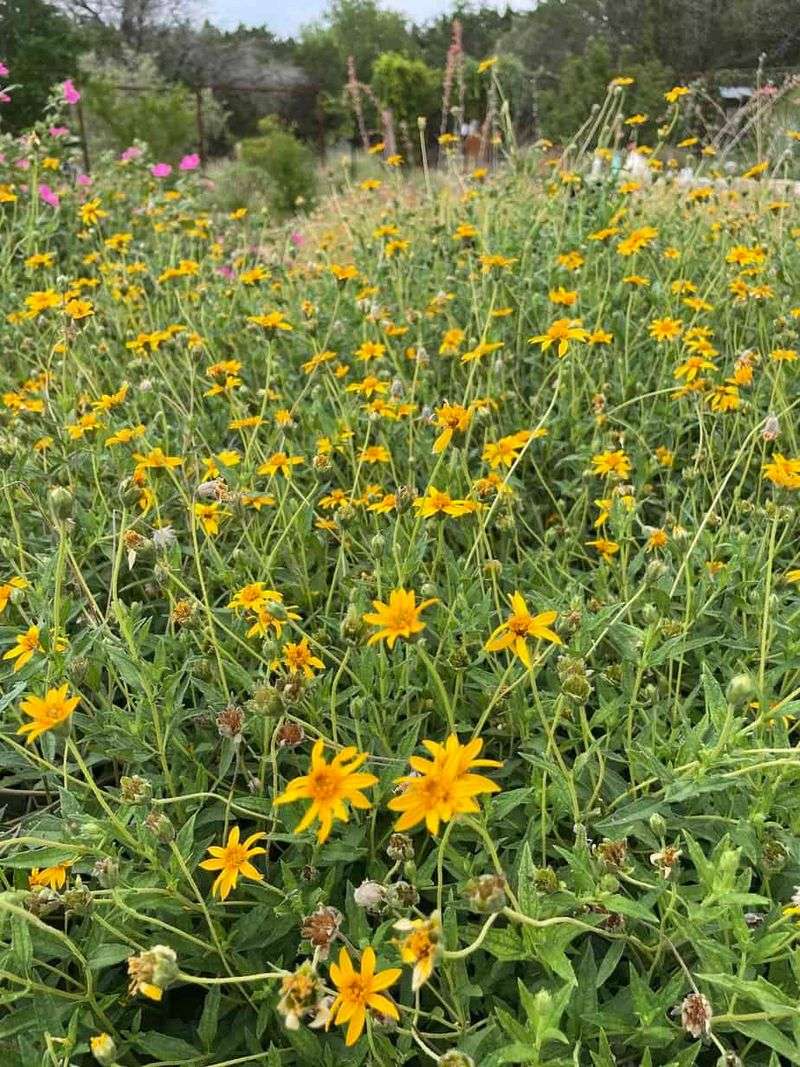
Orange zexmenia, known scientifically as Wedelia texanaWedelia hispidaWedelia acapulcensishispida, is the Texas-native perennial subshrub behind the promise of a flowering yard that needs far less water than conventional turf. You might also see it labeled in nurseries or regional databases under related names like or var. , so always cross-check the plant tag against a reputable regional source before you buy.
The naming can vary, but the plant itself is consistent and recognizable once you know what to look for.
Mature plants typically reach roughly 2 to 4 feet tall and spread 1 to 4 feet wide, forming a low, spreading mound of textured green foliage covered in small yellow-to-orange daisy-like flower heads. Texas A&M AgriLife describes it as drought tolerant and notes it keeps blooming most of the year, which makes it visually useful in exactly the situations when other plants start failing.
That combination of compact form and recurring color is what earns it a practical place in a low-water Texas landscape.
The corrected promise here is important. Orange zexmenia is a strong candidate for a lower-water border or lawn-replacement area, but it is not a plant that remains visually untouched during every drought or every stage of watering restriction.
USDA documentation confirms its drought tolerance and long flowering window, while also noting that established plants can experience stress during prolonged dry periods. What it offers is a meaningful advantage over poorly adapted alternatives, not a guarantee of perfection under every condition.
Its long bloom season gives a thirsty yard a visible alternative
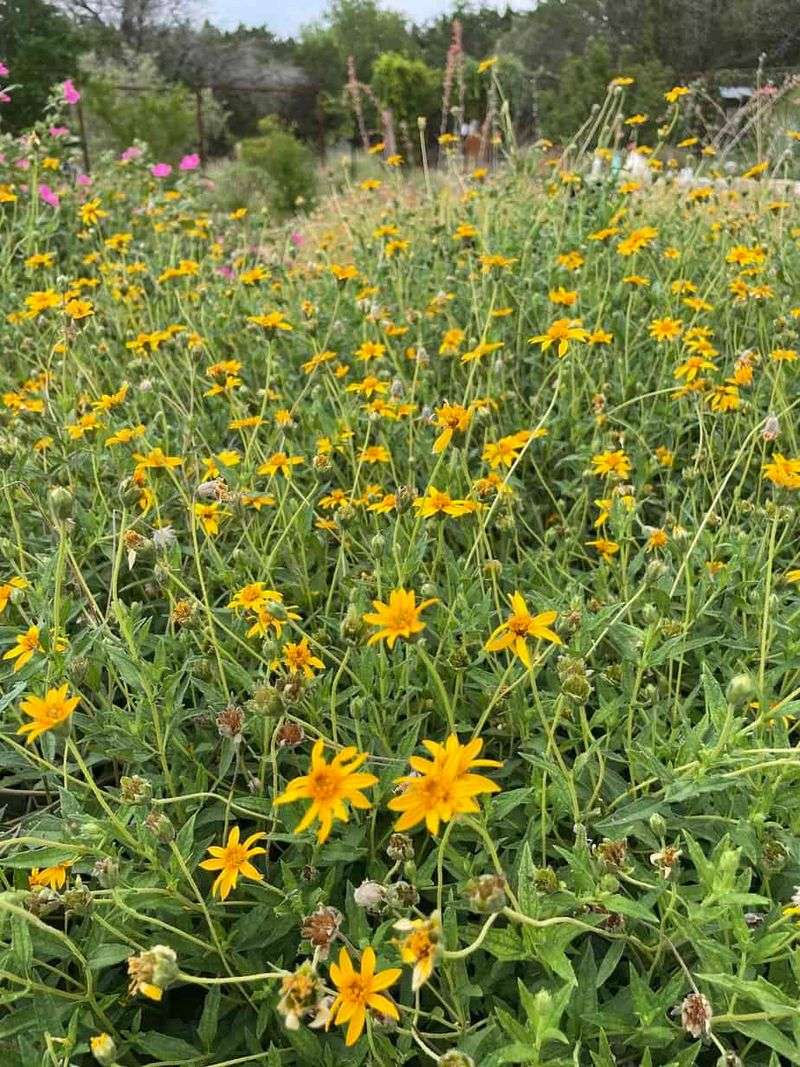
One of the most practical things about orange zexmenia is the length of its flowering window. USDA records flowering from approximately March through December, and Texas A&M AgriLife describes blooming through most of the year.
That is a remarkably long active season for a plant that can thrive with substantially less supplemental water than a conventional lawn.
The flowers themselves are small, yellow-to-orange daisy-like heads that appear repeatedly across the plant’s mounding form. Texas Parks and Wildlife describes a long bloom period running from spring into fall, which aligns with the USDA documentation.
Mature plants typically stay in the 2- to 4-foot height range, with a spread that can reach up to 4 feet depending on soil, rainfall, and management, so this is a plant with real landscape presence rather than a ground-hugging groundcover.
A realistic expectation matters here. One Texas Master Gardener reference describes flowering as sporadic rather than profuse, which means you should plan for a recurring bloom season rather than a solid carpet of color every single day.
That distinction is worth holding onto: the plant offers color through a long window, not a non-stop floral display.
Where orange zexmenia fits best is in a sunny flowering border, a rock garden, a foundation-area planting, or as a replacement for sections of thirsty lawn that are already struggling. North Texas SmartScape categorizes it as a low-water-demand native, reinforcing its role as a practical landscape element rather than a universal substitute for every plant in the yard.
What the drought evidence actually shows
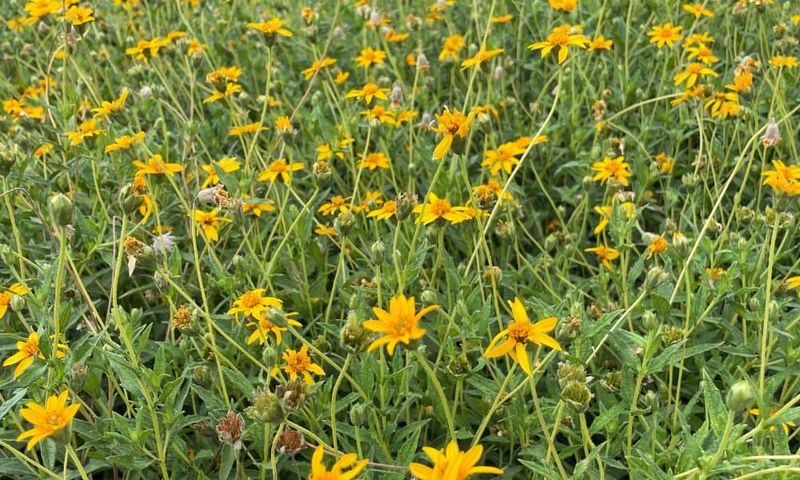
The reputation orange zexmenia has earned for drought tolerance is grounded in real documented performance, not just marketing language. A field trial conducted in South Texas found that orange zexmenia achieved 100% survival in tested plots under droughty conditions, which is a meaningful data point from specific, observed conditions.
That result supports the plant’s standing as a drought-resilient option, even though it cannot be stretched into a blanket promise for every yard in every Texas county.
Understanding what “drought tolerant” actually means in practice helps set the right expectations. Texas Water Resources Institute explains that drought-resistant plants are better understood as plants that show fewer stress symptoms and use less water than poorly adapted alternatives, not plants that need zero water or remain visually perfect through every dry spell.
Orange zexmenia fits that definition: it tends to handle dry conditions better than thirsty turf or ornamentals selected without regard for local climate, but it is not immune to drought stress.
Prolonged heat and severely limited water can still push even a tough native toward visible stress. Wilting, leaf loss, slower growth, and paused flowering are all possible outcomes during an extended dry period.
Texas Water Resources Institute’s summer landscape guidance makes clear that even adapted plants benefit from some moisture management during extreme heat. USDA field observations also note that whitefly infestations and butterfly larval feeding can completely defoliate orange zexmenia, though the plants in those observations survived and recovered.
The honest framing is this: orange zexmenia gives you a meaningful advantage in a low-water yard, especially after it has had time to establish roots. Expecting it to look completely unchanged through a record drought is setting up for disappointment.
Expecting it to outperform a conventional lawn under the same water budget is a fair and well-supported bet.
The right site does more of the water-saving work
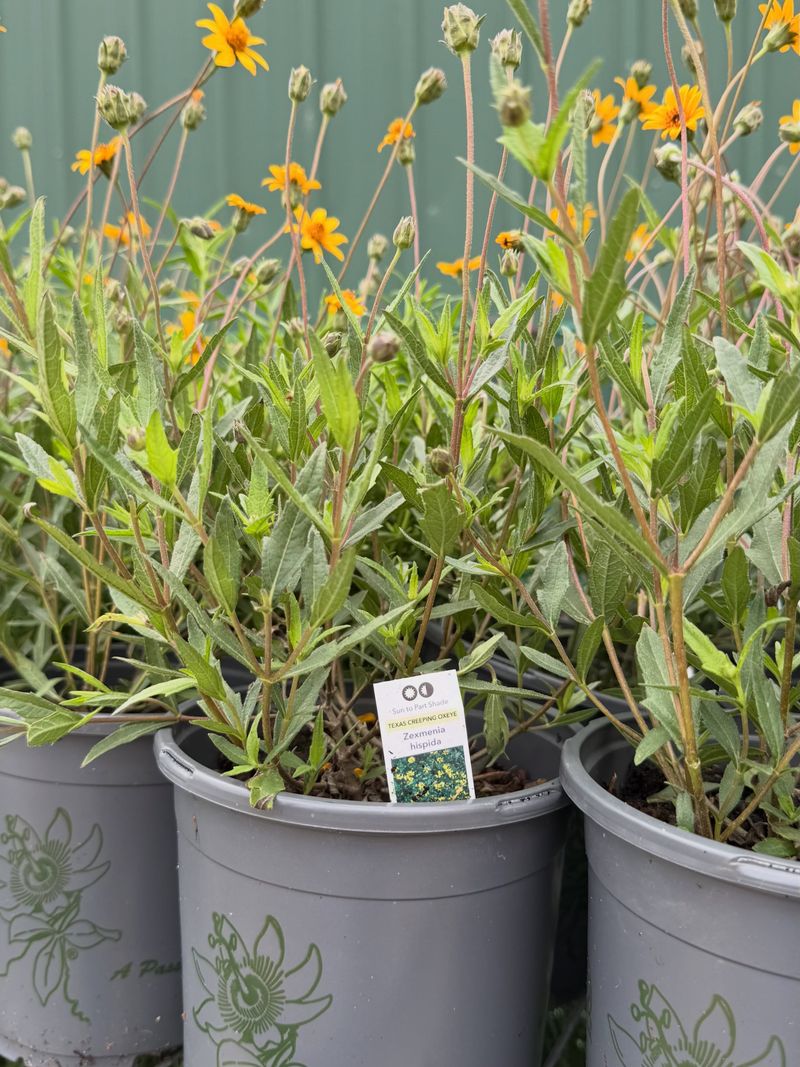
Choosing the right spot for orange zexmenia is not a minor detail. Site selection is one of the most powerful tools for getting the low-water performance this plant is known for, and a poor location can undercut even a healthy, well-established specimen.
Full sun and excellent drainage are the two non-negotiable starting points.
North Texas SmartScape lists orange zexmenia as a low-water-demand native and specifically notes that if the plant ends up in shade, it should be kept in dry soil to compensate. That guidance is useful to know, but shade is genuinely not the plant’s preferred condition.
A location that gets consistent direct sun will give orange zexmenia the best chance to perform as described, both in terms of flower production and drought resilience.
Poor drainage is a more serious problem than most gardeners expect. A plant that thrives in droughty South Texas soils is adapted to conditions where water moves through or away from the root zone rather than pooling around it.
Planting orange zexmenia in a low spot, a clay-heavy area with no amendment, or anywhere that holds water after rain sets it up for root stress that no amount of drought tolerance can fix.
Beyond sun and drainage, think about the landscape role before you dig. Texas A&M AgriLife’s Earth-Kind plant selector encourages selecting plants by regional fit and site characteristics rather than assuming a Texas native will work anywhere in the state.
Texas Water Resources Institute reinforces that native status alone is not a guarantee of performance. A rock garden, a sloped border, or a raised bed along a south- or west-facing foundation are all strong candidates for orange zexmenia.
A shaded north-facing bed with heavy clay is not the place to start.
Establish roots before reducing irrigation
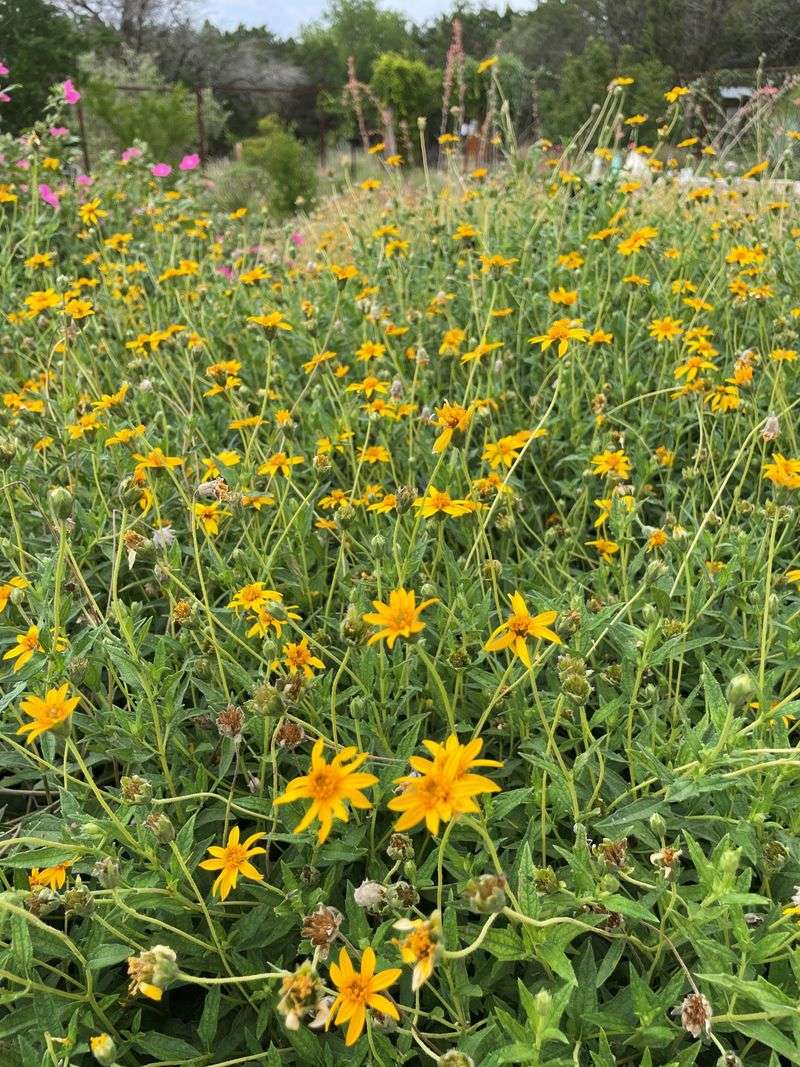
Planting timing makes a bigger difference than most people realize. USDA recommends setting out transplants in early to mid-spring so the root system has time to develop before summer heat arrives.
A plant installed in June or July and immediately denied water because of restrictions is a plant that may not make it. The low-water performance orange zexmenia is known for belongs to established plants, not freshly installed ones.
For gardeners interested in starting from seed, USDA guidance calls for a clean seedbed, direct sowing in late winter or early spring, and covering the seed approximately one-quarter to one-half inch deep. Transplants are generally the more reliable route for most home gardeners, especially when trying to get plants established before heat sets in.
Once a transplant is in the ground, water it consistently during the establishment period. The goal is to encourage deep root development, and that means watering deeply and less frequently rather than giving the plant a little water every day.
Texas Parks and Wildlife’s yard water guidance specifically warns that frequent shallow irrigation encourages shallow roots, which makes plants more vulnerable to heat and drought rather than less. A deep, less-frequent watering schedule builds the kind of root system that allows an established plant to handle dry stretches far better.
Mulch is one of the most useful tools in this process. A 2- to 3-inch layer of organic mulch around the plant helps retain soil moisture between waterings, moderates soil temperature during heat spikes, reduces runoff, and suppresses weeds that compete for water.
Texas Parks and Wildlife’s wildscape design guidance supports mulching as a standard practice for establishing native plants.
Before you water at all, check your local rules. The Texas Water Development Board confirms that watering restrictions are managed locally by individual water suppliers and municipalities, not through a single statewide schedule.
Your city or water district sets the current rules, including any exceptions for newly planted landscape material, and those rules vary widely across Texas.
Where Texas gardeners should—and should not—assume success
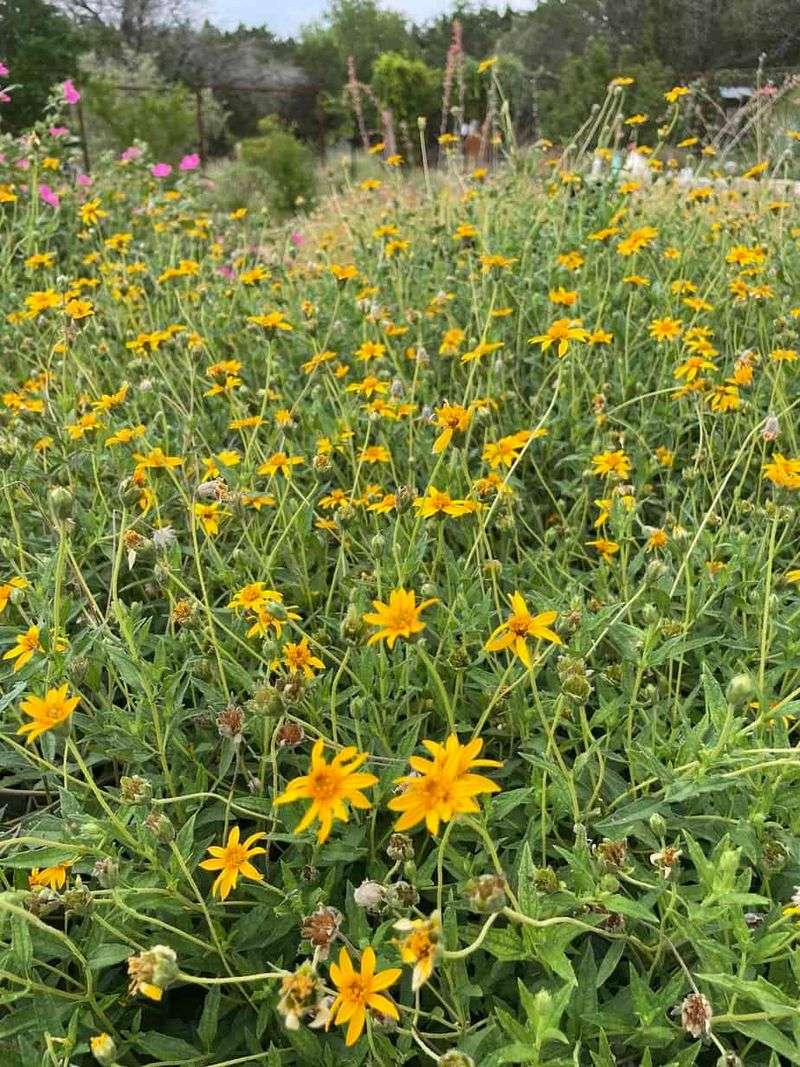
Orange zexmenia has its strongest documented track record in South Texas, the Rio Grande Plains, and parts of the Edwards Plateau and Central Texas Hill Country. These are the regions where the plant occurs most naturally and where field observations and trial data are most concentrated.
USDA notes that orange zexmenia is less frequent in Trans-Pecos, southeast, and north-central Texas, which means its frequency and testing vary considerably across the state.
Treating “Texas native” as a guarantee of equal performance in Houston, Dallas, the Panhandle, or the Trans-Pecos is a mistake worth avoiding. A plant that thrives in the dry, rocky, alkaline soils of the Rio Grande Plains may behave very differently in the heavy clay of the Blackland Prairie or the humid Gulf Coast.
Texas A&M AgriLife’s Earth-Kind plant selector exists specifically to help gardeners match plants to their region rather than assuming statewide suitability. Using that tool before purchasing is a smart step.
On the wildlife side, orange zexmenia brings real value. USDA identifies it as a nectar source for adult butterflies and a larval host for bordered patch butterflies, and Texas A&M AgriLife describes its flowers as a food resource for pollinators more broadly.
That pollinator connection adds ecological function to the practical water-saving argument.
A few challenges are worth knowing about before planting. Deer and livestock, including white-tailed deer, cattle, sheep, and goats, are documented browsers of orange zexmenia, so describing it as deer-proof would be inaccurate.
Whitefly infestations and defoliation by butterfly larvae can also occur. If pest pressure appears, monitor the situation first, consider a firm spray of water to dislodge soft-bodied insects, and consult locally approved integrated pest management resources rather than reaching for broad-spectrum insecticides that can harm the pollinators the plant is attracting.
A realistic drought-season role for orange zexmenia
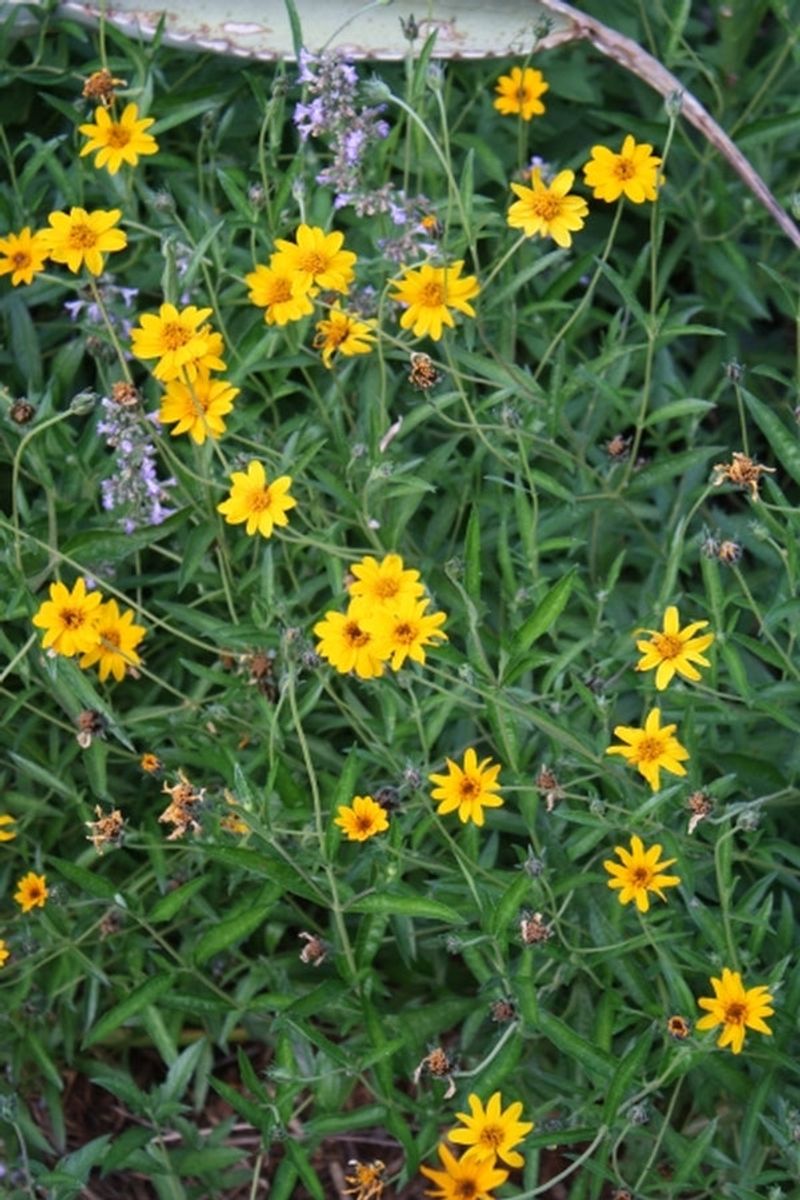
For Texas homeowners whose turf is already struggling under heat and watering limits, orange zexmenia offers a concrete alternative rather than a vague suggestion to “go native.” An established plant in a sunny, well-drained spot can continue producing recurring yellow-orange flowers through much of the warm season while using substantially less supplemental water than a conventional lawn or a poorly adapted ornamental. Texas Parks and Wildlife specifically recommends replacing drought-stricken, high-water turf with better-adapted native plantings, and orange zexmenia fits that recommendation squarely for the regions where it performs best.
The qualifications still matter. Local climate, soil drainage, sun exposure, planting timing, establishment irrigation, and your municipality’s current watering rules all affect what you actually get.
Texas Water Resources Institute is clear that drought-tolerant plants still need some water and that their advantage is relative, not absolute. Severe drought can slow or pause flowering even in well-adapted natives.
The practical sequence is straightforward: verify that orange zexmenia is a good regional fit for your part of Texas, choose a site with full sun and sharp drainage, plant transplants in early to mid-spring, water consistently during establishment, and reduce irrigation only as local rules allow and as the plant demonstrates it can handle the reduction. USDA documentation supports that sequence and confirms the plant’s long flowering window for gardeners who follow it.
A yard that includes established orange zexmenia is not a zero-effort yard, but it is a yard working with the Texas climate rather than fighting it.