
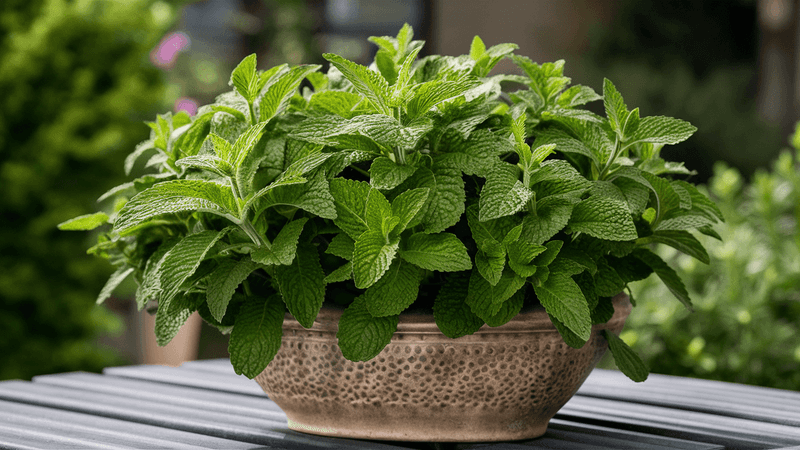
Plenty of Texas gardeners have heard that certain plants can help keep pests from sneaking inside, and spearmint keeps coming up as the most practical option for a front porch container. It smells great, grows reliably in the right setup, and Texas A&M says it handles Texas conditions better than peppermint.
That said, no potted plant is a proven barrier against rats or cockroaches, and understanding that difference will help you make smarter choices for both your garden and your home. The real protection comes from sealing gaps, removing food sources, and staying ahead of conditions that attract pests in the first place.
Spearmint is the practical Texas porch choice—not a pest-proof shield
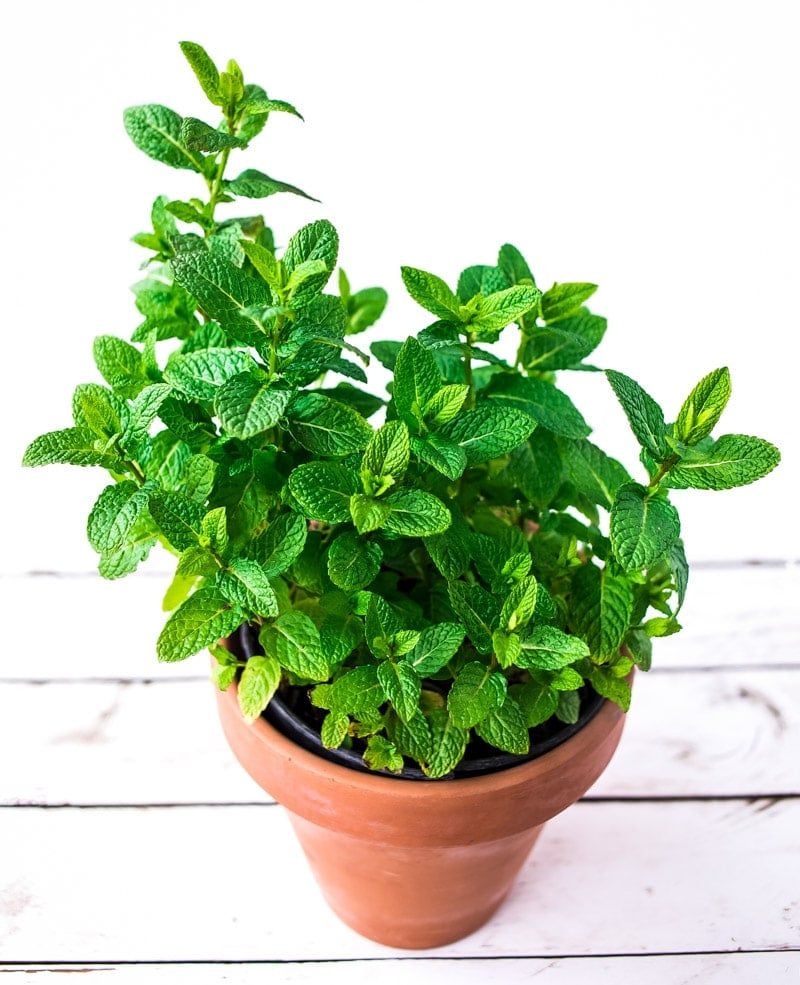
Spearmint earns its spot on a Texas porch for practical reasons. Texas A&M AgriLife Extension identifies spearmint as easier to grow in Texas conditions than peppermint, which tends to struggle in the heat.
A container on the porch gives you a fresh-smelling, manageable plant that fits neatly into a small outdoor space without taking over a garden bed.
The fragrance is real and noticeable when you brush against the leaves or catch a breeze. But the recommendation to grow spearmint rests on those gardening merits, not on proof that a live plant will stop rats or cockroaches from crossing your threshold.
Washington State University Extension research on companion planting found that aromatic plants generally do not produce enough airborne compounds in open-air conditions to function as dependable pest barriers.
That distinction matters before you invest time or expectations in a porch plant as a pest solution. Spearmint can be a worthwhile aromatic addition to your entry.
Reliable pest control, though, depends on changing the access, food, water, and shelter conditions that attract pests to your home. UC IPM’s guidance on rats is direct: rats may briefly avoid some odors, but no repellent provides durable control.
Starting with that honesty makes spearmint a more useful plant, not a less interesting one.
The strongest mint evidence comes from oil, not from a living plant
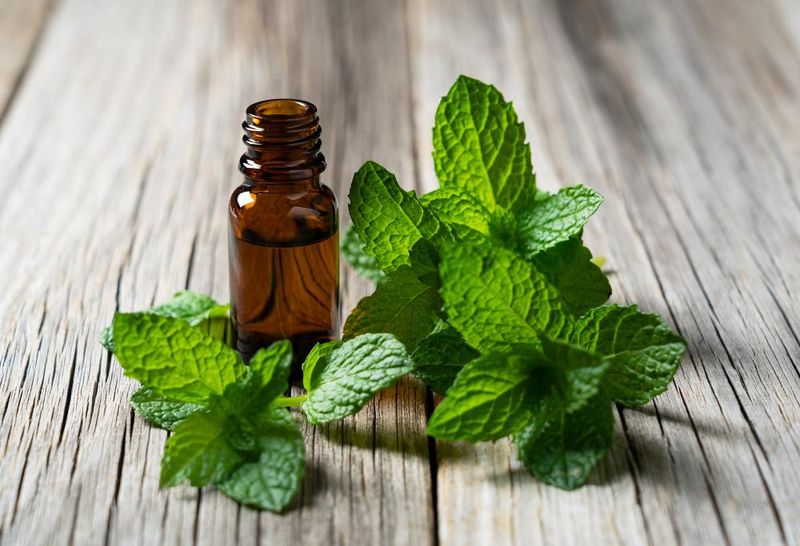
When you read that mint repels cockroaches, that claim almost always traces back to laboratory studies testing concentrated essential oils or plant extracts, not potted plants sitting in open air. A peer-reviewed study on plant essential oils against the brown-banded cockroach tested concentrated oil preparations under controlled conditions, the kind of setup that does not resemble a mint plant on a porch.
Those are very different scenarios.
Laboratory repellency, temporary avoidance, and mortality in a closed test chamber are separate outcomes from preventing cockroaches from entering a home. A roach briefly avoiding a treated surface in a choice-chamber experiment tells us something about the oil’s chemical properties, but it does not tell us that a living plant will form any kind of barrier at your door.
The concentration a live plant releases into moving outdoor air is far lower than what researchers apply in controlled tests.
Wind and outdoor dispersal compound the problem. Volatile compounds scatter quickly once they leave the plant, and WSU Extension companion-planting research confirms that aromatic plants in open landscapes rarely maintain enough airborne concentration to affect pest behavior reliably.
A person standing right next to the pot might enjoy the scent, while a cockroach approaching a nearby foundation crack may encounter essentially none of it.
UC IPM’s cockroach management guidance focuses on exclusion, sanitation, and targeted baiting rather than plant-based repellents, which reflects how limited the real-world evidence is for live-plant deterrence. Spearmint is worth growing for its fragrance and ease of care.
Expecting it to substitute for gap-sealing or sanitation, though, sets up the plant to fail a test it was never built to pass.
A container gives spearmint the control Texas porches need
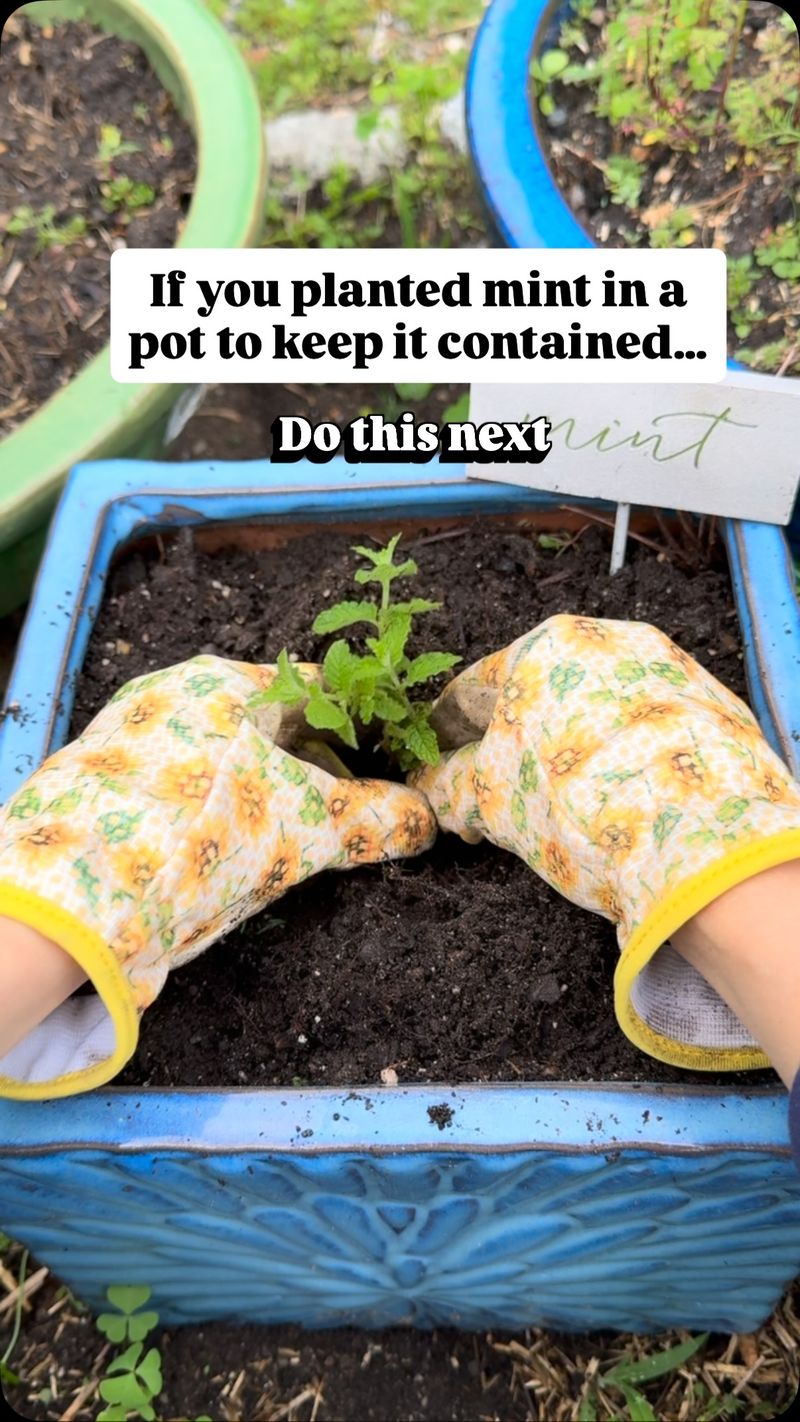
Mint planted directly in a garden bed is a commitment you may regret by midsummer. It spreads by underground runners and can take over surrounding plants faster than most Texas gardeners expect.
A container solves that problem cleanly: the pot keeps the roots where you want them, and you can move the plant to shade during the worst heat or bring it closer to the door when you want the fragrance nearby.
Texas A&M AgriLife’s container gardening guidance confirms that pots work well on patios, doorsteps, and small outdoor spaces, and spearmint fits that format naturally. Choose a pot with drainage holes, because mint sitting in waterlogged soil will rot at the roots.
A container at least eight to ten inches wide gives the plant room to fill out without becoming cramped.
Texas heat is the main management challenge. Containers dry out much faster than in-ground beds, especially on a south- or west-facing porch where afternoon sun can bake a small pot in hours.
Check the soil moisture every day or two during summer and water when the top inch feels dry. Texas A&M notes that spearmint is the more manageable mint for Texas conditions, but that does not mean it runs without attention.
A stressed, wilted plant produces less fragrance and less of whatever benefit you hoped to get from it in the first place. Consistent watering and a spot with morning sun and afternoon shade will keep a spearmint container performing through the long Texas growing season.
Use the pot as porch décor, not as an evidence-based pest barrier
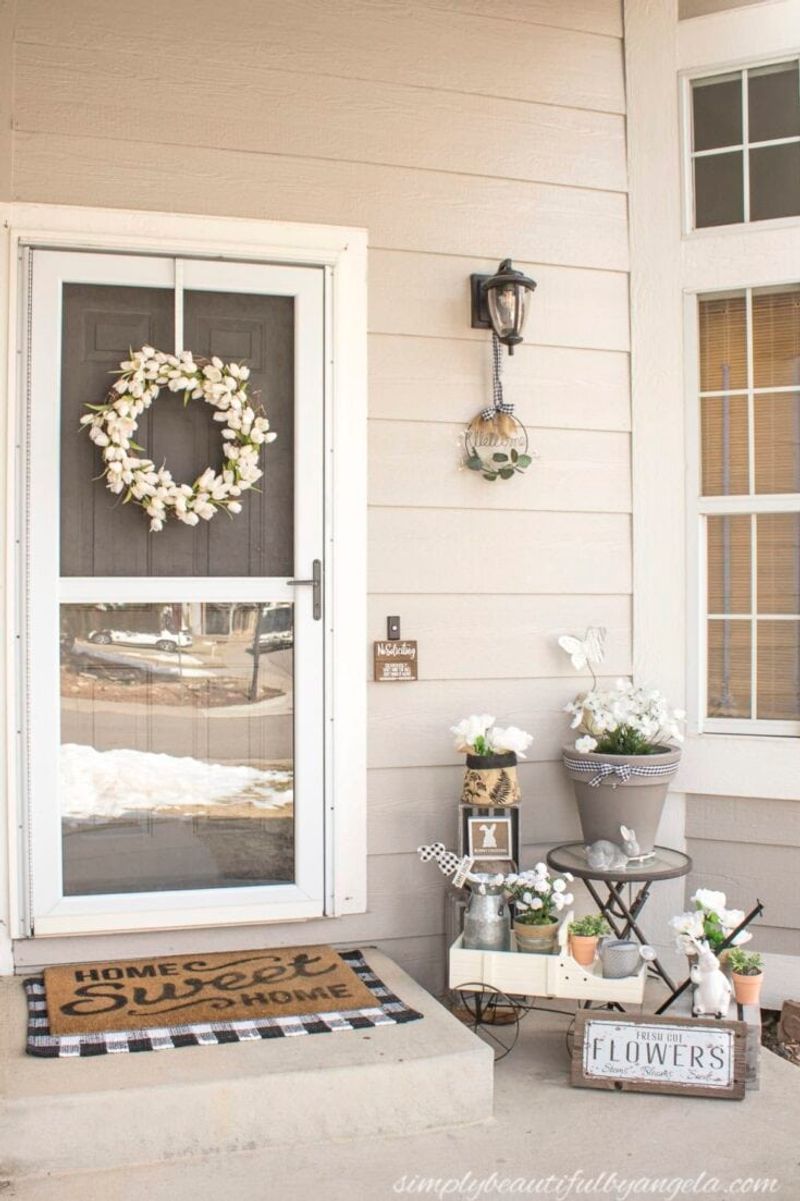
Placing a spearmint pot near your front door is a reasonable container-gardening choice. The plant looks tidy, smells good when someone walks past, and gives the entry a lived-in, cared-for feel.
Those are genuine benefits worth having, and they do not require any pest-deterrence claim to justify the pot’s spot on the porch.
What the evidence does not support is treating placement as a scientifically established pest-control technique. No research has identified an effective distance, orientation, or number of plants that reliably deters rats or cockroaches from approaching a home.
WSU Extension’s companion-planting review found that volatile compounds disperse too quickly outdoors to maintain pest-influencing concentrations across even a short distance. Moving the pot one foot closer to the door or adding a second container does not change that dynamic in any measurable way.
A healthy mint plant may produce a noticeable fragrance right at the pot. Whether that scent reaches a gap under the door, a crack in the foundation, or a screen with a torn corner at any useful concentration is a different question, and the answer is almost certainly no in breezy or warm conditions.
Texas A&M container gardening resources treat porch pots as a practical growing format, not as a pest-management strategy. Follow that framing and the plant earns its place on looks and fragrance alone.
Adding pots as a workaround for unrepaired gaps or unsanitary conditions around the entry will not close the gap or clean up the attractant, and it will not stop a determined pest from finding its way inside.
For rats, exclusion beats any porch scent
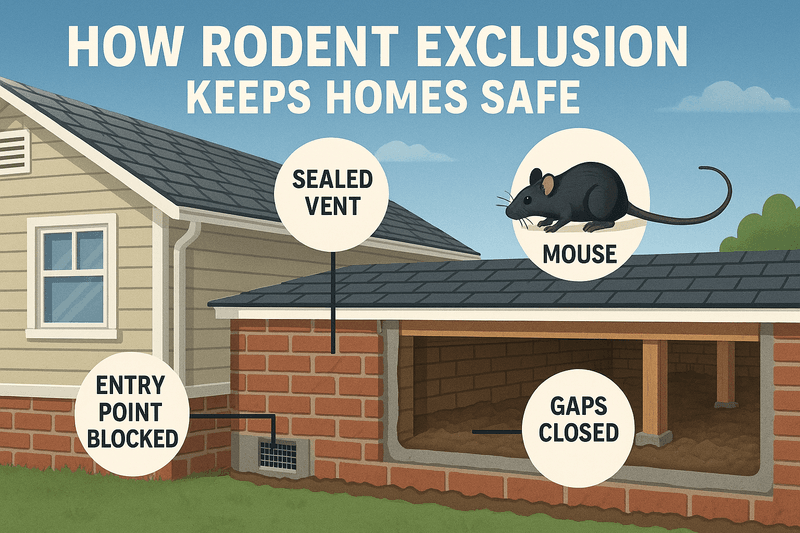
Rats are practical animals. They follow food, water, warmth, and shelter, and a scent near the porch does not change the calculation when those resources are available inside or around the home.
UC IPM’s rat management guidance states plainly that rats may initially avoid some odors, but no repellent has been shown to solve a rat problem for more than a short time. Exclusion, sanitation, trapping, and habitat reduction are the tools that produce lasting results.
Start with a thorough inspection of the exterior. Check where utility lines enter the building, look at the base of doors and garage doors, examine foundation vents, and run your hand along screen edges for tears or gaps.
UC IPM recommends sealing openings larger than 1/4 inch for rat exclusion, using hardware cloth, sheet metal, or cement for larger repairs and steel wool with caulk for smaller ones. As a separate benchmark, CDC guidance on sealing up to prevent rodents cites a 1/4-inch opening as the threshold for mice, which are smaller than rats – so treat that measurement as a conservative household inspection standard rather than a confirmed rat-entry size.
Outside the structure, reduce every condition that makes your property attractive to rats. Secure garbage cans with tight-fitting lids.
Bring in pet food bowls at night and store bags in sealed containers. Pick up fallen fruit from trees and sweep up bird-feeder spillage regularly.
Move woodpiles and debris away from the house, and trim vegetation that touches or overhangs the building, since rats use branches and dense shrubs as travel routes and cover.
Clutter in sheds, garages, and along fence lines gives rats shelter and nesting material. Clearing those areas and keeping them clear removes the habitat that sustains a rat population near your home.
A spearmint pot at the door adds a pleasant scent. Sealed gaps, clean surroundings, and removed harborage actually change the conditions that bring rats to your property.
Cockroach control starts where mint cannot reach
Cockroach management in Texas requires knowing which species you are dealing with. American, Oriental, and Turkestan cockroaches typically live outdoors and wander inside through foundation cracks, porch gaps, and utility penetrations.
German and brown-banded cockroaches breed indoors and spread through infested goods or shared walls. UC IPM’s cockroach resource explains that control methods and likely entry routes differ by species, so identifying what you have shapes what you do next.
For outdoor-invading species, the entry points are the priority. UF/IFAS Extension’s cockroach management guide recommends trimming vegetation away from the home’s exterior, reducing mulch depth against the foundation, and sealing cracks and gaps in siding, around pipes, and along door and window frames.
Outdoor roaches exploit exactly the kind of sheltered, moist harborage that builds up in neglected porch areas, so clearing debris and improving drainage near the foundation removes conditions that invite them.
Inside the home, sanitation carries most of the load. Remove food debris, fix leaking pipes, reduce clutter in cabinets and storage areas, and eliminate the standing moisture that cockroaches need to survive.
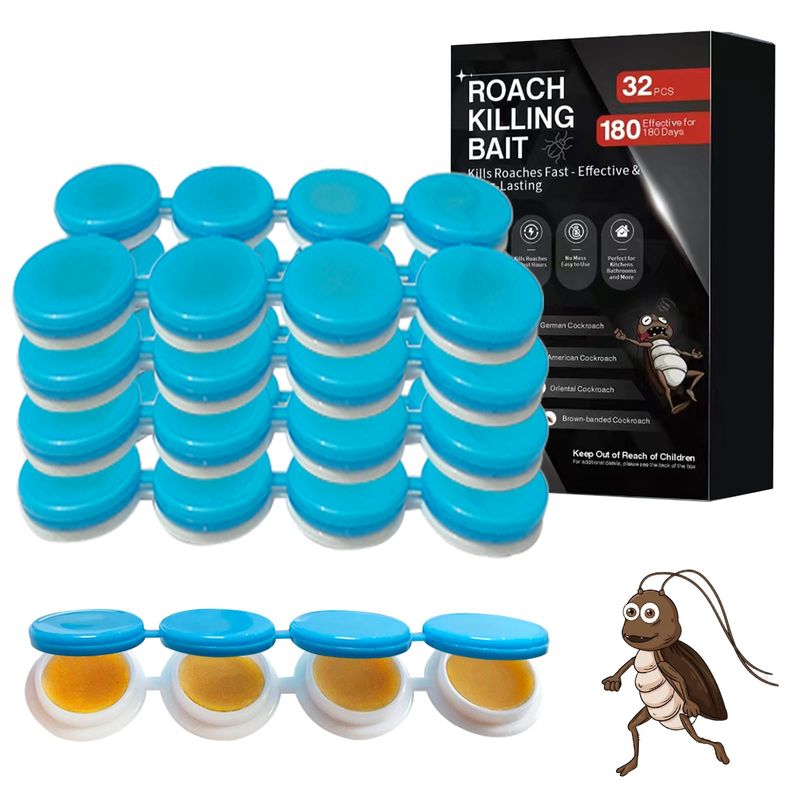
University of Maryland Extension’s cockroach guidance recommends gel baits or enclosed bait stations placed near cockroach travel routes and harborages as the most evidence-supported treatment approach. Position bait in cracks, corners, and along edges where roaches actually travel.
One practical caution: broad-area sprays can repel cockroaches away from bait stations, reducing the treatment’s effectiveness. If you use both, place bait first and keep spray applications away from those spots.
A mint plant near the porch will not reach the cracks where cockroaches shelter or the food and moisture that sustain them. Removing those resources and sealing entry points accomplishes what fragrance alone cannot.
A natural-smelling plant still deserves safety precautions
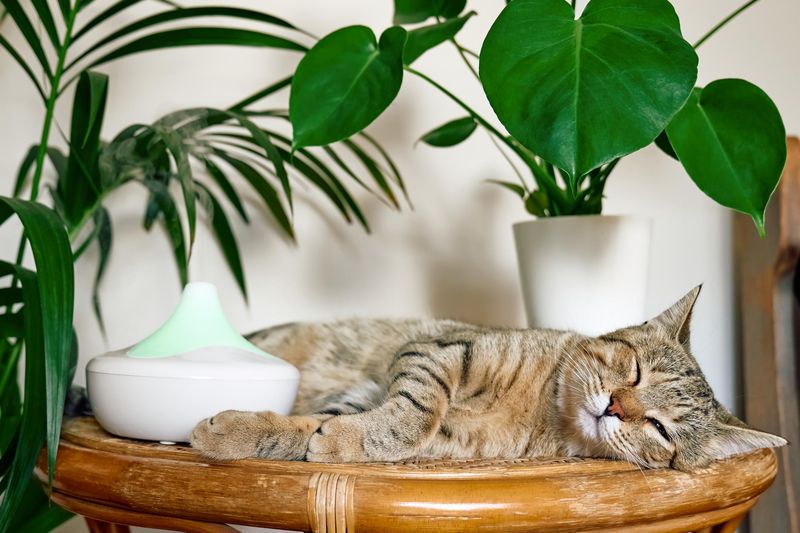
Growing a spearmint plant in a container is a low-risk gardening choice for most households. Using concentrated peppermint or spearmint essential oil around the same spaces is a different matter, and the two should not be treated as equivalent just because they share a scent.
The ASPCA’s guidance on essential oils around pets identifies concentrated mint oils as a concern for cats, dogs, and other animals, with ingestion, skin contact, and inhalation all posing potential risks. Cats are particularly vulnerable because they lack certain liver enzymes needed to process compounds found in many essential oils.
Birds and small mammals face similar concerns. If you have pets with outdoor porch access, keep the plant itself where animals cannot graze on it, and do not apply any oil preparation to surfaces, furniture, thresholds, or cotton balls in areas where pets or children spend time.
The ASPCA’s plant toxicity listing for mint notes that the plant can cause gastrointestinal upset in dogs, cats, and horses when ingested in significant amounts, with the essential oil identified as the toxic component. A pet nibbling occasionally on a leaf is a different level of exposure than an animal ingesting concentrated oil, but the plant should still be positioned with pet habits in mind.
On the broader question of “natural” products and safety, EPA guidance on pesticides and indoor air quality is consistent: natural origin does not equal low risk. Follow product labels, minimize exposure for people and animals, and keep any treated area ventilated and off-limits to pets until dry.
The potted spearmint plant stays the right recommendation here, not a homemade oil treatment applied to entry surfaces.
Let spearmint add fragrance while house defenses do the heavy lifting

Spearmint in a movable container is a genuinely good porch plant for Texas. Texas A&M’s guidance supports it as the more manageable mint choice for the region, and the fragrance near an entry is a real, pleasant benefit.
What it is not is a proven barrier against rats or cockroaches, and framing it as one sets up both the plant and the homeowner for disappointment.
The highest-value next steps are structural and behavioral, not botanical. Inspect the exterior for gaps and seal them with durable materials.
Remove food sources, secure garbage, and eliminate the shelter and moisture that sustain pest populations near the home. When cockroach or rodent signs persist, use UC IPM’s exclusion and sanitation protocols for rats and UF/IFAS-recommended cockroach management steps, including labeled baits placed near active travel routes.
If an infestation is established or rodents pose a health concern, professional help is the right call.
A well-tended spearmint pot and a well-sealed home are not competing ideas. The plant earns its place for what it actually delivers: a tidy, fragrant container that fits a Texas porch and holds up better than peppermint in the heat.
The house defenses earn their place by doing the work the plant was never meant to do.