
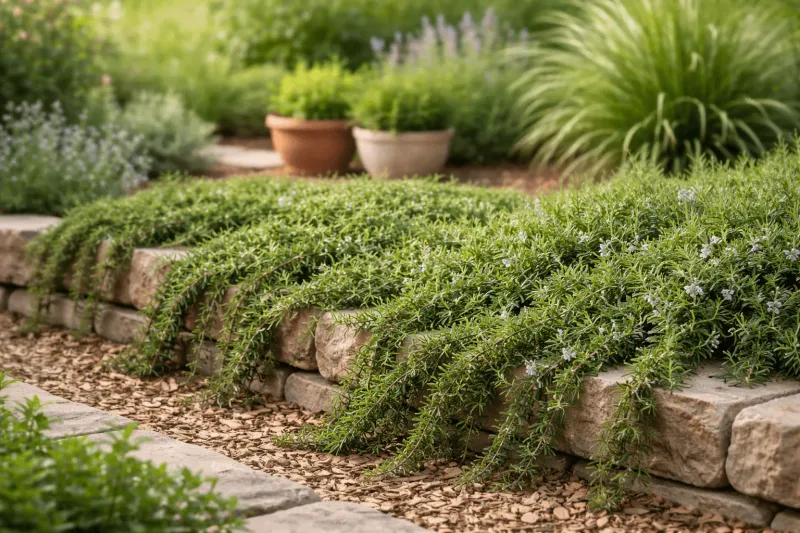
Rosemary is one of those plants that earns its spot on a Texas porch without much fuss. It handles brutal summer heat, smells great, and you can snip sprigs for dinner whenever you need them.
But if you have heard that a pot of rosemary will keep cockroaches and rats from crossing your threshold, that claim needs a closer look before you count on it.
Rosemary fits a sunny Texas porch
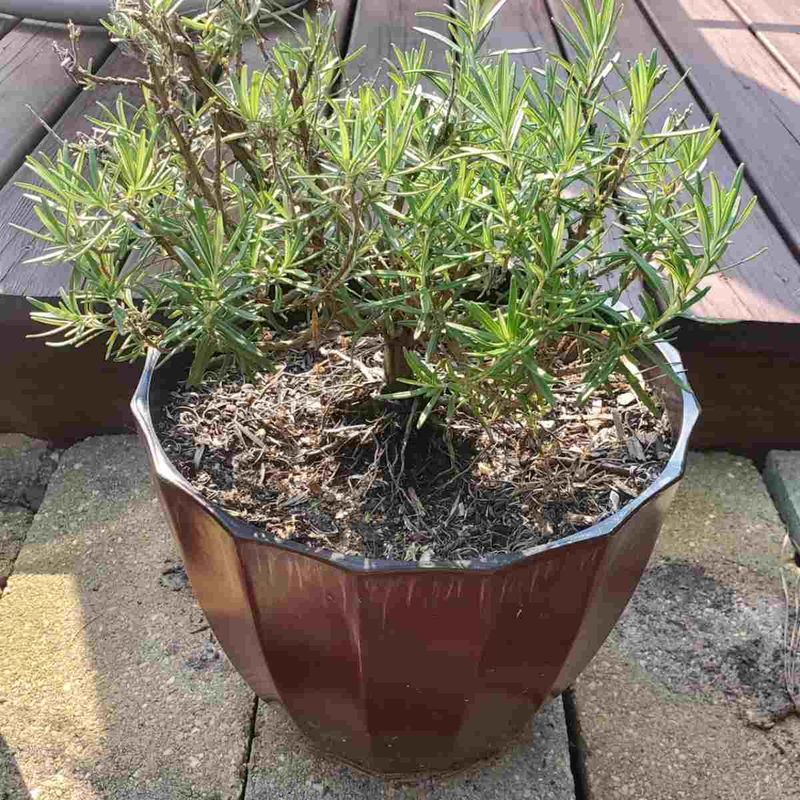
Few herbs handle a Texas summer like rosemary. While many container plants wilt by noon in July, rosemary keeps its needle-like foliage and holds its fragrance through triple-digit heat, which makes it a genuinely practical choice for a south- or west-facing porch where other plants struggle to survive.
Texas A&M AgriLife Extension recommends rosemary for Texas landscapes and containers, noting that it prefers full sun, at least six hours daily, and well-drained soil. Once established, it is drought-resistant, and in USDA Zone 7 and warmer areas that cover much of the state, it grows as a perennial rather than an annual that has to be replanted every year.
Beyond climate fit, rosemary brings real sensory appeal to an entry. Its resinous, herbal scent is pleasant for people stepping through the door, and the small blue or purple flowers that appear in late winter and spring attract bees.
The upright forms grow dense enough to anchor a porch arrangement visually, while spreading varieties can soften the edges of a large container.
Culinary value adds another reason to keep it close to the kitchen door. Fresh rosemary is easy to harvest and useful for roasted vegetables, bread, grilled meats, and infused oils.
That combination of heat tolerance, low water demand once established, year-round greenery, and kitchen usefulness is what makes rosemary worth the pot space. Its fragrance and appearance are the honest case for it, not any proven ability to stop cockroaches or rats from approaching the door.
Essential-oil studies do not prove a porch-plant effect

When people say rosemary repels cockroaches or rats, they are usually drawing on laboratory research involving concentrated essential oils. Understanding what those studies actually tested reveals why a pot on the porch is a different situation entirely.
One study of brown-banded cockroach nymphs found that rosemary oil caused 100 percent mortality at a 2.5 percent concentration after 24 hours. That sounds striking, but the experiment exposed insects to concentrated oil in a controlled chamber, not to a living plant growing in a pot outdoors.
Oregano oil, not rosemary, produced the strongest repellency in that same study. Species, concentration, formulation, and testing method all shaped the outcome.
A separate line of research tested peppermint, palmarosa, geranium, lavender, and rosemary essential oils loaded into polymeric nanoparticle formulations against German cockroaches. Nanoparticle delivery is a long way from a living rosemary plant releasing volatile compounds into open air.
Neither study measured whether a potted herb changes the number of cockroaches that cross a threshold.
Results across cockroach research are also not uniform. Older work reported that rosemary oil had little or no effect against German cockroaches under a particular repellency-testing method, while other studies report toxicity or repellency under different conditions.
The evidence is laboratory-specific and species-dependent, not settled or universal.
For rats, the picture is weaker still. A systematic review of plant secondary metabolites as rodent repellents found that while some plant compounds showed repellent effects in laboratory tests, results were inconsistent in enclosure and field conditions.
A fragrant plant sitting near a door has not been shown to change rat behavior in any meaningful or durable way outside a controlled setting.
Give rosemary the drainage and sun it needs
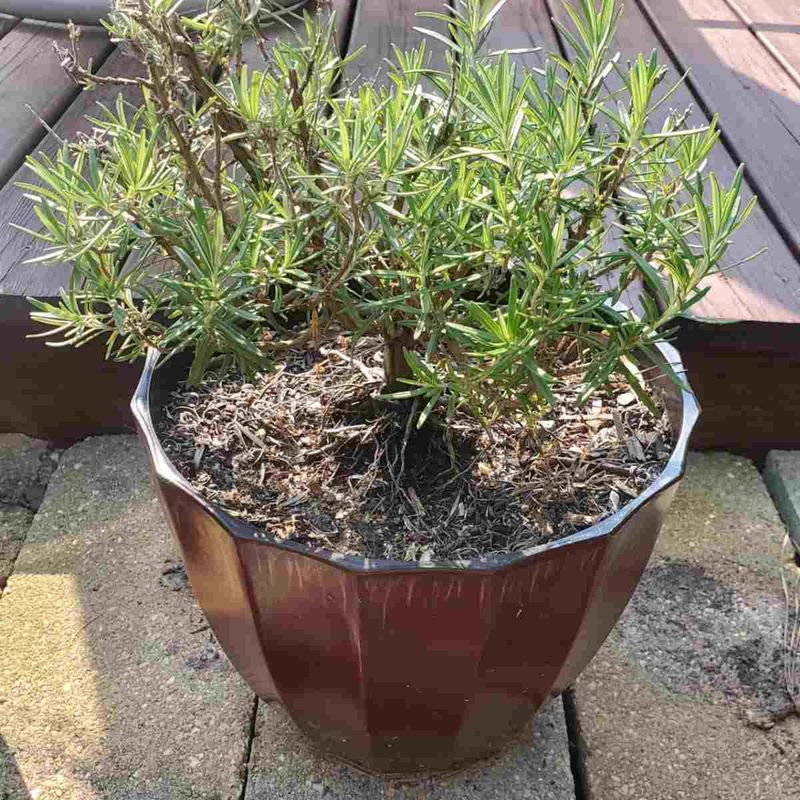
Getting rosemary established in a container comes down to two non-negotiable requirements: drainage and sunlight. A pot without adequate drainage holes will hold moisture around the roots, and rosemary roots sitting in wet soil will rot quickly, even in Texas heat.
Choose a container with at least one large drainage hole or several smaller ones, and skip the layer of gravel at the bottom, which research shows does not improve drainage and can actually raise the water table inside the pot. A coarse, well-draining potting mix, or a standard mix amended with perlite or coarse sand, gives roots the air they need between waterings.
Texas A&M AgriLife Extension specifies full sun and well-drained soil as the two baseline requirements for healthy rosemary growth.
Place the pot where it receives at least six hours of direct sun daily. A south- or east-facing porch position works well for most Texas locations.
Water deeply when the top inch of soil is dry, then allow the soil to dry out before watering again. Overwatering is a more common problem than underwatering with rosemary.
Container growing also gives you flexibility during cold snaps. Texas A&M notes that container roots are more vulnerable to freezing temperatures than roots in the ground, so moving a valuable rosemary plant to a garage or sheltered location during a hard freeze protects your investment.
That portability is a real advantage in the zones where February ice events can surprise gardeners.
Several varieties perform reliably in Texas conditions. ‘Arp’ is a well-known cold-hardy upright variety suited to northern Texas. ‘Prostratus’ spreads low and works well along container edges. ‘Pine Scented,’ ‘Spice Islands,’ and ‘Blue Boy’ offer different heights and growth habits, so match the form to your container size and how you plan to use the herb, whether for culinary harvesting from an upright stem or as a trailing accent in a wider planter.
Keep the entry attractive without adding shelter

Positioning the rosemary pot thoughtfully matters more for pest prevention than the plant’s fragrance ever will. A container that sits directly against the foundation wall, holds water in its saucer, or gets surrounded by porch clutter can quietly create the moisture and shelter conditions that pests look for, regardless of how good the plant smells.
Keep the saucer dry. Empty it after rain or after watering so standing water does not accumulate.
EPA guidance on smart pest control identifies standing water, leaks, and shelter sources as the conditions that support pest activity around a home. A wet saucer under a porch pot is a small but real example of exactly that kind of condition.
UC IPM recommends maintaining practical separation between dense vegetation and building walls where feasible, rather than pressing plants against the structure. A rosemary pot placed a few inches away from the wall, or elevated on a plant stand, avoids creating a sheltered, dark gap between the container and the foundation that could attract insects or rodents.
Reduce clutter on the porch itself. Stacked pots, old doormats, cardboard boxes, or bags of soil left on the porch create harborage that cockroaches and rodents will use.
The rosemary plant adds fragrance and a clean visual anchor at the entry, but that benefit disappears if the surrounding space becomes disorganized. Keeping the porch swept, uncluttered, and dry does more for pest prevention than any plant placement strategy.
The pot earns its spot through appearance and utility, not through any gap-sealing or scent-blocking function it cannot actually perform.
Close the conditions that support cockroaches

Cockroaches come inside because a home offers food, water, shelter, or a gap they can slip through. Addressing those conditions directly is what actually reduces cockroach pressure at the entry, and a rosemary pot plays no structural role in that process.
Start with food and water. Store dry goods in sealed containers, cover trash cans with tight lids, and clean up crumbs and grease from countertops and stovetops regularly.
Fix dripping faucets and leaking pipes under sinks, since cockroaches are drawn to moisture as reliably as they are to food. Reducing both sources cuts the attraction before cockroaches reach the door.
Seal the physical routes they use. UC IPM recommends closing cracks around baseboards, cabinets, and pipes, and installing door sweeps or weather stripping on exterior doors where gaps are visible.
American cockroaches, one of the most common large species in Texas, often enter through gaps around plumbing, weep holes, or doors that do not close tightly. Those are mechanical problems with mechanical solutions.
Sticky monitoring traps placed along walls near the door and in kitchen and bathroom corners help you understand where cockroach activity is concentrated. That information tells you where to focus your sealing and cleaning efforts rather than guessing.
For an established infestation, UC IPM generally favors gel bait or prefilled bait stations over sprays when sanitation and exclusion are also in place. Bait works by attracting cockroaches to a slow-acting insecticide they carry back to harborage areas.
Correct placement matters: bait should go in small amounts near cockroach activity, in cracks and corners, not on open surfaces. Always follow label directions, and keep bait products away from children and pets.
Rosemary belongs on the porch for its fragrance and culinary use; the sealing, cleaning, and baiting work belongs on this checklist.
Block the routes rats actually use
Rats are not deterred by fragrance in any reliable, lasting way. Their behavior is driven by access to food, water, shelter, and established travel routes.
A rosemary pot at the front door cannot address any of those drivers, and it has no effect on the routes rats actually use to enter a building.
Roof rats, common in Texas cities, climb. They use tree branches overhanging rooflines, utility lines, and vines on walls to reach attics, soffits, and wall voids.
Norway rats burrow and tend to stay near ground level, using gaps in foundations, plumbing penetrations, and crawl spaces. A container sitting at the front door does not intersect with either of those entry strategies.
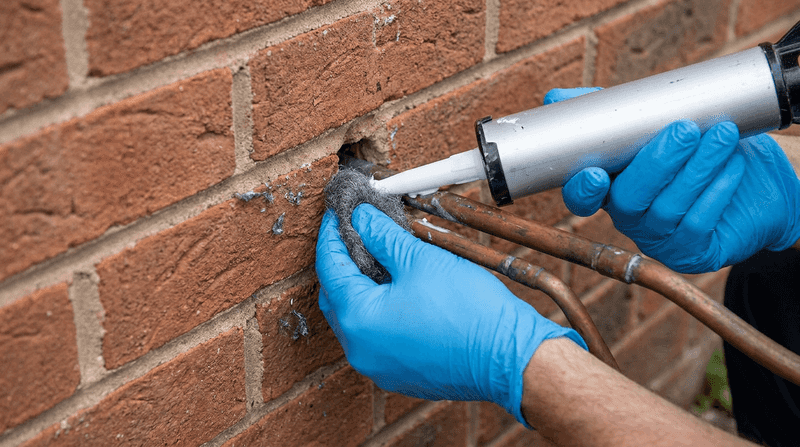
CDC guidance on sealing out rodents directs homeowners to inspect gaps around foundations, doors, windows, pipes, eaves, soffits, vents, and utility lines. Openings smaller than a quarter inch can be sealed with steel wool and caulk; larger gaps require metal sheeting, hardware cloth, cement, or other materials rats cannot chew through.
That physical work is the foundation of rat exclusion.
UC IPM adds that removing food sources matters just as much as sealing gaps. Pick up fallen fruit promptly, bring outdoor pet food inside at night, secure compost and garbage in rat-proof containers, and fix leaking outdoor faucets.
Thin dense vegetation and, where practical, keep shrubs and plants at least two feet from building walls so rats have less cover near the structure. Odor-based repellents, including plant scents, have not been shown to solve a rat problem for more than a very short time, so they should not substitute for any of these steps.
If rodenticides become necessary, use only tamper-resistant bait stations placed according to the product label, away from areas accessible to children, pets, and wildlife. Rodenticides are toxic to nontarget animals, and secondary poisoning of owls, hawks, and pets is a documented risk when products are misused.
EPA recommends integrated pest management and limiting pesticide use to situations where it is genuinely needed and correctly applied.
Grow rosemary for the porch, not as a pest promise
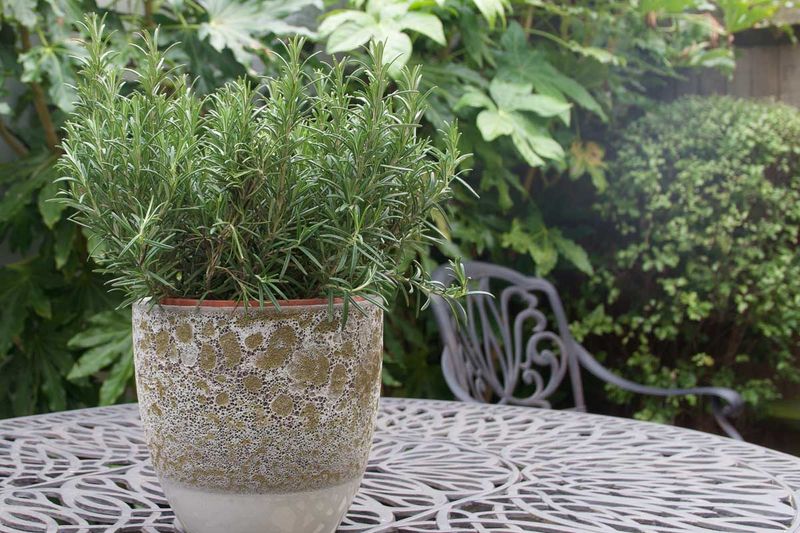
Rosemary is a genuinely good choice for a sunny Texas porch container. Texas A&M AgriLife Extension confirms it handles heat, prefers full sun and well-drained soil, and grows as a perennial across much of the state.
Its fragrance, culinary usefulness, and clean upright or spreading form make it worth the container space on its own merits.
What the cited research does not show is that a living rosemary plant discourages cockroaches or rats from approaching a door. The cockroach studies tested concentrated essential oils in laboratory conditions, and results varied by species, concentration, and method.
Practical cockroach prevention comes from sealing entry points, eliminating food and moisture, reducing clutter, and using baits correctly when an infestation takes hold. Rat control depends on structural exclusion, food-source removal, vegetation management, and population control, not on what you plant near the door.
The order of operations is straightforward: grow rosemary in full sun with fast-draining soil, keep the saucer dry and the pot clear of the wall, seal gaps around doors and utilities, remove food and water sources that attract pests, use sticky traps to monitor activity, and call in appropriate pest control when an infestation or active rodent route persists. The rosemary adds something real to the porch.
The work on the checklist is what keeps pests from coming inside.