
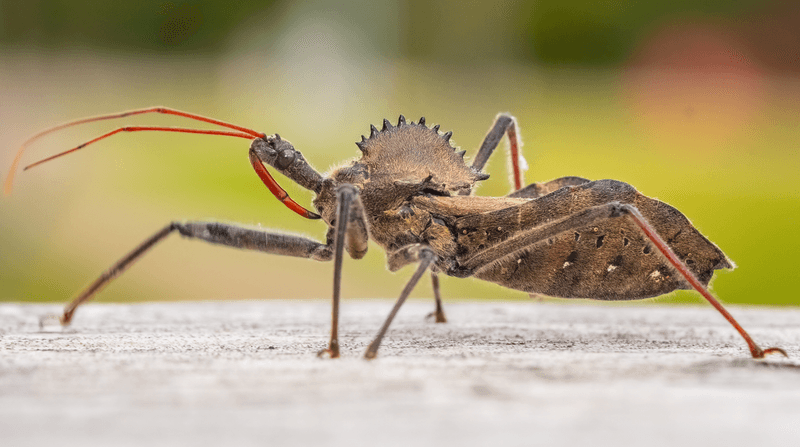
A big, cone-nosed insect crawling near your porch light can make anyone stop in their tracks. In Central Texas, that visitor could be a harmless-looking-but-feisty wheel bug, or it could be something you want to handle with care.
A few simple body clues can help you sort out what you are looking at. Knowing them can save you worry, and it can save a useful garden predator from a flip-flop.
An adult wheel bug’s crest is the quickest clue
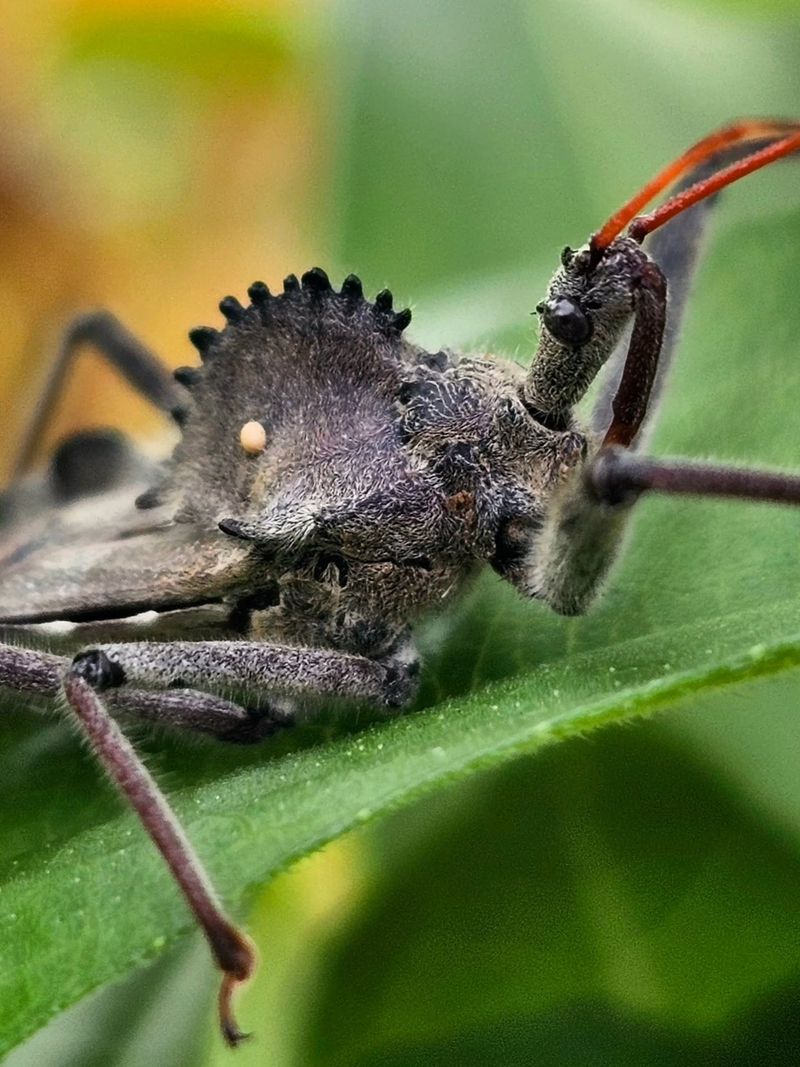
Picture a gray-to-dark-brown insect, roughly an inch or more long, with a raised, toothed half-circle on its upper back. That cog-like crest is the signature of an adult wheel bug, and it is the fastest first check you can make.
Texas A&M’s field guide describes this crest as the feature that gives the insect its name.
Look at the body outline from the side if you can do it safely. The crest rises above the thorax like a small gear, and it stands out against a bulky, slightly rough-looking body.
The head is narrow, with a beak tucked beneath it for catching prey.
A strong crest is a good sign, but it does not make a porch sighting a closed case. A quick glance at night, a bug flying past a light, or a photo taken from far away can hide the very detail you need.
Where the insect was found tells you very little, because several insects wander onto porches in Texas.
Give yourself a few seconds of calm observation from a distance. Snap a sharp photo from the side and from above if the bug sits still.
Keep your hands off, since Texas A&M Extension notes that wheel bugs can deliver a very painful defensive bite. A photo gives you something to compare against the later sections of this guide.
How does a kissing bug look different?
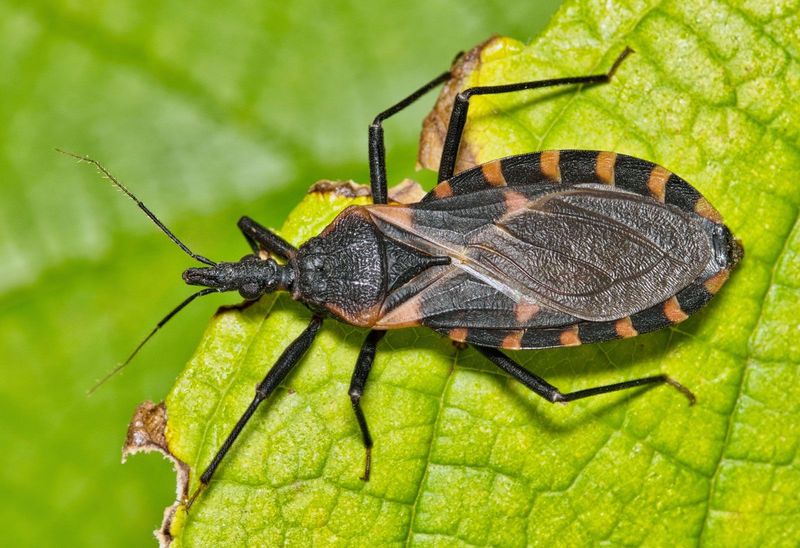
Kissing bugs do not have the wheel crest at all. Their backs look smoother, and their overall shape is more narrow and flattened than a wheel bug’s chunky outline.
Think of the crest as the first thing to look for and its absence as a reason to keep checking.
Next, compare the head and legs. Kissing bugs typically have a long, narrow, cone-like head and thin legs, and the body is usually dark.
Many species show orange, red, or yellow edging along the sides of the abdomen, which Texas A&M’s identification sheet uses as a helpful clue.
Color is where people get tripped up. Some Texas and western U.S. species may be completely brown, with no stripes to point to.
A missing stripe therefore does not clear an insect, and a stripe alone does not convict it.
Use several features together: no crest, a narrow cone-shaped head, thin legs, a dark body, and possible edging on the abdomen. Even then, treat this as a screening check rather than a final answer.
Texas A&M Extension points out that kissing bug identification takes a closer look than a quick glance, and lookalikes are common.
When the features do not line up cleanly, a photo is your best tool for getting a second opinion.
A missing crest does not identify a young bug
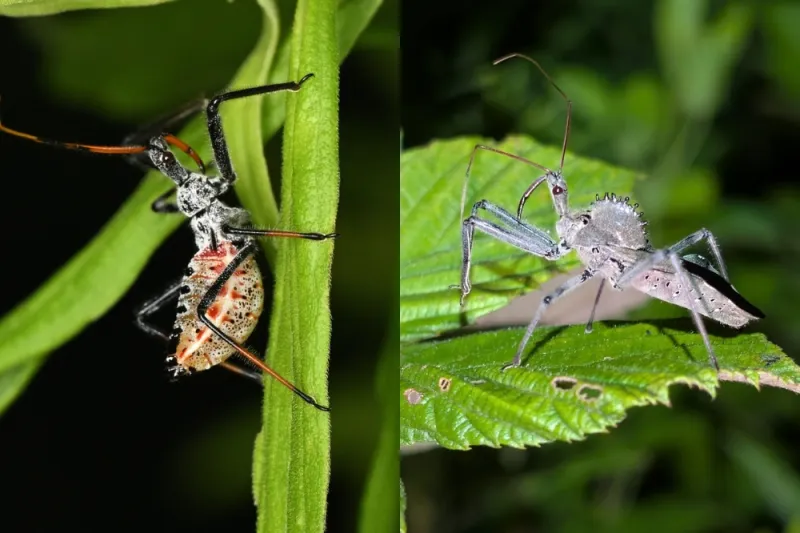
Here is the catch with the crest check: it works on adults. Young wheel bugs, called nymphs, do not have the wheel-shaped crest yet, as University of Florida IFAS Extension explains in its wheel bug profile.
A small bug with a smooth back could be a baby wheel bug.
Kissing bug nymphs add to the confusion because they are wingless too. The Texas DSHS guide covers the life stages of kissing bugs, and it shows how different a young insect can look from an adult.
So a small, wingless insect without a wheel should not be labeled a kissing bug just because the crest is absent. It also should not be dismissed as harmless on a hunch.
The honest answer is that it needs a closer look.
Take a clear, sharp photo with something for scale, like a coin placed nearby. Shoot from above and from the side, and keep your hands away from the insect.
Then send it in using the steps on Texas A&M’s Found a Bug page, or ask your county extension office.
An expert can tell you in minutes what a guess might get wrong for days.
Wheel bugs are predators, not guaranteed pest control
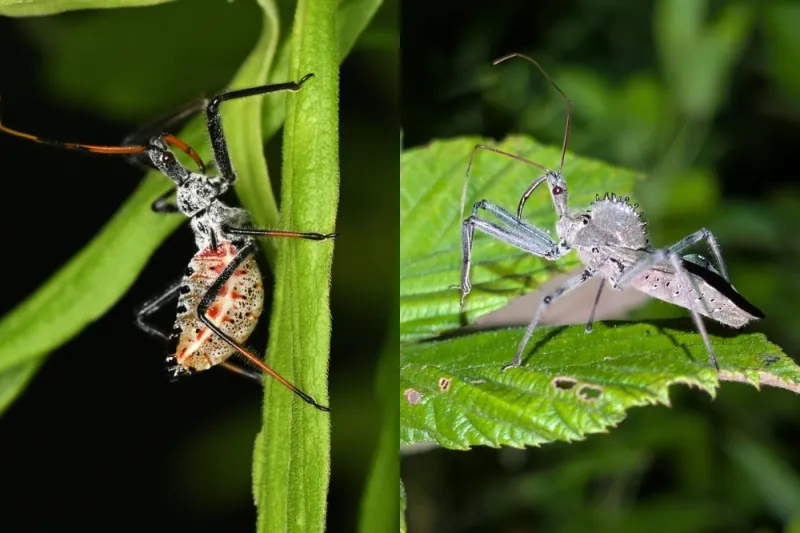
Wheel bugs hunt other insects, and that is where the garden-ally idea comes from. Texas A&M’s field guide lists a wide menu that includes caterpillars and other bugs.
A wheel bug on your tomatoes may be helping, at least a little.
Still, it is a generalist, which means it eats what it can catch. That can include bees and lady beetles, so the benefit comes with a trade-off.
Calling it a pest-control tool would promise more than it can deliver.
Numbers matter too. Texas A&M Extension describes wheel bugs as generally uncommon and says they do not warrant control.
Routine insecticide sprays are generally unnecessary, and spraying could hit the wider crowd of helpful insects in your beds.
The practical move is simple: let a confirmed wheel bug do its work and keep your distance. These insects defend themselves with a very painful bite, so do not pick one up, even to relocate it.
If a bite happens, wash the site and apply an antiseptic, as Texas A&M advises. Seek urgent medical attention for signs of a severe allergic reaction, such as trouble breathing, hives, or swelling that spreads beyond the bite.
Treat the wheel bug like a neighbor with sharp elbows: welcome, but give it room.
If you suspect a kissing bug, use a barrier and save a photo
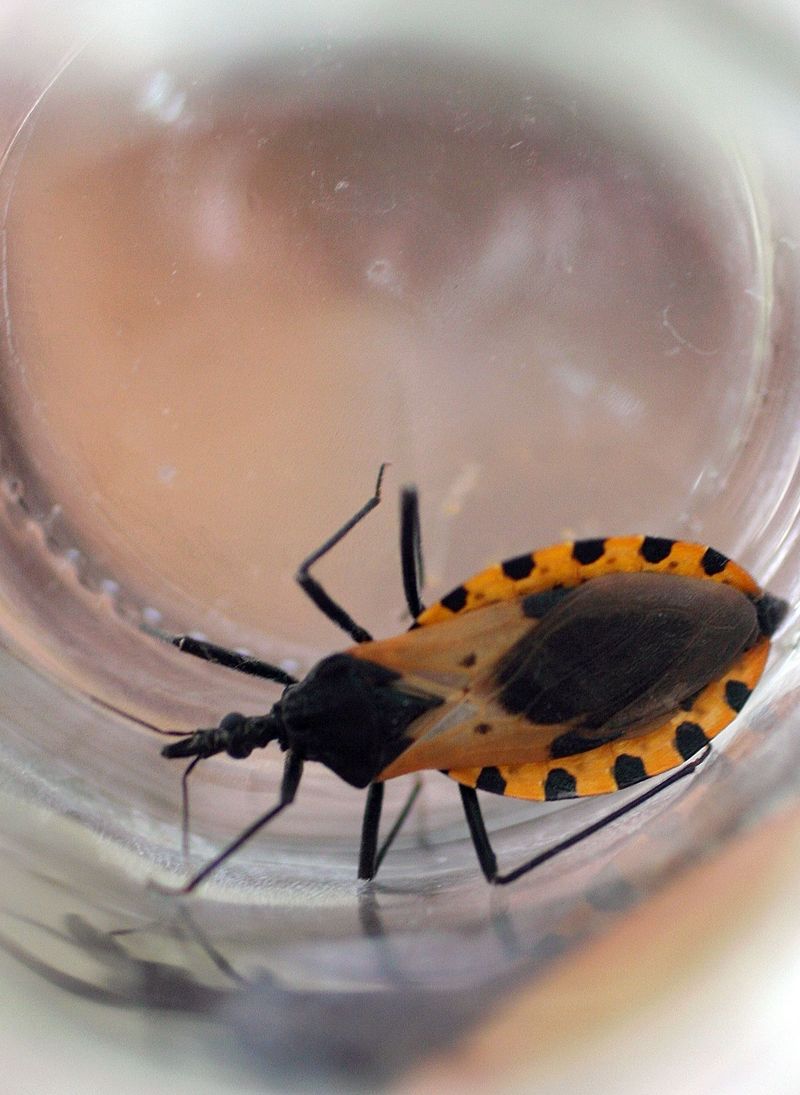
Suppose the bug on your porch has a narrow head, thin legs, and no crest. Your next steps are calm and simple.
Do not touch it with bare hands, and do not crush it.
Start with a photograph, taken from a safe distance. If you want to collect the insect, Texas A&M’s Found a Bug page advises using a barrier such as a glove or a small plastic bag, then placing the bug in a closed container.
Write down where and when you found it, such as the porch, a doorway, or a dog kennel. Also note whether anyone may have been bitten.
Those details help experts understand the situation.
Next, send your photo to Texas A&M for identification. A picture often settles the question without anyone mailing a specimen, and it may show that your visitor was a harmless lookalike.
Testing is a separate matter. Texas DSHS specimen testing is limited to confirmed triatomines associated with human exposure, so it does not accept every bug found on a porch.
Keep the closed container somewhere safe, such as the refrigerator or a sealed spot away from children and pets, until you get guidance.
A kissing bug sighting or bite does not establish Chagas disease
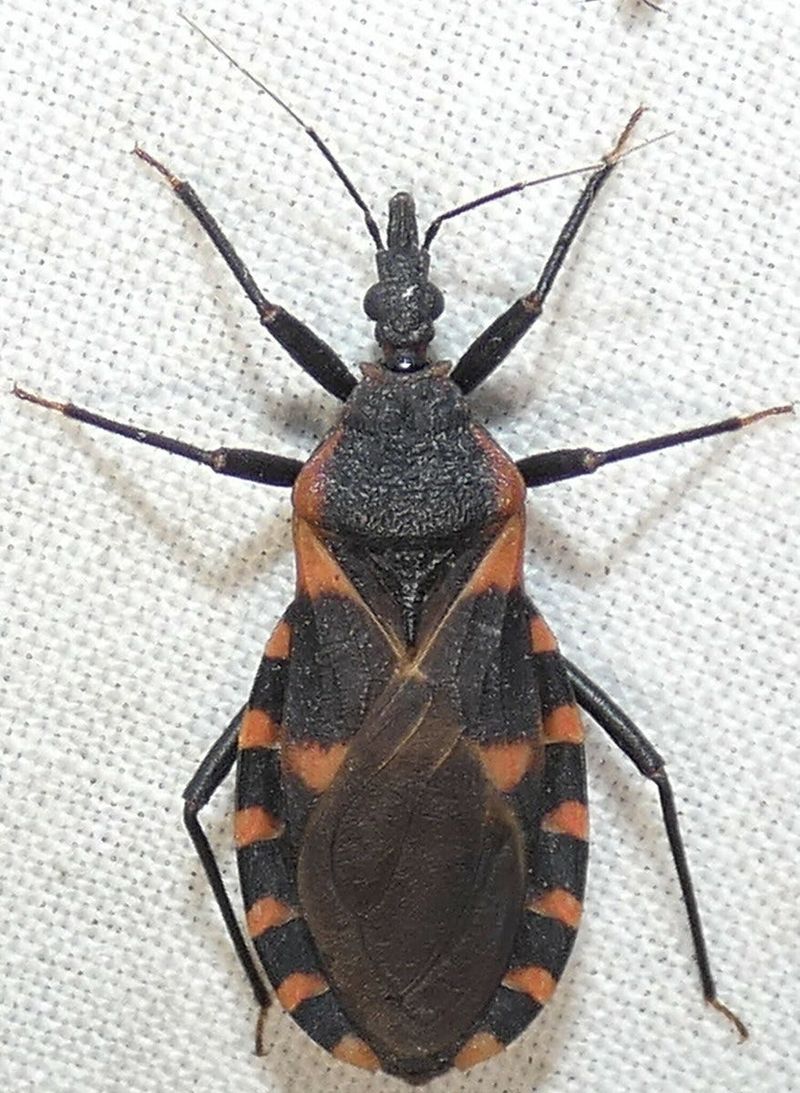
Worry about Chagas disease is understandable, so here is how it actually works. Transmission typically happens when feces from an infected kissing bug get into a bite wound, a cut, the eyes, or the mouth.
The bite alone is not the usual route, as CDC guidance explains.
That detail matters because it separates exposure from infection. Seeing a kissing bug does not mean anyone was infected, and a bite does not prove it either.
Even a bug that tests positive for the parasite does not show that transmission took place.
Texas DSHS reports that locally acquired human cases in Texas occur but are uncommon. That is a reason for calm, not for ignoring the issue.
If you believe someone was exposed, contact a medical provider and tell them what happened. Mention the bug, the date, and any bite or contact with possible droppings.
Follow current Texas DSHS guidance as well, since the agency updates its recommendations.
Wash your hands after any cleanup and keep the suspect insect contained while you wait for advice.
A porch bug is a reason to look closely, not to panic.