
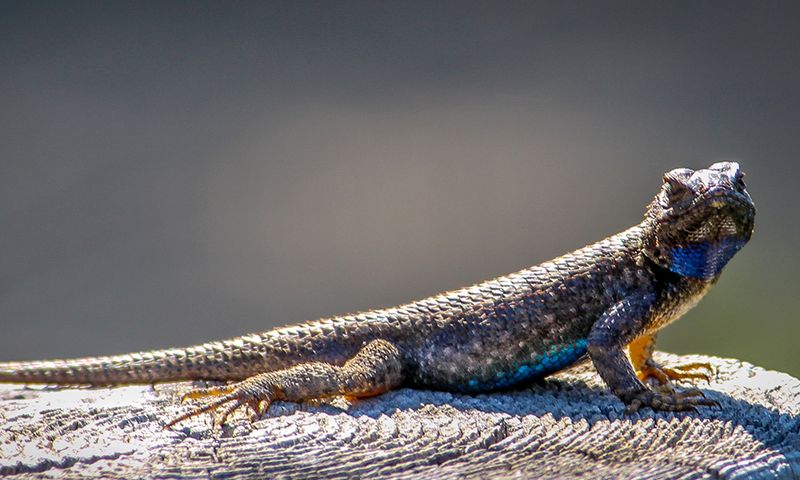
A small lizard basking on your backyard fence might be doing your garden a quiet favor. Most California homeowners recognize the blue-bellied lizard as a familiar sight, but many don’t know what it actually eats or why chasing it away can work against them. Understanding what this creature does, and what it doesn’t do, can change how you manage your yard in ways that are better for the local ecosystem and your plants.
The California “blue-belly” is usually a western fence lizard
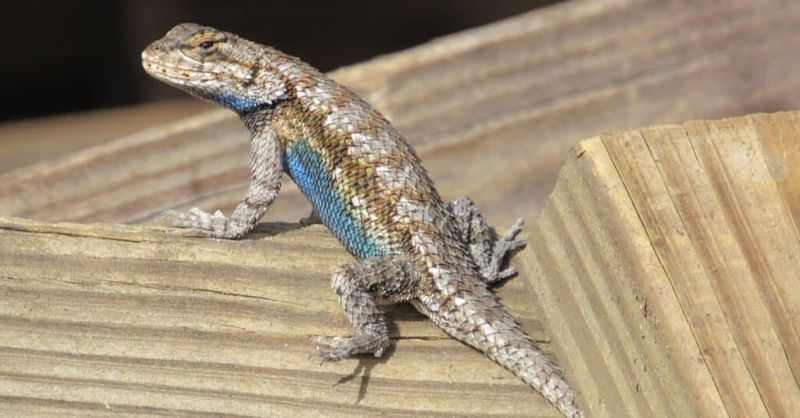
Spot a lizard doing push-ups on your garden wall and there’s a good chance you’re looking at a western fence lizard, Sceloporus occidentalis, one of California’s most commonly encountered native reptiles. Adults are typically brown, gray, or mottled with irregular patterns along their backs. Adult males display the species’ most recognizable feature: vivid blue patches on the belly and throat that flash when they bask in the sun.
These lizards favor open, sunny spots with nearby cover. Rocks, concrete walls, wooden fences, logs, and tree trunks all serve as prime basking surfaces. If you’ve seen one bobbing its head near your vegetable bed, it was probably warming up before heading out to hunt, not inspecting your tomatoes for a snack.
According to UC IPM’s guidance on California garden lizards, these animals generally cause no measurable damage to garden plants and are best left alone. That guidance matters because not every backyard lizard is a western fence lizard. California is home to several native lizard species with different appearances, behaviors, and ecological roles, so the same advice doesn’t automatically transfer to every lizard you encounter.
The California Department of Fish and Wildlife’s life-history account of the species confirms its wide distribution across the state and notes its preference for open, rocky, or wooded habitats that overlap with suburban yards and gardens. Additional natural-history detail from California Herps reinforces that the species is well adapted to human-modified landscapes, which is exactly why so many homeowners encounter it.
The practical takeaway at this stage is straightforward: if you see a lizard with a blue belly in a California yard, confirm it matches this description before deciding how to respond. An outdoor western fence lizard presents no documented threat to garden plants and is generally a resident worth keeping around.
Its benefit is one layer of natural pest predation
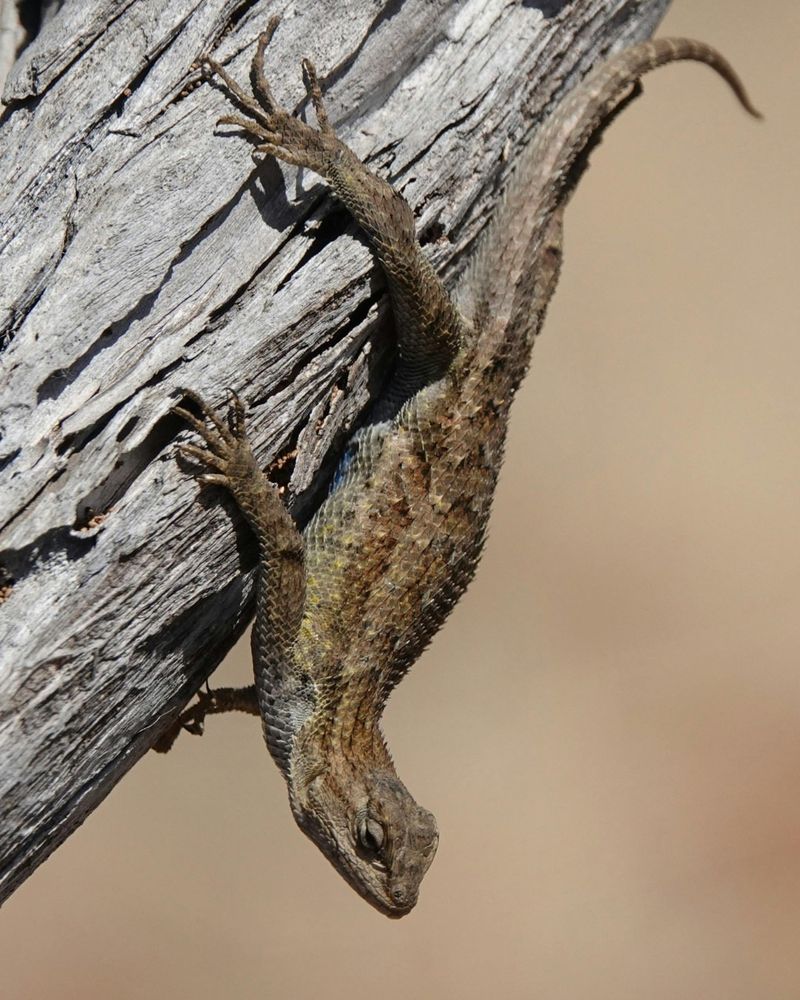
Western fence lizards are generalist insectivores, meaning they eat a wide variety of terrestrial invertebrates rather than targeting one specific pest. Their diet leans heavily toward insects, but they also take spiders, scorpions, centipedes, and isopods when opportunity arises. Ticks appear in their diet less frequently, a point worth flagging because it becomes relevant in a later section.
What that diet profile means practically is that a lizard patrolling your yard is opportunistically consuming whatever arthropods it can catch on or near the ground and on surfaces it climbs. It is not a specialist deployed against a particular pest. The CDFW life-history account describes this broad dietary range, which is useful context for setting expectations.
Research adds an important nuance. An urban agroecosystem predator-removal study found that western fence lizards did remove some experimental larvae placed in test plots, confirming an active predation role. But ants were responsible for a larger share of those removals. That result positions the lizard as one participant in a broader predator community that includes insects, birds, and other wildlife, not as the single organism responsible for keeping pests in check.
Seeing a lizard near an aphid-covered rose bush does not mean it is eating those aphids. Aphids are soft-bodied, often clustered high on plant tissue, and not a primary prey target for a ground-and-surface hunter like the western fence lizard. Translating general insectivory into a guaranteed outcome for any particular pest problem is a step the evidence does not support.
Leaving the lizard in place preserves whatever natural predation it contributes. That contribution is real, modest, and part of a functioning yard ecosystem. Expecting it to eliminate an infestation on its own sets up a disappointment that could push a homeowner toward unnecessary chemical treatment.
Why the pesticide premise needs a correction
The claim that certain pests are beyond the reach of any pesticide is not accurate, and repeating it without qualification can send homeowners in the wrong direction. Pesticides can control many common garden pests when the right product is matched to the right pest, applied at the right time, with coverage and label directions followed correctly. The problem with routine pesticide use is not that it fails to work; the problem is that it often gets applied when it isn’t needed, and the consequences for non-target organisms, including lizards, can be significant.
UC IPM’s pesticide guidance explains that calendar-based or precautionary spraying can disrupt beneficial organisms and create conditions where secondary pests emerge because their natural enemies have been eliminated. That is the real argument against reflexive pesticide use: not that chemicals are incapable of reaching pests, but that unnecessary applications cause collateral damage while solving problems that may not require treatment at all.
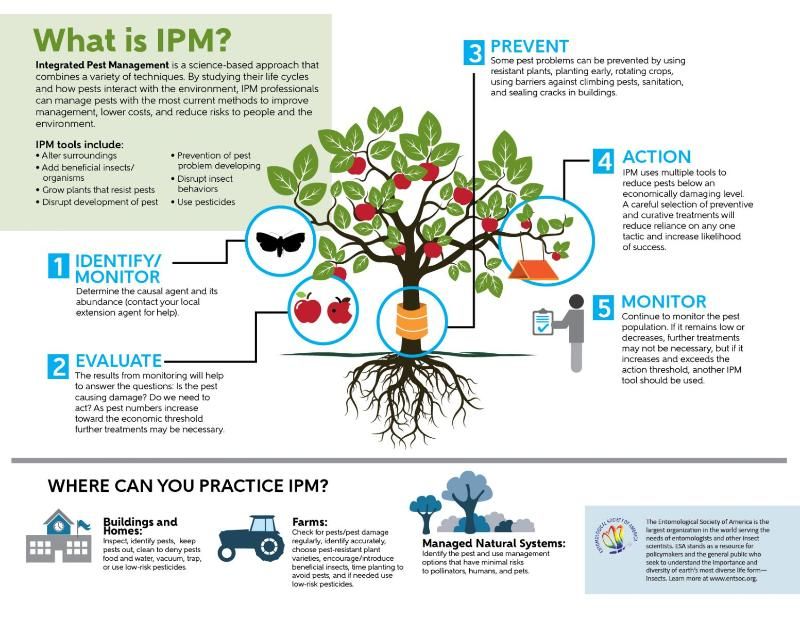
Integrated pest management, or IPM, offers a more structured path. UC IPM’s overview of the IPM approach outlines the core steps: correctly identify the organism causing the problem, monitor pest numbers and actual plant damage, determine whether damage has reached a level that justifies intervention, and then select the least disruptive effective treatment. That sequence keeps chemical use targeted and proportional.
Action thresholds are central to that process. A threshold is the point at which pest numbers or damage are high enough that doing nothing will cost more than treating. Below that threshold, monitoring and cultural controls, such as removing plant debris, adjusting irrigation, or hand-picking pests, are usually the better choice. UC IPM’s lawn insect guidance applies this logic to a common homeowner scenario, distinguishing insects that are merely present from those causing actual turf damage.
A western fence lizard fits naturally into an IPM yard because it contributes nonchemical predation without requiring any management input. The lizard is compatible with IPM, not a replacement for it.
The tick story is useful—but not simple
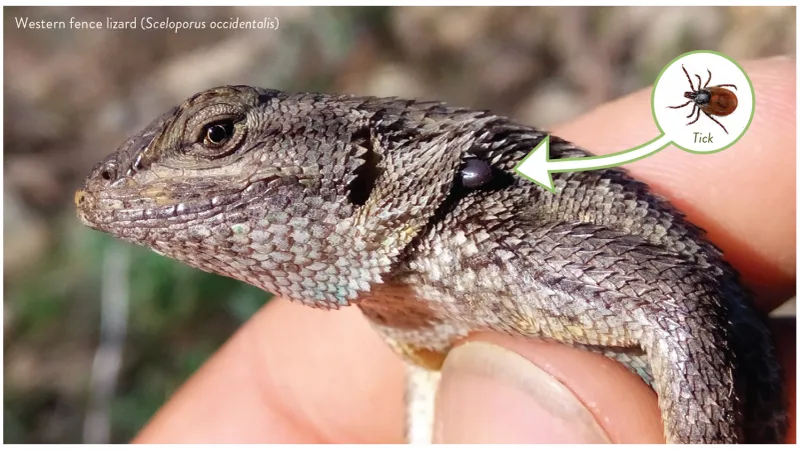
Among the ecological roles attributed to western fence lizards, the tick relationship gets the most attention, and it deserves careful explanation because the popular version oversimplifies what the research actually found. The lizard does not primarily eat ticks in a way that reduces tick populations. Its connection to tick biology runs through its blood, not its appetite.
Immature western black-legged ticks, both larvae and nymphs, commonly feed on western fence lizards. During that blood meal, something unusual happens: compounds in the lizard’s blood can eliminate Borrelia burgdorferi, the bacterium that causes Lyme disease, from the feeding tick. California public health data on tick-borne disease acknowledges this “lizard effect” as a factor that may reduce the proportion of infected ticks in some California settings.
The counterpoint matters just as much. A study on tick abundance on western fence lizards in Mendocino County documented very high tick infestation rates on individual lizards, meaning the same animals that may reduce bacterial carriage in ticks are also hosting and sustaining large numbers of immature ticks. The lizard can simultaneously lower infection prevalence in the tick population and support that population’s survival and development.
What happens when lizards are removed from an area? An experimental lizard-removal study found that most larval ticks did not successfully switch to alternative hosts after lizards were gone. Tick burdens on some rodents increased, but the following year’s nymphal tick density actually decreased. That result warns against the simple conclusion that more lizards always means fewer ticks, or that removing lizards predictably worsens Lyme risk.
The honest summary: western fence lizards play a real but complicated role in local tick biology. They are not a tick-control tool, and their presence does not make a yard safe from ticks. Standard precautions, including wearing long sleeves and pants in brushy areas, checking for ticks after outdoor time, and showering after potential exposure, remain necessary regardless of how many lizards share your yard.
Removing one can erase a native predator from the yard
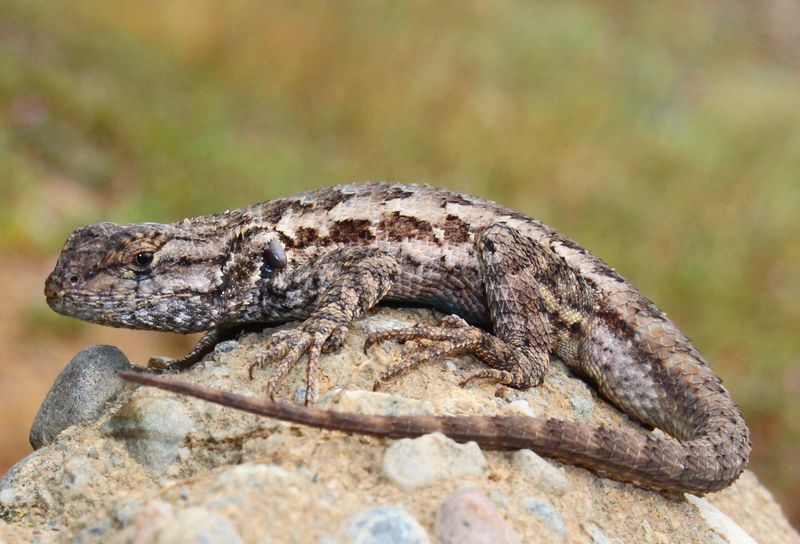
Chasing a western fence lizard out of your yard or relocating it removes one native, nonchemical predator from that specific space. That is the honest framing of what removal costs, and it is worth stating plainly without inflating the consequence into a yard-wide catastrophe.
UC IPM’s lizard guidance recommends leaving California garden lizards alone because they cause no plant damage and may contribute to natural pest control. The word “may” is doing real work there. The lizard’s contribution is real but not guaranteed to produce a measurable change in any particular pest population. The urban agroecosystem predator study showed that multiple predator types, not just lizards, share responsibility for consuming prey in a yard environment.
Removing one predator from that community reduces its diversity without predictably increasing any specific pest.
A lizard spotted near a plant is not evidence that it is controlling that plant’s pest problem. Presence and predation are different things. The lizard may be basking, thermoregulating, or hunting something entirely unrelated to the aphids on your nearby shrub. Connecting its location to a specific pest-control function requires more evidence than proximity.
According to the CDFW species account, western fence lizards are well adapted to suburban landscapes and can persist in yards with suitable basking surfaces and invertebrate prey. An outdoor lizard in that environment is filling a role it evolved to fill. The case for leaving it alone rests not on dramatic pest-control claims but on a simpler principle: it causes no documented harm to your garden, it contributes something to natural predation, and removing it eliminates a native organism from a yard that may have few enough of them already.
A lizard-friendly yard still must meet fire-safety rules
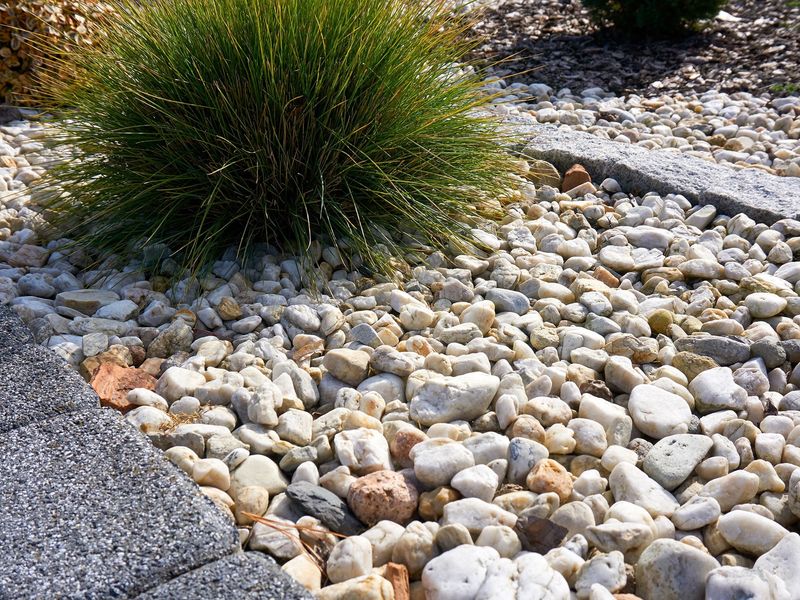
Keeping a yard hospitable to western fence lizards does not require major landscaping changes, but it does require thinking carefully about which habitat features are safe to add or keep near a California home. The lizard’s needs are modest: sunny, open surfaces for basking, and nearby cover for shelter and hunting. Many suburban yards already provide those conditions through existing rocks, concrete borders, masonry walls, and mixed plantings.
The CDFW life-history account and natural-history detail from California Herps both note that western fence lizards use rocks, walls, logs, and similar surfaces. Retaining noncombustible basking surfaces you already have, such as a stone border or a concrete block wall, is the most practical way to support lizard habitat without adding any fire risk.
Where the guidance gets complicated is around combustible cover. Woodpiles, deep dry mulch, dead vegetation, and unmanaged debris can attract lizards, but those same materials create serious wildfire hazards near structures. CAL FIRE’s defensible-space program designates the first five feet around a structure as an ember-resistant zone where combustible bark, mulch, and debris should be removed. That rule takes priority over any habitat preference.
UC ANR’s fire-smart landscape guidance reinforces the principle: the goal is a varied, structured yard that supports wildlife where local conditions allow, while keeping combustible materials managed and away from the home. Woodpiles, if you keep them, belong at a distance from structures and should be elevated and neatly stacked per fire-safety guidance, not scattered as informal lizard cover against the siding.
The practical balance is to avoid sterilizing the yard unnecessarily, preserve the noncombustible structure already there, and let lizards use what exists rather than building new habitat that conflicts with fire-safety requirements.
Respond safely when the lizard is indoors or pests need treatment

Finding a western fence lizard inside the house is less common than seeing one outdoors, but it happens, usually when a door or window is left open or when the lizard slips through a gap in weatherstripping or around a pipe. The right response is capture and release, not a pesticide application or a panicked attempt to shoo it out a window.
To capture it safely, place a container over the lizard and slide a piece of cardboard underneath, then carry it outside and release it near the area where it likely entered. UC IPM’s guidance on indoor lizards recommends exactly this approach and notes that there are no toxicants or repellents registered in California for use against lizards. Attempting to spray an indoor lizard with any pesticide product is an off-label use and is not an appropriate response. If the lizard is a species that may bite, such as an alligator lizard, wear gloves; even generally harmless lizards can puncture skin if grabbed roughly.
After releasing the lizard, seal the entry point. UC IPM recommends closing gaps of approximately one-quarter inch and larger around doors, windows, utility pipes, vents, and any other penetrations in the exterior envelope. That step prevents re-entry more reliably than any repellent.
For a confirmed pest problem in the yard, the starting point is IPM monitoring and action thresholds, not a broad spray. Identify the organism causing damage, assess whether the damage level justifies treatment, and select the narrowest effective option. UC IPM’s pesticide guidance emphasizes label compliance and targeted application over broad coverage.
Pesticide exposure is a real concern for lizards. The EPA developed the T-HERPS reptile and amphibian exposure model specifically because dietary exposure through contaminated prey, along with contact through treated soil and foliage, are recognized pathways. EPA wildlife-protection tips recommend avoiding spraying when lizards and other non-target wildlife are active nearby. Spot treatments rather than broadcast applications reduce exposure risk for the entire non-target community sharing your yard.
Keep the blue-belly, but keep expectations realistic
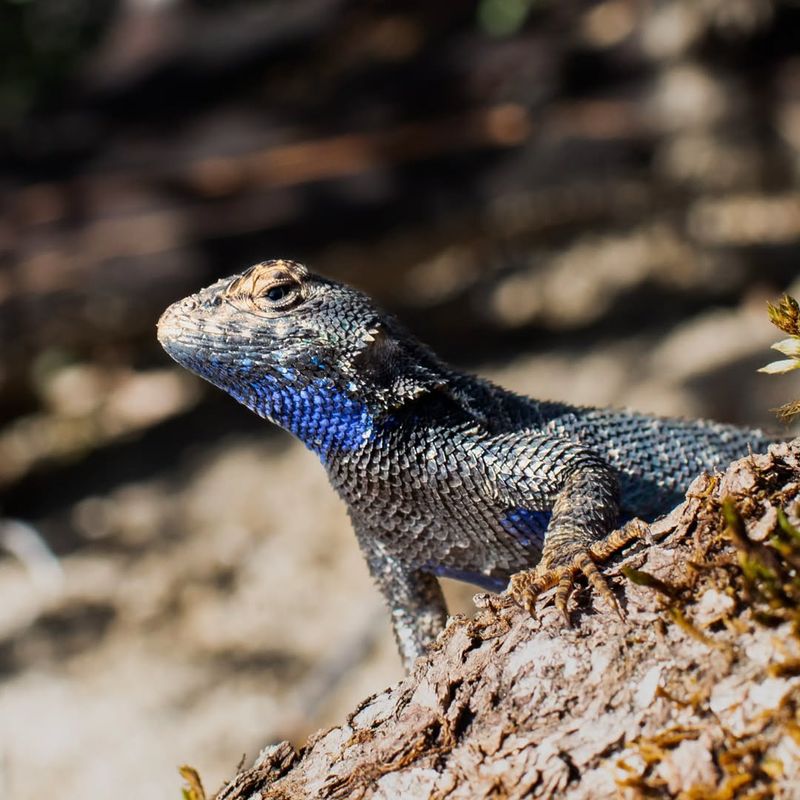
A practical decision rule for California homeowners comes down to four steps: confirm the species, leave an outdoor western fence lizard where it is, preserve suitable noncombustible habitat that already exists, and monitor actual pest damage before deciding whether treatment is warranted. UC IPM’s lizard guidance and the IPM framework together support each of those steps.
The balanced payoff is real but bounded. A western fence lizard in your yard adds native predation to your garden’s existing predator community, causes no plant damage, and costs you nothing to support beyond leaving it alone. At the same time, it cannot replace every pest-management tool, guarantee a pest-free season, or eliminate your tick risk. Human tick precautions remain necessary, and a genuine infestation still requires monitoring, thresholds, and targeted response.
Coexisting with a blue-belly is less about making a grand ecological choice and more about simply not removing something that is already working in your favor. A yard that holds a native predator, follows fire-safety rules, and applies pesticides only when the evidence supports it is a yard that is genuinely harder to improve on.