
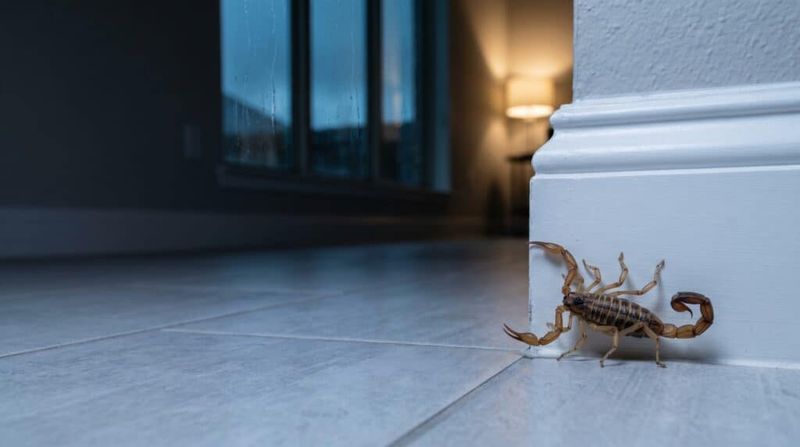
Scorpions are a fact of life across most of Texas, and plenty of homeowners spray regularly without seeing much change in how often they turn up near the house. The problem usually is not the spray itself – it is what the yard is offering scorpions that no pesticide addresses. Ordinary things like a stack of old boards, a pile of firewood against the wall, or tall grass along the foundation can give scorpions exactly what they need to stay close. Understanding what those conditions are, and how to change them, is the most practical place to start.
The yard may be offering scorpions shelter, not an invitation
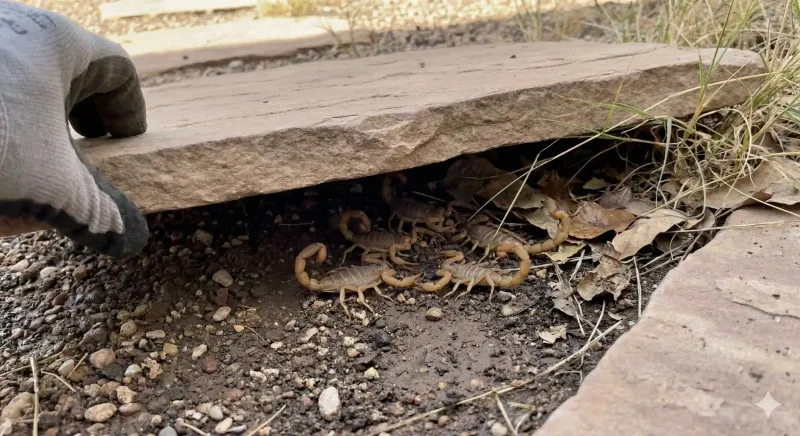
Scorpions found near a Texas home are almost always there because something in the yard or structure is giving them a place to hide, not because the yard is sending out a signal from a distance. Texas Parks and Wildlife notes that scorpions are nocturnal hunters that spend daylight hours tucked under rocks, boards, debris, and other ground-level cover. When a yard has plenty of that material close to the house, scorpions have little reason to move on.
Spraying can kill scorpions that come into direct contact with a treated surface, but it cannot reach animals that are resting in a crack, under a rock, or inside a wall void. Extension guidance on scorpion control describes chemical treatment as difficult precisely because scorpions can remain hidden for long periods. A homeowner who sprays the perimeter but leaves a pile of timber scraps against the foundation has addressed part of the problem while leaving the shelter that keeps scorpions in place.
Some species also enter homes through foundation cracks, gaps around doors and windows, and other small openings. Texas Parks and Wildlife urban wildlife guidance includes both habitat modification and exclusion as practical steps alongside chemical control. That framing matters: the goal is not to eliminate every scorpion from the surrounding environment but to remove the shelter and access routes that bring them into regular contact with people. Changing the yard conditions that support nearby shelter is worth doing even if a homeowner has already sprayed, because it addresses what pesticide alone cannot reach.
Rocks, boards, firewood, and refuse create hiding places homeowners overlook
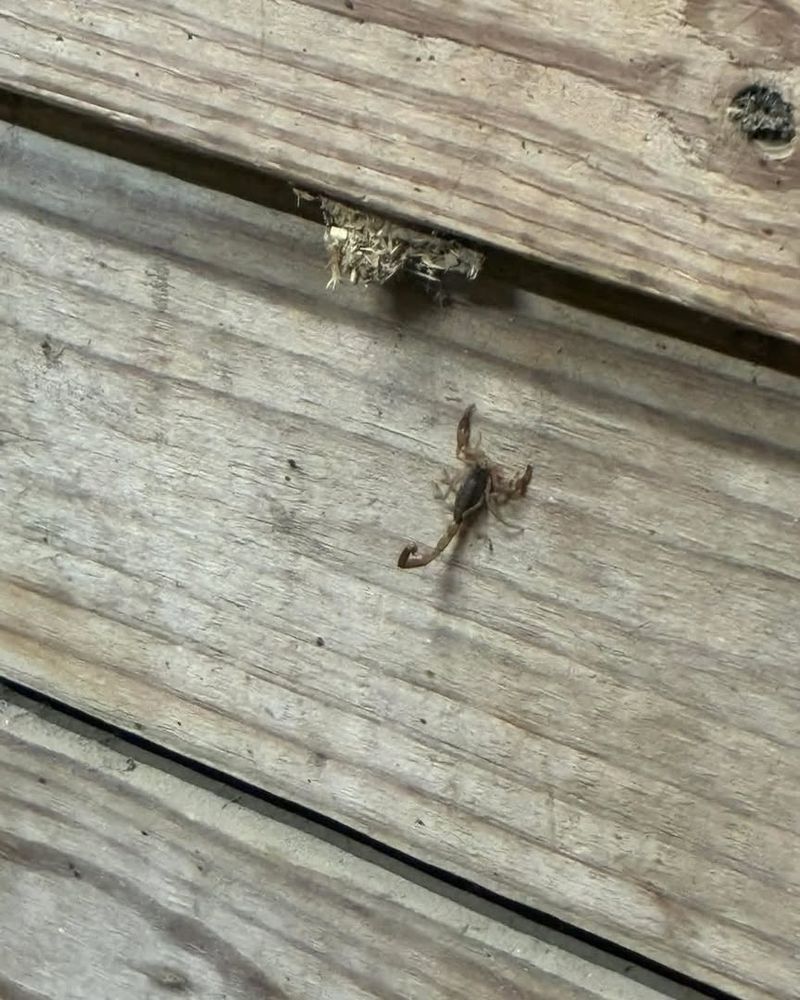
Walk any Texas yard and the usual suspects are easy to spot once you know what to look for: flat rocks left near the porch, scrap lumber from a project that never got cleaned up, broken clay pots, a tarp folded on the ground, or loose refuse along the fence line. Texas Parks and Wildlife specifically lists rocks, boards, and other litter as common scorpion hiding places, and removing them is the first practical step in reducing shelter near the home.
Firewood deserves extra attention because it combines two problems at once. A woodpile sitting on the ground next to the house provides both a sheltered daytime resting spot and a way for scorpions to travel indoors when someone grabs a few logs without checking. Texas Parks and Wildlife urban wildlife guidance recommends not bringing firewood inside until it is ready to go directly into the fire. That one habit change closes a reliable indoor entry route that no amount of perimeter spraying can stop.
CDC guidance for outdoor workers reinforces the shelter-removal approach, noting that scorpions hide under rocks and debris and that clearing those materials reduces contact risk. Extension scorpion guidance adds that any remaining materials should be stored off the ground and away from the structure where possible. For items that cannot be removed entirely, raising them on a rack or moving them to a spot farther from the home reduces the chance that a scorpion resting there will end up indoors the next time someone reaches in without looking.
Keep the house edge clear without blaming every plant
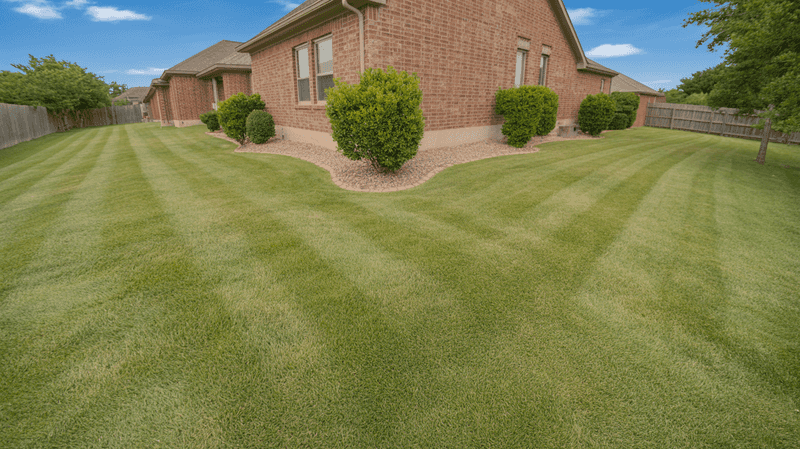
The strip of ground immediately beside a house wall is worth treating differently from the rest of the yard. Tall grass, dense leaf litter, or thick ground cover growing right against the foundation creates a sheltered corridor that connects whatever lives in the yard to the structure itself. Texas Parks and Wildlife specifically recommends keeping grass cut near the home as part of habitat modification, and reducing undisturbed, dense material along the foundation line is consistent with that guidance.
A Texas field study on scorpion microhabitat found that 20 to 25 percent of observed striped bark scorpions were on vegetation at some point during surveys. The researchers noted that it remained unclear whether those observations reflected predator avoidance, foraging behavior, response to temperature, or simply random movement. That uncertainty matters: the study does not show that native plants, shrubs, or any named landscape design inherently keeps more scorpions around. Removing a well-established native garden because of that data would be an overreaction the evidence does not support.
The practical focus is narrower than that. Trim grass and ground cover within a foot or two of the foundation so that the wall itself is exposed and visible. Move mulch, compost bins, or dense decorative material away from the house edge rather than eliminating them from the yard entirely. A yard can still have established beds, native plants, and shade trees while keeping the immediate border of the structure clear enough that scorpions do not have continuous covered ground from the lawn to the wall.
That edge management is about reducing shelter contact with the home, not redesigning the landscape.
Does watering bring scorpions closer?
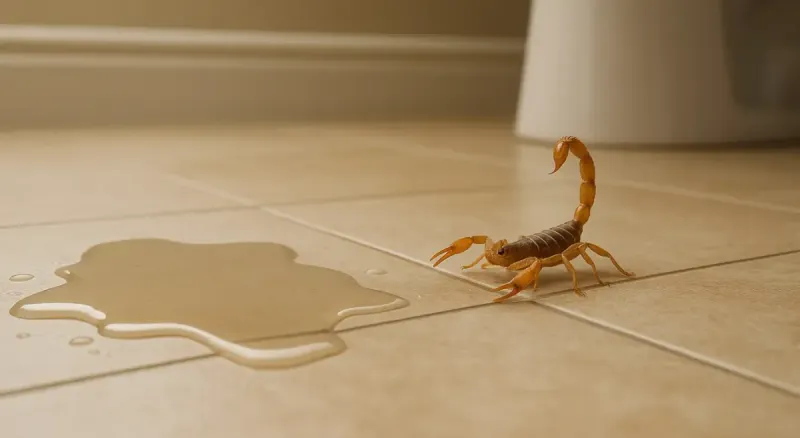
Water and scorpions come up together often enough that it is worth sorting out what the evidence actually shows. During a severe Texas drought in 2011, Texas Parks and Wildlife reported that scorpions were appearing inside homes while seeking water, which led to more sightings than usual. That is a real and documented pattern, but it describes behavior during extreme drought conditions, not a consequence of normal lawn watering.
Extension guidance notes that scorpions may occur in areas with available water, which is consistent with what Texas sources describe. What neither source establishes is that running a standard irrigation schedule on a Texas lawn will reliably pull more scorpions onto the property or cause their numbers to rise. Ordinary watering keeps a yard alive through triple-digit Texas summers, and there is no field evidence in the reviewed sources connecting that routine to a measurable increase in scorpion encounters.
The more useful context is behavioral. Scorpions are nocturnal, meaning they are most active after dark when temperatures drop and prey is moving. CDC guidance confirms that scorpions are night hunters, which is also when homeowners are most likely to spot one crossing a patio or appearing near a door. Sightings at night do not necessarily mean the population has grown; they may simply mean the scorpions that were already there are now visible.
Drought-period vigilance is reasonable. Cutting back irrigation out of scorpion concern alone is not supported by the available evidence.
Small foundation and door gaps turn a yard encounter into a house problem
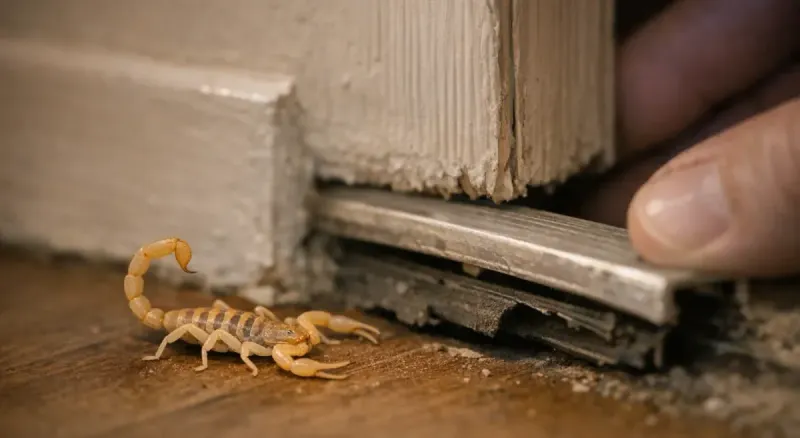
A scorpion that has shelter in the yard becomes a different kind of problem the moment it finds a way inside. Foundation cracks, gaps under exterior doors, spaces around pipe penetrations, and poorly sealed window frames are all practical entry routes. Extension guidance on scorpion exclusion identifies sealing these openings as a direct way to reduce indoor encounters, separate from anything done in the yard.
A useful inspection starts low and works up. Check the gap under every exterior door – if light is visible from inside, the seal is loose enough to let small animals through. Look along the base of the foundation for cracks wider than a pencil tip. Inspect where utility lines, pipes, and conduit enter the house, since those penetrations are often left with gaps around them.
Weatherstripping on doors and windows wears out gradually and may look intact from a distance while no longer sealing properly up close.
Texas Parks and Wildlife notes that the striped bark scorpion commonly enters homes, which means exclusion is not a theoretical concern in this state. Door sweeps, caulk along foundation cracks, and expanding foam around pipe penetrations are straightforward fixes that do not require professional help for most homeowners. Sealing the structure does not make the surrounding Texas environment scorpion-free, but it removes the routes that turn an outdoor encounter into a bedroom or kitchen problem. That separation between the yard and the interior is the practical goal of exclusion work.
Address shelter and entry routes instead of relying on spray alone
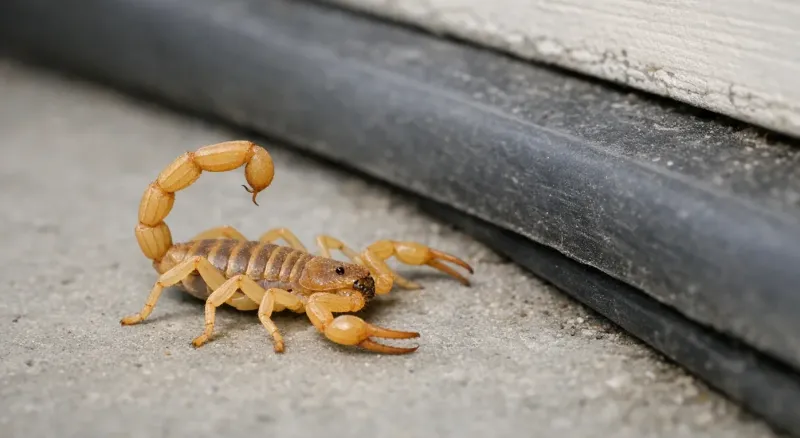
Spraying a perimeter is a familiar first move, and it is not without value. The problem is that a product applied to an exterior surface cannot reach a scorpion resting inside a wall void, under a rock pile, or in a firewood stack a few feet away. Texas Parks and Wildlife includes chemical control among recommended measures while also emphasizing habitat modification and exclusion, which reflects the reality that spray alone often leaves shelter and access routes unchanged.
Extension guidance describes scorpion chemical control as difficult, noting that treatments may need to target specific hiding places or entry zones and that repeated applications can be necessary. That does not mean pesticides are useless; it means they work best when the conditions supporting scorpion shelter near the home have already been reduced. Clear debris and refuse first. Shorten grass along the foundation.
Move dense material and firewood away from the structure. Seal gaps and cracks before or alongside any chemical application.
When a product is used, every instruction on the label is legally enforceable and must be followed exactly. Texas A&M AgriLife Extension covers scorpion control and is the right place to look for Texas-specific product guidance, since registrations and application requirements vary by state. Do not use pesticide bombs, mix products, or spray areas not listed on the label. Readers with persistent problems or uncertainty about product selection should consult a licensed pest professional rather than increasing application rates on their own.
The combination of shelter removal, exclusion, and label-directed chemical use addresses what any single approach alone is likely to miss.
Cleanup and sting response require caution
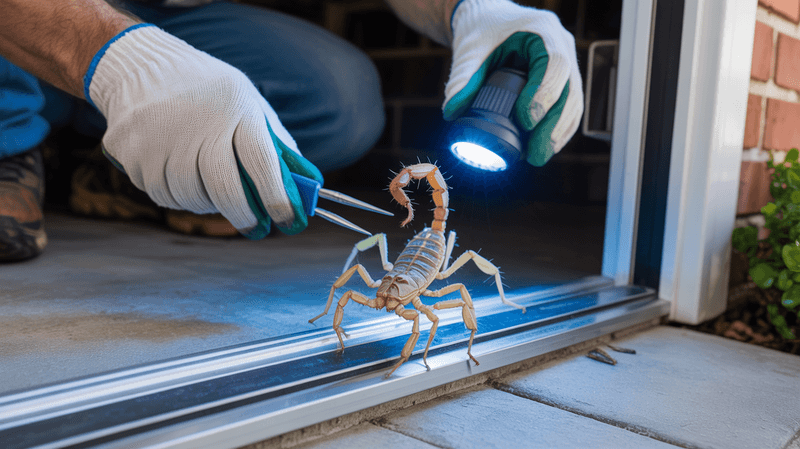
Changing yard conditions means reaching into exactly the places scorpions use for cover, so personal protection is not optional. Extension guidance recommends wearing gloves and boots when moving debris, rocks, or firewood, and that advice applies every time, not just the first pass through a cleanup project. Shake out shoes, boots, and any clothing that has been left on a porch or in a garage before putting them on, since scorpions can move into folded or still fabric.
A UV or blacklight flashlight is a practical tool for locating scorpions after dark, when they are active. CDC guidance confirms that scorpions fluoresce under ultraviolet light, making them visible against most surfaces in low light. If one is spotted, do not handle it, attempt to capture it, or crush it with a bare hand. A photograph taken from a safe distance gives enough detail for identification if needed, and a licensed pest professional or Texas A&M AgriLife Extension can help confirm species from a photo.
Most Texas scorpion stings produce pain and localized swelling that is generally comparable to a bee sting and resolves without medical treatment. The Texas Poison Center Network recommends washing the area with soap and water and applying a cool compress. Their line, 1-800-222-1222, is available around the clock for guidance. Some stings, however, produce reactions that require prompt medical attention.
CDC medical guidance lists trouble breathing, rash, slurred speech, muscle twitching, staggering, drooling, abdominal cramps, and convulsions as symptoms that warrant emergency care. Children and anyone with a known severe allergy should be evaluated promptly regardless of how the sting initially appears.
Aim for fewer encounters, not a scorpion-free Texas yard
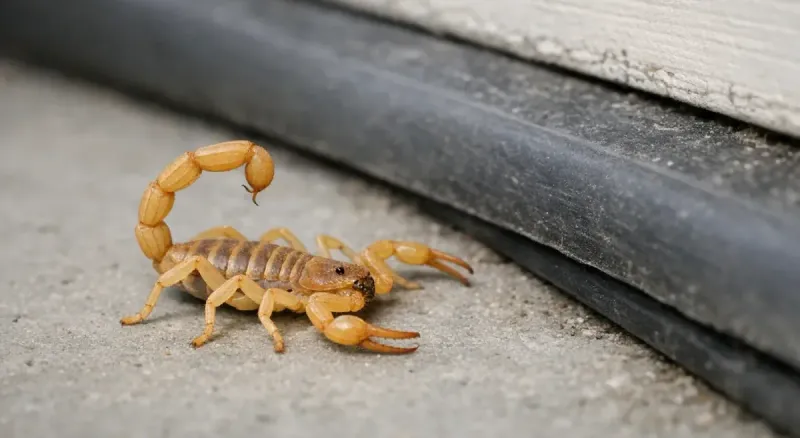
Scorpions are predators. They feed on insects, spiders, centipedes, and other arthropods, which means they serve a functional role in the yard ecosystem even when they are unwelcome near the house. Extension guidance frames the practical goal as reducing contact with people and structures, not eliminating every scorpion from the surrounding environment, which is neither realistic nor necessary in most of Texas.
The highest-value actions are consistent across everything covered here: remove ground-level debris and refuse, keep the strip of ground along the foundation clear and trimmed, store firewood on a raised rack away from the house and bring it inside only when it is going straight into the fire, and seal foundation cracks and door gaps before scorpions use them as entry routes. Texas Parks and Wildlife guidance supports each of those steps as part of a practical management approach. Pesticides can be part of the plan, applied label-directed to hiding places or entry zones, but they work better alongside habitat modification than instead of it.
None of these steps guarantee a scorpion-free property, and anyone who promises that is overstating what the evidence supports. What they do is reduce the shelter and access that keep scorpions in close contact with the home. In a state where scorpions are common across most of the landscape, that shift in odds is the realistic and worthwhile goal.