
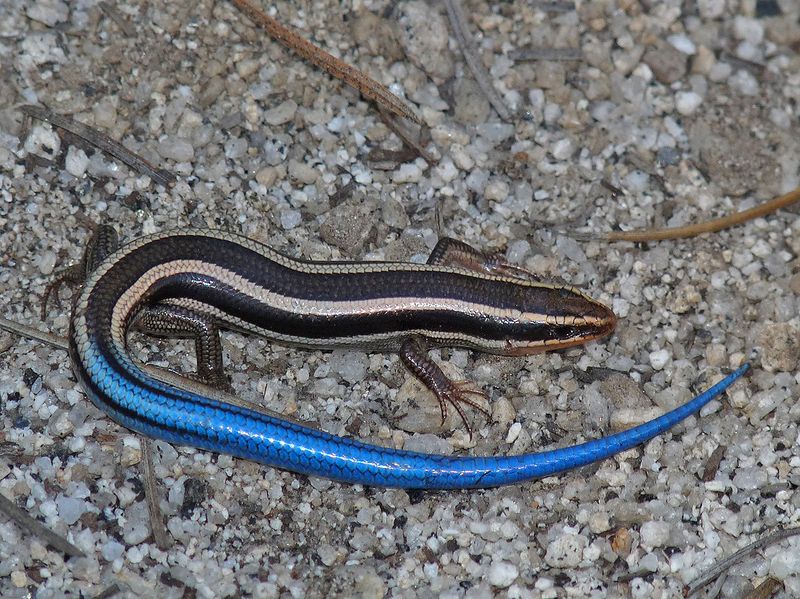
Spot a small lizard with a brilliant blue tail darting through your garden mulch and you might do a double take. That flash of color most likely belongs to a young western skink, a secretive native reptile found across much of California.
Understanding what it is, what it eats, and how to keep it around can help you make smarter decisions for your yard and the wildlife that shares it.
A vivid blue tail may belong to a young western skink
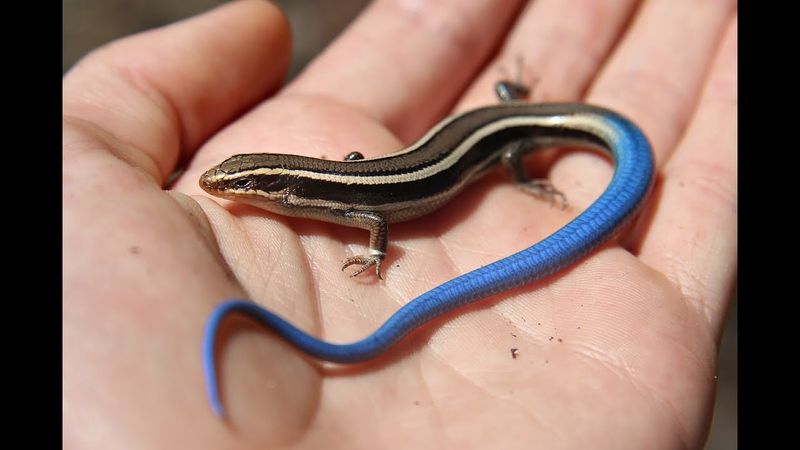
Few garden surprises are as striking as a small lizard with a tail that glows electric blue. When California homeowners spot one, the most likely candidate is the western skink (Plestiodon skiltonianus), particularly when the lizard is young.
Juveniles of this species carry a vivid blue tail that fades toward brown or gray as they mature, so the color itself is a clue to the animal’s age as much as its identity.
That said, color alone cannot confirm a species. A definitive identification requires checking body shape, scale patterns, and stripe markings in combination.
According to the California Department of Fish and Wildlife life-history account for the western skink, adults typically display a brown or olive back with pale lateral stripes bordered by darker lines running from the snout toward the tail. The body is smooth and cylindrical, quite different from the rougher, more compressed look of many other California lizards.
Western skinks are native to California and occupy a broad but uneven range. They occur throughout much of northern California and in suitable habitat along the Coast Ranges, in parts of the Sierra Nevada foothills, and in select southern mountain areas.
They generally avoid true desert regions, so a reader in the low Mojave or Sonoran desert is less likely to encounter one than someone gardening in a coastal valley or foothill community.
Treating a blue-tailed sighting as a probable western skink is a reasonable starting point, and that first step matters. Knowing roughly what animal you are looking at helps you decide whether to protect its habitat, leave it alone, or simply enjoy a rare glimpse of California wildlife going about its day.
Getting the identification right, even provisionally, is more useful than guessing and acting on the wrong assumption.
Blue-tailed and blue-bellied lizards are different animals
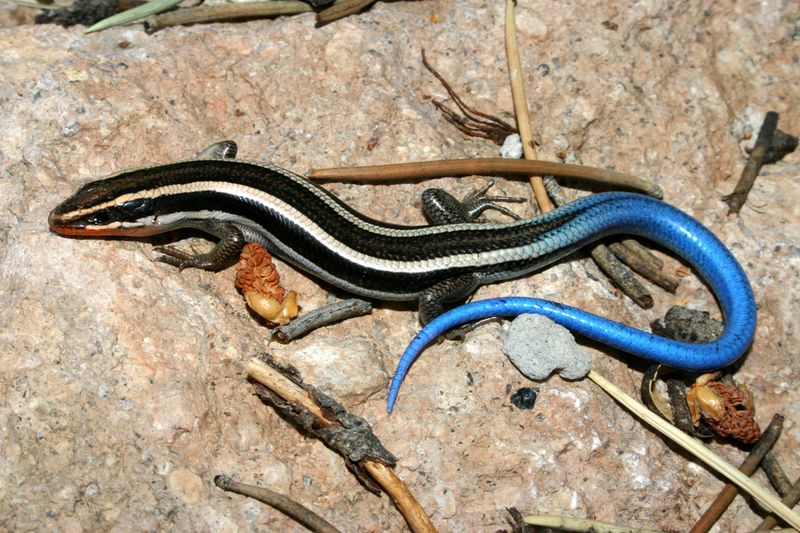
Two of California’s most commonly seen backyard lizards share the word “blue,” but the color appears in entirely different places on their bodies. On a young western skink, blue shows up on the tail.
On an adult male western fence lizard, blue appears on the belly and throat as bright patches that flash when the animal does push-ups on a sunny fence rail or rock. Mixing up these two animals is an easy mistake, and it leads to some confusion about which lizard does what.
According to UC Statewide IPM Program guidance on California lizards, western fence lizards are among the most visible backyard reptiles in the state, often seen basking conspicuously on walls, fences, and wood piles. Western skinks behave very differently.
They are secretive ground-dwellers that spend most of their time moving through leaf litter, under rocks, or in dense low vegetation. You are far less likely to see a skink sitting out in the open.
Both species eat arthropods, so both may contribute to a garden food web in a general sense. But their habits, appearance, and ecological roles are distinct enough that facts about one should not be attached to the other.
Western fence lizards, for instance, are the subject of research on tick interactions, specifically on how the blood of some lizards can affect certain Lyme-disease bacteria carried by immature western black-legged ticks. That research applies to fence lizards and involves a complicated relationship that does not eliminate tick risk overall.
None of it applies to western skinks.
When you spot a lizard near the ground moving quickly through mulch or low cover, the secretive behavior is itself a clue pointing toward the skink. A lizard perched openly on a warm surface and doing push-ups is more likely a fence lizard.
Behavior and color location together give you a much better read than color alone.
Its insect-heavy diet may benefit a garden food web
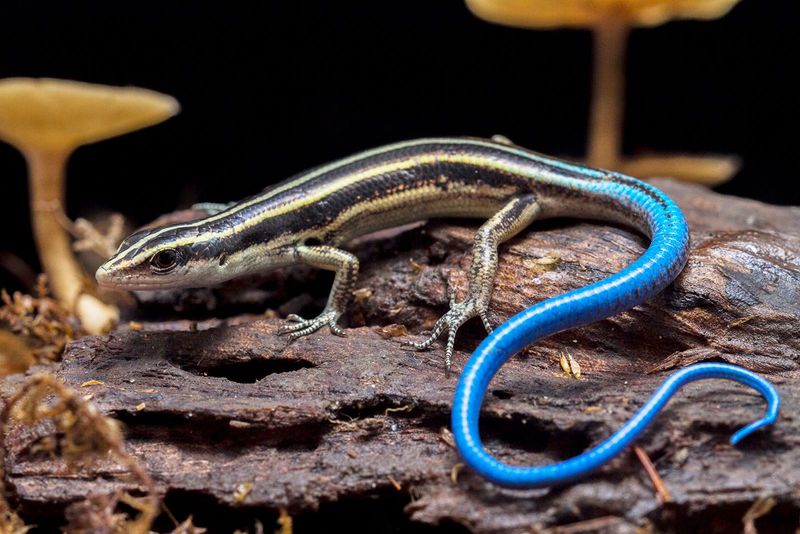
Western skinks are dedicated insect hunters, and their menu is broad. The CDFW life-history account documents their prey as including adult and larval beetles, caterpillars, moths, grasshoppers, crickets, ants, spiders, centipedes, sow bugs, insect eggs, and other insect larvae.
That is a long list of arthropods, and many of those organisms overlap with the creatures that California gardeners spend time trying to manage.
Because of that overlap, it is fair to describe a western skink as a potential garden ally. The CDFW western skink life-history account supports saying that its diet may include some of the same arthropods that cause garden problems, which means the animal may contribute to a healthier backyard food web.
That is a meaningful distinction from a yard full of only generalist scavengers or purely ornamental wildlife.
Where the line has to be drawn is at guaranteed pest control. No available evidence measures reliable pest reduction by western skinks in residential gardens.
A single skink foraging through your raised beds will not stop a caterpillar outbreak, eliminate a grasshopper problem, or protect seedlings from all the insects that find them appealing. A recent diet study of western fence lizards in central California grasslands found that even generalist predators with diverse arthropod diets show seasonal variation in what they actually eat, which reinforces the point that these animals do not lock onto one target pest and eliminate it.
Meanwhile, UC IPM notes that California lizards as a group cause no measurable plant damage and may be beneficial by eating pest insects, recommending that homeowners leave them alone. That guidance reflects the right attitude: welcome a skink as a part of the living system in your yard, appreciate that its feeding habits lean in a direction that may help, and resist the temptation to assign it a pest-control job it was never designed to hold.
Watch for a quick ground-level hunter
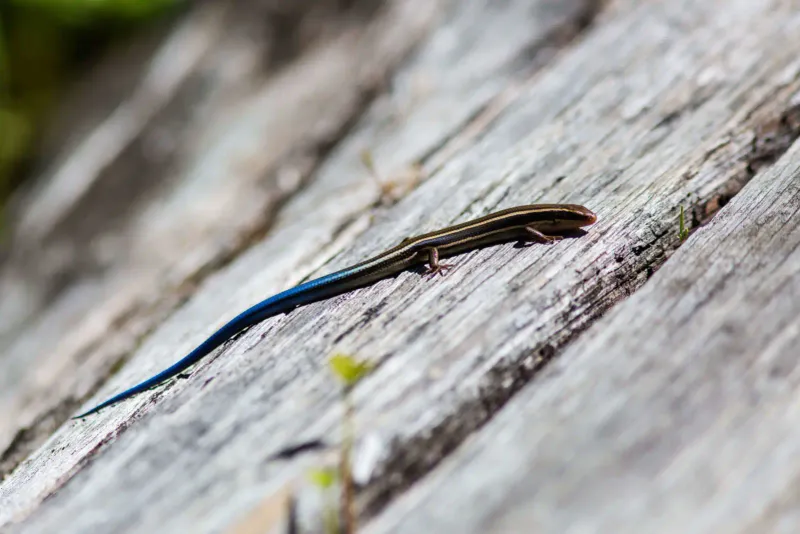
Catching a glimpse of a western skink in your yard requires knowing where and when to look, because these lizards are not the sit-and-bask type. They are warm-season, daytime hunters, but they tend to stay low and move fast rather than perching somewhere visible.
During summer, activity is often concentrated in the morning and again in the late afternoon, when temperatures are comfortable but not scorching.
Their preferred foraging territory is the ground layer: leaf litter, dense low vegetation, and loose or somewhat moist soil. According to the CDFW western skink life-history account, these lizards use rotting logs, surface litter, large flat stones, and areas of loose soil as both shelter and foraging habitat.
Females may nest beneath surface objects or near rock outcrops, so a flat stone partially buried in a shaded garden bed is exactly the kind of feature that could serve multiple functions for a resident skink.
Because they move through cover rather than across open ground, you are more likely to hear a western skink than see one at first. A quick rustle in the leaf mulch near a log, a brief shimmer of blue disappearing under a rock, or a flash of movement at the base of a dense shrub are all typical encounters.
Once you know what the habitat looks like from the lizard’s perspective, low dense plantings, undisturbed mulch, and shaded rock clusters, you will start to notice these micro-habitats in your yard and understand why a skink might favor one corner over another.
Patience helps. Standing quietly near a promising patch of ground cover for a few minutes during a cool morning is more productive than searching in the midday heat.
The lizard is out there doing its work; you just have to meet it on its terms.
Habitat cleanup and pesticide practices can harm skinks
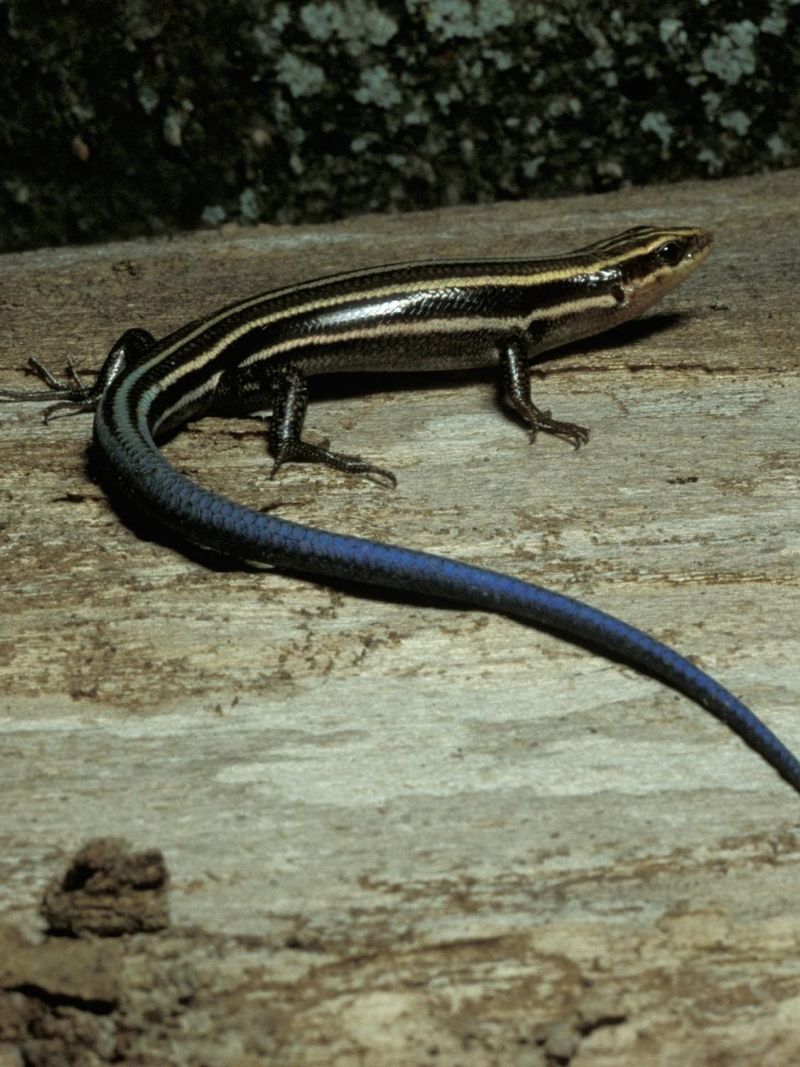
Two common yard-maintenance habits can quietly make a California garden less welcoming to western skinks, and they work through different mechanisms. The first is the urge to tidy every inch of the ground layer.
Removing logs, clearing away all leaf litter, lifting every flat stone, and cutting back dense low plantings can eliminate the physical cover that skinks rely on for shelter, foraging, and nesting. A spotless, raked, open garden floor may look neat, but from a skink’s perspective, it offers nowhere to hunt and nowhere to hide.
You do not need to let your yard go wild. Leaving one or two partially decayed logs in a back corner, keeping a modest layer of mulch under shrubs, and preserving a flat stone or two in a shaded bed can maintain enough ground-level structure to support a skink without changing the overall appearance of the yard.
According to CDFW habitat guidance for the western skink, rotting logs, surface litter, large flat stones, and areas of loose soil are the features most associated with skink presence. Retaining even a few of these elements is more meaningful than a complete habitat overhaul.
Pesticide exposure is a separate concern and deserves its own attention. Reptiles can encounter pesticides directly through skin contact, through contaminated soil or foliage, or by eating prey that has already been exposed.
The EPA’s guidance on reducing pesticide impacts on wildlife recommends using pesticides only when necessary, treating only the affected area rather than the whole yard, and following the product label precisely. Keeping pesticide mixtures and rinse water out of drains and waterways is also part of responsible use, because runoff can affect soil organisms and the arthropods that skinks depend on for food.
Broad-spectrum insecticides applied routinely or across large areas do not just affect the target pest. They can reduce the arthropod populations that make up a skink’s food supply, compounding the effects of habitat loss.
Using targeted, label-directed treatments only when a genuine pest problem warrants intervention is the most straightforward way to reduce the risk to resident lizards and the food web they are part of.
Observe the lizard instead of moving it
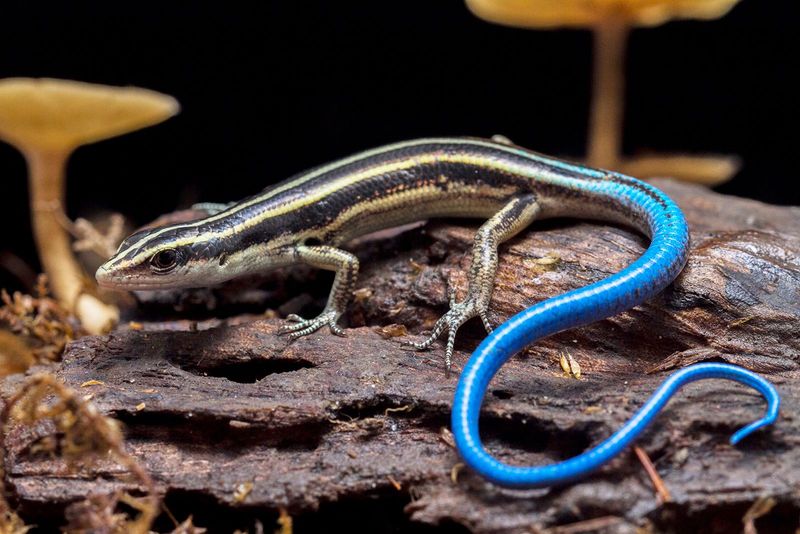
Finding a western skink in your yard is genuinely exciting, and the instinct to pick it up or move it somewhere “better” is understandable. Resist it.
Wild skinks are fast and stress easily, and handling can cause the animal to shed its tail, a dramatic defense mechanism that costs the lizard significant energy to regrow. The tail may continue wriggling after it detaches, which is startling but not unusual.
Still, the best outcome for the lizard is one where it never needed to use that defense at all.
Relocating a skink, even with good intentions, carries real risks. Moving a wild lizard out of its established territory can leave it in unfamiliar ground without the shelter sites or food sources it knows.
Purchasing a skink from a pet supplier and releasing it in your yard creates similar problems and adds the risk of introducing animals that may carry diseases or parasites into local wildlife populations. According to UC IPM, no native California lizards may be sold or used for commercial purposes, and the recommendation is simply to leave them alone.
California regulates the taking and possession of native wildlife, with rules that vary by species. The CDFW administers those regulations, and anyone curious about what is and is not permitted for a specific lizard species should consult current CDFW guidance rather than assume a blanket rule applies.
The practical takeaway is that capturing, keeping, or attempting to relocate a wild western skink is not a recommended course of action, both because of the potential harm to the animal and because of the legal framework governing native wildlife in California.
The most rewarding thing you can do is watch from a respectful distance. A skink moving through leaf litter on a cool morning, tail catching the light, is doing exactly what it evolved to do.
Letting it continue undisturbed is the best contribution you can make.
A possible garden ally, not a natural pesticide
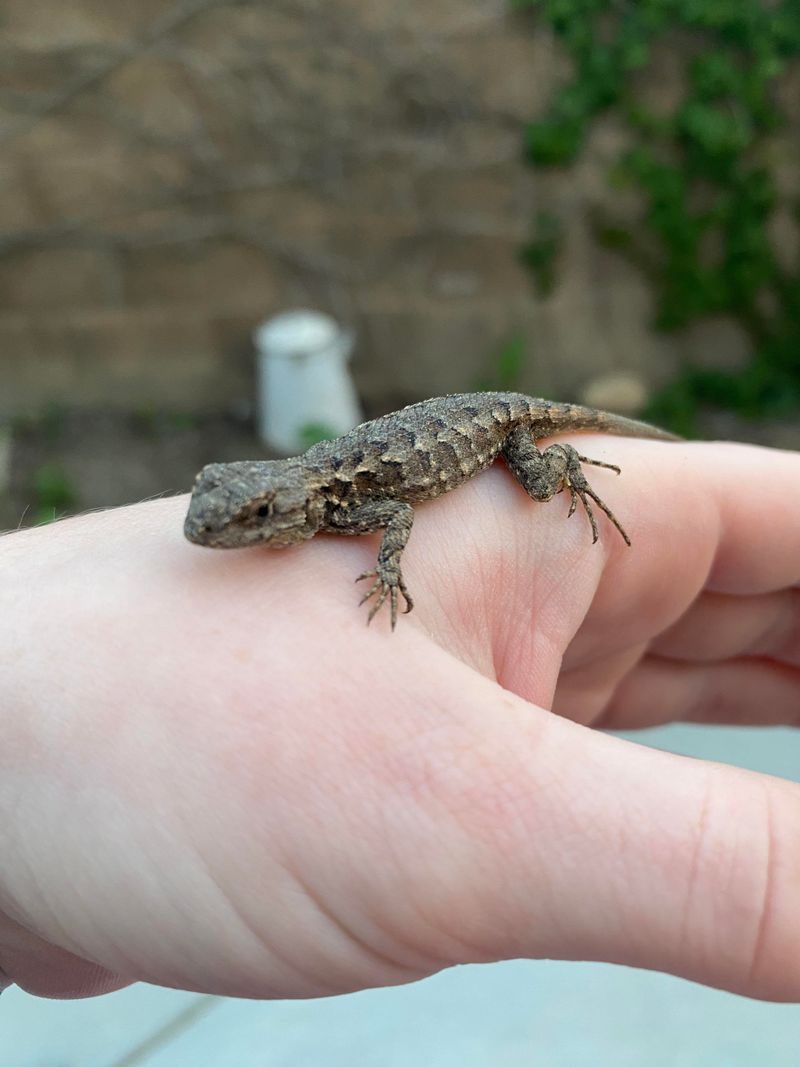
A California lizard with a vivid blue tail is most likely a young western skink, and that is genuinely good news for a wildlife-aware yard. Its documented diet, which spans beetles, caterpillars, moths, grasshoppers, crickets, ants, spiders, centipedes, and sow bugs, puts it squarely in the category of arthropod predators that may contribute to a healthier backyard food web.
That is worth appreciating on its own terms.
What a western skink cannot do is serve as a substitute for thoughtful pest management. No available evidence shows that a resident skink reliably reduces garden pest populations to measurable levels.
Framing it as a natural pesticide sets an expectation the animal cannot meet and can lead to disappointment or, worse, to abandoning other sensible garden practices. The honest and useful framing is this: its insect-heavy diet means it may eat some of the same arthropods that cause garden problems, and its presence is a sign of a yard with enough structure and biodiversity to support native wildlife.
Protecting that presence is straightforward. Keep some leaf litter and a flat stone or two in place, use pesticides only when a real problem warrants it and only on the affected area, and follow EPA guidance on minimizing pesticide impacts on wildlife.
Leave the lizard undisturbed when you see it, and consult CDFW rules before taking any action that involves handling or moving a native animal. According to both CDFW records and UC IPM, California lizards cause no measurable plant damage, and the right response to finding one is simply to let it be.
A yard that can support a western skink is already doing something right.